Huka Falls
Huka Falls, New Zealand
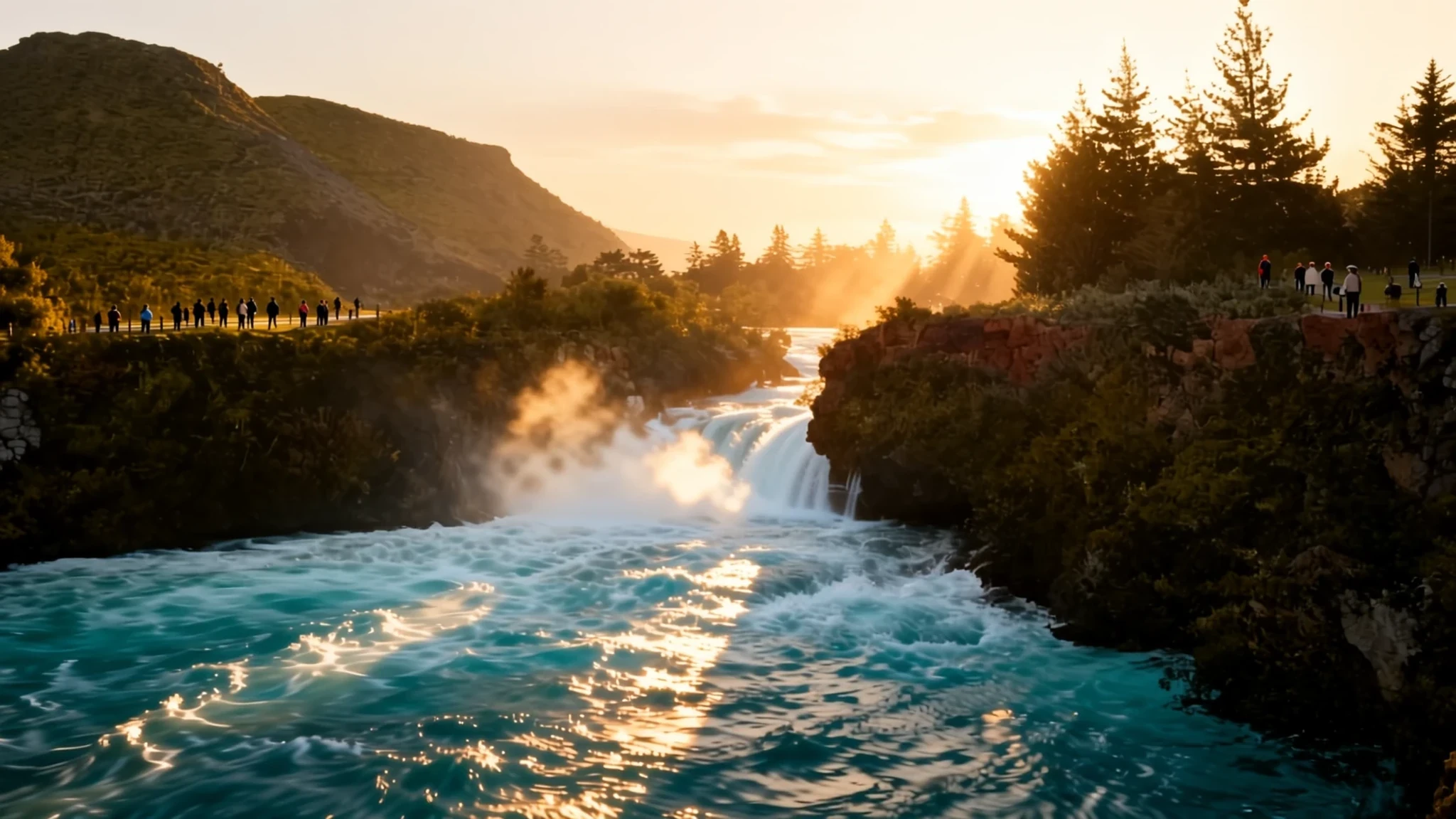
Go to see the Waikato River squeeze into a narrow rock canyon and tip over in a thundering white rush, a short drive from Taupō.
The place
Huka Falls sits on the Waikato River a short distance below Lake Taupō, the large volcanic lake near the middle of New Zealand's North Island. For most of its course from the lake the river is wide and unhurried, but here it funnels into a canyon. The water picks up speed, bunches into a churning white rush and drops over a series of rock steps before settling into calmer, deep-looking pools below. Most visitors see the falls from lookouts and a footbridge that crosses above the drop, and the roar and spray are hard to miss even from the car park.
What stands out is the colour. The water is a clear, intense blue-green, the kind that looks almost artificial until the speed of the current becomes obvious. The flow often approaches about 220 cubic metres per second, so the falls look different depending on how much water is being let through from upstream. Some days the volume is noticeably heavier than others, and the spray and noise change with it.
The falls are an easy stop from State Highway 1 and close to Taupō town, so most people fit them into a loop around the lake rather than making a trip to Huka Falls alone. Traffic and coaches cluster in the middle of the day, and the lookouts are busiest then. The walks are short and mostly level, though the paths can be uneven. The surroundings are farmland and native bush rather than dramatic mountain scenery, which suits a relaxed half-day.
Its story
The canyon at Huka Falls is young in geological terms, though its rocks are very old. Upstream of the falls the Waikato narrows dramatically, from a broad channel to a gorge only a few metres across. That gorge is cut through lake-floor sediments laid down before the Oruanui eruption of the Taupō Volcano, which the brief dates to 26,500 years ago. The eruption reshaped the landscape around the lake, and the soft layers it left behind are what the river has been carving ever since. Each wet season adds a little more erosion to the walls, so the canyon is a record of a much larger event still being worked on.
The Māori name Huka means foam, a fair description of the white water at the drop. The river itself carries the name Waikato, which means flowing water, and it is the longest river in New Zealand. Its path from the lake has been changed heavily by people. Between 1929 and 1971 nine hydroelectric dams were built along the river between Taupō and Hamilton, and together they supply about a tenth of the country's electricity demand. The flow past Huka Falls is therefore not wholly natural. The hydro operator manages releases through the Taupō Control Gates, and the regional council can alter flows when the downstream catchment is at risk of flooding.
The result is a waterfall whose appearance is partly shaped by engineering decisions made far upstream. Visitors often assume the falls behave as they always have, but the rhythm of the water has been set by dams for most of the last century. Reading that history makes the power of the river feel more deliberate, and it explains why the level can shift from one visit to the next.
What to see
- Huka Falls lookout and footbridge — Huka Falls, on the Waikato River near Taupō
The main viewpoint is the easiest way to take in the falls. A footbridge crosses above the drop, giving a straight-down look at the white water and the blue-green pools beyond. Stay on the marked paths and behind the railings. Mornings tend to be quieter than the middle of the day, which makes the view easier to enjoy and photograph without a crowd in the frame.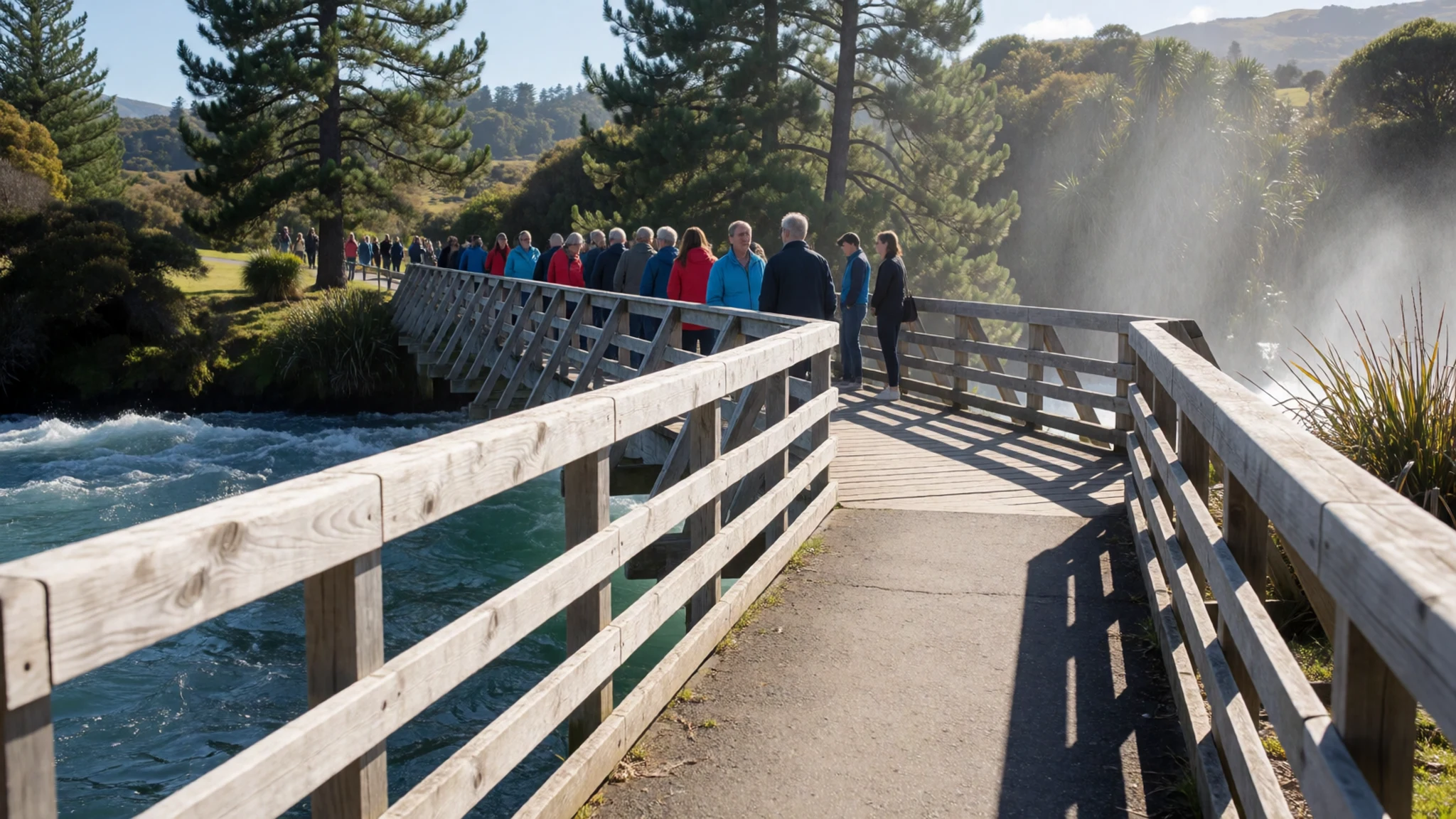
- Taupō Control Gates — Taupō, upstream of Huka Falls
The control gates sit upstream of the falls and show how the water is managed before it reaches the canyon. They are part of the hydro system that sets how much water flows through. The gates are a practical sight rather than a tourist attraction, so think of the visit as a short look at the engineering behind the falls. Check locally for any viewing arrangements before going.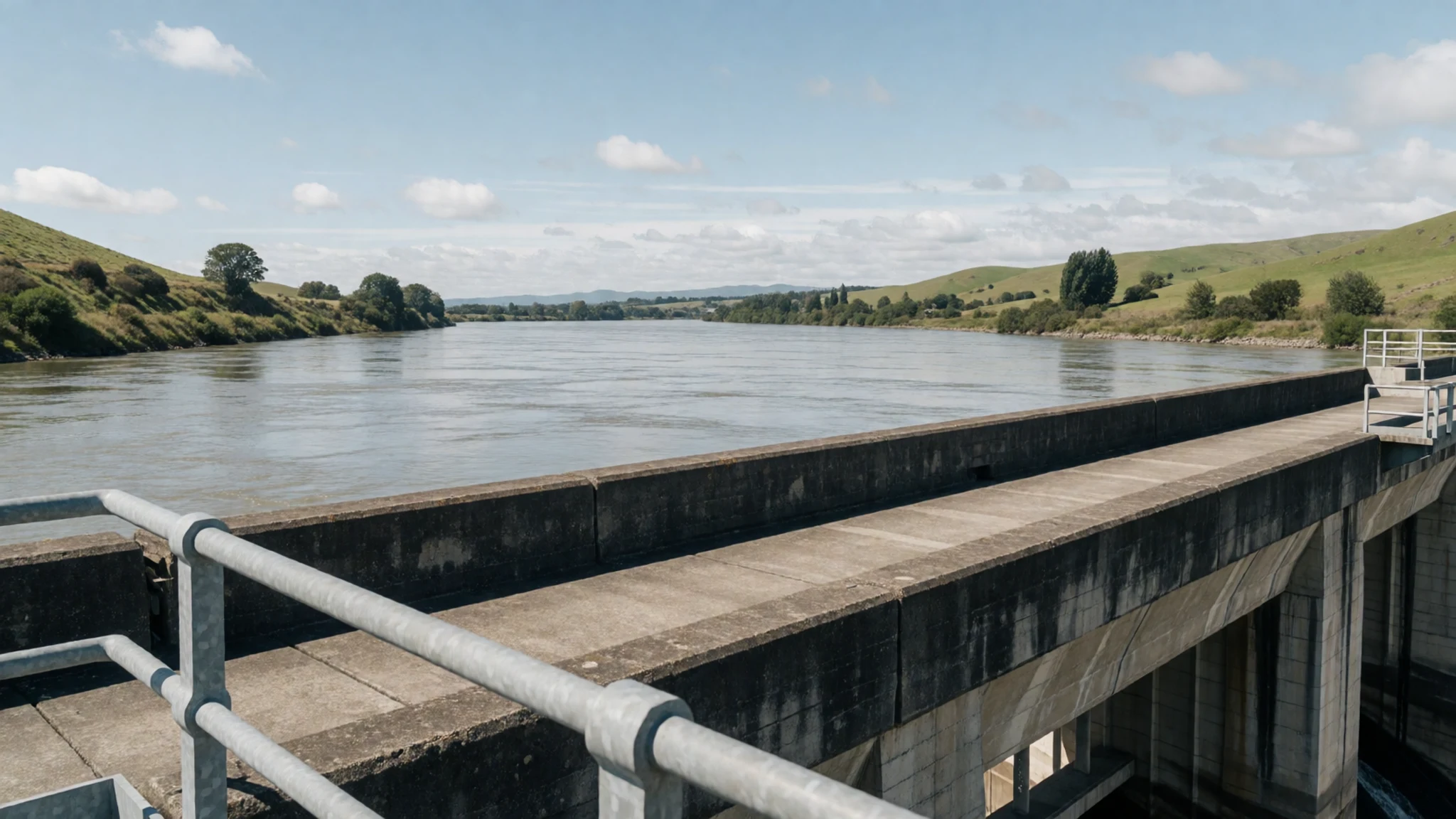
- The canyon and the jet boat run — The river below Huka Falls, Taupō
Below the falls the river runs through the narrow canyon, and jet boats make fast runs through the rapids and close to the cliffs. The boats give a strong sense of the current, though the ride is wet and loud. Wear closed shoes and a layer you do not mind getting soaked, and book with a reputable operator who explains the safety briefing and the route before departure.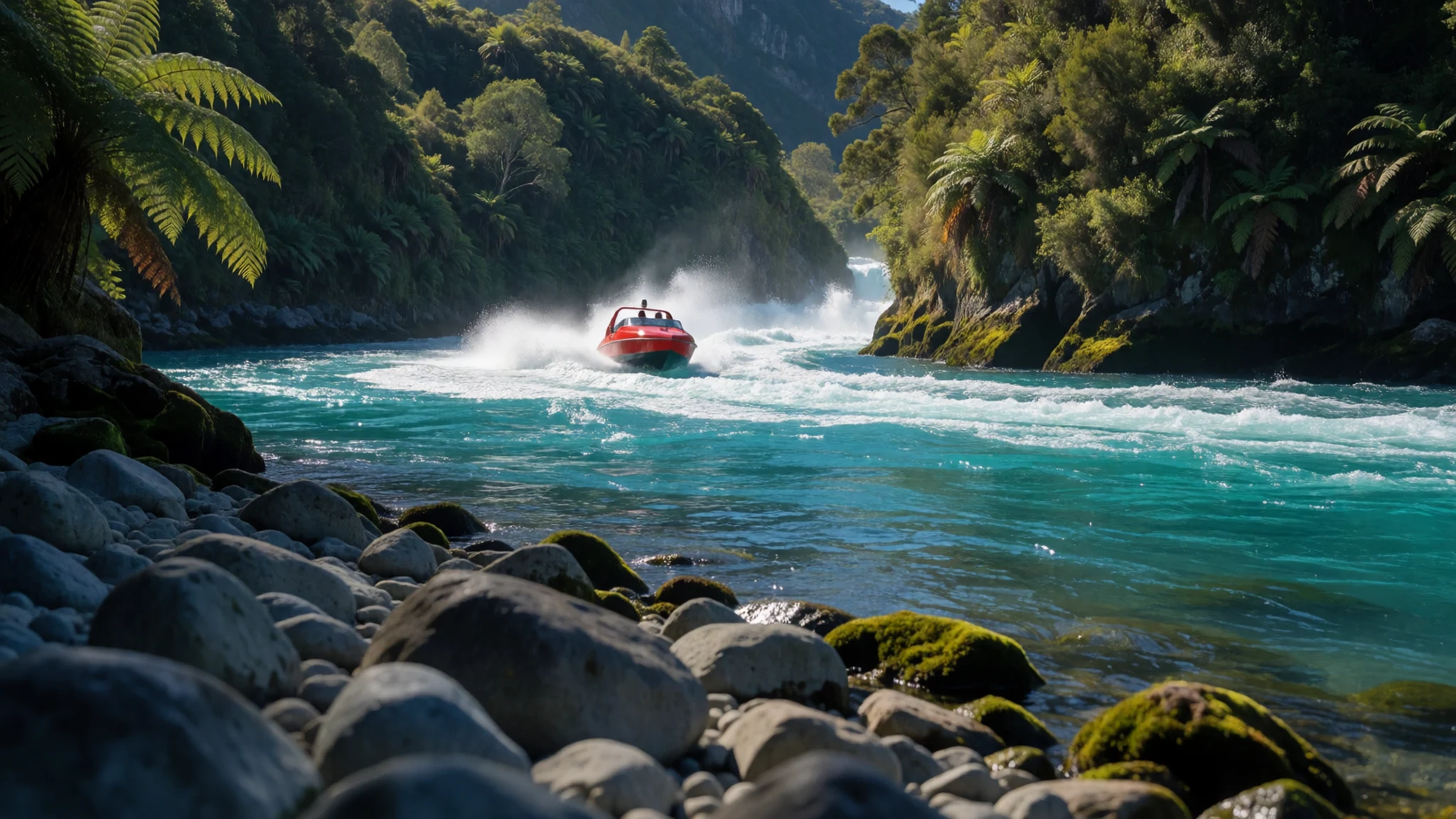
- Ruakuri Cave, Waitomo — Waitomo, inland from the Waikato
Ruakuri Cave is a subterranean experience a longer drive inland, reached by a spiral descent from ground level through a dramatic drum-shaped entrance and walkway. Tours are a good choice for anyone who wants to pair the river with something quite different. Wear sensible footwear, as the paths are wet and the steps can be slippery, and check the official site for current tour times.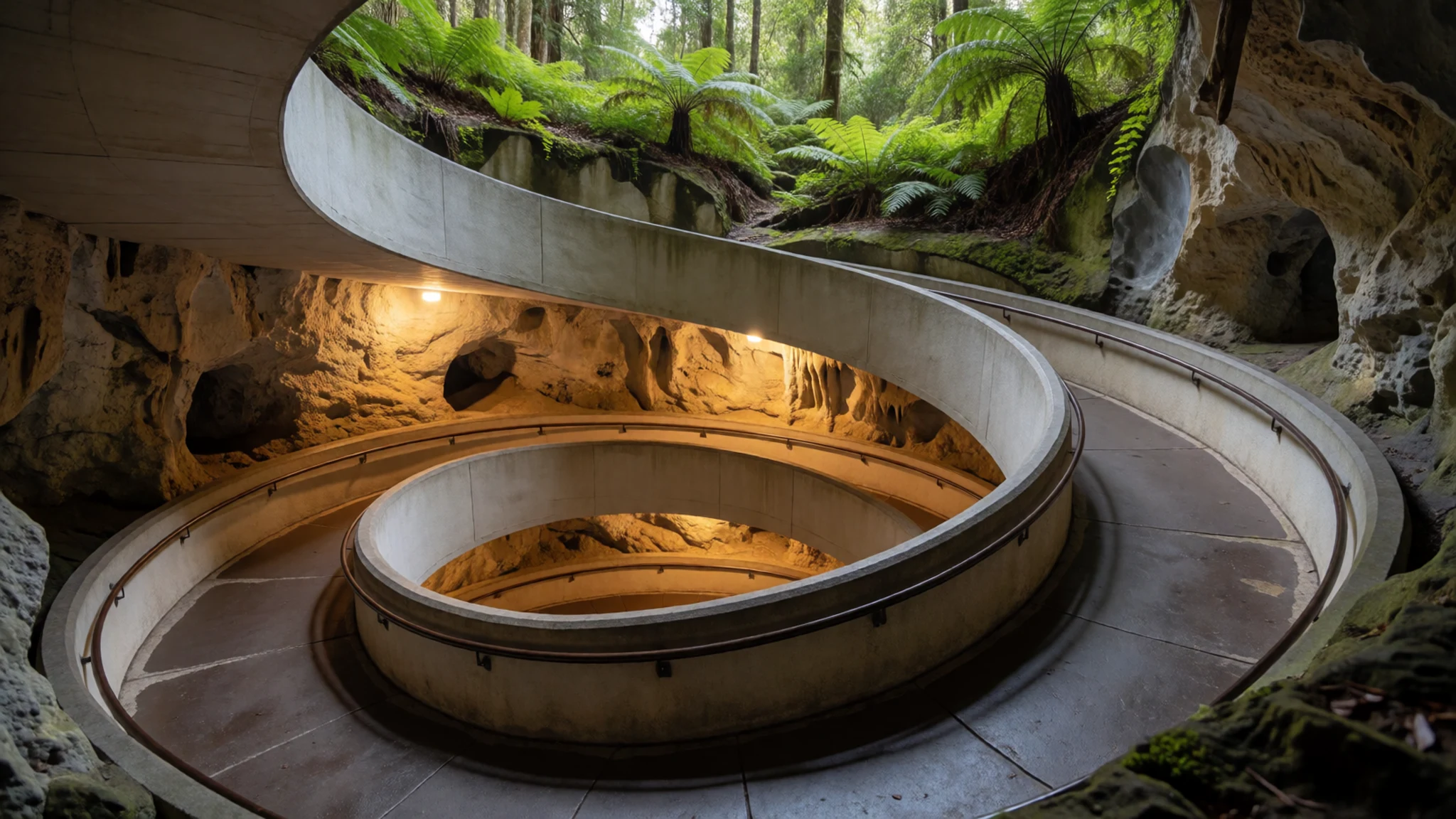
- Hobbiton Movie Set — Near Matamata, Waikato
Hobbiton Movie Set is a film location near Matamata, in farmland between Matamata, Cambridge and Tirau. Guided tours walk visitors through the village built for the Lord of the Rings and The Hobbit films. It is a popular half-day outing for fans and families, and it makes a pleasant contrast with the rawness of Huka Falls. Book ahead and check the official site for the current schedule.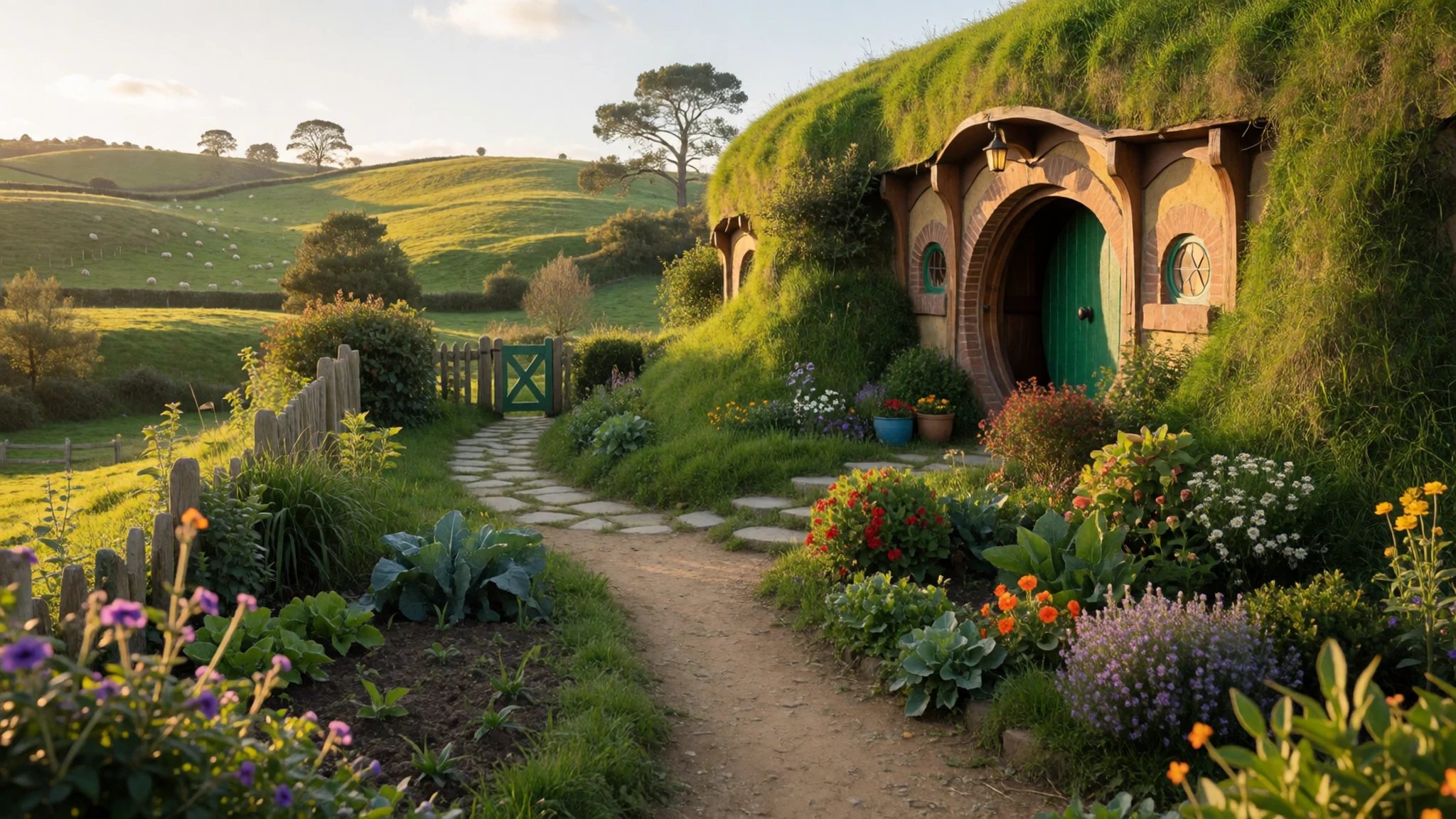
Culture
Huka Falls is part of a landscape that matters deeply to Māori, and the name itself, meaning foam, is a Māori word that visitors will see on signs and maps around the lake. Waikato means flowing water, and the river is treated with respect by the people whose ancestors lived along it. Many of the places around Taupō carry Māori names and stories, so a little attention to pronunciation and to the signs at lookouts goes a long way. Greetings are casual in most places, and a friendly hello is always welcome. Traditional cultural performances and marae visits are arranged through operators, and it is polite to follow the guidance given by hosts rather than wandering into areas without invitation. Keep to the marked paths and railings, and never climb the rocks or step into the water near the falls, because the current is powerful and the cliffs are unstable.
What to wear
Huka Falls is a river and bush setting, so what you wear matters more for weather and footing than for any formal dress code. Traditional Māori dress has long been built from flax and other natural fibres. The kākahu, a cloak, is woven from flax (harakeke) and muka, the prepared fibre of the leaf, and is worn on important occasions such as ceremonies and formal welcomes. Patterned weaving, tukutuku panels and carved elements also show textile skill, and these are seen in meeting houses around the region. Everyday dress across New Zealand today is practical and casual: outdoor jackets, jeans, fleeces and sturdy shoes, with a mix of urban and rural styles depending on where people are going. A visitor should bring a waterproof jacket and a warm layer, because weather around the lake can change quickly even in summer. Wear closed, grippy shoes for the paths and the jet-boat ride, a hat and sunglasses for the glare off the water, and sun protection that holds up to wind and spray. Modesty is not an issue at the falls, but if you join a cultural visit, cover shoulders and knees and follow the host's guidance about what to wear and where to sit.
What to eat
- Lake Taupō trout — Lakeside eateries and smokehouses in Taupō town
Trout from Lake Taupō is the local catch, and it is often served smoked or grilled. The fish is rich and firm, and it turns up in many lakeside eateries and smokehouses around the town. Ask what is caught that day, and expect a simple preparation with lemon and fresh salad that lets the fish speak.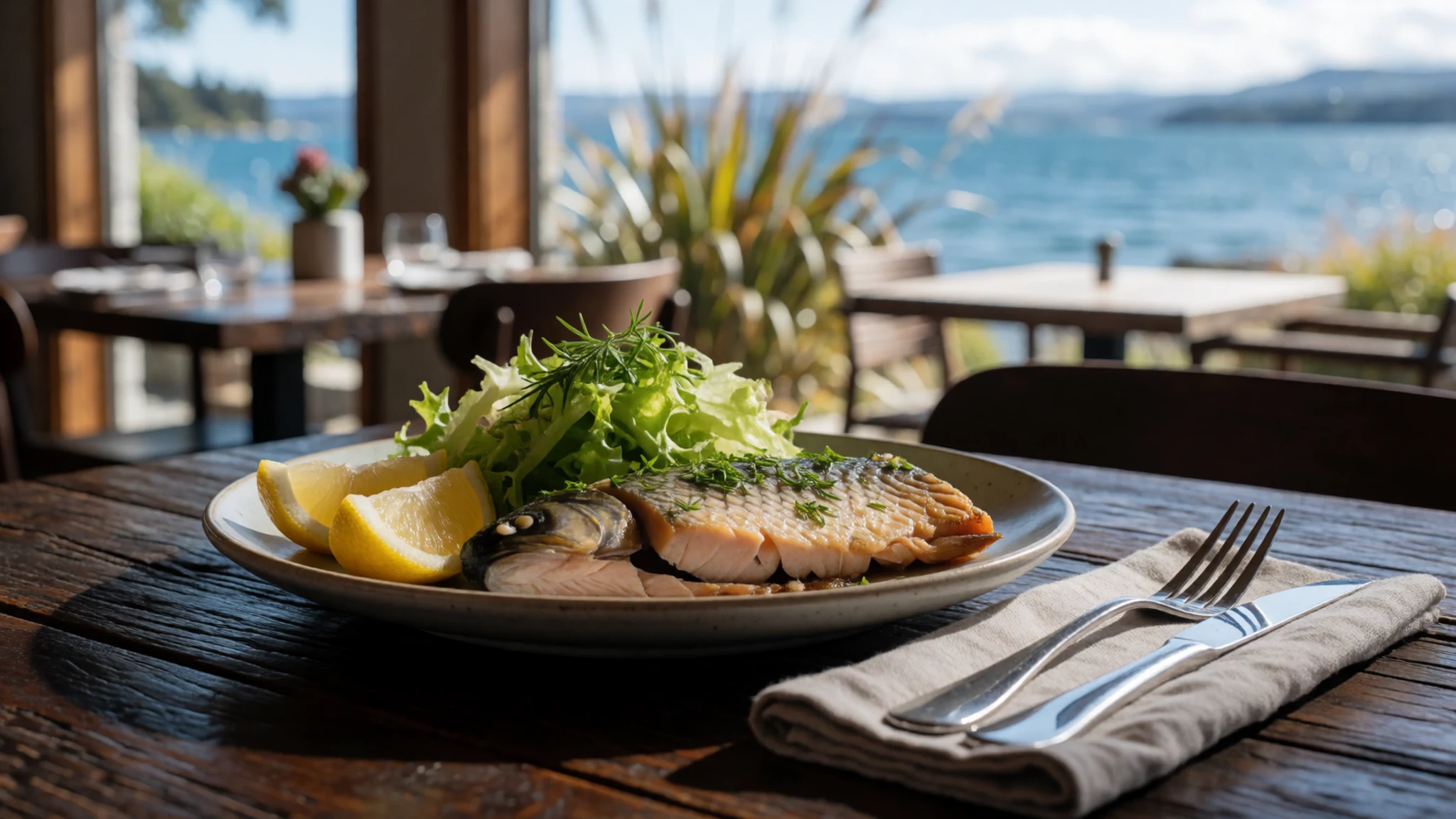
- Hāngi — Cultural evenings and marae visits arranged through local operators
Hāngi is a traditional method of cooking food in an earth oven, with meat and vegetables wrapped and cooked slowly over heated stones. It is usually eaten at a marae or on a cultural evening arranged by an operator. Book in advance, and ask what is included, because the experience varies between providers.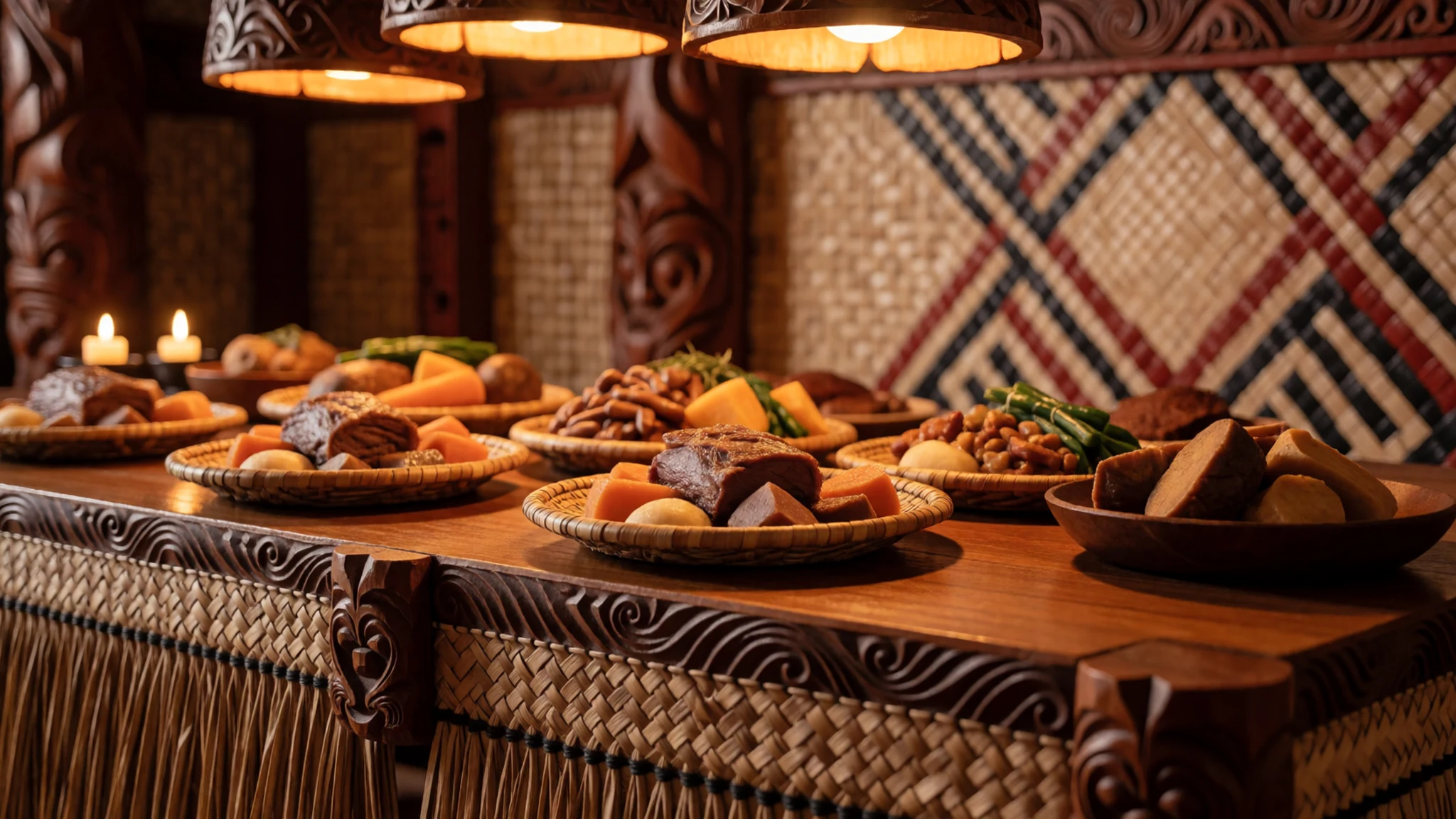
- Kūmara — Farmers' markets and cafés in and around Taupō
Kūmara, the sweet potato brought by Māori ancestors, appears in roasted, mashed and baked forms. It is a good sign of the local food tradition. Look for it at farmers' markets and in cafés that serve seasonal vegetables, where it is often served alongside meat or as a side. - Hokey pokey ice cream — Ice cream shops along the Taupō lakefront
Hokey pokey is vanilla ice cream with crunchy honeycomb toffee through it, a classic New Zealand treat. It is the perfect reward after the walk along the river. Most ice cream shops in town stock it, especially in the warmer months when the lakefront is busy. - Pavlova — Cafés and bakeries in Taupō town
Pavlova is a meringue dessert topped with cream and fresh fruit, and New Zealanders are fond of it. Cafés and bakeries in Taupō usually have it on the counter, and it is a light finish to a day outdoors. Ask whether it is made fresh that morning.
Plan it
Best time. December to February is the warmest and busiest season, when the lake and river are inviting and the jet boats run at full pace. Autumn and spring are cooler, quieter and often clear, which suits the walks and the drive around the lake. Winter is cold and can be wet, though the falls look dramatic whenever the river is running high.
How long. 1–2
Getting there. Auckland is the main international gateway. From Auckland, drive south on State Highway 1 to Taupō, where the falls are a short drive out of town. Most visitors arrive by car or coach, as public transport in the area is limited.
Budget. mid
Tips
- Visit the lookouts in the morning to avoid the midday coaches
- Book jet boat rides and cultural evenings ahead of time
- Carry a warm, waterproof layer, as the weather around the lake changes quickly
- Bring water and sun protection, because there is little shade on the paths
- Carry some cash for small operators, though cards are widely accepted in town
Etiquette
- Stay on the marked paths and behind the railings near the falls
- Follow host guidance when visiting a marae or cultural performance
- Ask before photographing people taking part in cultural events
Nearby
Sources
- Wikidata Q38477 (CC0)
- Wikipedia: Huka Falls (rev 1367004094) (CC BY-SA 4.0)
- Wikivoyage: Waikato (rev 5259464) (CC BY-SA 4.0)
- Photo: Huka Falls, Avenue (CC BY 3.0)
- Photo: View looking up the Huka Falls, Godber, Albert Percy (Public domain)
- Photo: Huka falls canyon Taupo NZ, Antilived (CC BY 3.0)
- Photo: Huka Falls in New Zealand, Dharpo32 (Public domain)
- Photo: Jetboat at Huka Falls, Egghead06 (CC BY 3.0)
- Photo: Waikato river at Huka Falls, QFSE Media (CC BY 3.0 nz)
- Photo: The rapids in the Waikato River before the Huka Falls, QFSE Media (CC BY 3.0 nz)
- Photo: Huka Falls near Taupo NZ, brewbooks (CC BY-SA 2.0)


