Huacachina
Huacachina, Peru
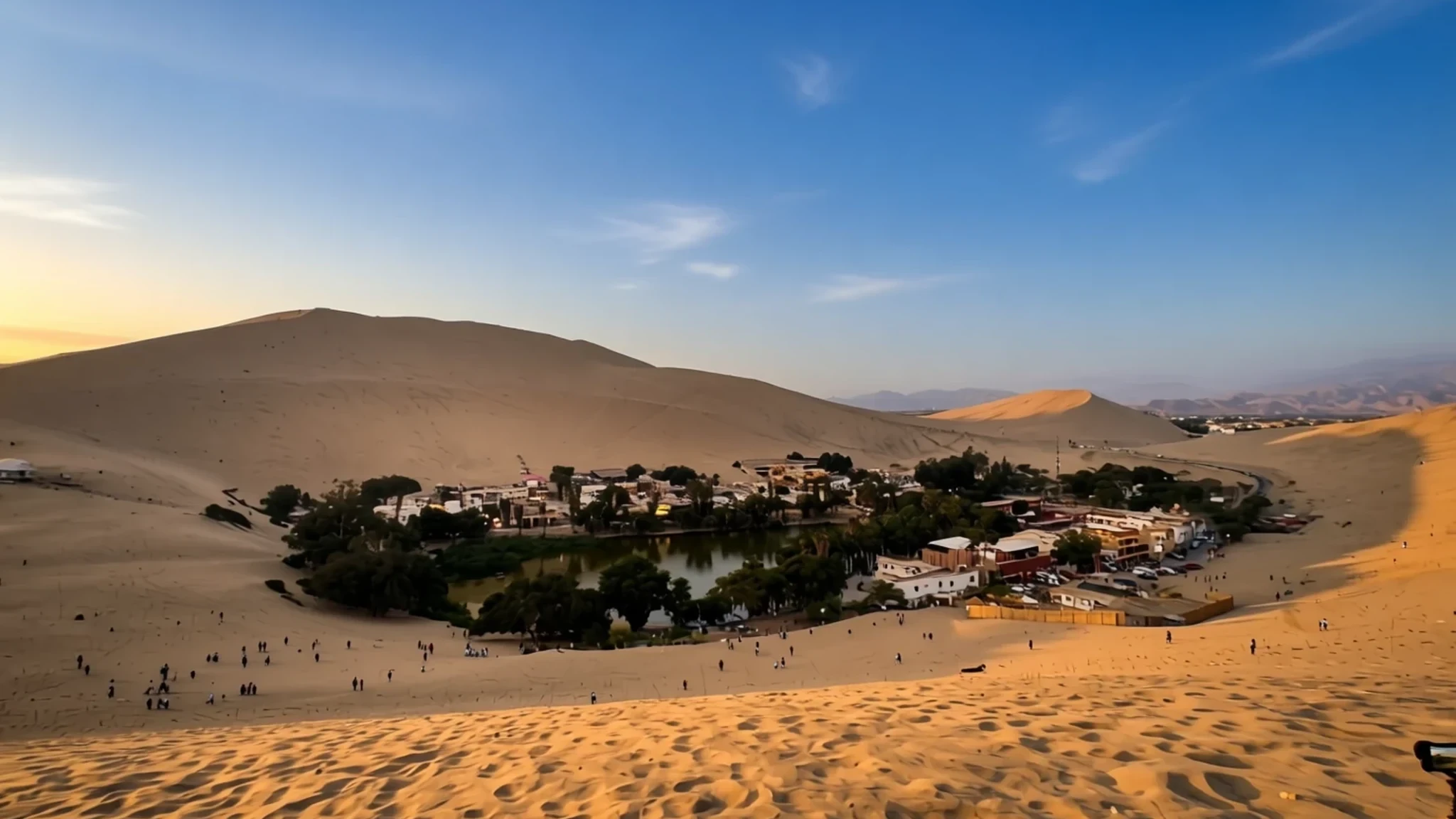
A desert oasis village of about 115 residents, built around a small lagoon among towering dunes near the city of Ica.
The place
Huacachina is a village of about 100 permanent residents, though it draws many more visitors than that each year. It lies in a hollow of Peru's coastal desert about five kilometres from the city of Ica, at around 403 metres above sea level. The settlement is less a town than a ring of hostels, hotels, bars and small restaurants around a green-edged lagoon, with palms along the water and dunes rising on every side.
The lagoon is the reason the village exists. Water seeping up from underground aquifers filled the hollow and kept a patch of greenery alive in one of the driest landscapes on the coast. That balance has shifted. Wells drilled nearby for farming reduced the supply considerably, and since 2015 local business groups have pumped water into the lake, partly to keep the oasis intact and probably, mainly, to keep the tourists coming. The dunes are the other half of the picture. The dunes can reach as high as 500 metres (1,600 ft). Visitors can climb them on foot, slide down their slopes, or drive across them in dune buggies.
Visitors arrive for the sport as much as the scenery. The village remains a favourite weekend resort for families from Ica, but younger travellers now make up much of the crowd, drawn by sandboarding and buggy rides. Accommodation ranges from backpacker hostels with pools to more comfortable hotels. Shade matters, because the midday sun and the heat off the sand can be punishing, which is why the palm-shaded edges of the lagoon and the dune summits at dusk are where most people spend their time.
Its story
Huacachina takes its name from Quechua, and the most common reading is wakachina, roughly 'guard' or 'conceal', possibly shortened from a longer phrase meaning hidden lagoon. Whatever the exact derivation, the name suits a pool that sits unseen until the dunes part around it.
Local legend holds that a mermaid living in the lagoon claims one man each year. Most accounts are less mythic. Many Peruvians cannot swim, which seems a far likelier reason for the yearly drownings. Some observers add a physical explanation, that swimmers cramp where warm surface water meets cooler water below. Whatever the cause, the drownings have shaped how the lake is talked about.
The oasis is older than its tourist trade. Water seeps up from underground aquifers, and for generations the lagoon sustained palms and a small settlement among the sand. The oasis even appeared on the back of Peru's 50 nuevo sol banknote in 1991, which gave it a national profile. In earlier decades it became a favourite family resort, and later, as sandboarding and dune buggies drew visitors from further afield, it grew into the place it is now.
Modern problems came with success. Wells drilled nearby for farming reduced the flow into the lagoon, and the water level fell. Since 2015, local business groups have pumped water in, partly to keep the lake alive and partly, probably mainly, to protect the village as a destination. The result is an oasis sustained by pumps as well as by the aquifer.
What to see
- The lagoon — Huacachina village
The lagoon sits at the heart of the village, and most visitors spend at least part of their time beside it. Rowing boats and pedal boats can be hired at the water's edge, and swimming is possible, although drownings have been reported and their cause is debated. Arrive early in the morning for calm water and fewer people on the shore.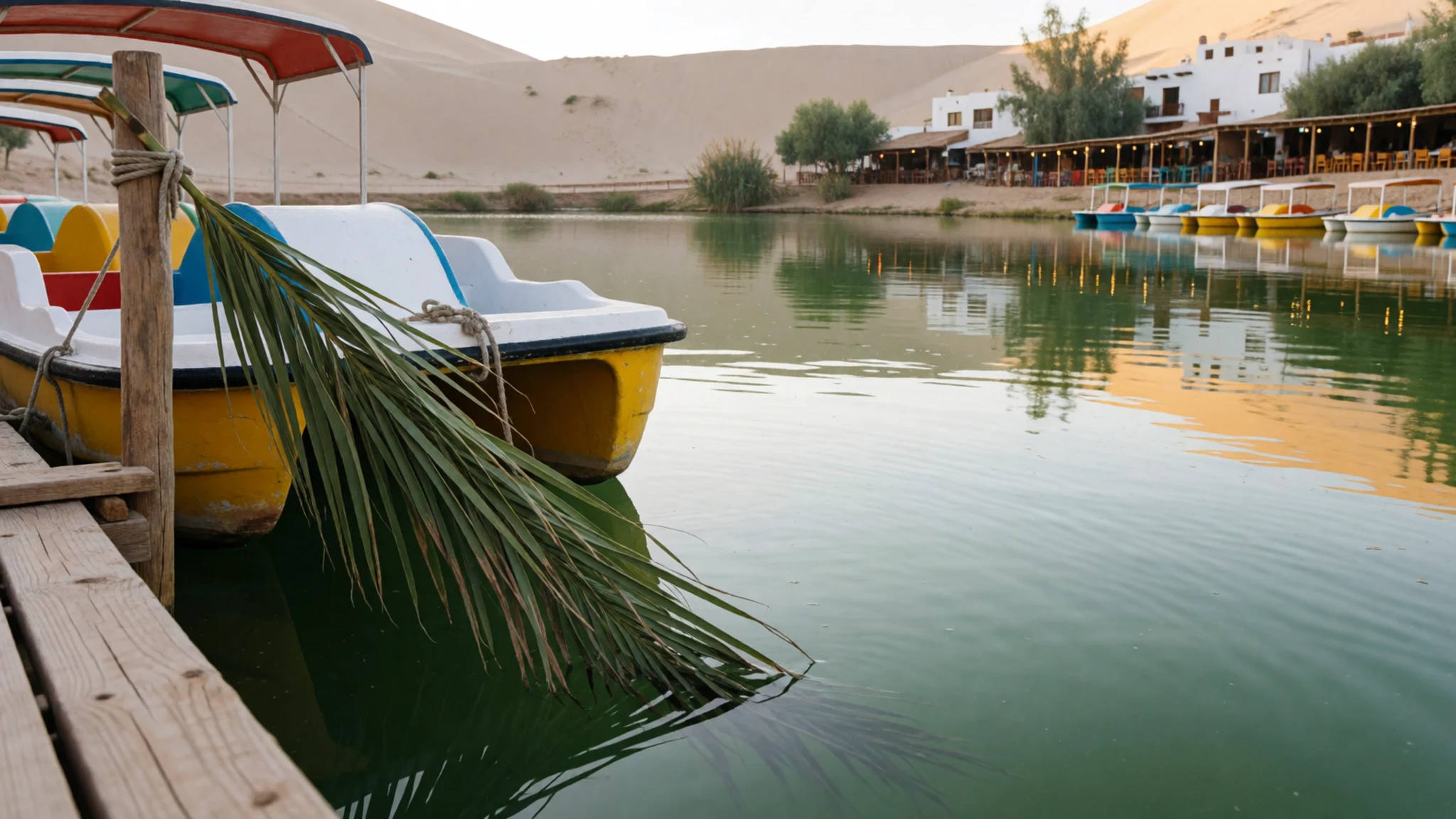
- The dunes at sunset — dunes above Huacachina
Climbing the dunes above the village may take an hour or less, based on your fitness and the chosen dune, and the sand is steep enough to make it tiring. Sunset is the favourite time, with the lagoon below and dunes stretching to the horizon. Carry water and a scarf against the windblown sand, since there are no marked paths.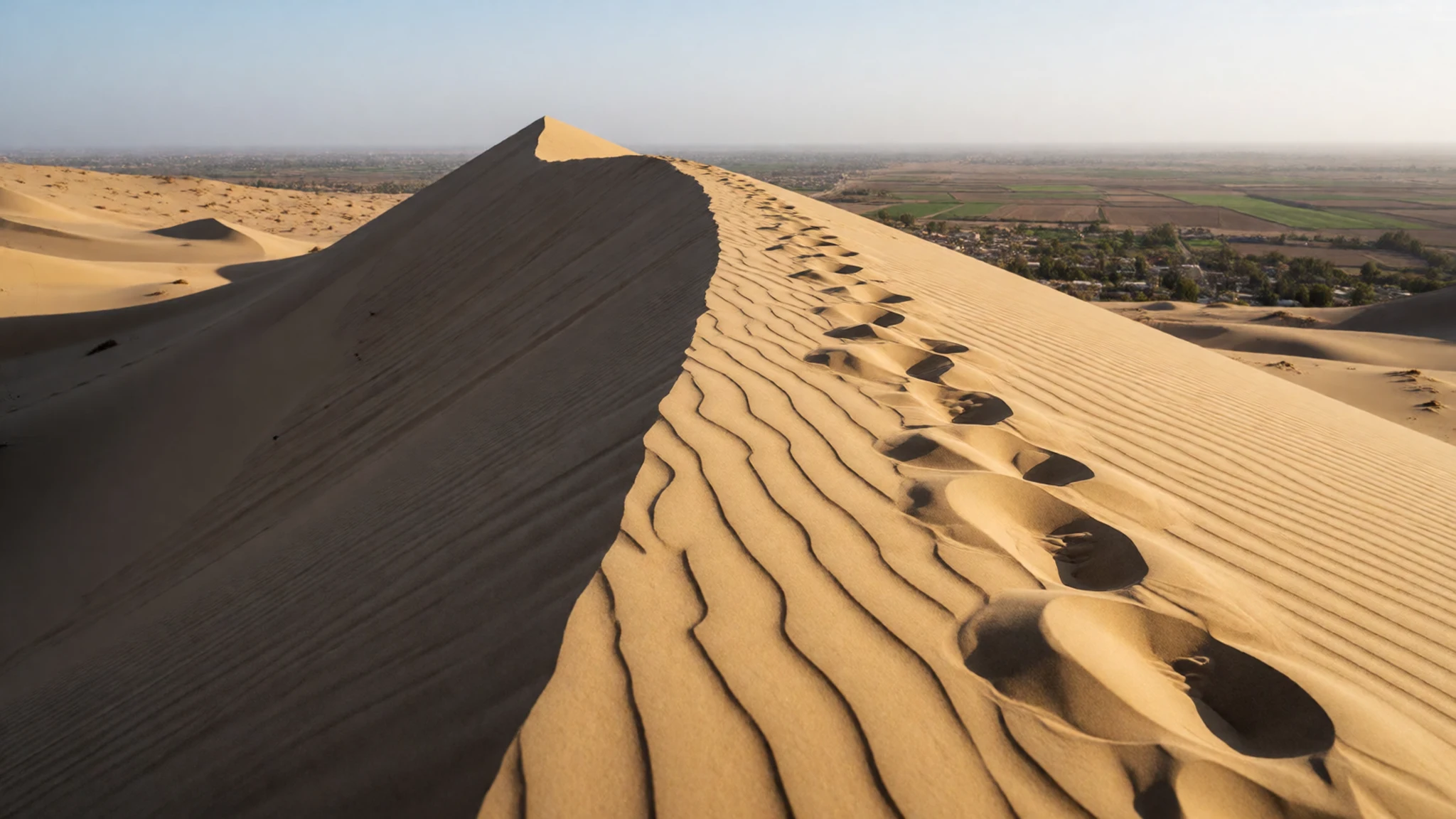
- Sandboarding and buggy rides — village streets and dune edges
Sandboarding is the hot cousin of snowboarding, and boards can be rented for a few soles on the village streets. Ask for a piece of wax as well, because it helps speed on the slopes. Dune buggies, known locally as areneros, run along the ridges and are usually booked through the hostels, and some hostels bundle them into room deals.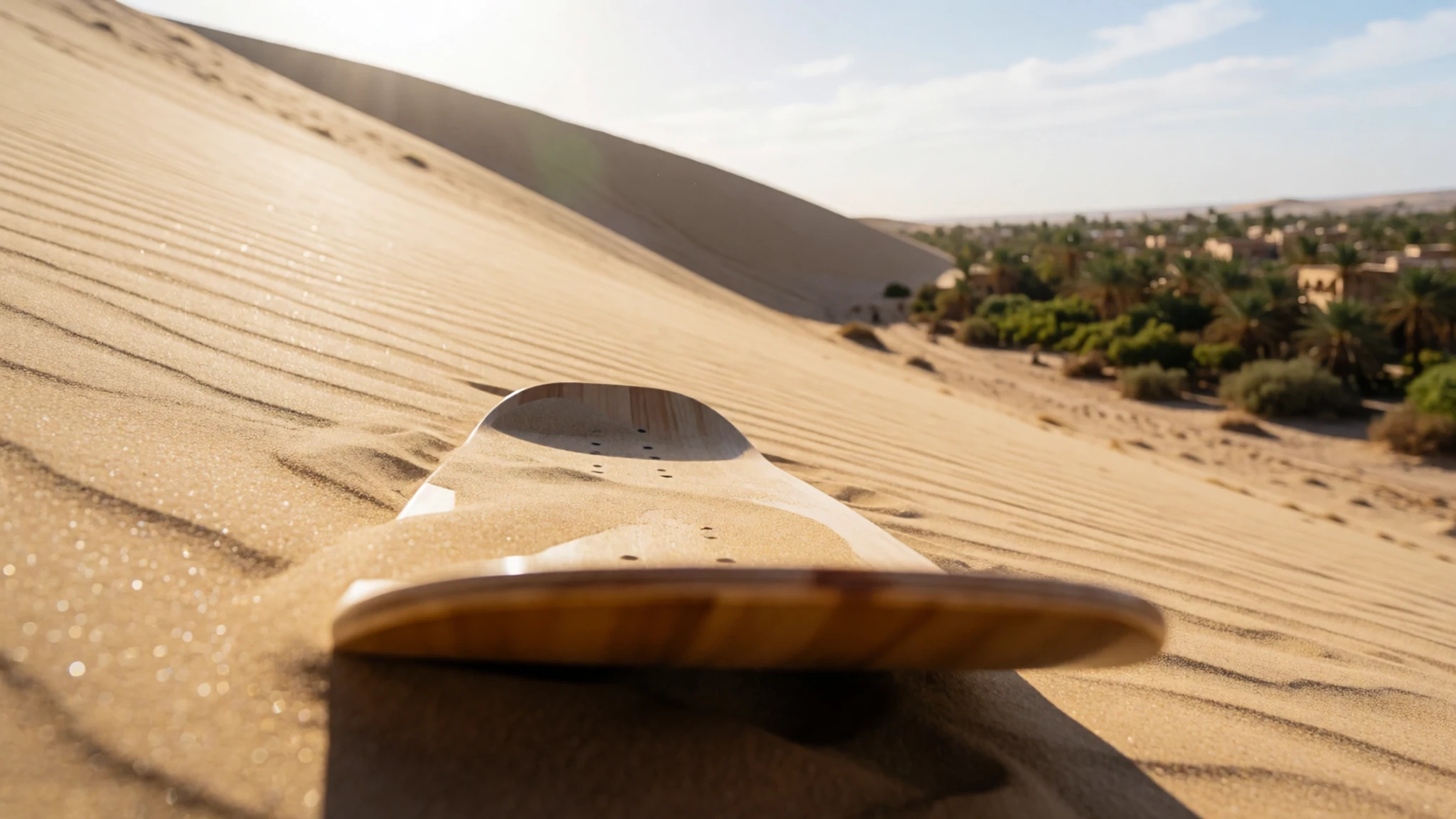
- Wineries and pisco bodegas in Ica — Ica city, reached by taxi
Ica's bodegas range from small family-run producers to large industrial plants that supply pisco across the country and abroad. Tours usually include the vineyards, fermentation and a tasting, and the smaller operations offer a more personal visit. Plan the trip for the morning, and check the official site or ask the hostel for current arrangements.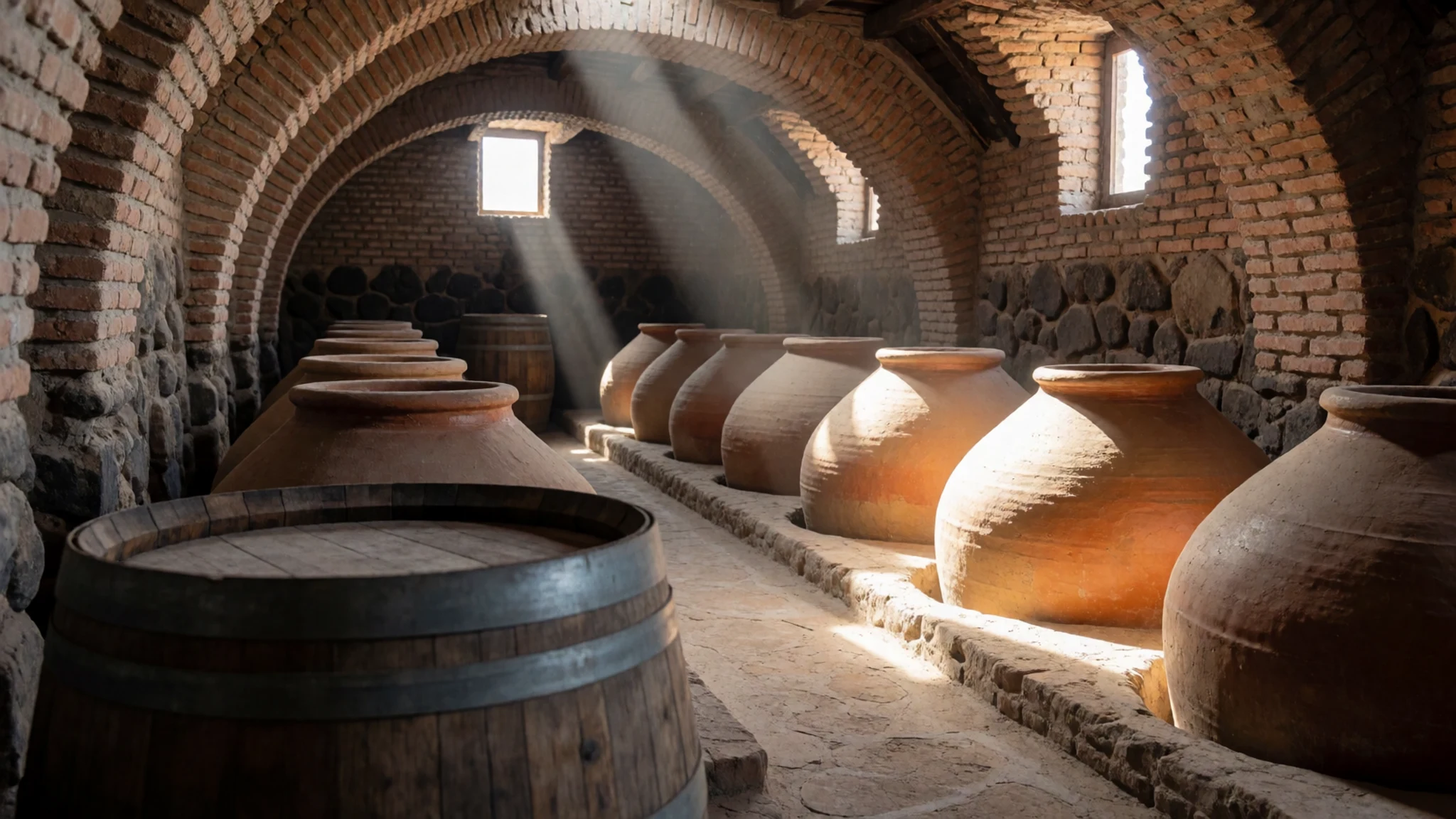
Culture
Huacachina is a village that runs on tourism, and its daily rhythm follows the visitors. Many of the people who work here come from the nearby city of Ica, and the oasis has been a favourite family destination for decades. More recently it has drawn younger travellers chasing sandboarding and dune buggy rides, so the atmosphere is relaxed, sociable and often loud after dark. Spanish is the everyday language, and English is common at the tour desks and hostel counters. Weekends bring local families back to the lagoon, so the shoreline is busiest then.
The lagoon is shared space, and people use it in different ways, from families paddling in shallow water to young travellers swimming past the shade structures. Tipping guides and drivers is common and well received, so carry small notes for the taxis that run at night. Photographs of people at work or at play should be asked for first, and the village's water supply, kept up by pumping, is worth treating with care. Ask before photographing local families at the lakeside, and keep the noise down once the hostels settle for the night.
What to wear
Huacachina has no dress of its own, so the textiles that matter here come from wider Peruvian weaving. Cotton and alpaca wool are the main fibres, and bright woven shawls, ponchos and belts are associated more with the Andes than with the desert coast. Ica's older textile heritage is tied to the Paracas culture, whose woven cloths are a major part of the region's history. Knitted hats, woven belts and embroidered bags are the textiles most visitors meet in the markets.
Day to day, people in the village dress for the heat: T-shirts, shorts, sandals and sun hats, with hostel staff and tour guides often in branded tops. Sunglasses are common, and nobody wears heavy layers in the afternoon.
For a visitor, light cotton or linen that covers the shoulders and arms works best against the sun and the blowing sand. Closed shoes or trainers make dune climbs far easier, while sandals suit the lagoon edge. Swimwear is fine at the water, but cover up when walking through the village or heading into Ica, and carry something to cover the shoulders for churches or town visits.
What to eat
- Thin-crust pizza — hostal restaurants around the lagoon
Thin-crust pizza is the easiest meal in the village, and hostal kitchens around the lagoon do it well. Personal sizes suit a light lunch, since the larger family pies cost noticeably more than the rest of the menu.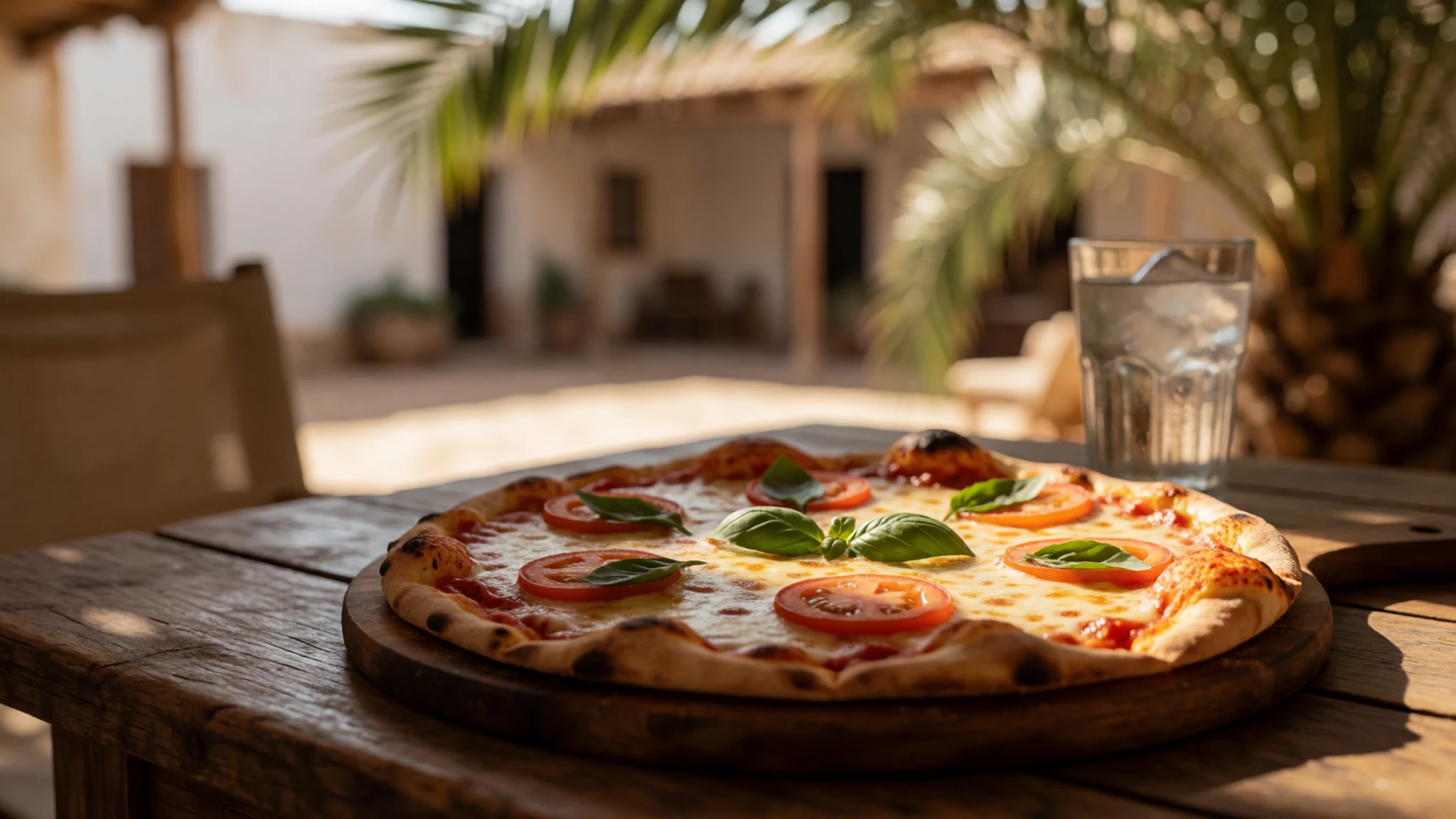
- Thai curry and falafel — a small café between the hostels
A small café between the village's hostels serves a flavourful Thai curry and falafel that many Israeli and Arab travellers recommend. Expect the rest of the menu to lean Peruvian, with a few ethnic dishes thrown in.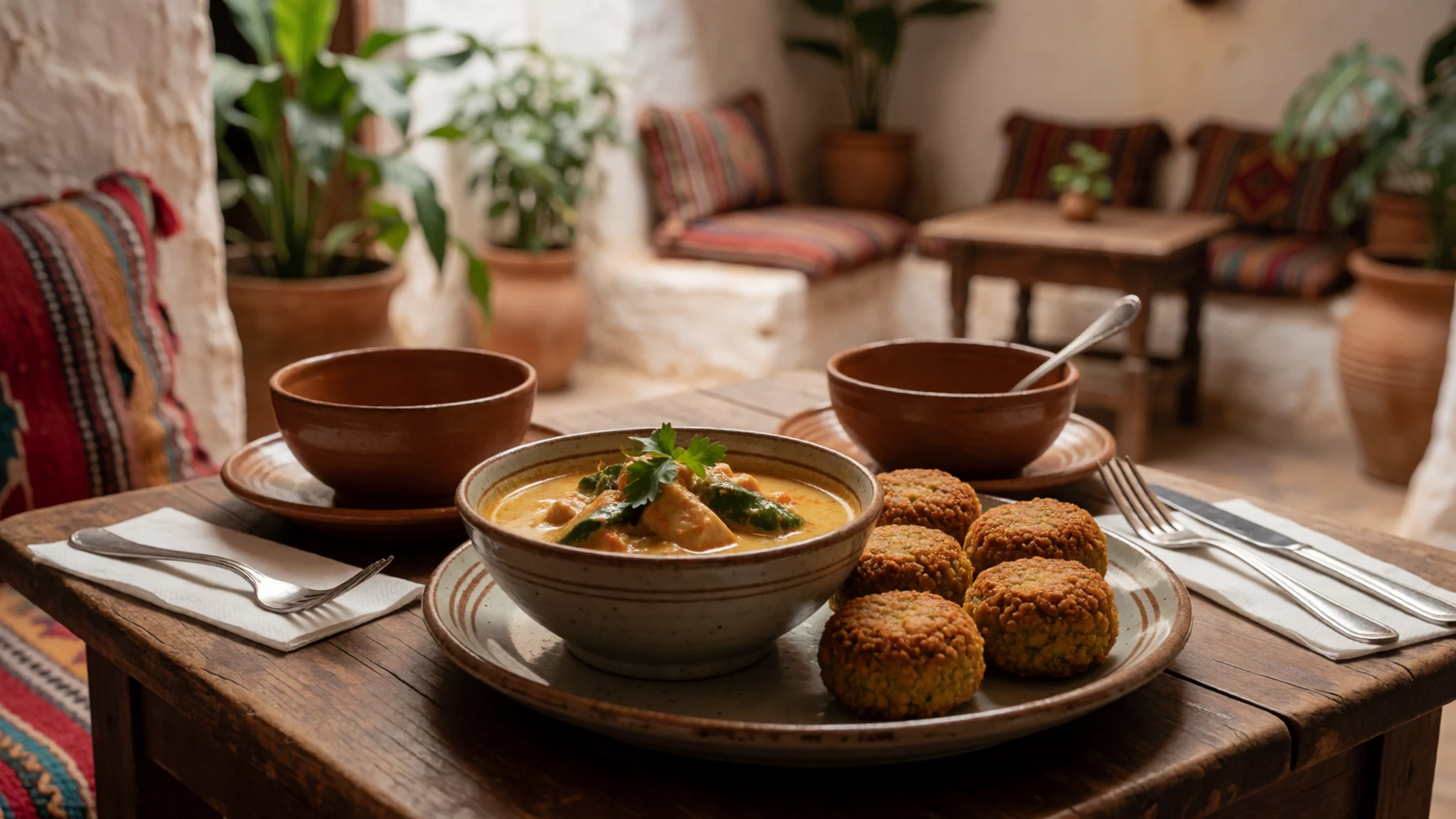
- Pisco sour — independent bars on the village lanes, not tied to a hotel
Pisco sour is the drink to order, made with the grape brandy distilled in the Ica bodegas. Independent bars sit alongside the hotel bars, and drinks generally cost more than in the city, so pace the rounds. - Wine and pisco tasting — family-run and large bodegas in Ica, reached by taxi
Bodegas in Ica grow their own grapes, crush them and make wine or pisco on site. Tours usually walk through the vineyards and fermentation rooms, then finish with small samples. Buying a bottle afterwards is welcomed but never compulsory.
Plan it
Best time. The coastal desert is dry and sunny for much of the year, so the main concern is heat in the middle of the day. Early morning and late afternoon are kinder for walking, boating and dune climbs. Check a seasonal forecast before fixing dates.
How long. 2–3
Getting there. Lima is the usual starting point. Buses run from Lima to Ica, and routes from Cusco also reach Ica. From Ica's bus station, a registered taxi covers the last few kilometres to the oasis.
Budget. mid
Tips
- Book sandboarding or buggy tours through established operators, and ask your hostel to recommend one
- Go early in the morning, when the sand is cooler and the lagoon is quieter
- Carry water, a hat and a scarf for sand and wind
- Carry cash in soles for taxis and small purchases
- Check the official site for the current lagoon and dune entry fee before you travel
Etiquette
- Use only a registered taxi with an official rooftop sign and driver documents on the dashboard
- Ask before photographing people, especially families at the lakeside
- Do not swim alone or after drinking
Nearby
Sources
- Wikidata Q1632715 (CC0)
- Wikipedia: Huacachina (rev 1374433967) (CC BY-SA 4.0)
- Wikivoyage: Huacachina (rev 5347064) (CC BY-SA 4.0)
- Huacachina en Ica, Perú (Gatol fotografia) (CC BY-SA 2.0)
- Huacachina oasis, Ica Region (Diego Delso) (CC BY-SA 4.0)
- Huacachina oasis, Ica, Peru (Diego Delso) (CC BY-SA 4.0)
- Relief in homage to Huacca China (Pierre André Leclercq) (CC BY-SA 4.0)
- Huacachina and surrounding dunes (Ingo Mehling) (CC BY 3.0)
- CCC No. 43, 1929: Huacachina, La Laguna Mágica (1) (The West Coast Leader) (Public domain)
- CCC No. 43, 1929: Huacachina, La Laguna Mágica (10) (The West Coast Leader) (Public domain)
- CCC No. 43, 1929: Huacachina, La Laguna Mágica (11) (The West Coast Leader) (Public domain)


