Horyu-ji
Horyu-ji, Japan
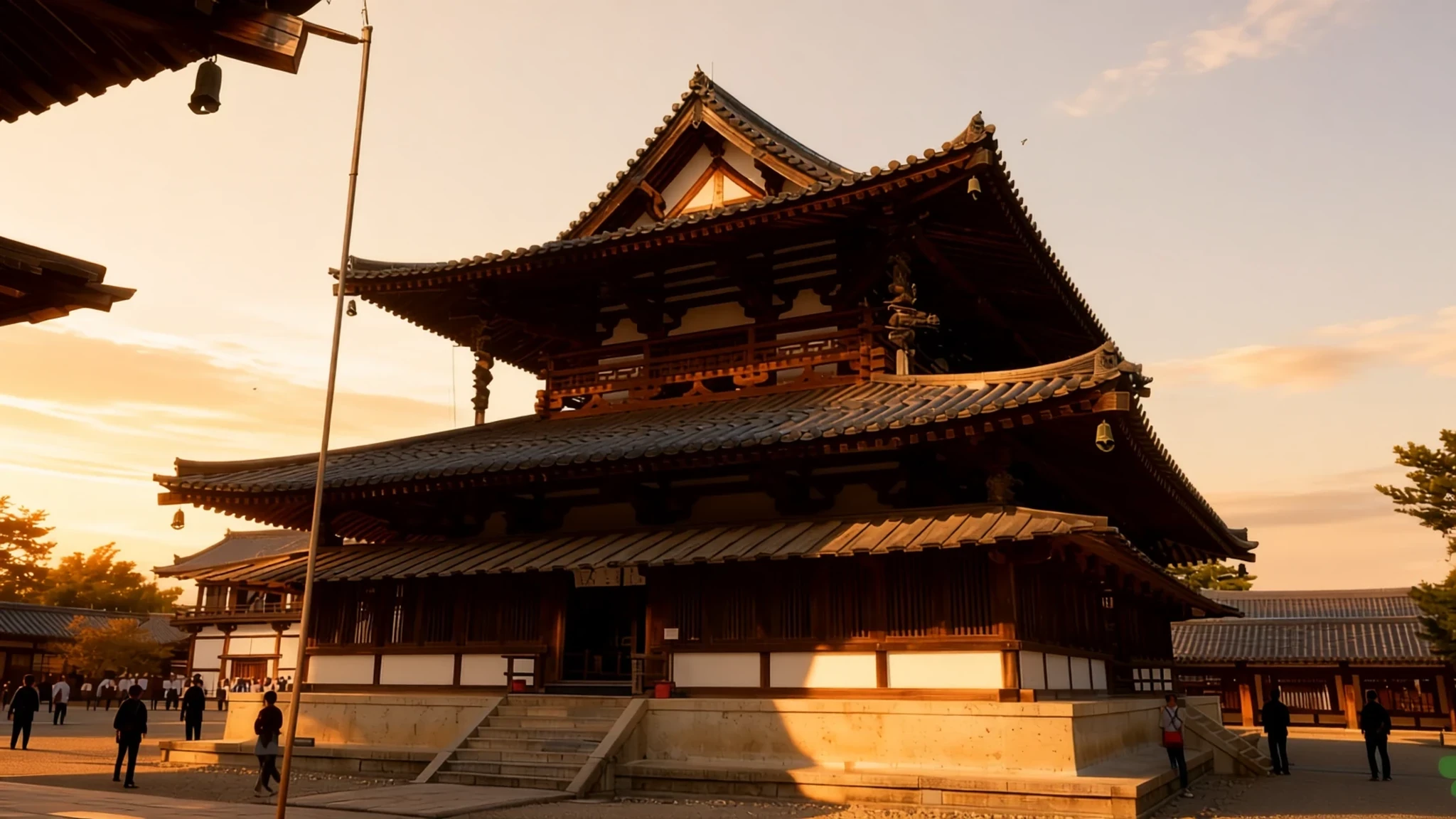
Hōryū-ji is one of Japan's oldest Buddhist temples, and its timber complex rewards a slow morning walk through the cloister.
The place
Hōryū-ji sits in Ikaruga, a quiet town in Nara Prefecture, a short distance south-west of the city of Nara. The temple was founded in 607 and is one of the oldest Buddhist sites in Japan, which gives it real weight for a place most visitors reach by a gentle walk past rice fields and tiled rooftops. The name means something like Temple of the Flourishing Dharma, and the complex was built to work as both a seminary and a monastery, so it was a place of study as well as worship.
The grounds fall into two main areas. The Western Temple, known as Sai-in, holds the older core: the gates, the Golden Hall, the five-storey pagoda and the lecture buildings, arranged inside a covered cloister. The Eastern Temple, Tō-in, lies to the east and holds halls added later for the veneration of Prince Shōtoku. Moving between the two shows how the site grew over centuries rather than being planned at once.
The buildings are the draw. Many of the gates and halls carry National Treasure or Important Cultural Property status, and the Golden Hall and pagoda are often photographed from outside. Stone, timber and tile dominate. The scale is modest but the proportions are carefully judged, and the wood has weathered to a soft grey-brown in places.
Practically, expect a calm site on weekday mornings and a busier one by midday when tour groups arrive. Opening hours and admission change, so the official site is the place to check them. Summer heat is real and the wide approach offers little shade, so bring water and a hat.
Its story
Hōryū-ji was founded by Prince Shōtoku, a regent who did much to promote Buddhism at the Yamato court. The first temple, known to historians as Wakakusa-garan, was largely complete by 607 and was dedicated to Yakushi, the Buddha of healing, partly as a memorial to the prince's father. Excavations in the twentieth century also found traces of the prince's palace beneath what is now the Eastern Temple, which suggests the site was tied to his household from the start.
Disaster struck in 670, when lightning destroyed the early buildings. The complex was rebuilt on a slightly different alignment, and many of the structures standing today belong to that rebuilding. Later centuries brought repairs and reconstructions, and the surviving buildings have been cared for through many hands since.
Veneration of the prince grew considerably in medieval Japan. During the Kamakura period it became central to the temple's life, with memorial ceremonies held in his honour and new halls in the Eastern Temple dedicated to him as an incarnation of the bodhisattva Kannon. By the end of the Tokugawa period the temple was receiving regular support from the shogunate, which kept its finances steady.
The modern chapter matters just as much. In 1949 a fire broke out during repair work on the Golden Hall, badly damaging it and destroying a rare Asuka-period mural. The loss shook the country, and 26 January is now marked as fire prevention day for cultural properties. In 1993 the temple, together with Hokki-ji, became one of Japan's first World Heritage Sites.
What to see
- Nandaimon (South Great Gate) — Southern approach, Western Temple
The grand southern gate is the first structure most visitors meet on the approach. It is a National Treasure, and its solid, slightly weighty form suggests a gate built to announce a serious place of study. Pause to take in the roof lines and the wide gravelled forecourt before going in, because the rest of the site opens up gradually through a sequence of gates.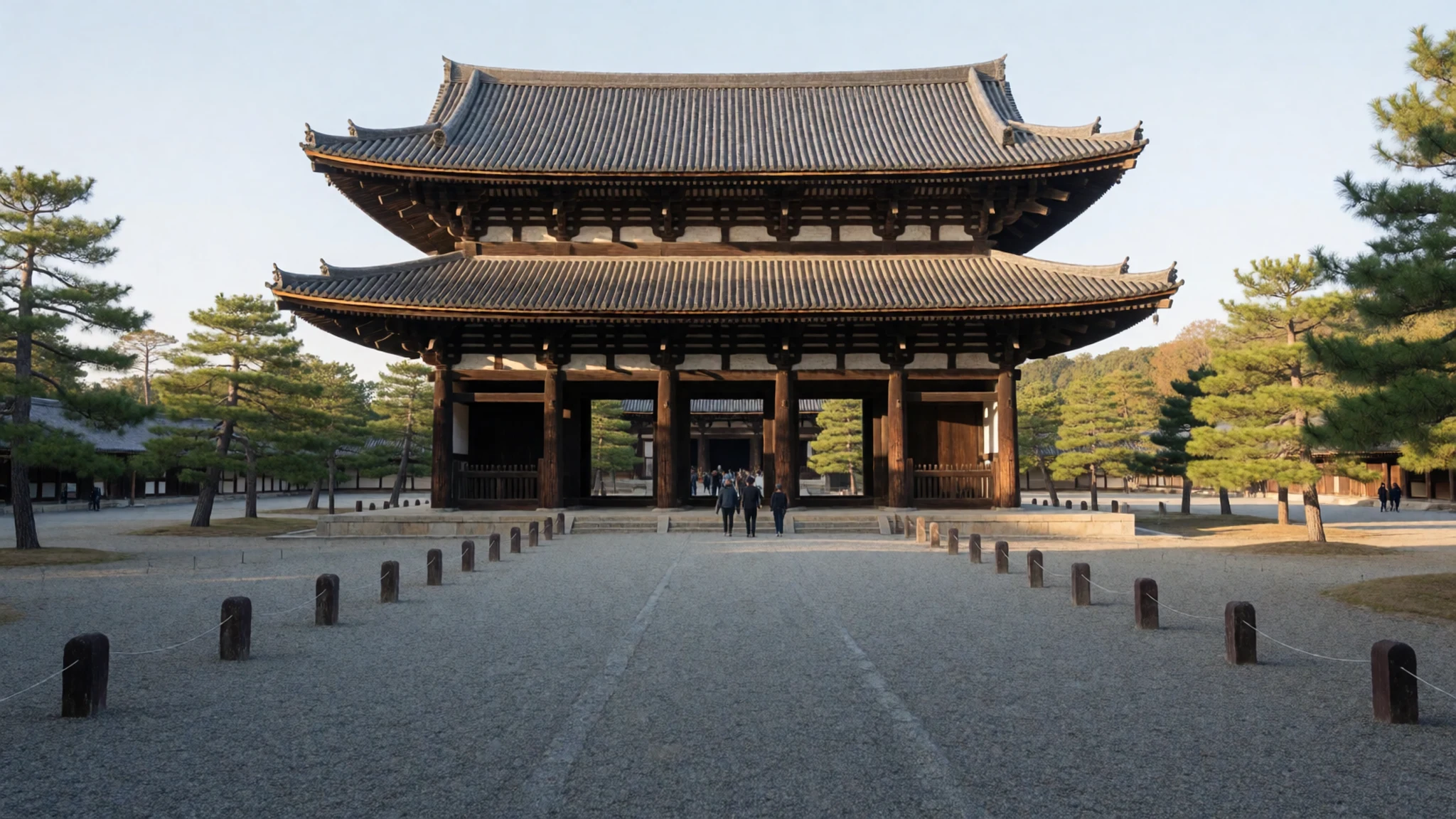
- Chūmon (Central Gate) — Central axis, Western Temple
Chūmon marks the threshold into the inner sanctum, where the covered cloister begins. Its guardian figures, the Kongō-rikishi standing on either side, are among the oldest of their kind in Japan, and their fierce faces repay a close look. They sit behind protective barriers, so view them from the designated spot.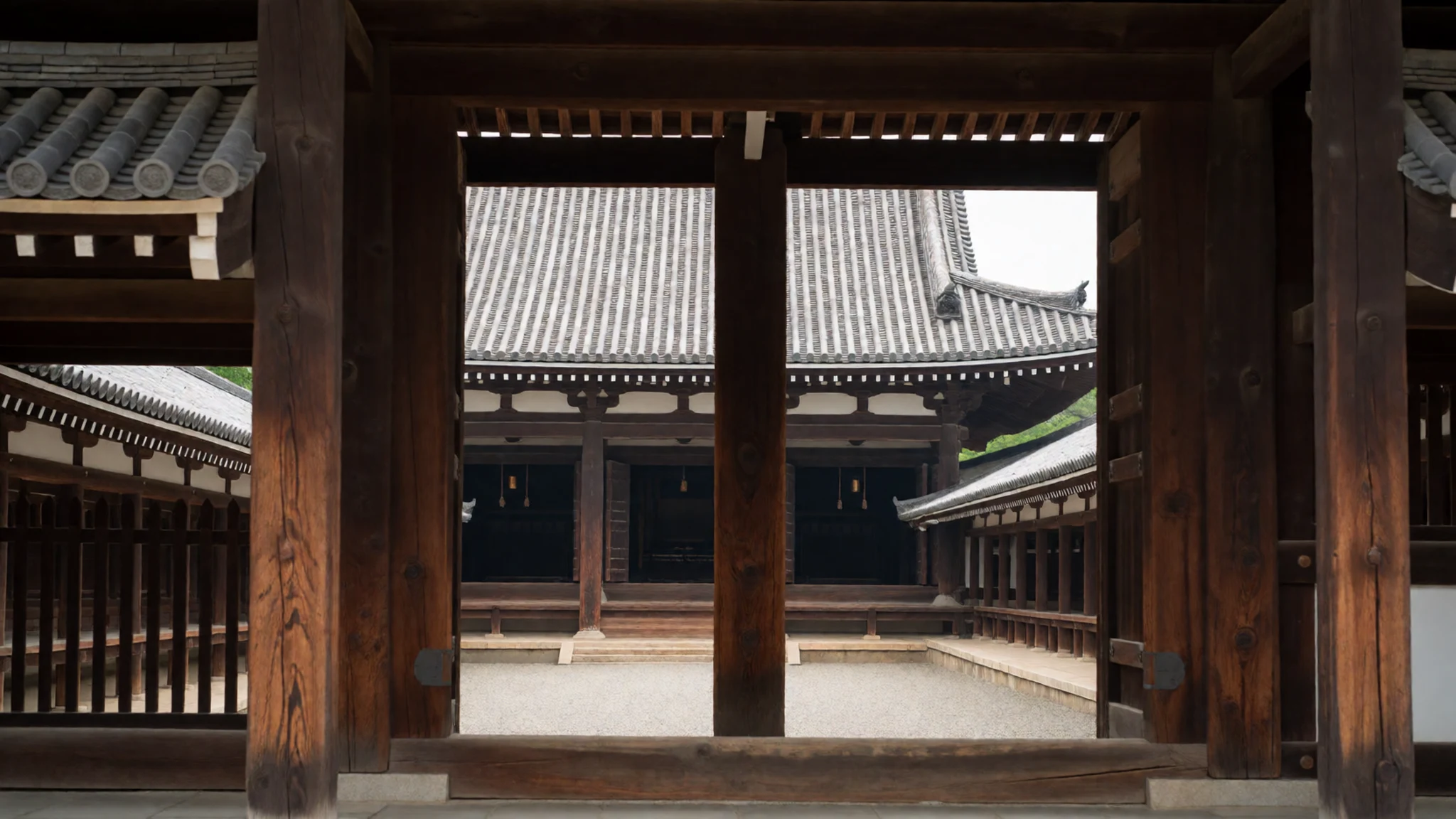
- Kondō (Golden Hall) — Inside the cloister, Western Temple
The Golden Hall is the heart of the Western Temple and the building most associated with the site's age. Its squat, sturdy form looks different from the taller halls of later centuries. Inside are important statues and wall paintings, although the 1949 fire damaged the original murals. Expect a queue at busy times, and allow time to move slowly around it.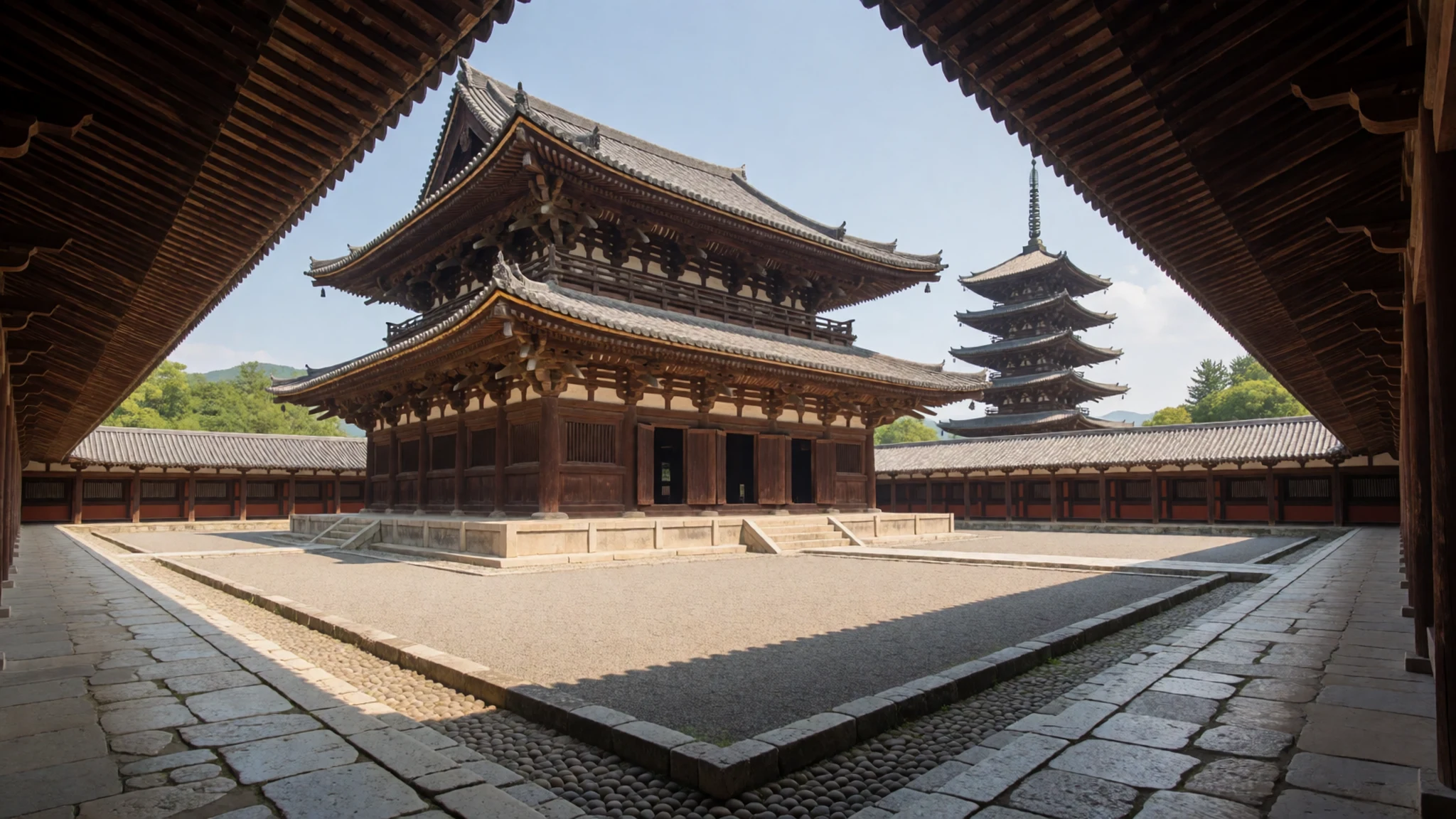
- Gōjūnotō (Five-storey Pagoda) — Inside the cloister, beside the Golden Hall
The five-storey pagoda is often described as the oldest of its type in Japan, and it became a model that later temples copied widely. Its tiers step back gracefully as they rise. Photograph it from the cloister or the open courtyard, and keep the walkway clear for people moving between halls.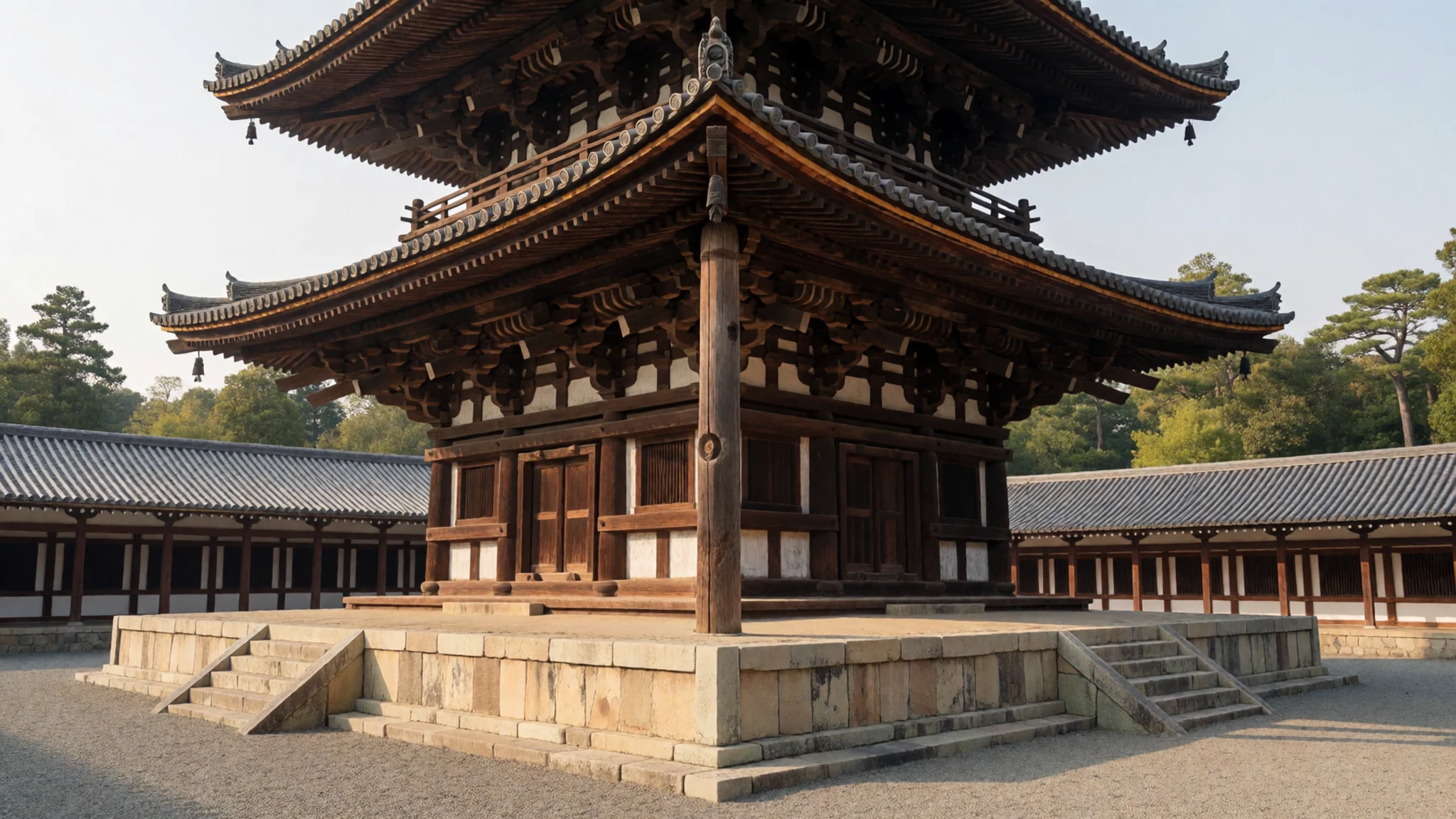
- Daikōdō (Great Teaching Hall) — North side of the cloister, Western Temple
Built on the north side of the cloister, the Great Teaching Hall is one of the largest buildings on the site and was used for lectures and ceremonies. Its size gives a sense of the monastic life that once filled these courtyards. Look for the proportions of the timber frame, which are easy to miss from the path.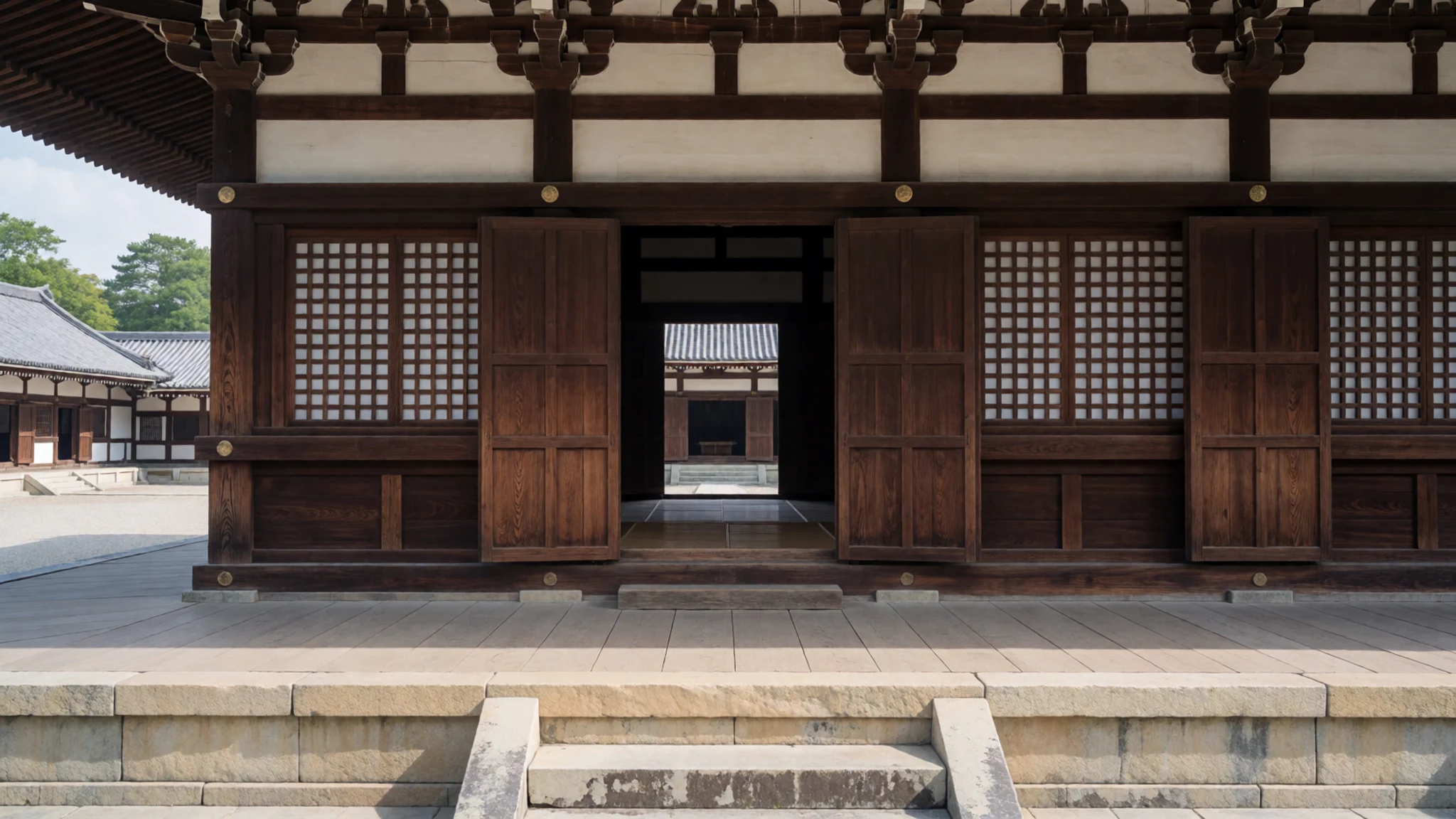
Culture
Hōryū-ji is still an active place of worship and training, not only a museum of old buildings, and that shapes how visitors should behave. The monks and students who live and study here keep to daily routines of prayer and learning, so keep voices low, especially inside the cloister and near halls where services may be held.
Japanese Buddhist temples treat the sacred and the everyday with care. Visitors usually walk the inner areas quietly and pause at the main gates to bow briefly. Many halls ask visitors to remove footwear where the floor rises, and where you see a step with slippers or a sign, follow it. Photography rules can differ from building to building, so check signs before raising a camera inside any hall; photographing the exteriors is generally fine.
Tipping is not expected in Japan, and bargaining would be out of place at a temple. Remove your shoes wherever a step up or slipper rack marks the entrance to a hall, and never walk onto a raised wooden floor in outdoor footwear.
What to wear
At Hōryū-ji the traditional dress is the kimono, a wrapped garment with a sash called an obi. Formal kimono use silk and are usually reserved for weddings, ceremonies and New Year. The lighter yukata, made from cotton, is the summer version and is worn to festivals and in the evening. Buddhist clergy wear plain robes in cloth such as silk or cotton, with the kesa, a stole that marks their rank and lineage. These textiles are most visible at ceremonies rather than on the everyday street.
What people wear now is largely Western-style clothing. Office workers, students and shoppers dress simply and neatly, and many are in dark or muted colours. Kimono appear mostly for festivals, coming-of-age days and weddings, and some visitors rent them in the old towns for photographs.
For a visit, dress for the weather and the walking. Summer is hot and humid, so choose loose, breathable cotton or linen and carry a hat, since there is little shade on the wide approach. In spring and autumn a light layer is enough. Modest clothing suits a working temple, so cover the shoulders and knees if you can. Above all, wear shoes that slip on and off easily, because you will remove them at halls and the gravel and timber paths are easy to walk on in comfortable footwear.
What to eat
- Kakinoha-zushi (persimmon-leaf sushi) — Food shops and station kiosks in Nara and nearby towns
A regional speciality of the Nara area, this pressed sushi is wrapped in persimmon leaves that give it a faint, fresh aroma. The fish and rice are compacted into a block and then cut into neat pieces. It travels well, which is why you will find it sold as a snack. Buy it fresh from a shop rather than a long-stored box.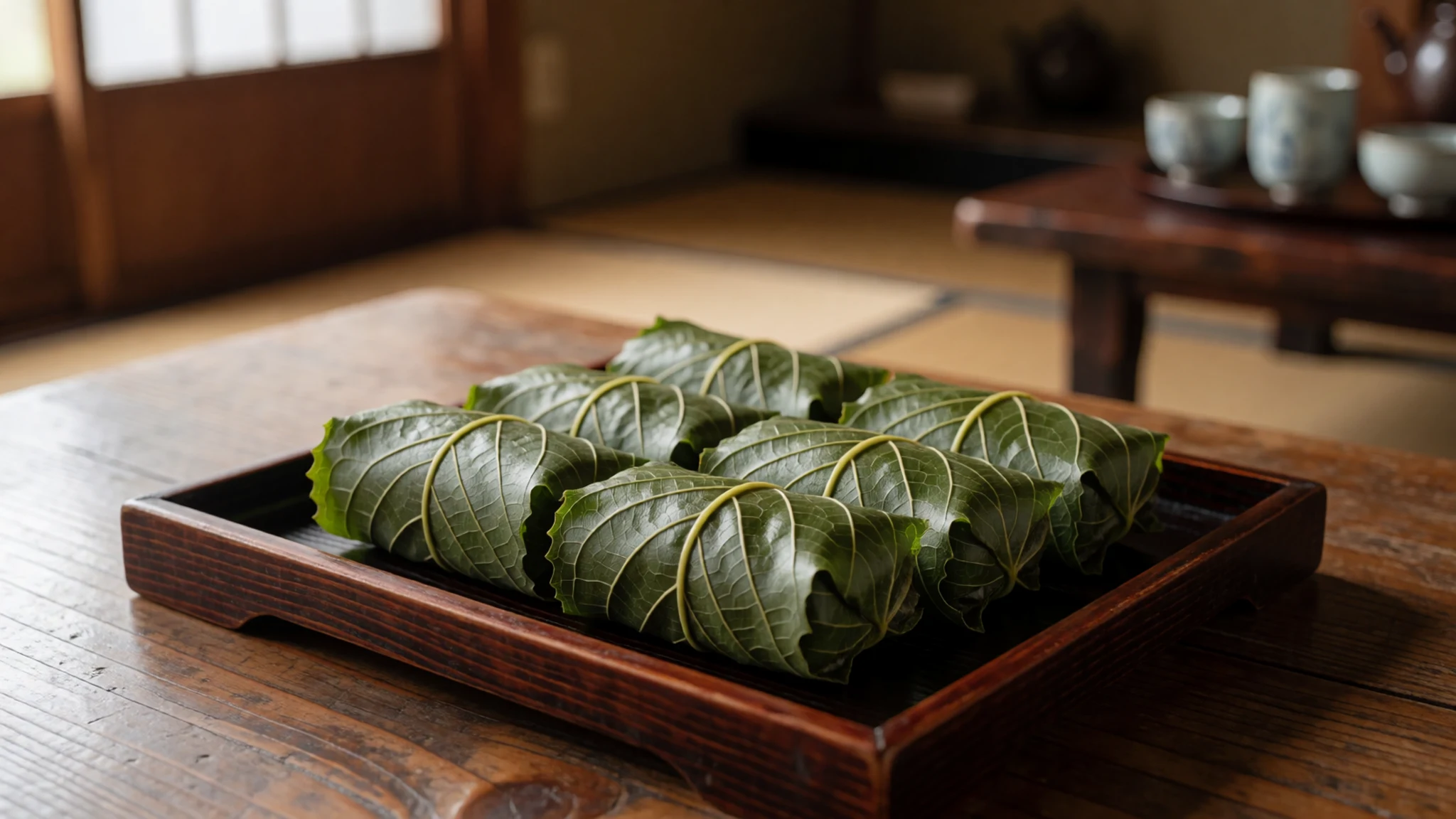
- Kusa-mochi (mugwort rice cake) — Traditional sweet shops near the station and the temple approach
These soft rice cakes are flavoured with mugwort and often filled with sweet bean paste. The green colour and gentle herbal taste make them a good accompaniment to tea. They are a traditional sweet with a long history in the region and are best eaten on the day they are made.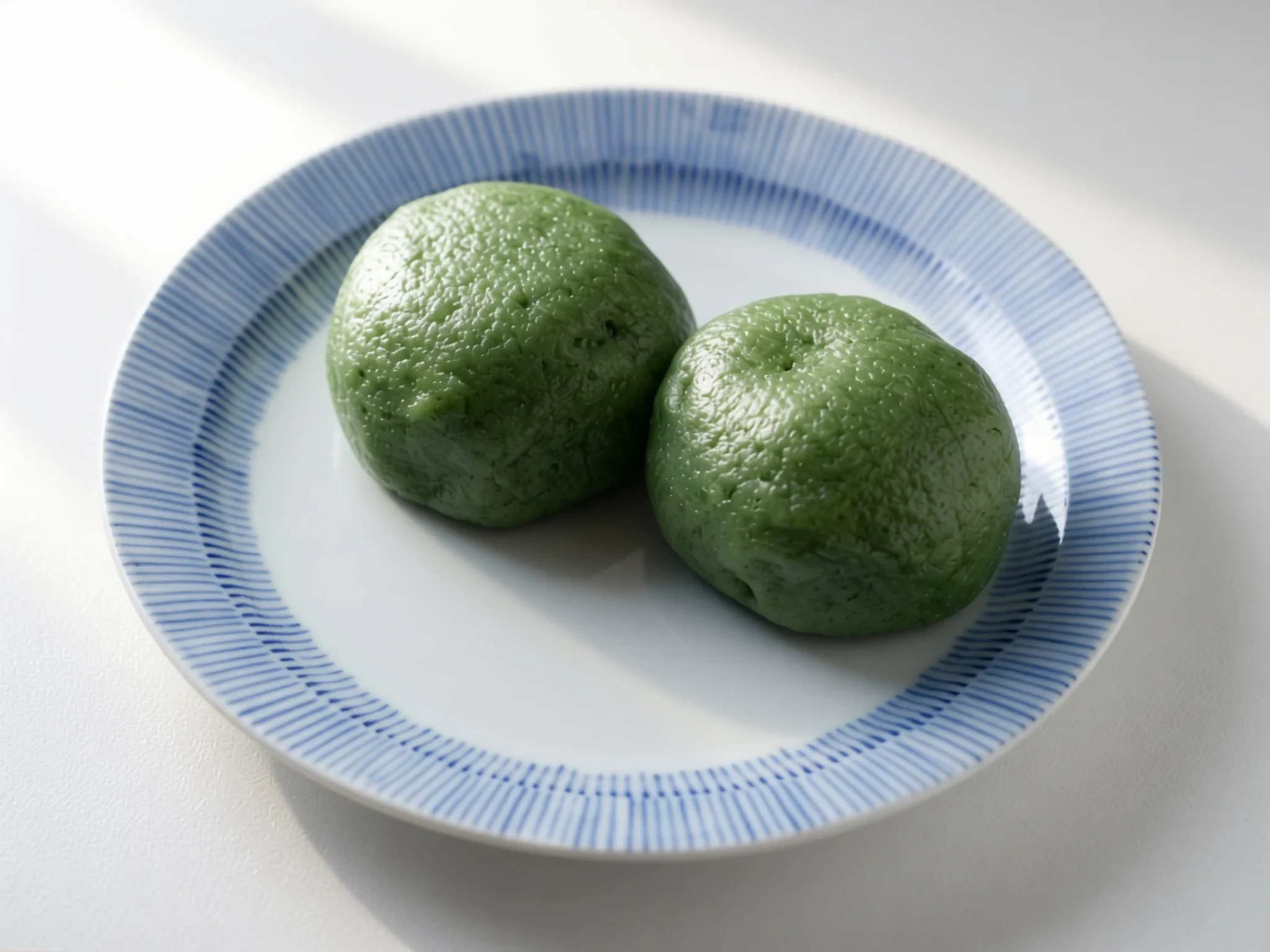
- Shōjin-ryōri (temple vegetarian meal) — Temple-style restaurants in the old town of Nara
Shōjin-ryōri is the vegetarian cuisine developed in Buddhist temples, built on tofu, seasonal vegetables, sesame and simple broths. It avoids meat and fish and uses restraint in seasoning. Several restaurants in Nara serve set meals in this style, and a set lunch is a gentle way to end a day of walking.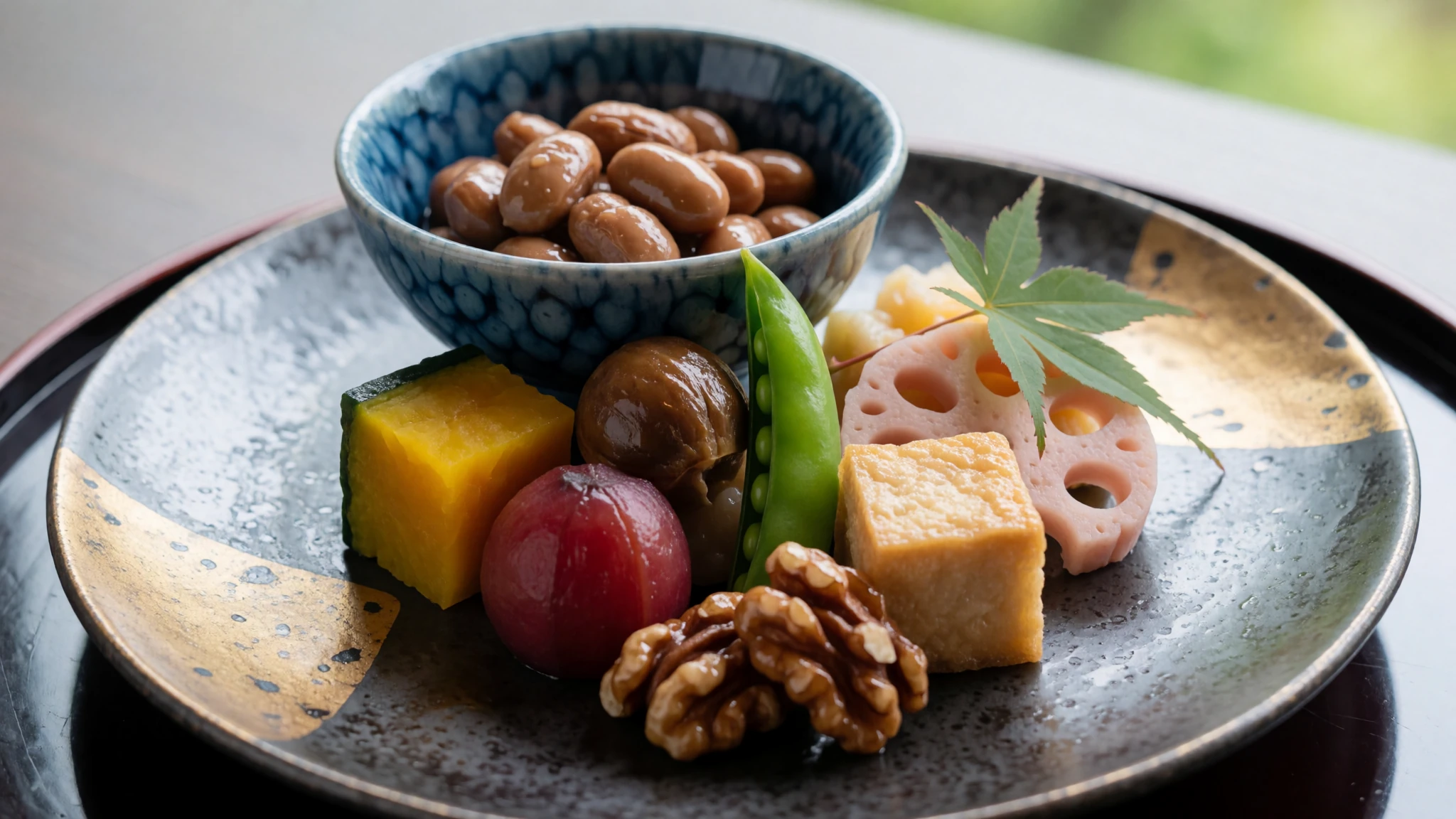
- Sōmen (cold wheat noodles) — Noodle shops on shopping streets and near main stations
Thin wheat noodles are served chilled in summer, usually with a dipping broth and garnishes such as spring onion or grated ginger. They are light and quick, which suits the heat between temple visits. Many small noodle shops serve them only in the warmer months, so look for signs that show a seasonal menu.
Plan it
Best time. Spring (March and April) and November are the most comfortable for walking the open grounds, while October is still hot and wet. Summer is hot and humid, and the rainy season makes the exposed approach less pleasant.
How long. 1–2
Getting there. Take the JR Yamatoji line from Osaka or Nara to JR Horyuji station, then walk about 20 minutes to the temple, or catch a local bus from in front of Ōji station. Buses also run direct from Nara, which is simpler if you are carrying luggage.
Budget. low
Tips
- Check the official site for current opening hours and admission before you go
- Go early on weekdays for the quietest walk around the cloister
- Carry cash for small purchases, as card acceptance varies at smaller sites
- Bring water and a hat, because the approach has little shade in summer
- Combine the visit with Nara, which makes an easy base for the day
Etiquette
- Remove shoes wherever a raised floor or slipper rack marks a hall
- Keep voices low in the cloister and near halls
- Check signs before photographing inside any building
Nearby
Sources
- Wikidata Q261932 (CC0)
- Wikipedia: Hōryū-ji (rev 1381146295) (CC BY-SA 4.0)
- Wikivoyage: Horyuji (rev 5311123) (CC BY-SA 4.0)
- 663highland, Inner Gate and Five-storied Pagoda of Hōryū-ji (CC BY 3.0)
- 663highland, Golden Hall and Five-storied Pagoda of Hōryū-ji (CC BY 3.0)
- Bamse, Thousand-armed Kannon at Sanjūsangen-dō (CC BY 3.0)
- 663highland, Inner Gate of Hōryū-ji (CC BY 3.0)
- Vesna Vujicic-Lugassy, Buddhist Monuments in the Horyu-ji Area (122502) (CC BY-SA 3.0 igo)
- Vesna Vujicic-Lugassy, Buddhist Monuments in the Horyu-ji Area (122508) (CC BY-SA 3.0 igo)
- 663highland, Belfry of East Precinct of Hōryū-ji (CC BY 3.0)
- 663highland, Five-storied Pagoda of Hōryū-ji (CC BY 3.0)


