Heraclea Minoa
Heraclea Minoa, Italy
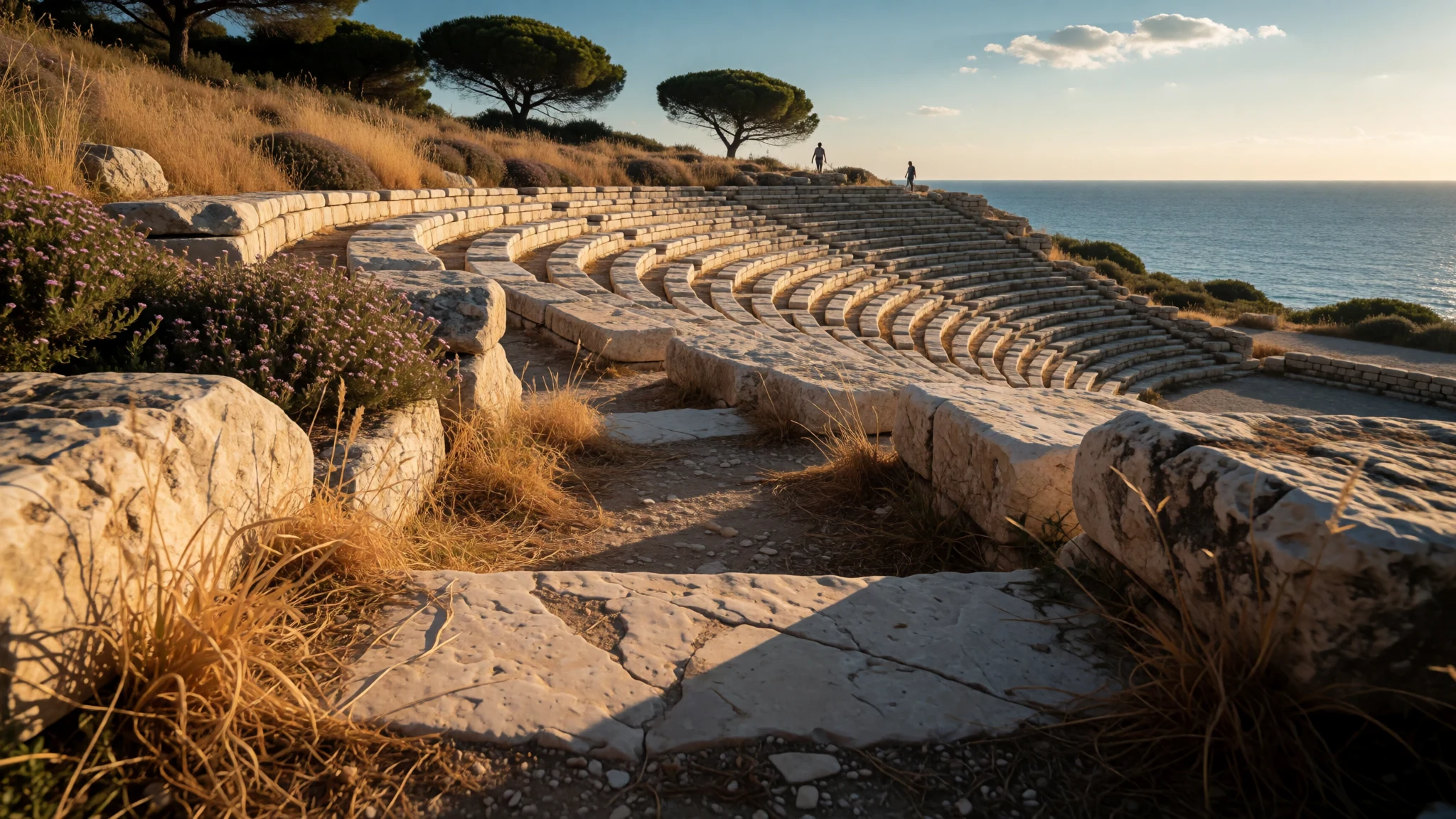
Heraclea Minoa pairs a Greek theatre and quiet ruins above the Sicilian coast with a pine-shaded walk down to an easy, uncrowded beach.
The place
Heraclea Minoa (Italian: Eraclea Minoa) is an ancient Greek site on the southern coast of Sicily, set on high ground above the sea where the river Platani, called the Halycus in antiquity, runs out into the Mediterranean. It belongs to the comune of Cattolica Eraclea, roughly 25 km west of Agrigento, and a small modern seaside settlement beside it uses the same name. The city was part of Magna Graecia, the cluster of Greek colonies around southern Italy and Sicily, and Wikidata classes it as a polis and an Ancient Greek archaeological site. What survives is not a standing town but a landscape of excavated pieces: a semicircular theatre, stretches of defensive wall and the footings of houses, spread over open ground with the coast in view. Part of the theatre is kept under cover to protect it. Below the ruins, a path leads through pine woods to a long, calm beach, so a day here can be half archaeology and half swimming. It is a quiet place. Crowds are thin, shade among the ruins is scarce, and services outside the bathing season are limited. Most people use it as a pause on the coastal route between Sciacca and Agrigento. The regional heritage authority keeps the official page for the site, and that is where to check opening arrangements before going: http://www.regione.sicilia.it/beniculturali/dirbenicult/database/page_musei/pagina_musei.asp?ID=35&IdSito=9
Its story
Heraclea Minoa carries two names because it carries two legends. In one, Heracles beat a local hero, Eryx, in a wrestling match and won the right to western Sicily for his descendants. In the other, Minos of Crete chased the craftsman Daedalus across the sea, came ashore at the river mouth and founded a town called Minoa; a variant gives the founding to his followers after his death. Archaeology tells a plainer tale. Burials from the cemetery point to a foundation in the sixth century BC by settlers from Selinus (modern Selinunte), who wanted a foothold at the eastern edge of their territory. Akragas, the rival city to the east, coveted the Platani valley as well, so the little town was contested from the start. Around 510 BC the Spartan prince Dorieus arrived in Sicily to claim land he believed his ancestor Heracles had promised, and died fighting Carthaginians and their allies. Euryleon, the one leader to escape, took over Minoa, and the town probably gained the name Heraclea at that point, with Minoa kept beside it to tell it apart from other places of the same name. Control passed between several powers in the following centuries. The town later became Roman and was finally abandoned around the start of the 1st century AD. The theatre and walls visitors see today belong to the later, Hellenistic city.
What to see
- The Hellenistic theatre — Archaeological area
The semicircular theatre is the image most people carry away from Heraclea Minoa. Its seating curves towards the sea, and part of it is covered to protect the stone from weather and wear. Climb to the upper rows for the coastline, then walk the rim to see how the curve was shaped into the slope.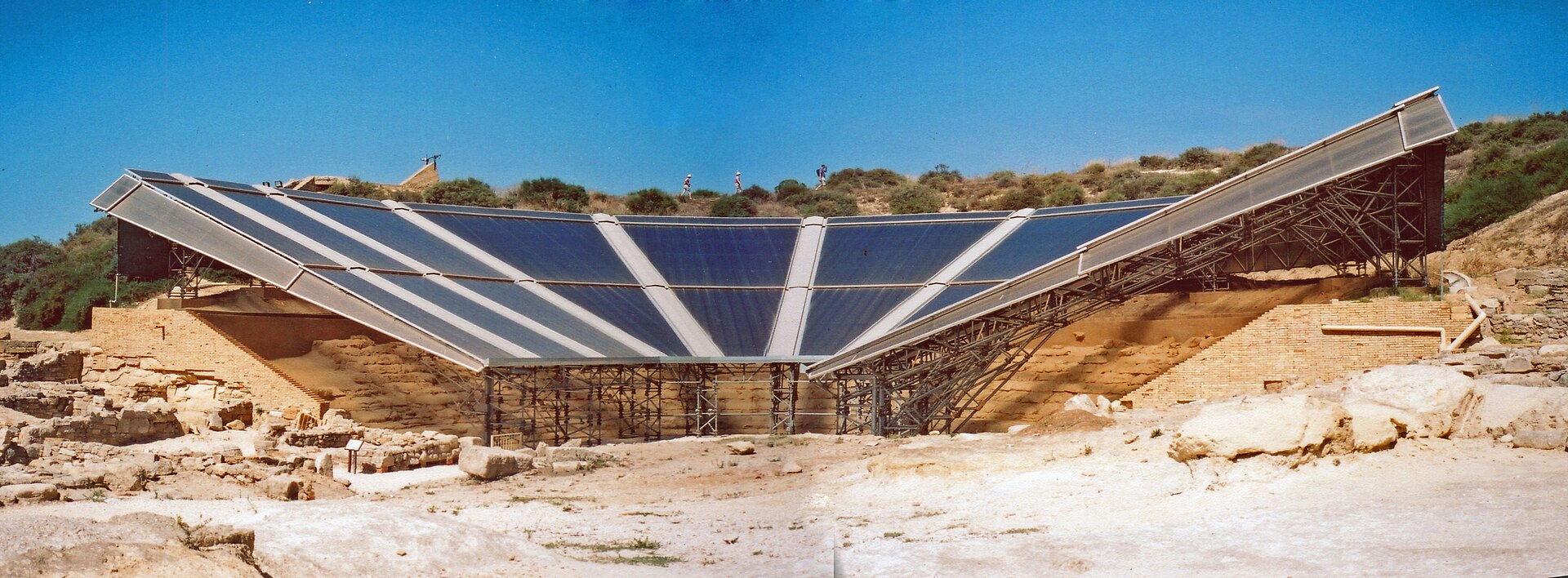
- The residential quarter — Archaeological area
Low walls and room outlines mark where ordinary households once lived. It is easy to walk past them, but a slow loop gives a sense of street lines, doorways and the scale of private life in a small colonial town. Look for the house plans that have been tidied and labelled for visitors.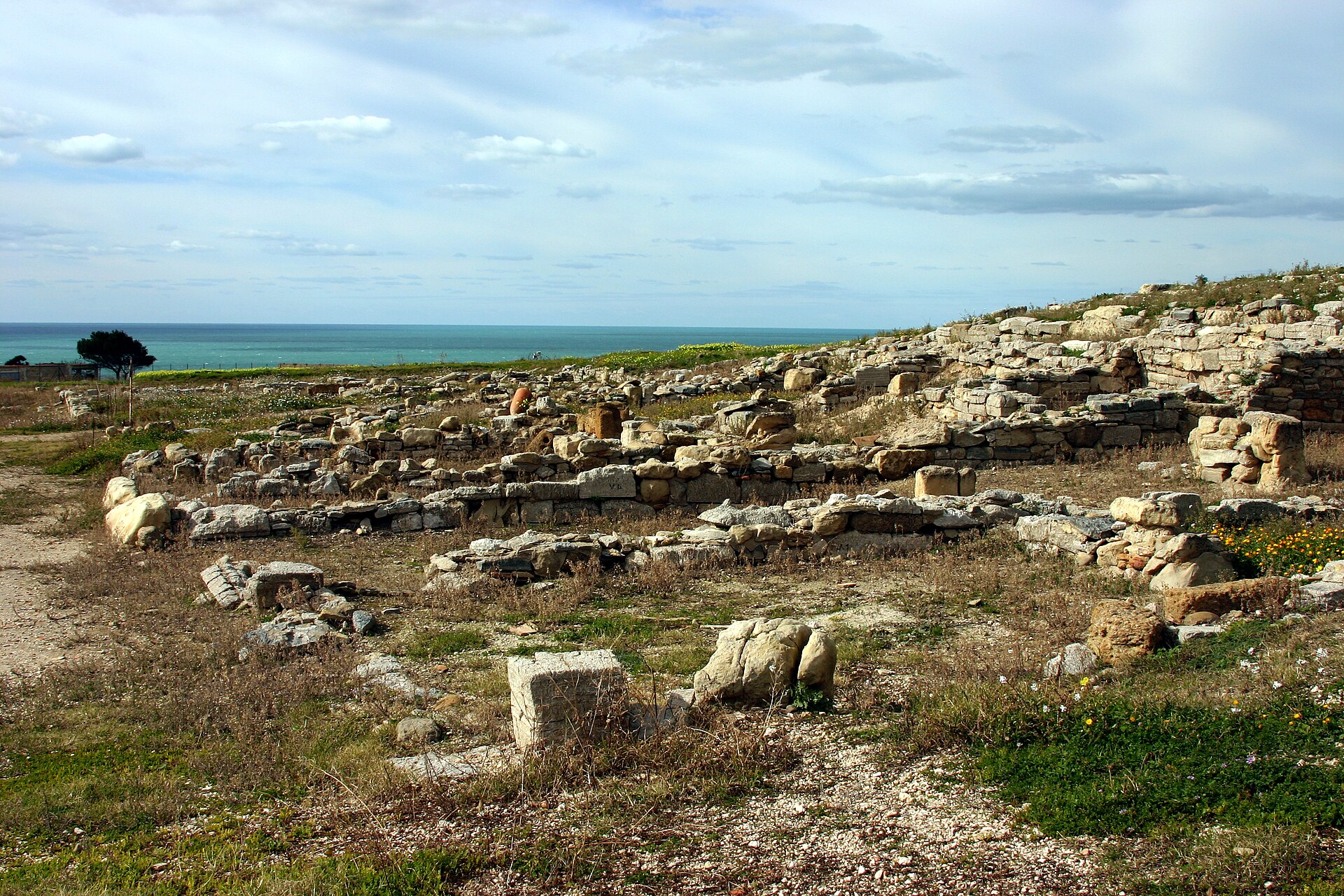
- The defensive walls — Edge of the archaeological area
Stretches of the city wall survive along the edge of the site, built to guard a town that sat between rival powers. They are modest in height, but the line of the stones shows how the defences followed the ground. Early morning light on the masonry suits photography.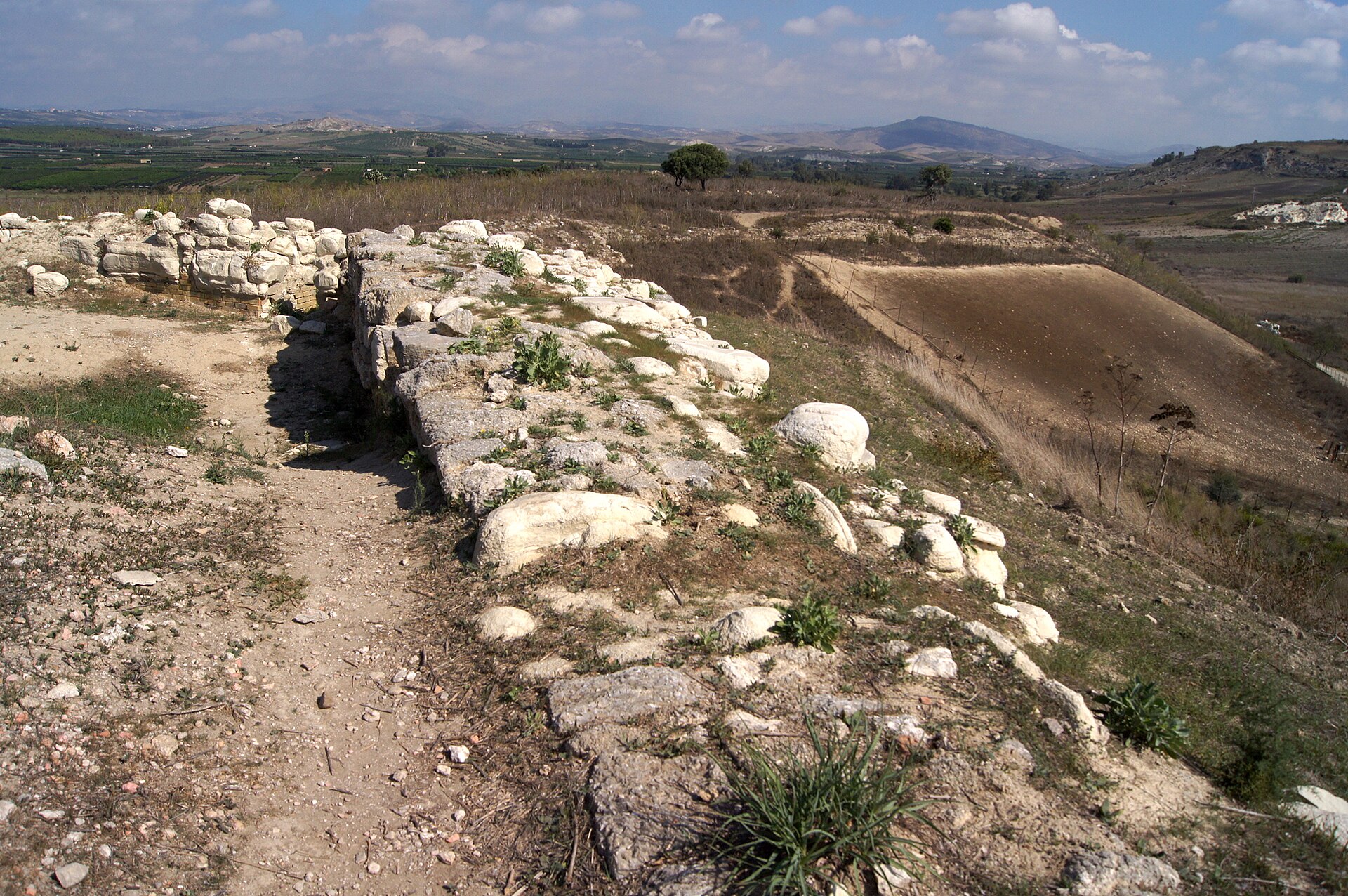
- The wider view of the excavations — Archaeological area
From a higher point, the separate pieces of the site fall into place: theatre, houses and walls laid across open ground, with the sea behind. This is the best moment to understand how a small Greek outpost used a headland, and how far the town sat from the river mouth.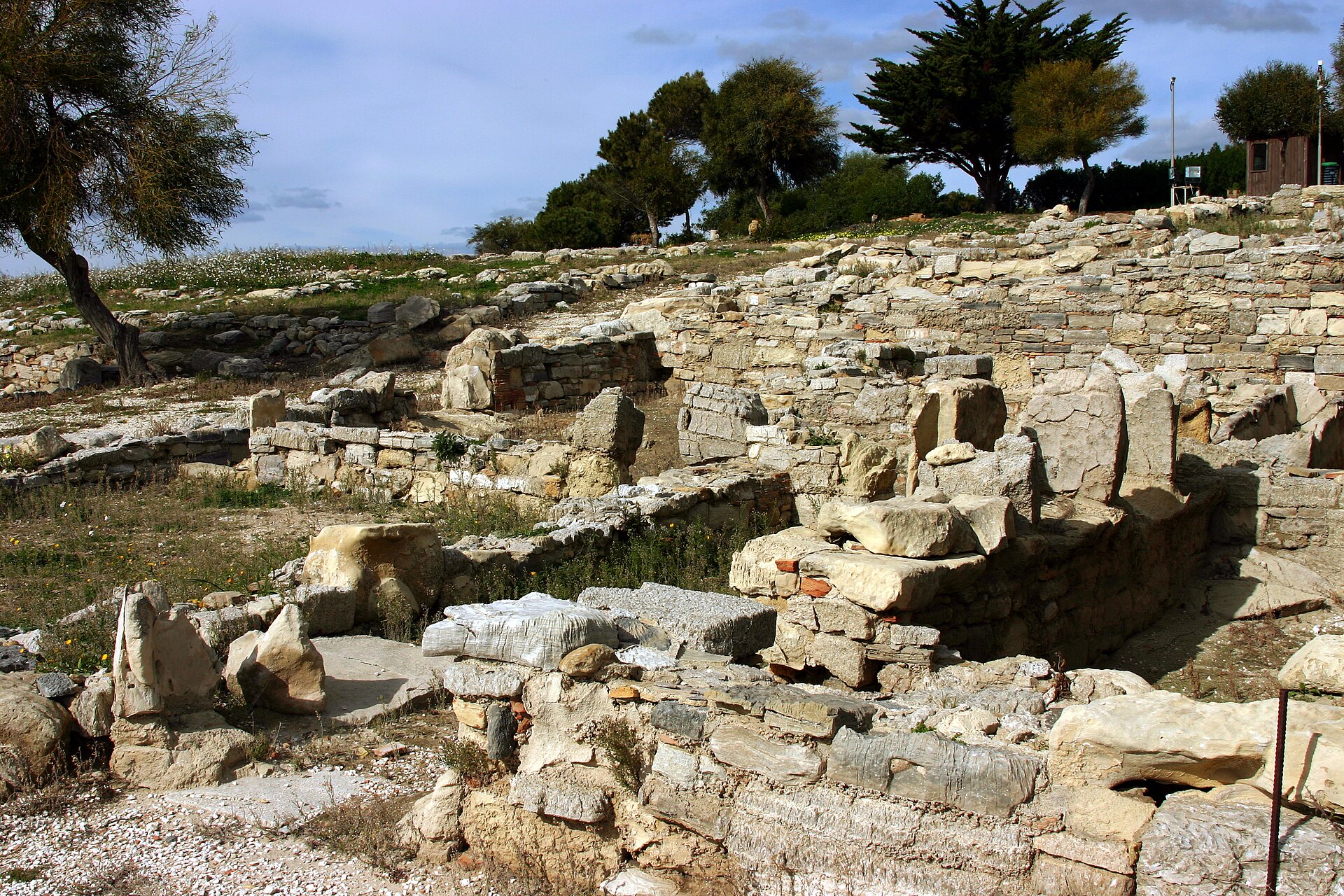
- The pine-shaded beach — Below the site, towards the sea
A path from the ruins drops through pine woods to a long beach, good for swimming, sunbathing or a quiet walk along the shore. Seasonal kiosks sell drinks and light meals in summer. Outside the bathing months it is emptier and breezier, and the kiosks may be shut.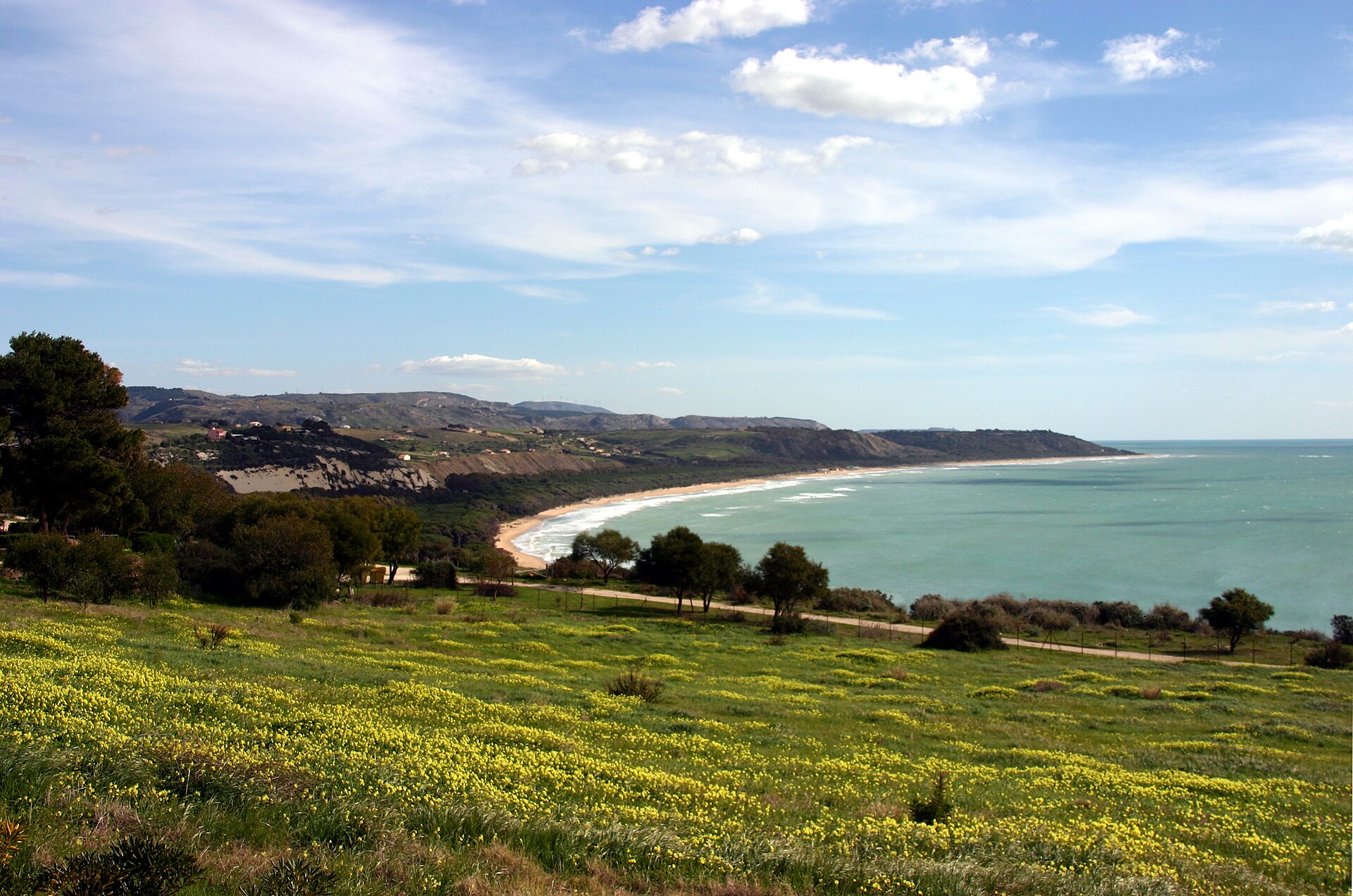
Culture
Heraclea Minoa is a reminder that Sicily was Greek as well as Italian. Colonists from the Aegean planted cities along the island's coasts, and the myths they told were part of how they claimed land: Heracles wrestling Eryx, Minos chasing Daedalus. Those stories were political as much as poetic, and they gave the town the two halves of its name. The theatre belongs to that world. Greek theatre was civic life, with drama, festival and public gathering in a shared open-air bowl facing the view. The living culture of this stretch of coast is now more about the sea. Summer weekends bring families from nearby towns, beach kiosks, evening aperitivo and a slow rhythm in which the middle of the day is for shade and lunch and the evening for walking and talking. Away from July and August the village is nearly empty, and the site feels like a local heritage place rather than a stage set for tourists. The regional government looks after it, so it is treated as a protected Sicilian monument, with rules enforced lightly but meant seriously. Greetings count in small places: a 'buongiorno' on entering a café or ticket office goes a long way. Stay on the marked paths, keep off the walls and theatre seating, and carry your rubbish away from both the ruins and the beach.
What to wear
Heraclea Minoa sits in a part of Sicily where traditional rural dress has largely become festival clothing. The best-known piece is the coppola, a flat cap in wool or tweed, once everyday wear for men in the countryside. Women's costume in older Sicilian villages combined full skirts, fitted bodices, aprons and headscarves, often with embroidery and lace trims, and these are mostly seen now at folk events and processions. Day to day, people on this coast dress for heat and the sea: linen shirts, cotton dresses, shorts, sandals and swimwear carried in a beach bag. Italians dress neatly even for casual outings, so beachwear tends to stay at the beach. A visitor should plan for sun first. Bring a wide-brimmed hat, sunglasses and high-factor sunscreen, since shade among the ruins is scarce. Wear shoes with grip and a closed toe, because the paths are uneven and the stones are loose in places. Light long sleeves protect shoulders at midday. For the beach, add sandals that can get wet and a cover-up for the walk back through the pines. If you plan to visit churches in nearby towns, carry a scarf or shirt to cover shoulders and knees. Evenings can be breezy by the sea, especially outside high summer, so a thin layer is worth packing.
What to eat
- Pasta alla Norma — Casual eateries near the beach and in the holiday village
Pasta with fried aubergine, tomato, basil and salted ricotta, one of Sicily's best-known dishes. It appears on the menus of casual eateries near the beach and in the holiday village, and it suits vegetarians. - Grilled seafood — Seaside restaurants near the beach
Fish and shellfish cooked simply over heat and dressed with lemon and olive oil. The catch varies with the day, so ask what has come in. It is a natural lunch after a swim, with a glass of local white wine. - Arancini — Bars and snack counters in the village
Fried rice balls with a crisp crumb coating, filled with ragù, cheese or vegetables. They make an easy snack to carry to the beach or the ruins, and they are usually served warm from the counter. - Wood-fired pizza — Pizzerias in the seaside village
Thin, blistered pizza from a wood oven, with seafood, vegetable or plain tomato-and-cheese toppings. Family-friendly pizzerias in the village serve it in the evening, and vegetarian options are easy to find. - Granita — Beach bars and summer stalls near the site and beach access
Sicilian crushed-ice dessert, often in lemon, almond or coffee, sometimes eaten with a soft brioche. On summer weekends temporary stalls may appear near the site or the beach paths, and beach bars serve it too.
Plan it
Best time. April–May and September–October, when the sea air is mild and walking the open ruins is comfortable. July and August are hot with little shade, though that is when the beach kiosks and bars are open. Winter is quiet, and many seasonal places close.
How long. 1
Getting there. Palermo is the usual airport for western Sicily, with Catania as the alternative; neither is near, so allow a long onward journey by road. Buses between Agrigento and Sciacca stop at the 'bivio Eraclea Minoa' turning on the SS115, roughly 4 km from the ruins and beach. From there it is a walk down to the coast, so a car or taxi makes the last leg easier.
Budget. mid
Tips
- Visit the ruins early in the morning or late in the afternoon, as shade is scarce and midday summer heat is hard going
- Carry water and sun protection, especially if you walk the last stretch from the bus stop
- Check the official site page for opening arrangements before you go
- Bring some cash, since small kiosks and stalls may not take cards
- Outside summer, food and drink options are limited, so pack a picnic
Etiquette
- Stay on marked paths and do not climb on the walls or theatre seating
- Keep swimwear for the beach and cover up when you walk into the village or a café
- Greet staff with 'buongiorno' or 'buonasera' on entering
Nearby
Sources
- Wikidata Q1502156 (CC0)
- Wikipedia: Heraclea Minoa (rev 1364714336) (CC BY-SA 4.0)
- Wikivoyage: Heraclea Minoa (rev 5102273) (CC BY-SA 4.0)
- Photo: Ruins of a residential quarter, José Luiz Bernardes Ribeiro (CC BY-SA 4.0)
- Photo: General view of the excavations, José Luiz Bernardes Ribeiro (CC BY-SA 4.0)
- Photo: Eraclea Minoa theatre, Alun Salt (CC BY-SA 2.0)
- Photo: Heraclea House A, Rjdeadly (CC BY-SA 4.0)
- Photo: Heraclea City walls, Rjdeadly (CC BY-SA 4.0)
- Photo: Last Wall of Heraclea Minoa, Rjdeadly (CC BY-SA 4.0)
- Photo: Beach in Eraclea Minoa (3), Jbribeiro1 (CC BY-SA 4.0)
- Photo: Beach in Eraclea Minoa, Jbribeiro1 (CC BY-SA 4.0)


