Head-Smashed-In Buffalo Jump
Head-Smashed-In Buffalo Jump, Canada
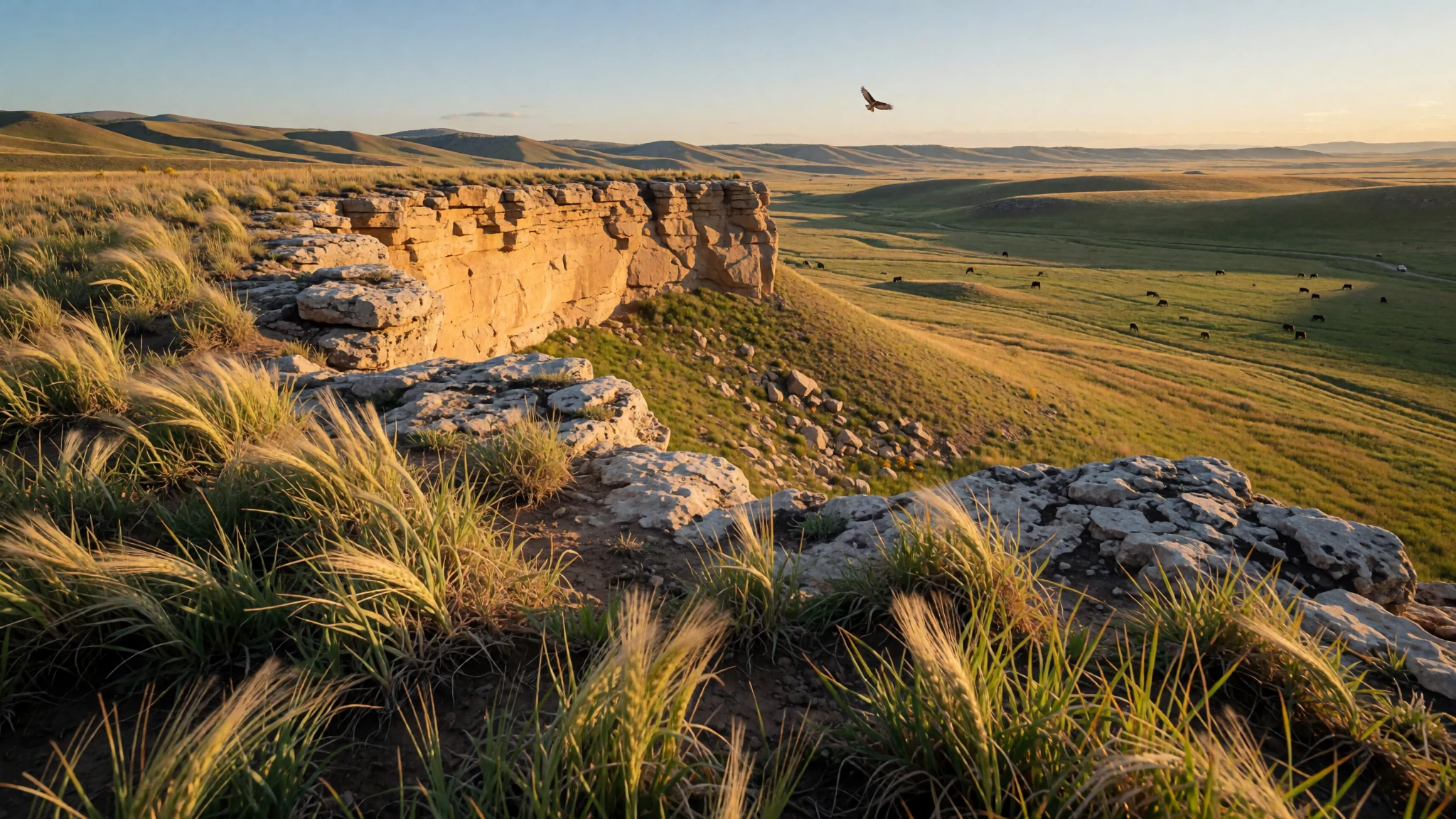
A cliff-edge bison jump in the Alberta foothills, where Blackfoot knowledge of the land still shapes how the site is told.
The place
Head-Smashed-In Buffalo Jump lies about 18 kilometres west of Fort Macleod in southern Alberta, a short drive from the highway that links the prairie towns with the mountains. It is both a museum of Blackfoot culture and a UNESCO World Heritage Site, and the two halves of the place are meant to be understood together. The Blackfoot name, Estipah-skikikini-kots, appears alongside the English one, and the interpretive centre presents the site as a living story rather than a relic.
The jump itself is a cliff edge above a valley, with open grassland stretching away to the east and a band of hills rising to the west. The interpretive centre sits near the cliff top, so the usual order is to start indoors with the exhibits and then walk out to the edge. The walk is not long, but the ground is uneven and the wind can be strong, so the paths are best taken at a steady pace. Much of what the site offers lies in the landscape: the scale of the cliff, the sightline across the valley, and the sense of how a herd could be funnelled towards the drop. Visits are usually quiet, and the panels are easiest to read before the larger tour groups arrive.
Its story
For roughly five and a half thousand years, the Plains Indigenous peoples hunted bison at Head-Smashed-In Buffalo Jump by stampeding herds over a cliff. The method depended on coordinated people as much as on the land. Before horses arrived late in the story, Blackfoot hunters moved animals from a grazing area in the Porcupine Hills, a few kilometres to the west, into drive lanes marked by hundreds of cairns. Young men trained in animal behaviour, known as buffalo runners, guided the herd, and some dressed as coyotes and wolves to keep the animals moving the right way. When the leading animals reached the edge at full gallop, the weight of the herd behind pushed the rest over, and the fall broke legs and left many animals unable to move.
Warriors waiting at the base finished the injured animals with spears and clubs. The carcasses were then taken to a camp in the valley, which offered fresh water and everything needed for butchering. Nearly every part was used: bone became tools, and hide became clothing and shelter. Bone deposits built up at the cliff base to a depth of about 12 metres, a measure of how long the practice continued. The cliff itself is roughly 300 metres long and drops about 10 metres at its highest point. The site's importance reached well beyond food and supplies. Joe Crowshoe Sr., a Piikani ceremonial elder, helped shape its modern form and devoted his life to preserving Blackfoot knowledge.
What to see
- The interpretive centre and museum — On the cliff top, above the jump
Head-Smashed-In Buffalo Jump is best approached through its interpretive centre, which holds exhibits on Blackfoot material culture and on how the jump worked. The museum presents the site through Blackfoot perspectives, with objects and displays that explain the drive lanes, the butchering camp and the many uses of the animal. Allow time indoors before walking out, because the exhibits make the cliff far easier to read when you reach it.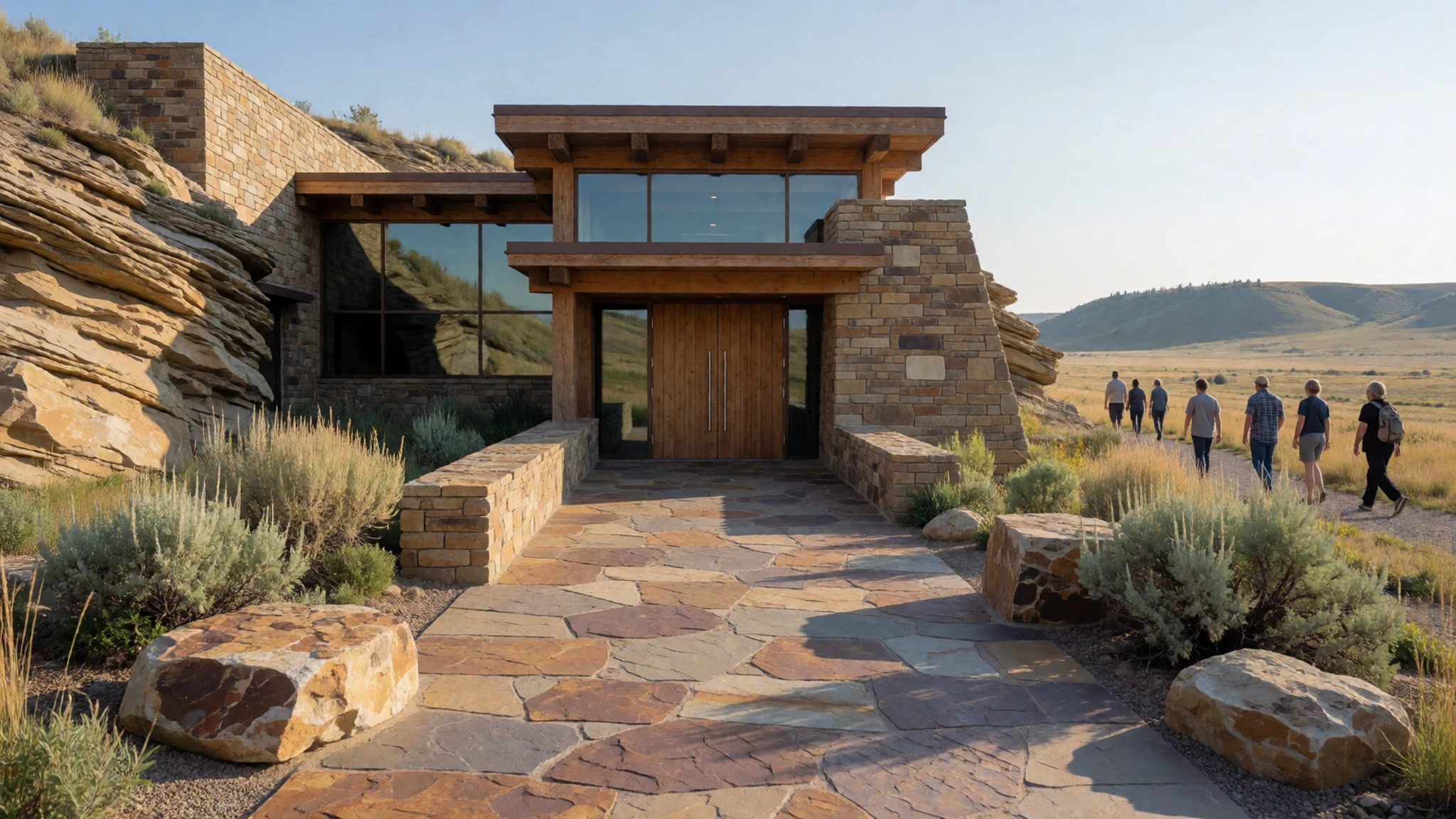
- The cliff edge — The top of the jump, reached by a short walk from the centre
The cliff edge is the reason the site exists. Standing on the top, the drop is clear, and the view north along the rim shows how the cliff stretches away. Keep back from the lip, which is unfenced in places and crumbles over time. The sightline helps explain how a herd could be pushed forward across open grass and then lost to the edge, one animal at a time.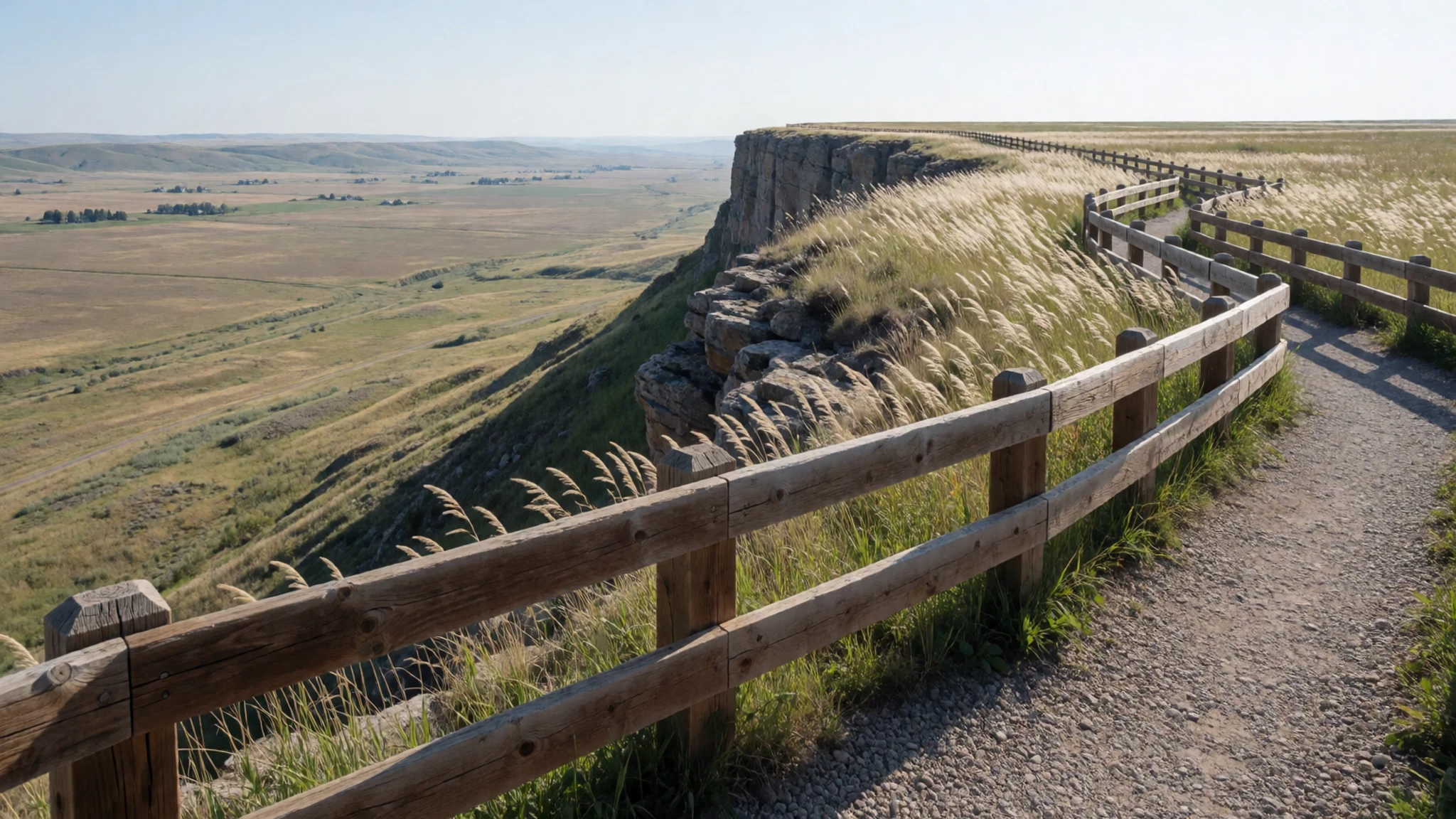
- The base of the cliff — The bone bed below the jump, reached on the trail
The base of the cliff is where the work was finished, and where the bone deposits lie. The ground here holds layers of material built up over thousands of years, so the scale of the practice becomes physical. Stay on marked routes and leave everything where it lies. The base is quiet and often windy, and it rewards a slow walk with time to look up at the rock face.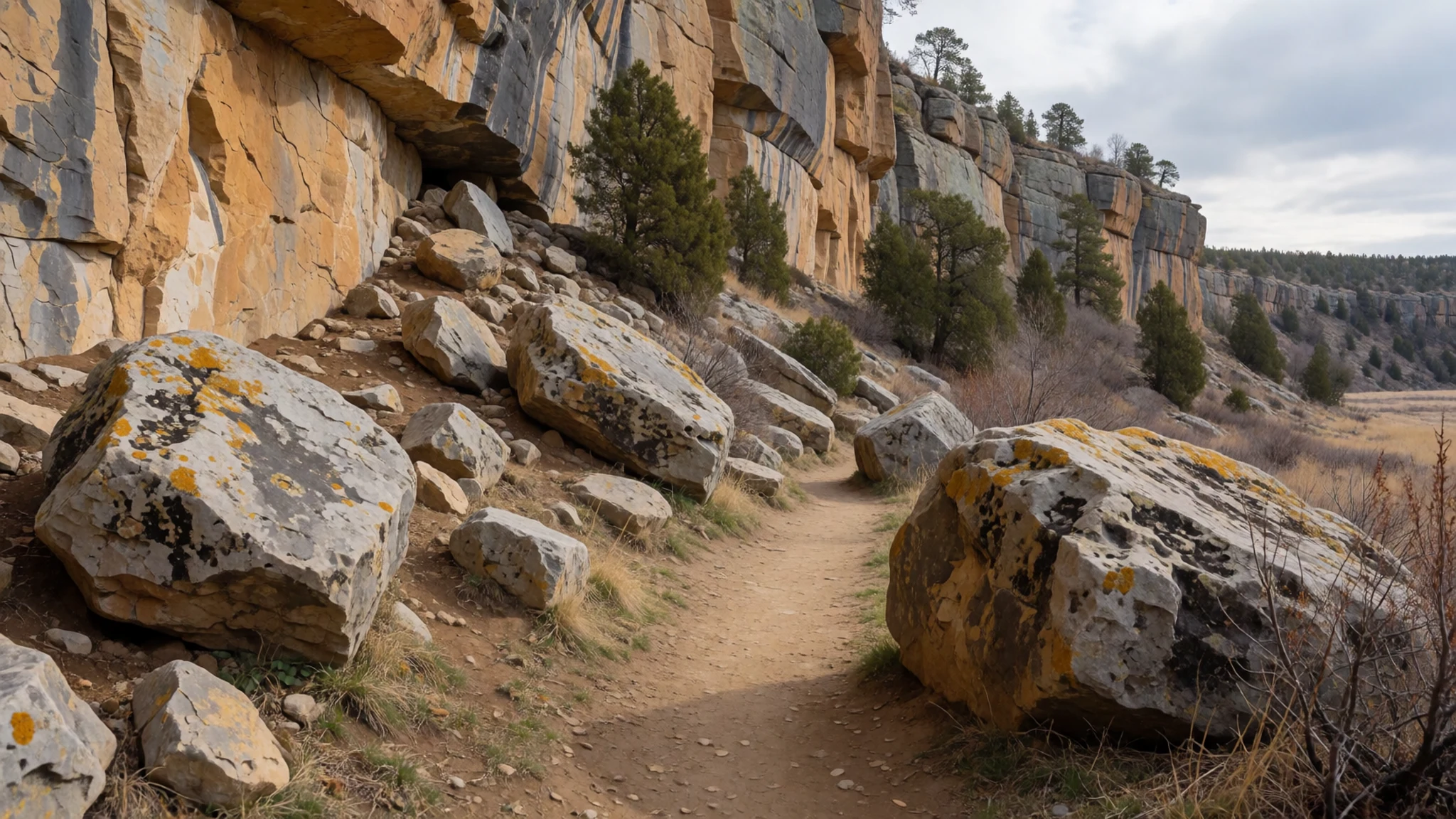
- Joe Crowshoe Sr. Lodge — Ask staff at the centre for the lodge's location
The Joe Crowshoe Sr. Lodge is named for the Piikani elder who was instrumental in developing the site. He spent his life preserving Blackfoot culture and encouraging better understanding between Indigenous and non-Indigenous people. Ask staff at the centre about the lodge and what it is used for before you visit, since access and programmes can change.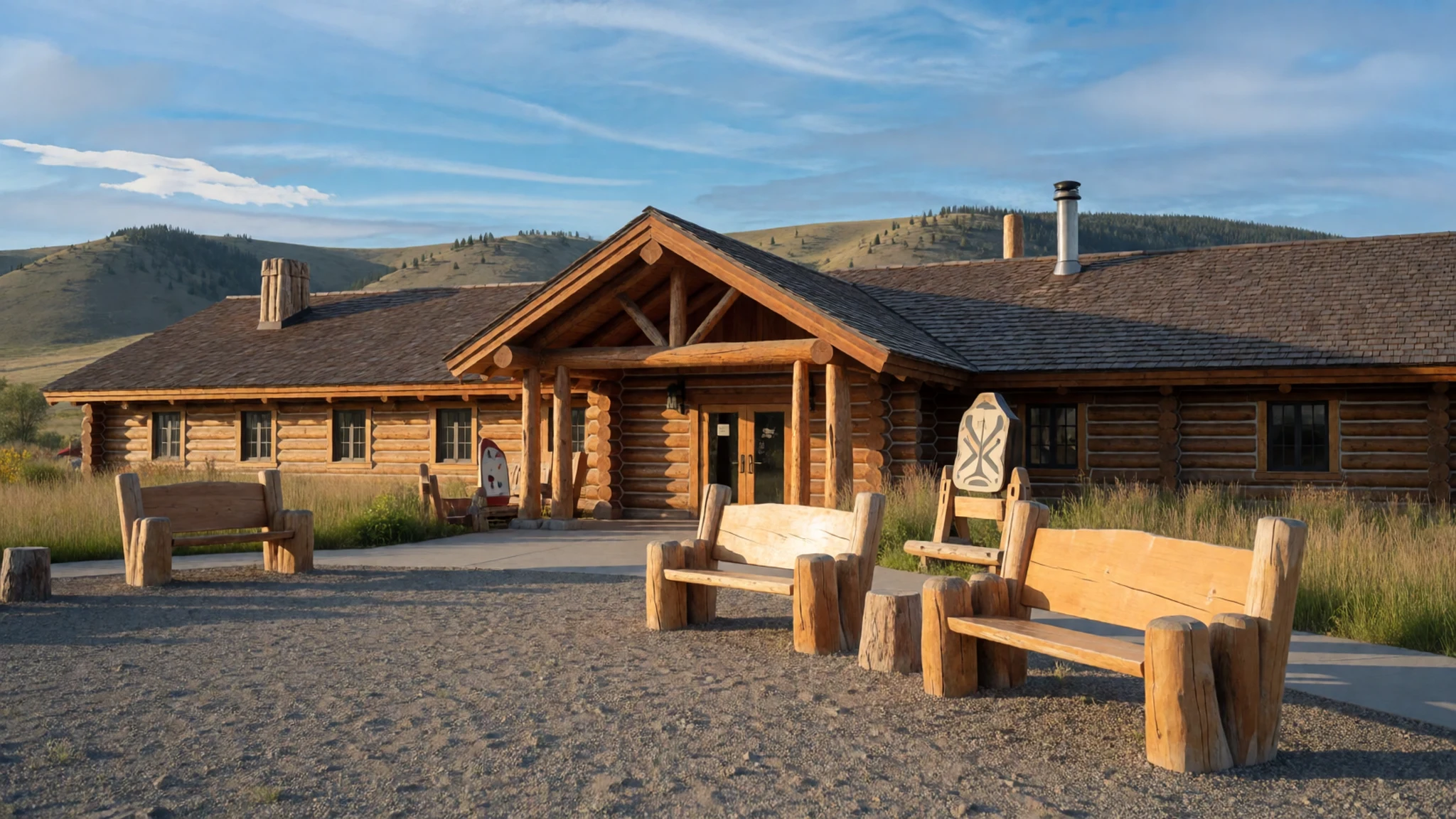
- Walking paths across the grassland — Trails leading out from the centre into the surrounding grassland
The paths across the grassland show the wider setting of the jump, with the hills to the west and open prairie to the east. Walk them in the cooler hours if the day is forecast to be hot, and wear sturdy shoes, since the grass hides stones and soft ground. The trails are the best way to feel the distances the herds once covered.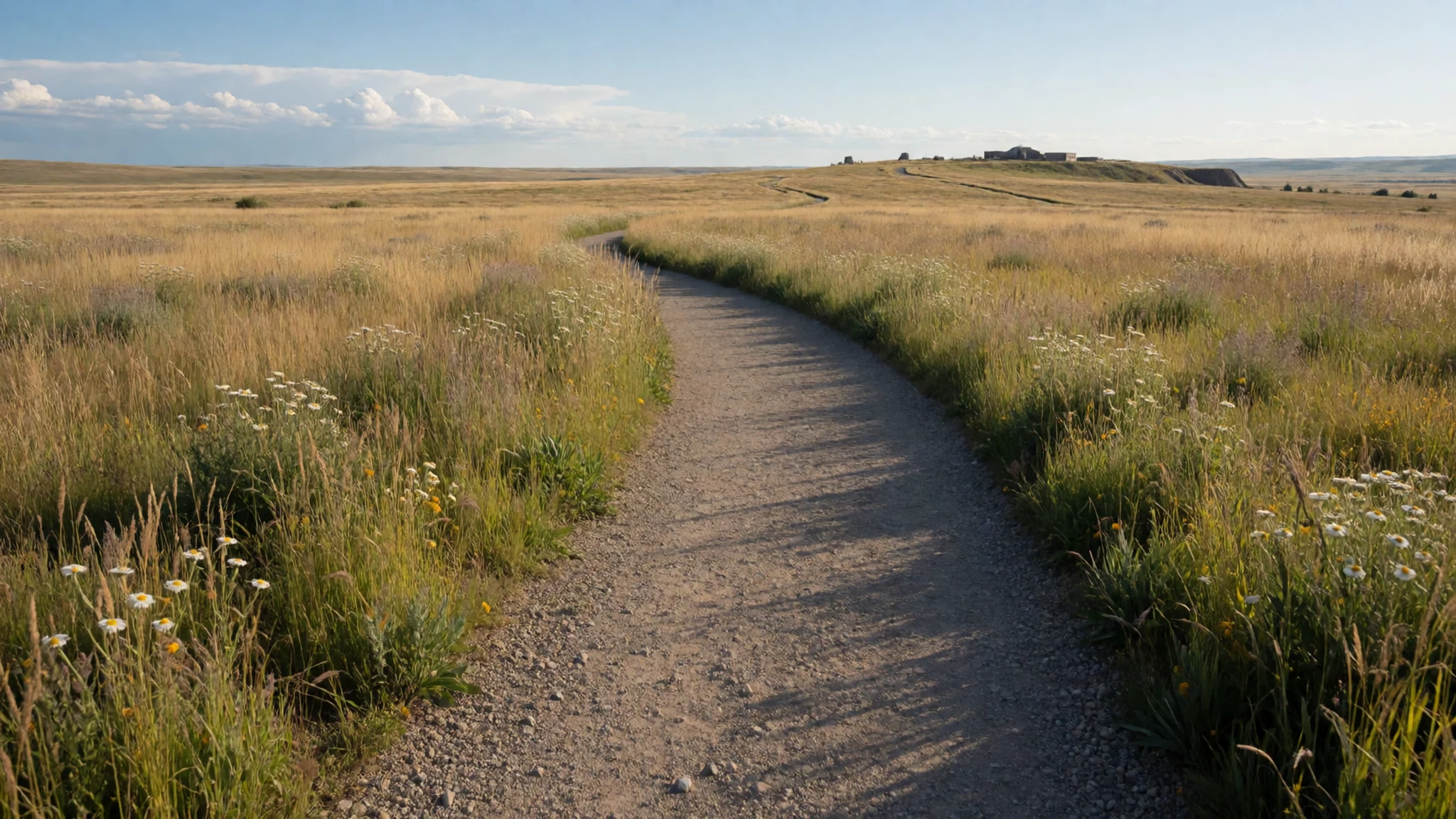
Culture
Head-Smashed-In Buffalo Jump is a place where Blackfoot knowledge is shared directly, and the site is run with that in mind. The stories told here are not decoration. They describe a working relationship between people, animals and land that lasted for thousands of years, and the interpretation draws on living traditions as well as archaeology. Visitors often arrive with an image of the jump as simply dramatic, so it helps to listen to how the guides and displays describe the people who carried out the work and the respect they showed the animals they relied on.
The Piikani and wider Blackfoot communities have a deep connection to this land, and the site's leaders have worked to keep that connection central. Some traditions are private and not for public display, so guides may decline certain questions, and that is a reasonable boundary to accept. Ceremonies and gatherings may take place in the area, and people attending them should not be photographed without permission. Please leave stones, bone fragments and other natural material where you find them, and ask before photographing anyone at the centre or at a ceremony.
What to wear
At Head-Smashed-In Buffalo Jump, the dress story begins with the Plains peoples whose traditions the site preserves. Traditional clothing across the plains was made from tanned hide, most often bison or deer, cut and sewn into shirts, dresses, leggings and moccasins. Decoration came from quillwork and later glass beadwork, along with painted designs and, in ceremonial contexts, eagle feathers and carefully made regalia. These garments were practical as well as meaningful, suited to long rides, cold winters and the demands of hunting. Many of the techniques are still taught and practised today.
Day to day, most people in southern Alberta wear the same clothes as anyone else: jeans, fleece, work boots, and caps. Traditional dress appears most often at powwows, dances and public ceremonies, where regalia is worn with pride and treated with care. Visitors should dress for the landscape. Wind on the cliff top can be strong even in summer, so bring a windproof layer and a fleece. Sturdy closed shoes suit the grass and uneven cliff paths far better than sandals. A sun hat helps on open ground, and modest, practical clothing suits any visit to a ceremony or community event.
What to eat
- Bison — A butcher's counter or steakhouse in Fort Macleod, Calgary or other towns along the highway
Bison is the animal this whole site was built around, and it still appears on menus across southern Alberta. Lean and dense, it is often served as steak, burgers or sausage. It is worth trying for the connection alone, and many restaurants note the source of the meat on the menu.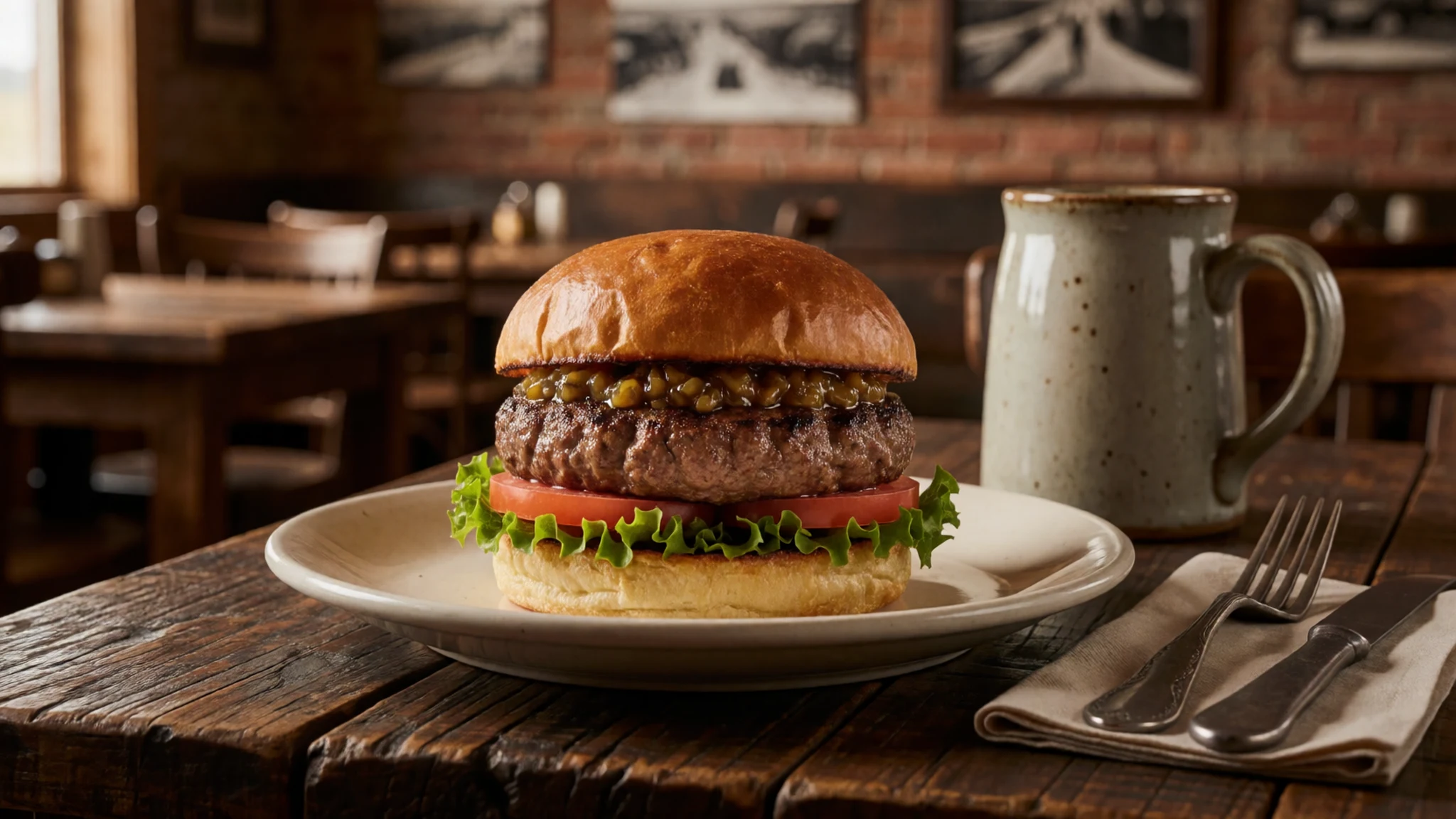
- Alberta beef — A roadside diner or steakhouse in towns across southern Alberta
Alberta is known for quality beef raised on rich grasses and finished on local barley. Diners in small towns serve it as steaks, roast dinners and hearty burgers. The meat is generally a good value by the standards of major cities, and it is a straightforward meal after a long day outdoors.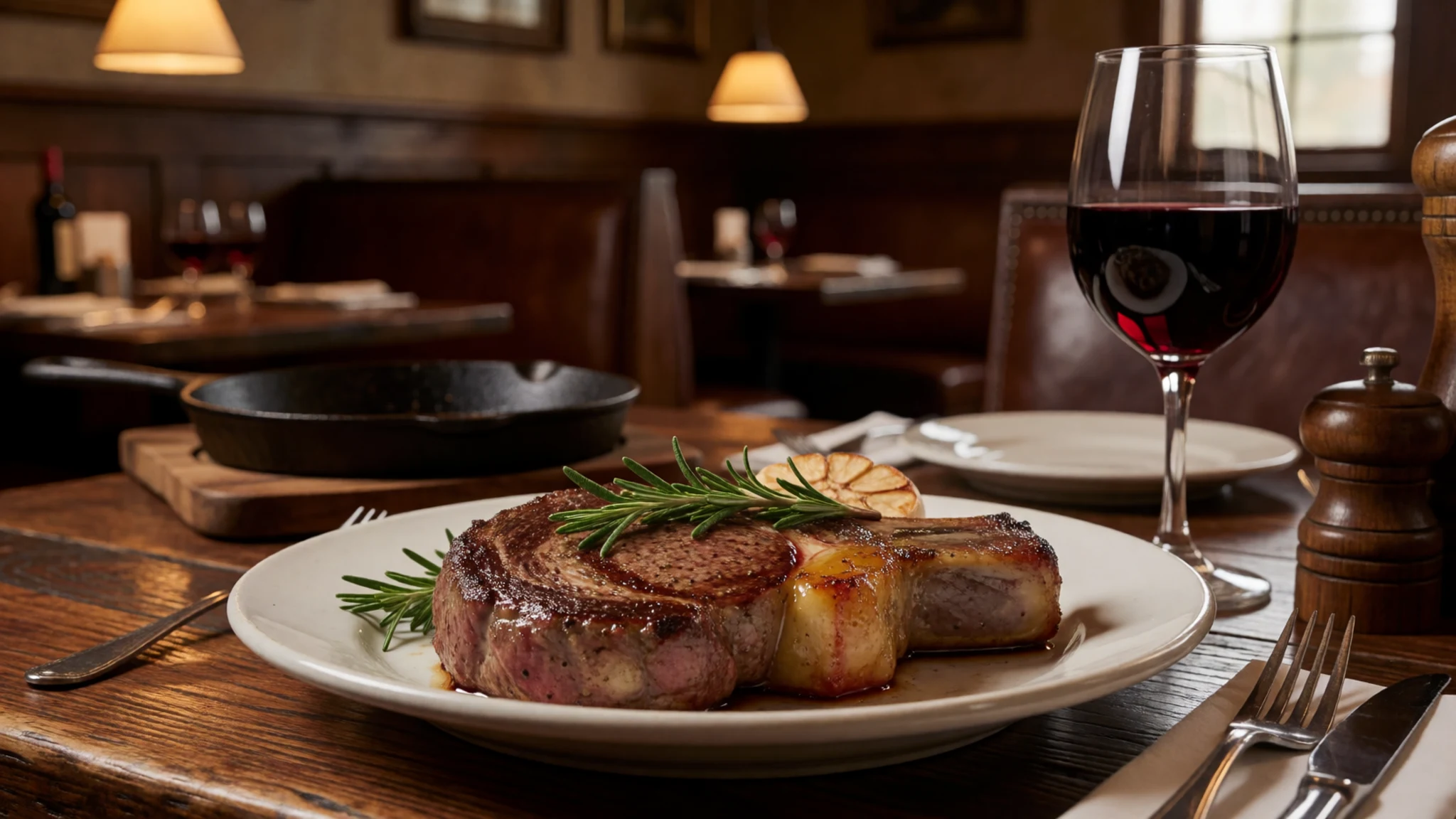
- Chinese café dishes — A small-town Chinese café, common even in the smallest towns
The Chinese café is one of the most typical eateries in rural Alberta, a legacy of cooks who worked in railway camps. The menus often mix spring rolls, won ton soup and chop suey with local favourites. Expect a relaxed, family-run room and generous portions at a modest price. - Perogies — A church supper or a Ukrainian-Canadian community hall in the region
Perogies are Ukrainian dumplings filled with potato, cheese or onion, usually boiled and then fried with butter and onions. They are a staple of community suppers and Ukrainian-Canadian halls across the province. Ask at a local event whether the dumplings are homemade, since the best ones usually are. - Poutine — A diner, takeaway counter or roadside stop across the province
Poutine is chips topped with cheese curds and hot gravy, a Canadian classic that appears on almost every diner menu. It is filling and simple, and it makes a fitting end to a day spent walking a cliff. Versions vary, so it is worth comparing a few on a long drive.
Plan it
Best time. Late spring to early autumn, when the grass is green and the roads and paths are easiest. Winters on the prairie are cold, and wind can strike in any season, so check conditions before driving out from the towns.
How long. 2–3
Getting there. Fly into Calgary International Airport, the third largest in Canada by passenger volume, then drive south-west by car. The site is about 18 km west of Fort Macleod, and the last stretch on rural roads is best done in daylight.
Budget. mid
Tips
- Check the official site for current opening hours and admission before you travel
- Stay in Fort Macleod or Calgary and treat the site as a half-day trip
- Bring water and a windproof layer, since there is little shade on the paths
- Carry some cash as well as a card for small purchases in towns
- Combine the visit with the Rockies; the Icefields Parkway between Banff and Jasper is a drive worth making
Etiquette
- Keep to marked paths and leave the cliff base and bone deposits undisturbed
- Ask before photographing people, especially elders and at ceremonies
- Keep noise low around the interpretive centre and the grounds
Nearby
Sources
- Wikidata Q683110 (CC0)
- Wikipedia: Head-Smashed-In Buffalo Jump (rev 1370109857) (CC BY-SA 4.0)
- Wikivoyage: Alberta (rev 5393505) (CC BY-SA 4.0)
- Photo 01 — The view north along the top of the cliffs, Ken Thomas (Public domain)
- Photo 02 — Sign at Entrance, Lazarus000 (CC BY-SA 4.0)
- Photo 03 — Interpretive centre and museum, Ken Thomas (Public domain)
- Photo 04 — Bottom of the cliff, Pazakui (CC BY 4.0)
- Photo 05 — UNESCO site view, Wilson Hui (CC BY 2.5)
- Photo 06 — Cliffside view, XeresNelro (CC BY-SA 4.0)
- Photo 07 — Path, XeresNelro (CC BY-SA 4.0)
- Photo 08 — Plains Indian hunters stampede, David Stanley (CC BY 2.5)


