Hampton Court Palace
Hampton Court Palace, United Kingdom
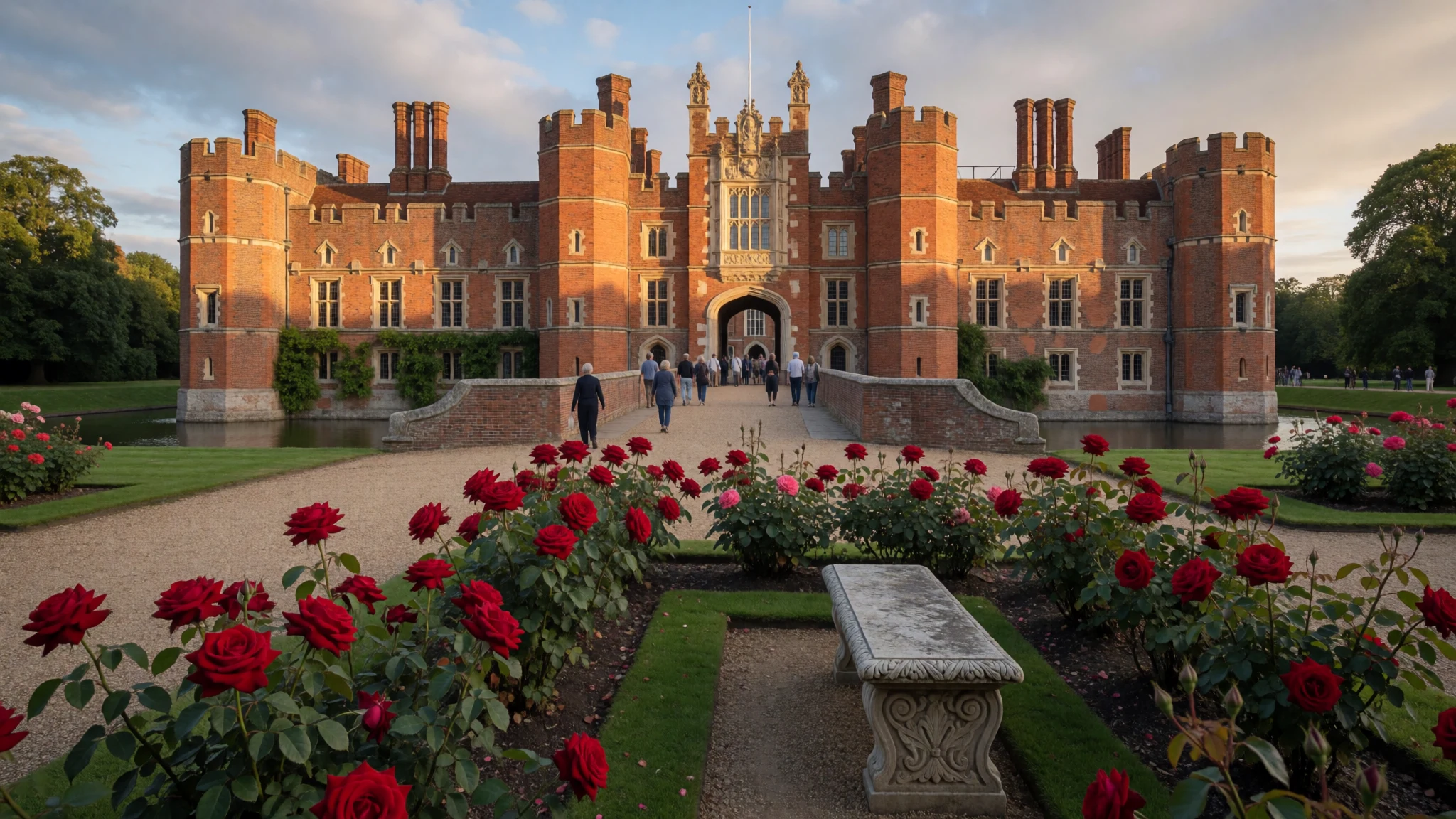
Hampton Court Palace is a rare chance to walk from a Tudor court into a Baroque palace, then out to gardens and the Thames, in one day.
The place
Hampton Court Palace stands beside the Thames in the London Borough of Richmond upon Thames, upstream and south-west of the city centre. It is close enough to reach by suburban train, yet the setting of river, parkland and old brick feels more like a country estate than inner London. The palace is really two buildings joined together. One part is Tudor: red brick, tall chimneys, gatehouses and a vast timber-roofed hall. The other is Baroque, with ordered rows of windows and a calmer, more formal look. The join works better than it should, because both halves use the same warm pink brick and a low, spreading outline. A charity, Historic Royal Palaces, now looks after the buildings and grounds and opens them to the public. State rooms, a great hall, cavernous kitchens and paintings from the Royal Collection fill the interior. Outside are formal gardens, a hedge maze, a royal tennis court and Home Park, where a music festival and a garden festival are held each year. The building is Grade I listed, and Wikidata also classes it as a historic house museum and a theatre building. A full day passes easily, since courtyards, galleries, gardens and the riverside path all take time to walk. Crowds peak in school holidays and on fine summer weekends. The grounds absorb people better than the narrow rooms do. For tickets and opening times, check the official site at https://www.hrp.org.uk/hampton-court-palace/.
Its story
Hampton Court Palace began as a rural estate held by the Order of St John of Jerusalem, a crusading religious order. It was leased out in the fifteenth century, and in the 1490s the statesman Sir Giles Daubeney enlarged it, adding a kitchen complex whose bones survive, much altered. In the 1510s the lease passed to Thomas Wolsey, Archbishop of York and Henry VIII's chief minister. Wolsey spent heavily to turn the place into a showpiece, modelled on the idea of a Renaissance cardinal's residence, with a symmetrical plan, grand rooms on an upper floor and classical detail. Not much of his work survives unchanged, but the first courtyard, the inner gatehouse and the Clock Court still follow his scheme, and his seal can be seen over the clock tower arch. By 1529 Wolsey was losing the king's favour, and he handed the palace to Henry, hoping to save himself. It did not work, but Henry liked the place and extended it to house his huge household. Two centuries later, in the 1690s, William III began a rebuilding meant to compete with Versailles. It swept away much of the Tudor palace before work stopped, leaving the mixed Tudor and Baroque result visitors see today. George II was the last monarch to live here. The Wikidata founding date is 1515, though building work began slightly earlier, as is common with large projects.
What to see
- The Great Hall — Tudor courts, central range
The Great Hall at Hampton Court Palace was built as a banqueting space for Henry VIII's court, and the ceiling is the reason to stop. Carved timbers, pendants and decoration rise high above the floor, and craning your neck is normal. Tapestries line the walls. Arrive early, as tour groups bunch up here.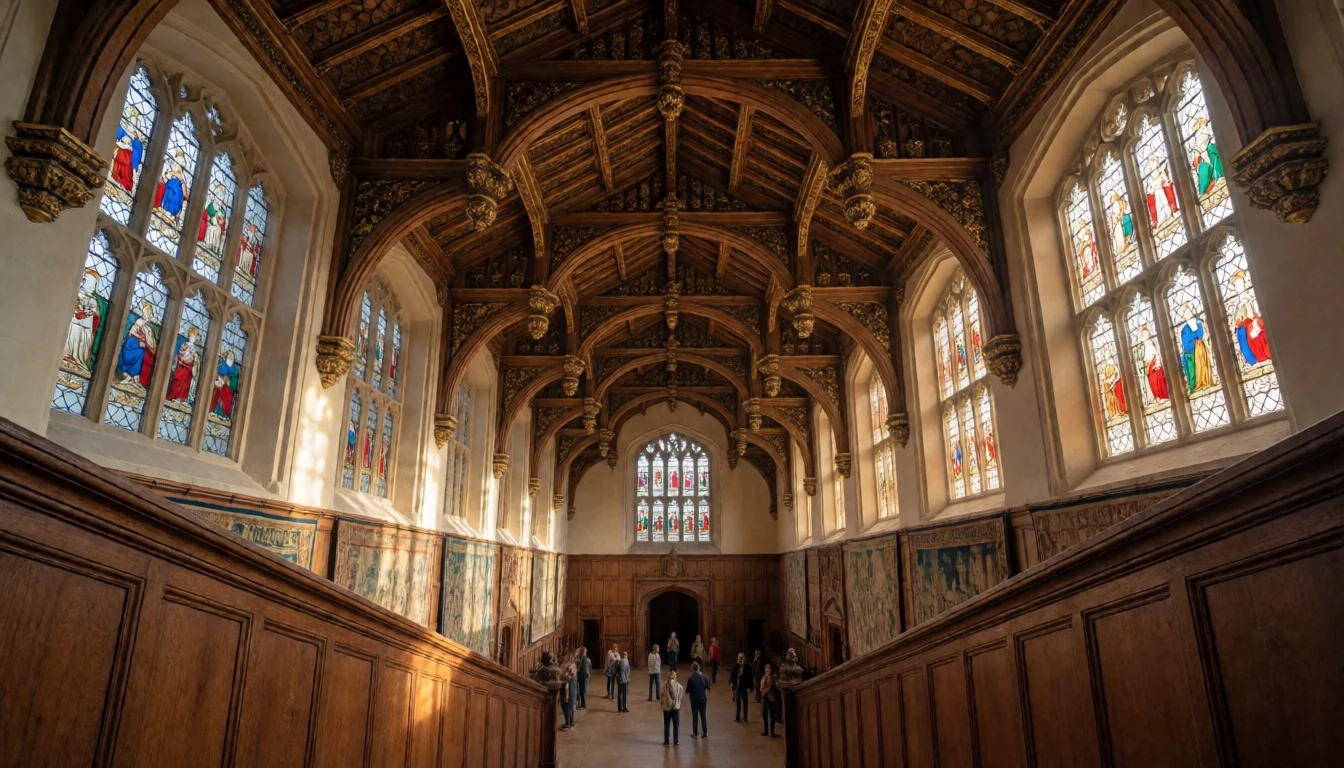
- West Front and Base Court — Main entrance, west side
The West Front is where most visits begin, a long red-brick face with towers and a gatehouse. It leads into Base Court, the first courtyard Wolsey laid out, once lined with lodgings for guests. Standing there gives a clear sense of how the Tudor palace was meant to be approached.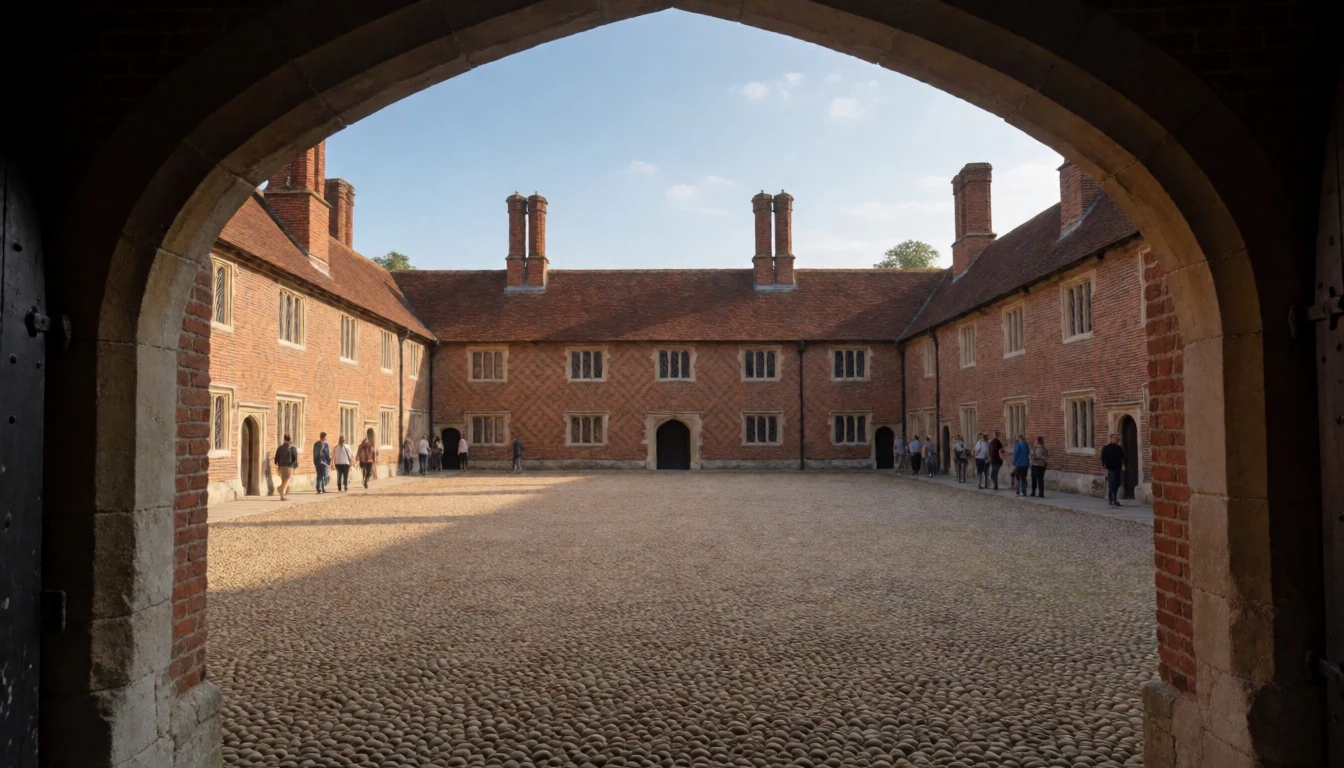
- Clock Court and the chimneys — Inner courts
Clock Court sits beyond Wolsey's inner gatehouse and holds the clock tower with his seal above the arch. Look up as well as across: the clustered Tudor chimney stacks, each shaped and patterned in brick, are among the most photographed details on the roofline.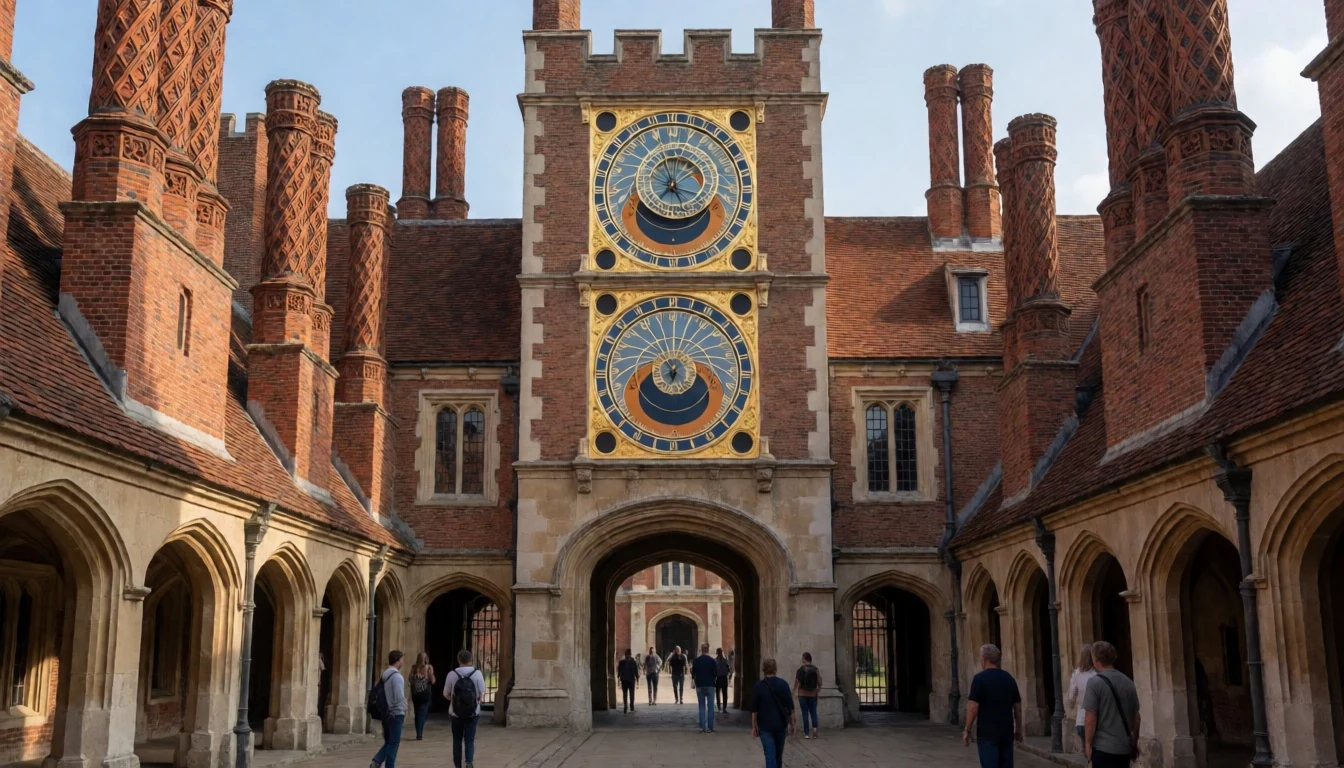
- The Great Kitchens — Tudor service wing
The Great Kitchens grew from Daubeney's earlier building and were later enlarged to feed a vast court. Brick fireplaces, spits and work tables show how many hands it took to cook for hundreds. The smoky, practical scale makes a good contrast with the polished state rooms.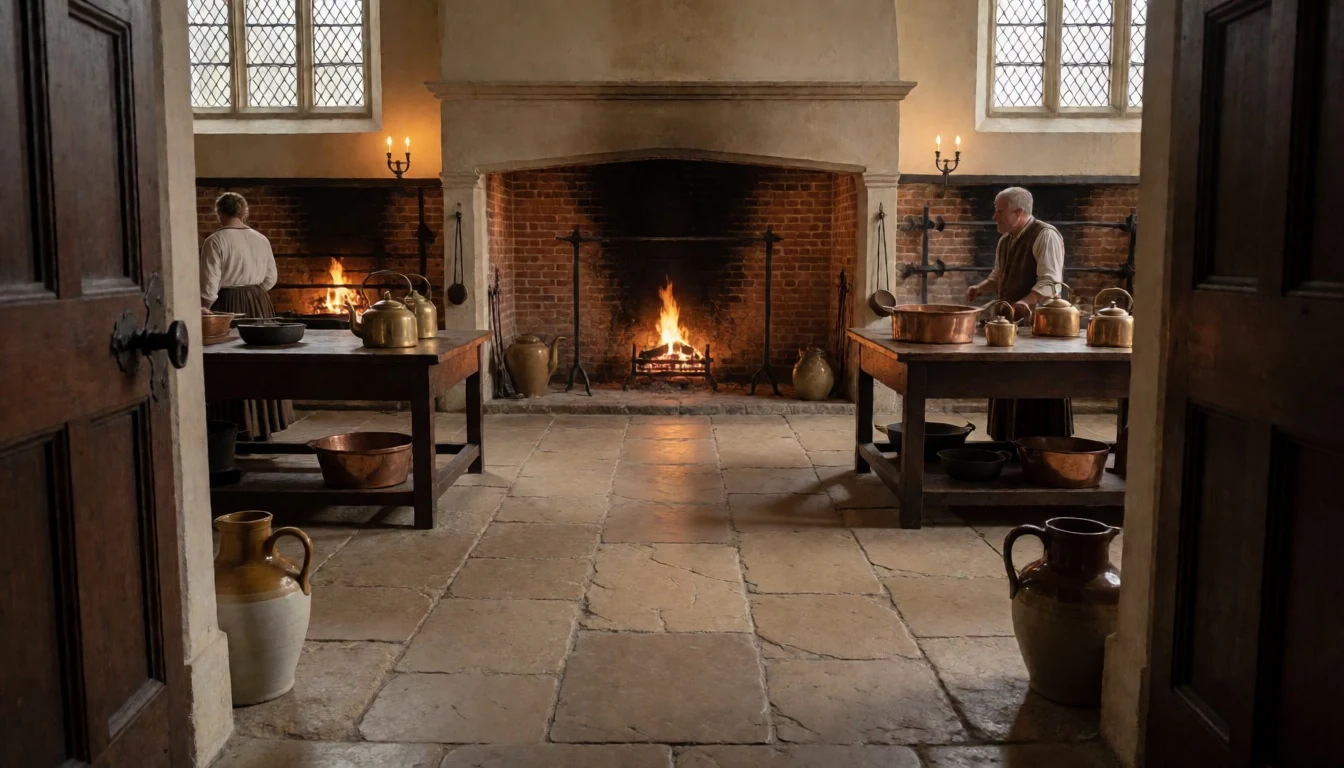
- William III's Baroque palace — South and east ranges
The Baroque half of Hampton Court Palace comes from William III's rebuilding, with regular windows, stone detail and garden fronts facing the formal grounds. The rooms are more ordered and ceremonial than the Tudor ones, and walking between the two halves shows how tastes changed within a few generations.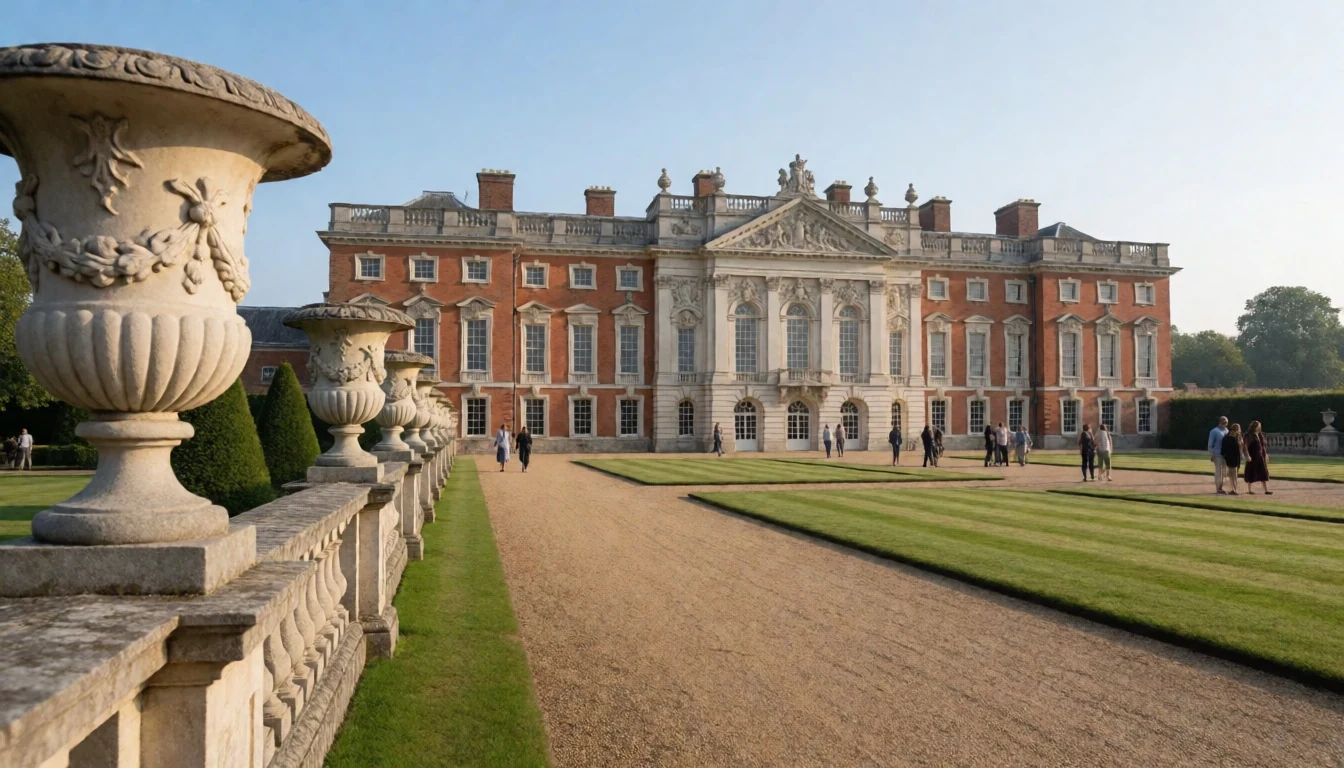
- Gardens and the Maze — Palace grounds, north side
The gardens around Hampton Court Palace include the hedge maze, the royal tennis court and long clipped walks beside the river. The maze is a short, cheerful diversion and gets queues in school holidays. Quieter corners of the grounds are better for a sit-down once the rooms have tired the feet.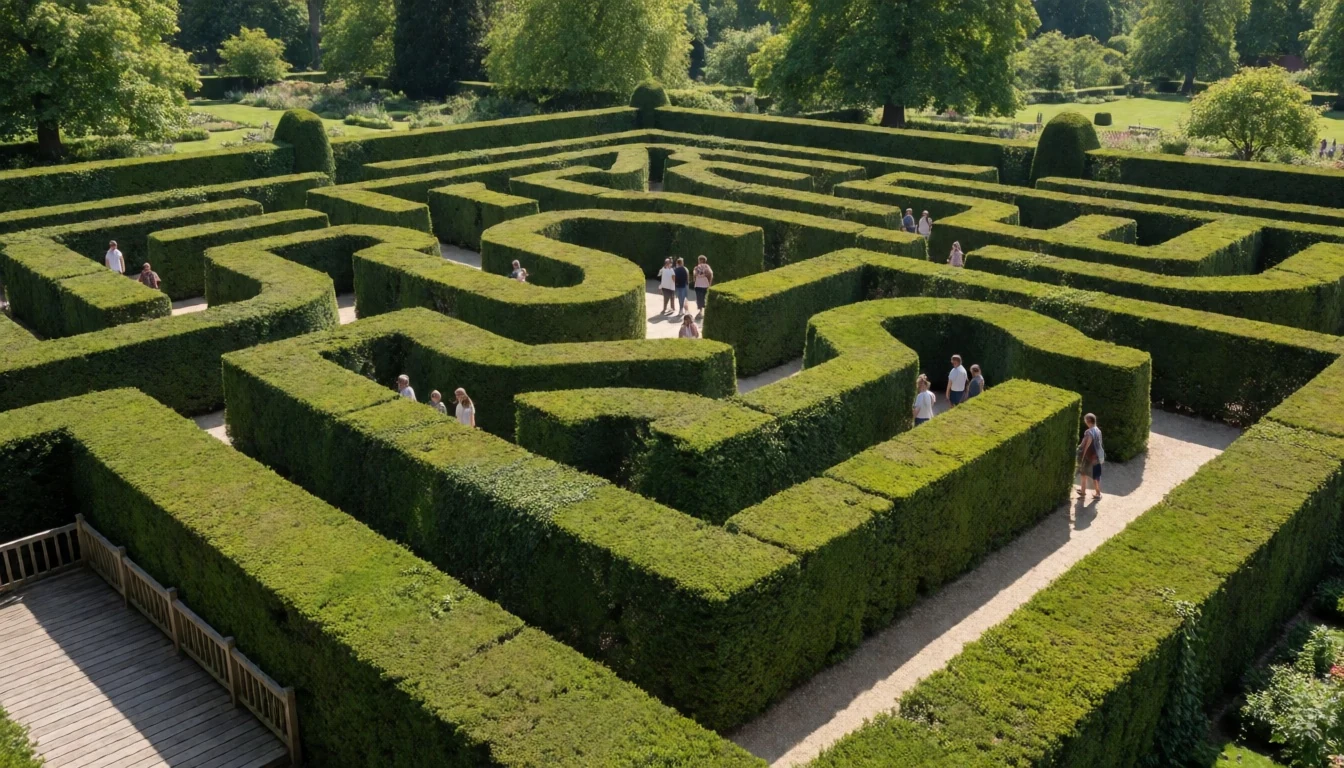
Culture
Hampton Court Palace was built for display. Under Wolsey and then Henry VIII, the court was a machine of rank, with guest lodgings, state rooms and feasting halls arranged according to who counted for what. Meals, hunting, music and games all helped to show status, and the royal tennis court in the grounds still hosts a form of the game played in that period. William III's later rebuilding reflected a different taste, formal and continental, and gave the palace its second personality. Since the last monarch to live here left, the palace has had a long public afterlife as a museum, a venue for open-air concerts and a setting for garden shows. British visitors tend to treat it as a day out with family or friends: a walk, a tea, perhaps a go at the maze. Historical interpretation here leans on the Tudor story, since those rooms are best known, but the Baroque apartments are well worth the time. Staff and costumed performers sometimes bring the court to life, though programmes change, so the official site is the place to check. Queuing is orderly, voices are kept low in the state rooms, and families are common. Visitors should follow the marked routes and staff guidance on photography, and never touch tapestries, panelling or historic furniture, however tempting.
What to wear
Hampton Court Palace has no living traditional dress, but the Tudor court left a very recognisable look. Men wore doublets, hose and short gowns, often trimmed with fur, while women wore long kirtles under heavy gowns, topped with structured hoods. Fabrics were wool for everyday and velvet, silk and brocade for show, with linen underneath. Colour and trim signalled rank, and rich cloth was a form of wealth. None of this is worn now except by costumed performers and at themed events, so check the programme if that interests you. What people actually wear today is ordinary British casual: jeans or trousers, trainers, light jackets and umbrellas. Families dress for comfort and for the weather, and smarter outfits appear at festival evenings in Home Park. For a visit, the key is practical shoes. Courtyards are cobbled, paths are gravel and the grounds are large, so flat, broken-in footwear matters more than style. Bring layers, since stone rooms stay cool even on a warm day, and carry a light waterproof, as English weather changes quickly. In summer, add a hat and sunscreen for the gardens. There is no formal dress code, and modest clothing is not required, as this is not a place of worship in the visitor routes.
What to eat
- Afternoon tea — Palace cafés and riverside tea rooms
A tea of sandwiches, scones, jam, cream and cake is the classic pause after the rooms. Look for the palace cafés and tea rooms inside the grounds, or for similar rooms in the village and on the riverside nearby.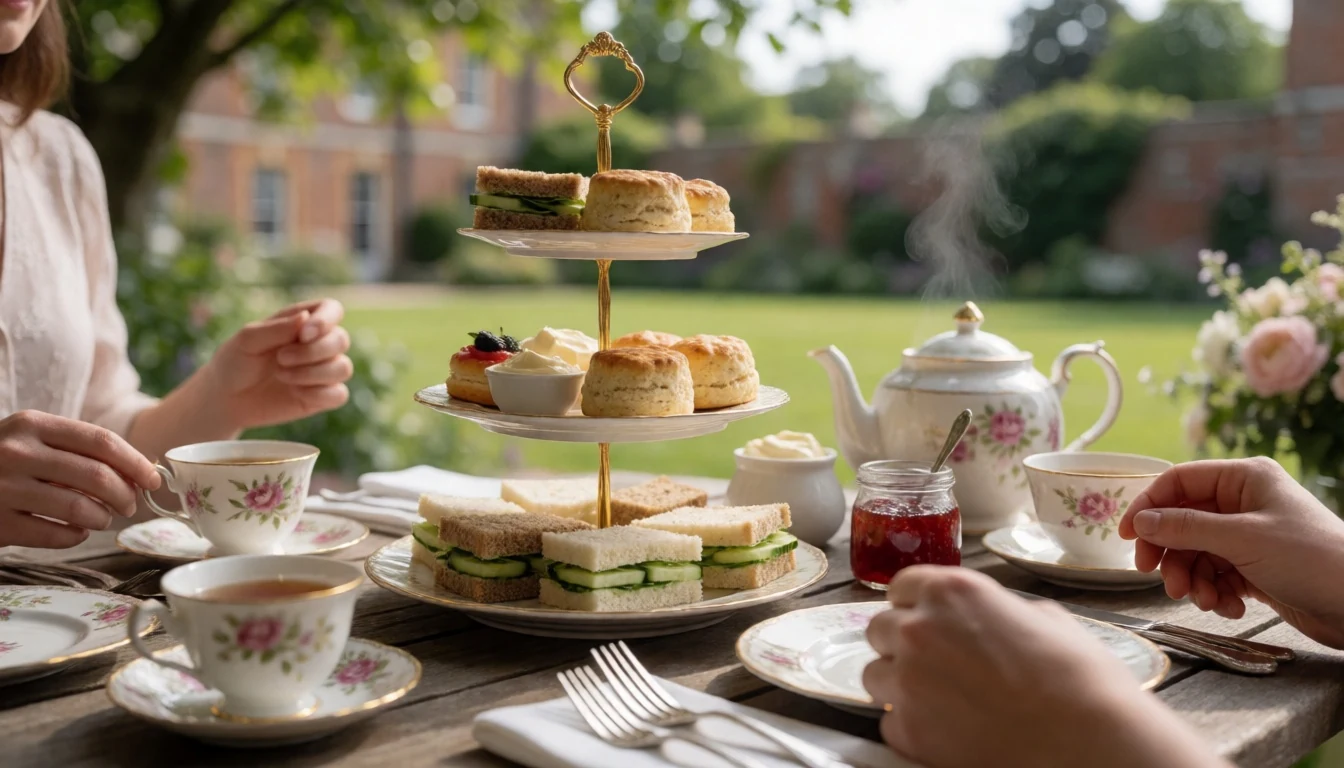
- Cream tea — Cafés near the palace gates
A scone split and topped with jam and clotted cream, served with a pot of tea, is the lighter option. It is easy to find in cafés near the gates and in nearby Thames-side towns.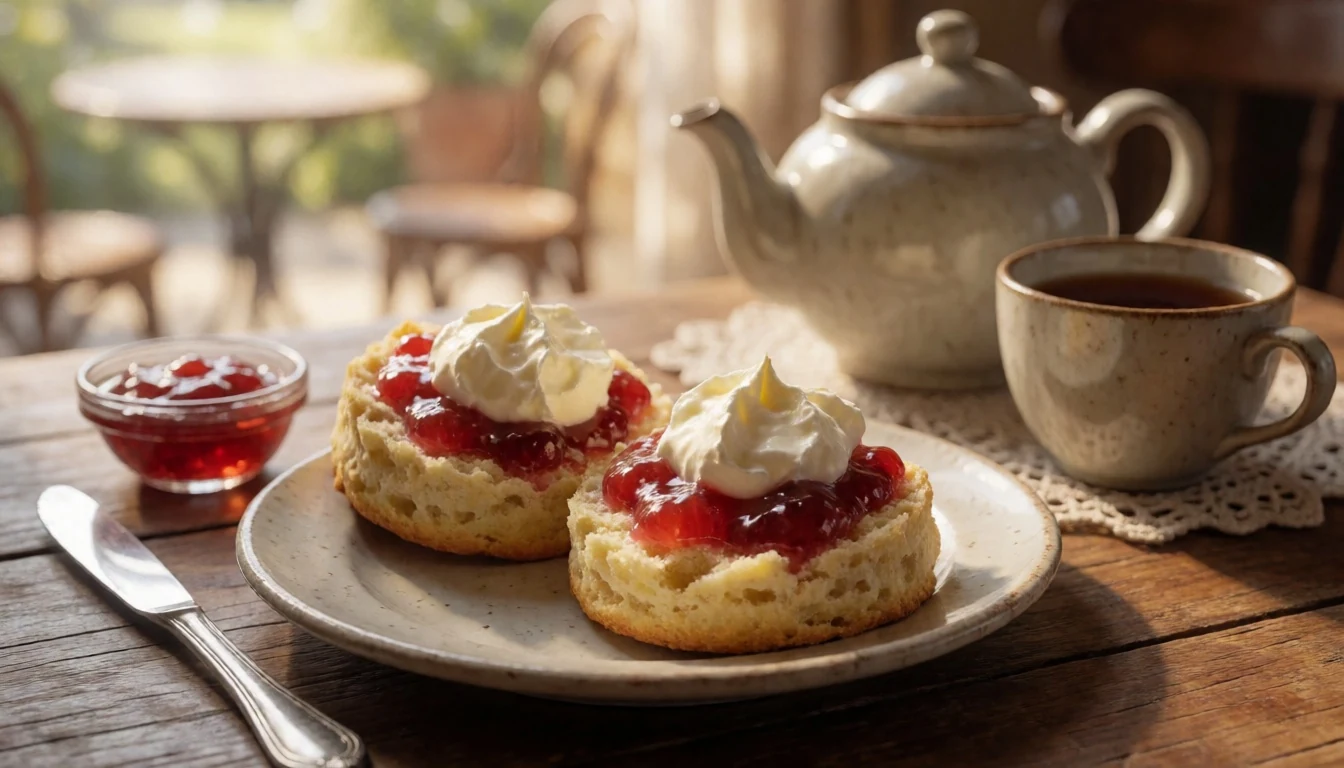
- Sunday roast — Thames-side pubs near the palace
Roast beef, chicken or lamb with potatoes, vegetables, Yorkshire pudding and gravy is a weekend habit across Britain. Riverside pubs around Hampton Court and nearby Kingston usually serve it, and popular ones fill up, so go early. - Fish and chips — Chip shops in Hampton and Kingston
Battered fish with thick chips, salt and vinegar is a dependable cheap lunch. Look for chip shops in the surrounding towns, and eat by the river if the weather allows. - Pie and mash — Pubs and traditional eateries nearby
A meat pie with mashed potato and sometimes a green parsley sauce is a London staple. It suits a cold day better than a hot one, and pub menus nearby often carry versions.
Plan it
Best time. May and September are the easiest months, with gardens in leaf and milder weather; June is already hot, and July and August are busiest and can be hot, while winter has short days but fewer people.
How long. 1
Getting there. Heathrow is the nearest major airport; from there, connect by taxi or by rail via London to Hampton Court railway station, which is close to the palace. Suburban trains also run from central London, and some seasonal river boats operate on the Thames, so check operators.
Budget. mid
Tips
- Book timed tickets online through the official site before travelling
- Arrive at opening, as the Great Hall and kitchens fill by midday
- Wear flat, comfortable shoes for cobbles and gravel
- Carry a waterproof; weather changes fast and gardens offer little shelter
- Check festival dates in Home Park, as they bring extra crowds
Etiquette
- Keep to marked routes and never touch tapestries, panelling or furniture
- Follow staff guidance on photography and keep voices low in the state rooms
- Queue in turn at the maze and ticket points
Nearby
Sources
- Wikidata Q205666 (CC0)
- Wikipedia: Hampton Court Palace (rev 1382871550) (CC BY-SA 4.0)
- Wikivoyage: Hampton Court Palace (CC BY-SA 4.0)
- Hampton Court Palace — Ricardalovesmonuments (CC BY-SA 4.0)
- Hampton Court Palace, West Front — Tilman2007 (CC BY-SA 4.0)
- Tudor Chimney Pots at Hampton Court Palace — Maxwell Hamilton (CC BY 3.0)
- The ceiling of the Great Hall — Diliff (CC BY 3.0)
- Hampton Court Palace, The Great Hall — Tilman2007 (CC BY-SA 4.0)
- Hampton Court Palace, The Great Hall — Tilman2007 (CC BY-SA 4.0)
- Thames riverside gate, August 2023 — Tabletop123 (CC BY-SA 4.0)
- A royal kitchen from the Tudor era — Calstanhope (CC BY-SA 4.0)


