Haleakalā National Park
Haleakalā National Park, United States
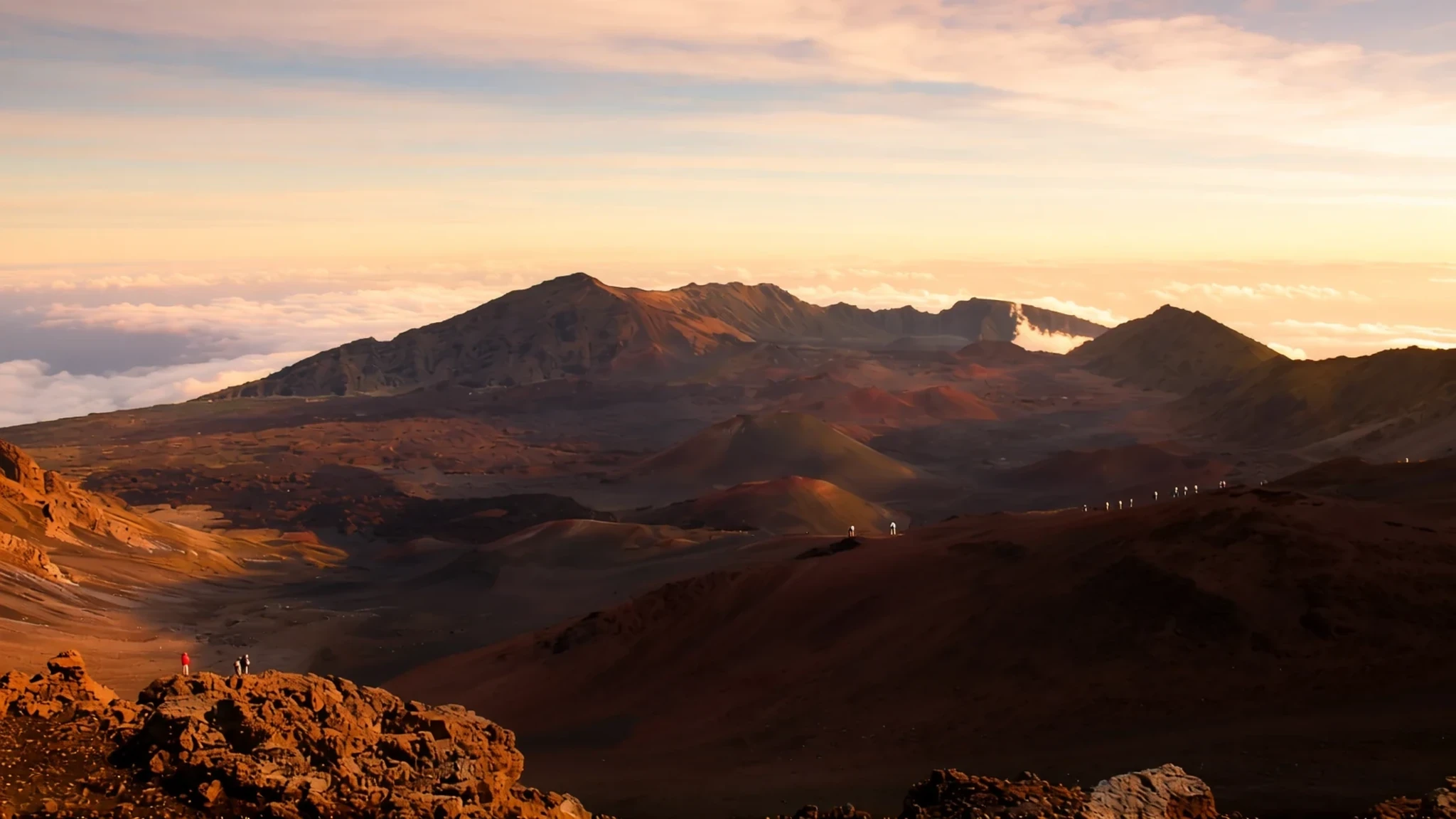
Haleakalā National Park gives a dramatic mix of volcanic summit and lush coast—rare landscapes shaped by altitude and isolation.
The place
Haleakalā National Park sits on Maui, Hawaii, and it’s named after Haleakalā, the dormant volcano inside the park boundaries. What stands out immediately is that the park isn’t just “a viewpoint”: it’s a whole vertical world, running from high crater country down to the Kipahulu coast.
At the top, the crater floor is covered in lava flows, ash and cinder cones. The surfaces can look like deep, dry desert—dark reds and browns under a hard sky—yet the air and light feel different as the elevation changes. Many visitors describe the summit like a lunar scene, and the feeling is real once you walk a little way away from the cars.
Then there’s Kipahulu: a completely different mood. The park reaches down to sea level here, and the coastal area is where you’ll notice how quickly the landscape shifts—shrub and woodland textures, damp air, and the sense of being in a more tropical pocket.
Haleakalā is open year-round and 24 hours a day, but severe weather can trigger closures. Practically, that means the “best day” is often whichever day your plans align with clear conditions and manageable temperatures at altitude. It also helps to remember that the park protects a living set of habitats, with native and endemic species tied closely to these isolated Hawaiian conditions.
Its story
Haleakalā’s story starts with the islands’ volcanic backbone. Before the park was its own destination, Haleakalā was part of a bigger Hawaii National Park that also included Mauna Loa and Kīlauea on the island of Hawaiʻi. That arrangement dates back to 1916, and later Haleakalā’s volcanic home became part of a new, separate set-up when the wider park was reorganised in 1961.
The name Haleakalā—often translated as “house of the sun”—also comes with a legend. Local stories say Maui imprisoned the sun here to lengthen the day, which is exactly the kind of myth that makes a sunrise trip feel more than just scenic.
The park splits into two clear parts: the peak and Kipahulu. It’s not a single road-connected loop, so the history of the place feels built into the geography—summit first, coastal second, with each zone offering its own set of plants, animals, and weather.
Geologically, the crater preserves the long work of eruption and time. Even though Haleakalā is dormant, the volcanic surfaces—cinders, ash and lava—still read like active geology. That’s why the experience can feel oddly timeless: you’re moving through the remains of eruptions while the living ecosystems below and around it keep adapting to this isolated island world.
What to see
- Haleakalā summit crater landscape — Summit area
Haleakalā National Park’s summit is defined by the crater floor—lava flows, ash and cinder cones stretching under big sky. The colours shift as you move, and the scale can feel hard to judge from the rim. - Sunrise moment at the rim — Summit area
Early mornings are the classic rhythm here. Watching the light come in from a clear morning can change how the cinder desert looks—less about photography, more about atmosphere. Expect planning because sunrise access is regulated. - Haleakalā summit trails and wilderness feel — Wilderness area
If the summit car stops feel too quick, the wilderness landscape is where the park turns into a real hike. People go for day walks or longer stays on the trail, moving between dry cinder zones and cooler, wetter pockets. - Kipahulu coastal region — Kipahulu area
Kipahulu is the park’s sea-level side, reached via Maui’s roads rather than a simple connection from the summit. Here the setting feels more tropical, and conditions can turn humid quickly, so layers and rain-ready gear matter. - Haleakalā Observatory area — Summit area
Up at the summit, the observatory area gives you a glimpse of how the location matters to science. The landscape around it is still volcanic and exposed, so go prepared for altitude, sun, and wind.
Culture
Haleakalā National Park is less about built landmarks and more about respecting how a fragile, isolated ecosystem works. The park is home to endangered and native Hawaiian species, and that’s part of what makes hiking here feel different: the land isn’t just scenery, it’s habitat.
On the summit side, crowds can spike around sunrise, and the atmosphere becomes a queue-and-wait kind of experience. Being prepared—dark-to-light layers, warm headwear, and patience—helps you enjoy the moment without rushing others.
In Kipahulu, the culture shifts to water and weather. The area can be affected by conditions that bring sudden flash-flood risks, so letting the visitor centre guidance lead is the “local good sense” here.
There’s also a practical culture of conservation in how people treat the park: there are no food concessions, so visitors plan ahead and take rubbish out. Wildlife encounters are typically distant and observational, because staying on paths and keeping your distance protects both the animals and the plants.
Visitor etiquette: stay on marked trails, take all rubbish with you, and follow posted safety warnings—especially around water and sudden weather changes.
What to wear
At Haleakalā, dressing is mostly about coping with altitude and shifting microclimates. The summit can feel cold and dry compared with the island lowlands, even though Maui itself is tropical. A layered kit works best: base layer, warm mid-layer, and a windproof outer shell for breezy conditions at higher elevations.
On the coast of Kipahulu, humidity and rain are more likely, so quick-drying tops and a light rain layer help you stay comfortable. Footwear matters: choose trainers or hiking shoes with grip for cinder and uneven ground around the summit trails, and avoid thin soles that slip on wet or muddy patches.
For textiles and traditional dress, there isn’t a single “required” outfit in the park context like there is at certain religious sites. Still, many people opt for breathable, modest clothing that covers shoulders and knees comfortably for long walks, then adjusts for weather.
What to wear as a visitor: layers you can add or peel, a warm hat for early starts, sunglasses for bright summit light, and sturdy shoes for volcanic terrain. Bring a small day bag with water, and be ready for conditions to change quickly even on the same morning.
What to eat
- Crater coffee (mobile trailer snacks) — Summit area (crater area roadside setup)
A mobile coffee trailer operates in the crater area, serving hot drinks like coffee, teas and hot cocoa, plus simple snacks such as bagels and muffins. - Bring-your-own picnic meals — Everywhere in the park (especially summit hikes)
Haleakalā has no general food concessions, so most visitors plan packed meals for hikes or long scenic stops. Think portable items that travel well in a day bag. - Refill strategy from Kahului — Before you drive into the park, starting from Kahului
Because the park doesn’t offer an in-park shopping routine, visitors usually eat and drink before entering and then ration water for the hike. Pack enough for the zone you’ll be in. - Local snacks and markets on the way — Markets and local shops around Maui’s towns before the park
A practical approach on Maui is to pick up snacks and simple breakfast items on your route in the days leading up to the summit or Kipahulu drive, then carry them with you.
Plan it
Best time. October–November and March–April are comfortable windows to aim for clear conditions; the summit can be cold at altitude while lower areas stay warm. June is the rainy season, and August can feel hot and humid, so plan around weather and start early.
How long. 3–4
Getting there. Fly into Kahului on Maui, then drive to the park via Route 37 and 378 for the summit area or via Route 36 and 360 and 31 for Kipahulu; there is no public transportation to or in the park.
Budget. mid
Tips
- Do the summit section on a clear day—altitude conditions matter for comfort and safety.
- For sunrise, plan ahead because sunrise experiences are regulated.
- Bring all food for the day since there are no broad concessions beyond a small coffee/snack option.
- Pack water and walk slowly at higher elevations to reduce breathing stress.
- Check conditions at the visitor centre before entering Kipahulu water areas.
Etiquette
- Follow posted rules around water and flooding warnings, and don’t ignore barriers.
- Stay on marked paths, especially in cinder terrain and in wilderness areas.
- Take rubbish out with you; don’t leave litter on trails or viewpoints.
Nearby
Sources
- Wikidata Q1137640 (CC0)
- Wikipedia (rev 1379149022) (CC BY-SA 4.0)
- Wikivoyage (rev 5242156) (CC BY-SA 4.0)
- Photo photos/01-kipahulu-coast.jpg (Public domain)
- Photo photos/02-haleakala-national-park-02.jpg (CC BY-SA 4.0)
- Photo photos/03-maui-moku-map-2.jpg (Public domain)
- Photo photos/04-haleakala-national-park-map-2008-08.jpg (Public domain)
- Photo photos/05-haleakal-2017-9.jpg (CC BY-SA 4.0)
- Photo photos/06-haleakalasilversword.jpg (Public domain)
- Photo photos/07-kiwikiu-perched-in-the-waikamoi-forest-preserve.jpg (CC BY 4.0)
- Photo photos/08-haleakala-observatory-2017.jpg (CC BY-SA 4.0)


