Grímsey
Grímsey, Iceland
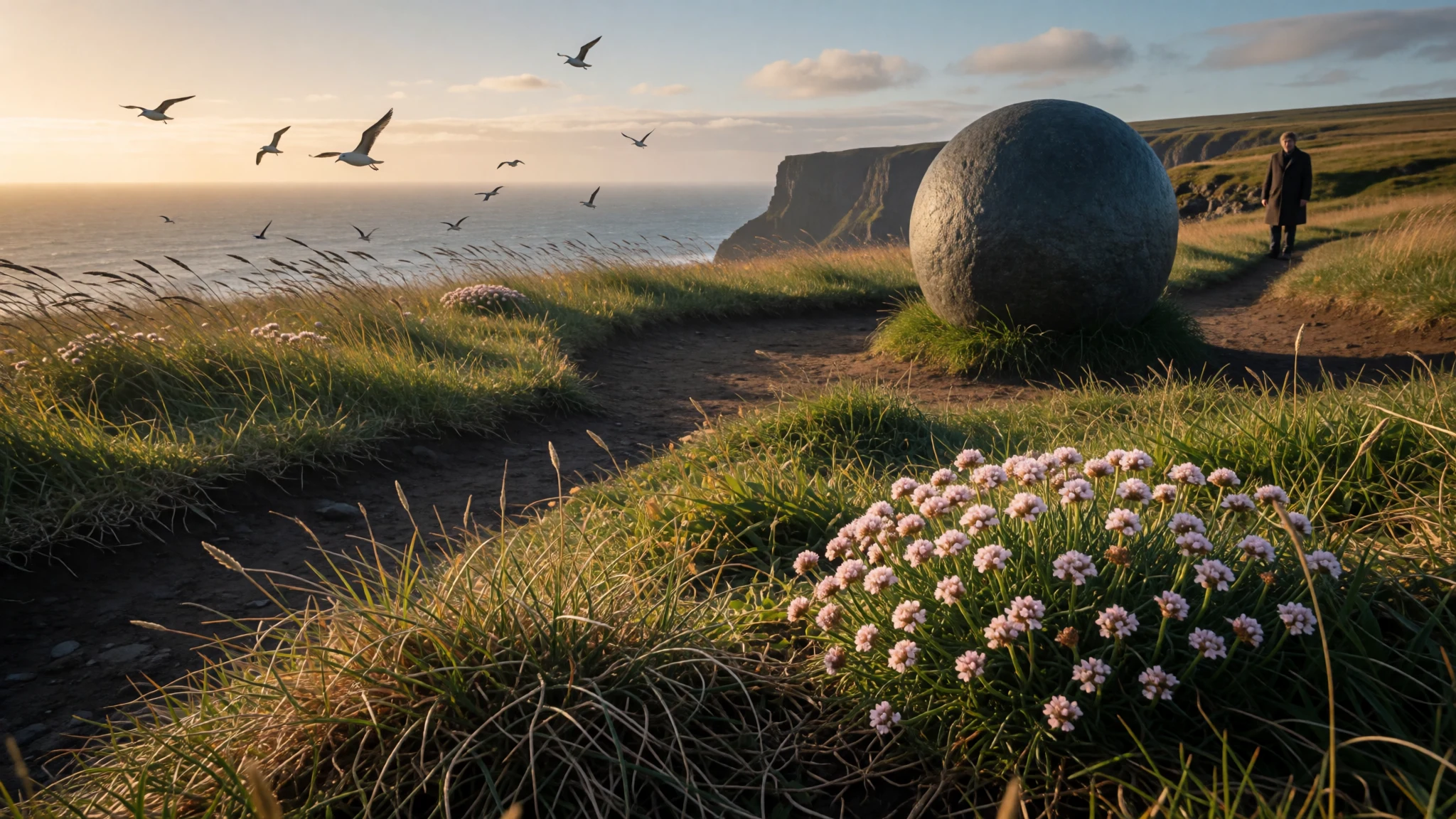
Grímsey is a windswept Arctic Circle island of seabirds, fishing boats and a village of 61 people, reached by a short ferry or flight from the mainland.
The place
Grímsey is a small island in the North Atlantic, north of the Icelandic mainland, with a population of 61 and a single village, Sandvík. The highest point is 105 metres above the sea. Cliffs fall away on almost every side; only the south-western shore slopes gently enough to hold the harbour and the houses. Administratively the island belongs to the municipality of Akureyri, and the usual ways across are the ferry and the small passenger plane. The Arctic Circle passes through Grímsey, which is the main reason people come, and it is the northernmost inhabited part of Iceland. Daily life is built around the sea: boats in the harbour, a church, a school, a shop and a handful of houses, with very little else. The birds supply the crowds. In summer the cliffs fill with nesting puffins and other seabirds, and the noise and smell are part of the experience. The top of the island is open grass and low tundra with almost no trees, so the wind is constant and shelter is rare. Despite the latitude, a warm ocean current softens the winters, which makes the climate cold and breezy rather than extreme, but even July days rarely feel warm. A walk from one end of the island to the other is easy, services are limited, and the weather decides the schedule more than any timetable does.
Its story
Grímsey's best-known story is about a line that will not stay put. The Arctic Circle is a circle of latitude, and because the tilt of the Earth's axis wobbles slowly over long periods, the circle creeps northward by about 14.5 metres a year on average, though the figure changes from one year to the next. Islanders have long marked where it falls. Several older stone markers record where the line lay in earlier centuries, and each now sits a little south of the real thing. In 2017 the community added a different kind of marker: Orbis et Globus, a stone sphere weighing eight tonnes, made to be moved as the circle shifts, so that it stays on the line instead of merely remembering it. At present the crossing lies near the island's northern end, and the drift means it will leave Grímsey altogether around the middle of this century and fall into open water. That gives the island an odd claim, because its famous position is temporary. Behind the line lies a quieter history. Grímsey has been a fishing community, living off boats, birds and the sea, and it has stayed inhabited through isolation and long winter darkness. Until the municipal reorganisation it governed itself, and it is now run from Akureyri on the mainland. The smallness is the point: everyone knows the harbour, the weather and each other, and a visitor walking to the monument is stepping into that daily routine.
What to see
- Orbis et Globus — Northern part of the island
Grímsey's stone sphere sits on the current line of the Arctic Circle, and walking out to it across open grass is the classic visit. The sphere is moved from time to time as the circle drifts, so ask locally before heading out. Wind is the main hazard here.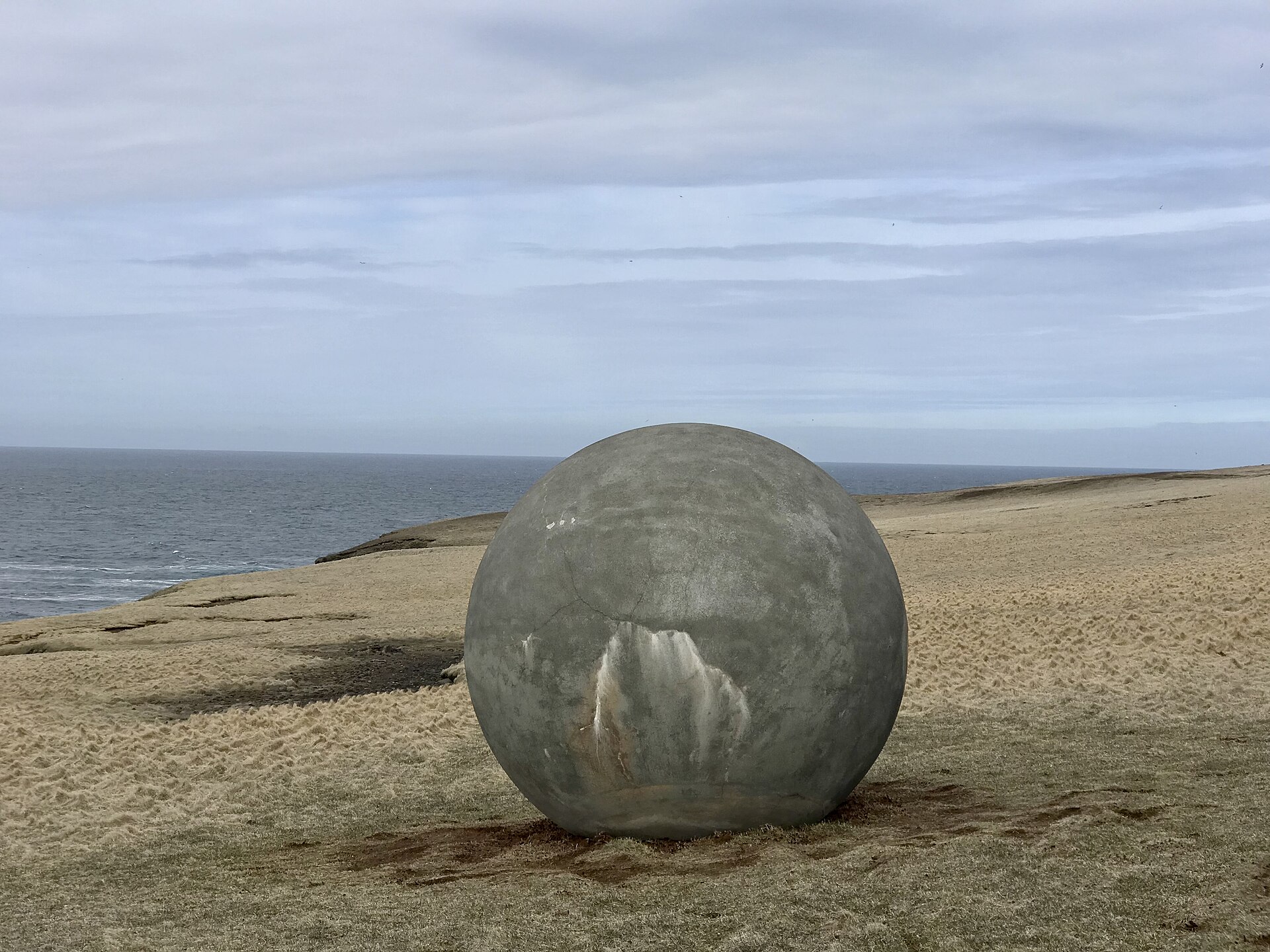
- The older Arctic Circle markers — Central and northern island
Near the village stand older markers that record where the Arctic Circle was in past centuries. Comparing them with the sphere makes the northward drift visible. They are modest pieces of stone and signage, best taken as a short stop on a longer walk.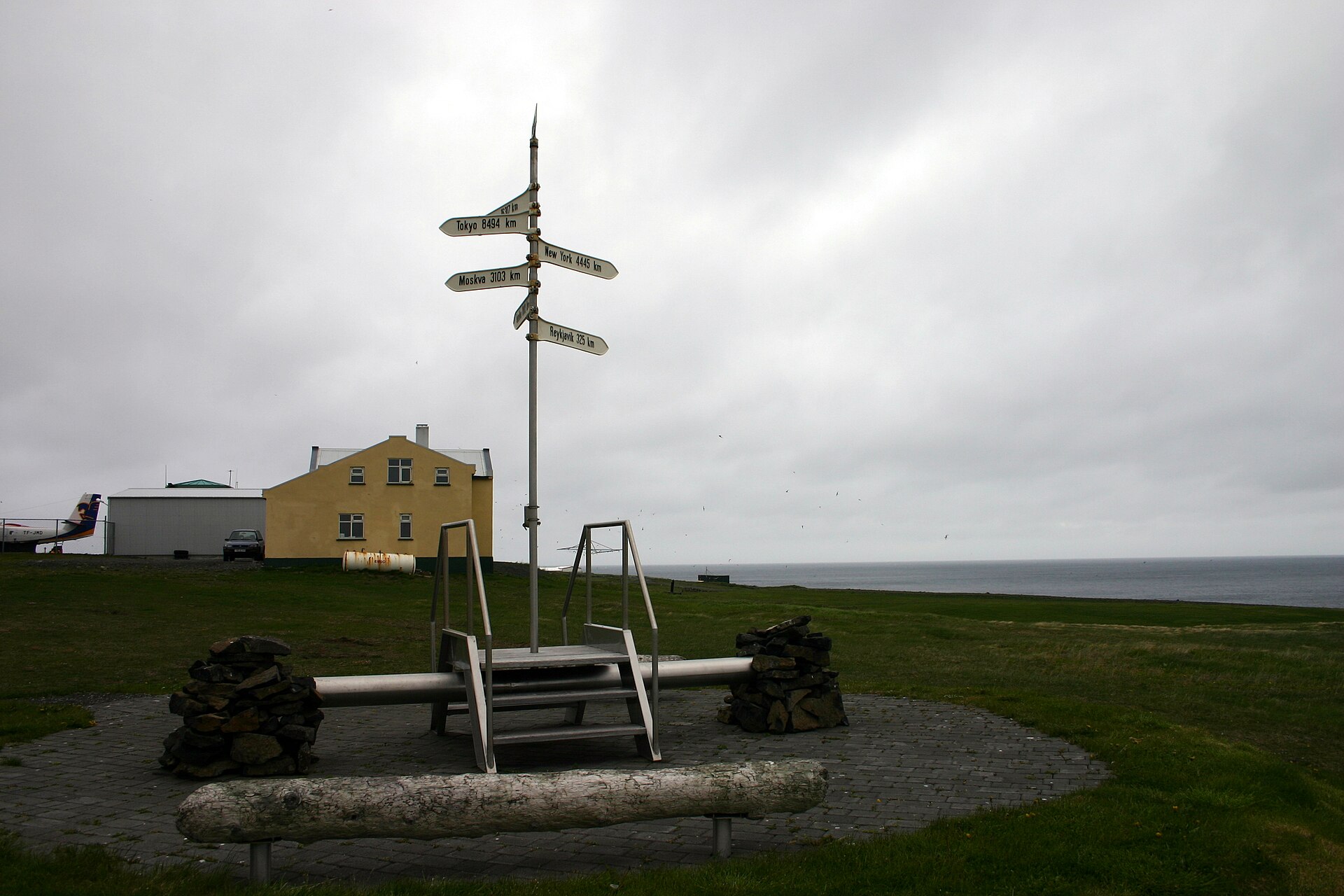
- Northern cliffs and bird colonies — Northern tip
The northern end of Grímsey drops in steep cliffs crowded with seabirds in summer, puffins among them. Stay well back from the edge, as the turf can be loose and gusts strong. Binoculars help, and early or late hours are quieter for watching.
- The harbour — South-western shore
Grímsey's harbour is the island's working heart, where fishing boats come and go and the ferry arrives. It is a good place to watch daily life and to see how a village of this size depends on one sheltered inlet. Keep clear of working quays and ropes.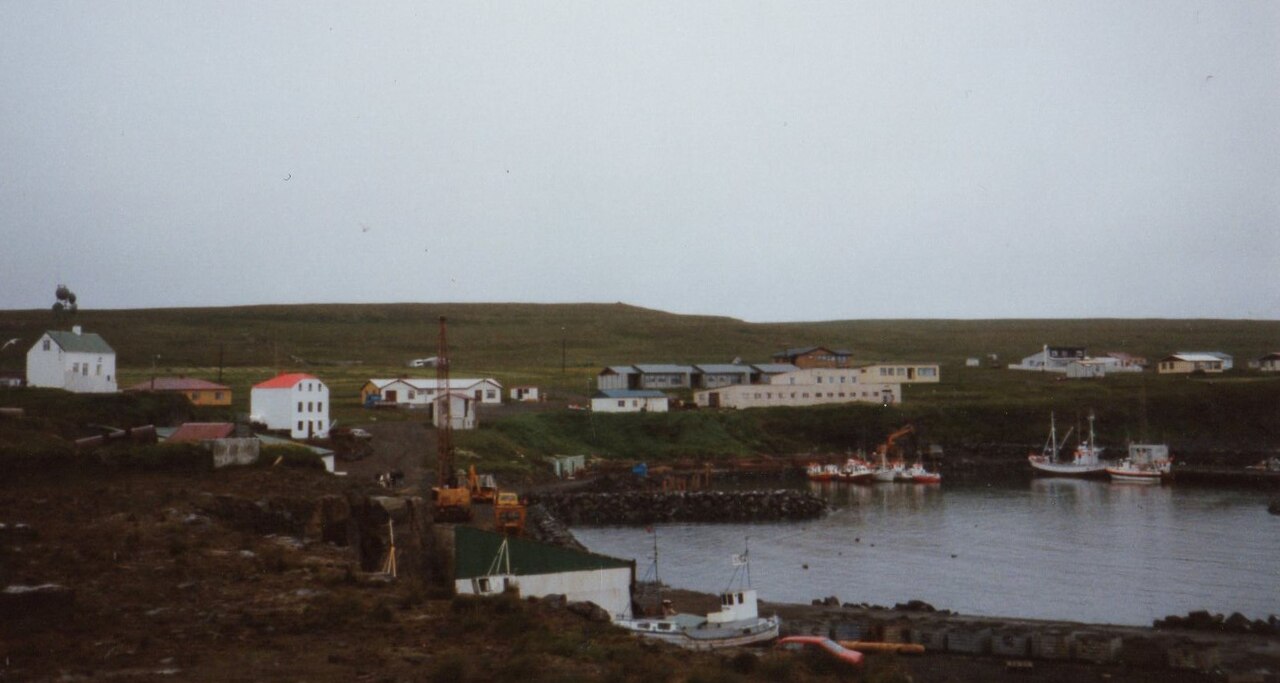
- Village main street and church — Sandvík village
The island's one road of houses leads past the church, a plain building that serves a small community. A stroll takes minutes, but it shows Grímsey as a place where people live rather than a visitor attraction. Respect homes and gardens, and ask before going inside the church.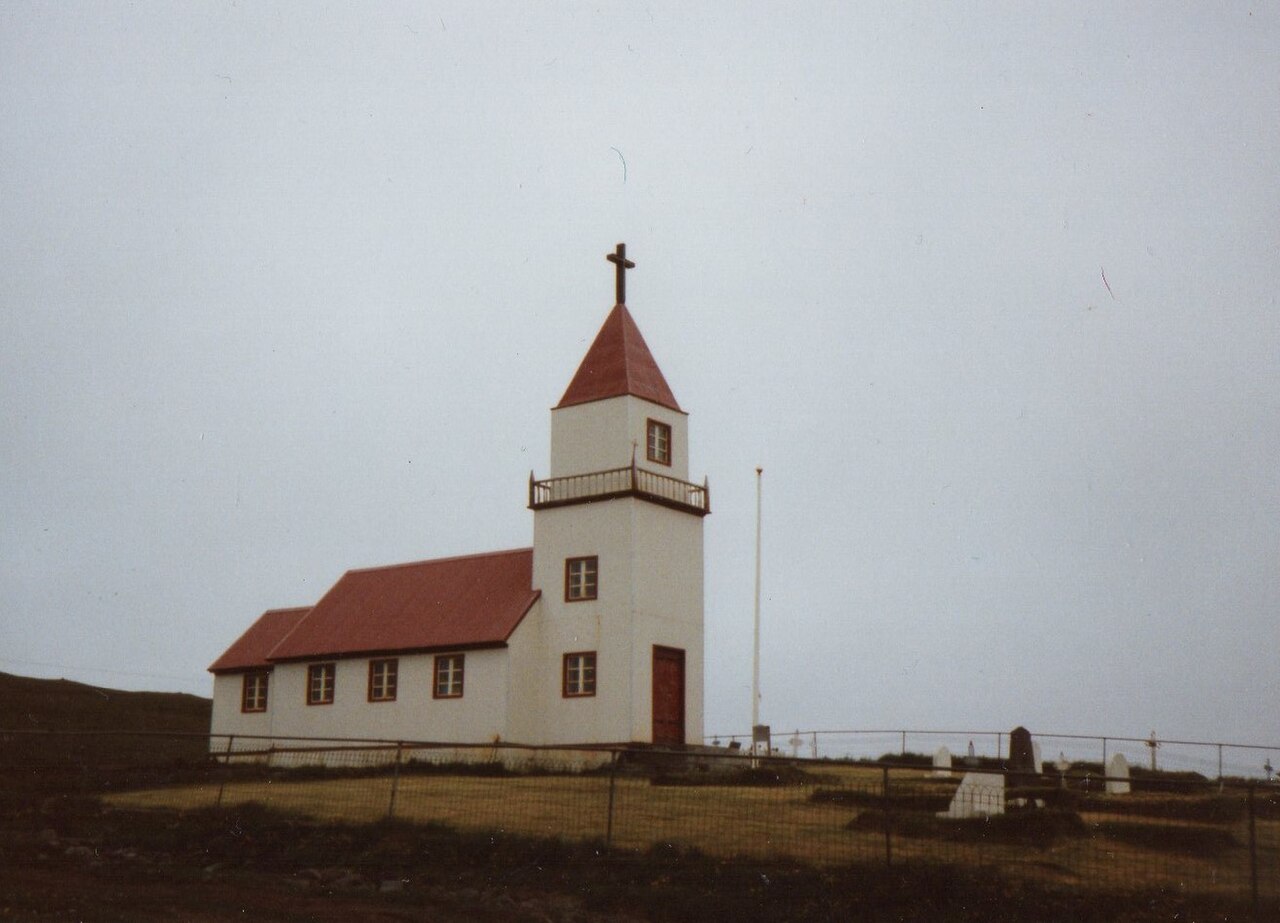
Culture
Grímsey's culture is that of a tiny Icelandic fishing community, where the sea, the weather and the seabirds shape the year. Icelanders in general are egalitarian, and that shows here in an easy informality: people greet visitors as equals, whether they are working on a boat, serving in the shop or showing someone the way to the monument. News travels quickly in a place this small, and visitors who ask questions will find residents glad to talk about the island, the birds and the changing line of the Arctic Circle. Locals tend to be curious about how a visitor finds Iceland, and polite, honest interest goes further than flattery. Family and community ties matter a great deal across the country, and interest in genealogy is widespread, so surnames and family stories are a natural topic of conversation. The church and the harbour are the island's gathering points, and seasonal work, such as fishing and tending the birds' habitat, sets the rhythm of the year. Visitors arrive in numbers mostly in summer, so residents are used to guests but also value quiet, particularly outside the main weeks. In the village, remember that the houses, gardens and boats you pass are private and in daily use, not part of an exhibit. Keep to marked paths near nesting birds and ask permission before photographing residents or going near private property.
What to wear
Grímsey is a place where clothing is about wind and wet more than display, but Icelandic tradition still shows. The best-known garment is the lopapeysa, a yoked sweater knitted from lopi, the wool of Icelandic sheep, in rings of pattern around the shoulders. Formal national dress, the þjóðbúningur, is a long skirt and embroidered bodice for women and a more sober outfit for men, usually worn for weddings, confirmations and national celebrations rather than every day. On the island today, people wear practical outdoor clothes: waterproof jackets, wool base layers, thick socks, rubber boots for work at the harbour and a knitted hat in nearly every season. A lopapeysa is still common, partly for warmth and partly from habit. Visitors should dress for a cold, windy, treeless island even in summer. Bring a windproof and waterproof outer layer, a warm mid-layer such as fleece or wool, a hat and gloves, and sturdy waterproof shoes or boots with good grip for wet grass and rough tracks. Sunglasses help in long summer light. There is no strict dress code in the village or at the church, though simple, tidy clothing is polite if you step inside. Pack layers you can add or remove quickly, since sun, drizzle and wind can all arrive within an hour.
What to eat
- Fresh local fish — The island's small eatery or guesthouse dining room
Fish is the island's living, so Grímsey's best meals are usually whatever the boats have landed, often simply pan-fried or boiled with potatoes and butter. Availability depends on weather and season, so ask what is fresh rather than expecting a fixed menu. - Harðfiskur — The village shop or any supermarket on the mainland
Harðfiskur is wind-dried fish torn into strips and eaten with butter as a snack. It is salty, chewy and surprisingly filling, and it is a sensible thing to carry on a windy cliff walk or a ferry crossing. - Skyr — The village shop or breakfast tables at guesthouses
Skyr is a thick, tangy, yoghurt-like dairy product eaten across Iceland, plain or flavoured, usually for breakfast or a light snack. It is low in fat and high in protein, and it works well with berries or honey. - Hangikjöt — Home-style menus at guesthouses and mainland restaurants
Hangikjöt is smoked lamb, traditionally served sliced and cold or hot with potatoes, peas and a white sauce. It is closely tied to festive meals, and its smoky, salty flavour suits a cold climate. - Rúgbrauð — Bakeries and supermarkets on the mainland, sometimes the island shop
Rúgbrauð is a dense, dark, slightly sweet rye bread, traditionally baked slowly in hot ground. It is often eaten with butter, smoked fish or lamb, and it keeps well, which makes it good picnic bread.
Plan it
Best time. June to August for puffins and other nesting seabirds, long daylight around midsummer and the mildest weather; even then it stays cool and windy. Winter brings darkness, rough seas and disrupted transport, though clear nights can offer northern lights.
How long. 1–2
Getting there. Fly or take the ferry from the north coast of mainland Iceland. Akureyri is the nearest town and the usual base, with the island's municipal website at https://www.akureyri.is/grimsey/ for local information. Check operators for current timetables and booking, since weather can change plans.
Budget. mid
Tips
- Book transport and any bed well ahead for summer, and keep a spare day in case weather cancels a crossing
- Bring cash and a card, and carry food and water, as services on the island are limited
- Pack windproof layers even in July, because the island has almost no shelter
- Walk to the Arctic Circle monument early or late in the day, when the paths and cliffs are quieter
- Ask locally where the sphere currently stands, since it is moved to follow the line
Etiquette
- Keep to paths and well back from cliff edges and nesting birds
- Treat houses, gardens and boats as private, and ask before photographing residents
- Take all rubbish away with you
Nearby
Sources
- Wikidata Q213707 (CC0)
- Wikipedia: Grímsey (rev 1379565893) (CC BY-SA 4.0)
- Wikivoyage: Iceland (rev 5413463) (CC BY-SA 4.0)
- Photo: Grímsey (Steinninn) (CC BY 4.0)
- Photo: Orbis et Globus (Andrii Gladii) (CC BY-SA 4.0)
- Photo: Grimsey Iceland (AJHawkeyeOfficial) (CC BY-SA 4.0)
- Photo: Arctic Circle on Grimsey Island (Brad Weber) (CC BY 3.0)
- Photo: Harbour of Grimsey Island (Torbenbrinker) (CC BY-SA 4.0)
- Photo: Main Street, Grimsey Island (Torbenbrinker) (CC BY-SA 4.0)
- Photo: Church on Grimsey Island (Brad Weber) (CC BY 3.0)
- Photo: Church, Grímsey Island (Torbenbrinker) (CC BY-SA 4.0)


