Grenoble
Grenoble, France
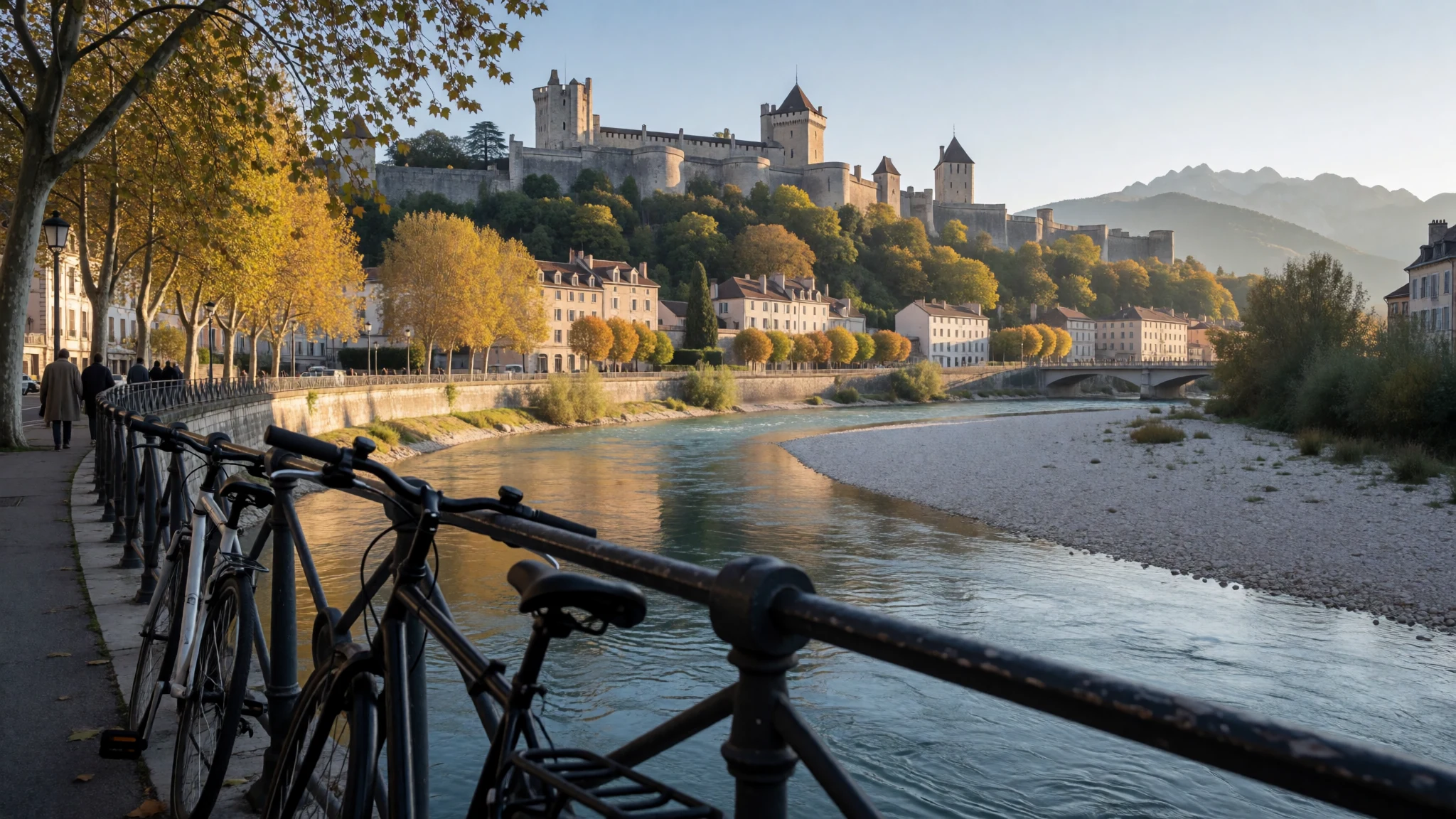
Grenoble is a working Alpine city where tram lines end at mountain walls, a hilltop fort overlooks the rivers, and trails and ski slopes sit within easy reach.
The place
Grenoble sits at 212 metres above sea level on a flat valley floor where the Drac meets the Isère, with the Alps rising steeply on several sides. That setting shapes everything. Mountain walls close the horizon at the end of nearly every street, and cable-car cabins swing over the river to a fortified hill. About 156,140 people live in the commune itself, and roughly 730,000 in the wider urban area, so the feel is of a busy regional capital rather than a resort. It is the prefecture of Isère in southeastern France and was for centuries the capital of the old province of Dauphiné.
Students and researchers shape daily life. Universities, laboratories and a large synchrotron on the western edge of town bring a young, international crowd, and the city promotes itself as a European science centre. The result is a place with bike lanes, trams, lively cafés in the old centre and a habit of heading to the hills at weekends.
As a base, Grenoble works well. Ski stations, walking trails and lakes lie within an hour or two, while the city itself offers museums, a compact old quarter and fine views for a day or so. A few honest caveats: the valley floor can be hot and still in high summer, winter brings cold and sometimes low grey cloud that hides the peaks, and the old centre is modest rather than grand. Clear days in spring and autumn are when the setting earns its reputation. The official city site is https://grenoble.fr.
Its story
Grenoble's recorded story starts in 43 BC, when Cularo was a small settlement of the Allobroges, a Gallic people, beside a crossing of the Isère. As the late Roman world grew less safe, a defensive wall went up around the town in 286 AD, and stretches of that masonry can still be seen today. In 381 the emperor Gratian visited, was pleased by his reception and granted the settlement city status. It took his name as Gratianopolis. Centuries of changing pronunciation wore that down to Graignovol and finally Grenoble.
Christianity arrived in the 4th century and a diocese was founded in 377. From then on the bishops held real political power, and until the Revolution they carried the title of prince as well as bishop. The town passed through the Burgundian kingdoms and joined the Holy Roman Empire in 1032. In the 11th century it became capital of the Dauphiné, and later union with France helped it grow into a parliamentary and garrison city close to the Savoy frontier, which then lay inside the Empire.
Two later episodes are still retold locally. On 7 March 1815 Napoleon, returning from Elba, was welcomed here by the 7th Regiment under Colonel de la Bédoyère, a moment that opened his road towards Paris. And in 1925 the city staged an international exhibition on houille blanche, or white coal: the hydroelectric power drawn from mountain water that fed its industrial rise.
What to see
- Bastille Hill — north bank of the Isère, above the old centre
Bastille Hill rises directly above the old centre, crowned and flanked by a long chain of fortifications built to watch over the city. Cabin lifts run up from the riverside, or a steady walk of about forty minutes follows the slope. From the top the Alps, both rivers and the grid of rooftops lie spread out. Check the operator's site for lift times and fares.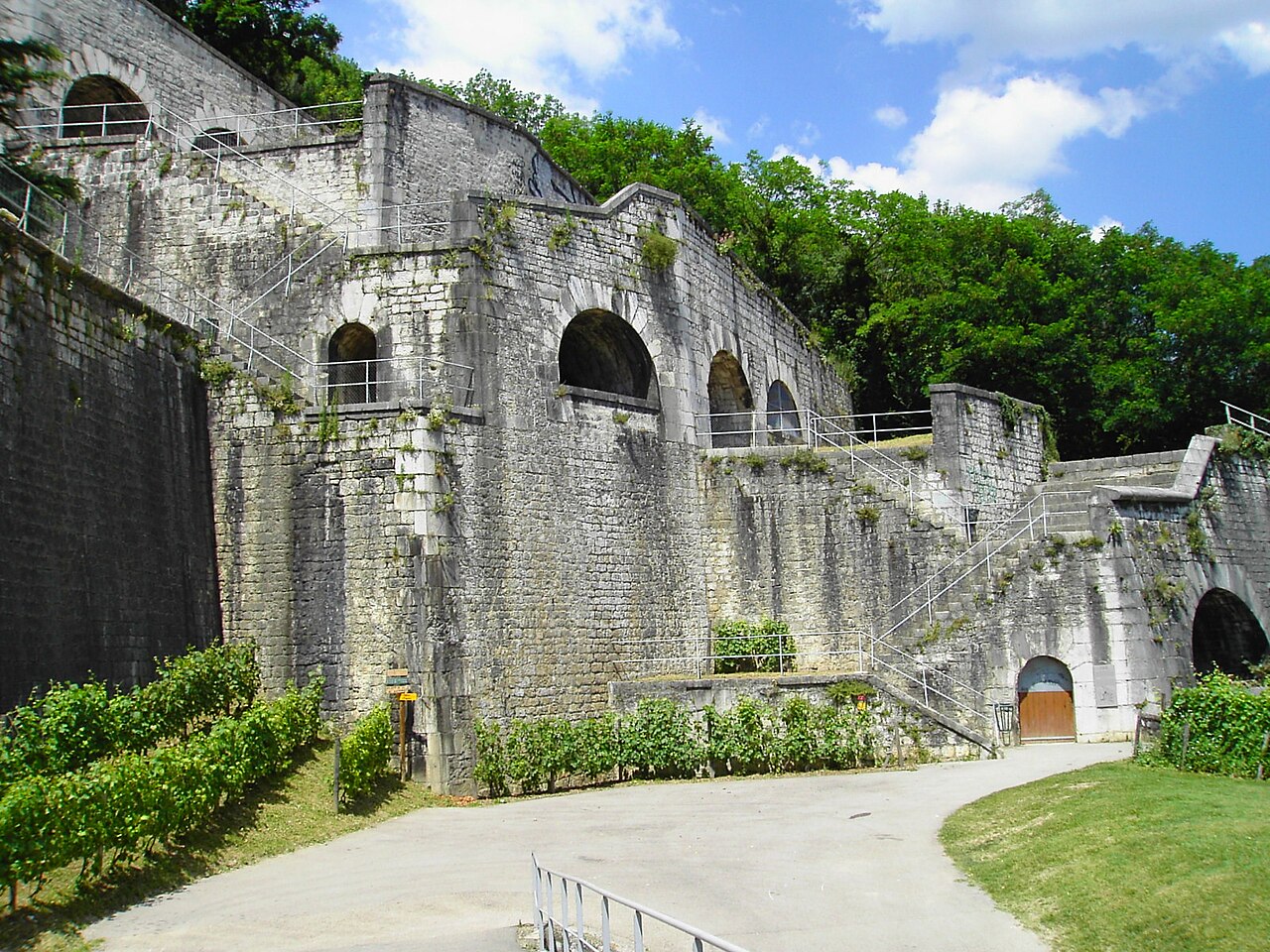
- Roman wall of Cularo — old town
Fragments of the Roman wall of Cularo survive in the city, a reminder that the town was fortified in the late third century. The stonework is short and unshowy, best treated as a quick stop rather than a destination, and it means more after reading about Gratianopolis. The tourist office can point out the exact places to look.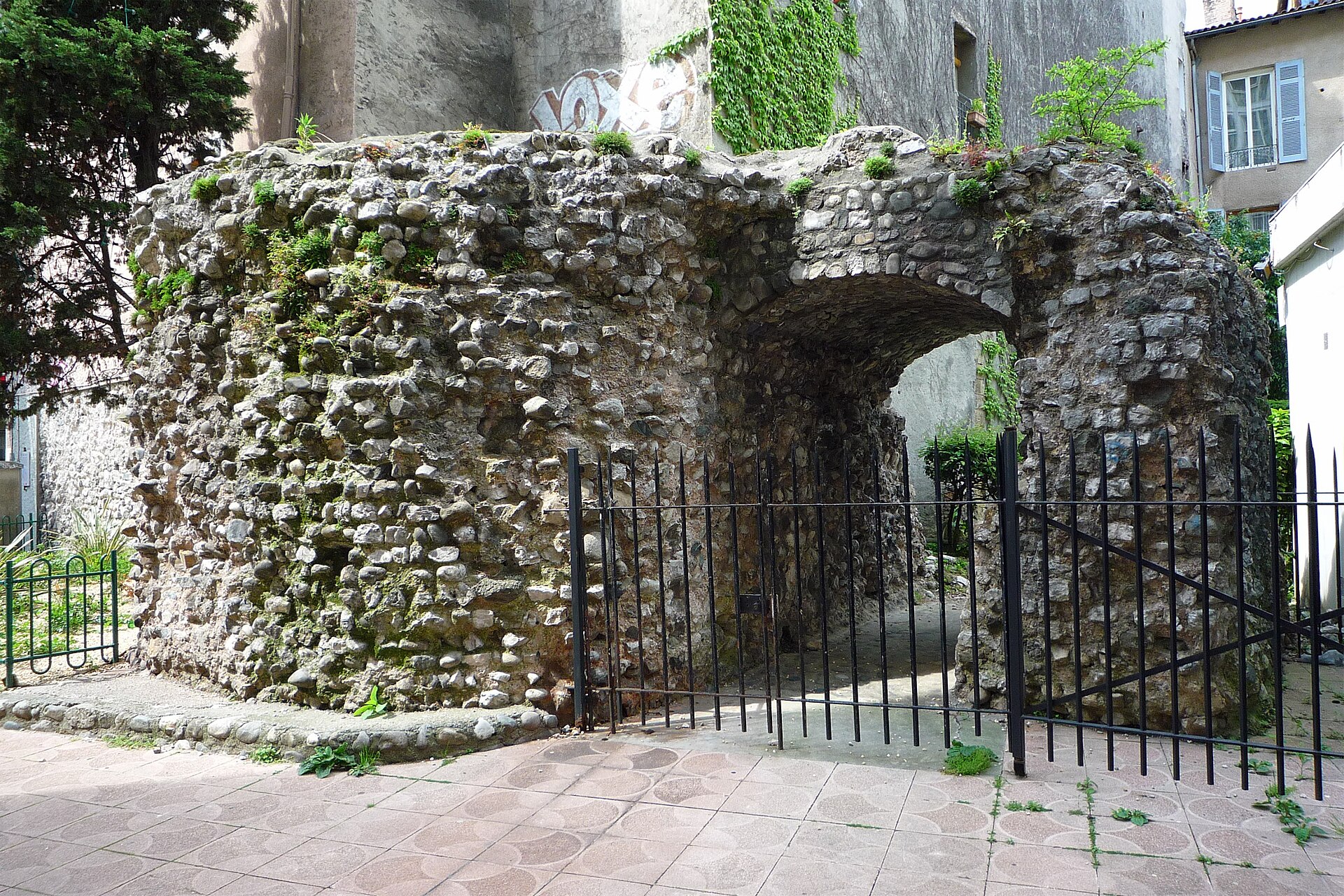
- Musée Dauphinois — foot of Bastille hill
The Musée Dauphinois occupies a former convent, Sainte-Marie-d'en-Haut, on the lower slope of Bastille hill, so a quiet cloistered setting comes with displays on the history and traditions of the Dauphiné region. It pairs naturally with a trip up the hill. Opening hours and any charges change, so check the museum's official page before going. - Musée de Grenoble — city centre, near the Isère
The Musée de Grenoble is worth a visit partly for its modern, light-filled building. Inside are Italian paintings from Florence and large canvases from the French, Flemish, Dutch and Spanish schools, alongside later art. It suits a wet or very hot afternoon. Check the museum's website for current hours and ticket arrangements. - Muséum d'histoire naturelle — central Grenoble, near Parc Paul Mistral
Grenoble's natural history museum is a good primer for anyone heading into the mountains. It holds rich collections of minerals and Alpine wildlife, plus an aquarium, and the building has facilities for disabled visitors. Families find it easy going, and it is a sensible choice when cloud hides the peaks. Check the official page for opening times.
Culture
Grenoble's culture is that of a student and scientific city set inside mountain country, and the two sides mix easily. A morning in a lab can be followed by an afternoon on a rock face, and outdoor kit is normal clothing in cafés. Cycling is part of everyday travel, and the old centre fills in the evening with people on terraces.
The festival calendar leans towards music and film. Détours de Babel brings music to the city each March, and Cabaret Frappé fills the end of July. The Grenoble Outdoor Short Film Festival has run since 1978; in June, short films are screened over three nights at the Cinéma Juliet Berto and in the open air in the Jardin de ville, with prizes from juries and audiences. Programmes shift from year to year, so check dates before planning around them.
For theatre, dance and concerts, the main venue is MC2, the Maison de la culture. Its name is shorthand for a second-generation cultural house, and the programme draws on both French and international companies. Beyond the stage, local identity rests on the Dauphiné past, on the bishops and the parliament that once governed here, and on the habit of treating the surrounding peaks as a shared garden rather than a distant view.
In shops, cafés and on public transport, begin with a clear bonjour and add merci or au revoir on leaving, since skipping the greeting is the quickest way to seem abrupt.
What to wear
Grenoble has no single famous costume the way some regions do. The old Dauphiné country dress of wool and linen, with aprons, shawls and caps for women, faded from everyday use long ago and now appears mainly in museum displays and folk events. The city's own textile claim is more specific: it was long associated with fine glove-making, working soft leather into a trade that supplied much of France. Today that heritage is chiefly a matter of history rather than of what is worn on the street.
What people wear now is practical and understated. Students and researchers favour jeans, trainers, waterproof shells and fleeces, with trail shoes and rucksacks common even on ordinary weekdays. Smarter outfits appear at the theatre or at dinner, but rarely anything formal. Cyclists wear helmets and bright jackets in the dark months.
For a visitor, layers are the rule. Summers in the valley can be hot and still, so light cotton, a hat and sun protection help, while evenings on Bastille hill are cooler. Winters are cold and damp, and a proper coat, gloves and boots with grip are worth packing, especially if the plan includes snow. Sturdy shoes matter for the hillside paths and cobbles. Churches and museums have no strict dress code, but covered shoulders are a courteous choice when entering a place of worship. For trips into the mountains, bring waterproofs whatever the forecast.
What to eat
- Gratin dauphinois — traditional bistros in the old centre
Gratin dauphinois is the regional comfort dish: thinly sliced potatoes baked slowly in cream until soft and golden. It appears as a side with meat or as a meal with salad. Look for it at traditional bistros in the old centre, especially on colder days. - Noix de Grenoble — covered market and food shops in the centre
Walnuts from the Isère valley carry the city's name and a protected designation. They turn up fresh in autumn and are sold shelled, in cakes, in bread and as walnut oil. Browse the covered market and food shops for them in the centre. - Ravioles du Royans — market stalls and regional delicatessens
These small, soft pasta parcels filled with cheese and herbs come from the Royans area to the southwest. They are usually served in cream or broth and cook in minutes. Look for them in fresh-pasta counters at markets and in regional shops. - Saint-Marcellin — morning markets and cheesemongers
Saint-Marcellin is a small, creamy cow's-milk cheese from the Isère area, often sold in a little ceramic dish. Young ones are mild, older ones runny and tangier. Buy it from a cheese stall at a morning market and eat it with bread. - Chartreuse — bars and wine shops in the centre
Chartreuse is a herbal liqueur made from a closely guarded recipe in the nearby mountains of the same name. The green version is strong and sharp; the yellow is sweeter. Try it as a digestif in a bar, or look for it in wine shops in town.
Plan it
Best time. May–June and September–October bring clear mountain views and walkable temperatures; July–August is hot in the valley but good for high trails, and winter suits skiing but often brings cloud and cold in the city itself.
How long. 2–3
Getting there. Three airports serve the area. The nearest is about 40 km away with a coach link, Lyon Saint-Exupéry is about 100 km away with buses and TGV trains to Grenoble, and Geneva is 157 km away with trains and buses; the last leg in all cases ends at Grenoble's central station, a short tram ride from the old centre.
Budget. mid
Tips
- Book a table or ticket ahead if a festival is on, especially in June and late July
- Take the Bastille cable car or walk up early for clearer air and softer light
- Check the official sites for museum and lift hours, which change by season (https://grenoble.fr)
- Carry a reusable bottle and layers, since valley and hill temperatures differ
- Use trams and bikes in town rather than a car, as parking in the centre is tight
Etiquette
- Greet staff with bonjour when entering shops and cafés
- Stay on marked paths on the hills and take litter back down
- Keep voices low in museums and in the Jardin de ville at night
Nearby
Sources
- Wikidata Q1289 (CC0)
- Wikipedia — Grenoble (rev 1384631423) (CC BY-SA 4.0)
- Wikivoyage — Grenoble (rev 5403234) (CC BY-SA 4.0)
- Photo: Grenoble with bridge over Isere and view of Alpes (Public domain)
- Photo: Vestiges de l'enceinte romaine de Cularo (CC BY-SA 2.0)
- Photo: Plan-relief de Grenoble en 1848 (CC BY 3.0)
- Photo: Journée des Tuiles (Alexandre Debelle) (CC BY-SA 4.0)
- Photo: Fortifications de la Bastille, Grenoble (CC BY-SA 1.0)
- Photo: Retour de Napoléon de l'île d'Elbe (Charles de Steuben) (Public domain)
- Photo: Fontaine des trois ordres, Grenoble (CC BY-SA 2.5)
- Photo: Entrée exposition H.B., Grenoble (Public domain)


