Gondar
Gondar, Ethiopia
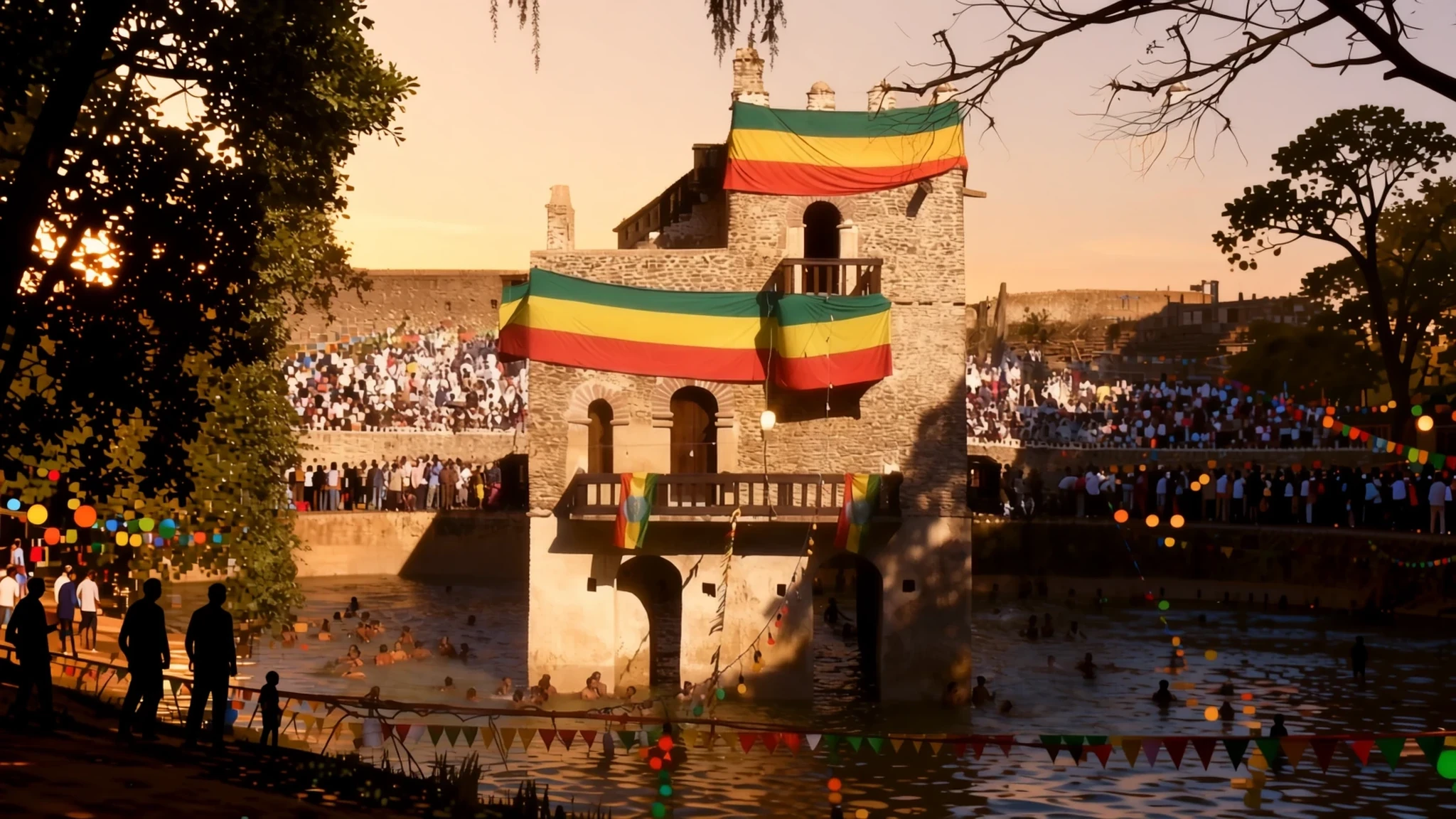
Gondar rewards a few days of castles, churches and mountain air, with the Fasil Ghebbi as its anchor.
The place
Gondar sits in the Amhara Region of northern Ethiopia, north of Lake Tana and on the edge of the highlands that lead towards the Simien Mountains. The city stands at about 2,133 metres, so the air is thin and cool compared with the lowlands. The population is around 320,000, a substantial town rather than a village, yet the centre is compact enough to walk between the main sights.
The royal camp was set up in 1636, and the city went on to serve as the seat of the Ethiopian Empire and later as the capital of Begemder Province. That history is what most visitors come for. Stone castles, royal halls and churches stand within the old enclosure and beyond it, built in the centuries after the city was founded. Some interiors were damaged by earthquake and later by bombing, so the remaining walls feel more affecting than polished. The scale of the royal enclosure still surprises people who arrive expecting a single fort.
Daily life runs alongside the monuments. Markets fill the streets on certain days, minibuses and bajaj weave through the traffic, and coffee is served in small ceremonies that can stretch an afternoon. Gondar is not a place of nightlife or sprawling resorts; it rewards slow mornings, long meals and time spent with the stonework. Most of the best sites are a short taxi ride apart, and the altitude means the first day can feel tiring, so take the climb slowly.
Its story
Gondar began as a name before it became a city. The word first appears as that of a body of soldiers posted to guard trade routes and keep a restless population in check, probably at a site a little way off. The place gained royal status when Emperor Fasilides chose it as his camp, a base from which the court could travel and to which it could return.
The choice paid off. Gondar lay where caravans from Sudan and the Red Sea routes converged, and the court gained from the trade that passed through. Fasilides ordered a walled royal enclosure, now called the Fasil Ghebbi, along with several churches and a pleasure pool beside the Qaha river, where a stone pavilion still stands.
Visitors left detailed accounts. A Yemeni envoy who came to the court described a stone palace of remarkable quality, and listed its furnishings: imported beds, Indian mattresses, gem-set sofas, and courtiers dressed in gold-embroidered silk. Many of the craftsmen were drawn from abroad, including a head stonemason from India who had worked on an earlier royal palace.
After Fasilides died, his successor Yohannes I did not look for a new capital as earlier monarchs had done. He stayed for much of the year, leaving on campaigns and returning. Religious policy shaped the city too: Muslims and Jews were directed to live apart from Christians, and Muslims settled in the lower town near the river, a division of neighbourhoods that the layout still hints at.
What to see
- Fasil Ghebbi — Royal enclosure, central Gondar
The Fasil Ghebbi is the walled royal enclosure at the heart of Gondar and the reason most visitors come. Within its walls stand several castles, including Fasilides' Castle, built by the emperor who did so much to establish the city, and Iyasu's palace, the largest structure in the compound. Give the enclosure a full morning. The stonework is weathered but legible, and the ground rises gently between buildings, so comfortable shoes matter more than a heavy camera bag.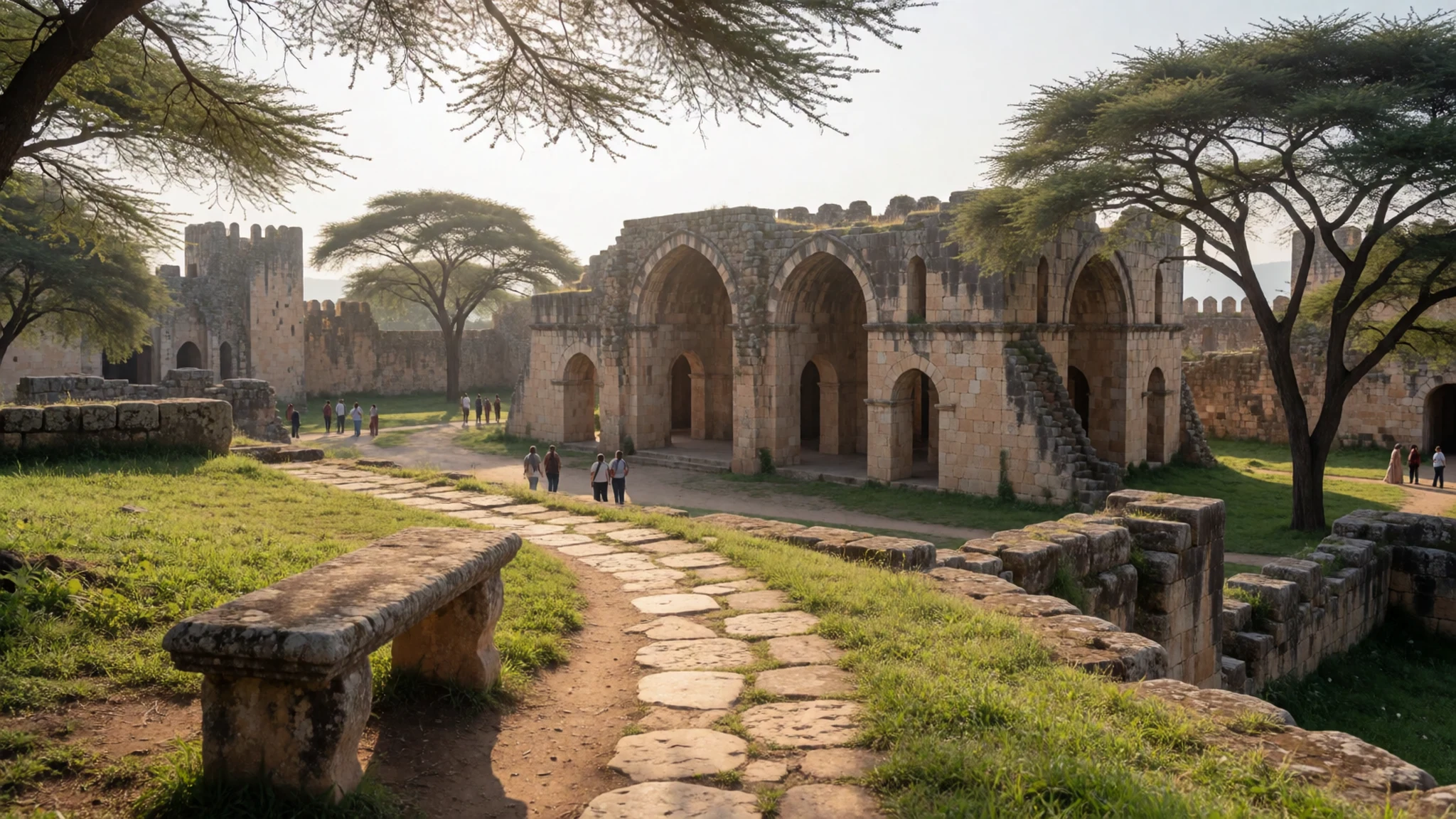
- Fasilides' Bath — By the Qaha river, across town
Across town from the enclosure, the bath is a pool beside the Qaha river with a stone pavilion on its edge, traditionally linked with the emperor. It is best known in January, during the Timket festival, when large crowds gather to bathe and celebrate. Outside festival days it is quieter, and you can walk down to the water and sit by the pavilion. Ask before photographing people at the pool.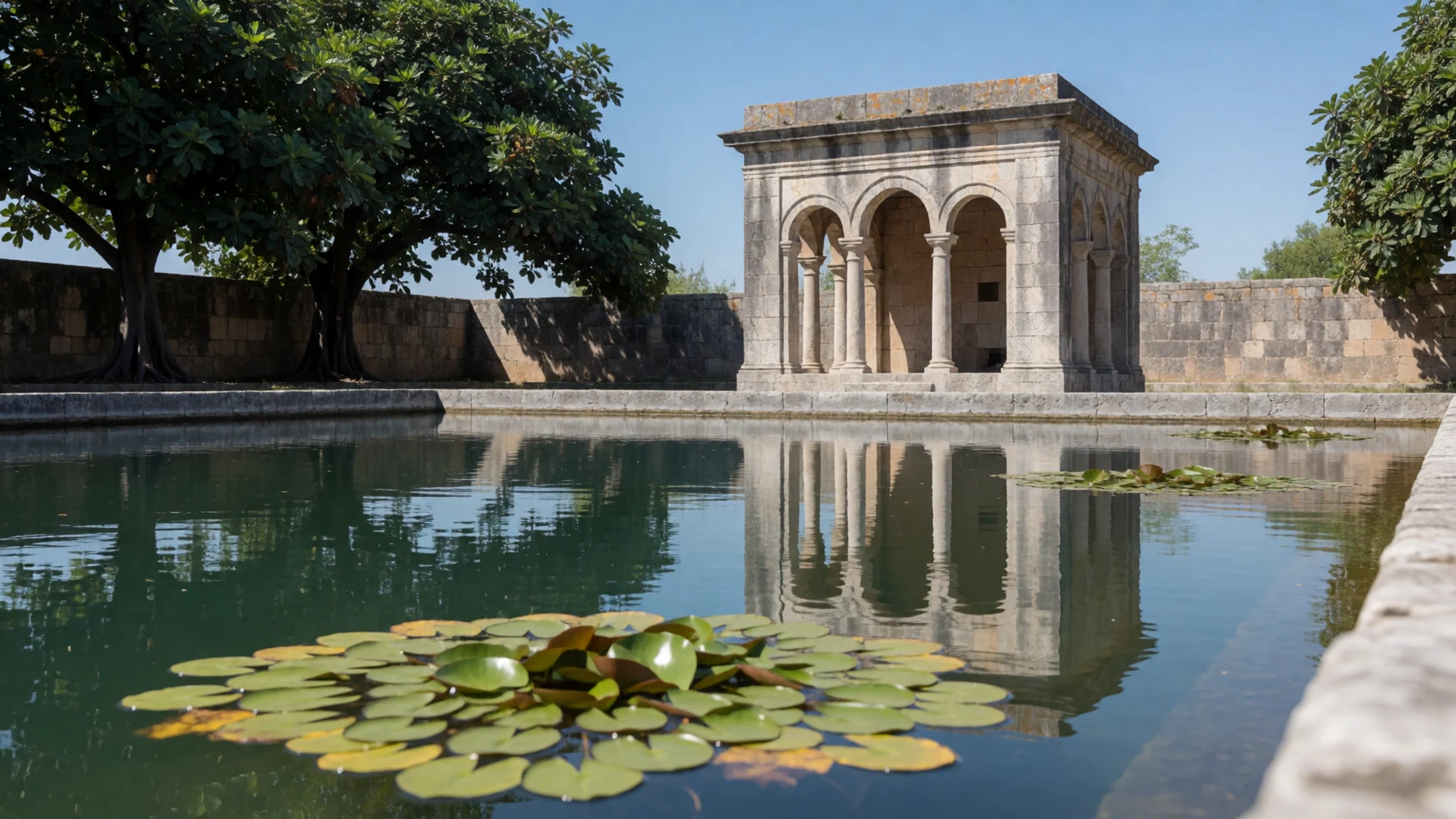
- Debre Birhan Selassie Church — Eastern outskirts
On the eastern edge of town, this church looks more like a fortress than a place of worship. Its walls were built thick and high because earlier churches in the area were vulnerable to raids from Sudan, and that impression is still strong when you arrive. Take your time inside and dress modestly, as you would for any active church. Allow a relaxed half hour for the walk around the outside as well.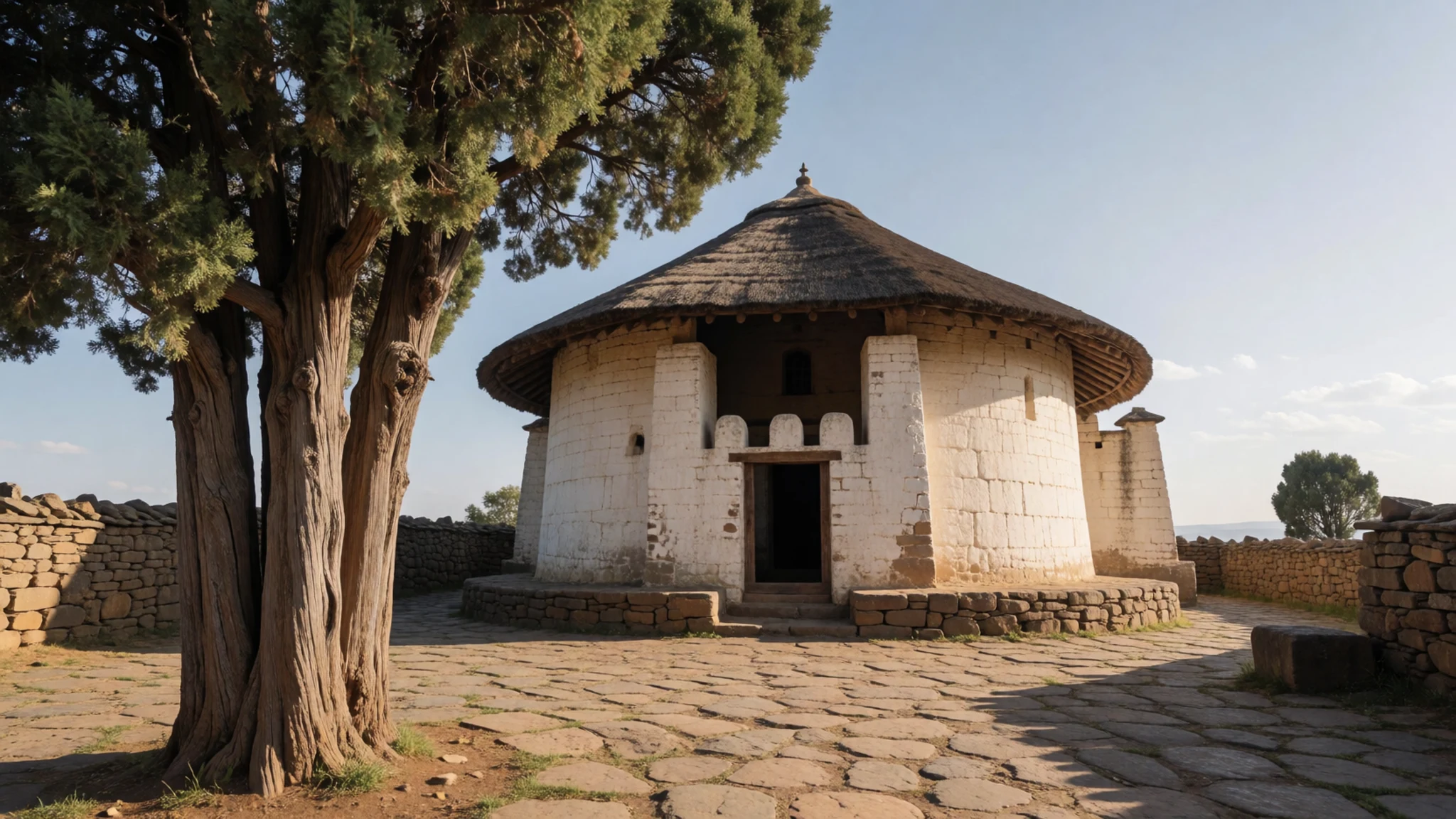
- Atse Tewodros Square — Town centre
This busy intersection in the centre of town has traffic circling a statue of the warrior emperor Tewodros II. It is an easy orientation point, since many central restaurants and shops are within a few minutes' walk. Traffic here is loud and unpredictable, so cross carefully. Going early or late in the day gives you kinder light for photographs of the statue.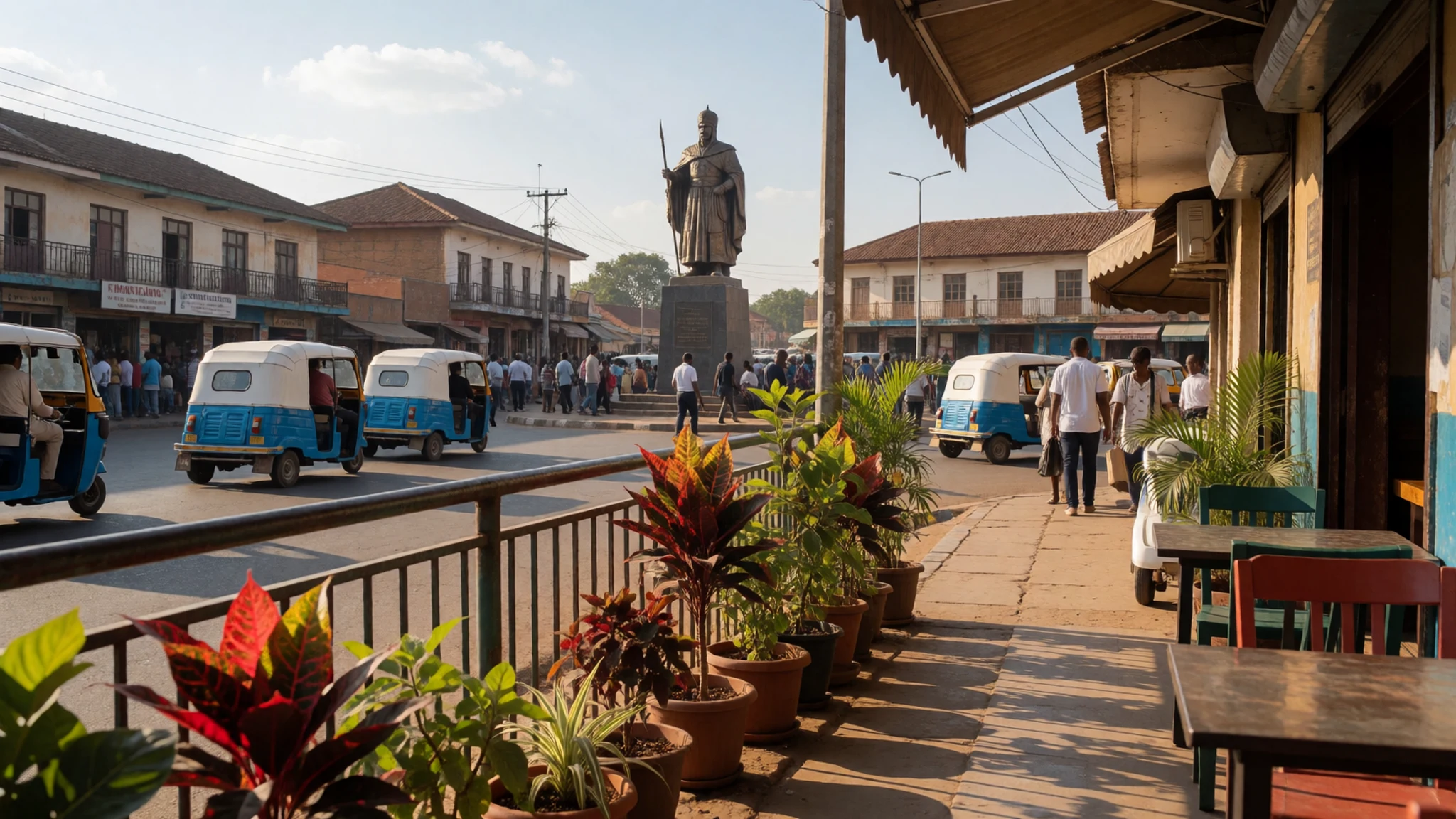
Culture
Gondar is a city of churches, and a religious calendar shapes daily life, so a few habits matter. Ethiopian Orthodox Christianity is central here, and you will see worshippers in white shawls, especially on Sundays and feast days. Churches and church compounds ask for modest dress, with covered shoulders and knees, and in many places shoes come off at the door. Photography inside churches is often restricted, so ask before pointing a camera at priests or worshippers.
Coffee is a social ritual rather than a quick drink. In traditional ceremonies beans are roasted, ground and brewed in front of guests, and the process can take a long time. An invitation is a compliment worth accepting if you have the time. Tipping is customary in restaurants and for guides, and small amounts in cash are the usual form.
Gondar's neighbourhoods have a long history of mixed communities, so you will notice Muslim and Christian life side by side. Religious holidays are taken seriously, and fasting periods affect what restaurants serve, so ask before ordering meat during Lent. Greet people before asking questions, and accept that a conversation may begin slowly. Take your shoes off at church doors and dress modestly, and ask before photographing anyone inside.
What to wear
Gondar's traditional dress draws on the wider Ethiopian highlands. The most familiar garment is the shamma, a white cotton wrap with a woven border, worn over the shoulders and sometimes draped over a long dress called a habesha kemis. The netela is a lighter, sheer shawl used for church and celebrations, often with a thin coloured stripe along the edge. Cotton is spun and woven by hand on narrow looms, and the finest examples have embroidered borders in red, green and gold.
These clothes are still worn in Gondar, though mostly for church, weddings, religious holidays and formal occasions. On an ordinary day in town you will see jeans, shirts, trainers and western-style dresses, with many older residents still wearing the shamma, especially on the way to church. Younger people often mix styles, so a white netela worn over a T-shirt is common enough to be unremarkable.
For your own clothes, plan for a city that sits high and can be dusty, with cool mornings and evenings and strong sun in the middle of the day. Long trousers or a longer skirt, a light long-sleeved top and a hat cover most situations. Shoulders and knees should be covered inside churches and monastic compounds, so keep a shawl or light scarf in your bag. Closed, sturdy shoes are best for the stone paths and uneven ground of the Fasil Ghebbi.
What to eat
- Injera with shiro — A simple eatery in the market quarter
Injera is the sour, spongy flatbread that serves as both plate and utensil. Shiro is a thick stew of ground chickpea or broad bean, spiced with berbere, and it is everyday food in many homes. Tear the injera and scoop the stew with it.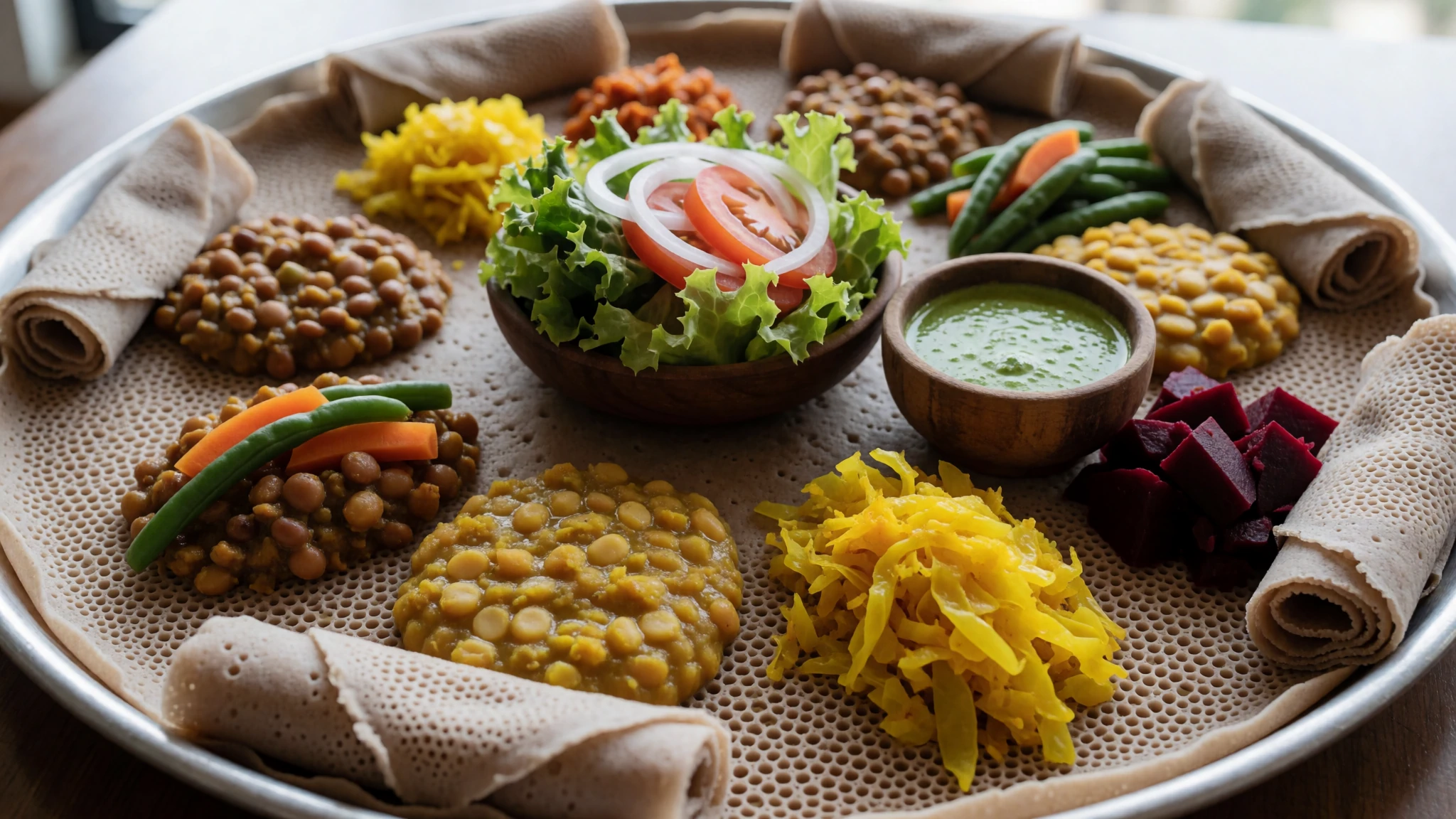
- Tibs — Central restaurants near Atse Tewodros Square
Tibs are chunks of beef or lamb fried quickly with onion, garlic, chilli and butter, served sizzling. It is the dish to order when you want meat, and some places serve it even during Lent when others stop. Ask for it medium if you prefer it less fiery.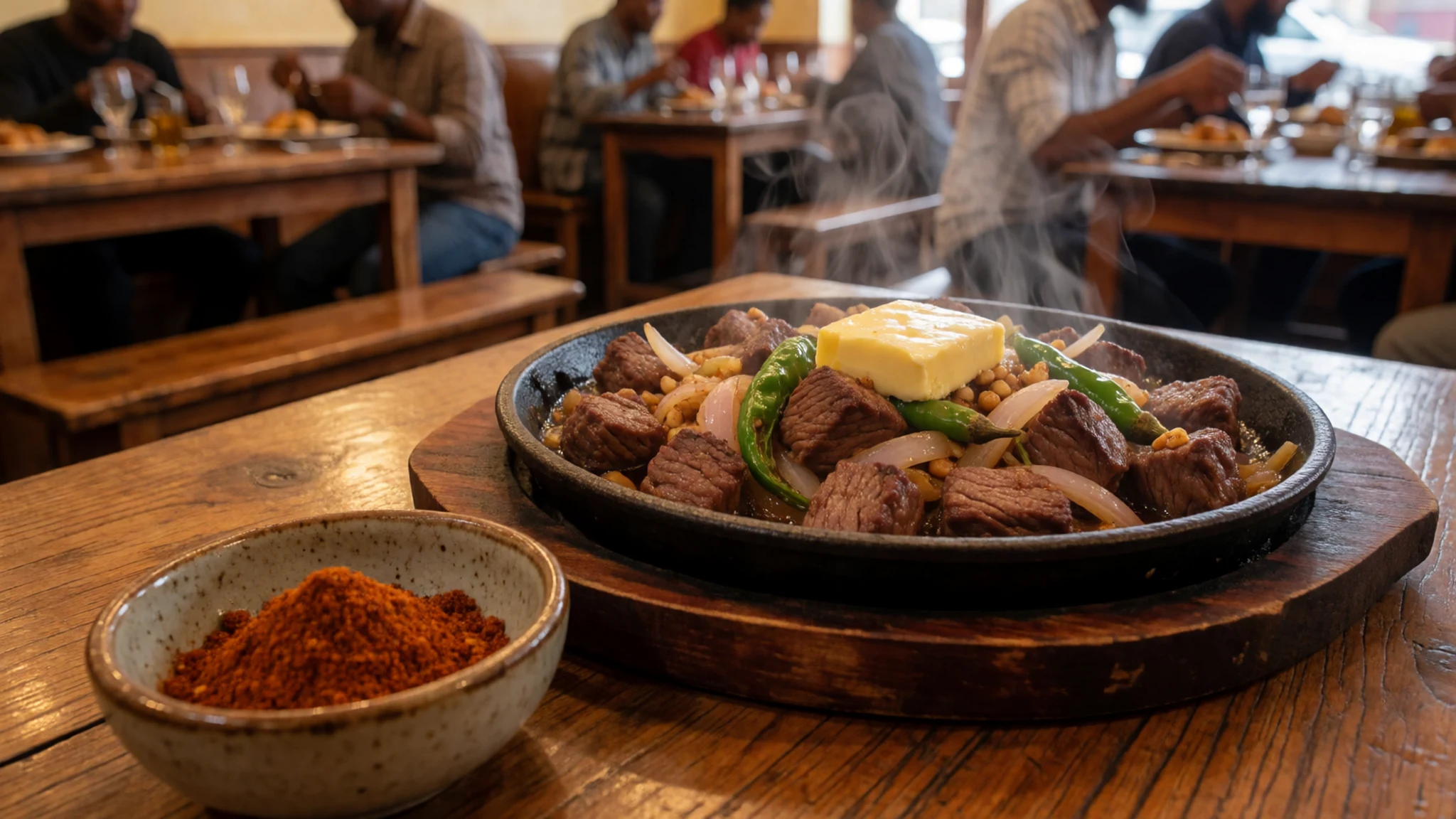
- Lake Tana fish — Central restaurants, asked about that morning's catch
Fish from Lake Tana is the local catch to try, usually grilled or fried and served with injera and a simple salad. Restaurants in town tend to describe it as fresh from the lake, and the claim is easy to check on your plate. Order it when the kitchen has fish that day. - Tej — Honey-wine houses and restaurants in the centre known for tej
Tej is a honey wine, and the pure version is made with honey alone, without added sugar. It is sweet, mildly sharp and often served in a conical flask called a berele. Drink it slowly, because it is stronger than it tastes. - Buna — Coffee houses near the bus station
Buna is coffee, and Ethiopians take it seriously. Beans are roasted over a small pan, ground, and brewed in a clay pot called a jebena, then poured into small cups. A pot can be shared, and a coffee break is a social event.
Plan it
Best time. The climate is mild and temperate to warm, averaging about 20 °C year round, but the rains from June to September are heavy, with July and August the wettest months. Late October to February tends to suit walking the castles, when the days are drier and the skies clearer for photographs.
How long. 2–3
Getting there. Fly to Addis Ababa and continue by road. Luxury coaches and minibuses make the day-long journey north, and minibuses are usually booked through your guesthouse. Confirm whether your bus stops in town, because some minibuses drop passengers at Azezo, about 13 km outside, where a bajaj costs extra into the centre.
Budget. low
Tips
- Book your bus seat a day ahead, and ask where the drop-off is
- Start at the Fasil Ghebbi early, before the midday sun is strong
- Carry cash in birr for small eateries, markets and rides
- Take the altitude slowly on your first day, as the city sits high
- Hire a guide for the castles if you want the history explained
Etiquette
- Dress modestly and cover shoulders and knees for churches
- Ask before photographing people, especially at the bath and inside churches
- Remove shoes at church doors
Nearby
Sources
- Wikidata Q218861 (CC0)
- Wikipedia: Gondar (rev 1381238847) (CC BY-SA 4.0)
- Wikivoyage: Gondar (rev 5402927) (CC BY-SA 4.0)
- Gonder from the Goha hotel, Justin Clements (CC BY 2.5)
- Mentewab's Castle, Bernard Gagnon (CC BY-SA 1.0)
- Chancellery of Yohannes I, Bernard Gagnon (CC BY-SA 1.0)
- Fasilides Bath, Bernard Gagnon (CC BY-SA 2.5)
- Fasilides Palace 01, Bernard Gagnon (CC BY-SA 1.0)
- Church of Debra Berhan Selassie, Bernard Gagnon (CC BY 3.0)
- Fasilides Palace 02, Bernard Gagnon (CC BY 3.0)
- Fasilides castle, Gondar, mK B. (CC BY 2.5)


