Golden Gate Bridge
Golden Gate Bridge, United States
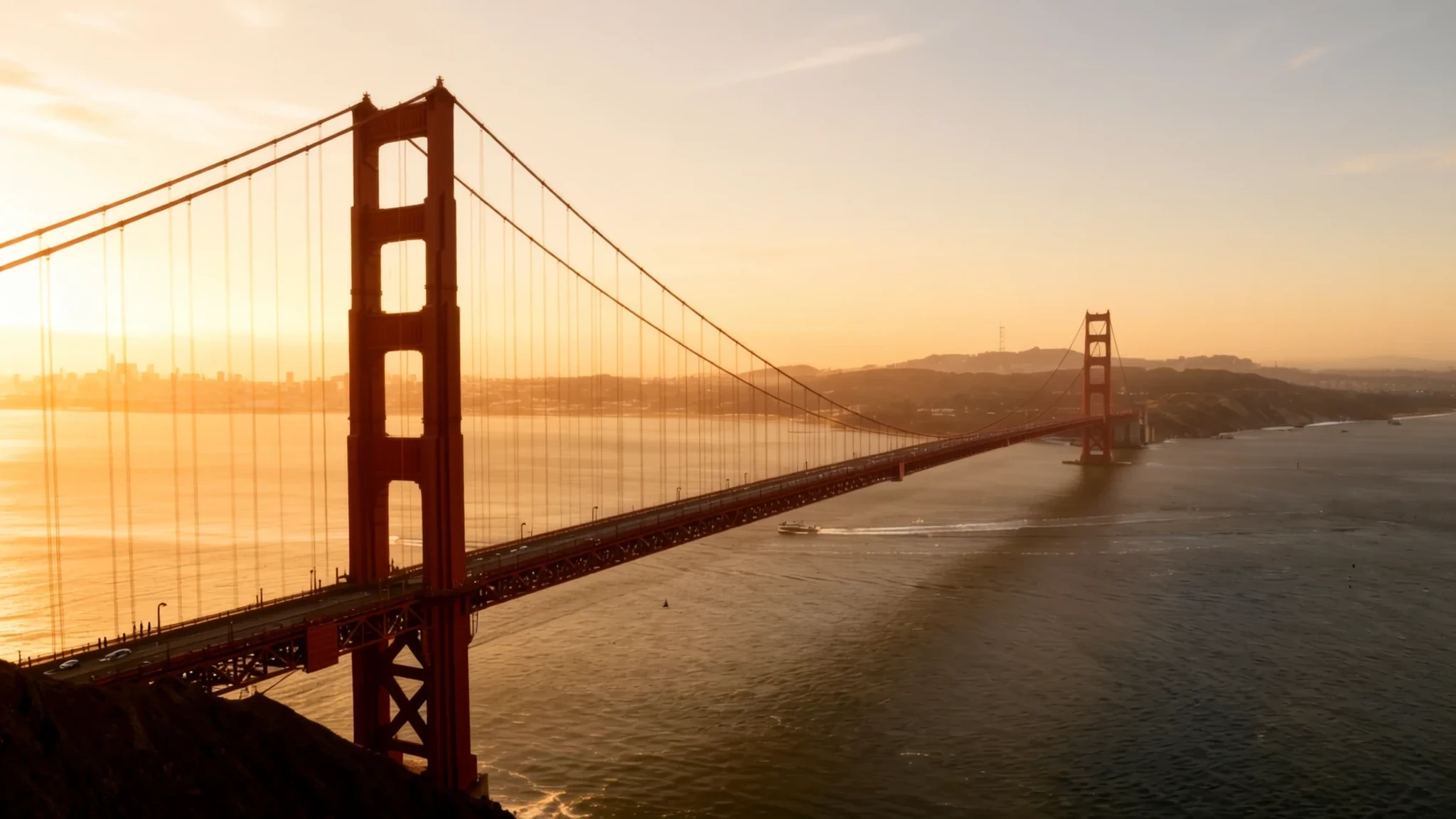
The Golden Gate Bridge stands as a monumental Art Deco feat linking San Francisco to Marin County across a storied Pacific strait.
The place
The Golden Gate Bridge spans the one-mile-wide strait connecting San Francisco Bay and the open ocean in California. As a vital transport link, the landmark carries motor vehicles alongside dedicated pedestrian and bicycle paths, serving as a primary corridor between the northern tip of the San Francisco Peninsula and Marin County. Opened to the public during the mid-twentieth century, the suspension structure has endured as one of the most widely recognized symbols of both San Francisco and the wider American West.
The setting is shaped by dramatic geography, where rolling coastal fog frequently rolls in through the coastal mountains to shroud the soaring steel towers. Below the deck, swift tidal currents rush through deep channels, while the surrounding headlands offer sweeping vantage points across the bay towards Alcatraz Island and the downtown skyline. Engineers and travellers alike continue to marvel at the sheer scale of the crossing, which remains an essential pilgrimage for anyone exploring the Pacific coastline. The approach from either side leads visitors through historic batteries, windswept coastal scrub, and dramatic overlooks that capture the raw, elemental beauty of northern California.
Its story
The Golden Gate Bridge was born out of a long-standing need to replace the ferries that once formed the only practical route between San Francisco and Marin County. Early transport across the treacherous strait relied on vessels carrying passengers, cargo, and eventually automobiles on busy regional routes. By the early twentieth century, local leaders recognised that reliance on boat services severely limited regional growth, prompting visionary engineers to propose a permanent fixed crossing over the deep, wind-whipped channel.
Skeptics initially argued that spanning the open waters was impossible given the powerful swirling tides, deep centre channel, and fierce maritime gales. Nevertheless, chief engineer Joseph Strauss, supported by brilliant collaborators, brought the ambitious project to life. The monumental construction effort culminated in its grand opening, forever transforming regional transit and establishing a new benchmark for structural engineering. Decades of careful maintenance, seismic retrofits, and continuous preservation have since safeguarded the iconic landmark for millions of global visitors.
What to see
- Marin County Civic Centre — San Rafael
Designed by the celebrated architect Frank Lloyd Wright, this distinct government complex stands as his only completed public building of its kind. Located in San Rafael, the sprawling structure features striking blue roofs and sweeping circular motifs that also served as a backdrop for notable science fiction cinema.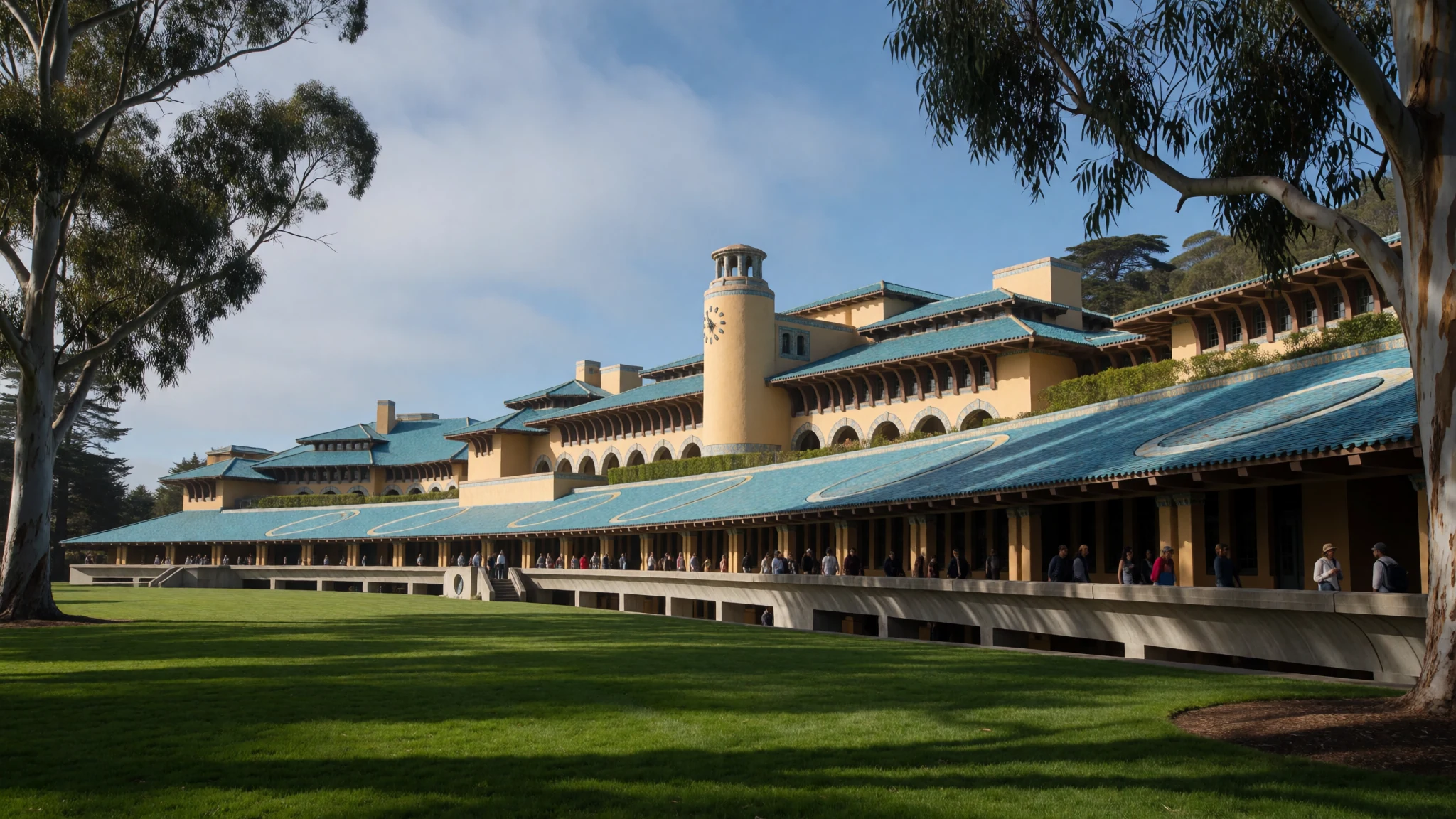
- Point Reyes Lighthouse — Point Reyes National Seashore
Perched at the dramatic westernmost tip of a windswept peninsula within the national seashore, this historic beacon offers world-class whale watching and sweeping ocean panoramas. Visitors descend long staircases down the sheer cliffs to reach the historic lens house battered by Pacific gales.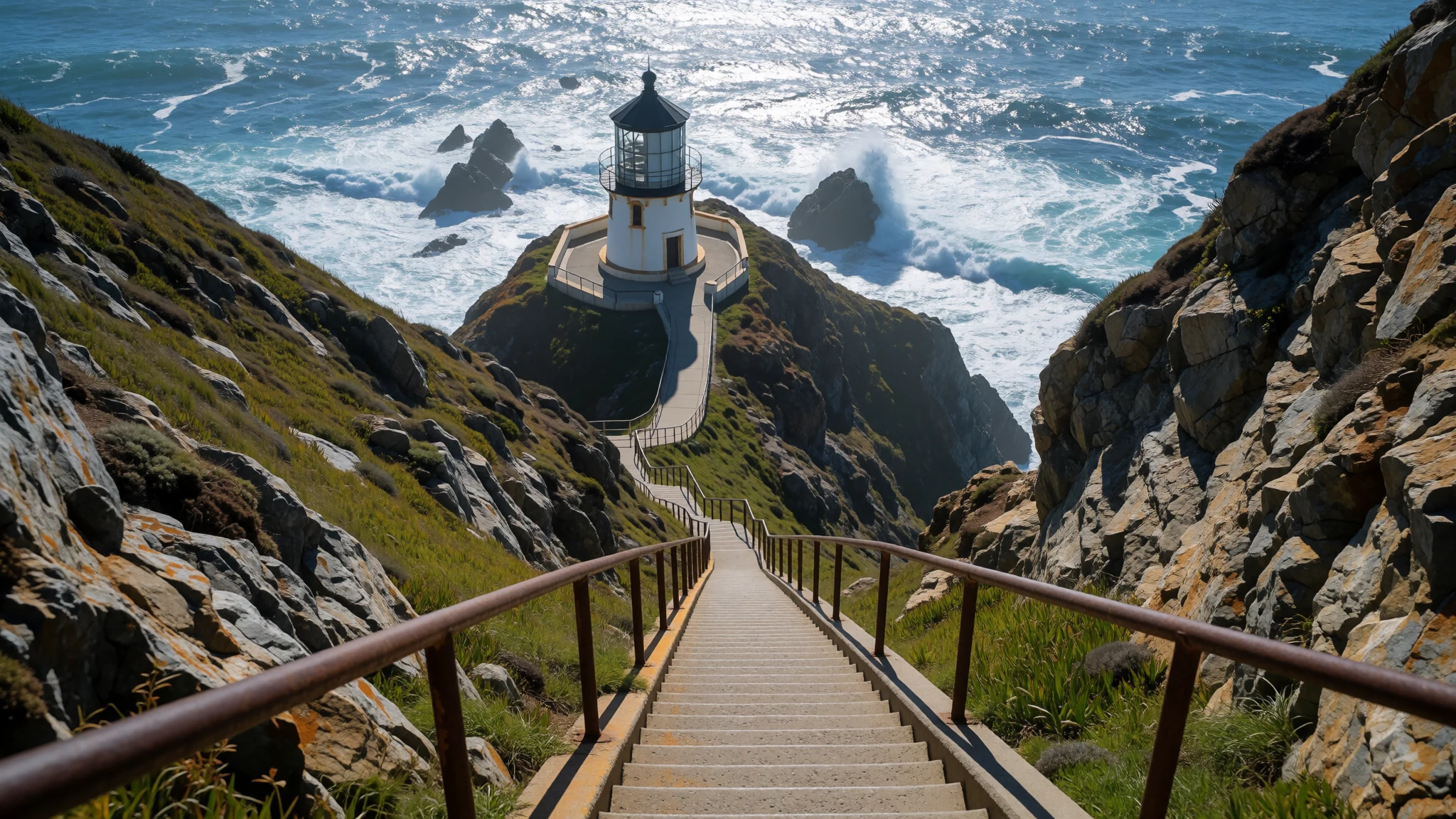
- Muir Woods National Monument — Mill Valley
Tucked away in a deep coastal canyon, this protected grove shelters ancient old-growth coast redwoods towering high above the forest floor. Visitors stroll along wooden boardwalks beneath some of the tallest living organisms on Earth, surrounded by lush ferns and quiet streams.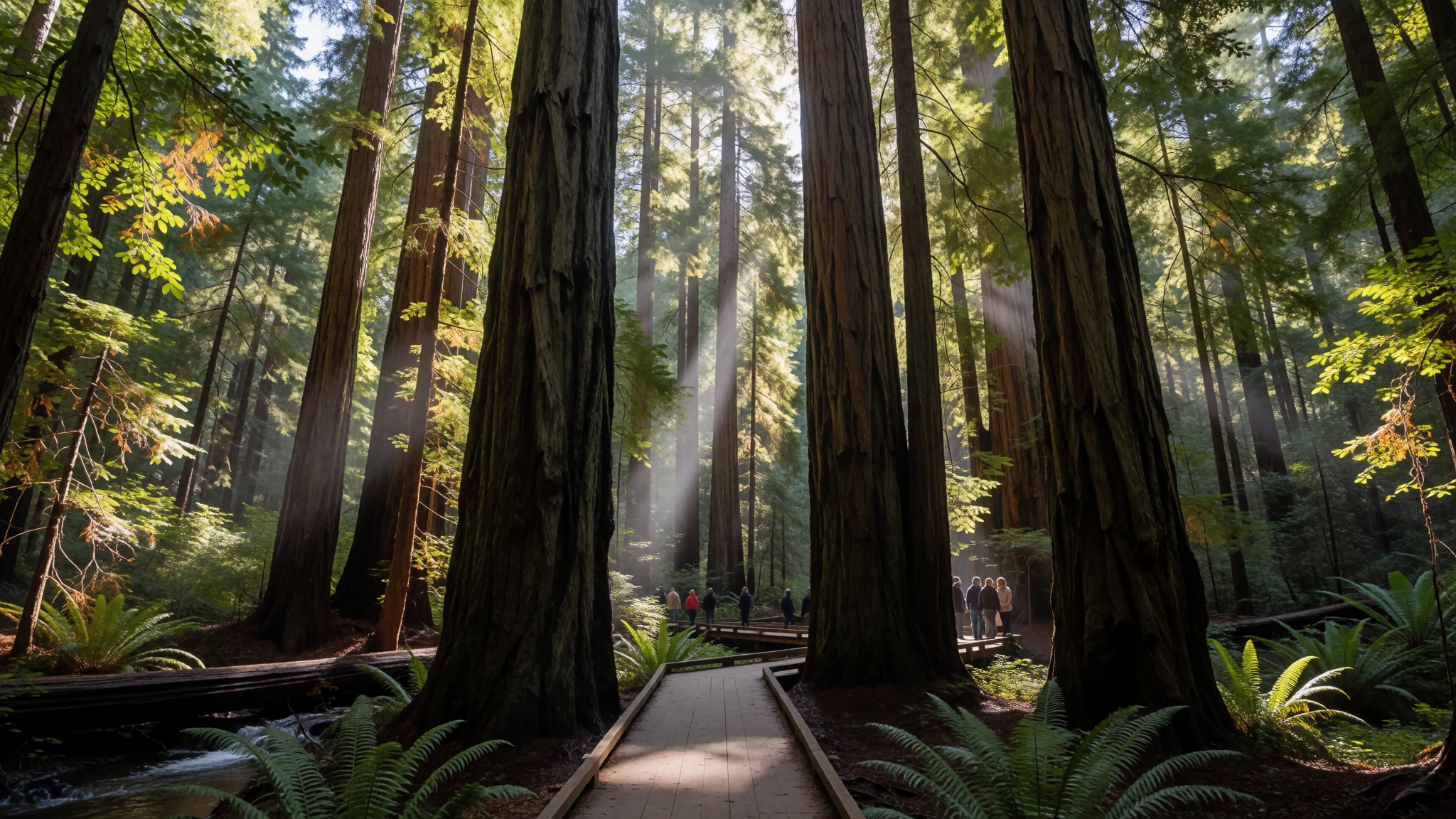
- Battery East — San Francisco Presidio
Situated just off the southern approach to the crossing, these historic military installations offer remarkable vantage points for observing passing cargo ships and architectural details up close. Informative plaques detail the defensive history of the bay while photographers capture unobstructed angles of the rust-red towers.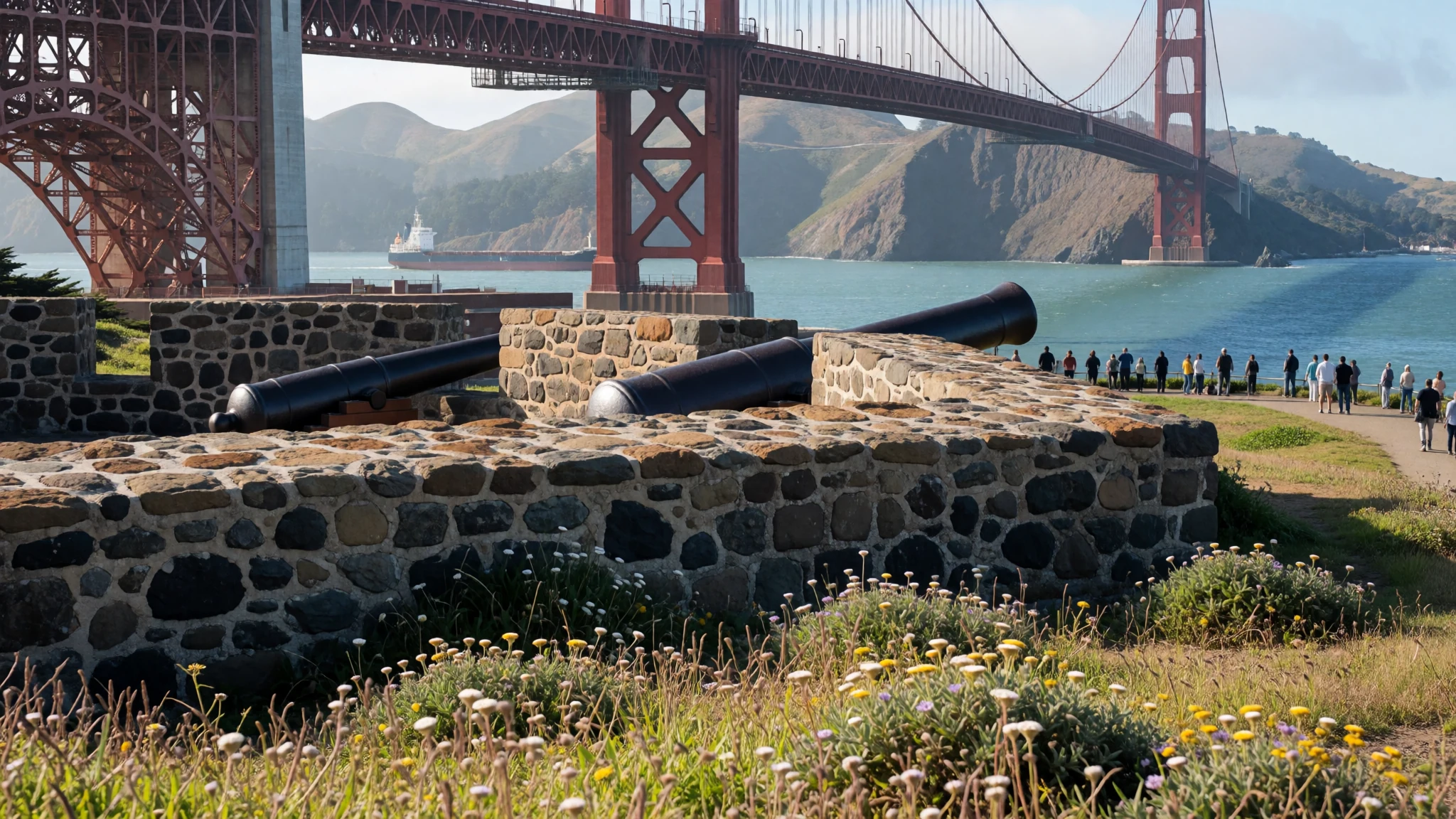
- Sausalito Waterfront — Sausalito
Clinging to the steep hillsides overlooking the northern bay, this charming maritime community features floating homes, boutique shops, and excellent seafood restaurants. Ferries dock regularly along the bustling pier, providing travellers with picturesque views back towards the San Francisco skyline.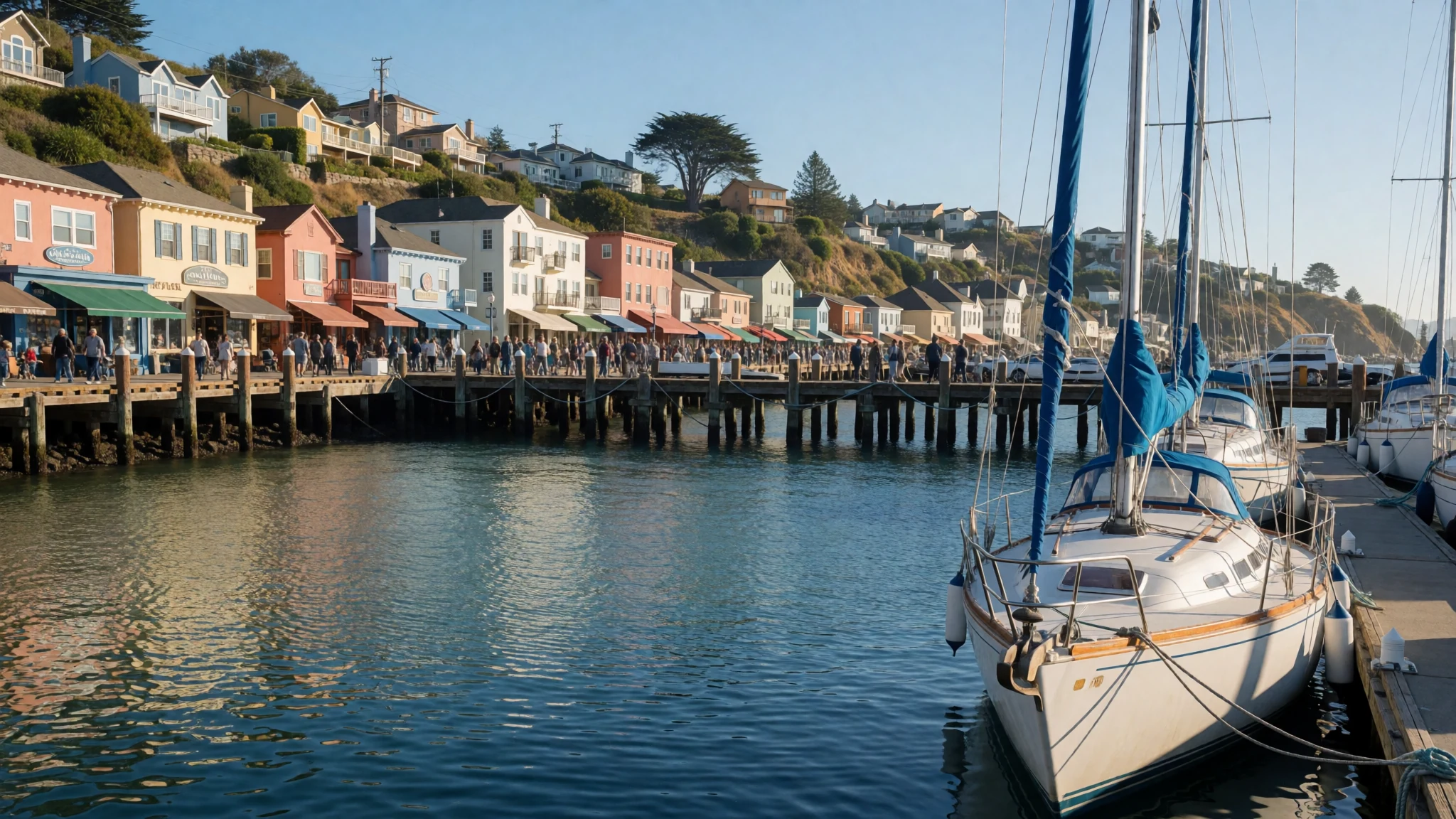
Culture
The Golden Gate Bridge and its surrounding counties reflect a distinctly West Coast ethos defined by environmental consciousness, progressive politics, and an enduring passion for outdoor recreation. Communities across the region place a high value on preserving their dramatic natural landscapes, from rugged coastal headlands to protected redwood forests. Local residents embrace an active, health-conscious lifestyle, spending weekends hiking mountain trails, kayaking in sheltered coves, or cycling along scenic coastal routes. This appreciation for nature influences local arts, community gatherings, and sustainable culinary traditions that celebrate regional agriculture and seafood. When exploring coastal trails or walking across the bridge span, always yield the path to cyclists and stay behind designated safety barriers.
What to wear
The Golden Gate Bridge region embraces a relaxed, functional aesthetic heavily influenced by changing coastal microclimates and outdoor pursuits. Traditional dress is largely casual, with locals favouring practical outdoor layers such as fleece pullovers, durable denim, windproof jackets, and sturdy walking shoes suitable for sudden sea breezes and damp trails. Contemporary urban wear across San Francisco and Marin combines understated comfort with sleek, weather-resistant outerwear, reflecting a culture that values both utility and modern style. Visitors exploring the bridge and nearby headlands should pack in layers, bringing a reliable windbreaker, comfortable walking footwear with good grip, and sunglasses to cope with bright ocean glare, ensuring warmth when the famous coastal fog rolls in.
What to eat
- Sourdough Bread Bowl with Clam Chowder — Historic waterfront bakeries and piers
A local culinary staple featuring rich, creamy clam chowder served inside a freshly baked, tangy San Francisco sourdough boule. - Fresh Dungeness Crab — Coastal seafood shacks and harbour restaurants
Sweet, tender local crab prepared simply, often cracked and served cold with melted butter or incorporated into hearty local cioppino stews. - Sonoma Cheese Platter — Farmers markets and specialty food shops across Marin
Artisanal cheeses crafted by regional creameries, highlighting rich cow and goat milk varieties paired with local orchard fruits. - Fish Tacos — Casual coastal eateries and beachside cafes
Crisp battered or grilled local catch topped with shredded cabbage, zesty lime crema, and fresh salsa on warm corn tortillas. - Organic Farm-to-Table Salads — Bistro menus throughout Marin County towns
Crisp, hyper-local greens harvested from fertile nearby valleys, dressed simply with local olive oil and artisanal vinegars.
Plan it
Best time. June to September offers the clearest skies and warmest daytime temperatures, while May often brings heavy morning coastal fog.
How long. 2–3
Getting there. Fly into San Francisco International Airport or Oakland International Airport, then take the Marin Airporter bus or rent a car to cross into Marin County.
Budget. high
Tips
- Dress in multiple warm layers because wind and fog can drop temperatures suddenly.
- Arrive early in the morning to secure parking at popular viewpoints before crowds peak.
- Check bicycle rental rules beforehand if you plan to cycle across the span.
- Inspect clothing and skin for ticks after walking through grassy coastal fields.
Etiquette
- Yield to cyclists on shared pedestrian and bike paths across the structure.
- Keep noise levels respectful when visiting quiet natural sanctuaries like redwood groves.
Nearby
Sources
- Wikidata Q44440 (CC0)
- Wikipedia (CC-BY-SA 4.0)
- Wikivoyage (CC-BY-SA 4.0)