Glendalough
Glendalough, Ireland
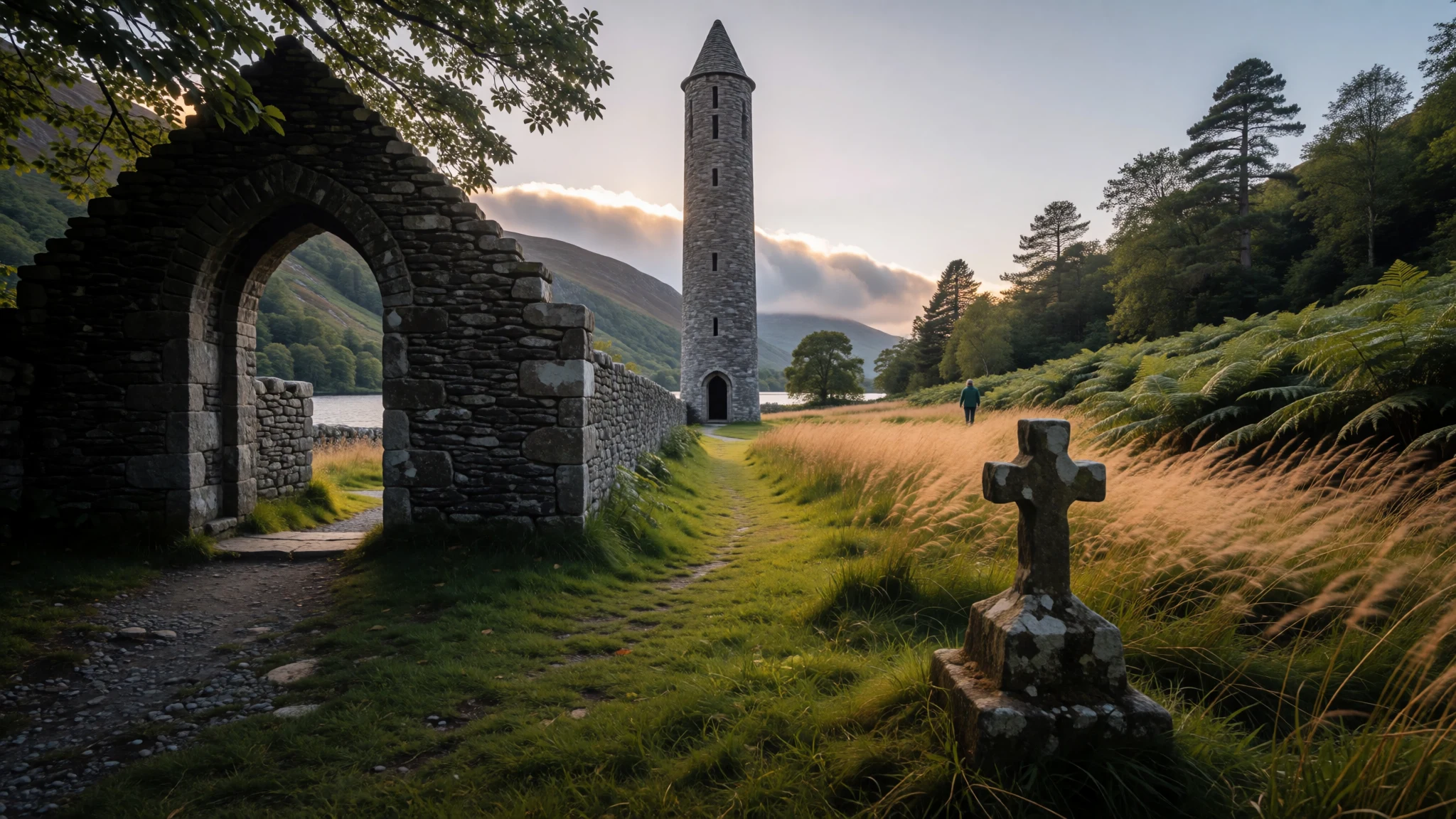
Glendalough pairs a ruined monastic town with two lakes in a glacier-carved valley, close enough to Dublin for a day, wild enough for a long walk.
The place
Glendalough lies in County Wicklow, in the hills south of Dublin, and its Irish name, Gleann Dá Loch, means valley of two lakes. Ice made the place. A glacier carved a steep-sided, U-shaped trough with a flat floor, and a single lake gathered behind a dam of glacial debris. Later the Poulanass River came tumbling down the southern slope, dropped silt across the water and split it in two: a large Upper Lake and a small Lower Lake. The monastic settlement began with Kevin, a hermit who settled here in the sixth century. His following grew into a small town of church and everyday buildings. The earliest sites probably lie around the Upper Lake, while the structures around the Lower Lake were mostly raised between the tenth and twelfth centuries, and most of what stands today, the round tower included, belongs to that later phase. The head of the valley also has an industrial past, because a lead mine worked there through the nineteenth century and into the twentieth. Today the valley is a recreation area as much as a heritage site, with picnic spots, maintained walking trails of varying difficulty and rock climbing on the crags. It is honest to say that it gets busy. Summer weekends fill the car parks and the road in from Dublin, while early mornings and weekdays outside high season feel far more like a quiet valley. The monastic ruins can be entered free at any hour, though parking is charged and the car parks close overnight.
Its story
Glendalough's story starts with Kevin, said to come from one of the ruling families of Leinster. As a boy he was taught by three holy men, and he first came to this valley during that time. He returned later with a few monks and founded a monastery near a meeting of two rivers. The accounts of his life were written long after his death, so little about him is certain. His writings describe battles with knights, which scholars now read as a picture of his inner struggles and temptations. His reputation as a holy man drew followers, and he died in the early seventh century, traditionally on the third of June. For the next six hundred years or so the settlement thrived, and the Irish Annals record the deaths of its abbots and the raids made on it. Vikings attacked more than once, yet oak from the valley also went into a Viking longship, and a modern replica of that vessel now sits in Roskilde, Denmark. In the early twelfth century Glendalough became one of the two dioceses of North Leinster, and the Book of Glendalough was written here soon afterwards. Laurence O'Toole, born in the same century, served as abbot and was remembered for his holiness and hospitality. After he became Archbishop of Dublin he still came back to the solitude of St Kevin's Bed. In the early thirteenth century the diocese was merged with Dublin, and the settlement's long decline followed.
What to see
- Glendalough Visitor Centre — Lower Lake end of the valley
The visitor centre is the sensible first stop. It has an exhibition and an audio-visual show that explain who built what, which makes the scattered ruins much easier to read afterwards. Check the official site for opening times before travelling, and pick up a trail map for the lakes.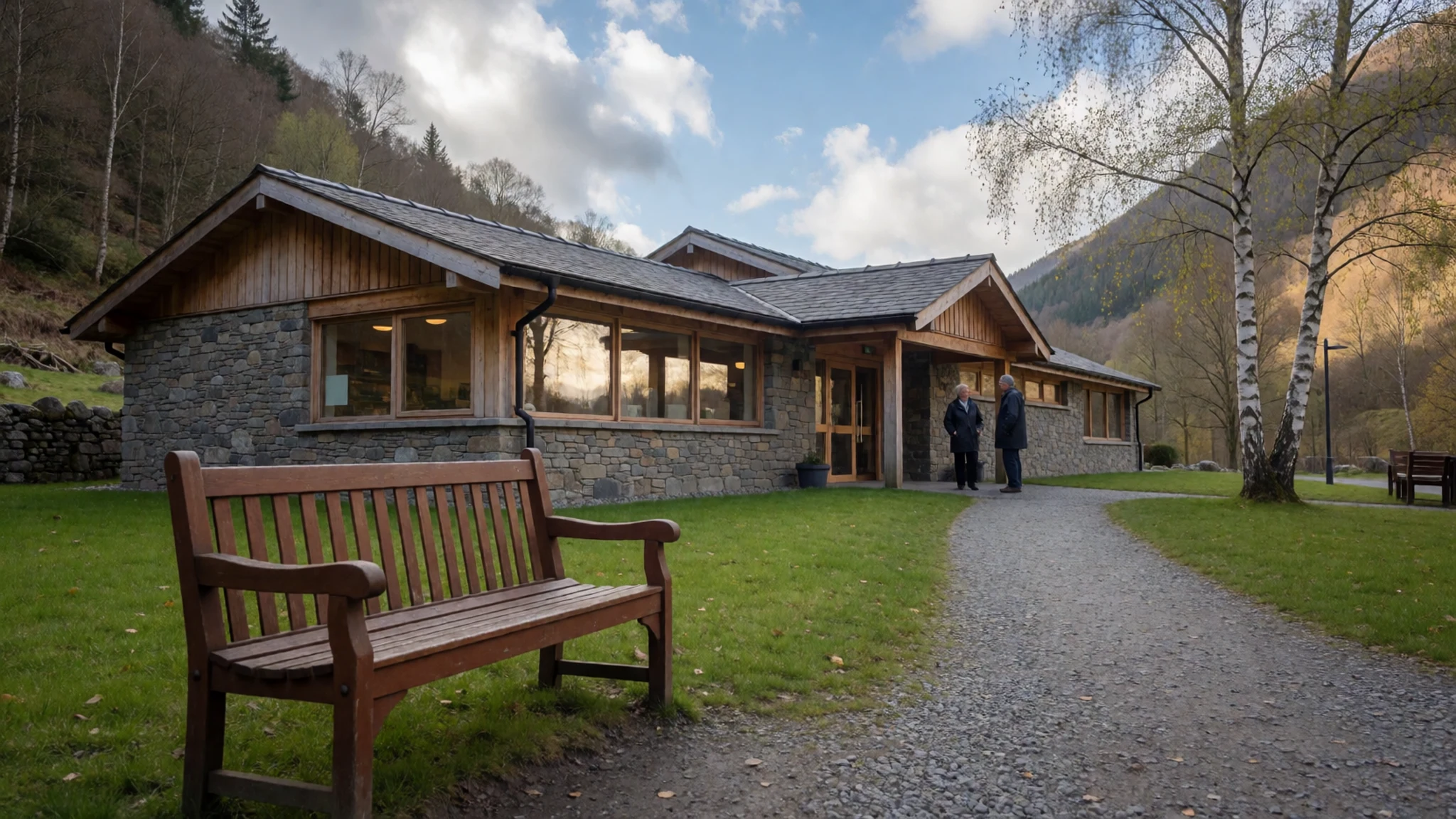
- The Gateway and the Round Tower — Monastic city, Lower Lake
The double-arched gateway was once a two-storey gatehouse, and a cross on its west wall marks where the monastery's sanctuary began. Beyond it, a slim stone round tower stands in excellent condition, its conical cap rebuilt in the nineteenth century using the original stone. The graveyard nearby is still in use.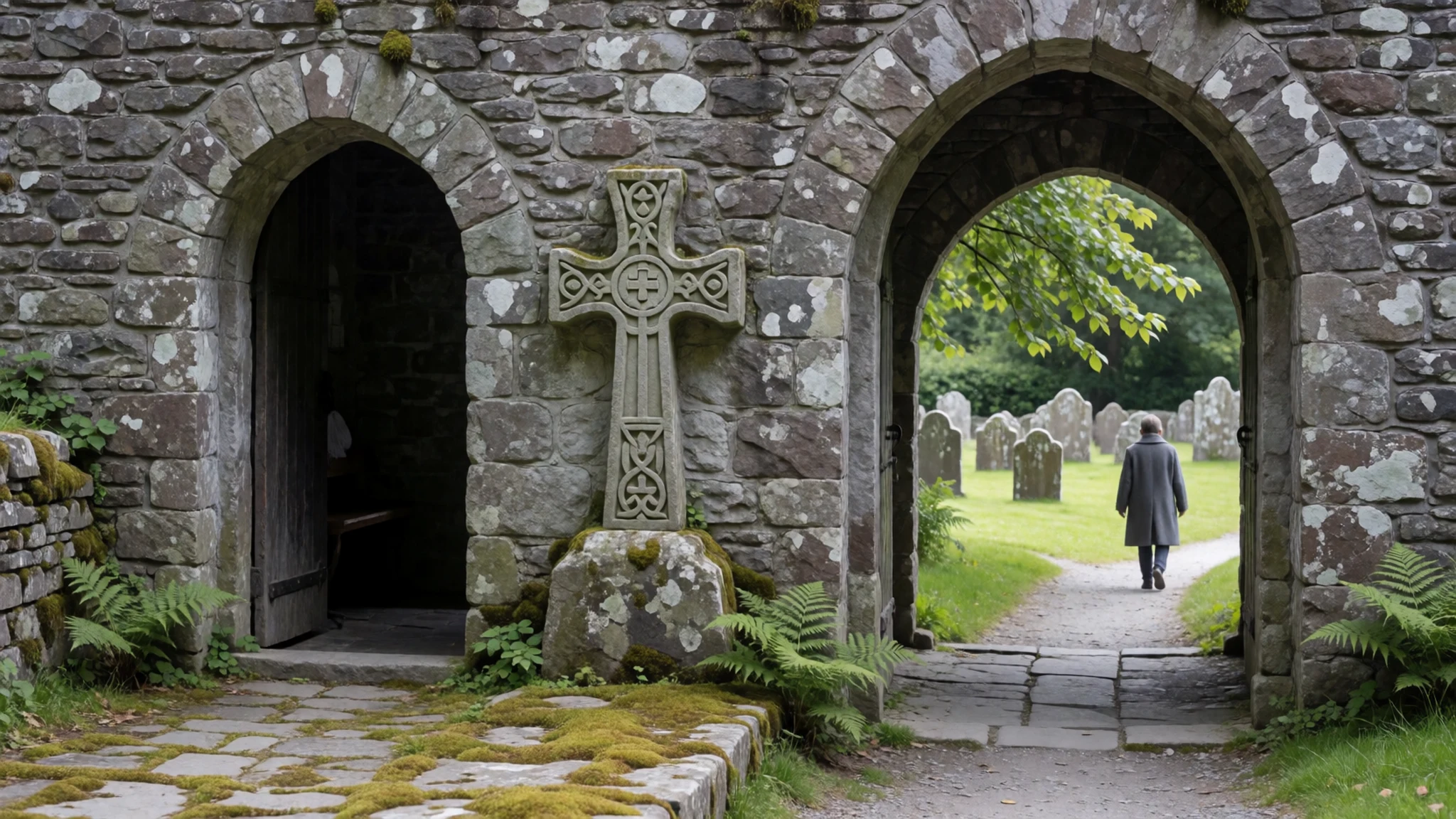
- St Kevin's Kitchen — Monastic city, Lower Lake
This small stone church with a steep roof and a little belfry rising from it is one of the best-preserved buildings in the monastic city. The name is a later nickname, since nobody cooked here. It repays a slow look at the masonry and the way the roof is built from stone.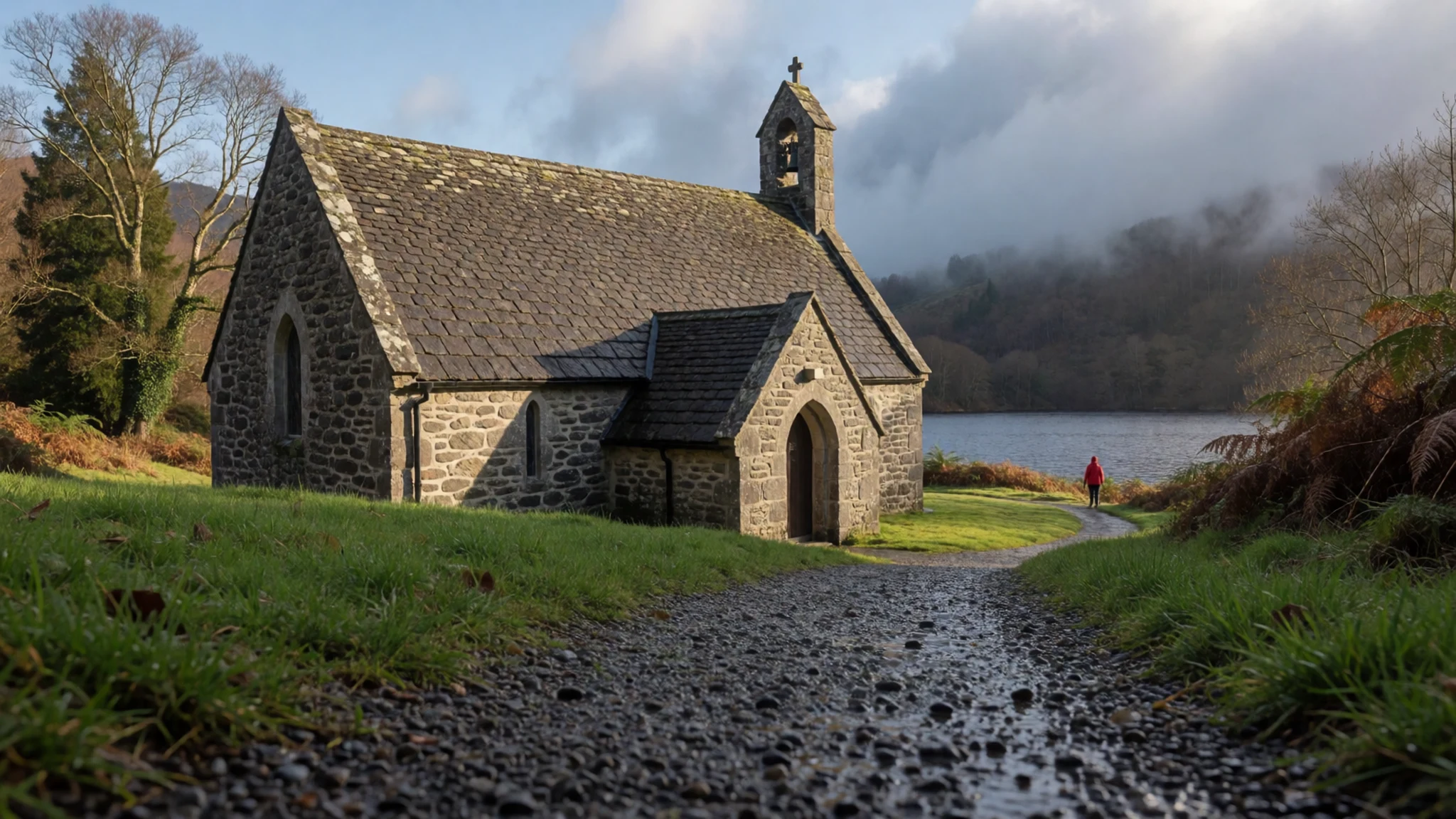
- Trinity Church — East of the visitor centre
Trinity Church is the roofless shell of a simple medieval church standing a short walk east of the visitor centre, outside the main enclosure. Most visitors run out of time before they reach it, which means it is usually quiet, and it makes a calm end to the circuit.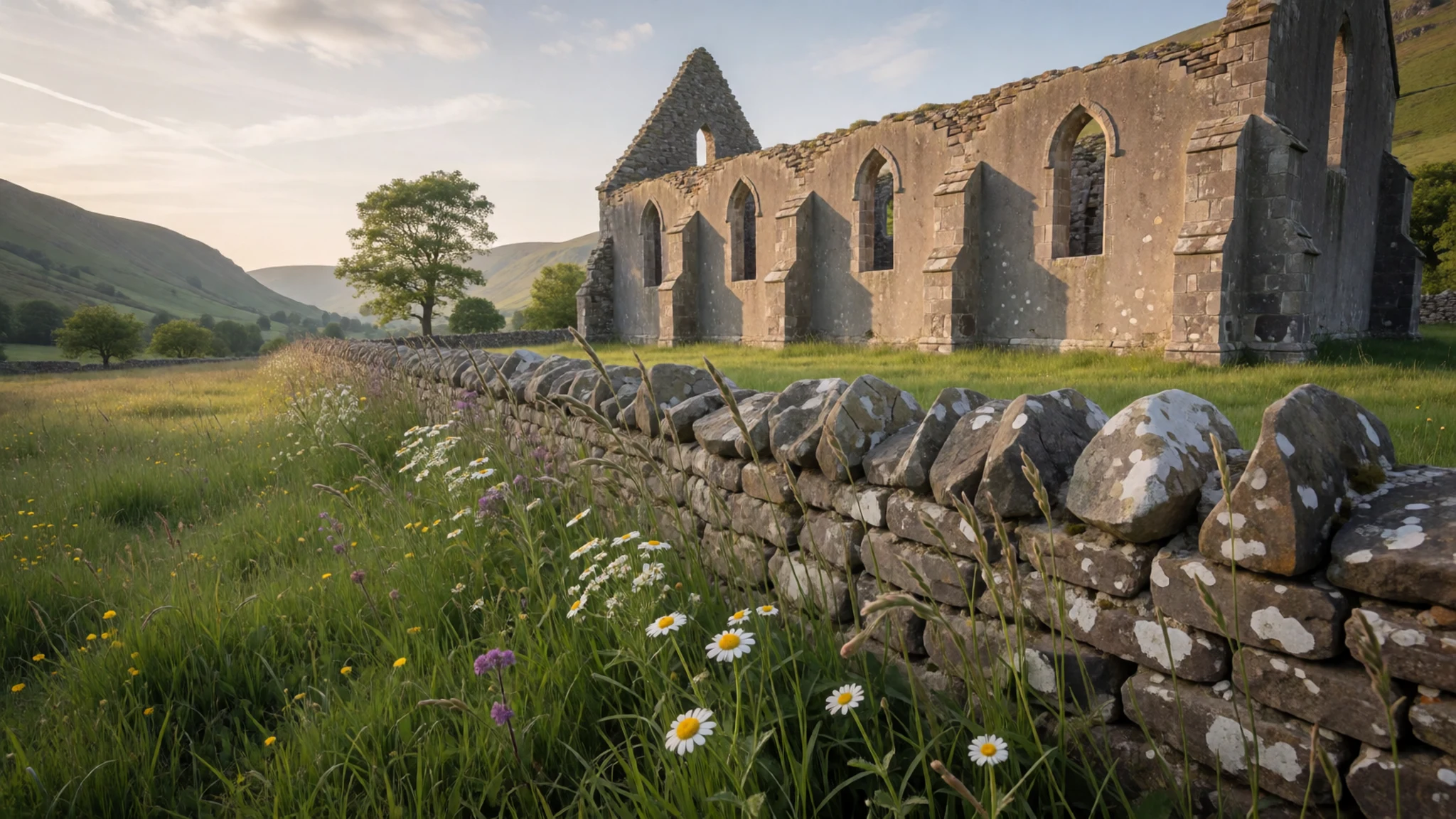
- The Upper Lake — Head of the valley
A walk along the boardwalks and paths to the Upper Lake is where the glacial valley makes sense: steep slopes, a flat floor and dark water below Camaderry mountain. Sites here may belong to Kevin's original hermitage. Paths vary in difficulty, so choose one to suit the weather and footwear.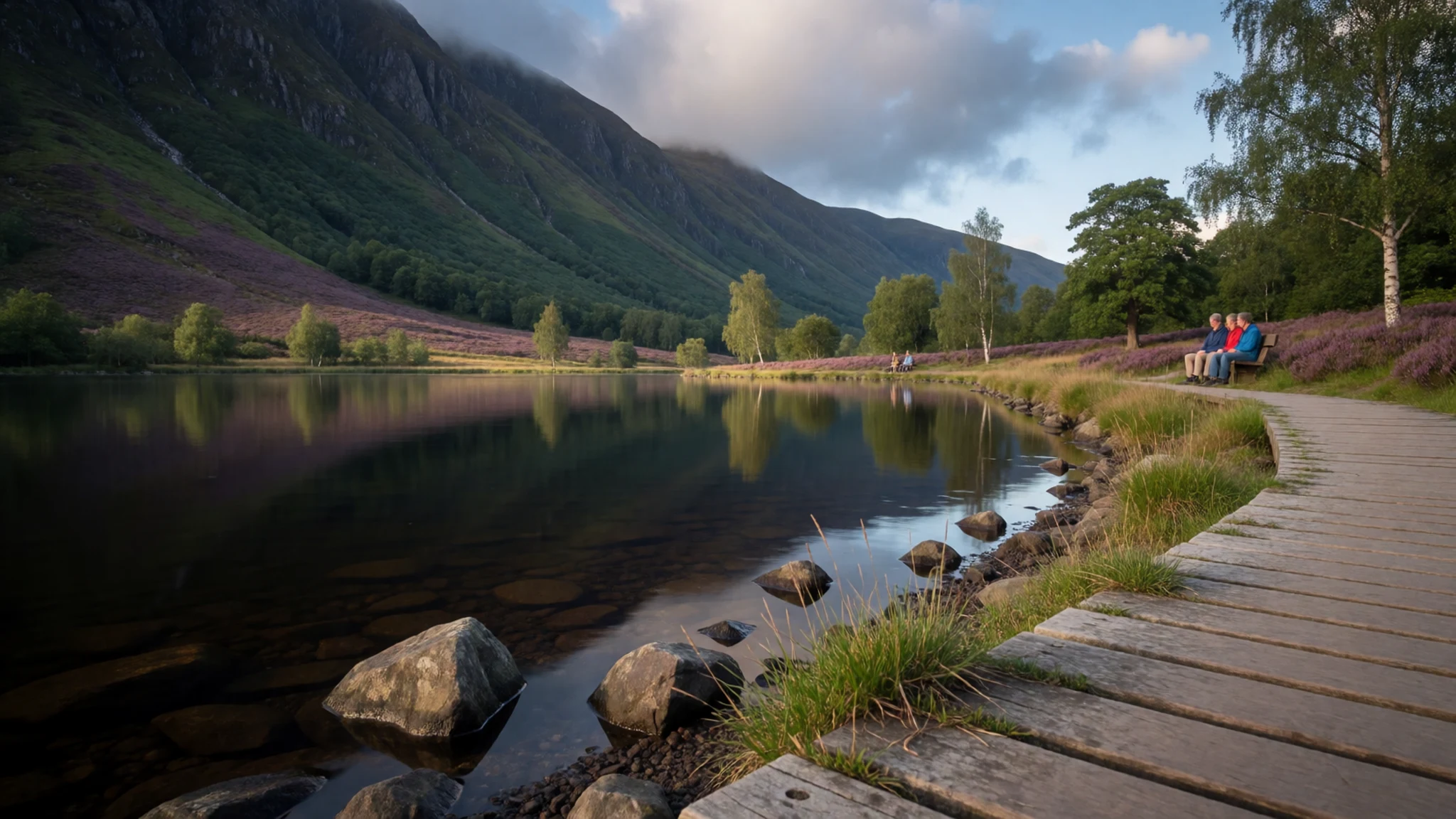
Culture
Glendalough's culture is bound up with Irish monasticism, where learning, prayer and hospitality mattered as much as solitude. Kevin is still honoured as the founding saint, and his feast on the third of June is the day most associated with the valley. The settlement was a place of writing and teaching as well as devotion, and the Book of Glendalough is a reminder that scribes worked here. The round tower is typical of Irish monasteries. It served as a belfry and landmark and, according to tradition, a refuge when raiders came, though the tale of safe sanctuary behind the cross on the gateway did not always hold. The landscape itself carries a strong sense of retreat. Stories of Kevin living in a hollow above the Upper Lake, and of Laurence O'Toole coming back to the same solitude, give the lakes a quiet, almost penitential feel that locals and pilgrims have long recognised. The ruins sit beside a working graveyard, so the place is still part of living community life rather than a museum. Many visitors come on a family day out, with picnics and walks, and others come as pilgrims or history readers. The two sit comfortably together here so long as everyone keeps their voices low near the old churches. Walk quietly through the graveyard and the ruined churches, keep to the paths, and do not climb on the old walls or step on the graves.
What to wear
Traditional dress in Wicklow and the wider Irish countryside is built from wool and other plant fibres. The best-known pieces are the cable-knit Aran jumper, made from thick undyed wool, and tweed cloth woven for caps, jackets and coats, with Donegal tweed the name most often heard. Linen was a staple fabric in earlier centuries. The monks of early Glendalough would have worn simple wool habits, which suited a cold and wet valley. Nobody wears folk costume in daily life now, apart from dancers and festival performers. What people actually wear around the valley is practical outdoor clothing: waterproof jackets, fleeces, walking trousers and sturdy boots, with a woollen hat on cold mornings. Locals dress for variable weather and often carry a layer just in case. Visitors should do the same. Wear waterproof, grippy shoes, because paths around the lakes can be muddy, uneven or wet underfoot, and boardwalks turn slippery in rain. Pack layers, since a bright morning can turn cool and showery within the hour, and bring a waterproof even in summer. There is no strict dress code at the ruins, but because the graveyard is in use and the sites are former churches, shoulders and knees need not be covered, though quiet, tidy clothing feels right. A hat and sunscreen help on the rarer clear, bright days.
What to eat
- Irish stew — Traditional restaurants in Laragh
A slow-cooked pot of lamb or mutton with potatoes, onions and carrots, simple and filling after a long walk. Look for it on the menus of traditional Irish restaurants in Laragh and in pub-style eateries around the valley.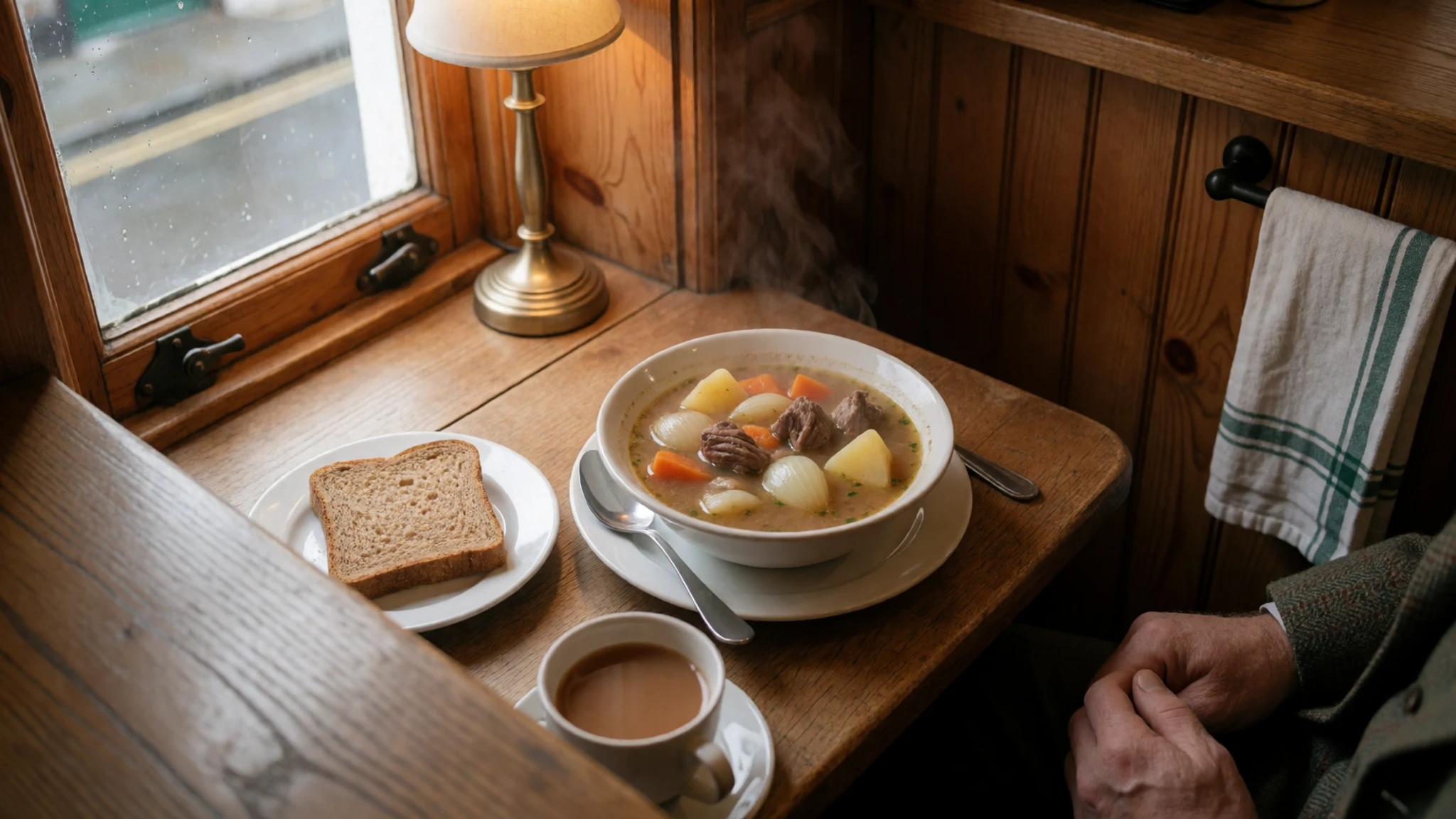
- Seafood chowder — Cafés and bars in Laragh and near the visitor centre
A thick, creamy soup of fish and shellfish, usually served with brown bread. Quality varies, so ask what is in the pot. It is a common lunch order in the valley's cafés and bars.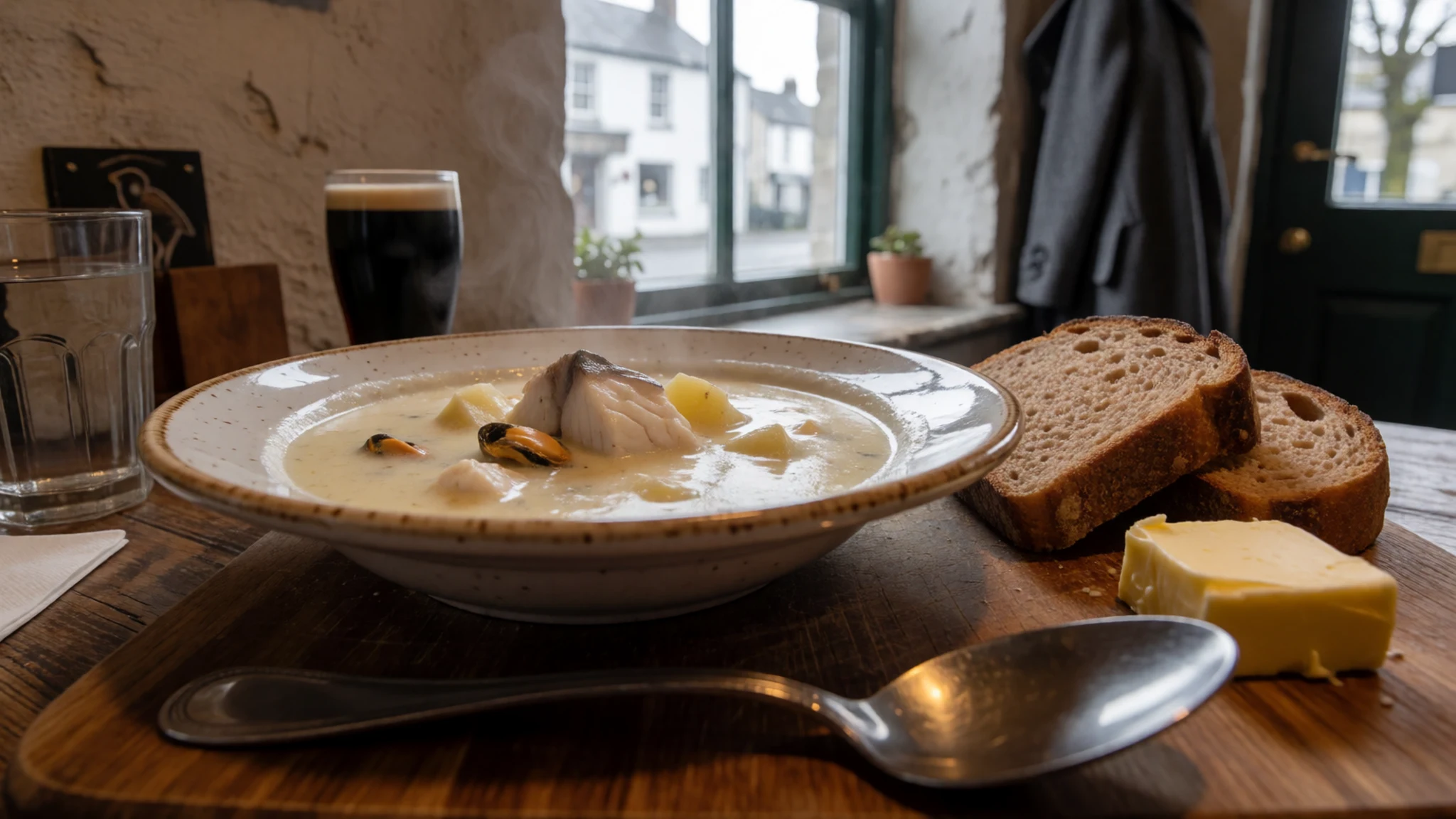
- Brown soda bread — Valley cafés and bakeries
A dense, slightly sweet wholemeal loaf raised with bicarbonate of soda rather than yeast, and eaten with butter, soup or smoked fish. It is baked daily in most cafés and often sold in slices on the side. - Scones with tea — Cafés near the visitor centre
A warm scone with butter, jam and perhaps cream, alongside a pot of strong tea, is the classic walkers' reward. Eateries near the sights sell them through the afternoon, though they sell out on busy summer weekends. - Full Irish breakfast — Guesthouses and cafés in Laragh
Bacon, sausages, eggs, black and white pudding, tomato and toast make a hearty start before a long trail. Most places to stay in Laragh serve it, and it keeps walkers going for hours.
Plan it
Best time. May, June and September: long daylight and easier walking, though summer weekends are busy, so go midweek if possible. Spring and autumn weekdays are quieter. Ireland's weather can turn wet in any month, so plan for rain whenever you visit.
How long. 1–2
Getting there. Fly into Dublin Airport, then travel into the city. From Dublin, take a coach excursion or the St Kevin's Bus from St Stephen's Green, or drive via the M11 and the R755 through Roundwood. Local Link bus 183 links Wicklow town with Laragh and the valley. Check current timetables with the operators.
Budget. low
Tips
- Arrive early on summer weekends, because the car parks fill and the roads in are congested
- Start at the visitor centre for orientation, then walk to the Upper Lake before the crowds
- Eating places right beside the sights get mobbed, so go at a quiet hour, bring a picnic or eat in Laragh
- Bring waterproofs and proper footwear in any season
- Laragh has the most accommodation, so book ahead for busy weekends
Etiquette
- Keep voices low and stay on the paths around the churches
- Treat the graveyard as a place of rest, not a photo backdrop
- Take litter home and leave the stones as you find them
Nearby
Sources
- Wikidata Q691153 (CC0)
- Wikipedia: Glendalough (rev 1362386253) (CC BY-SA 4.0)
- Wikivoyage: Glendalough (rev 5402836) (CC BY-SA 4.0)
- Photo: Glendalough monastery (Schcambo) (CC BY 3.0)
- Photo: St. Kevin's Kitchen (Denzillacey) (CC BY-SA 4.0)
- Photo: Glendalough Valley from Brockagh Mountain (Joe King) (CC BY 3.0)
- Photo: Glendalough Upper Lake (Britishfinance) (CC BY-SA 4.0)
- Photo: The Gateway to the monastic city of Glendalough (Denzillacey) (CC BY-SA 4.0)
- Photo: Glendalough Round Tower Above (Denzillacey) (CC BY-SA 4.0)
- Photo: Glendalough church (Leonardo Fonseca) (CC BY-SA 4.0)
- Photo: Priest House in Glendalough (Denzillacey) (CC BY-SA 4.0)


