Gangotri National Park
Gangotri National Park, India
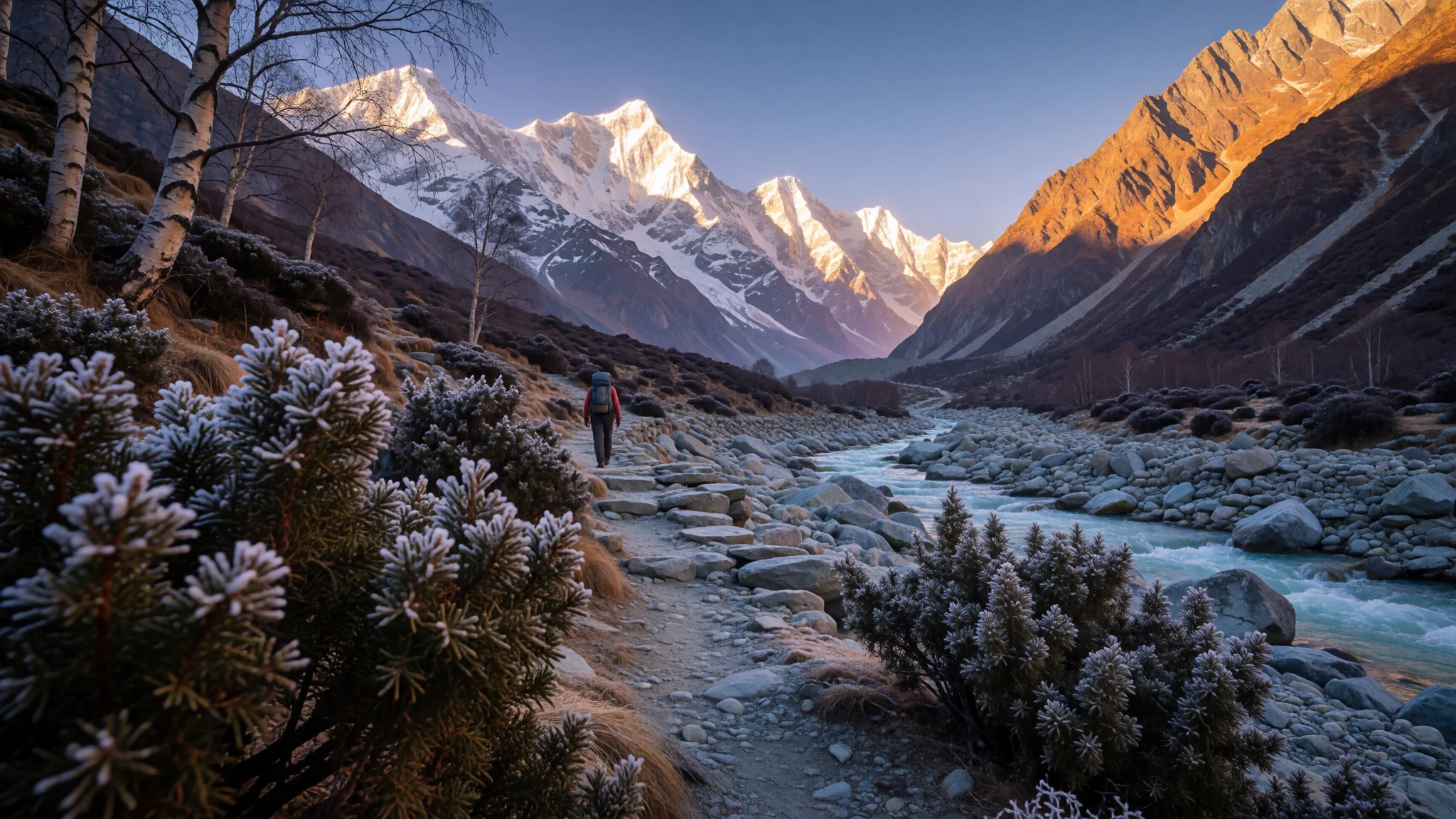
Visit for the sacred source of the Ganges and rare wildlife amidst some of the Himalayas' most rugged terrain.
The place
Gangotri National Park is a high-altitude sanctuary located in the Uttarkashi District of Uttarakhand. Established in 1989, the park protects a vast and varied landscape that ranges from dense coniferous forests and lush alpine meadows to stark, frozen glaciers. The terrain is defined by its extreme verticality; visitors encounter deep gorges, precipitous cliffs, and narrow valleys that carve through the mountains. This dramatic geography creates a series of distinct biomes, moving from subtropical vegetation at lower reaches to the windswept heights of the West Himalaya zone.
At the heart of the park lies the Gaumukh glacier, the physical origin of the Bhagirathi river, which is the primary headstream of the holy river Ganga. Because of this, the park is not merely a wildlife refuge but a site of immense spiritual significance. The environment is harsh and demanding, with snow-clad peaks dominating the horizon and an international boundary with China marking its northeastern edge. For the traveller, it is a place of solitude and raw natural power, though the approach to the main shrines can be crowded during peak pilgrimage seasons. The air is thin, the weather is volatile, and the scale of the landscape is humbling, making it a destination for those who seek both spiritual renewal and physical challenge.
Its story
The story of Gangotri National Park is inextricably linked to the spiritual geography of India. The park is named after Gangotri, one of the most sacred shrines for Hindus. According to tradition, the river Ganga descended from the heavens to earth, and the park encompasses the very point where this celestial river emerges from the ice of the Gangotri glacier at Gaumukh. This intersection of geological process and divine narrative makes the land a living temple for thousands of pilgrims who trek these paths every year.
Beyond the spiritual, the park tells a story of ecological resilience. It serves as a critical corridor for wildlife, maintaining a viable continuity between the neighbouring Govind National Park and the Kedarnath Wildlife Sanctuary. In these high valleys, rare species like the Himalayan musk deer and the blue sheep, known as bharal, have found a refuge from human encroachment. The region's history is also marked by the Garhwal Kingdom, with the name Garhwal potentially stemming from the 'owner of forts'. This legacy of fortified hill towns and remote mountain passes adds a layer of human history to the prehistoric scale of the glaciers. To walk through the park is to move through layers of time, from the ancient movement of ice to the enduring rituals of faith that have defined the Garhwal hills for centuries.
What to see
- Gaumukh Glacier — Central park area
The 'Cow's Mouth' is the snout of the Gangotri glacier and the source of the river Ganga. This trek is a demanding journey through rocky terrain, leading to a site of profound spiritual energy where the glacial ice meets the rushing river.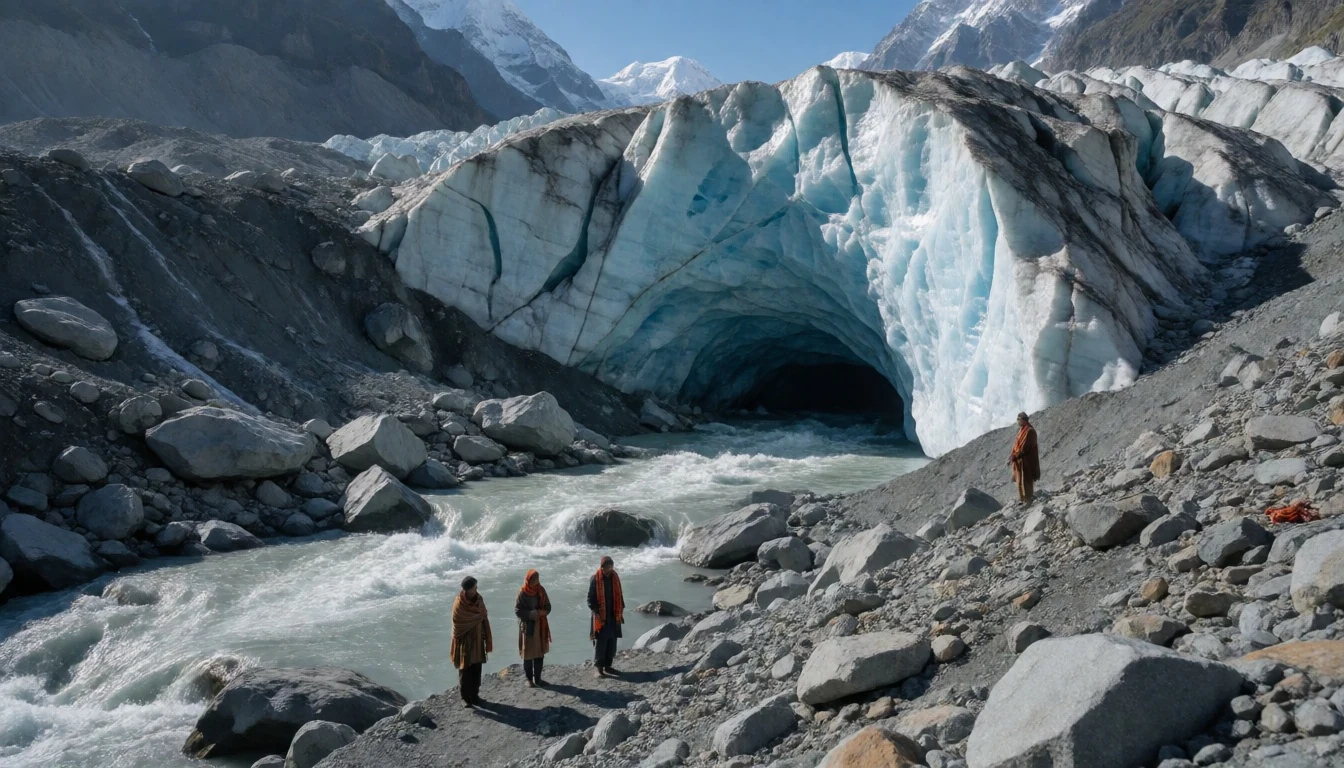
- Bhagirath Peaks — Northern high ridges
These towering summits provide some of the most dramatic vistas in the park. Viewed from spots like Bhojvasa, the jagged, snow-covered ridges illustrate the raw power of the Himalayan uplift and offer a challenging backdrop for experienced mountaineers and photographers.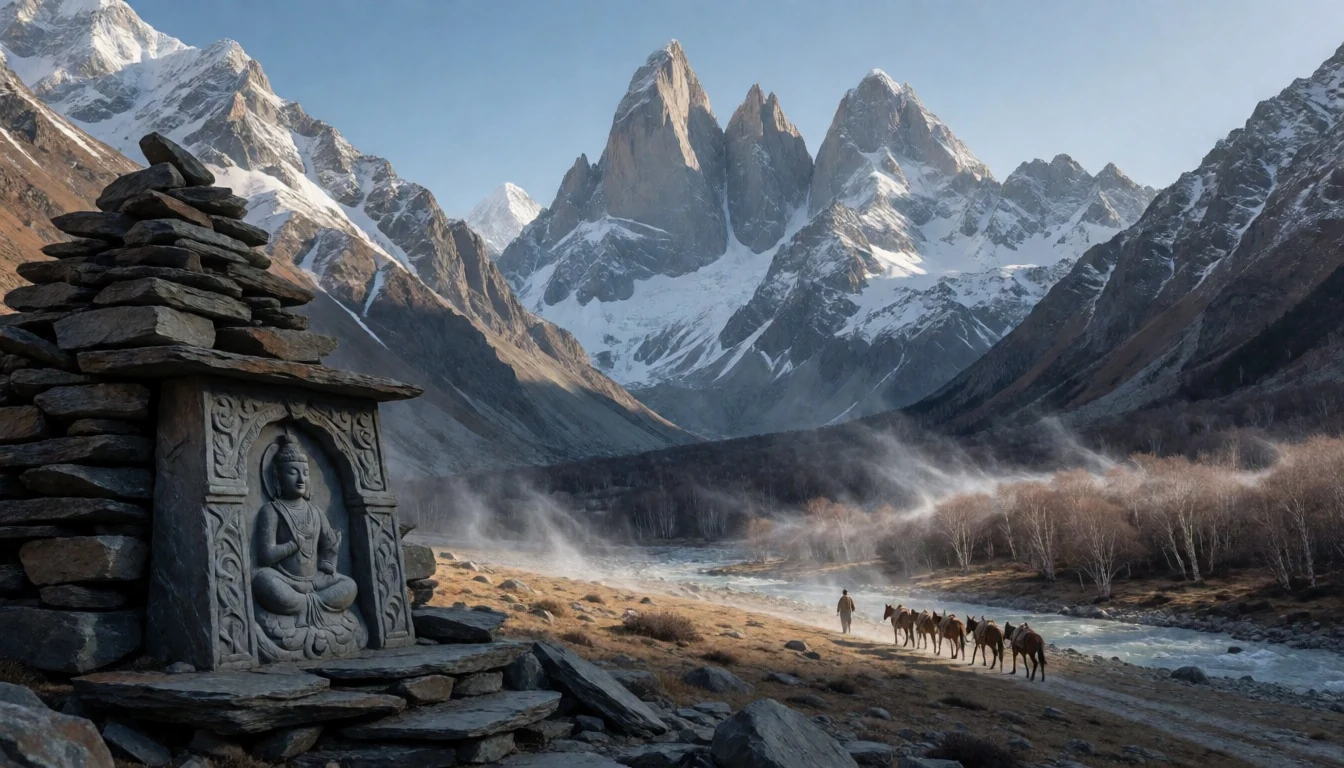
- Nehru Institute of Mountaineering — Uttarkashi
Located in the gateway town of Uttarkashi, this premier institute trains climbers in search and rescue and basic mountaineering. Visitors can explore its museum to learn about Himalayan expeditions and the technical skills required to navigate the park's peaks.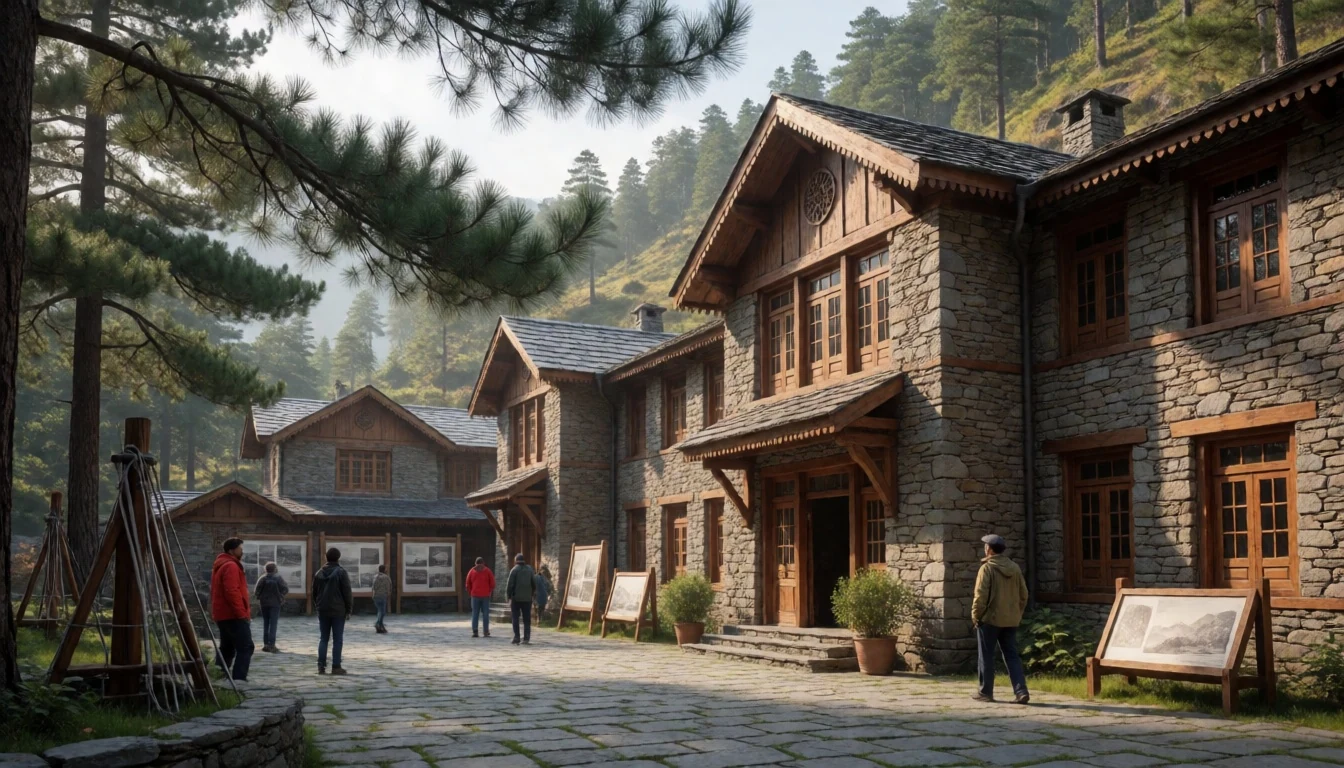
- Bharal Habitats — Alpine meadows and slopes
The steep, rocky slopes of the park are the primary home of the bharal, or Himalayan blue sheep. These agile animals are often spotted grazing on the alpine meadows, providing a glimpse of the park's unique high-altitude biodiversity.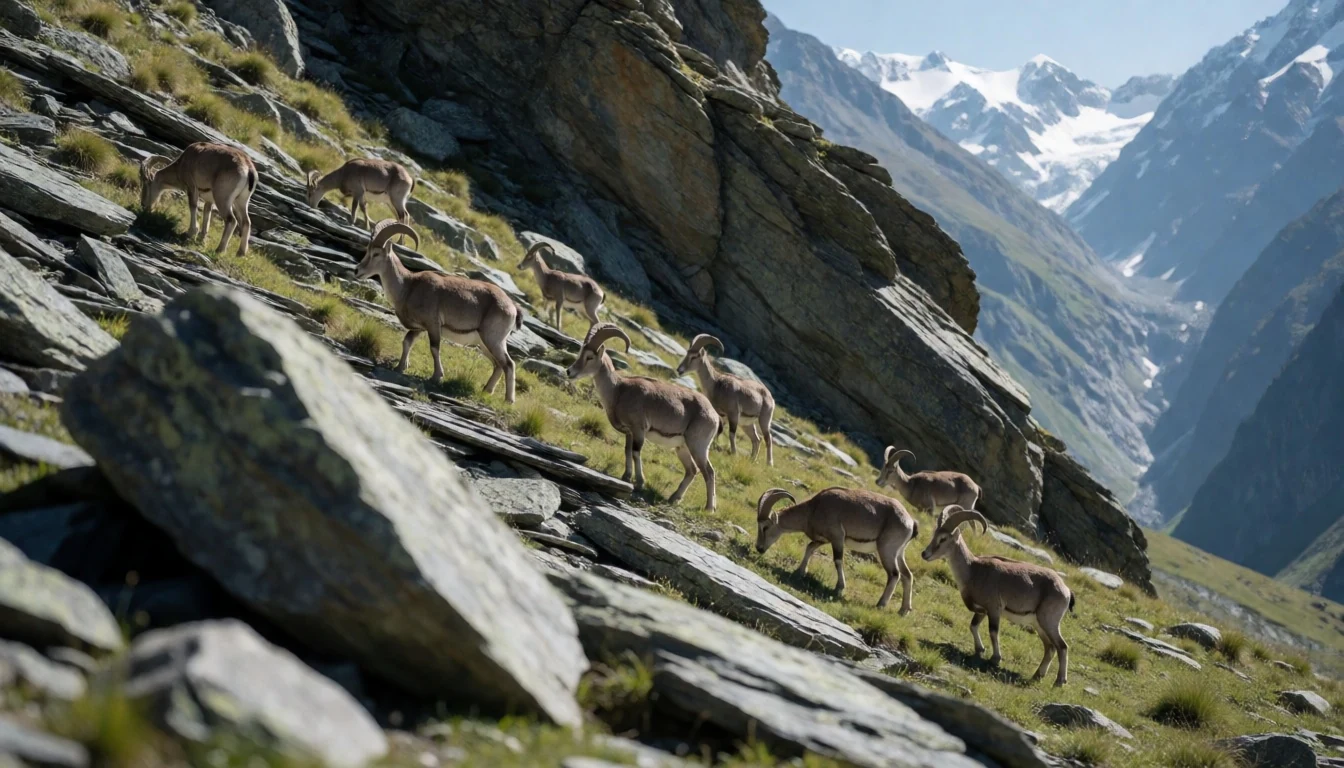
- Panch Kedar — Garhwal region
While spread across the wider region, these five holy sites dedicated to Shiva are central to the spiritual experience of the Garhwal Himalayas. Pilgrims visit them in a specific order, weaving through the mountains to complete their sacred circuit.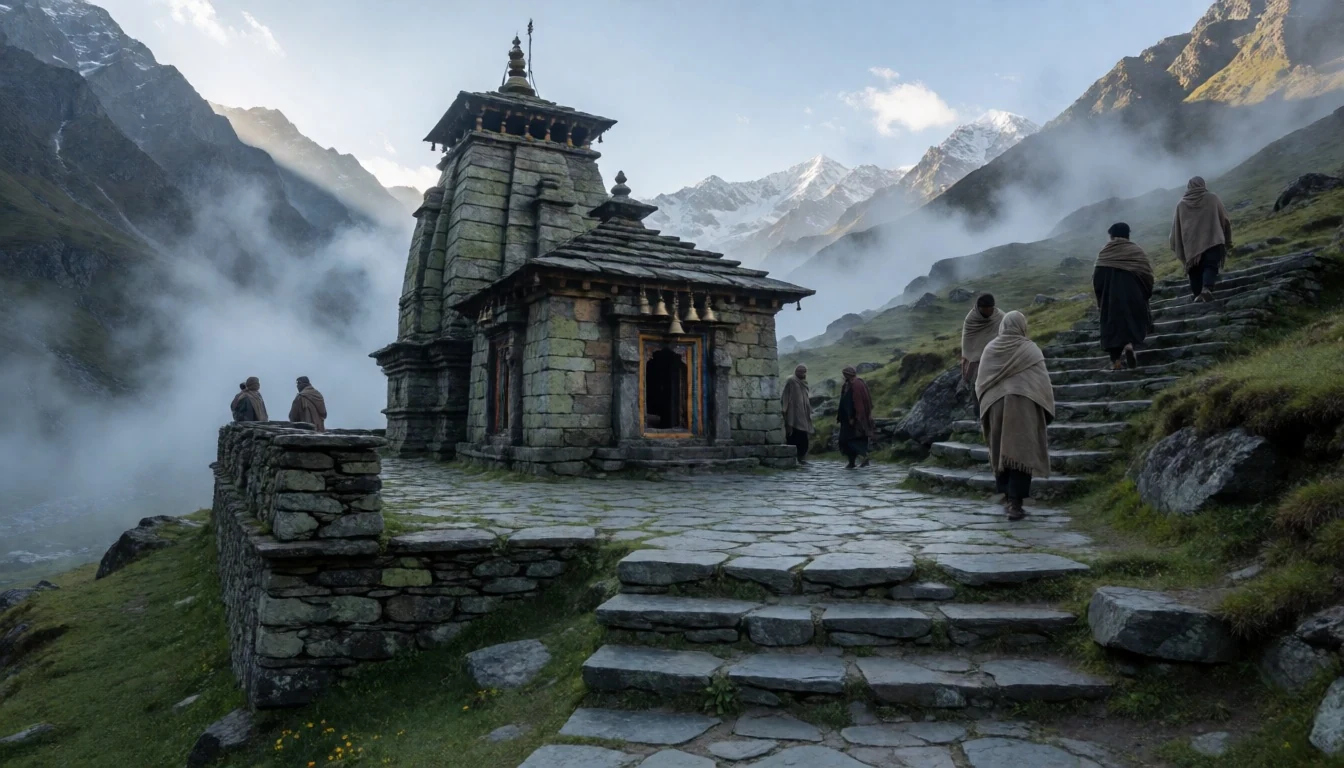
Culture
Culture in Gangotri National Park is a blend of deep Hindu piety and the rugged pragmatism of mountain life. The region is a hub for Shaivite pilgrimage, where the rhythm of life is dictated by the opening and closing of the shrines based on the seasons. Local communities have a profound respect for the mountains, viewing the peaks not just as geography but as the abode of the gods. This is reflected in the local folklore and the enduring tradition of the Garhwal Rifles, who embody the strength and resilience of the hill people. In the smaller villages, life revolves around terrace farming and livestock, with a strong communal bond forged by the challenges of the climate. Visitors will find a warm, welcoming atmosphere, though the pace of life is slow and dictated by the terrain. When visiting shrines or interacting with locals in remote hamlets, it is important to be mindful of the sacredness of the sites. Please dress modestly and avoid loud noise when passing through prayer areas or pilgrimage queues.
What to wear
Fashion in Gangotri National Park is defined by the need for warmth and modesty. Traditional Garhwali dress often features heavy, hand-knitted woollens, including intricately patterned sweaters and shawls crafted from local sheep's wool to combat the biting mountain chill. These textiles are prized for their durability and are still widely sold in the market towns of the region. Nowadays, local men and women often mix these traditional woollens with practical modern wear, such as synthetic fleece jackets and sturdy trousers, reflecting the influence of the trekking and mountaineering industries.
For the visitor, clothing must be tiered for extreme temperature swings. High-quality thermal base layers are essential, topped with woollen mid-layers and a waterproof, windproof outer shell. Sturdy, broken-in trekking boots with ankle support are non-negotiable for the rocky paths. When visiting the Gangotri shrine or other religious sites, ensure shoulders and knees are covered to respect local norms. A wide-brimmed hat and high-SPF sunscreen are necessary, as the alpine sun is surprisingly intense despite the cold air.
What to eat
- Burans Juice — Roadside dhabas
A tart, refreshing drink made from the flowers of the rhododendron plant. This indigenous Himalayan brew is best found at small roadside stalls and local dhabas during the spring blooming season.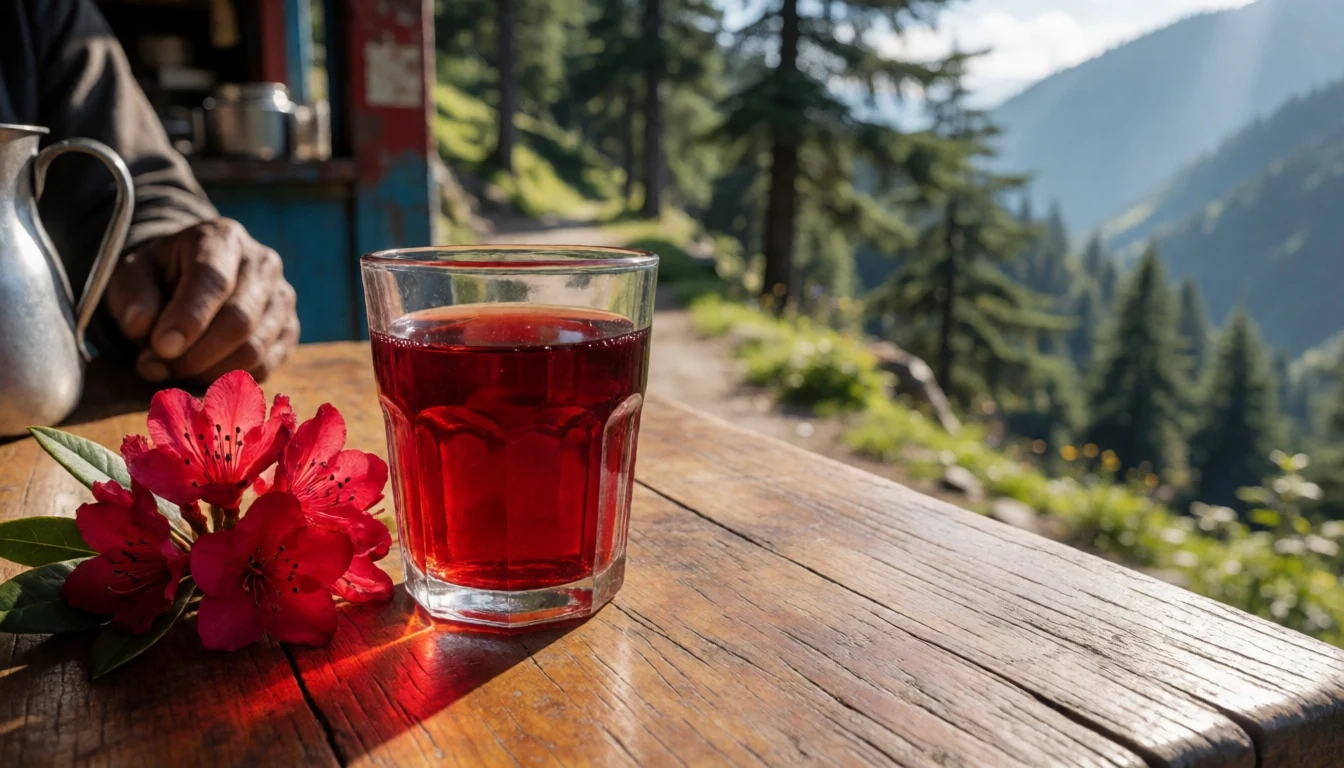
- Local Dal and Rice — Village eateries
A comforting staple consisting of hearty lentils and steamed local rice, often seasoned with mountain herbs. It is the primary fuel for trekkers and can be found in any village eatery.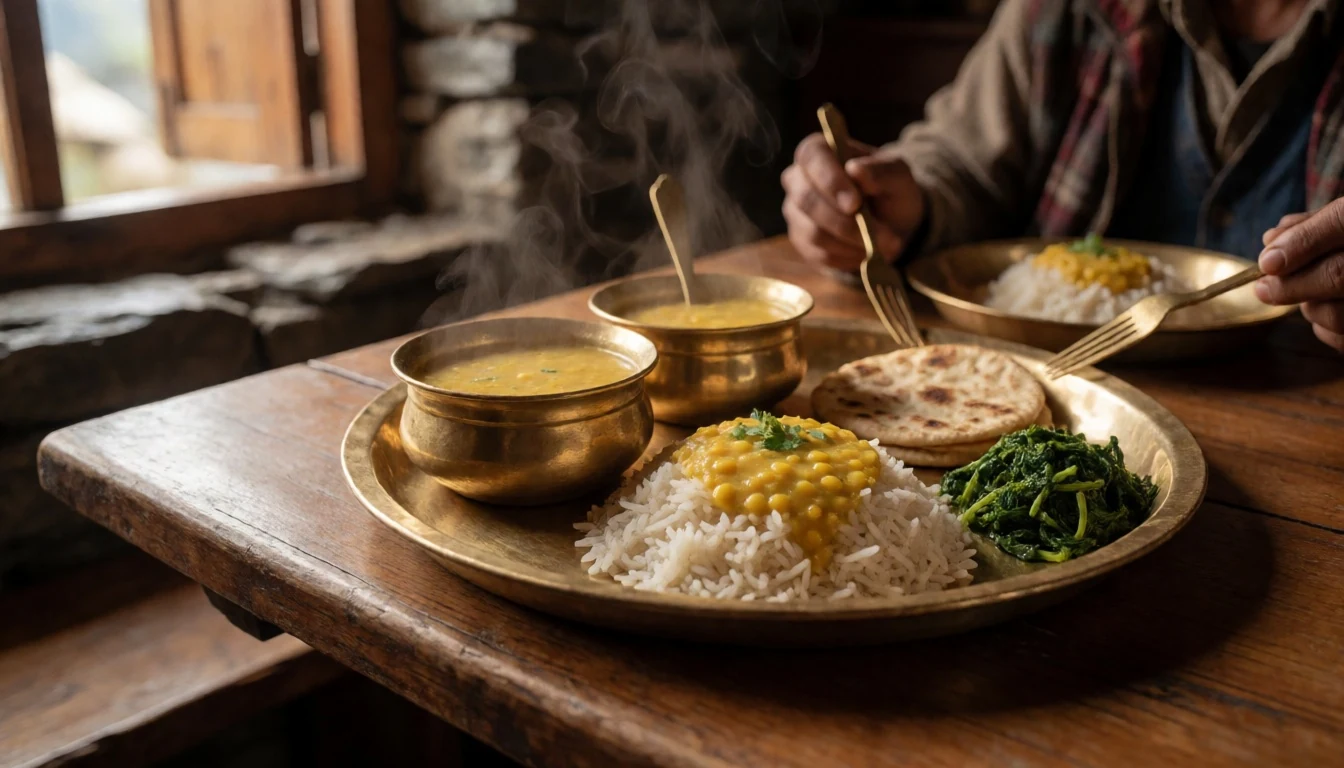
- Mountain Tea — Trekking tea stalls
Strong, milky tea often infused with ginger or cardamom to keep the body warm in the thin air. It is served in almost every small shop and tea stall along the trekking routes. - Garhwali Siddu — Traditional home-stays
A traditional steamed bread often stuffed with poppy seeds or walnuts, providing a dense source of energy. This local delicacy is typically found in home-stays and traditional Garhwali eateries.
Plan it
Best time. March–April and October–November; these windows avoid the monsoon rains and the heaviest winter snows that block the high passes.
How long. 5–7
Getting there. Fly into Jolly Grant Airport (DED) in Dehradun, then take a bus or shared taxi to Uttarkashi; alternatively, buses run from New Delhi's ISBT Kashmiri Gate to Rishikesh and Kotdwar.
Budget. mid
Tips
- Carry plenty of cash as ATMs are rare once you leave the main towns
- Acclimatise in Uttarkashi for a few days to avoid altitude sickness
- Book GMVN guest houses well in advance during the pilgrimage season
- Carry a reusable water bottle and purification tablets to reduce plastic waste
- Prepare for sudden weather shifts with high-quality waterproof gear
Etiquette
- Maintain silence and patience in pilgrimage queues
- Do not litter in the national park or near the glacial sources
- Ask for permission before photographing local villagers or monks
Nearby
Sources
- Wikidata Q2281202 (CC0)
- Wikipedia (CC BY-SA 4.0)
- Wikivoyage (CC BY-SA 4.0)