Fuerteventura
Fuerteventura, Spain
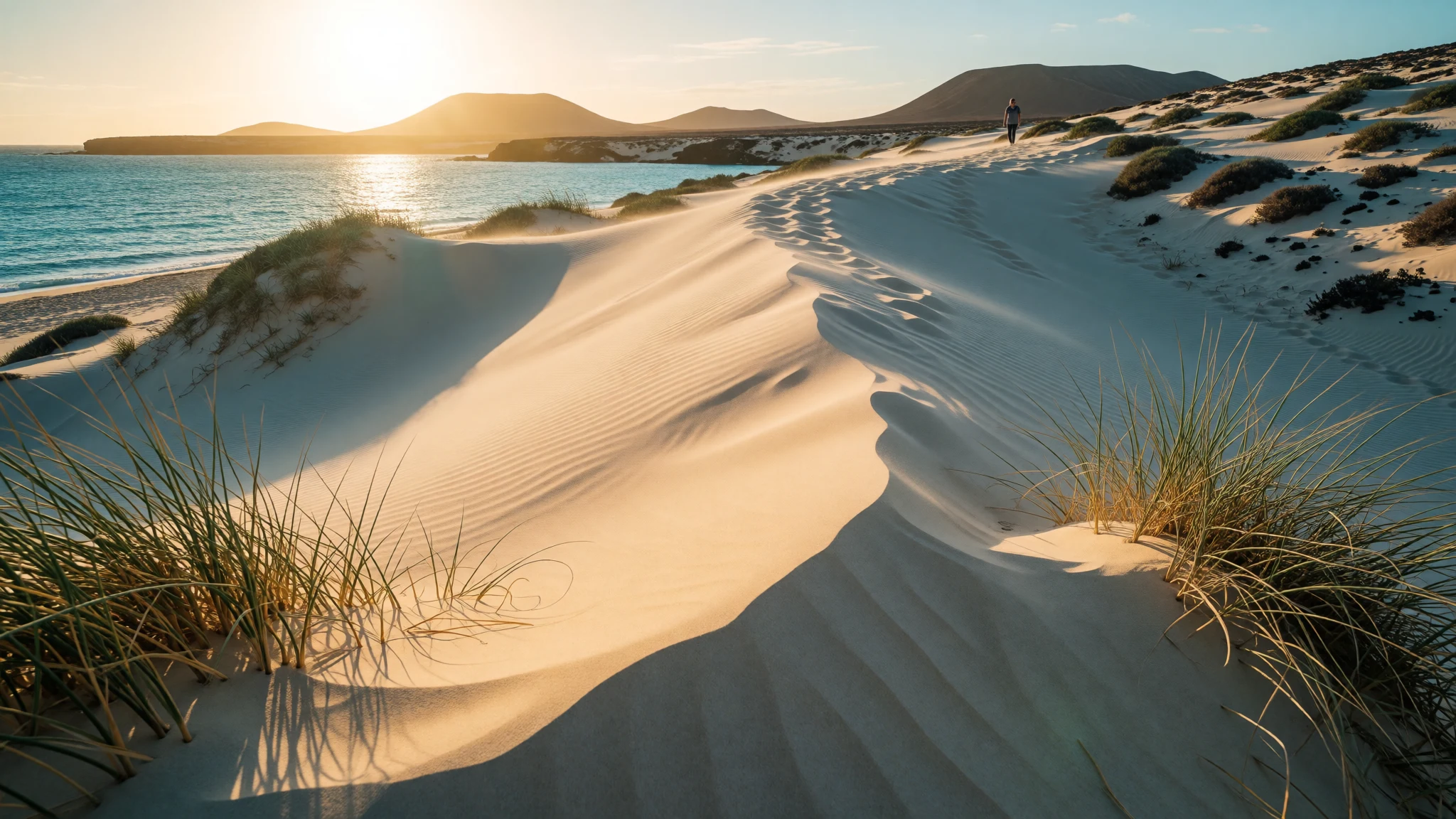
Fuerteventura offers long beaches, steady wind and bare volcanic hills on a Spanish island lying close to Africa, with mild weather through most of the year.
The place
Fuerteventura is a long, dry, wind-scoured island in the Atlantic. It belongs to the Canary archipelago and to Spain, yet lies only about 97 km from the African coast. That closeness explains much of what the island looks like: bare brown hills, wide plains with little shade, and a clear, hard light. The island runs about 100 km from end to end and is far narrower across. Its high point, Pico de la Zarza at 807 m, stands in the south-west, and the central massif around Betancuria forms the only real mountain country. About 127,000 people live here, with Puerto del Rosario as the capital, though few visitors stay there. Tourism is the main earner. It clusters around Corralejo in the north, Morro Jable and the Jandía peninsula in the south, and the purpose-built resort of Caleta de Fuste near the capital. Fishing and some farming continue in the background. Between the resorts lie some of the longest white-sand beaches in the archipelago, with black volcanic shingle in other places. The steady trade wind shapes everything. In summer it draws wind and kite surfers from across Europe, and it can also make a sunbed afternoon tiring. Sea conditions vary sharply from one beach to the next, from nearly flat lagoons to surf strong enough that lifeguards and locals advise staying out. The interior is sparse goat country with small whitewashed villages, and it repays a day with a hired car.
Its story
Fuerteventura's recorded story begins with people believed to have come from North Africa. Their descendants gave the island its local name, majorero, which comes from maho, a goatskin shoe. The first inhabitants lived in caves and half-buried stone dwellings, and excavations have turned up early tools and pottery. Claims that Phoenicians landed here have never been firmly backed by evidence. Before Europeans took control, the island was divided into two kingdoms. Maxorata lay in the north under King Guize, and Jandía in the south under King Ayoze. A wall across the narrow isthmus of La Pared marked the border, and some of it survives. The island's ancient name, Erbania, is linked to that wall. Spanish and Portuguese expeditions began around 1340, followed by Moorish and European slave traders. The formal conquest started in 1402 under the French knights Jean de Béthencourt and Gadifer de la Salle, who had first settled on neighbouring Lanzarote. A chronicle of the campaign, La Canarien, survives. In 1404 the invaders founded Betancuria on the west side, the first settlement on the island. In later centuries Fuerteventura and Lanzarote sent wheat and other cereals to Tenerife and Gran Canaria, but the profit went mostly to landowners. In famine years many islanders left for the bigger islands in search of work, which left lasting ties between the eastern islands.
What to see
- Corralejo dunes — Corralejo, north coast
The dunes at Corralejo spill pale sand almost into the sea, with Lanzarote showing across the water on clear days. There is no shade and the wind can sting bare legs, so go early, carry water and a hat, and walk some distance from the car parks for quiet.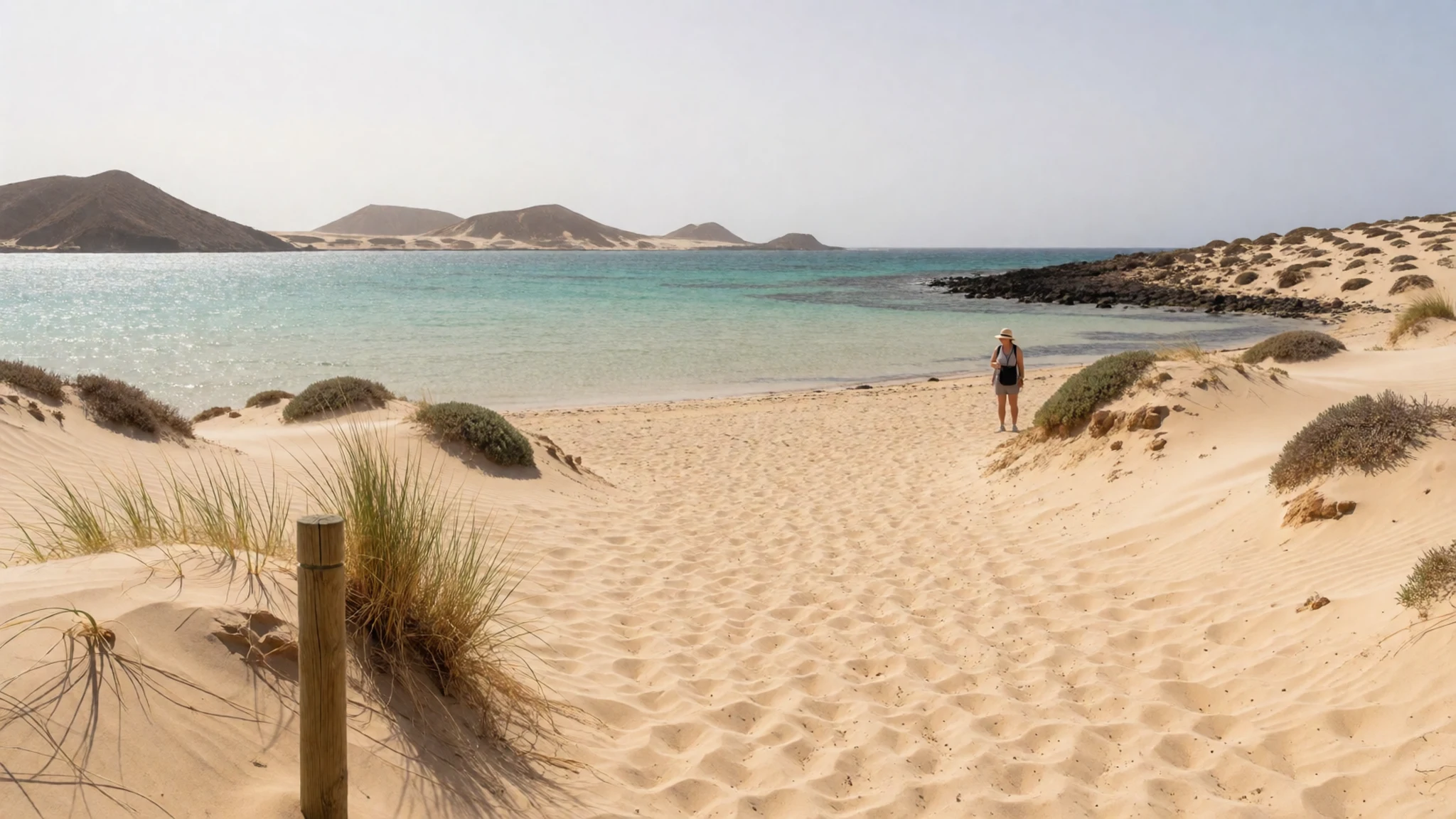
- Betancuria and the central massif — Central uplands, west side
Betancuria, founded in 1404, sits tucked inland among the island's central hills. The winding road from the coast passes viewpoints over dry valleys and terraces, and gives a sense of how farmers and goat herders managed on this arid land. Drive slowly, as bends are tight and cyclists common.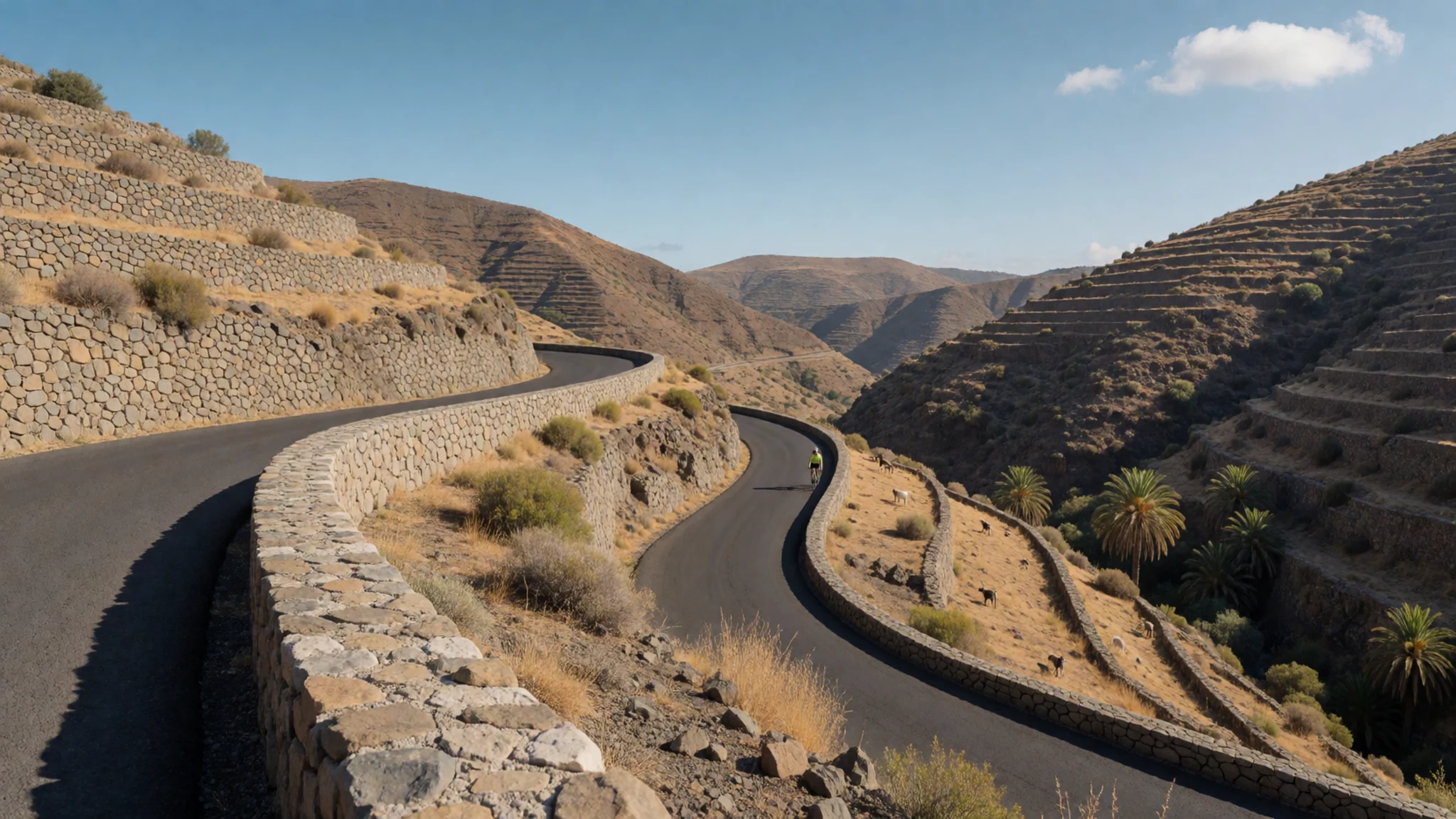
- Morro Jable and the Jandía peninsula — South of the island
Morro Jable is the main resort in the south, with a working harbour and a very long beach that runs along the Jandía peninsula. The beach is wide enough that a short walk from the promenade brings quiet. Wind and currents vary, so check the flags before swimming.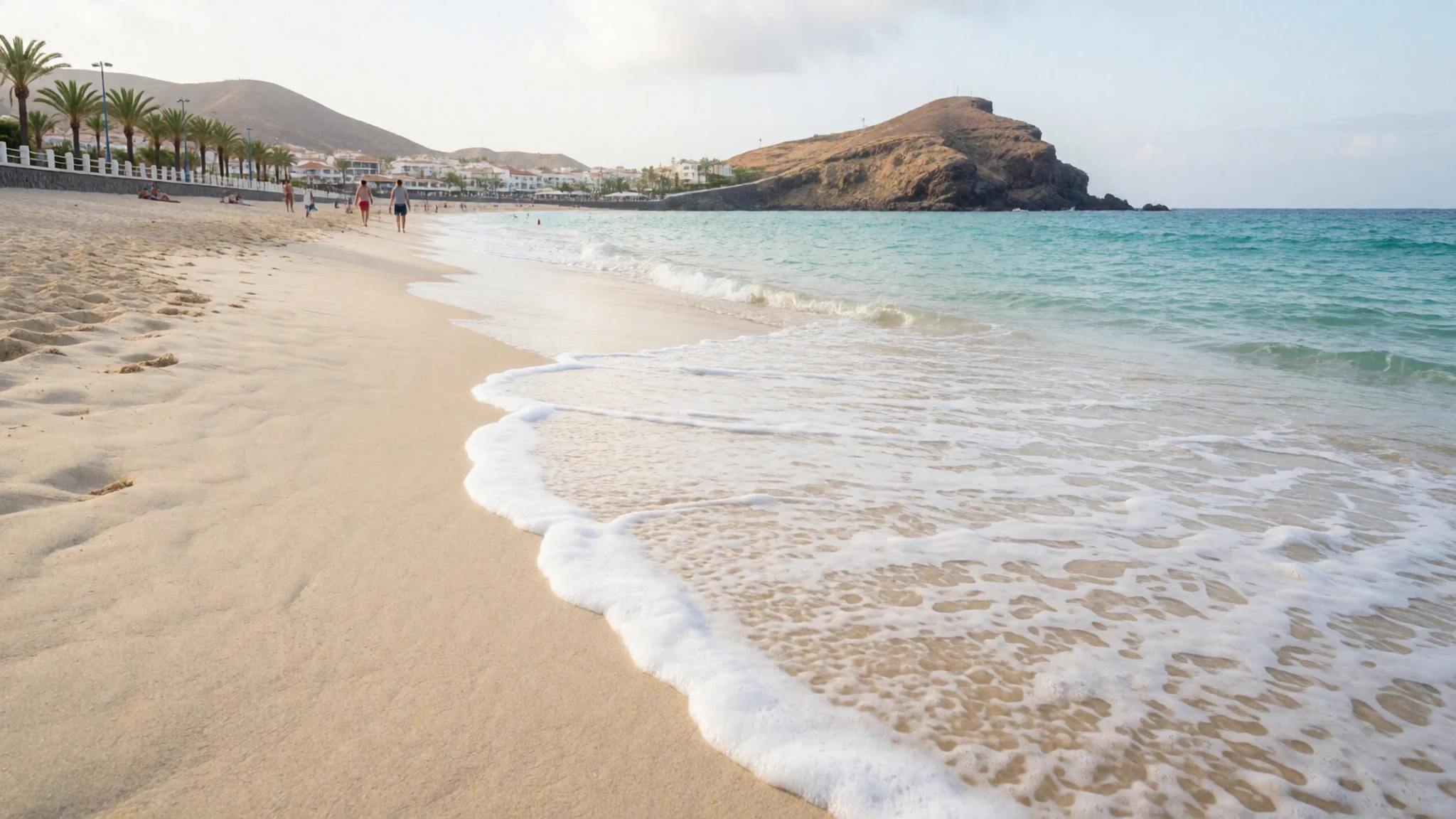
- Castillo de San Buenaventura — Caleta de Fuste, east coast
This small stone fortification stands beside the sea at Caleta de Fuste, a resort built for visitors. It is a modest stop rather than a day out, but it gives a quick reminder that the coast once needed guarding. It pairs easily with a swim in the sheltered bay nearby.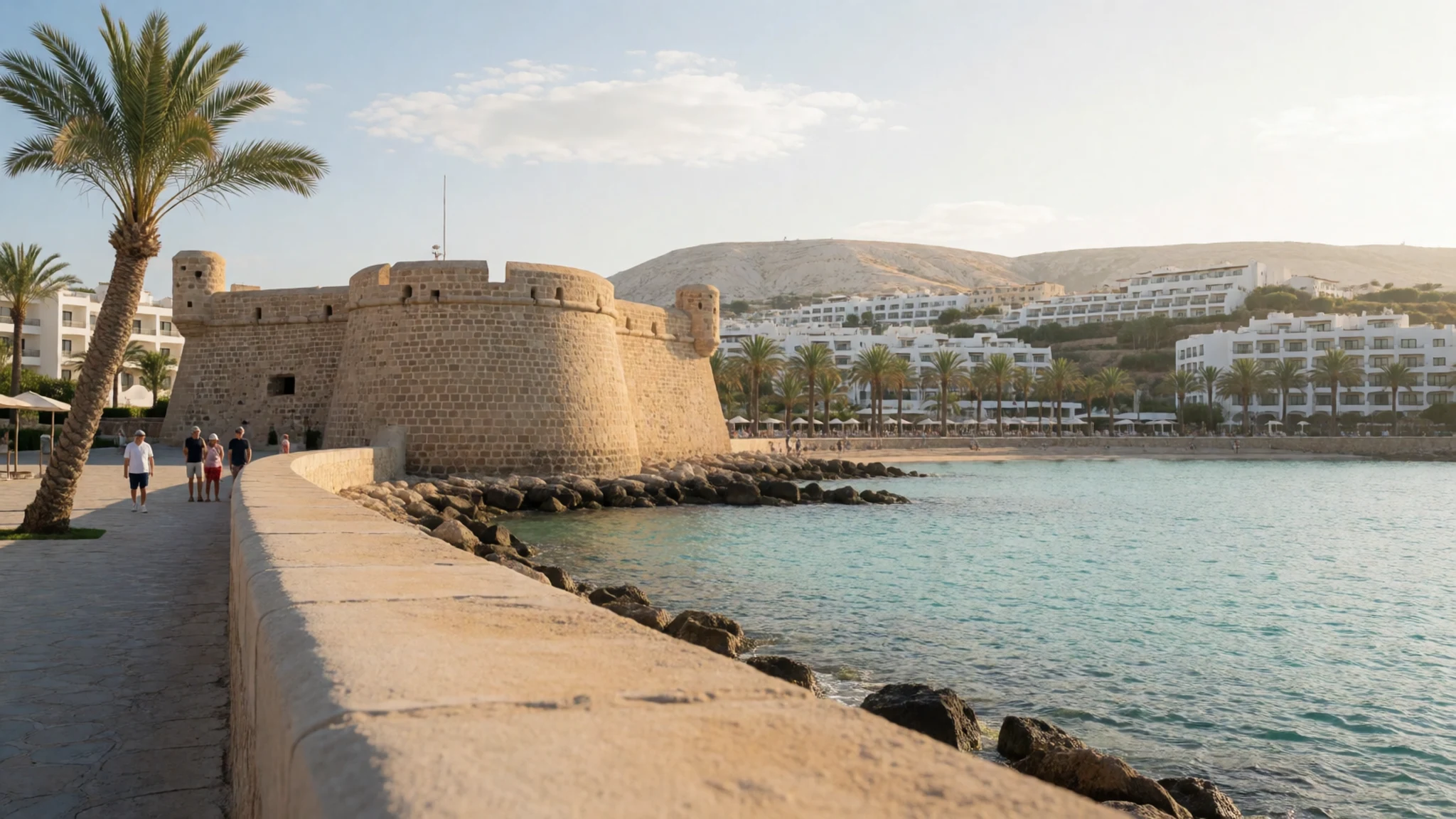
- Faro de La Entallada — Eastern coast, near Tuineje
The lighthouse of La Entallada stands on exposed cliffs on the east coast, far from the resorts. The point of the trip is the empty coastline, strong wind and big sea views. Check the road and weather before setting out, and bring a windproof layer.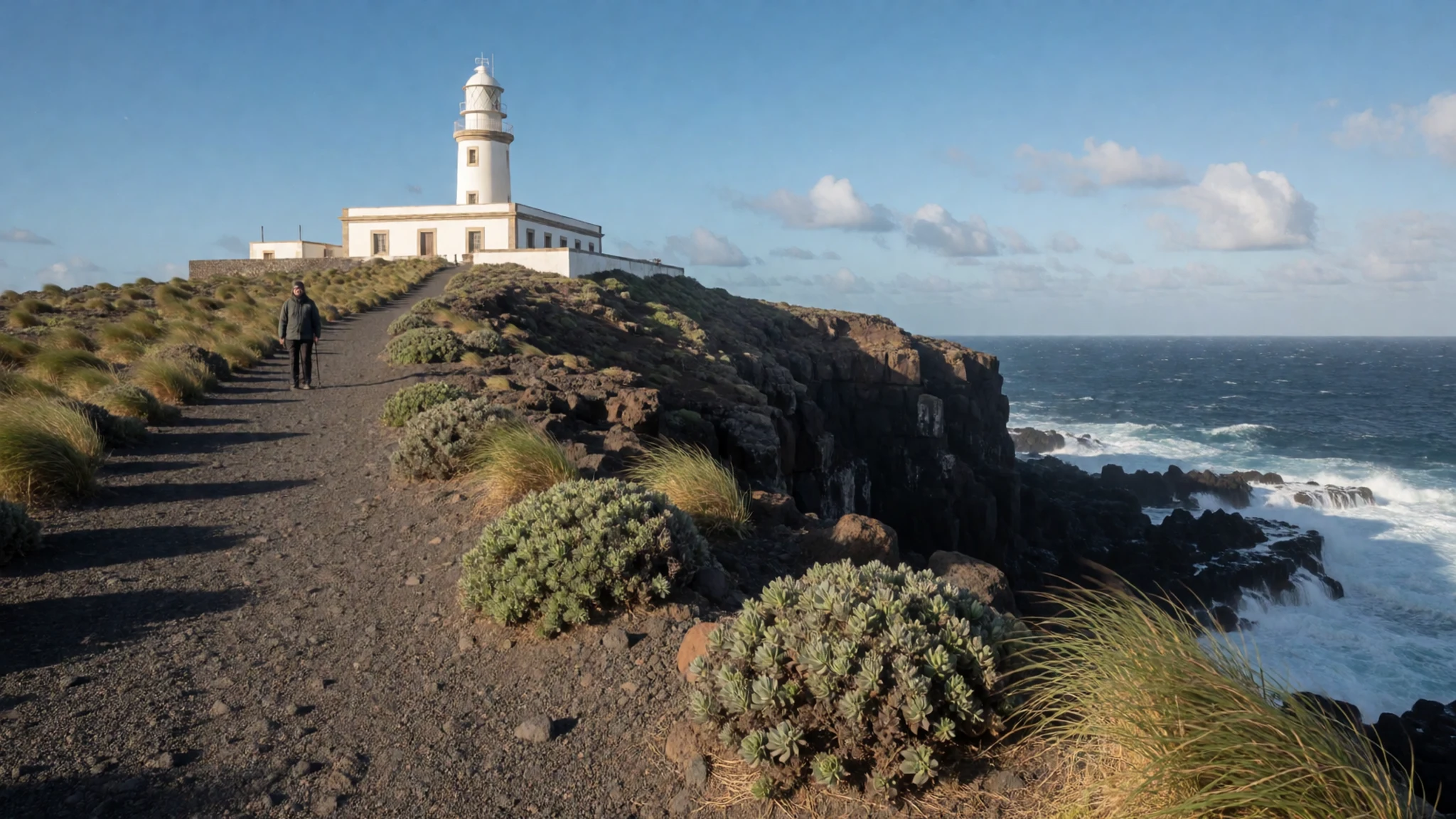
- Oasis Park — La Lajita, south-east
Oasis Park is a zoo and botanical garden on the south-east coast, popular with families and a useful break from beaches on a windy day. Its plants show how green the island can look when watered. Check the official site for opening times and current tickets before travelling.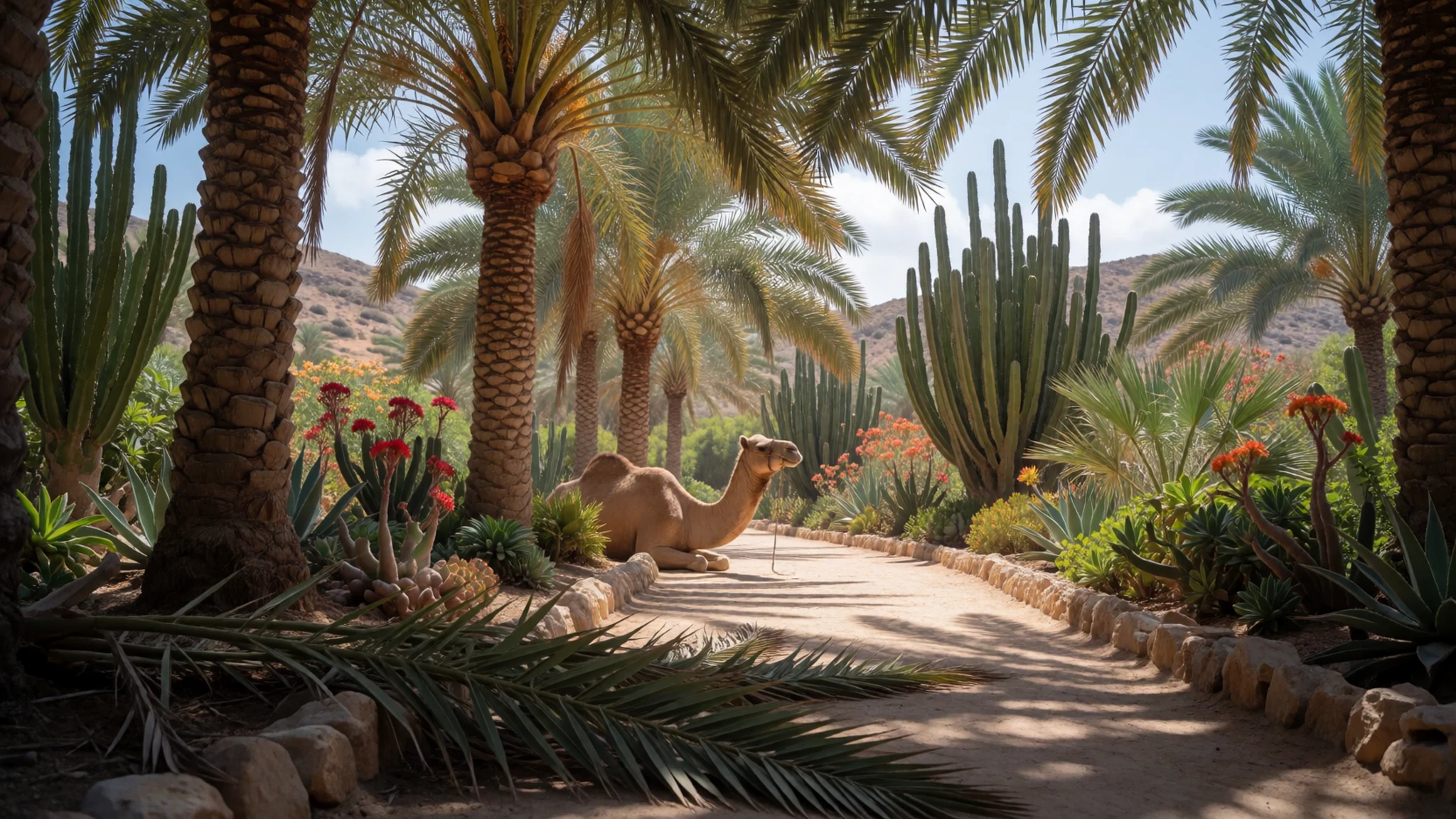
Culture
Fuerteventura's culture grew out of poverty, drought and isolation. Islanders call themselves majoreros, a word that links back to the goatskin shoes of the original inhabitants, and goats still define local life through cheese, stews and herding traditions. For centuries the island sent grain to richer neighbours while its own people often went short, and many left to seek work. That history left strong ties with Latin America, and visitors may hear Canarian Spanish with a softer, more Caribbean rhythm than the mainland's. Words such as guagua for a bus are a small sign of those links. Village life centres on the church square, a bar and a long lunch, and the pace slows noticeably in the afternoon. In the central uplands, old stone farm buildings, windmills and terraces show how people lived on a dry island before tourism. Today the coast is international, with surf schools, German and British retirees, and plenty of English spoken at the resorts. Away from the coast a few words of Spanish are noticed and appreciated. Local politics often turn on water, land and how much further building the island can absorb. Visitors who stay in the villages and eat locally contribute more directly to that balance than those who stay entirely inside a resort. When you visit a village church or a small inland community, dress modestly, keep your voice low, and always ask before photographing residents.
What to wear
Fuerteventura has no single grand national costume, but its old working dress reflects the island's climate and farming life. The best-known early item is the maho, a goatskin shoe from which the word majorero is derived. Later rural dress, shown in Alfred Diston's 1829 drawings of islanders, relied on wool, linen and straw for sun, wind and cold nights. Canarian festival dress, with embroidered blouses, long skirts, shawls and wide straw hats, is still worn at village fiestas and folk events, and some groups perform in it. Day to day, people wear what suits a hot, windy island: cotton shirts, shorts, trainers and sandals. Surf brands dominate along the coast, and wetsuits and board shorts are an ordinary sight in Corralejo. In the evening, locals dress neatly but casually, and few restaurants expect more than a clean shirt. Visitors should pack for strong sun and wind more than for heat alone. Bring a hat that fastens under the chin, sunglasses, high-factor sun cream and a light windproof jacket for the evenings and for boat or lighthouse trips. Closed shoes with grip suit volcanic paths and stony hillsides, and sandals are enough for beaches and towns. Swimwear belongs on the beach, so put on a shirt or wrap for shops and restaurants. Cover shoulders and knees if you plan to go inside village churches such as those around Betancuria.
What to eat
- Queso majorero — Village shops and weekly markets in the central uplands
Queso majorero is the island's goat cheese, sold fresh, semi-cured or cured, sometimes with a coating of paprika or gofio. It is served as a tapa with bread or on a cheese plate. Buy from a producer or market stall where possible.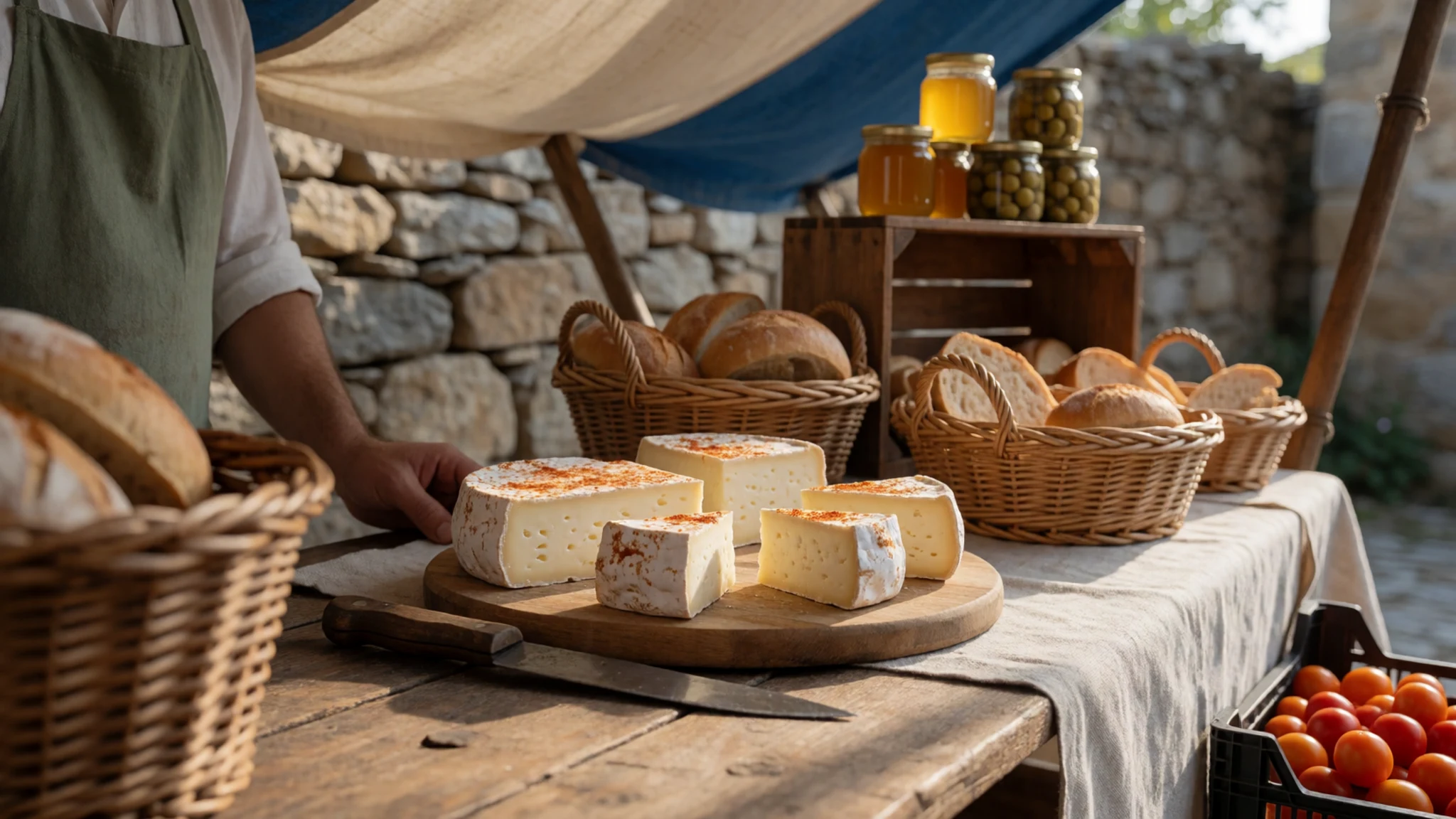
- Papas arrugadas con mojo — Almost any local eatery, from harbour towns to inland villages
Small potatoes are boiled in very salty water until the skins wrinkle, then eaten with a red or green mojo sauce made from oil, garlic and spices. They often arrive as a side dish or shared starter.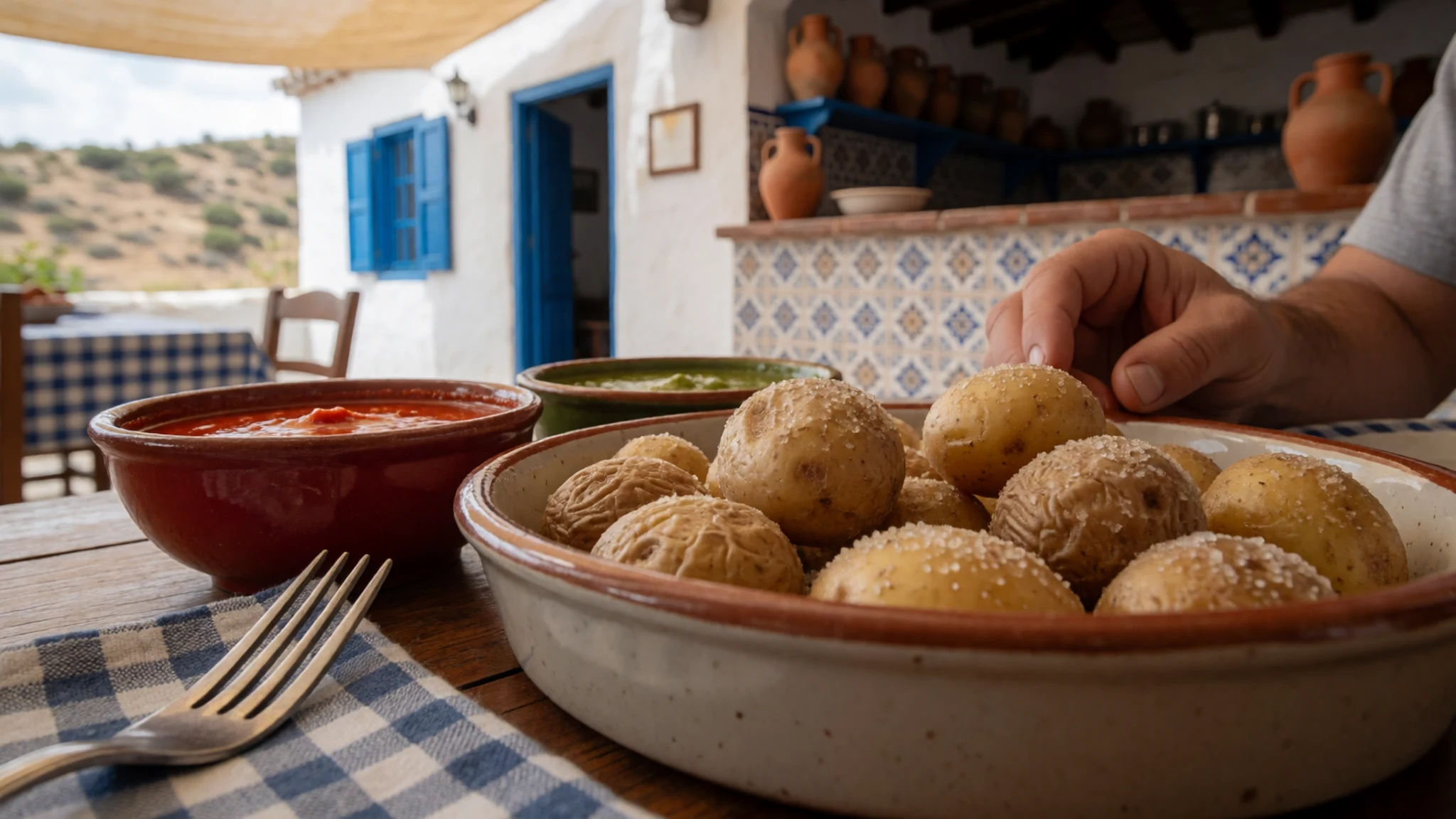
- Cabrito — Family-run restaurants in the central villages
Kid goat, stewed or roasted, is a traditional dish for festivals and Sunday lunches. The meat is rich but not heavy and often comes with potatoes. Ask for it at village restaurants rather than resort cafes. - Gofio — Supermarkets, village bakeries and market stalls
Gofio is toasted flour, usually from maize or wheat, which people have eaten here for centuries. It is stirred into soups and stews, kneaded into dough, or mixed with milk or honey for breakfast. It tastes nutty and filling. - Fresh grilled fish — Harbour restaurants in Morro Jable, Corralejo and smaller fishing villages
Fishing still supplies many harbour-side restaurants with the catch of the day, usually grilled whole and served with potatoes and mojo. Ask what came in that morning, and pick places where locals are eating.
Plan it
Best time. April–June and October–November give mild, bright days and manageable crowds. Summer suits wind and kite surfers because the trade wind blows most reliably, but it can be tiring for general beach days. Winter is also an option, since the island stays comparatively mild, though sea swimming feels cooler.
How long. 5–7
Getting there. Fly to Fuerteventura Airport near Puerto del Rosario, served by Spanish and international airlines and charter operators from the UK and Europe, then take a taxi, bus or hire car to your resort. Ferries run from Playa Blanca on Lanzarote to Corralejo in about 30 minutes, and there are longer sailings from Puerto del Rosario to other Canary Islands.
Budget. mid
Tips
- Hire a car for at least one day, since the interior and the quietest beaches are hard to reach by bus.
- Check beach flags and local advice before swimming, as waves and currents vary widely.
- Carry water, a hat and high-factor sun cream, because shade is scarce and the wind hides how strong the sun is.
- Book flights and accommodation early for school holidays and the summer surf season.
- Check the official sites of paid attractions such as Oasis Park for current times and tickets before you go.
Etiquette
- Dress modestly in village churches and inland communities.
- Ask before photographing local people, and take litter away from beaches and dunes.
- Stay on marked paths in the dunes and protected areas.
Nearby
Sources
- Wikidata Q192534 (CC0)
- Wikipedia: Fuerteventura (rev 1380005289) (CC BY-SA 4.0)
- Wikivoyage: Fuerteventura (rev 5402466) (CC BY-SA 4.0)
- Photo: Fuerteventura NWW.png (Public domain)
- Photo: Insula Fuerteventura din arhipelagul Canarelor, vedere satelit (Asybaris01) (Public domain)
- Photo: View of the Morro Jable Beach (User:Yoshi) (CC BY 3.0)
- Photo: Cantón o reino de Maxorata (Soront) (CC BY-SA 4.0)
- Photo: Natives of Fuerteventura (Alfred Diston, 1829) (Public domain)
- Photo: Castillo de San Buenaventura (Clydiee) (CC BY-SA 4.0)
- Photo: View from Pico de la Palma (MasturrX) (CC0 1.0)
- Photo: Fuerteventura, Canary Islands, March 2018 (Bengt Nyman) (CC BY 2.5)


