Freycinet National Park
Freycinet National Park, Australia
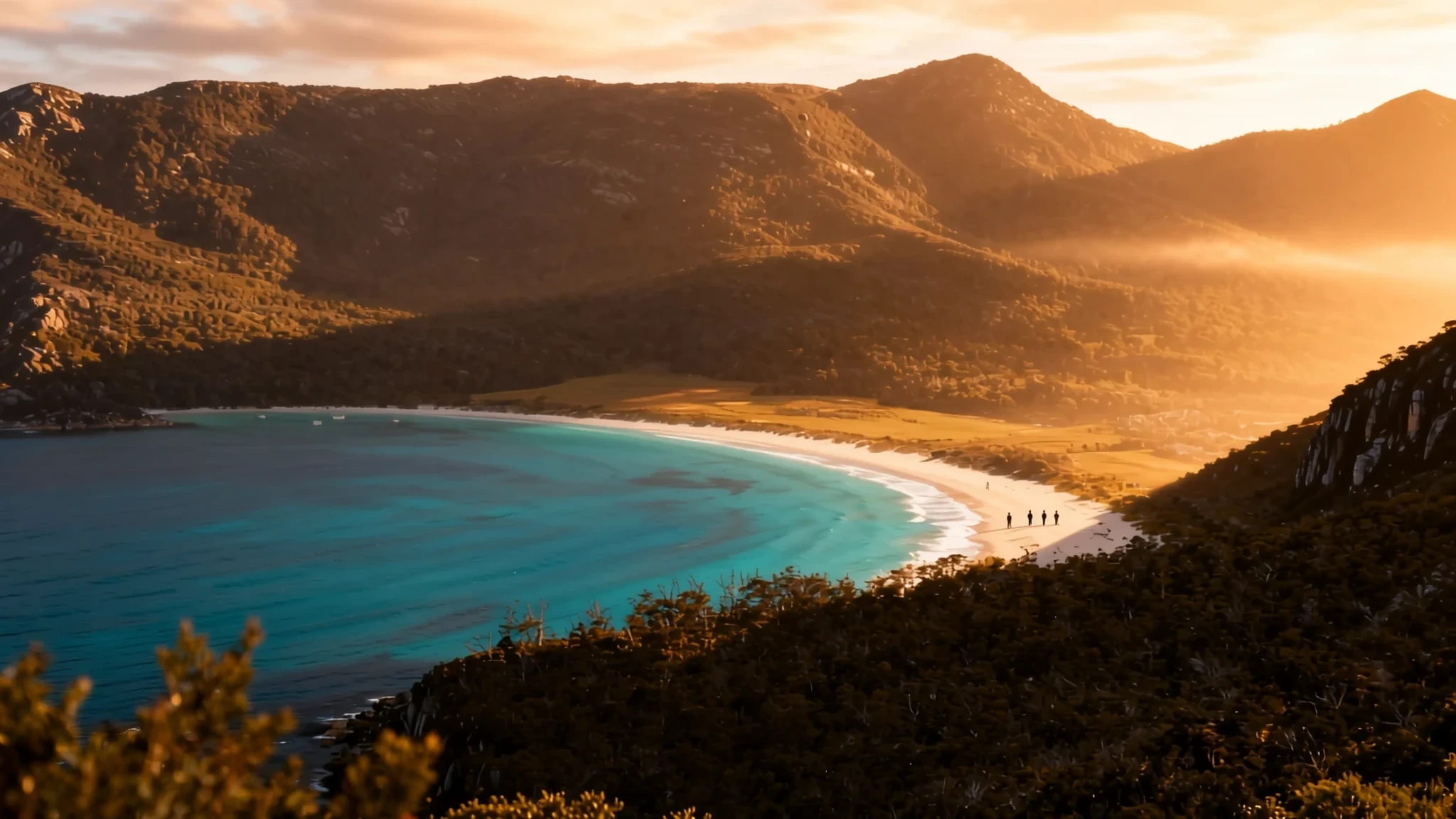
Pink granite peaks frame a secluded bay that rewards hikers with quiet, wild coastal scenery.
The place
Freycinet National Park occupies the Freycinet Peninsula on the east coast of Tasmania, roughly 125 kilometres northeast of Hobart. Founded in 1916, it is one of the state’s oldest protected areas, sharing that distinction with Mount Field. The landscape is defined by Devonian granite, where orthoclase gives the stone its characteristic pink hue, contrasted by black mica and white quartz. This geology shapes the jagged peaks known as The Hazards, which line the coastline. The park protects rare flora and fauna within a rugged coastal environment, including the secluded Wineglass Bay. The nearby settlement of Coles Bay serves as a gateway, while the larger nearby town is Swansea. Large parts of the landscape remain undisturbed, preserving diverse communities of plants and animals. The area holds cultural significance for Aboriginal and European history, with several sites protected within the park boundaries. Tourism plays a major role in the local economy, drawing visitors to the natural environment and recreational opportunities. The climate features over 300 days of sunshine annually, making it a destination defined by light and stone rather than dense forest. The combination of isolated beaches, coastal trails, and dramatic rock formations makes this a distinct place within the broader Tasmanian experience.
Its story
The peninsula takes its name from French navigator Louis de Freycinet, whose early maritime records helped document this section of the Australian coast. Conservation efforts formalised in 1916 established the park, setting aside a landscape that had been shaped by geological forces for millennia. The pink colour of the granite is not a trick of the light but a mineral signature, with orthoclase feldspar dominating the rock composition. This geological history is visible in the jagged peaks of The Hazards, which have served as natural landmarks for sailors and walkers. The isolation of the area meant that many sections remained untouched by human development until the park’s creation. Nowadays, the story of Freycinet is one of balancing access with preservation. The hiking trail to Wineglass Bay is a well-trodden path, yet the landscape beyond the initial headlands feels remote. Small settlements like Coles Bay have developed to support the growing number of visitors, shifting from a purely rural setting to a destination focused on nature-based tourism. The presence of Aboriginal sites within the park reminds visitors that this was inhabited long before European contact, and ongoing research aims to better understand and protect these deeper human histories. The park stands as a protected remnant of Tasmania’s wild east coast.
What to see
- Wineglass Bay — Freycinet Peninsula
The bay is accessible via a scenic hike from the car park, offering a clear view of the granite peaks across the water. The path follows a well-formed track, crossing gentle hills to reach the headlands. Walkers should expect to spend several hours round-trip, as the journey involves steady elevation changes. Bringing water and checking the weather is essential, as conditions can shift quickly in the exposed coastal terrain.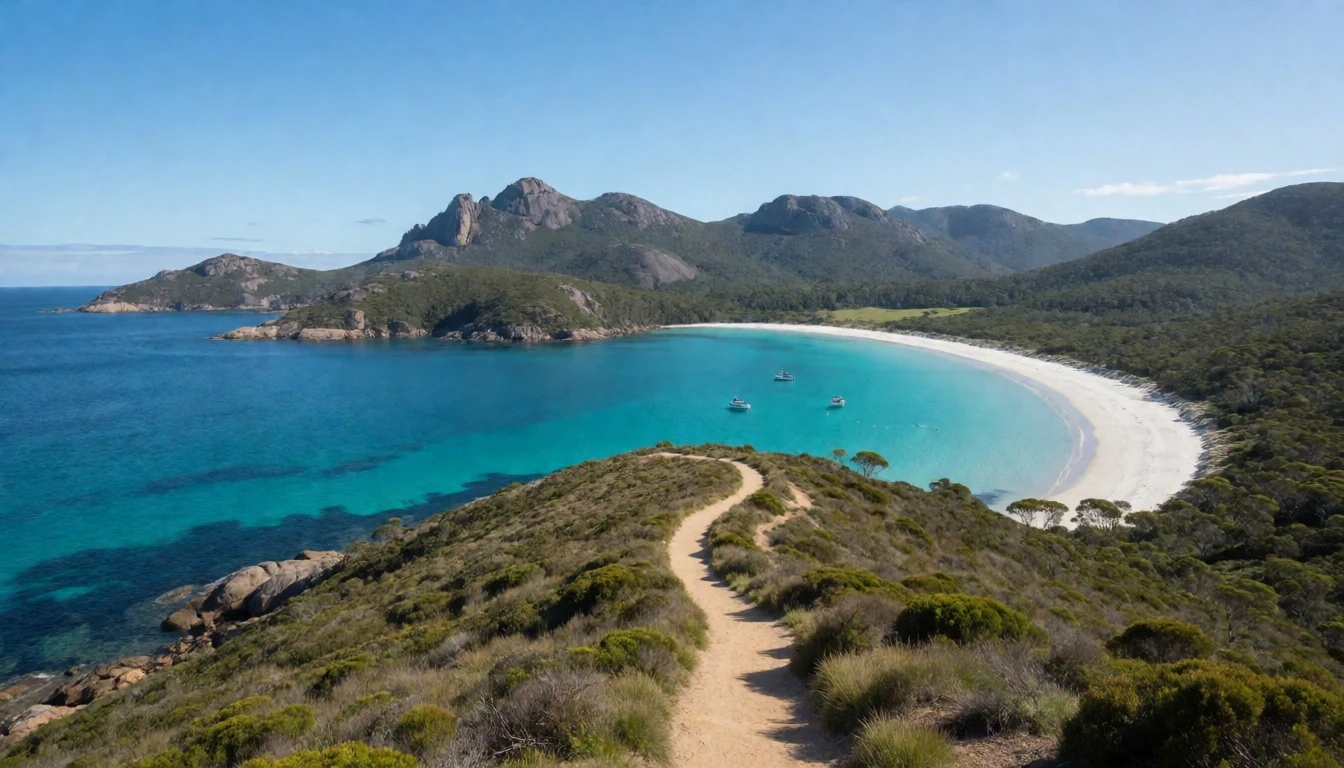
- The Hazards — Coastal Viewpoints
These jagged pink granite peaks form a striking skyline that greets visitors entering the park. The rock formations create a dramatic contrast against the blue water of the estuary. Viewpoints along the main coastal road offer clear vantage points for photography without requiring long hikes. The stone’s colour intensifies under direct sunlight, making midday a good time for visual study.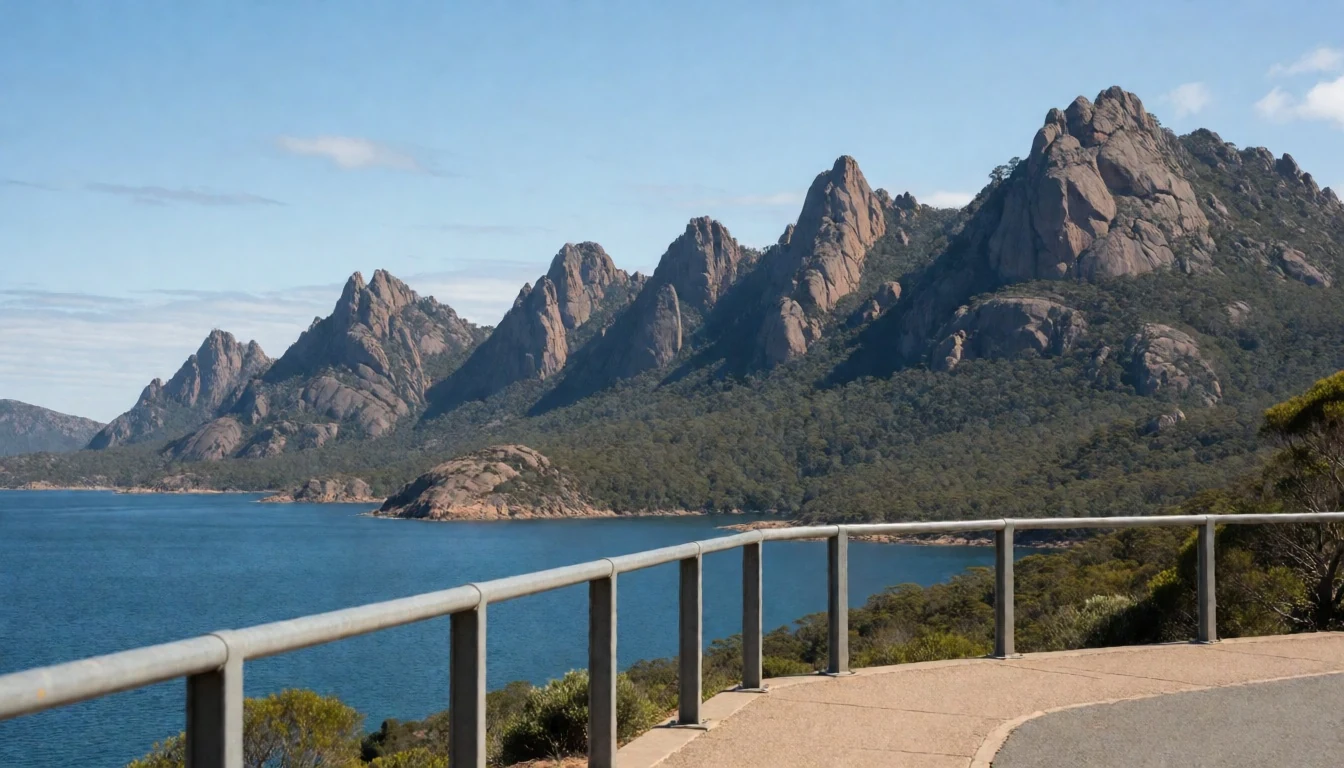
- Cape Tourville — Cape Tourville
A sealed road leads to a short boardwalk track that winds along the cliff edge to a historic lighthouse. The walk is manageable for most fitness levels, taking only a few minutes each way. The exposure to the sea is significant, so caution is needed near the cliffs. It provides a quiet, structured walk for those who want a coastal viewpoint without a long-distance hike.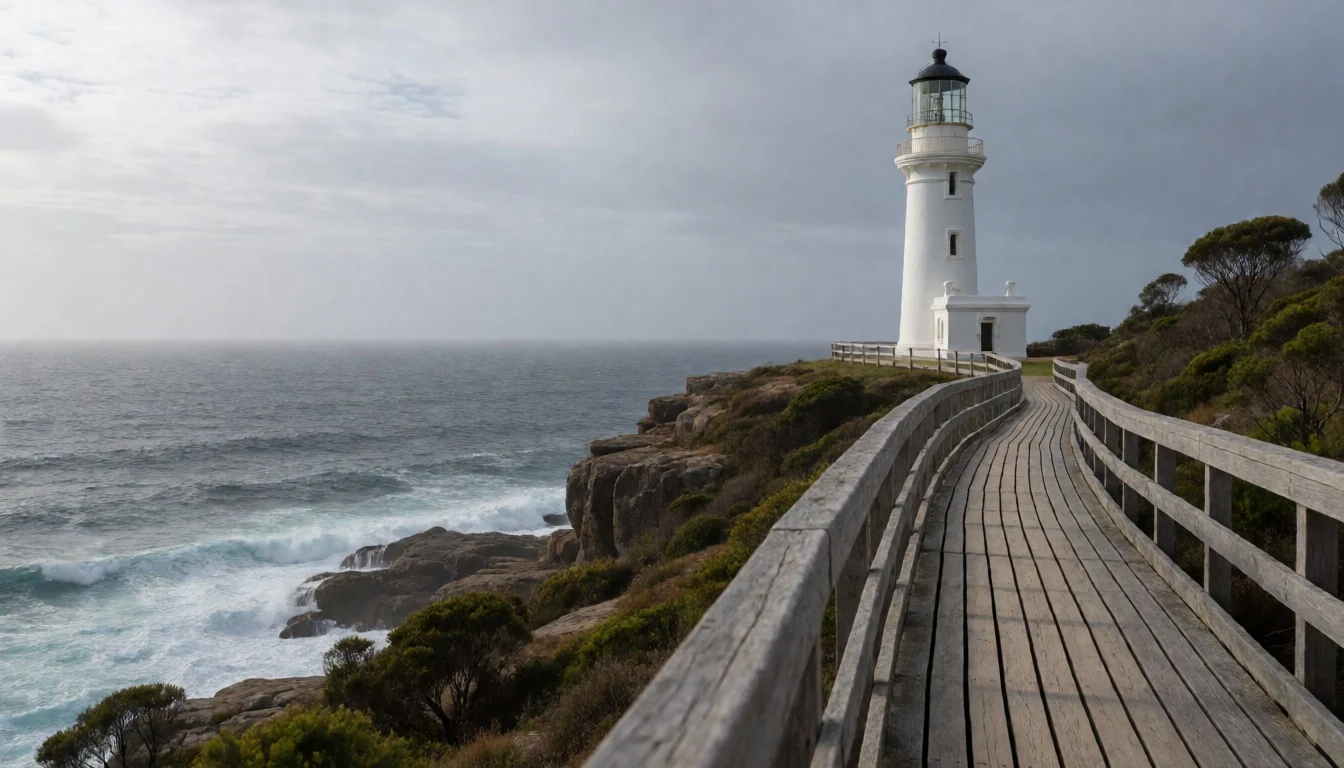
- Hazards Beach — East Coast
This secluded beach sits beneath the granite peaks, accessible via a longer circuit from Wineglass Bay. The walk is strenuous and requires good footwear, as the terrain includes boulder fields and steep sections. It is suitable for experienced walkers who can navigate using maps and local guidance. The isolation offers a wilder experience than the main bay.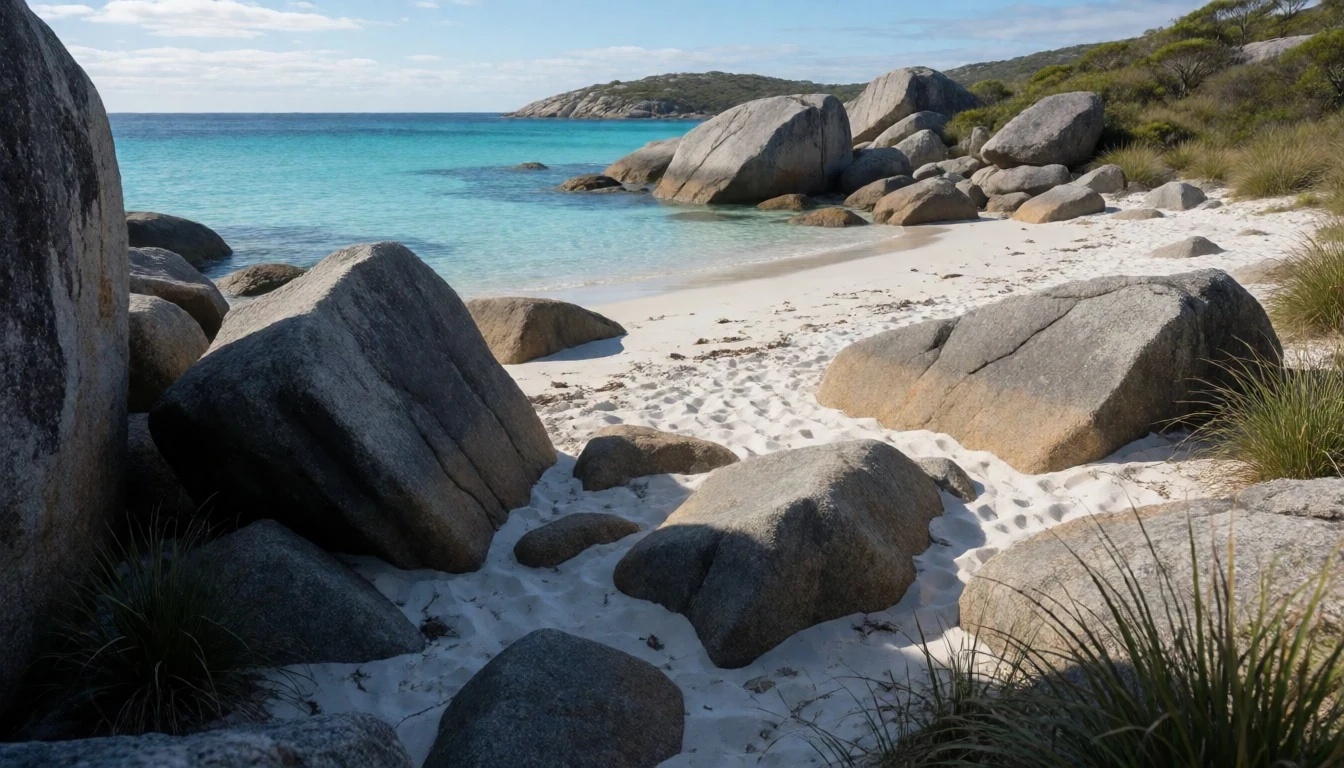
- Wineglass Bay Lookout — Freycinet Peninsula
For those preferring a shorter route, the lookout is located midway along the trail to the main bay. The path is well signposted and well formed, with steady inclines leading to a panoramic viewpoint. The scene captures the curve of the bay and the distant peaks. It is a popular stop for photographers and those with limited time for walking.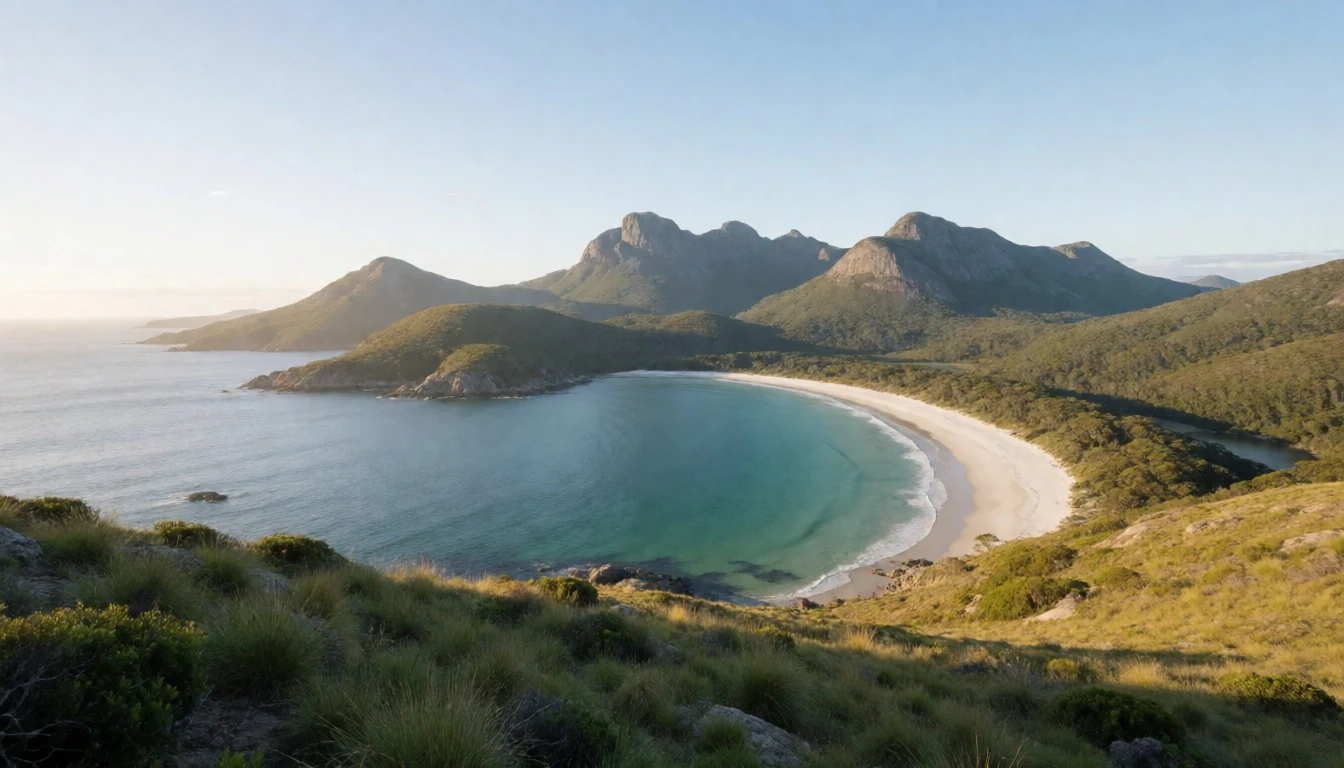
Culture
The cultural landscape of Freycinet blends deep Aboriginal heritage with the more recent history of European settlement and conservation. While deeper investigation into the pre-European human history of the park is still ongoing, several significant sites are protected within the national park boundaries. These sites are reminders that the landscape was long inhabited and managed by local Aboriginal peoples before formal protection by the state. The park’s establishment in 1916 marked a shift towards conservation values, emphasising the protection of rare flora and fauna. Today, the visitor experience is centered on nature-based activities, with a strong emphasis on leaving no trace and respecting the natural environment. Local communities in Coles Bay and Bicheno have adapted to support the tourism economy, creating a culture that values sustainability and outdoor recreation. Respect for the local wildlife is part of the cultural expectation, with visitors encouraged to keep a distance from native animals. The area is also a place of quiet reflection, detached from the busy urban centres of the mainland.
What to wear
Traditional dress in this part of Australia is not distinct from broader national norms, with no specific regional textile heritage associated with Freycinet itself. What people actually wear now is functional outdoor clothing tailored for variable weather. Locals in nearby towns like Coles Bay typically wear casual, layered outfits suitable for active exploration. What a visitor should wear is the most important consideration here. The climate can shift rapidly, so layers are essential, including a waterproof raincoat and a warm fleece. Footwear is critical; sturdy, waterproof walking shoes are recommended for the trails, as puddles and steep sections are common. In summer, breathable fabrics and sun protection are vital, given the high number of sunshine days. Hats and sunglasses are standard for long walks. The lack of specific religious modesty norms means the focus is entirely on comfort and safety in the bushland. No specific dress code is required for the visitor centre or local amenities.
What to eat
- Fresh Seafood — Coles Bay town centre
Local cafes and restaurants in Coles Bay serve fish and chips and other seafood dishes prepared with daily catches. These establishments are typically small, independent businesses located in the town centre. The food reflects the coastal proximity, with an emphasis on fresh, local ingredients. It is a casual dining experience focused on quality produce.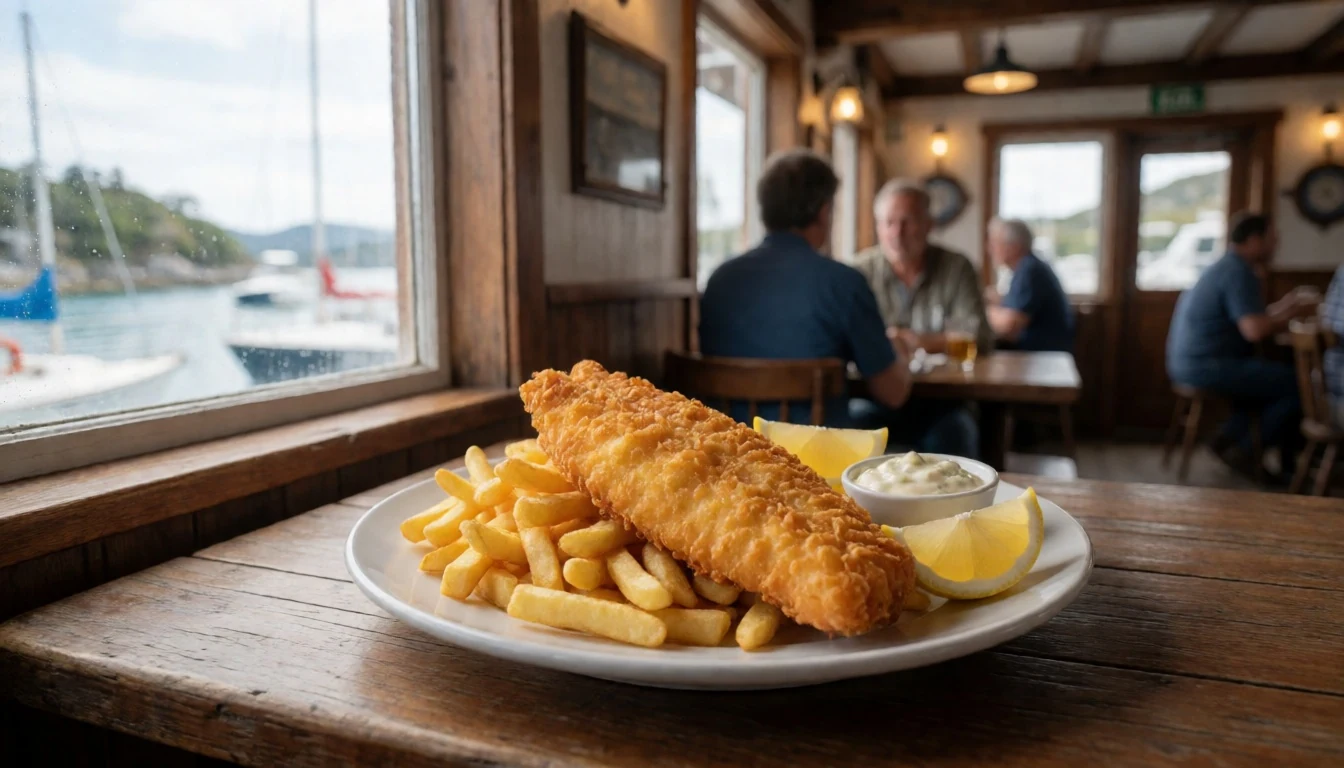
- Local Coffee — Coles Bay amenities
Cafe culture is strong in the visitor centres and town amenities, offering high-quality coffee for walkers and tourists. The Oyster Catcher Cafe is a known spot for coffee and light meals. Serving local roasts, these places are convenient stops for energising before or after hikes. It is a common part of the visitor experience.
- Pub Fare — Coles Bay
The Iluka Tavern in Coles Bay offers a traditional Australian pub experience with food and drinks. It serves as a social hub for travellers staying in the area. The menu typically includes hearty, local cocktails and meals. It provides a place to rest and socialise after a day of exploration. - Packed Provisions — Local supermarkets in Coles Bay or Swansea
Given the isolation of the park and the length of some hikes, many visitors rely on packed lunches and energy bars. Local supermarkets in Coles Bay or Swansea stock these items. Bringing your own food is practical for long walks like the Hazards Beach circuit. It allows for flexibility in timing during the day.
Plan it
Best time. October–November for spring growth and fewer crowds; December–February for peak sun and warm seas; avoid midwinter for day-trippers due to shorter daylight hours.
How long. 2–3
Getting there. Fly into Hobart International Airport, then drive approximately 2.5–3 hours northeast via sealed roads. No 4WD is required as all access roads are sealed. From Launceston, the drive is similarly 2.5–3 hours. Book advance accommodation in Coles Bay for summer peak.
Budget. mid
Tips
- Check weather forecasts daily as thunderstorms can roll in quickly
- Carry sufficient water and rain protection for all hikes
- Book camping permits in advance via the official website for summer
- Wear waterproof footwear for the boulder fields on longer trails
- Drive carefully at night due to active wildlife on the roads
Etiquette
- Maintain a safe distance from wild wallabies and wombats
- Do not disturb wildlife or carry food into the bushland
- Stay on marked tracks to protect fragile vegetation
- Pack out all rubbish to preserve the natural environment
Nearby
Sources
- Wikidata Q930677 (CC0)
- Wikipedia (rev 1380528002) (CC BY-SA 4.0)
- Wikivoyage (rev 5276672) (CC BY-SA 4.0)