Fitzroy Falls
Fitzroy Falls, Australia
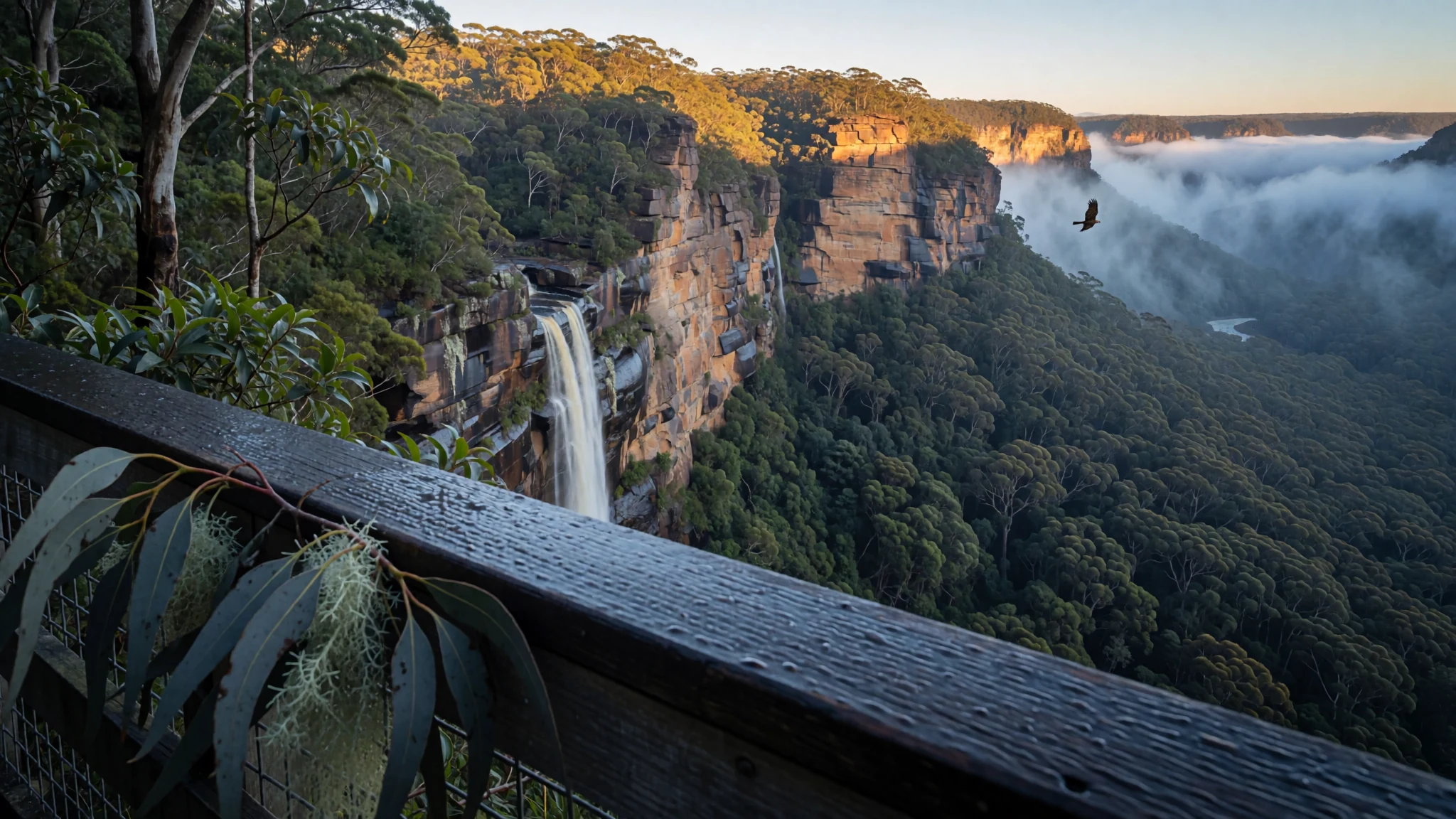
Come for a single tall waterfall in cool, green Southern Highlands country, an easy stop on a drive out from Sydney.
The place
Fitzroy Falls is a small village in the Wingecarribee Shire, in the Southern Highlands of New South Wales. It has about 220 residents and sits at around 674 metres above sea level, so the air is noticeably cooler and greener than on the coastal plain. The village takes its name from the waterfall beside it, an 81-metre drop. The locality was known as Yarrunga until the falls gave it a new identity.
Most visitors come for the water. The fall drops into a valley, and the view down into that valley is the reason to make the detour off the main road. The settlement is small. You will not find a large town centre or a long list of shops, so treat it as a stop on a wider drive rather than a place to fill several days.
The surrounding country belongs to the Southern Highlands, a patchwork of farmland, bush and forested gullies. Because the village is inland, far from the sea, the food and the feel of the place differ from the Sydney coast. Traffic is light away from the main road, and on a quiet morning the sound of the water carries across the valley. Bring a warm layer, because the altitude makes evenings cooler than many visitors expect in Australia.
Its story
The land around Fitzroy Falls was home to Aboriginal peoples for thousands of years before Europeans arrived. The wider colony of New South Wales was first settled by Europeans in 1788, and settlement spread outwards from Sydney in the decades that followed.
The name itself comes from the sea. Captain Cook gave the state its name eighteen years earlier, on his first voyage of discovery, after Wales. It is still unclear whether he meant South Wales or a Wales of the south, but the cliffs he passed south of Sydney look much like the coastline of the Welsh Cambrian Coast, which may explain his choice.
The colony once covered the eastern two-thirds of mainland Australia, along with Van Diemen's Land, New Zealand and a few sub-Antarctic islands. Over time those territories were separated, and the state settled into roughly its present shape by the 1860s. Early farmers depended on fresh water and good soil, so the first large settlements grew near Parramatta and Windsor, where the rivers stopped being navigable. The Blue Mountains and the Great Dividing Range slowed inland expansion for years, and European settlers did not get across the mountains until 1813.
The Southern Highlands were opened up as that frontier moved inland. The village that now bears the waterfall's name was once called Yarrunga. The renaming reflects how the falls became the defining feature of the place, the thing a traveller comes to see first.
What to see
- Fitzroy Falls — Southern Highlands, Wingecarribee Shire
The waterfall that gives the village its name is an 81-metre drop into a valley in the Southern Highlands. Go in the morning if you want quiet, and wear sensible shoes, since paths near the edge can be damp and uneven. The falls look their best when water is running strongly after rain.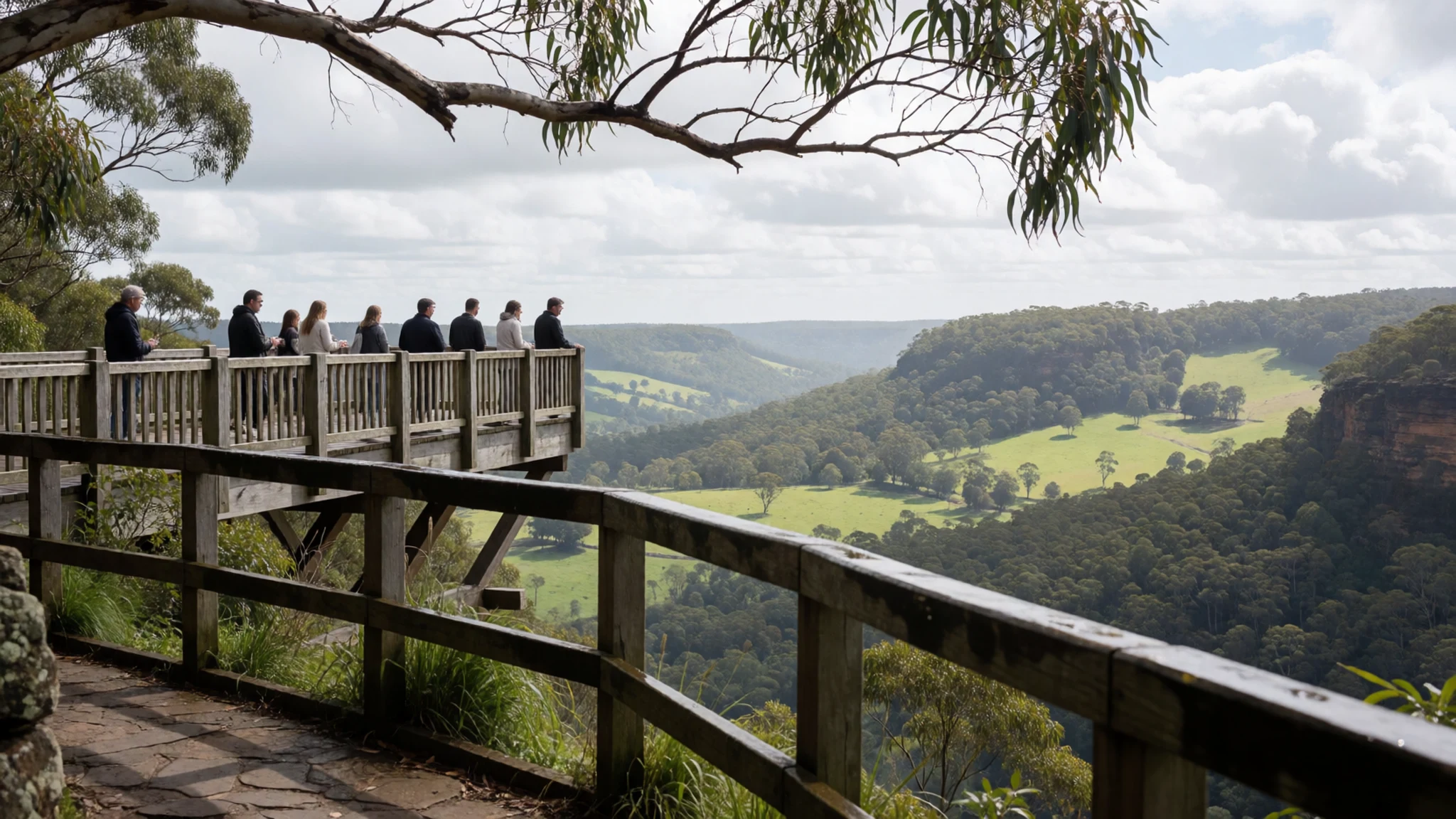
- Three Sisters, Katoomba — Katoomba, Blue Mountains
The Three Sisters rock formation sits in Blue Mountains National Park, about an hour's drive from Sydney's central business district and reachable by the intercity train network. It is one of the most visited natural landmarks in the state. Legend says the three rock pillars were turned to stone for protection, and the site is also a sacred place for Aboriginal people, so keep to the marked lookouts.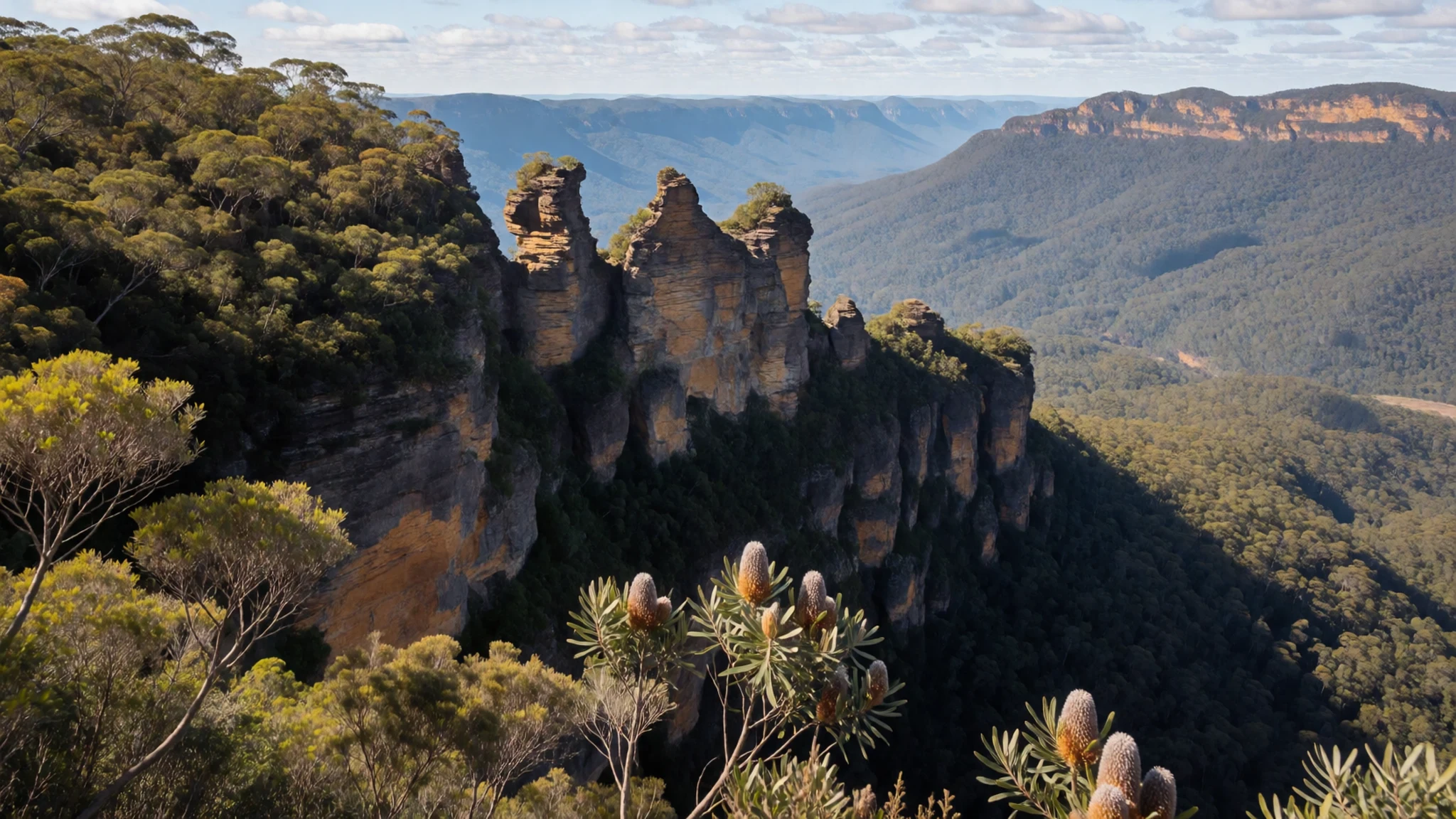
- Sydney Harbour — Sydney Harbour and Sydney Harbour National Park
Sydney Harbour is the state's most familiar view, best seen from the deck of a ferry, from one of the islands in the middle of the harbour, or from one of the many lookouts in Sydney Harbour National Park. Early morning and late afternoon give softer light and fewer crowds than midday.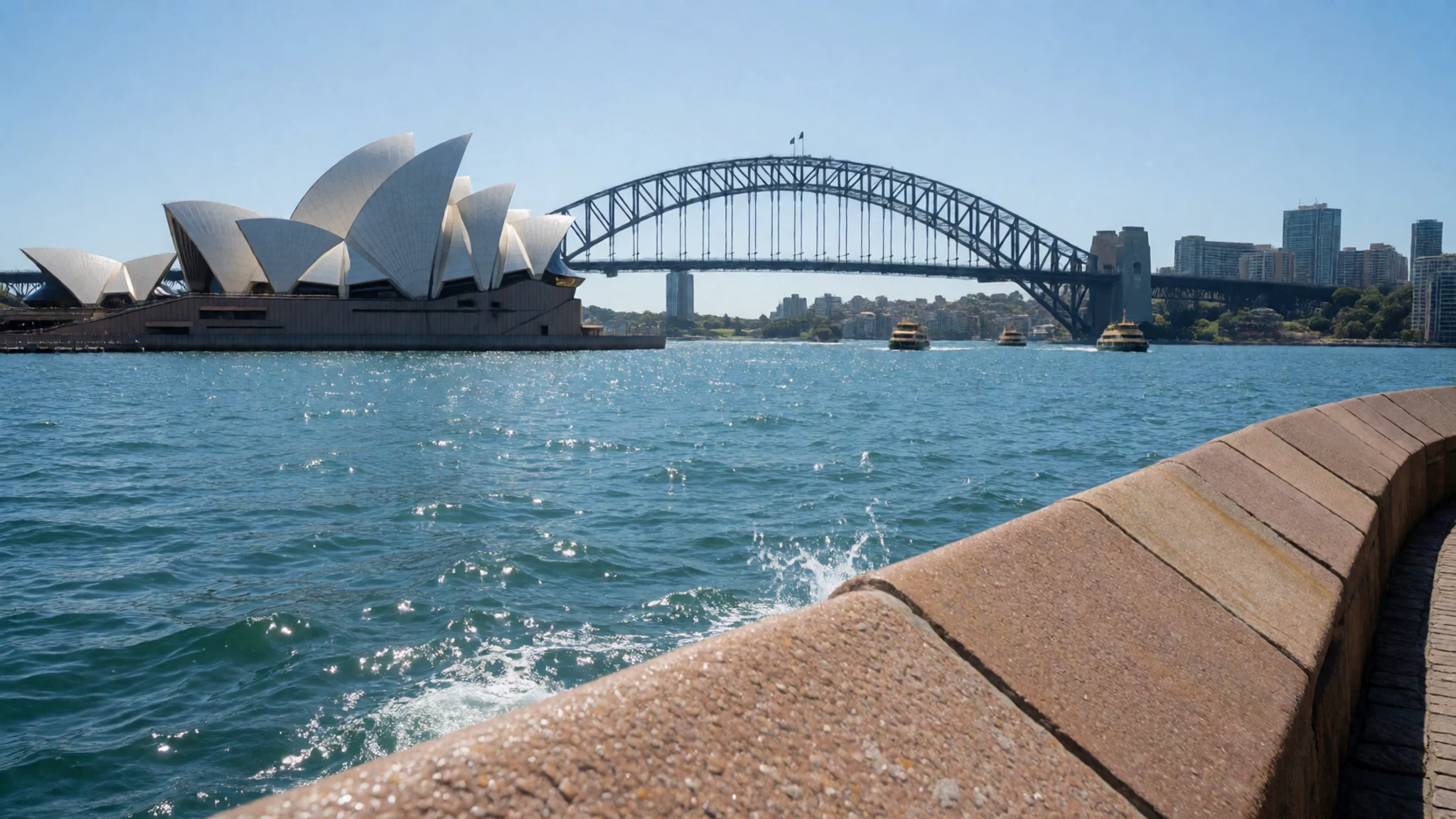
- Hyde Park Barracks — Central Sydney
Hyde Park Barracks is one of four convict sites in New South Wales that are listed as World Heritage. Its dormitory-style rooms show how convicts were housed in the early colony, and the building is a short walk from the city centre. Allow an hour or two, and check the official site for opening times before you go.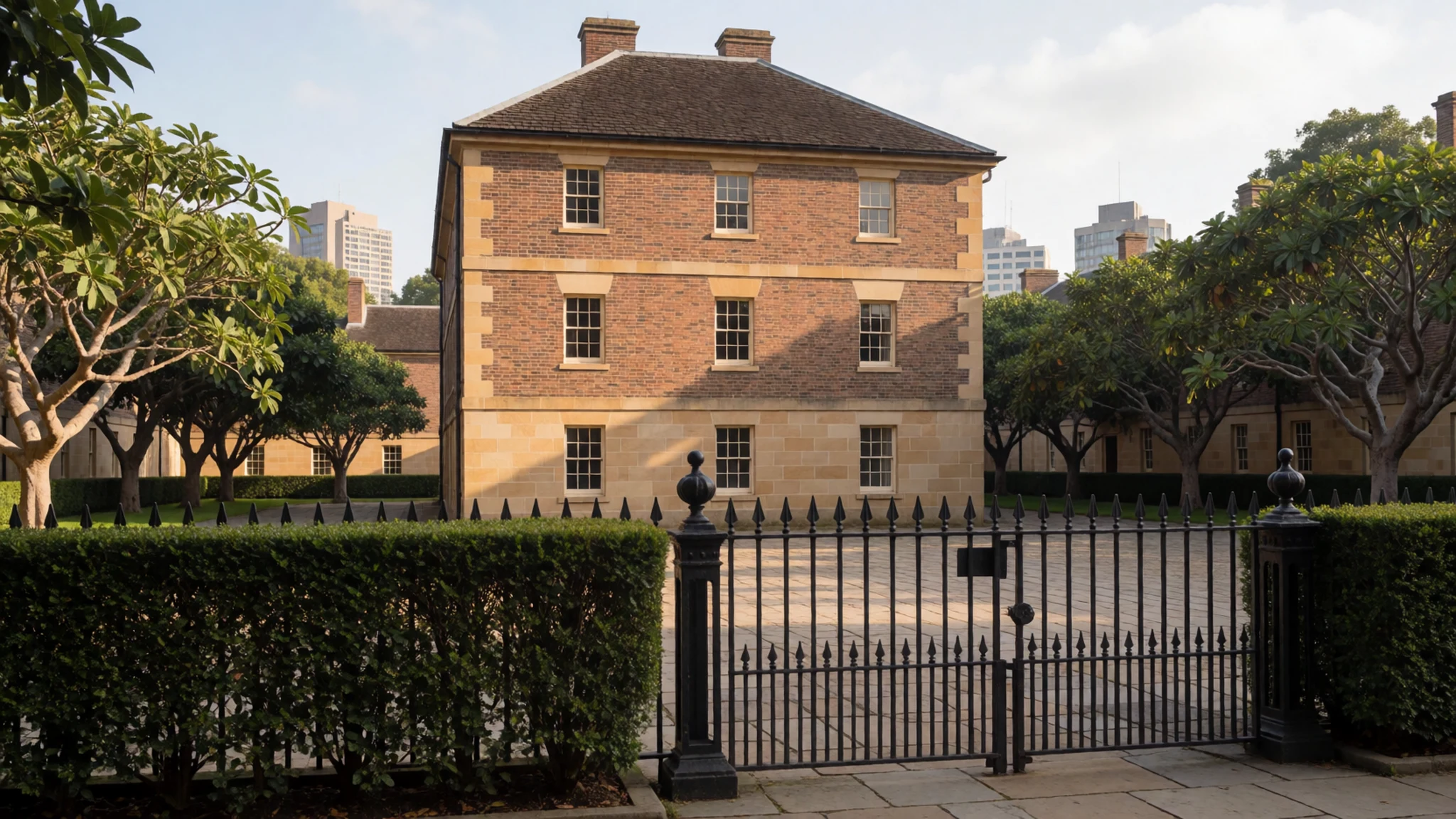
- Mungo National Park — Western New South Wales
Mungo National Park is a remote contrast to the village. There is no sealed road access, so the route involves at least 80 kilometres of unsealed track. Only consider it with a suitable vehicle, plenty of water and fuel, and a clear plan. Many visitors treat the trip as a separate expedition rather than a day out.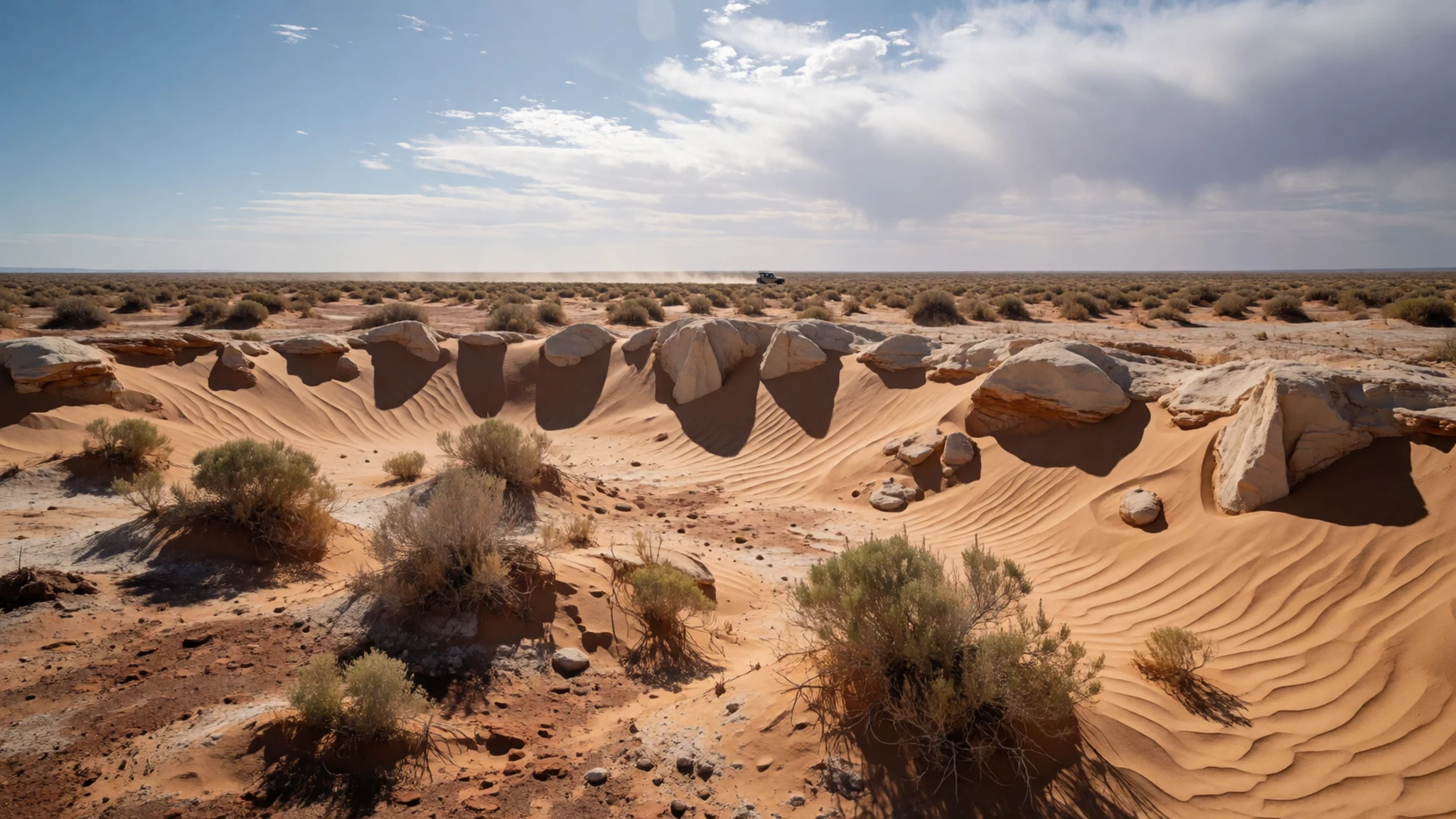
Culture
Fitzroy Falls is a rural village, and daily life here follows New South Wales rules on smoking and vaping. Smoking is banned indoors in public buildings, pubs, restaurants, transport and in private cars carrying children. It is also banned outdoors wherever food is served. Many pubs have covered outdoor areas with heaters where smoking is permitted, but these are sometimes smoke-free too. Vaping is generally treated the same way, and a 'no smoking' sign usually covers vapes as well.
The land is part of Aboriginal Country that has been cared for for thousands of years. Respect for Aboriginal heritage matters at places such as the Three Sisters, which is a sacred site. Stay on marked tracks, read interpretive signs, and ask before photographing people or ceremonies.
In short, check the signs before you light up, because many outdoor areas at pubs and cafes are smoke-free too.
What to wear
The traditional dress of the Aboriginal peoples who lived in this region is best learnt from the local Aboriginal land councils and cultural centres, which can explain how clothing, adornment and textiles were made and used. Visitors should be wary of generic images that pass for regional costume. What is worn on Country today is a matter for the communities themselves.
Day to day, people in the Southern Highlands dress for the outdoors. Practical jackets, jeans, boots and layers are normal, particularly for walkers and farm workers. Shorts and sandals are common in summer, but evenings can turn cool at this altitude, around 674 metres above sea level.
For a visit, dress in layers that suit a changeable climate. Pack a waterproof jacket for spray near the falls and wet rock, and wear shoes with good grip for damp, uneven paths. Sun protection matters in Australia at any time of year, so bring a hat and sunglasses. Modesty norms are relaxed in villages like this, but a light cover-up is sensible if you visit a church, memorial or community event.
What to eat
- Seafood from the coast — Fish shops and eateries on the South Coast or in Sydney
The coast is the place for fresh fish and shellfish, and the South Coast and Sydney both serve it well. The village is inland, and the catch there is less fresh by the time it arrives. If you want seafood, plan a trip to the coast rather than expecting it on a village menu.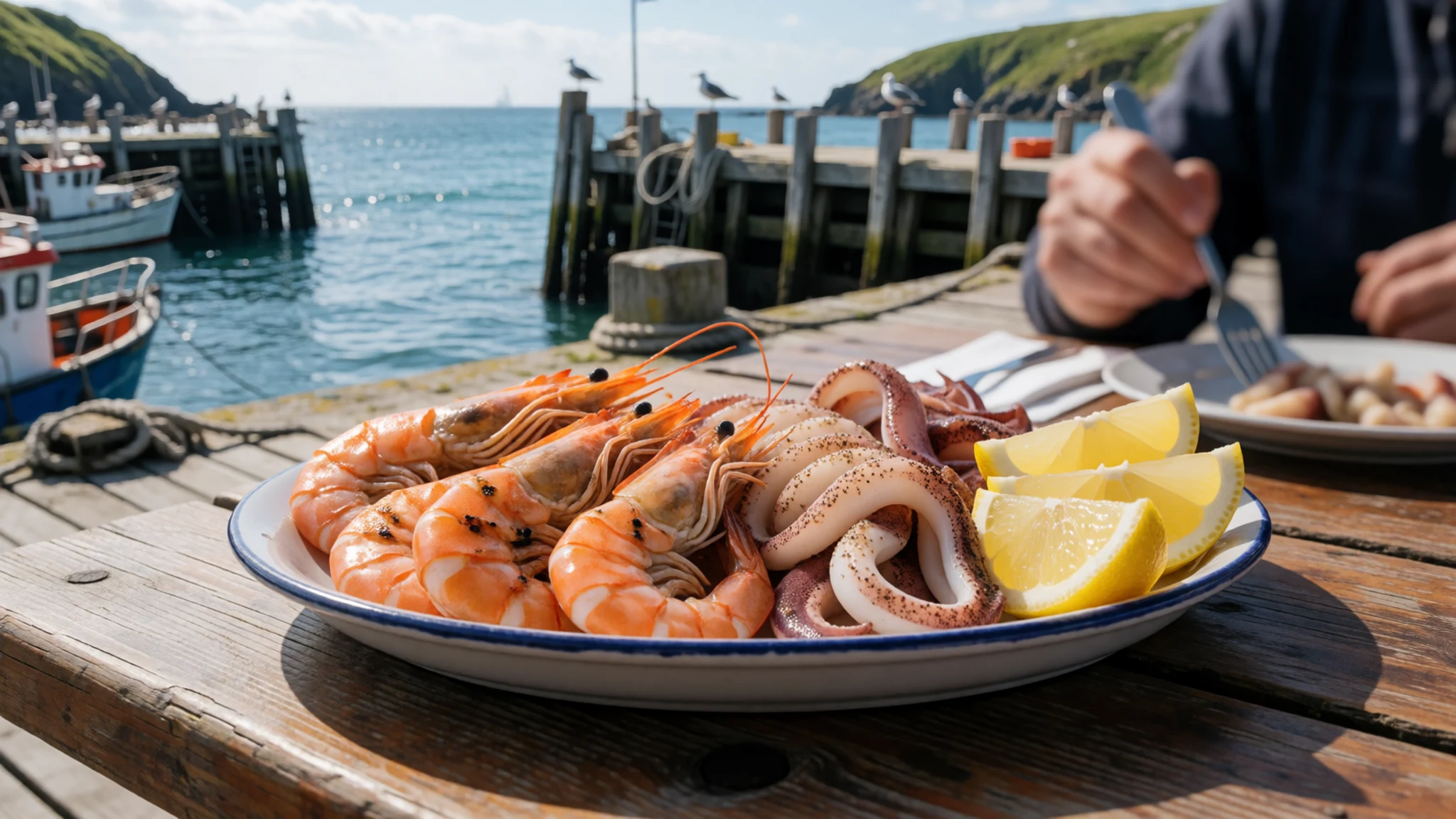
- Central West produce — Regional restaurants in the Central West
Restaurants in parts of the Central West are built around local produce, from meat and vegetables to regional cheeses and preserves. Some of these kitchens are now well regarded and priced to match. Ask what is grown nearby and what is in season.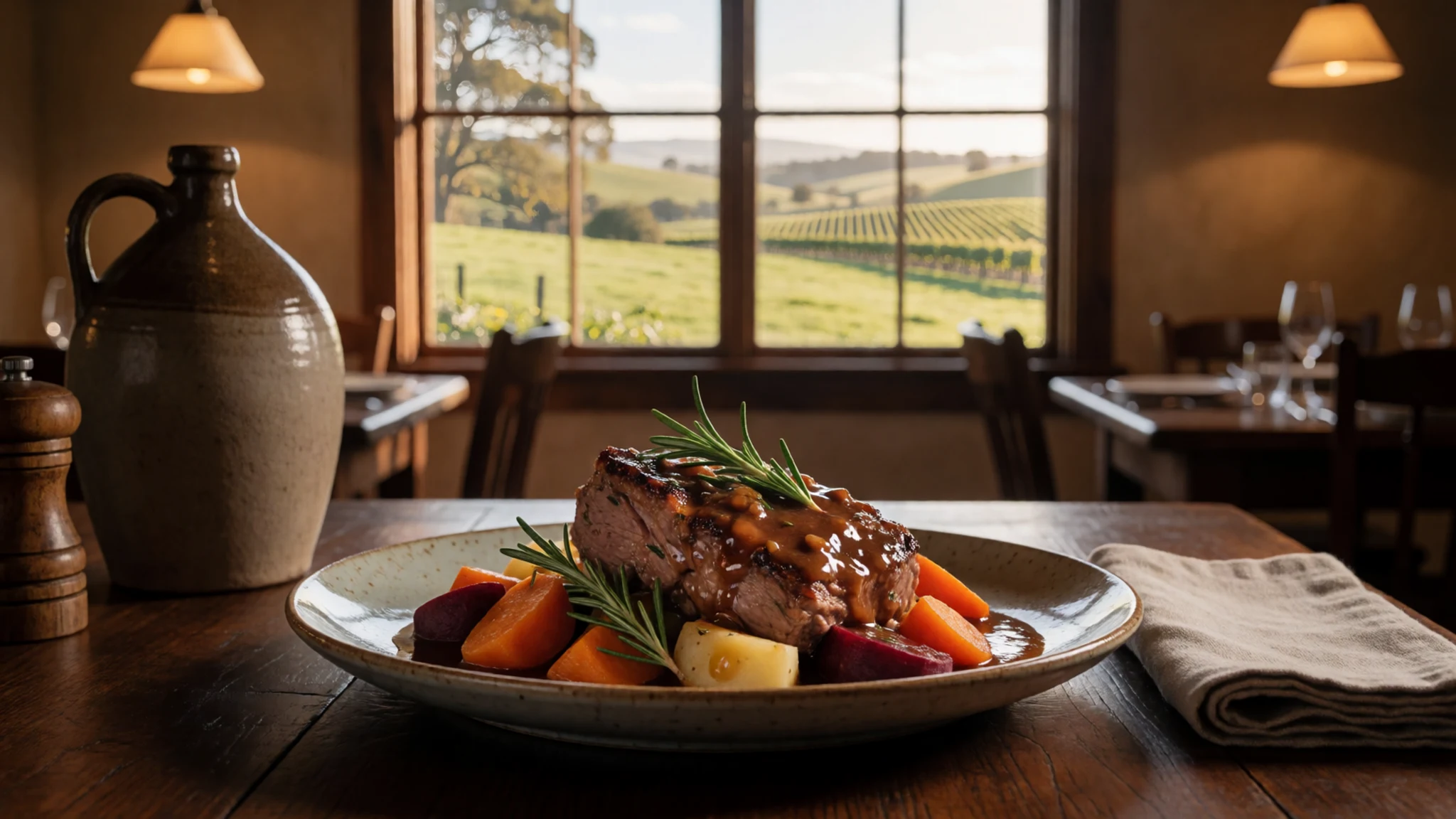
- Sydney Thai and fusion — Restaurants across central and inner Sydney
Sydney has a strong wave of Thai and fusion cooking, alongside top-end restaurants whose chefs trained in major international kitchens. Sydney's cosmopolitan population means almost every major cuisine is easy to find, usually at good value. It is a day trip from the village rather than a village meal. - Fruit from a roadside stand — A roadside stand or farm gate on the drive in
Roadside stands and farm gates sell fresh fruit and vegetables, which make a good snack on the drive. Fruit and plant material cannot be carried between many regions, so eat what you buy near where you buy it, and use the disposal bins at airports and roadside stops. - A pub meal in the country — Any country pub in the Southern Highlands
Country pubs in the Southern Highlands often serve simple hearty meals, and many have outdoor areas with heaters. Vegetarians can usually find something on a pub menu, although options are easier to find in Sydney and its surrounds than inland.
Plan it
Best time. March and April bring autumn weather and the best balance of mild days and cool nights, while October and November are spring months with fresh conditions around the falls. Summer can be hot, and altitude keeps evenings cooler than the coast.
How long. 1–2
Getting there. Fitzroy Falls is a country stop, so drive or hire a car from Sydney and check the route and fuel before you set out. Combine the village with the Blue Mountains or a day in Sydney.
Budget. mid
Tips
- Check road and track conditions before any unsealed drive, such as to Mungo National Park.
- Go early for quieter paths and a clearer view of the falls.
- Pack water, snacks and a warm layer, because services are limited in the village.
- Carry your phone with a charged battery and a map, since signal can be patchy in the hills.
- Check the official site for any opening hours or access changes before you travel.
Etiquette
- Leave fresh fruit and plants behind when you cross regions, and eat what you buy near where you buy it.
- Keep to marked paths and lookouts, especially near cliff edges and at sacred sites.
- Check the signs before smoking or vaping, since outdoor areas can be smoke-free.
Nearby
Sources
- Wikidata Q1092480 (CC0)
- Wikipedia: Fitzroy Falls, New South Wales (rev 1355847494) (CC BY-SA 4.0)
- Wikivoyage: New South Wales (rev 5395593) (CC BY-SA 4.0)
- Photo: The Fitzroy Falls near Moss Vale (Bjenks) (CC BY 3.0)
- Photo: View from Fitzroy Falls NSW Australia (Peter Jones) (CC BY-SA 4.0)
- Photo: Southern Highlands, Australia (Timothy M Roberts) (CC BY-SA 2.0)
- Photo: Fitzroy Falls, Australia (Li.silvia) (CC BY-SA 4.0)
- Photo: Fitzroy Falls near Moss Vale, NSW, 1998 (Gregory Heath, CSIRO) (CC BY 3.0)
- Photo: Australia (Timothy M Roberts) (CC BY-SA 2.0)
- Photo: Glass plate negative, Fitzroy Falls (Powerhouse Museum) (Public domain)
- Photo: Fitzroy Falls, New South Wales (Lobster1) (CC BY 3.0)


