Esna
Esna, Egypt
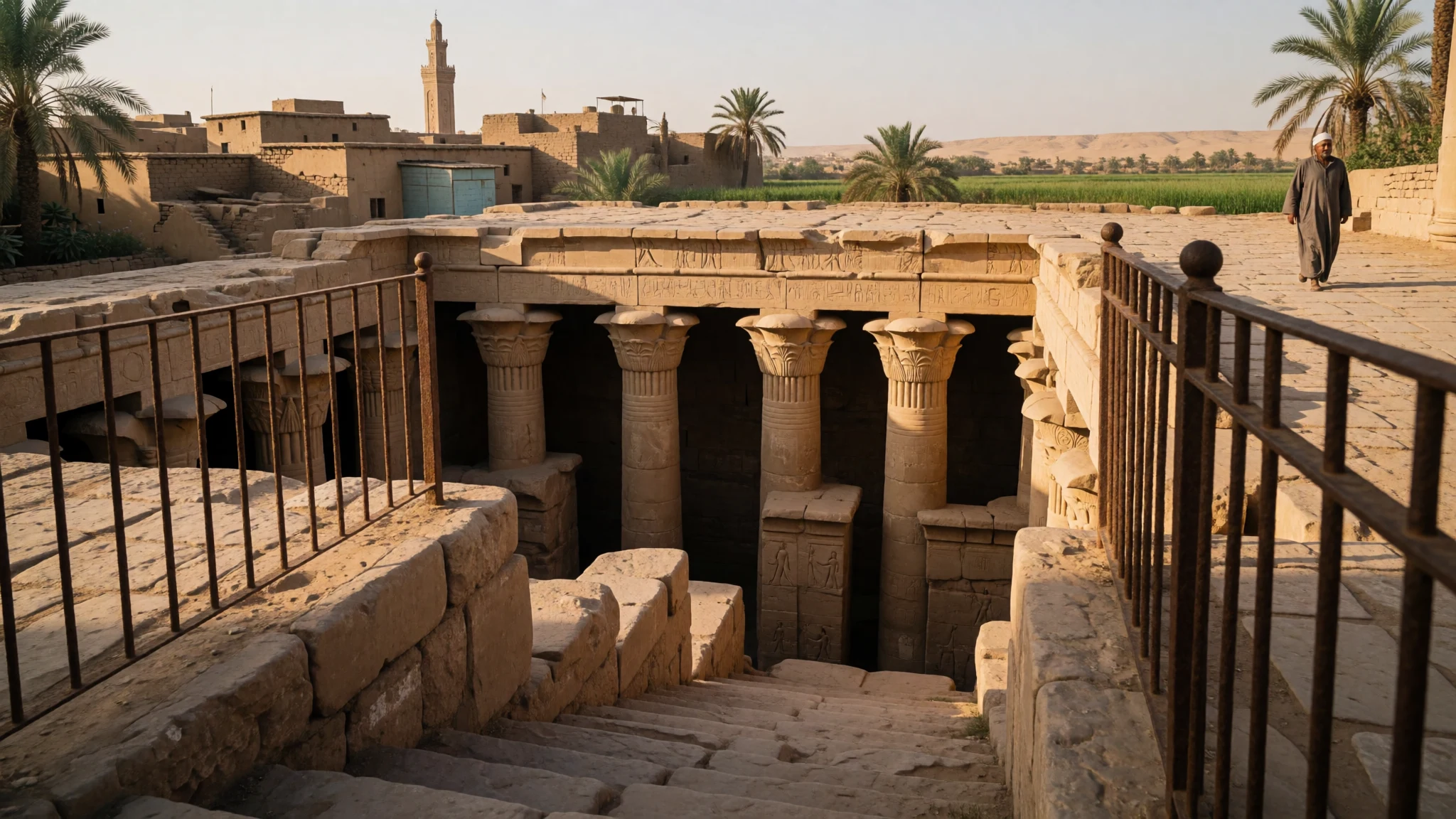
Esna is a working Nile town with a temple of carved columns sunk below its streets, an easy stop between Luxor and Aswan.
The place
Esna sits on the west bank of the Nile, about 55 km south of Luxor, and falls naturally between Luxor and Aswan on the river route. The Nile here is broad, with cane fields and date palms pressed up to the water and desert starting a short way back. The elevation is 86 m, and the climate is hot desert: long, dry, fierce summers and mild, bright winters, with rain a rarity. Nearly half a million people live in the city, so this is a working town rather than a resort, and daily life runs around the market lanes, the riverfront and the farmland beyond. The centre is divided into quarters long associated with established local families, and the older houses carry Egyptian, Greek and Roman, Coptic, Islamic and modern layers in their walls and alleys. The main draw is the temple of Khnum, which stands in a pit in the middle of town, its columns well below the surrounding pavement, so visitors descend to it from the street. Around it are an Ottoman-period covered market, a former trading house, an adobe minaret and several Coptic churches. Cruise boats stop here because of the lock on the river, which can hold traffic for hours, and that brings short bursts of tour groups. Outside those windows the town is calm. Half a day covers the main sights, though a slower stay suits anyone who likes watching an Upper Egyptian town get on with its day.
Its story
Esna has carried many names, and they read like a list of its rulers. Ancient Egyptians had their own name for it, which softened into the Coptic Snē and then the Arabic Isnā. Greek speakers called it Latopolis, and the Romans shortened that to Lato. By 300 BC it was the capital of the third nome, or province, of Upper Egypt. The temple of Khnum belongs to the Ptolemaic and Roman centuries, when the town was a religious centre. Over time the building disappeared under rubble and the growing town. That burial protected it, and it now lies 9 m below the modern street. Christianity left a heavy mark too. During the Roman persecutions of the early fourth century, many local believers were put to death, and Coptic tradition remembers Esna as the City of Martyrs. Churches, shrines and monasteries in and around the town keep those memories alive. In the Islamic period, a Fatimid vizier raised a minaret here in the eleventh century, and it survives as the only part of its mosque. Under the Ottomans, Esna was a trading stop on the Nile road. Its caravanserai handled textiles, African ivory and ostrich plumes during the eighteenth and nineteenth centuries, and the covered market nearby sold cloth and sewing supplies. In 1908 a barrage was built across the river to manage the Nile's flow. Today's town is the sum of all these layers, and its old crafts and family quarters are fading.
What to see
- Temple of Khnum — Town centre, west bank
The temple is why most people come. Visitors walk down from the street to a hall of columns whose capitals are carved with plant forms, and the walls and ceiling are covered in reliefs. Allow time to look up and along the walls. Check the official site or ask locally for opening arrangements before going.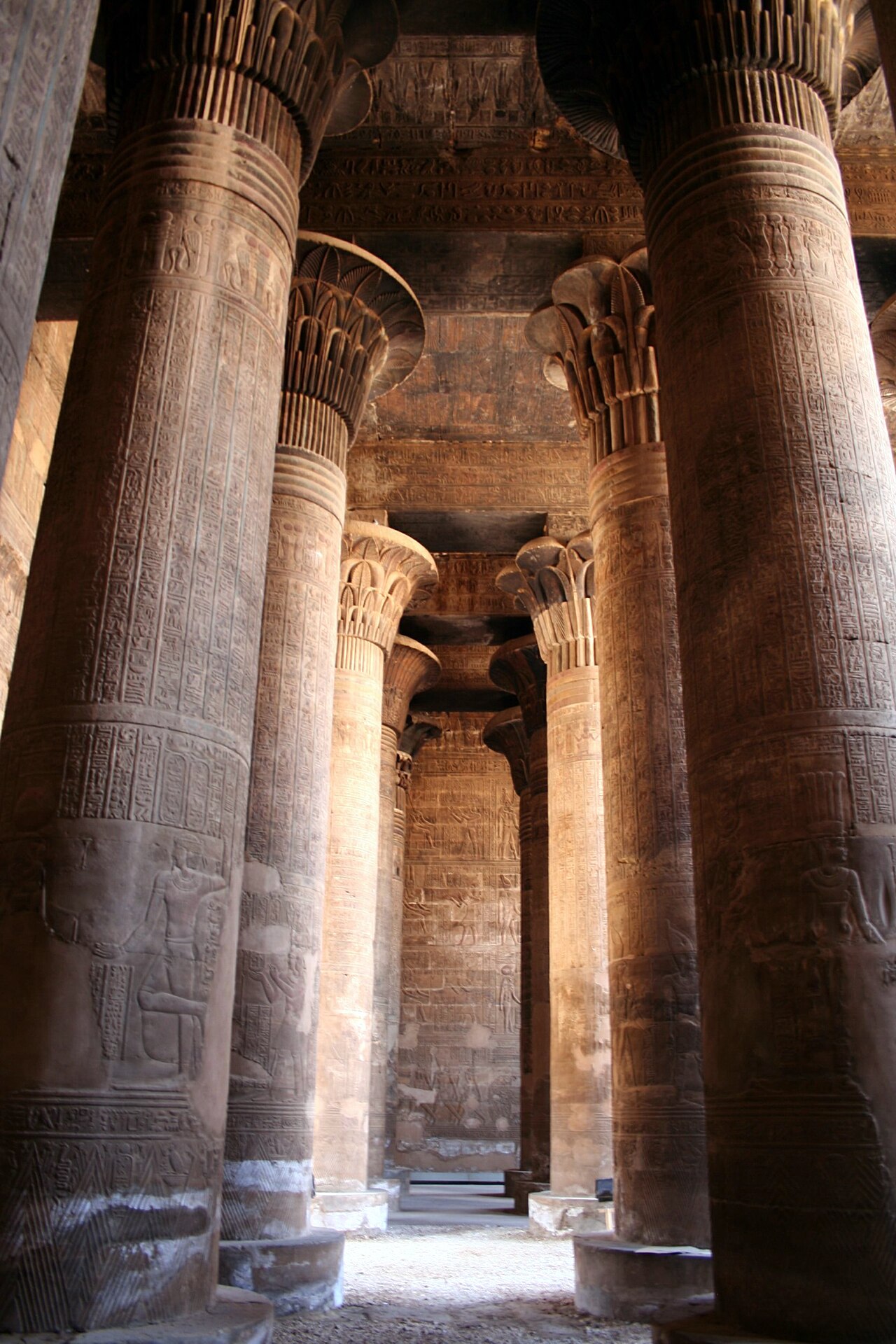
- Temple reliefs — Inside the temple of Khnum
Wall carvings show gods and rulers in procession, among them Khnum with a goddess beside him. Light matters here, because the sunken position leaves some walls shaded and others bright. A small torch helps with fine detail, and a slow walk along each wall beats a quick lap of the hall.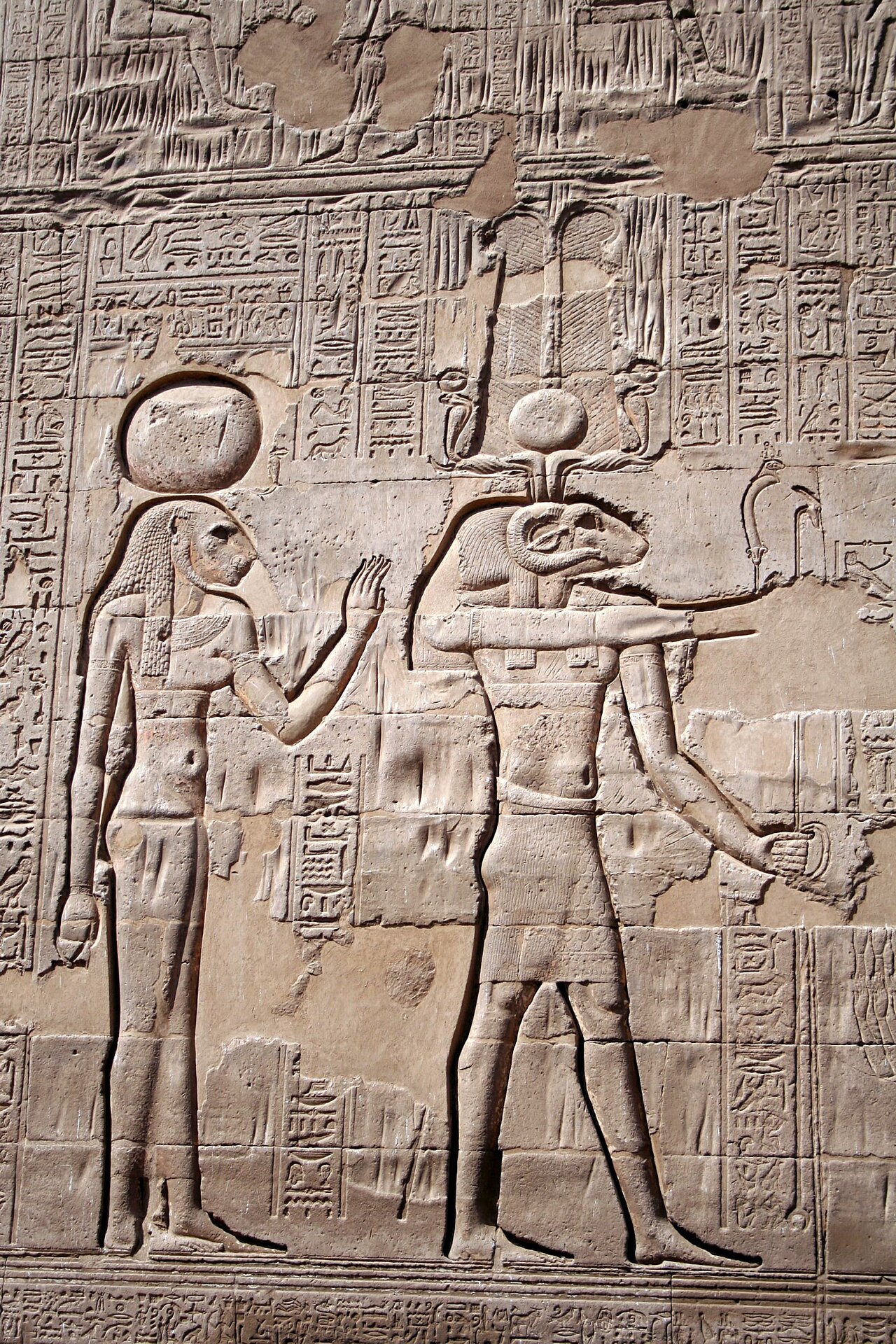
- Al-Qisariyya Market — Immediately south of the temple
This traditional covered market lies just south of the temple and has served the town for over a century. It was once known for cloth, sewing tools and tailors, and some of that trade lingers. It is the best place to watch ordinary shopping, bargaining and conversation in Esna's centre. - Wakalat al-Jiddawi — Beside the temple of Khnum
This old caravanserai looks over the temple and dates from the eighteenth century. Merchants used it to trade textiles, ivory and ostrich plumes along the Nile. Even from outside it shows how the town made its money, and it is worth a look when you are walking between the temple and the market. - Al-Amriyya Minaret — Old town
Built by a Fatimid vizier in the eleventh century, this minaret is all that remains of its mosque. It is one of a small group of similar minarets he raised in Upper Egyptian towns. It makes a quiet stop for anyone interested in Islamic-period Esna. - Esna Old Barrage — On the Nile, near the town
The barrage was finished in 1908 to regulate the river, and its stone masonry is neat and detailed. A felucca trip crosses the barrage and gives a closer view. The river itself, with its birds, fields and slow boats, is a pleasant contrast to the dusty streets.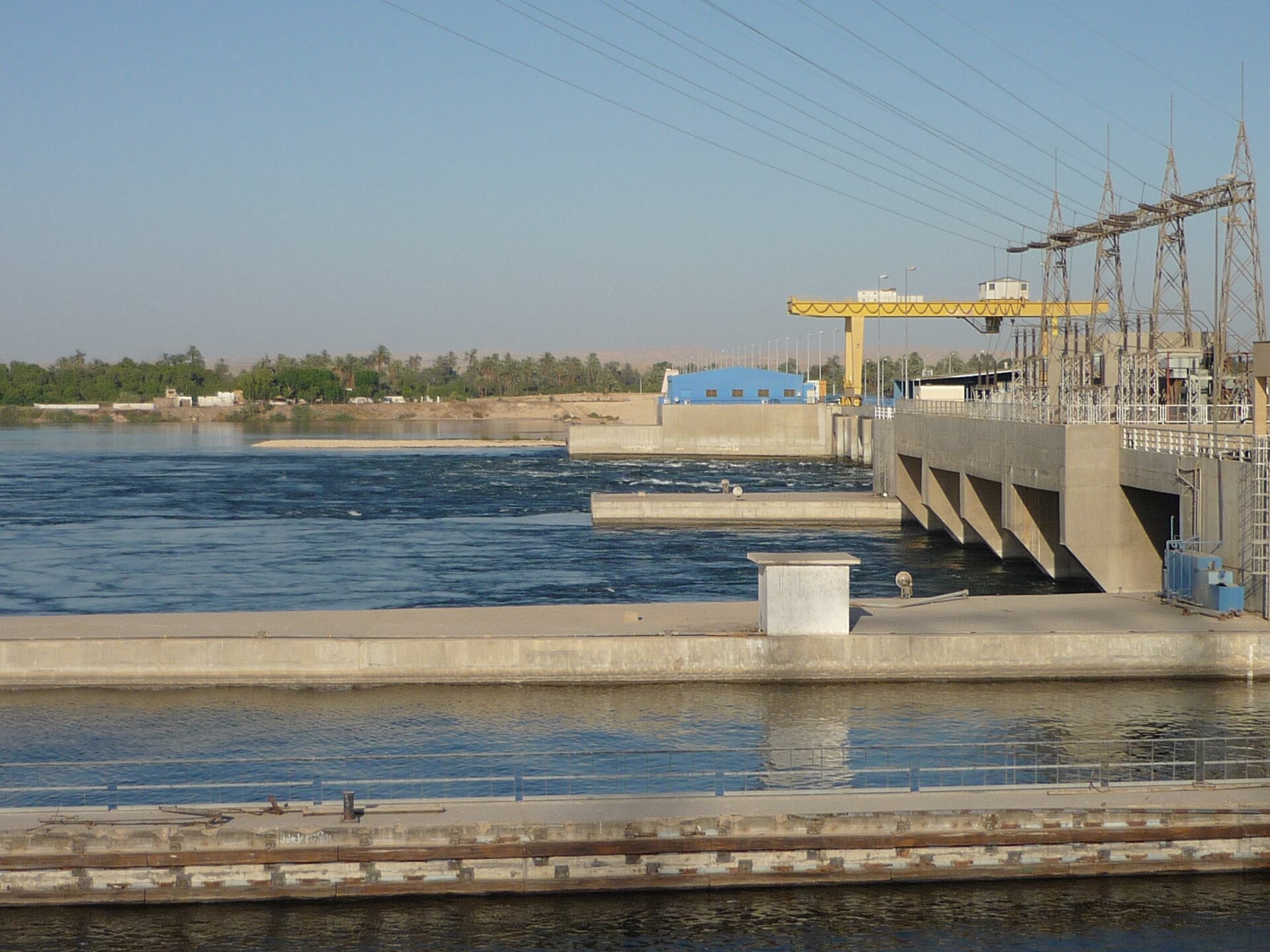
Culture
Esna is a conservative Upper Egyptian town where several faiths have left visible marks. Muslim and Coptic Christian communities live side by side, and the calendar follows both: church feasts and fasts, the Islamic month of Ramadan, and the call to prayer carrying across the rooftops. The Coptic tradition here runs deep, and the memory of the early fourth century martyrs gives local churches and monasteries a particular importance for believers. The older social structure still shows in the quarters of the centre, where long-established families keep their houses and their standing. Traditional crafts, including cloth trades once central to the market, survive in a thinner form. Family comes first in daily life, hospitality is sincere, and a visitor who stops to talk is likely to be offered tea. Much of the old Egyptian religion is visible in the temple carvings, which show rulers making offerings to gods, though the town itself is rooted in later layers of belief. Friday is the main day of prayer, and the town is quieter in the late morning and around midday. Shops open late and close at different hours, and the evening is when the streets feel most alive. Greeting people politely and accepting a small courtesy, such as tea, goes a long way. When you visit a mosque, church or monastery, dress modestly, remove your shoes where others do, and ask before photographing worshippers or anyone in a doorway.
What to wear
Esna's traditional dress is the galabeya, a long, loose robe of cotton or lighter blends worn by men and women across Upper Egypt. Men wear it in plain colours such as white, grey, cream or brown, often with a scarf or turban cloth wound around the head against sun and dust. Women wear galabeyas in patterned or darker cotton, with a headscarf, and some add a black outer cloak in public. Cloth was once a major trade in the market, though much of the old tailoring has faded. Today most people mix tradition and practicality: men often wear a galabeya in the village and trousers and a shirt in town, and younger people choose jeans, long sleeves and trainers. Women usually keep arms and legs covered and wear a headscarf, and many Coptic women dress similarly in public. A visitor should dress for heat and modesty together. Loose cotton or linen with long sleeves and long trousers or skirts is cooler than bare skin in strong sun, and it avoids unwanted attention. A hat, sunglasses and a light scarf help, and women may find a scarf useful for churches and mosques. Wear closed, comfortable shoes with grip, because the ground by the temple is uneven and dusty, and sandals that slip off are awkward to climb down in. In winter evenings, bring a light jacket.
What to eat
- Ful medames — Breakfast stalls and small eateries near the market
Slow-cooked fava beans, mashed and flavoured with oil, lemon and cumin, eaten with flat bread. This is a common breakfast across Egypt, and Esna is no exception. Look for small stalls and eateries near the market and the station in the morning. - Taamiya — Sandwich counters on the main streets
Egyptian falafel, made from fava beans rather than chickpeas, fried until green inside and crisp outside. It is served in bread with salad and tahini. It is cheap, quick and filling for a walk around the temple. - Aish baladi — Neighbourhood bakeries
Round, wholemeal flat bread baked fresh and eaten with almost every meal. It is used to scoop dips and wrap grilled meat. Bakeries produce it through the day, and the warm loaves are best straight from the oven. - Grilled pigeon — Local restaurants, especially for lunch
Pigeon is a traditional Upper Egyptian dish, often stuffed with rice or freekeh and then grilled or roasted. It is richer and smaller than chicken. Ask at local restaurants whether it is on that day. - Sugarcane juice — Juice stalls along the riverfront and market lanes
Pressed fresh from cane grown along the Nile, sweet and cold, and a welcome relief from the heat. It is made on the spot, so choose a stall that looks busy and keeps its equipment clean.
Plan it
Best time. October to March, when days are warm and bright and nights are cool. April is hotter, and the summer months are very hot, so visit the temple early in the morning if you come then.
How long. 1–2
Getting there. Fly to Luxor, then take a train or bus south to Esna, which takes roughly an hour by train. Trains also run from Cairo to Luxor first. Nile cruise boats between Luxor and Aswan stop here, and the local bus from the river's west bank runs to the station area.
Budget. low
Tips
- Visit the temple early in the day, before cruise groups arrive and before the heat builds
- Carry cash for small shops, tea stalls and local transport, as cards are rarely used outside hotels
- Carry water and a hat, as shade is limited around the temple and market
- Confirm bus and train times locally, because schedules change
- Take a small torch or phone light for the reliefs
Etiquette
- Dress modestly, covering shoulders and knees, especially in the town and at religious sites
- Ask before photographing people, particularly women, worshippers and anyone in a doorway
- Remove your shoes where others do, at mosques and churches
Nearby
Sources
- Wikidata Q626031 (CC0)
- Wikipedia: Esna (CC BY-SA 4.0)
- Wikivoyage: Esna (CC BY-SA 4.0)
- Badics, Viewed from the river (CC BY 3.0)
- Steve F-E-Cameron, Columns at the temple of Khnum (CC BY 3.0)
- Rémih, Esna new dam (CC BY 3.0)
- Jan Hazevoet, Lonely donkey (CC BY 3.0)
- tutincommon (John Campana), Esna Temple 2004 (CC BY 2.5)
- Steve F-E-Cameron, The temple of Khnum wall carving (CC BY 3.0)
- tutincommon, Esna Temple reliefs (CC BY 2.5)
- William Henry Goodyear, Esneh, image 9883 (Public domain)


