Dover Castle
Dover Castle, United Kingdom
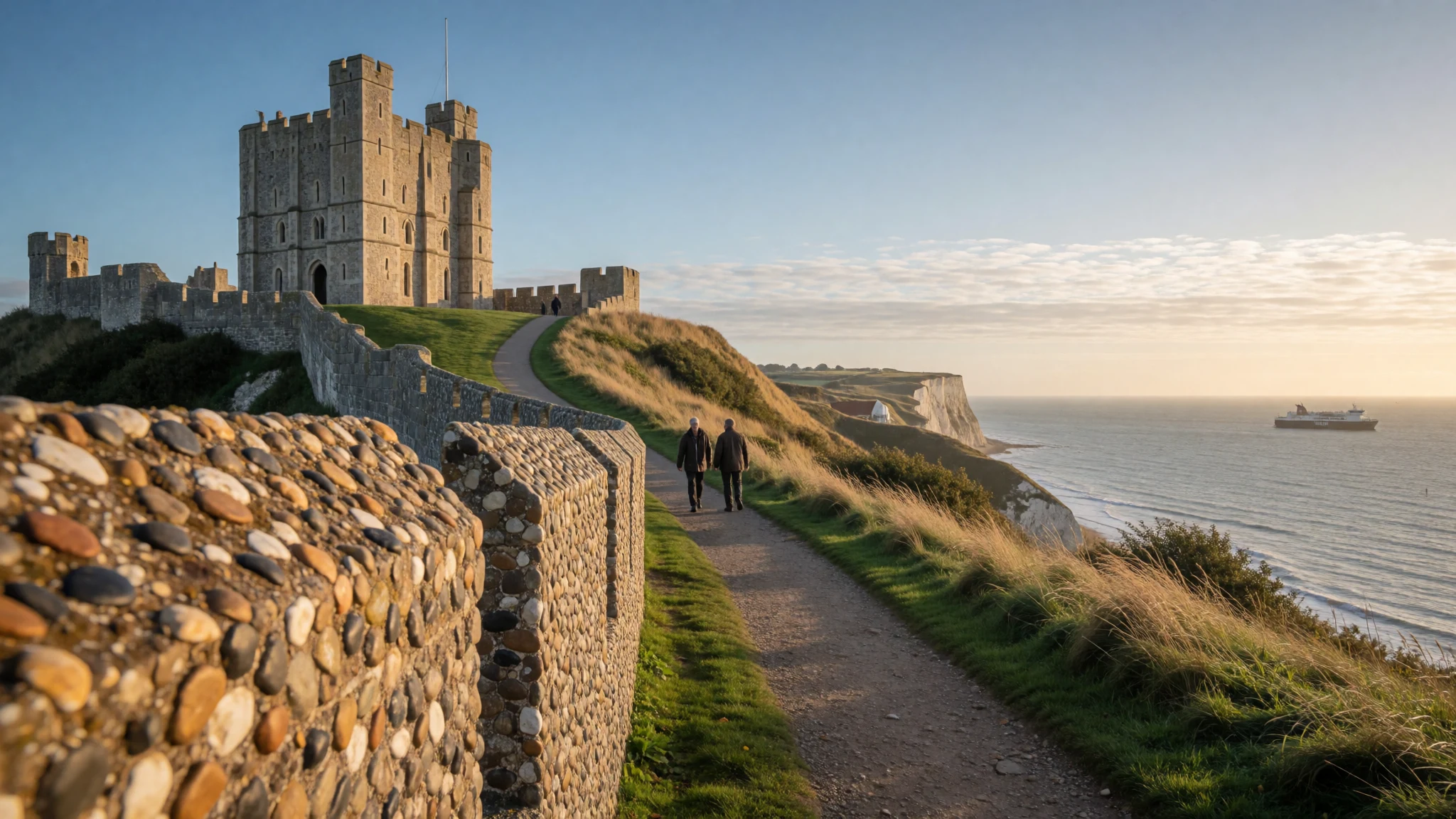
Dover Castle gathers a Roman lighthouse, a Saxon church and a medieval keep on one windy hilltop above the Channel.
The place
Dover Castle stands on a hill above the port of Dover in Kent, on the south-east corner of England where the Channel is crossed by dozens of ferries a day. It is Grade I listed and run by English Heritage, whose official page (https://www.english-heritage.org.uk/visit/places/dover-castle/) is the place to check opening times and tickets. Its nickname, the "Key to England", comes from its role as a lookout and a barrier: whoever held this hill could watch the sea and block the shortest road inland.
The site is less a single building than a layered campus. Inside the walls are a Roman lighthouse, a Saxon church, a medieval keep, and the barracks and museum rooms of later soldiers. The castle was founded in the 11th century, yet earthworks and older structures show that people used the hill long before. Walking round feels like reading a timeline in stone, each century leaving something beside the last.
Below lies Dover, a working harbour town as much as a tourist stop. From the castle walls the comings and goings of ships are easy to follow, and on a clear day the French coast shows as a pale line across the water. Rome treated the place as important, starting the road known as Watling Street here, and in the Middle Ages Dover belonged to the Cinque Ports, the south-coast league of harbours that supplied ships and men to the Crown.
One honest note for planning: the hilltop is exposed, so wind and sea mist are common even when the town is mild, and the grounds are big enough that a rushed visit will miss most of them.
Its story
Dover Castle's story begins before there was a castle. Odd-shaped earthworks on the hill may come from an Iron Age fort, raised before the Romans arrived, though archaeologists have not settled whether Iron Age settlement nearby is linked to it. The Romans then built a lighthouse on the headland, an eight-sided tower of tufa, Kentish ragstone and red brick. It outlived Rome. Saxons turned it into a bell tower, a new upper stage was added in the later Middle Ages, and a restoration followed in the early twentieth century. A twin lighthouse once stood at Boulogne across the water, but coastal erosion eventually dropped it into the sea, which makes the Dover survivor all the more precious.
The next famous chapter is 1066. After the Battle of Hastings, William the Conqueror and his army headed for Westminster and his coronation, but chose an indirect route through Romney, Dover and Canterbury. A contemporary chronicler said Dover had a reputation as a place very hard to take, and its harbour, together with its standing among the Cinque Ports, probably explains William's interest. Dover's importance also helped give Kent its motto, Invicta, meaning unconquered.
The stone castle visitors see today came later. Henry II commissioned the great square keep, built to show royal authority across his lands and to discourage rebellion, and his major building here from 1179 gave the castle its recognisable shape. After that, every age added its own layer, from outer walls to barracks, so the hill still holds almost a thousand years of building on top of a far older site.
What to see
- The Great Tower — Inner castle, central hilltop
Dover Castle's square keep was commissioned by Henry II as a statement of royal power. Its thick walls, tall rooms and long stair climbs give a clear sense of how a king lived and defended himself. The roof views over harbour and Channel repay the effort.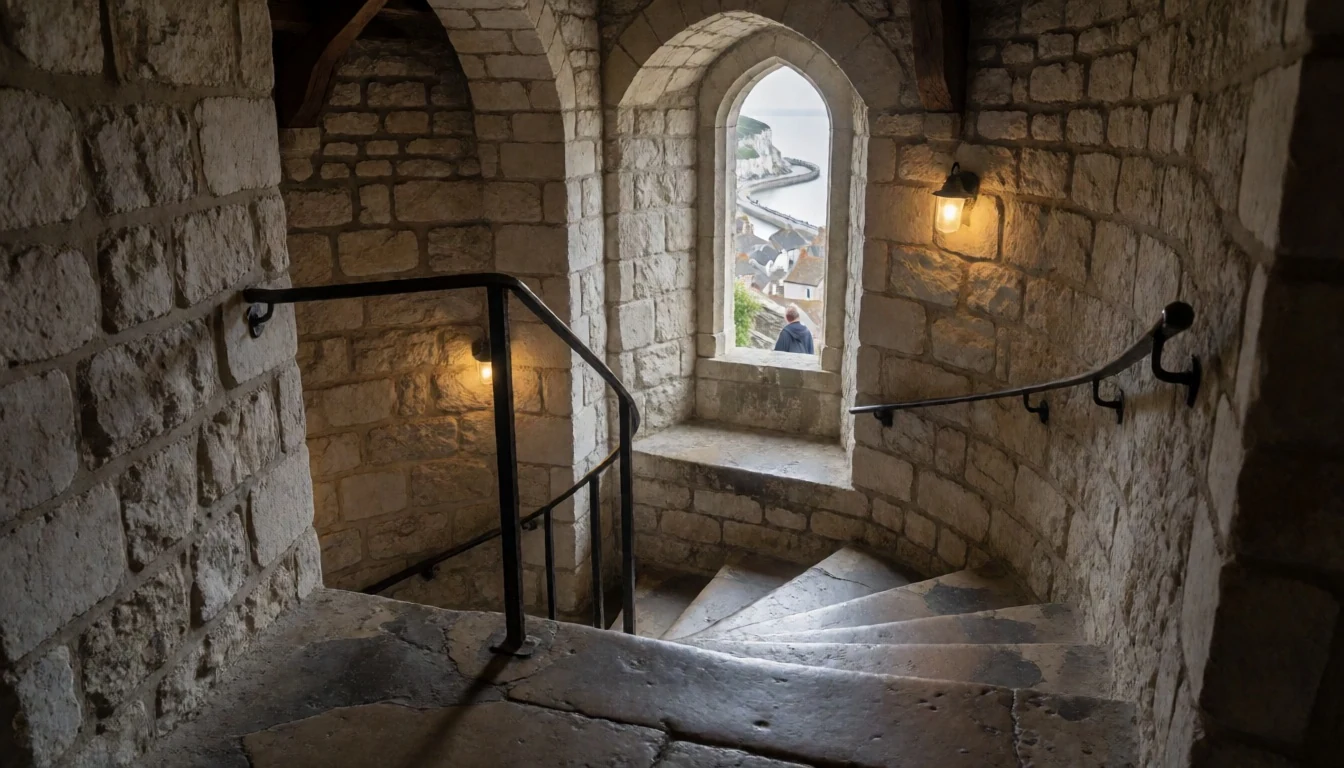
- Roman Lighthouse — Beside St Mary in Castro
The Roman lighthouse beside the church is a weathered tower of stone and red brick with eight sides. It once guided ships into the harbour, later served as a belfry, and is still easy to read as Roman work despite the medieval repairs on top.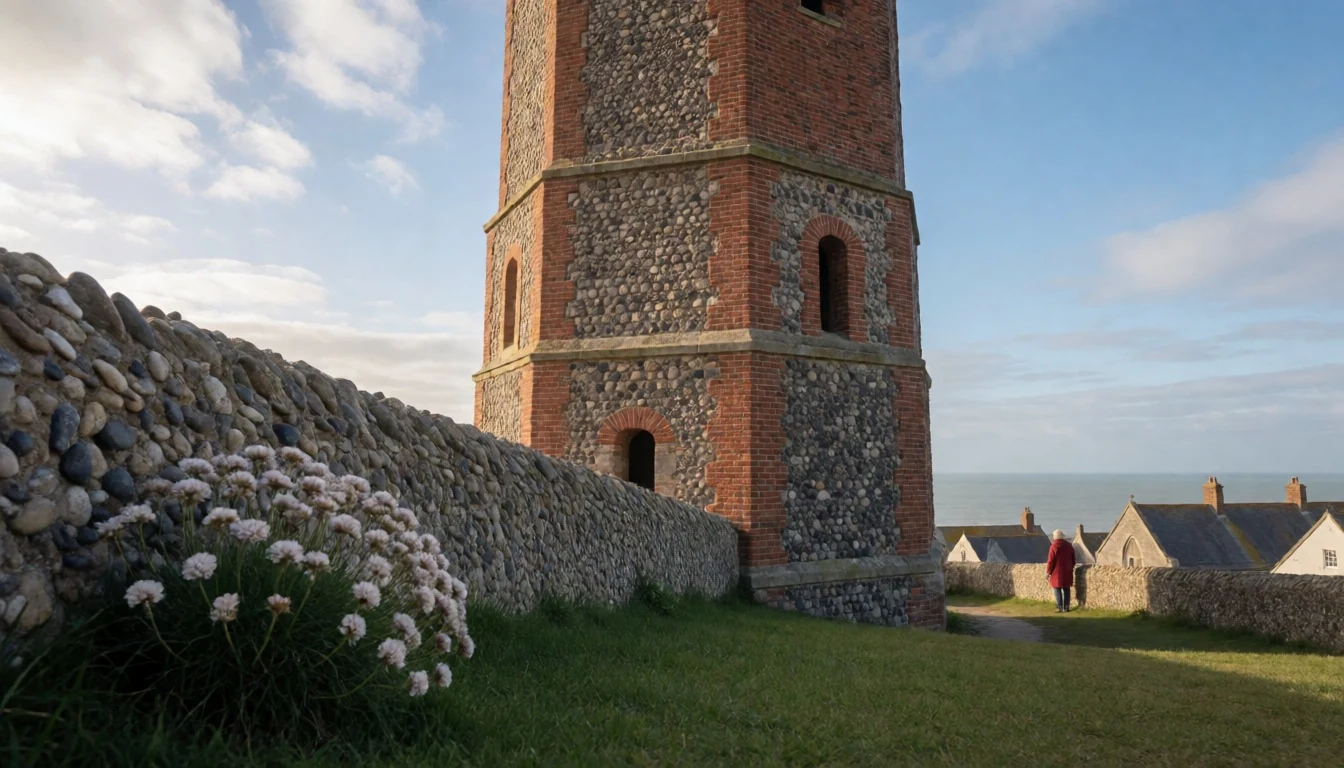
- Church of St Mary in Castro — Inside the castle walls
This small Saxon church sits next to the lighthouse and looks over the harbour. It was heavily restored in the Victorian era after a spell as a coal store. The plain interior is a calm pause between the busier exhibits.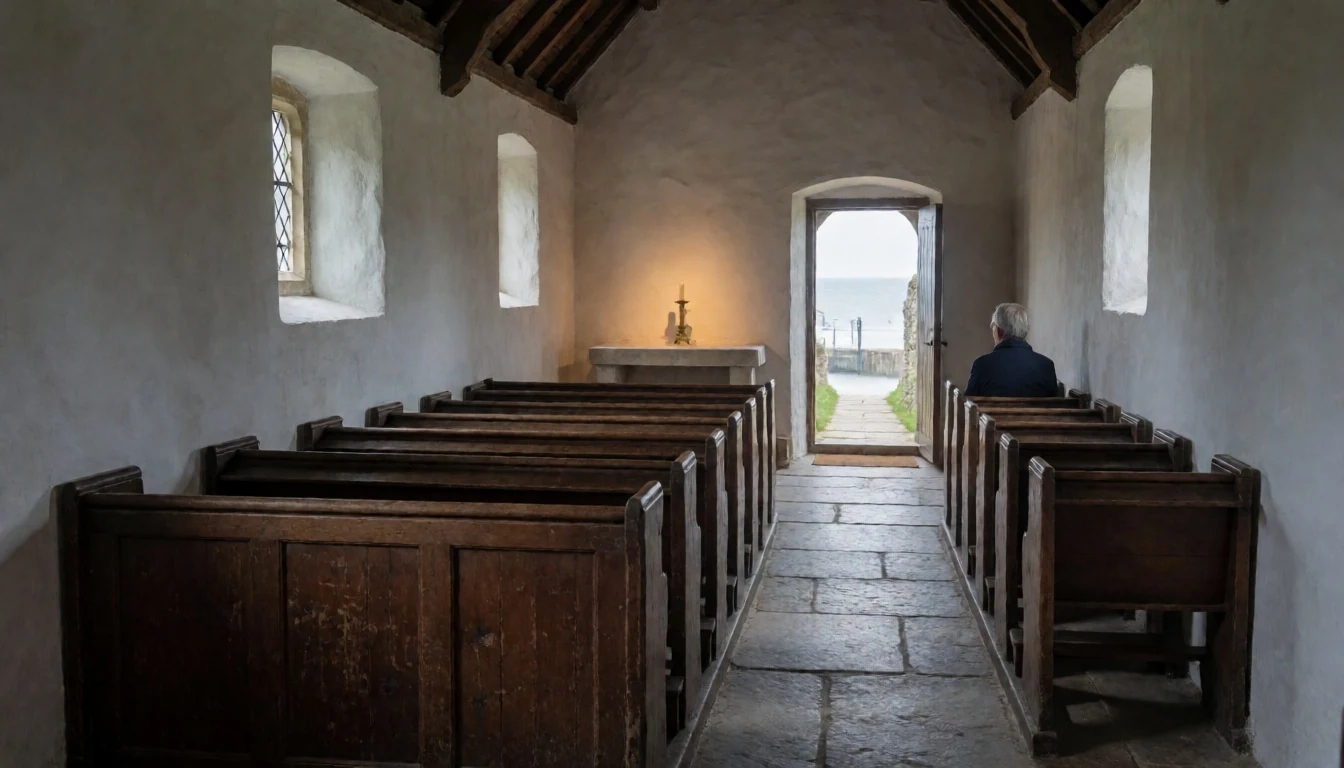
- Regimental museum — North side of the castle grounds
The museum covers around four centuries of soldiering through uniforms, medals and personal objects, from the American War of Independence through the Boer and Zulu wars to the world wars and today. It adds the human side of a fortress that was lived in for centuries.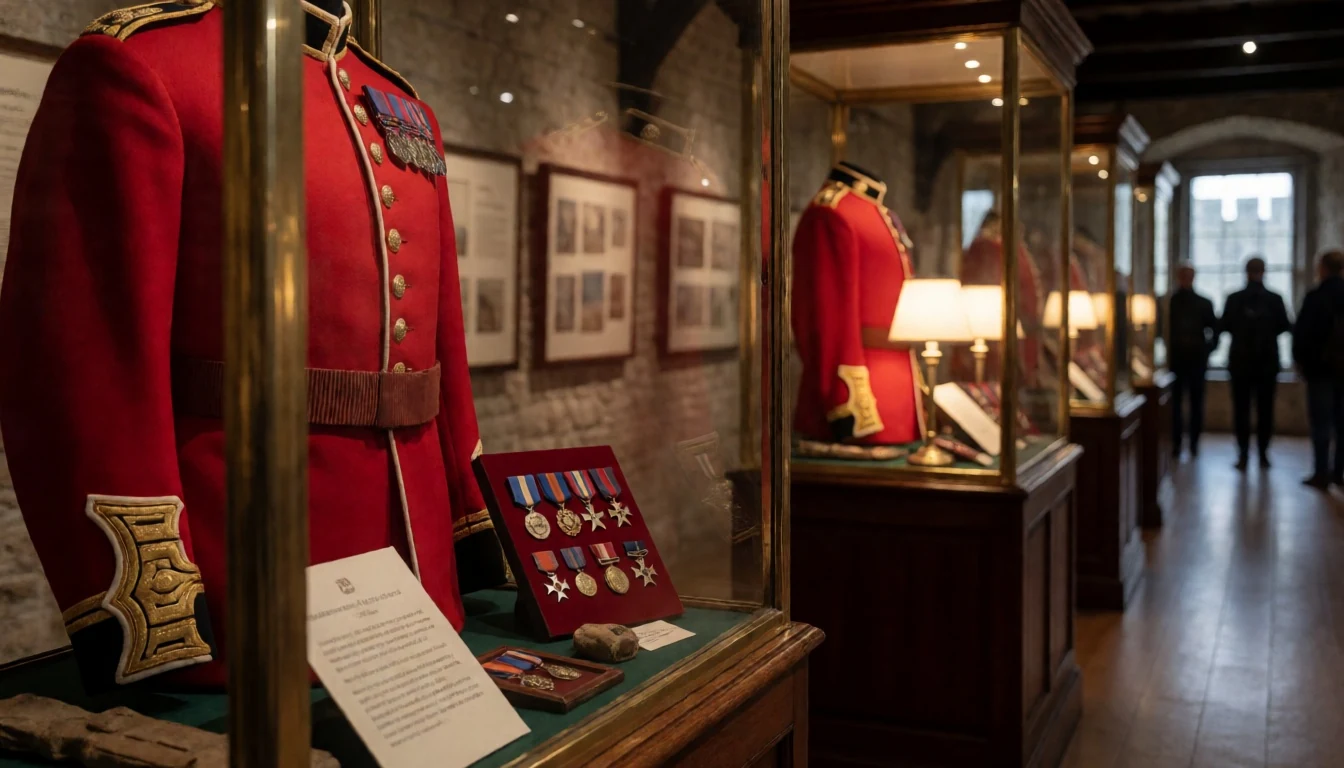
- Battle of Britain Memorial — Cliffs west of Dover
A short drive from the castle, this clifftop memorial honours the airmen who fought in the summer of 1940. It is quiet, open to the sea air, and a good companion stop for anyone interested in how this coast was defended in the twentieth century.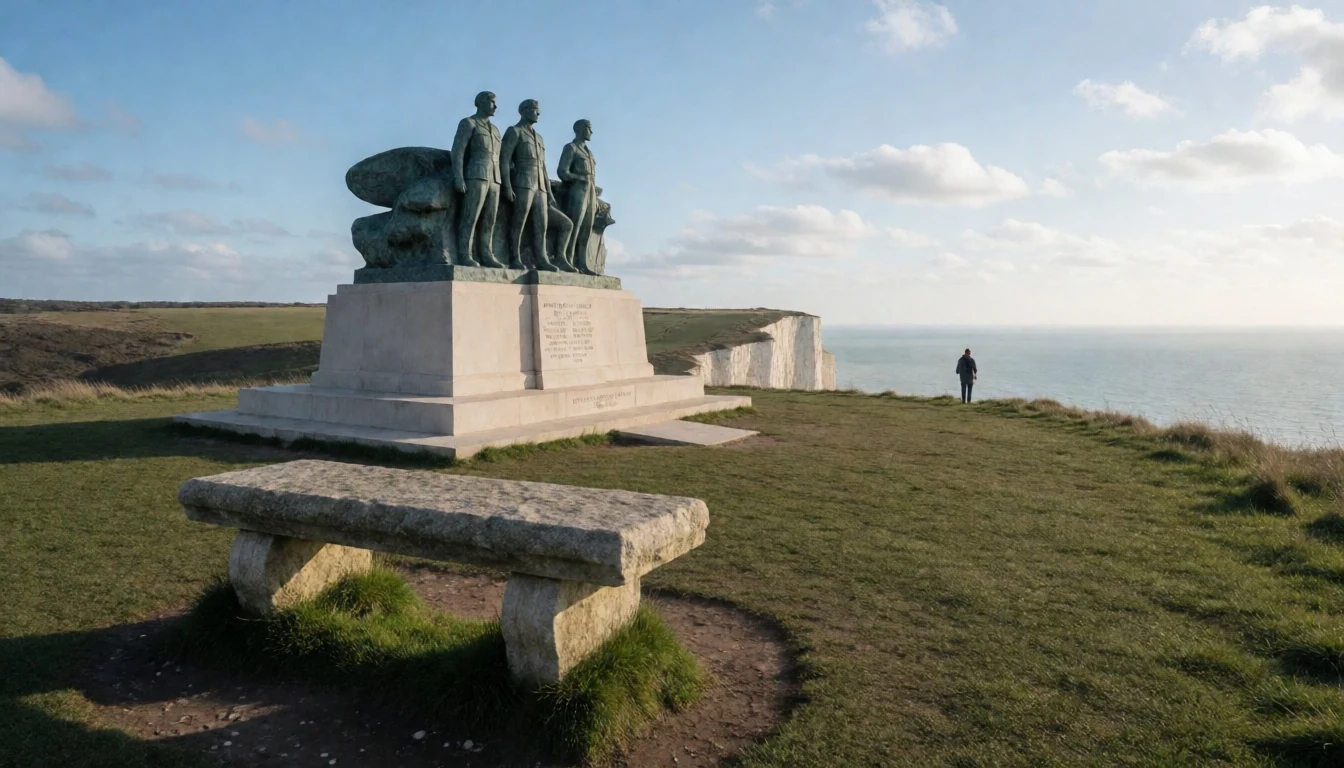
Culture
Dover Castle sits where England is closest to the continent, and local culture reads that position as both duty and pride. Kent's motto, Invicta, meaning unconquered, is tied by tradition to the county's reputation for resisting invaders, and Dover's membership of the Cinque Ports gave the town an old identity as a harbour that served the Crown. The castle feels like part of that story rather than a museum set apart from the town.
Military memory is strong here. The regimental displays follow centuries of British soldiering, from the American War of Independence to the world wars, and the Battle of Britain memorial on the nearby cliffs keeps the Second World War present in local life. Remembrance is a quiet matter in Britain, so the tone is sober rather than celebratory, even when family events fill the grounds in school holidays.
The Saxon church inside the walls shows the same layering: it was once used to store coal, then restored as a church, and some visitors simply sit in it for a moment. Dover itself is a practical port town where ferries, lorries and day-trippers share the streets. Conversation tends to be friendly but reserved, and queuing is taken seriously.
Keep your voice low inside the Saxon church of St Mary in Castro, and wait your turn rather than crowding at narrow doorways and stairs.
What to wear
Dover Castle belongs to a country with no single national costume, so dress here means historical clothing and everyday habit rather than one traditional outfit. Kent's working past was dressed in wool, linen and later cotton, with oilskin and waxed cotton for fishermen and farm workers, and tweed jackets and flat caps survive as a country style. The clothing most tied to the castle is military: scarlet coats for older regiments and khaki for modern ones, which the regimental museum shows alongside medals and kit.
People in Dover now dress casually and practically: jeans, trainers, fleeces and waterproof jackets, with something smarter for church or a dinner out. Nobody will look twice at hiking gear or a raincoat.
Visitors should plan for weather rather than occasion. The hilltop is open to wind and sudden showers, even in summer, so bring layers, a windproof or waterproof coat, and a hat that will stay on. Footwear matters most: there are steep paths, cobbles, worn stone steps and uneven floors, so wear closed, comfortable shoes with good grip. The Saxon church needs no special covering, and ordinary respectful clothes are fine. In summer add sun cream and a water bottle, because shade is limited across the open grounds.
What to eat
- Fish and chips — Chip shops and seafront pubs in Dover town
Dover is a harbour town, so fish and chips is the obvious meal after a day on the castle hill. Look for chip shops and seafront pubs in the town, and eat it outdoors if the wind allows.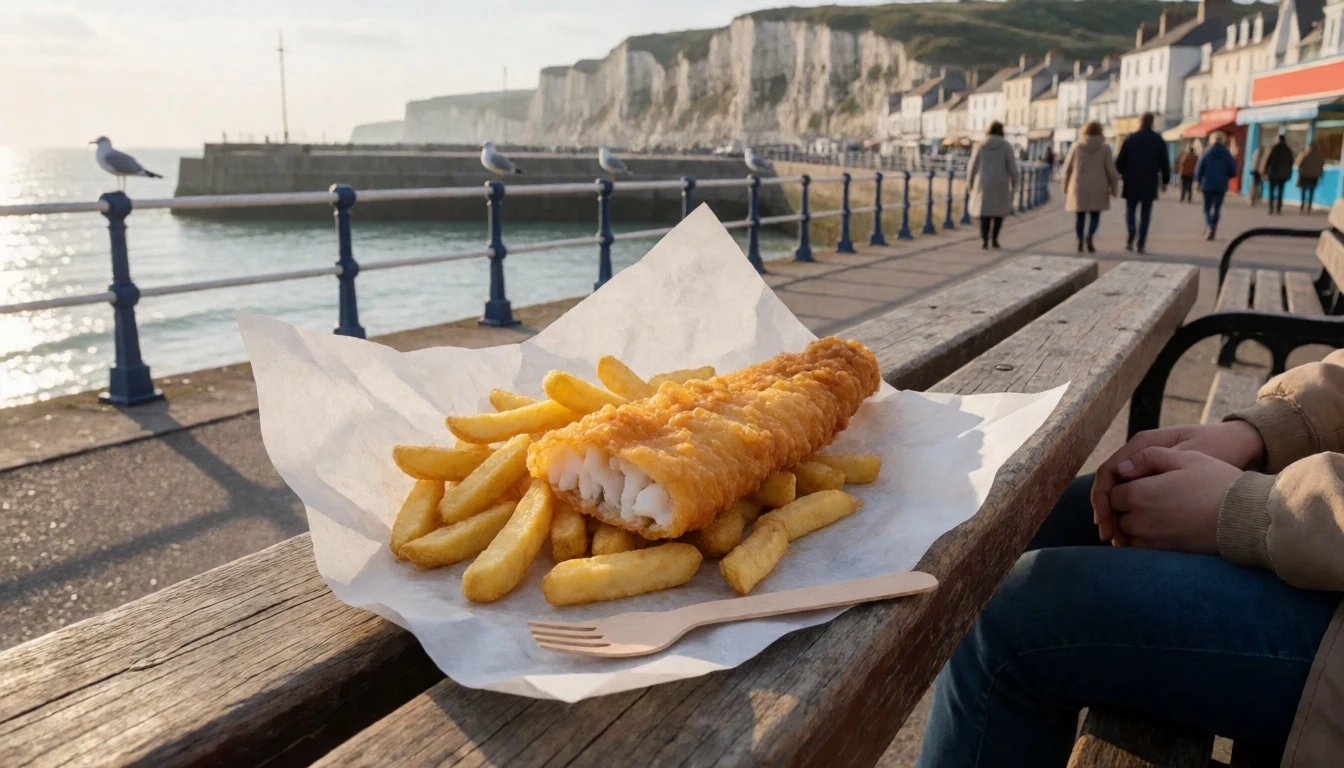
- Pub sandwiches — Town-centre pubs in Dover
Many Dover pubs make sandwiches freshly to order, usually with thick bread and a simple filling such as ham, cheese or prawn. They are a cheap, filling lunch between the castle and the harbour.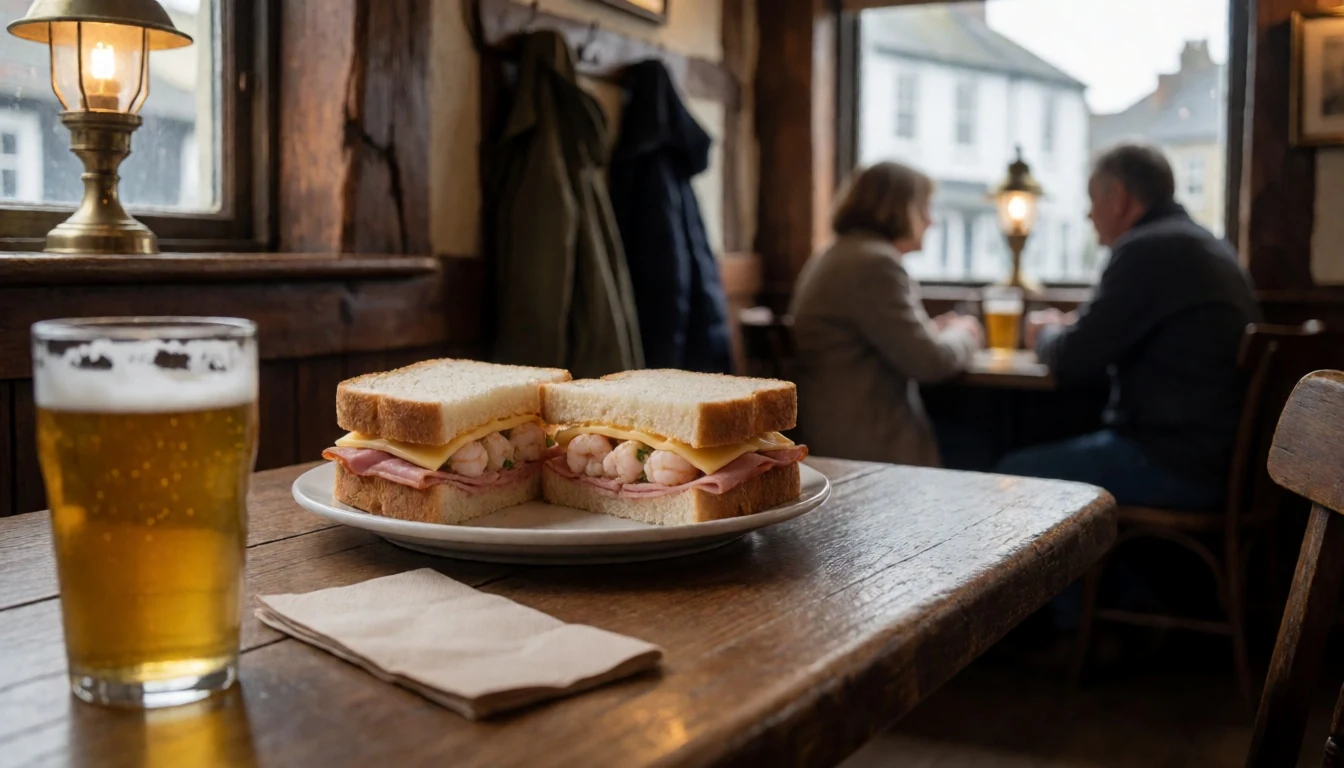
- Jacket potatoes — Pubs and cafes in Dover and nearby villages
A baked potato with a topping such as cheese, beans or tuna is standard pub and cafe food in Kent. It is warming after a cold day on the hilltop and easy for vegetarians to find. - Local Kentish ale — Independent pubs in Dover town centre
Kent has a long brewing tradition, and several Dover pubs focus on local beers. Ask staff what is on the hand pumps and for a small taster before choosing a pint. - Crab sandwich — Coastal pubs and cafes near St Margaret's Bay
Where it is on the menu, a crab sandwich is a good taste of this coast, usually dressed simply with salad on soft bread. Try cafes and pubs near the cliffs and bays east of Dover, such as St Margaret's Bay.
Plan it
Best time. May–June and September for milder weather and fewer school-holiday crowds; July and August are the busiest and brightest. The hilltop is exposed, so winter can be cold, windy and wet, though quieter.
How long. 1
Getting there. From London, Southeastern trains run to Dover, and the National Express 007 coach from Victoria to Dover Pencester Road takes around three hours. By car, the A2/M2 and the A20/M20 both lead to Dover. The castle stands on the hill above the town, so allow for a taxi or a steep uphill walk for the last leg. Ferries from Calais and Dunkirk also arrive at the port.
Budget. mid
Tips
- Check opening times, tickets and booking advice on the official English Heritage page before travelling.
- Arrive early on weekdays outside school holidays, as the grounds are large and queues build up around midday.
- Wear windproof layers and sturdy shoes; the hilltop is exposed and the ground is uneven.
- Carry a card and a little cash, and bring water, as shade is limited on the open grounds.
- Allow most of a day to see the keep, church, lighthouse and museum without hurrying.
Etiquette
- Keep to marked routes and leave ropes and barriers in place on the old stonework.
- Speak quietly in the Saxon church and treat it with respect.
- Queue patiently at the keep and on narrow stairs.
Nearby
Sources
- Wikidata Q950970 (CC0)
- Wikipedia: Dover Castle (rev 1379039384) (CC BY-SA 4.0)
- Wikivoyage: Dover (England) (rev 5401247) (CC BY-SA 4.0)
- Photo: Aerial panorama of Dover Castle, 2017 (Chensiyuan) (CC BY-SA 4.0)
- Photo: Castle church and harbour (O1ive) (CC BY 3.0)
- Photo: A lidar view of Dover Castle (Dr John Wells) (CC BY 4.0)
- Photo: Henry II's Great Tower (DeFacto) (CC BY-SA 4.0)
- Photo: Henry Hulsbergh, Dover Castle (Yale Center for British Art) (CC0 1.0)
- Photo: Dover Castle from the north (DeFacto) (CC BY-SA 4.0)
- Photo: Dover Castle from the south-east (Neptuul) (CC BY-SA 4.0)
- Photo: Dover Castle Great Tower, the guest hall (HARTLEPOOLMARINA2014) (CC BY-SA 4.0)


