Douglas
Douglas, Isle of Man
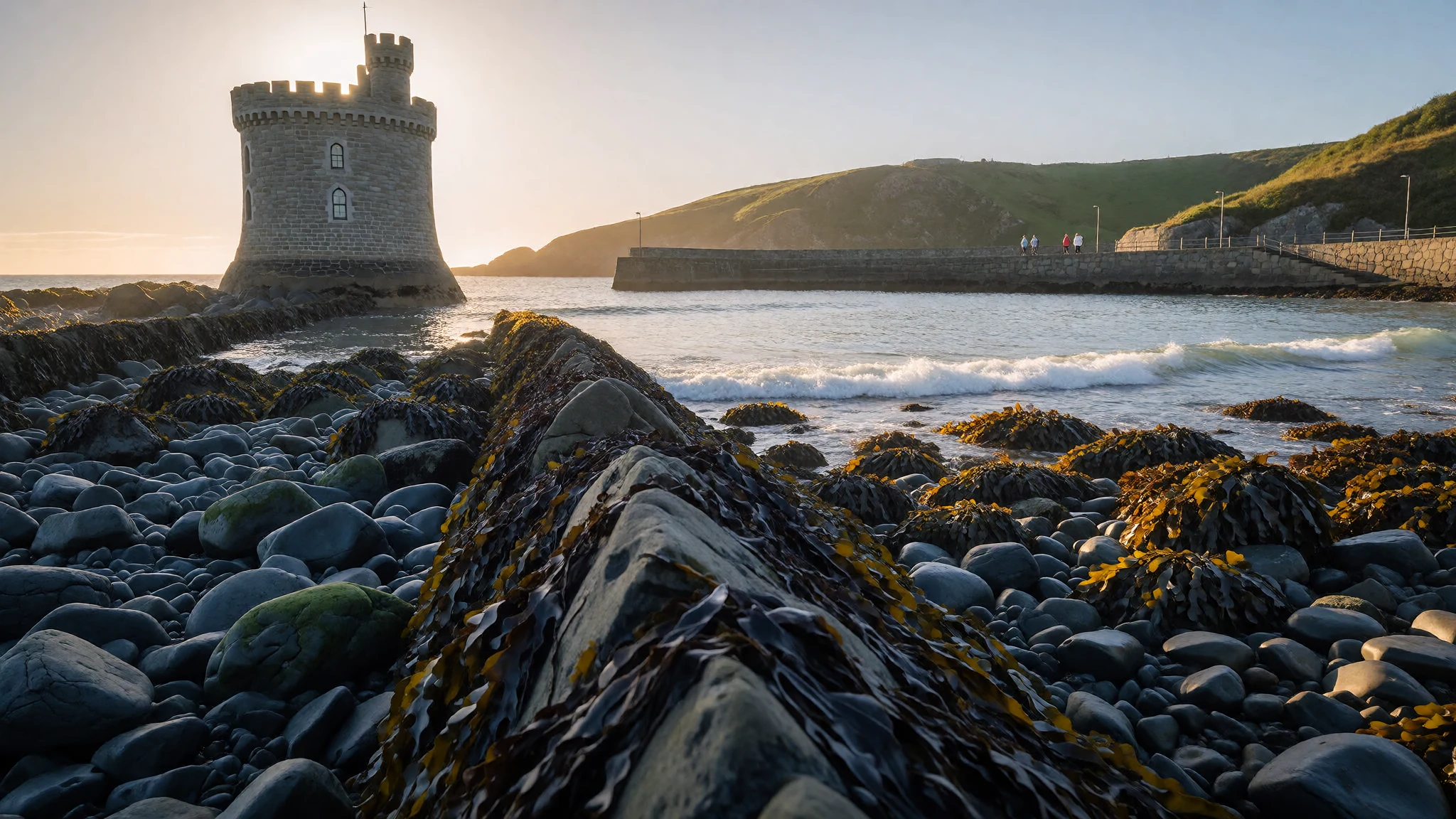
Douglas is a compact Irish Sea capital with a long Victorian seafront, a horse tram, steam trains and a rocky headland for the views.
The place
Douglas is the capital of the Isle of Man and sits on the island's east coast, curved around a wide bay that looks out across the Irish Sea. The River Douglas, formed where two smaller rivers (the Dhoo and the Glass) meet, runs into the harbour, which is still the island's main commercial port. About 26,700 people lived here at the last count, and the town was granted city status in 2022. That makes it the island's biggest settlement, though Ramsey now outranks it as a town, a quirk of the new label.
The layout is easy to read. A long promenade follows the bay, with guesthouses, gardens and shops facing the water. Behind it, streets climb a little inland towards the courts, government offices and the Manx Museum. The centre is at about 31 metres above sea level, so the walking is gentle, with a few short hills. At the southern end, the ferry terminal and the rocky bulk of Douglas Head frame the harbour.
Douglas does the island's day-to-day work: banking, legal services, shipping, shopping and nightlife all concentrate here. It is also the base for the annual TT motorcycle races, when the town fills with riders and spectators and prices climb. Outside race fortnight it feels quiet and unhurried, with a seaside-resort air that dates from the nineteenth century. The island's steam railway and electric tramway both start from the town, which makes it a practical base for exploring the rest of the Isle of Man without a car.
Its story
Douglas was small for most of its history. The name comes from an early Celtic phrase meaning 'black river', and the settlement grew up beside the river mouth. A bronze weapon found in the centre and a large Viking hoard unearthed on the outskirts, both in the 1890s, hint that the site mattered long before records begin. The hoard is now split between the Manx Museum and the British Museum in London.
Written mentions are sparse. A monastic chronicle names the place in 1190, when monks from Rushen Abbey stayed for a few years, and again in 1313, when Robert the Bruce spent a night at a monastery here on his way to take Castle Rushen. By 1511 the first detailed survey found only thirteen households living north of the harbour. Much of the property was let as unheated one-room stores to outsiders such as churchmen and officials, which suggests Douglas began as a working port rather than a true town.
The change came in the eighteenth century, when trade with Liverpool made the harbour busy and the population began to climb. In the following century the island's centre of power drifted east. During the 1860s the High Courts moved from Castletown, then the Lieutenant Governor's residence (in nearby Onchan), and finally the legislature, Tynwald, itself. Douglas had become the capital, and the seafront boarding houses that still line the bay grew with the holiday trade.
What to see
- Tower of Refuge — Douglas Bay, near the Sea Terminal
A small castle-like tower on a reef in the bay, near the ferry terminal. It was built in 1832 after several wrecks, among them the mail steamer St George, and gave stranded sailors somewhere to shelter. It looks best from the promenade, especially at high tide when water surrounds it.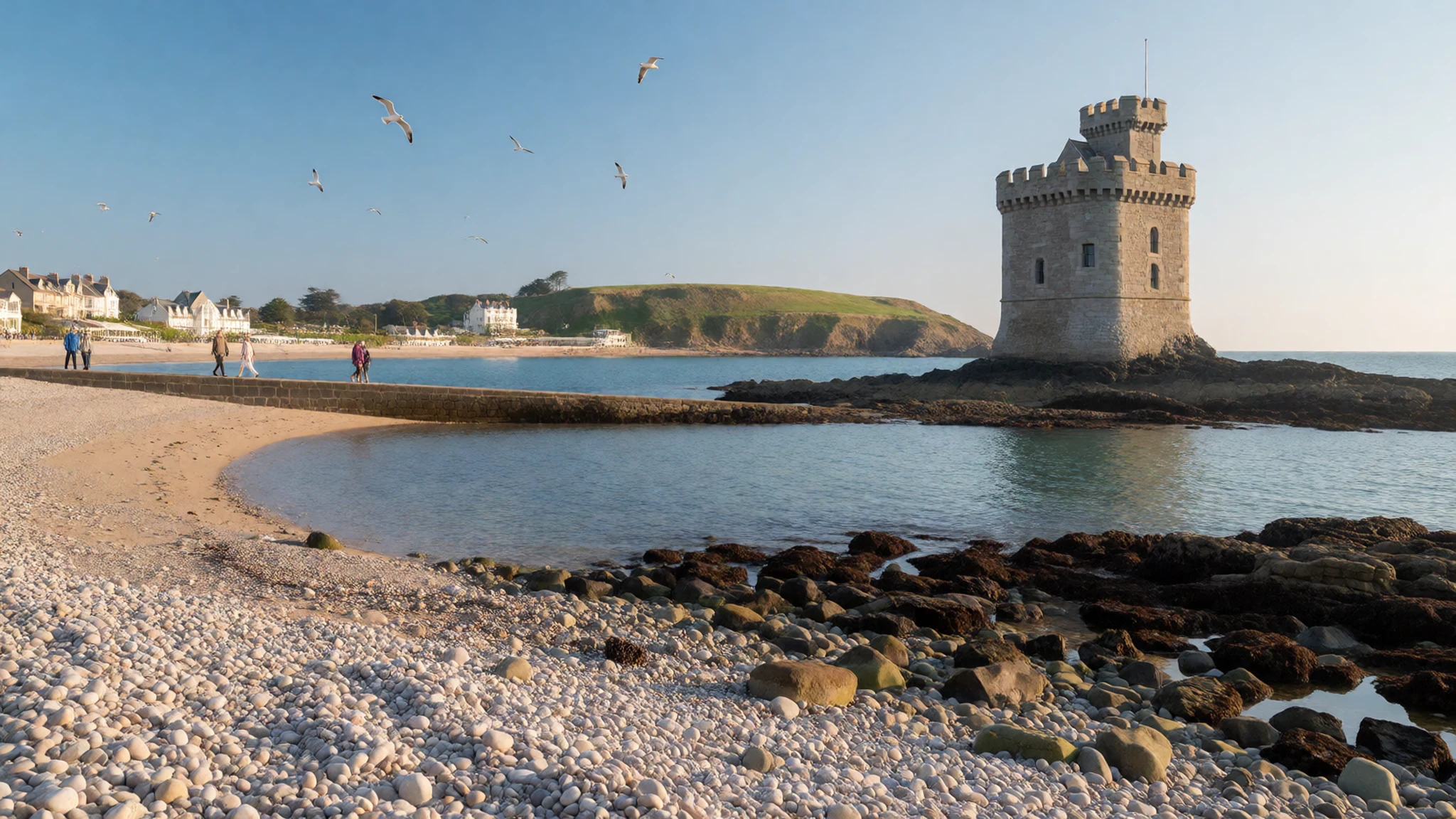
- Douglas Head — South side of the harbour
A rocky point at the south side of the harbour with wide views over the bay, the town and the working port. It is a good place to orient yourself on arrival, and a pleasant short walk at the end of the day when the light drops over the water.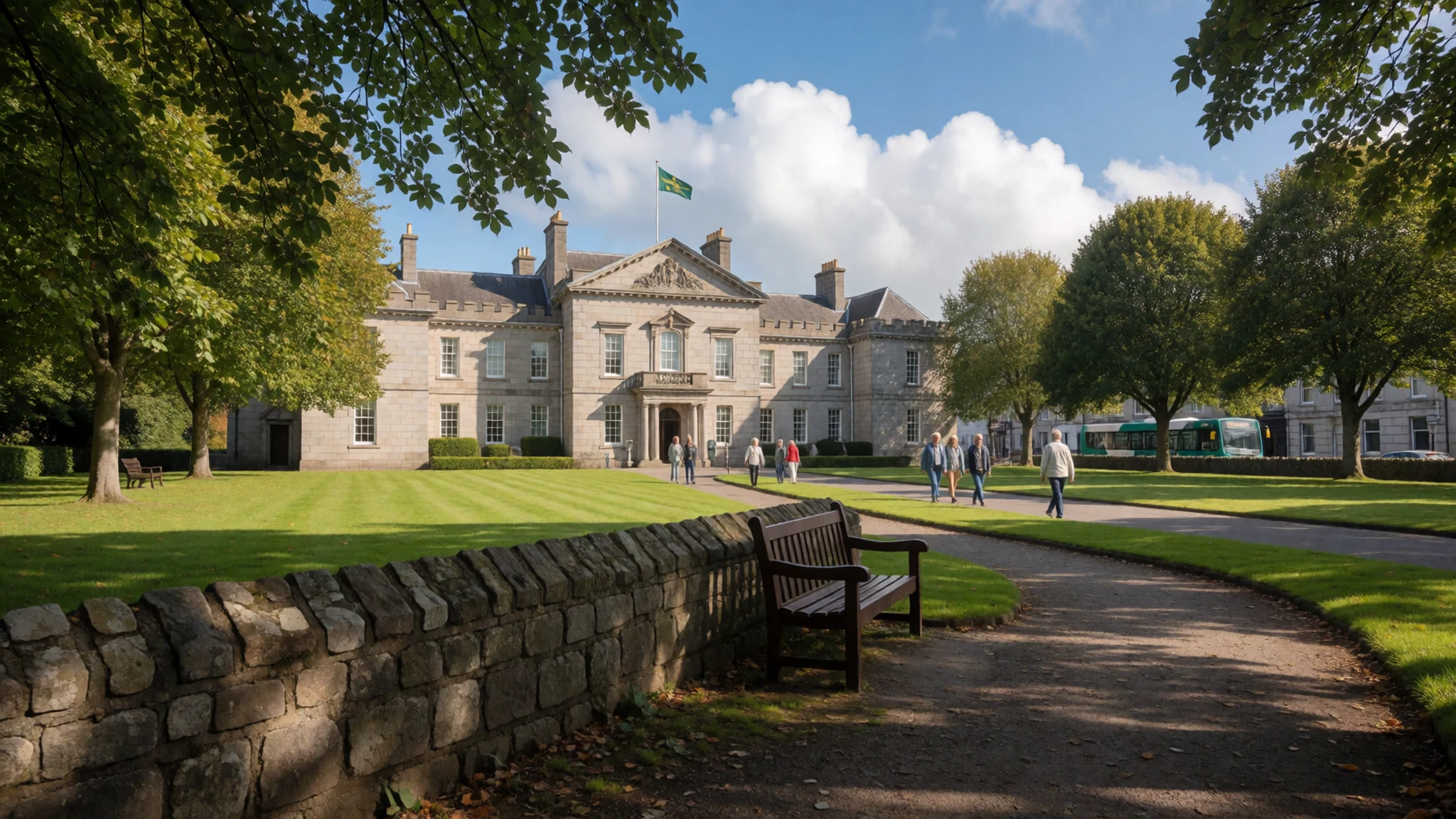
- Manx Museum — Kingswood Grove, central Douglas
The best single stop for understanding the island. Galleries cover natural history, the Viking period, Tynwald, wartime Mann, the TT races and the story of island tourism, and the building also houses the national art gallery. Allow a couple of hours and check opening times on the official site.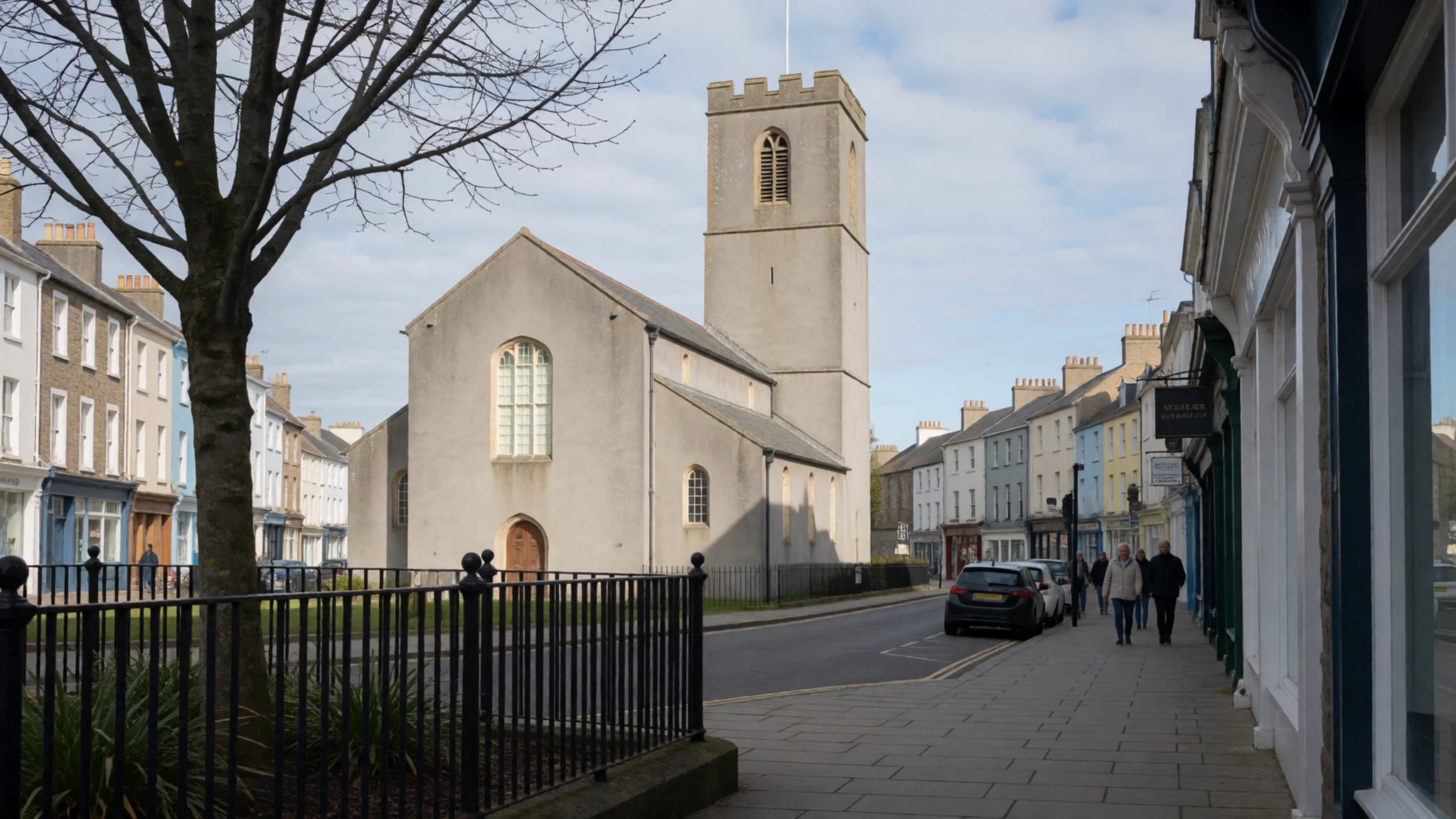
- St George's Church — Old town, central Douglas
Building began in 1762 but stalled when a smuggling crackdown dented the fortunes of its backers, and money was reportedly tangled up with an insolvent bishop's own. The Georgian church that resulted is a quiet, handsome corner of the old town, worth a look from outside even if it is closed.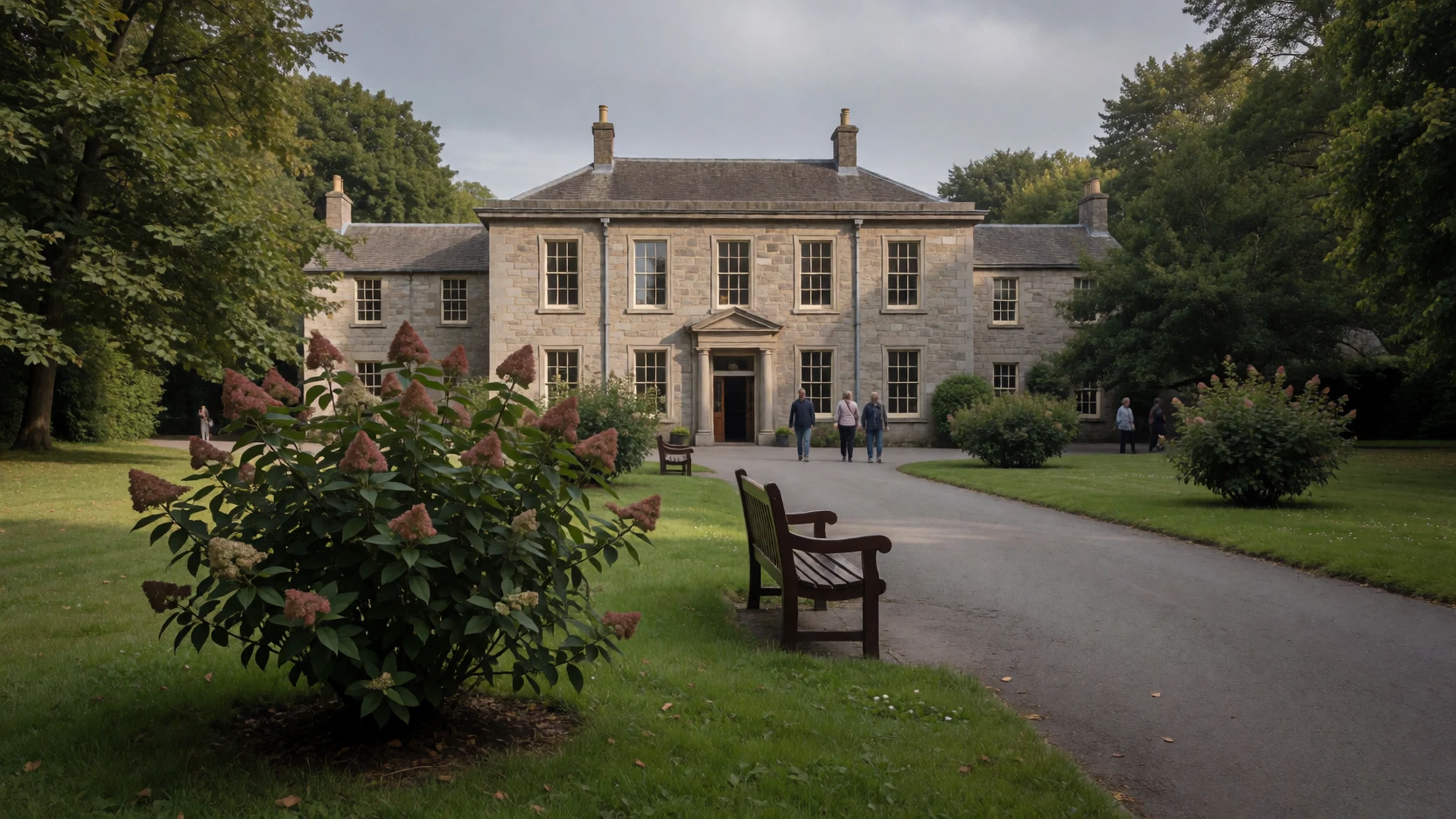
- Gaiety Theatre — Promenade, central Douglas
Opened in 1900, this is one of the few surviving theatres designed by Frank Matcham, and its richly detailed interior is the draw. The easiest way to see it is to book a performance; check the theatre's own website for the programme and any tours.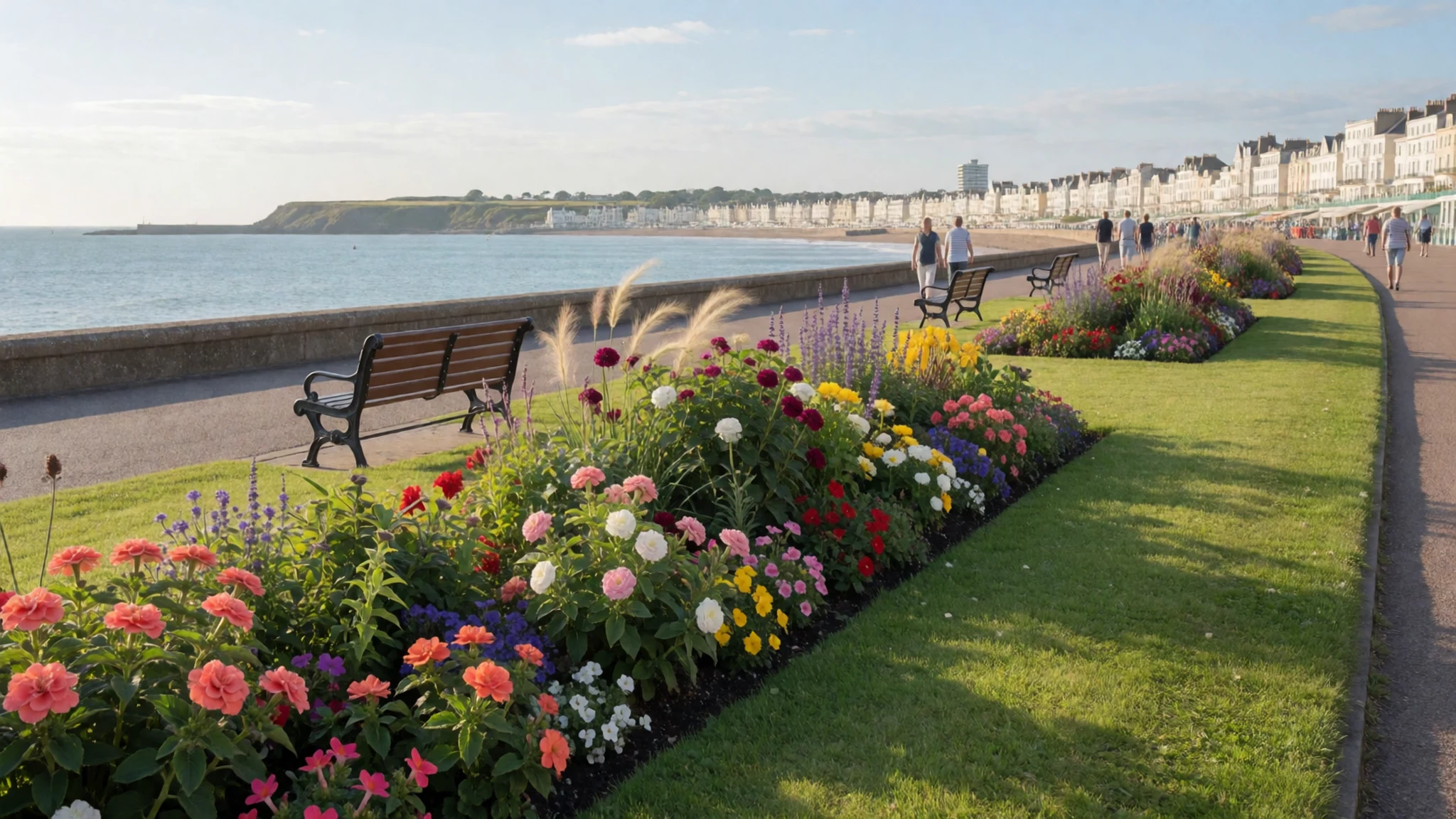
- Home of Rest for Old Horses — Western edge of Douglas
A small farm on the edge of town where horses retired from pulling the island's trams spend their last years, alongside other animals. Visitors can feed them, which suits children. It sits a little out of the centre, so plan the trip by bus or car.
Culture
Douglas is the capital of a self-governing Crown dependency, and that shapes its character. The Isle of Man has its own parliament, Tynwald, its own laws and its own flag, the three-legged triskelion, which flies along the promenade. Locals are proud of this independence and will gladly explain it, though visitors should know the island is not part of the United Kingdom, nor the European Union.
The Manx language, Gaelic in origin, gives the capital its second name, Doolish. English is what people speak every day, but Manx turns up on road signs, in school lessons and in place names, and a revival has been under way for years. Music and dance are part of that, and local festivals mix Celtic and Norse echoes.
Tynwald's claim to be among the oldest parliaments rests on a date from 979 that is itself disputed, and Manx people tend to be wry about it. The best-known event of the year is the TT motorcycle fortnight, which takes over the town and draws riders from across Britain and Ireland. Pubs fill, roads close for racing, and the mood is cheerful and noisy. At other times Douglas is calm, with walkers on the promenade and a Victorian seaside rhythm. When the roads are closed for racing, wait for a marshal's signal before crossing a course, and never step onto the tarmac on your own.
What to wear
Douglas has no single national costume worn day to day. The island's traditional dress belongs to heritage: wool and woollen cloth, long a staple of Manx farming and fishing communities, and tartan-like Manx tweeds and the island's own registered tartan, seen at ceremonies, dance displays and on Tynwald Day, when officials and performers dress for the occasion. Knitted fisherman's jerseys, warm and practical, are part of the same inheritance.
What people actually wear now is ordinary British casualwear, chosen for weather. Waterproof jackets, fleeces, walking boots and trainers are everywhere, and layering is second nature because the sea air can turn from sunny to blustery in an hour. Office workers in the finance and legal sector dress smartly, and evenings out are relaxed. During TT fortnight, leather riding gear and branded motorcycle clothing is almost a uniform.
Visitors should pack for changeable conditions whatever the month. A light waterproof, a warm layer and comfortable shoes with grip are the essentials, particularly if you plan to walk Douglas Head or ride the tram and railway out to the hills. Summer days can be warm enough for shorts and sunglasses, but evenings by the water are cool. There are no dress codes for churches beyond ordinary respect, though covered shoulders are polite for services.
What to eat
- Fresh seafood — Harbour and old-town restaurants
Local fish and shellfish are the island's strongest suit, from queen scallops to crab and kippers. Small seafood restaurants near the harbour and the old town centre serve them simply, so ask what came in that day.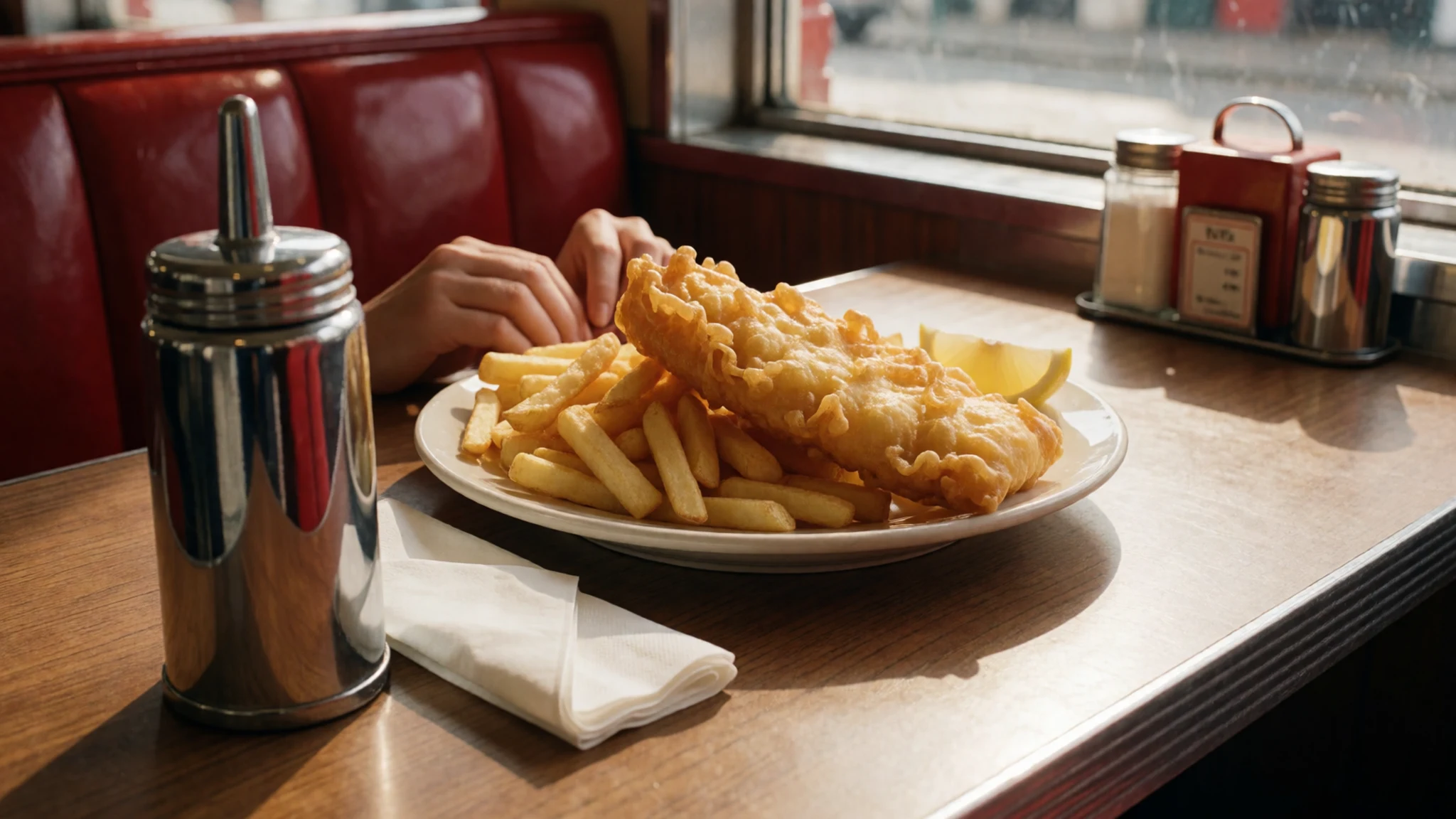
- Traditional British grill — Grills near the marina and central cafés
Pies, roasts, burgers and grilled meats are on offer all over town, often in retro-styled cafés and marina grills. Portions are generous, and it suits a wet afternoon when you want something hot and filling.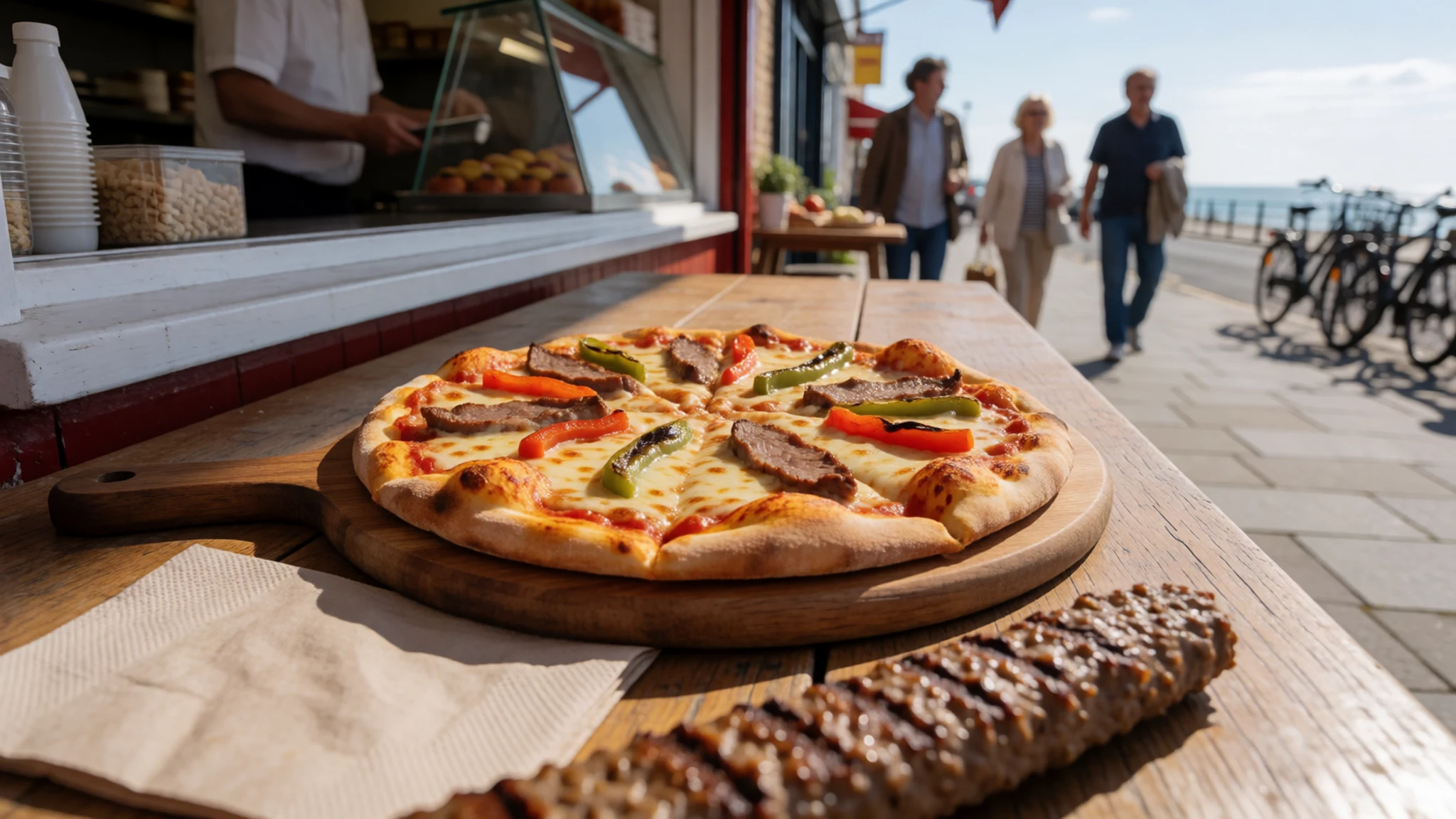
- Full breakfast and pancakes — Cafés in the centre of town
A cooked breakfast, or stacks of pancakes with fruit or syrup, is a local habit before a day of walking or riding the trams. Small cafés in the centre open early and are friendly places to sit with tea. - Italian pizza and pasta — Italian restaurants near the seafront and centre
Italian restaurants are a fixture of the town, from sit-down trattorias to casual pizza places where you can build your own pizza or calzone. Portions are filling and prices modest, which suits families and TT crowds. - Takeaway kebabs and pizza — Takeaways in the town centre
Late in the evening, takeaway counters around the centre serve kebabs, burgers and pizza. It is cheap, quick and popular after a night out or a long day by the bay, and quality is generally decent.
Plan it
Best time. Late May to September is the easiest time: longer days, the steam railway and electric tramway running (mid-March to October), and the best chance of dry weather. Expect cool, breezy conditions even in summer. TT fortnight brings crowds and higher prices, so book far ahead or avoid it.
How long. 2–3
Getting there. Fly to Isle of Man Airport at Ronaldsway, about 9 miles south of Douglas, with flights from several UK cities and Dublin, then take a bus or taxi into town. Ferries from Britain and Ireland arrive at the Sea Terminal at the south end of Douglas; some routes run seasonally.
Budget. mid
Tips
- Book ferries and rooms early if visiting during TT fortnight
- Bring a waterproof, as showers arrive quickly off the Irish Sea
- Check the official site for museum and theatre opening times
- Use the island's buses from Lord Street Interchange to reach other towns
- Ride the steam railway or electric tramway between mid-March and October
Etiquette
- Wait for marshals before crossing roads during race events
- Feed the horses at the Home of Rest only with what staff allow
Nearby
Sources
- Wikidata Q18569 (CC0)
- Wikipedia: Douglas, Isle of Man (rev 1382128084) (CC BY-SA 4.0)
- Wikivoyage: Douglas (Isle of Man) (rev 5401238) (CC BY-SA 4.0)
- Photo: The View From Douglas Head, Jim Linwood (CC BY 2.5)
- Photo: Douglas Head view to harbour, Zairon (CC BY 4.0)
- Photo: Tower of Refuge, Colin Park (CC BY-SA 2.0)
- Photo: Manx Museum, Otter (CC BY-SA 1.0)
- Photo: Gardens on Douglas promenade, Jim Barton (CC BY-SA 2.0)
- Photo: The Bee Gees Walking on Douglas Promenade, David Dixon (CC BY-SA 2.0)
- Photo: Loch Promenade 1890s, Detroit Publishing Co. (Public domain)
- Photo: Loch Promenade, Gregory J Kingsley (CC BY 3.0)


