Diyarbakır
Diyarbakır, Turkey
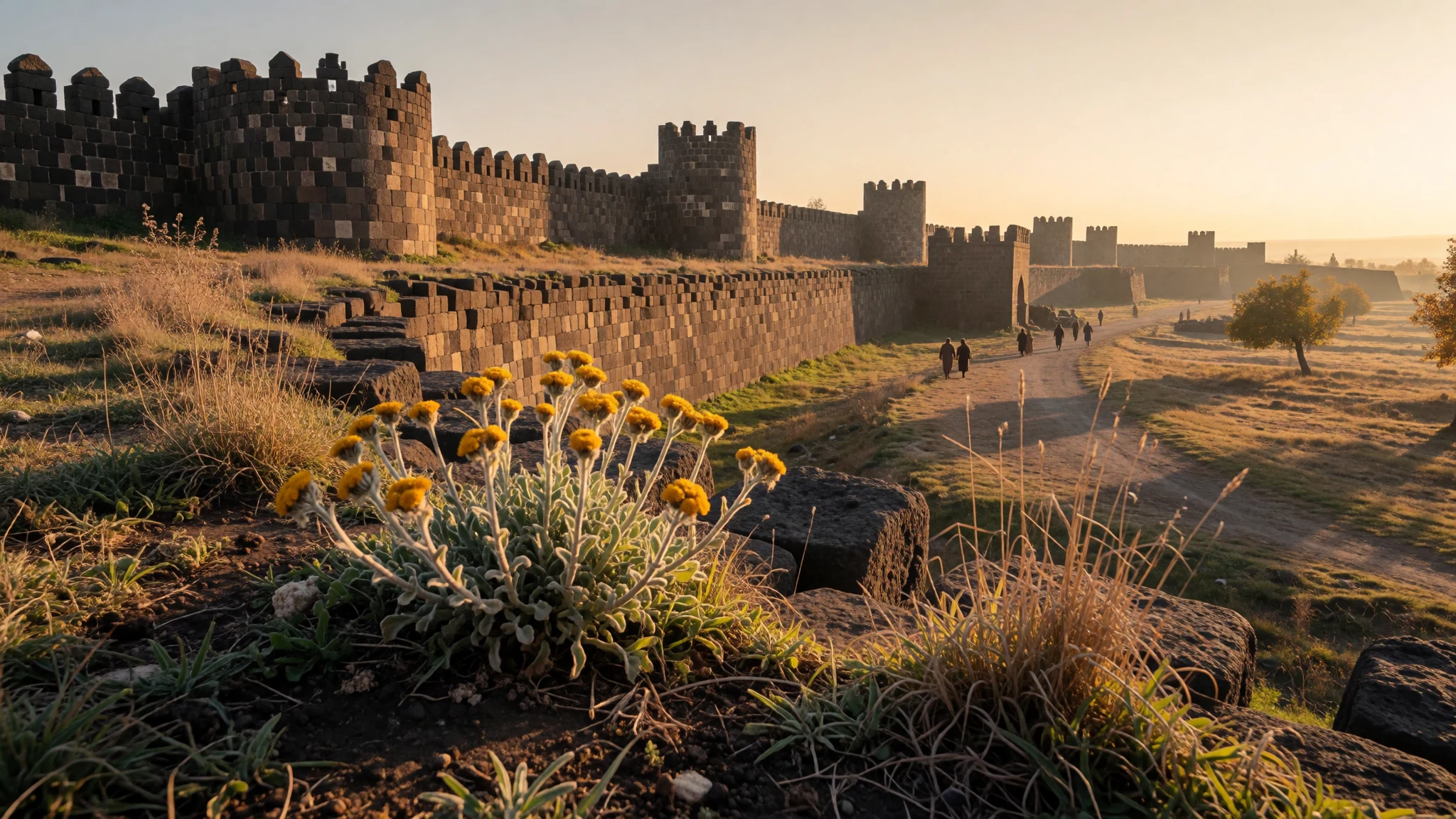
Explore ancient basalt ramparts, bustling roadside courtyards, and vibrant cultural traditions in the historic heart of southeastern Turkey.
The place
Diyarbakır stands as the largest Kurdish-majority city in Turkey, occupying a commanding position on a high plateau above the banks of the Tigris River in the nation's southeast. Recognized as one of the oldest continually inhabited urban settlements in existence, people have made their homes here continuously since the Stone Age. The municipality governs a sprawling regional population of about 1.7 million residents distributed across several central urban districts including Bağlar, Kayapınar, Sur, and Yenişehir. Encircled by immense fortifications of dark volcanic stone, the old city center preserves a labyrinth of alleys, historic caravanserais, and stone houses that reflect millennia of trade and shifting empires. Summers on the Mesopotamian plain bring intense, baking heat, while winters turn chilly with occasional frost and snow. The city functions as the cultural and administrative hub of the region, carrying a profound heritage shaped by Kurdish identity, ancient trade routes, and centuries of architectural evolution. Despite political complexities and recent seismic events that tested its resilience, the local community maintains a vibrant daily rhythm within its historic quarters, welcoming visitors to experience its distinct regional character, bustling tea houses, and peerless culinary traditions.
Its story
The historical chronicle of Diyarbakır reaches back into prehistory, anchored by its strategic location on the frontier borders of Upper Mesopotamia. Early major civilizations left their mark, beginning with the Hurrian kingdom of the Mitanni, followed by successive waves of Arameans, Assyrians, Urartu, Armenians, Achaemenid Persians, Medes, Seleucids, and Parthians. In sixty-six BC, the Roman Republic secured control, designating the settlement as Amida and transforming it into a vital fortified outpost. During the fourth century, Sasanian forces under Shapur II besieged and captured the stronghold after a gruelling military campaign recorded in detail by contemporary Roman chroniclers. Following territorial treaties that forced evacuations from nearby Nisibis, refugees flooded into Amida, swelling its population and establishing its status as the principal Roman stronghold in the province. Within its fortified perimeter, the ancient city boasted grand amenities including public thermal baths, an amphitheatre, sprawling storehouses, monumental arches, and extensive aqueduct networks. Through subsequent medieval eras, Seljuk, Artuqid, and Ottoman dynasties continually repaired and augmented the defensive works, leaving behind an architectural tapestry of ornamented mosques, carved stone portals, and vaulted marketplaces that still define the historic urban landscape today.
What to see
- Great Mosque — Inside the old city walls
Considered the oldest mosque in Anatolia, this monumental religious site was established by a Seljuk ruler in the eleventh century. Its spacious central courtyard features classical Islamic arcades, antique classical columns collected from older ruins, and intricate stone carvings that demonstrate centuries of regional craftsmanship. - Sülüklü Han — Sur district
Constructed in the seventeenth century as a traditional roadside caravanserai for travelling merchants, this atmospheric stone courtyard has been beautifully revitalised. Today, vaulted lower chambers and shady outdoor seating areas house popular local cafes, independent bookstores, and artisan souvenir shops. - Surp Giragos Armenian Church — Armenian quarter within the old city
Founded originally in the sixteenth century and rebuilt in its current expansive form in the nineteenth century, this stands as the largest Armenian church in the Middle East. After standing derelict for many years, meticulous restoration efforts returned the soaring bell tower and vast prayer hall to active use. - City Walls and Dağ Kapı — Northern edge of the old city
The formidable fortifications feature massive blocks of dark basalt stone, first erected by Roman engineers and continually reinforced by subsequent rulers over the centuries. Entering through the northern Dağ Kapı gate offers access to a scenic walking route along the top of the ramparts. - Virgin Mary Church — Southern sector of the old city
A venerable Syriac Orthodox sanctuary with foundations tracing back to the third century AD. The compound features a peaceful stone courtyard, ancient wooden icons, and an active community space that continues centuries of continuous Christian worship in the heart of the ancient settlement.
Culture
Cultural life in Diyarbakır is deeply rooted in communal heritage, traditional craftsmanship, and vibrant musical expressions. Artisans continue local specialities such as delicate silver wirework and metal engraving, while spirited folk dances accompanied by the rhythmic beat of large drums and traditional zurna pipes remain central to weddings and seasonal festivities. Celebrations of Nowruz mark the arrival of spring and the new year, drawing immense crowds to open-air grounds in a profound display of Kurdish historical identity and shared community joy. Municipal cultural initiatives have historically supported local theatre productions and artistic performances in the Kurdish language, celebrating the region's linguistic diversity. When visiting local neighbourhoods and traditional households, dress modestly and always ask for permission before photographing local residents in streets or markets.
What to wear
Traditional dress in Diyarbakır reflects practical adaptation to harsh seasonal extremes on the Mesopotamian plain, featuring layered garments crafted from durable regional textiles. Historically, local men wore loose traditional trousers known as şalvar paired with embroidered waistcoats and wrapped headscarves, while women donned vibrant, layered velvet dresses accented with ornate coin belts and intricate headwear reflecting tribal and familial heritage. Today, everyday attire in modern urban areas such as Kayapınar closely mirrors contemporary European styles found across Turkey, with younger generations wearing jeans, jackets, and smart casual wear. However, traditional garments and regional motifs remain visible during festive celebrations, weddings, and among older residents in the historic quarters. Visitors should pack versatile clothing suited to the climate: lightweight, breathable cottons and linens for baking summer days, and warm layers or heavy coats for freezing winter outings. When entering active mosques or religious sanctuaries within the city, both men and women should ensure their shoulders and knees are covered, and women ought to carry a light headscarf to use when visiting sacred interiors.
What to eat
- Ciğer Kebabı — Near the northern city gate
A beloved local staple featuring tender skewers of grilled lamb liver seasoned with aromatic spices, commonly enjoyed for breakfast or late-night meals alongside flatbread, charred green chillies, and fresh herbs at open-air grills like Dağ Kapı Ciğercisi. - Ekşili Etli Dolma — Traditional eateries within the old city
Tender vine leaves or seasonal vegetables meticulously stuffed with a savory mixture of minced meat, rice, and herbs, simmered slowly in a distinctive sour pomegranate or tamarind reduction that gives the dish its signature tangy profile. - Meftune — Local restaurants in the Sur district
A rich, slow-cooked regional stew combining chunks of tender meat with tart sumac, garlic, and seasonal vegetables like aubergine, creating a robust, comforting dish that highlights the bold and sour flavour combinations characteristic of local cuisine. - İçli Köfte — Traditional market cafes
Crispy, bulgur-wheat shell casings formed by hand and stuffed generously with spiced minced meat, onions, and walnuts, then fried to a golden crunch or boiled in broth depending on household preference and family tradition. - Kadayıf and Künefe — Gazi Caddesi within the walls
Indulgent, sticky-sweet local desserts made from shredded pastry dough layered with fresh cheese or crushed pistachios, baked until crisp and drenched in sweet sugar syrup at renowned sweet shops like Saim Usta.
Plan it
Best time. April to May and September to November offer pleasant daytime temperatures for exploring the ramparts and bazaars, avoiding the baking heat of summer and freezing winter frosts.
How long. 2–3
Getting there. Fly into Diyarbakır Airport, which features daily scheduled flights from Istanbul, Ankara, Izmir, and Antalya, followed by a short taxi or car journey into the city center.
Budget. mid
Tips
- Wear sturdy walking shoes with good grip for exploring the uneven stone paving of the historic walls and old alleys.
- Carry bottled water and sun protection when visiting open archaeological sites during the warmer months.
- Keep Turkish lira in cash for small purchases in traditional bazaars and smaller family-run eateries.
- Start your outdoor sightseeing early in the morning to enjoy cooler temperatures and quieter streets inside the old town.
Etiquette
- Dress respectfully with covered shoulders and knees when visiting mosques and churches.
- Always ask permission before photographing local residents and traders in the markets.
Nearby
Sources
- Wikidata Q83387 (CC0)
- Wikipedia (rev 1381386708) (CC BY-SA 4.0)
- Wikivoyage (rev 5405853) (CC BY-SA 4.0)
- Photo 01-goletli-park-diyarbakir.jpg (CC BY-SA 4.0)
- Photo 02-diyarbakir-great-mosque-dscf8201.jpg (CC BY-SA 4.0)
- Photo 03-karasanserai-diyarbakir.png (CC BY 3.0)
- Photo 04-pira-dehder-2014.jpg (CC BY 3.0)


