Dijon
Dijon, France
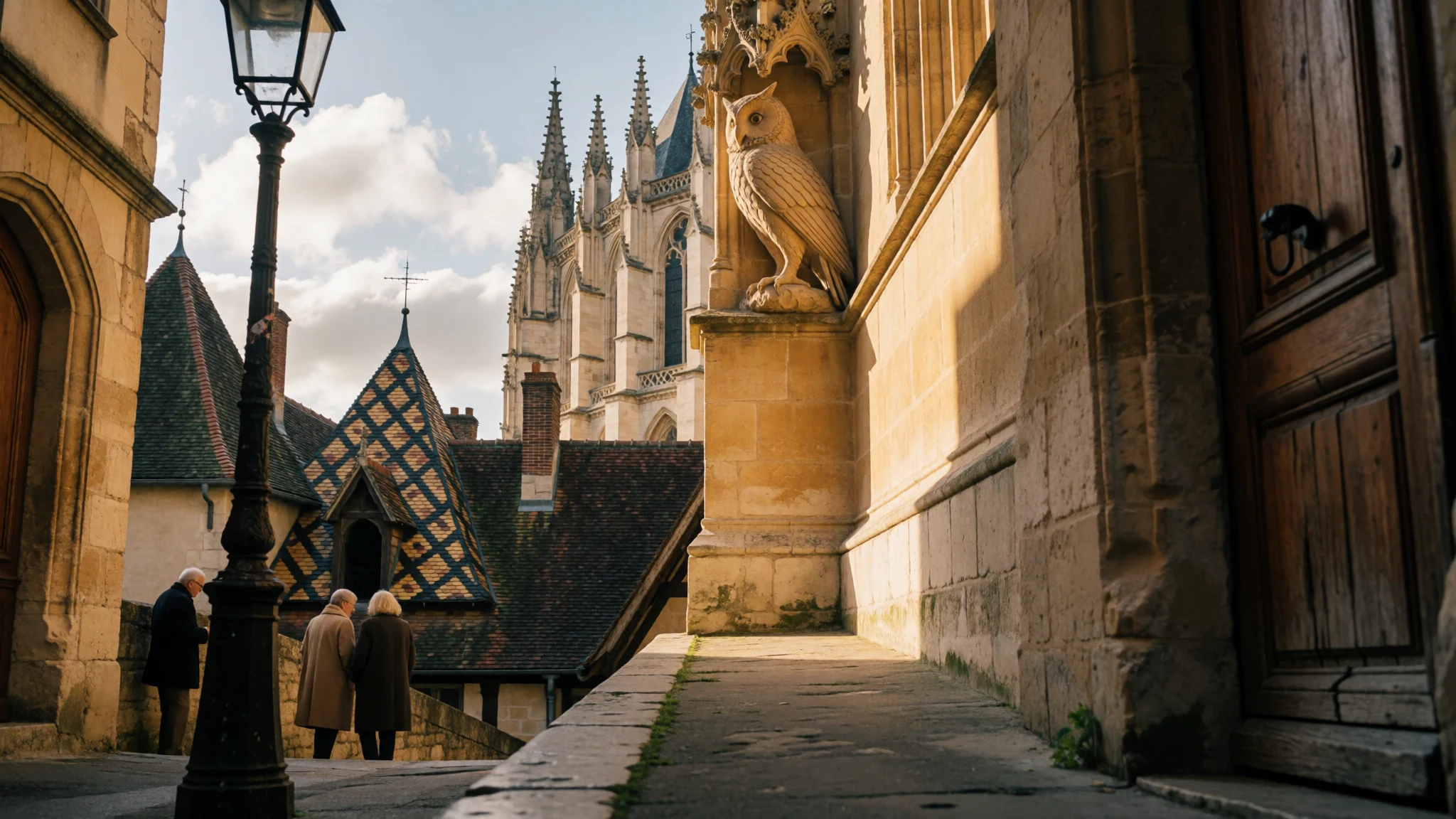
Dijon is a compact Burgundian capital of ducal stone, patterned tile roofs and serious lunches, close to the vineyards and an easy train ride from Paris.
The place
Dijon is the administrative seat of the Côte-d'Or department in eastern France, a city of about 160,000 people at roughly 251 metres above sea level, on open ground just north of the Burgundy wine slopes. It is the most populous commune in the Bourgogne-Franche-Comté region, yet it feels like a regional capital rather than a metropolis: compact, walkable and organised around a historic centre of pedestrian streets. The old core is a patchwork of stone townhouses, church spires and small squares, with the former ducal palace anchoring the middle. Most of the pleasure is in looking up. Many roofs are covered in glazed terracotta tiles in dark green, yellow, red and brown, laid in diamonds and zigzags. Locals call these toits bourguignons, Burgundian polychrome roofs, and they are the quickest way to recognise the region. Between the squares run narrow lanes of old houses that are still lived in, so the centre is a place of daily errands as much as sightseeing. Green space is generous, with public gardens, a botanical garden and tree-lined walks within easy reach of the shops. Dijon also works well as a base, because the railway is quick, the tram is simple and the centre can be crossed on foot in a short walk. Food is the other organising idea. The covered market, the mustard shops, the cheese counters and the long lunches all tie the town to the farms and vineyards around it. A university population keeps the cafés busy outside the holiday months, though August can be quiet as residents leave. The climate is continental in character: warm summers, cold and often grey winters, and changeable springs.
Its story
Dijon's recorded story begins with Neolithic traces in the ground, followed by a Roman settlement called Divio on the road linking Lyon with the north. The name may mean sacred spring, a guess that suits a town with so much water beneath it. Christian tradition credits Saint Benignus, whose historical standing is doubtful, with bringing the faith here and dying for it, and his name survives on the cathedral. The long middle chapter belongs to the Dukes of Burgundy, who ruled from the early eleventh century until the late fifteenth. In those centuries Dijon became rich and politically weighty, a meeting point for artists, scholars and monks, and the duchy played a real part in how medieval Europe shifted toward the early modern world. Their palace survives in altered form and now houses both the town hall and the fine-arts museum. A dramatic episode came in 1513, when Swiss and imperial armies besieged the city. The governor, Louis II de la Trémoille, held out through a violent siege and then negotiated, persuading the attackers to withdraw and to return three hostages held in Switzerland. The town therefore entered later centuries with its buildings largely intact. That continuity explains the present streets, where Capetian, Gothic and Renaissance work stands beside townhouses from the eighteenth century and earlier. Many of those houses are still homes rather than museums, which gives the old centre a lived-in, layered feel that is easy to read on foot.
What to see
- Palace of the Dukes and Estates of Burgundy — Place de la Libération, city centre
The former home of the Burgundian dukes fills one side of Place de la Libération. Its long classical façade looks formal from the square, and the building now shares its rooms between the town hall and the fine-arts museum. Go for the museum collections and the views from the tower.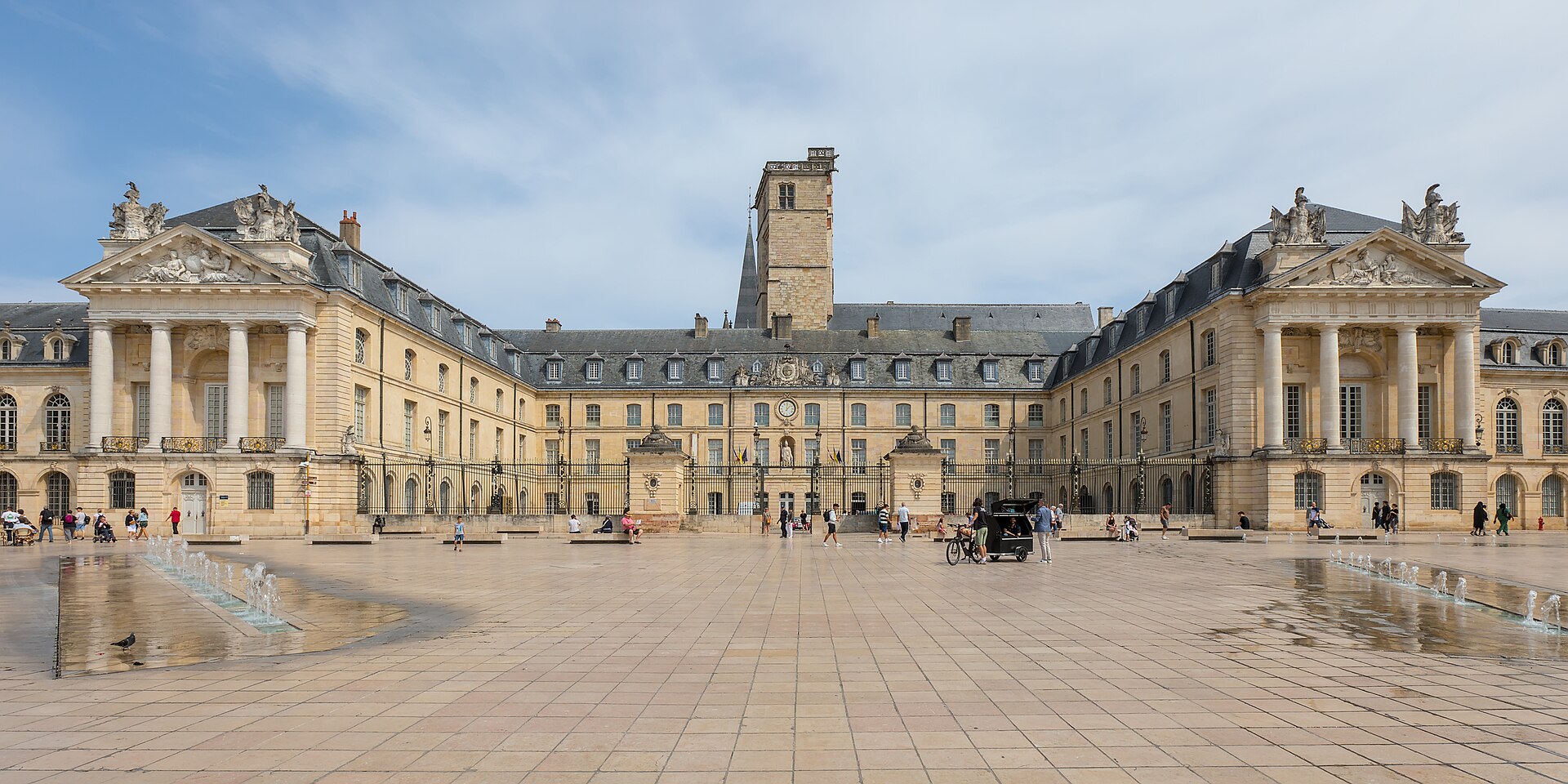
- La Chouette and Notre-Dame — Rue de la Chouette, beside Notre-Dame
A small owl is carved into the side of the Gothic church of Notre-Dame, and its stone has been worn smooth by hands. Local custom says that stroking it with the left hand grants a wish. Visitors queue casually, and the owl also marks the start of a signposted walking route. - Place François Rude — Pedestrian centre, near Rue de la Liberté
This lively square is ringed by old houses, cafés and bars, with a fountain and sculpture at its centre and an old-fashioned carousel at one side. It fills with locals on warm evenings and is one of the pleasanter places to sit and watch the town go by.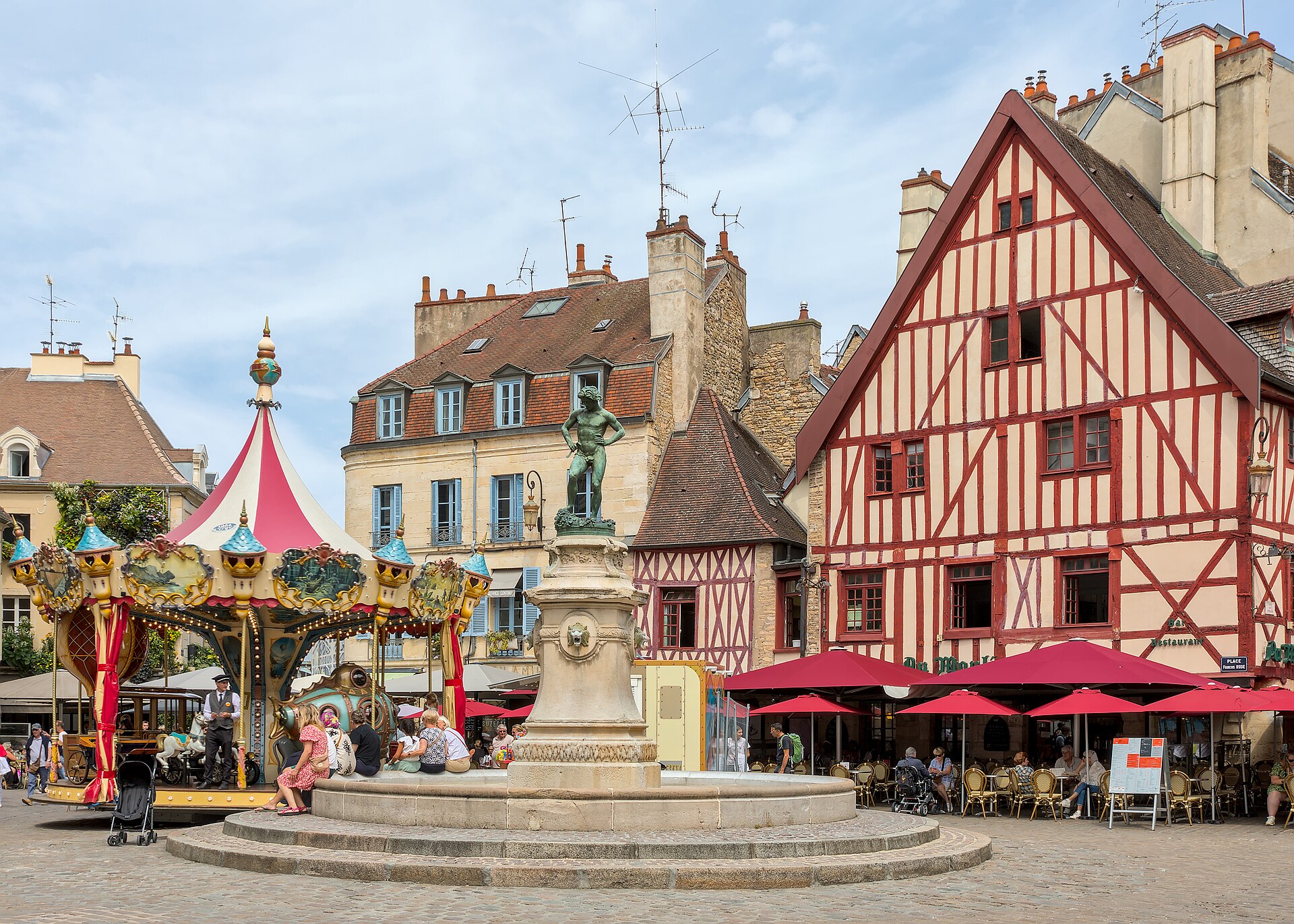
- Les Halles centrales — Old town, near Rue Bannelier
The covered market dates from the nineteenth century, with an iron-framed hall and stalls selling cheese, charcuterie, bread, vegetables and wine. Mornings are the busiest and best, especially on market days, and it is the simplest way to see what Burgundian cooking is built on. - Well of Moses — Champmol, western edge of the centre
Carved in stone around a basin, this sculpture shows prophets in heavy robes, each given a distinct personality and expression. It stands in the grounds of a former Carthusian monastery founded by the dukes, and it repays a slow look at the faces and folds of cloth.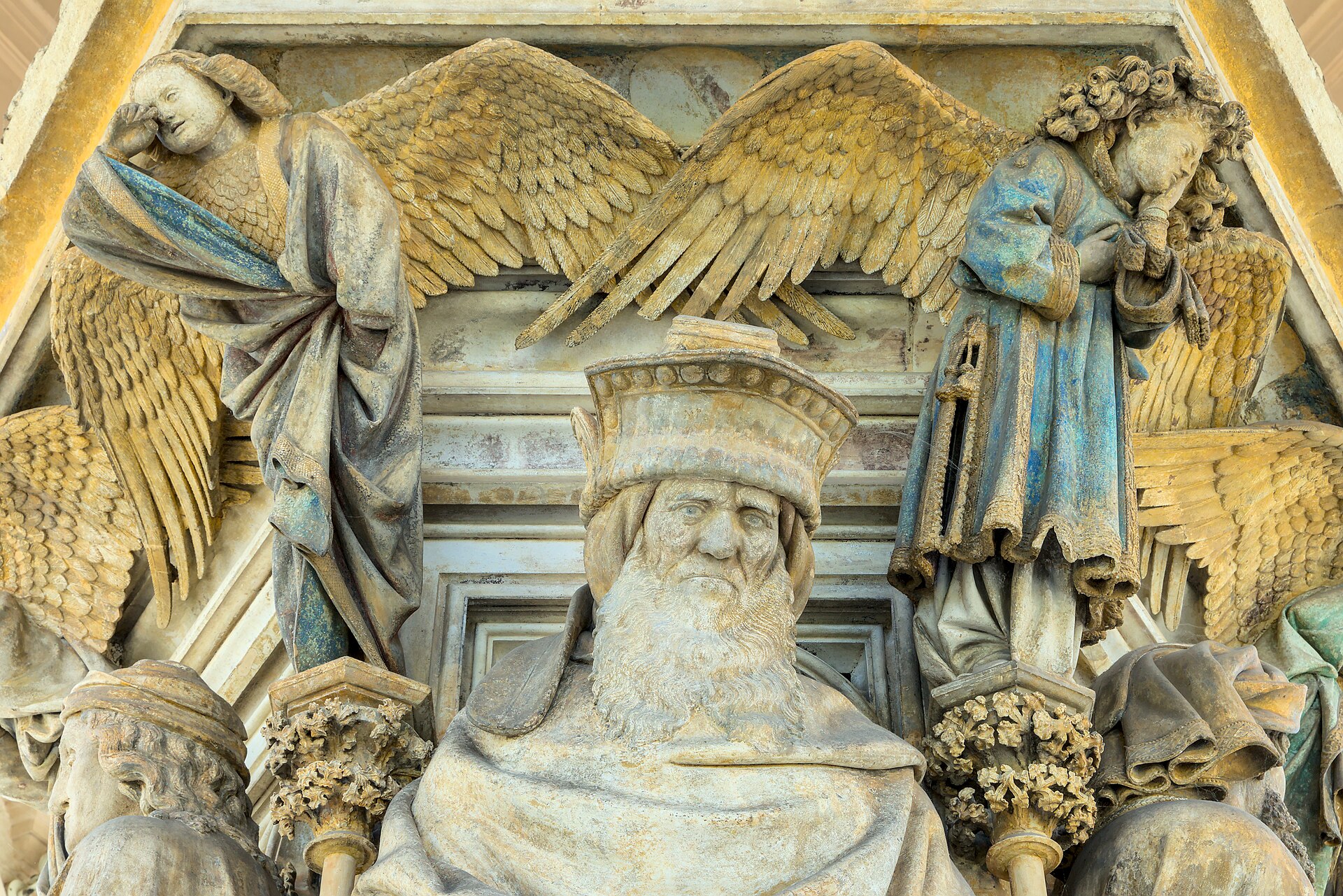
- Jardin Darcy — Between the station and the centre
Between the railway station and the old town, this public garden offers lawns, tree shade and a fountain, which makes it a sensible first or last stop. It is a good place to recover from heat or a long journey before walking into the pedestrian streets.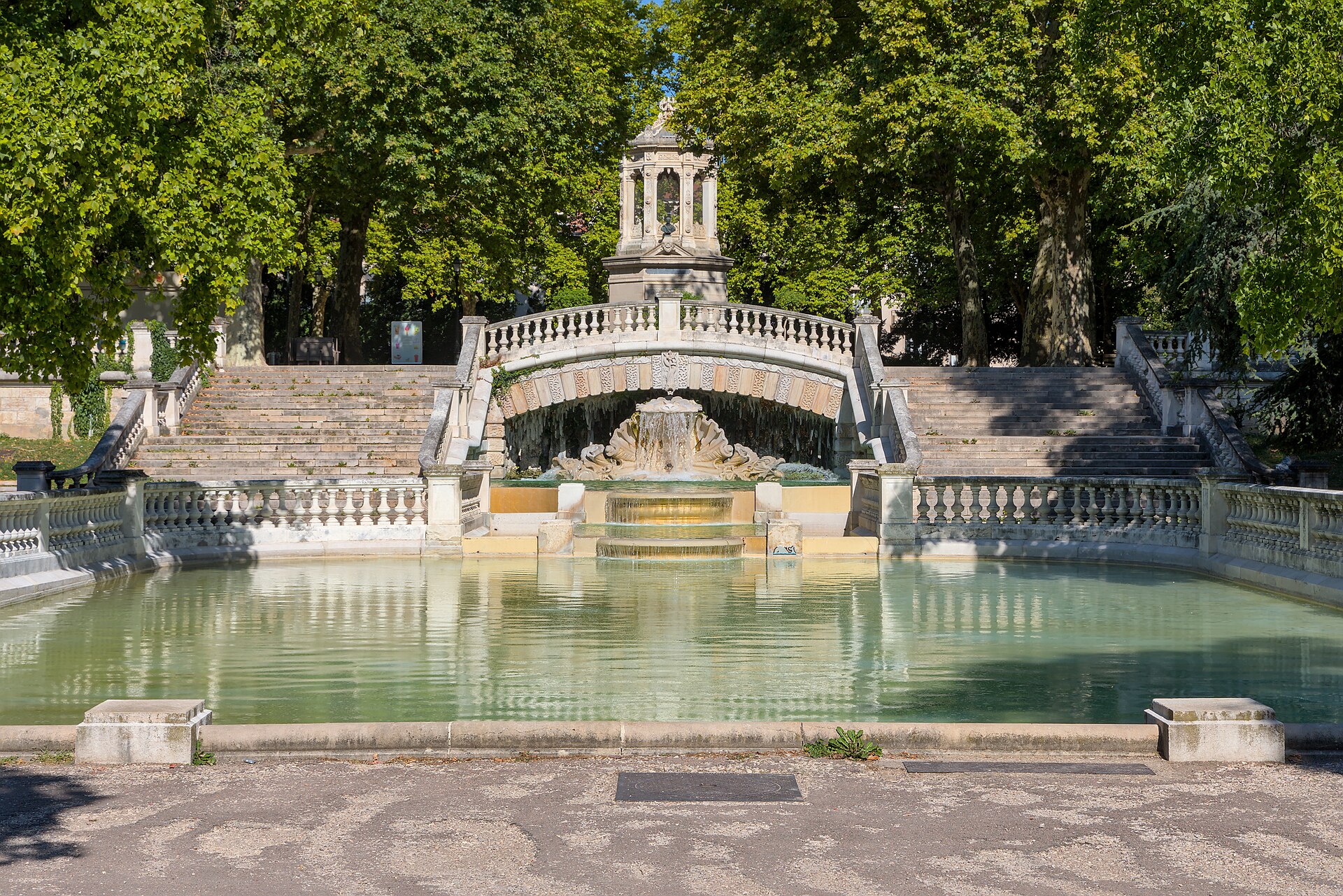
Culture
Dijon's cultural life rests on museums, seasonal fairs and a belief that the table is a civic matter. The fine-arts museum inside the ducal palace is the natural starting point, and the city also has an archaeological museum, a museum of Burgundian life, a sacred-art museum and the Magnin collection in a private townhouse. Le Consortium is a respected contemporary art centre, and the fine-arts school and regional contemporary collection keep living artists in view. Every autumn the International and Gastronomic Fair fills the exhibition halls with large crowds, and every third year the Florissimo flower show brings colour to the parks. Wine shapes the calendar here more than any single monument. The vineyards to the south set the rhythm of tastings, brotherhoods in ceremonial robes, harvest festivities and long Sunday lunches. Burgundy has also given French cooking some of its best-known dishes, and a fixed-price menu is a normal, respectable way to eat, not a tourist trick. Social manners lean formal and a little reserved. People are quiet in cafés, tables are not rushed, and shopkeepers expect a greeting before any request. Churches remain working places of worship, and the cathedral and Notre-Dame are quiet inside. Sunday trading is limited, so many shops close, and the pace of the town slows noticeably. Greet staff with a clear "bonjour" when you enter a shop, café or restaurant, and wait to be shown to a table instead of choosing your own.
What to wear
Dijon has no single dress that visitors are expected to recognise, and the old regional costumes of Burgundy now appear mainly in folklore groups and heritage events. The one traditional garment most people will actually see is ceremonial: the robes worn by wine brotherhoods at tastings and harvest celebrations, usually in deep red and gold and made in heavy cloth. In daily life, people dress in the way of a French provincial city, neat and understated: dark jeans or tailored trousers, plain knitwear, good coats in cold months and clean leather shoes or smart trainers. Colour tends to be restrained, and tracksuits and beachwear look out of place in the centre, particularly at lunch. Visitors should dress for a continental climate. Layers work best in spring and autumn, a proper coat, scarf and waterproof shoes are needed in winter, and light cotton or linen with a hat suits summer afternoons. Streets are often cobbled or uneven, so comfortable shoes with grip matter more than fashion. For churches and the cathedral, cover bare shoulders and avoid very short shorts, and take off hats indoors. A light jacket is useful in restaurants, where air conditioning can be strong and the evening mood is a little smarter than the day.
What to eat
- Dijon mustard — Mustard shops in the pedestrian old town
Mustard is the city's best-known export, a sharp, smooth paste made with local tradition and used in sauces and dressings. Specialist mustard shops in the old town sell it plain and flavoured, in pots and jars that travel well in luggage. - Œufs en meurette — Traditional bistros in the centre
Poached eggs are served in a glossy red-wine sauce with bacon, onions and mushrooms, usually on toasted bread. It is a classic Burgundian starter, rich and savoury, and a good test of whether a bistro takes its regional cooking seriously. - Bœuf bourguignon and coq au vin — Regional restaurants and the fixed-price menus of old-town bistros
Both are slow braises in red wine, with onions, mushrooms and bacon, made to soften tougher cuts. They suit the cold months best and are widely cooked in the region's homes and traditional restaurants, often served with potatoes or noodles. - Époisses and other local cheeses — Cheese counters at Les Halles centrales
Époisses is a soft cow's-milk cheese with a washed, orange rind and a strong smell that is much milder than it announces. Cheese counters offer small tasting portions and will wrap it for the train. - Pain d'épices and cassis — Bakeries, confectioners and café terraces in the centre
Dijon's spiced honey cake is dense, fragrant and keeps well, which makes it an easy gift. Blackcurrant liqueur, crème de cassis, is mixed with white wine as a kir, a typical aperitif before dinner.
Plan it
Best time. May to June and September to October, when days are mild, the terraces are open and the vineyards are green or turning gold. July and August can be hot and quiet in the city, and winters are cold and often grey, though the Christmas season and indoor museums still make a visit worthwhile. The autumn food fair brings crowds and busier hotels.
How long. 2–3
Getting there. Fast TGV trains run from Paris Gare de Lyon to Dijon-Ville in about 1 hour 40 minutes, and Lyon is roughly the same distance by TGV. A few direct TGV services link the centre with Paris Charles de Gaulle airport. From Dijon-Ville station, walk or take the tram into the old town.
Budget. mid
Tips
- Book TGV tickets early for the best fares and check the official rail site for timings.
- Visit Les Halles centrales in the morning, when stalls are fullest.
- Reserve a table for dinner at weekends and during the autumn fair.
- Allow a half-day for a wine-route trip south, with a designated driver or a guided tour.
- Carry a card and a little cash for market stalls and small shops.
Etiquette
- Greet shopkeepers and waiters with "bonjour" before asking for anything.
- Keep voices low in churches and the cathedral, and avoid flash photography.
Nearby
Sources
- Wikidata Q7003 (CC0)
- Wikipedia: Dijon (rev 1383546474) (CC BY-SA 4.0)
- Wikivoyage: Dijon (rev 5425025) (CC BY-SA 4.0)
- Photo: Vue panoramique de Dijon 05 — Christophe.Finot (CC BY-SA 2.5)
- Photo: Dijon Place du Théâtre 03 — François de Dijon (CC BY 3.0)
- Photo: Porte Guillaume, Dijon — Chabe01 (CC BY-SA 4.0)
- Photo: Dijon, Place François Rude — Benjamin Smith (CC BY-SA 1.0)
- Photo: Dijon, Jardin Darcy — Benjamin Smith (CC BY-SA 1.0)
- Photo: Dijon, Puits de Moïse — Benjamin Smith (CC BY-SA 1.0)
- Photo: Tramway de Dijon — Pline (CC BY 3.0)
- Photo: Dijon, Palais des Ducs et des États de Bourgogne — Benjamin Smith (CC BY-SA 1.0)


