Dazu Rock Carvings
Dazu Rock Carvings, People's Republic of China
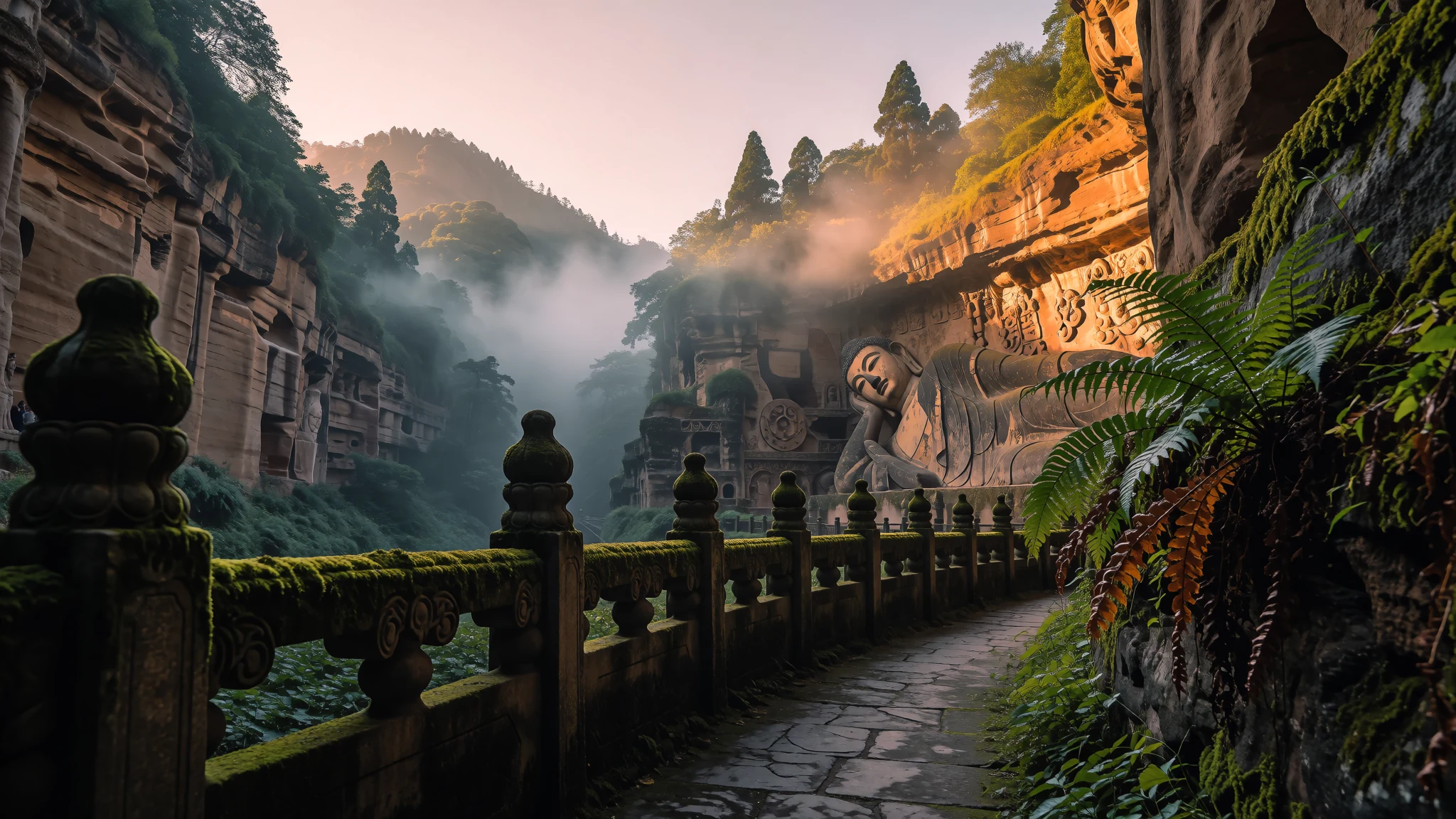
Discover thousands of stunning cliffside statues blending three great Asian philosophies across the steep hillsides of Dazu.
The place
The Dazu Rock Carvings represent a vast outdoor gallery of religious sculpture found throughout the steep hillsides of the Dazu District, located west of the major urban area of Chongqing in the People's Republic of China. This expansive archaeological site encompasses numerous protected zones containing tens of thousands of individual statues alongside extensive stone inscriptions and epigraphs carved directly into sandstone cliffs. Unlike many grotto complexes that rely entirely on enclosed caves, these works feature prominent open-air reliefs cut right into mountain walls, allowing natural light to illuminate the detailed garments, serene expressions, and symbolic gestures of ancient figures. The geographic spread of the carvings covers five primary locations, with the highest concentration of artistic highlights centered around Mount Baoding and Mount Beishan. Visitors navigating the area travel through winding rural roads framed by green hills and agricultural terraces, arriving at cliff faces where stone deities have kept watch over the valleys for centuries. The surrounding landscape experiences distinct seasonal shifts, bringing warm, humid summers and cooler, mist-shrouded winter days that cast a dramatic mood over the ancient rock art. Exploring the district requires moving between scattered mountain clusters, making the journey feel part pilgrimage and part rural excursion through southwestern China's rugged terrain.
Its story
The creation of the Dazu Rock Carvings began during the seventh century, drawing initial inspiration from sculptural traditions that travelled eastward from ancient India. Artistic momentum surged under local leadership in the late ninth century when regional officials initiated ambitious carving projects on Mount Beishan, setting a precedent that local gentry, monastic communities, and ordinary families would follow across successive dynasties. During the twelfth century under the Song dynasty, a dedicated monk named Zhao Zhifeng directed an extraordinary decades-long undertaking on Mount Baoding, shaping the dramatic U-shaped valley into a cohesive narrative of Buddhist teachings. What sets the Dazu collection apart from other regional heritage sites is its inclusive theological vision, weaving together elements of Buddhism, Taoism, and Confucianism into a single artistic dialogue about morality, filial piety, and spiritual release. For a long period in modern history, these delicate cliffside treasures remained largely isolated from international travellers, connected to the nearby town by little more than a muddy rural track until transport links improved later in the twentieth century. Recognition of their immense cultural value culminated in official heritage listing, which highlighted the remarkable preservation of secular and religious life captured in the stone.
What to see
- Baodingshan Rock Carvings — Baoding Mountain
Situated within a dramatic U-shaped valley at Mount Baoding, this location features elaborate Song dynasty sculptures designed by the monk Zhao Zhifeng. The carvings present complex narrative scenes, giant reclining figures, and detailed depictions of moral retribution that unfold sequentially along the cliff walls for visitors walking the valley floor.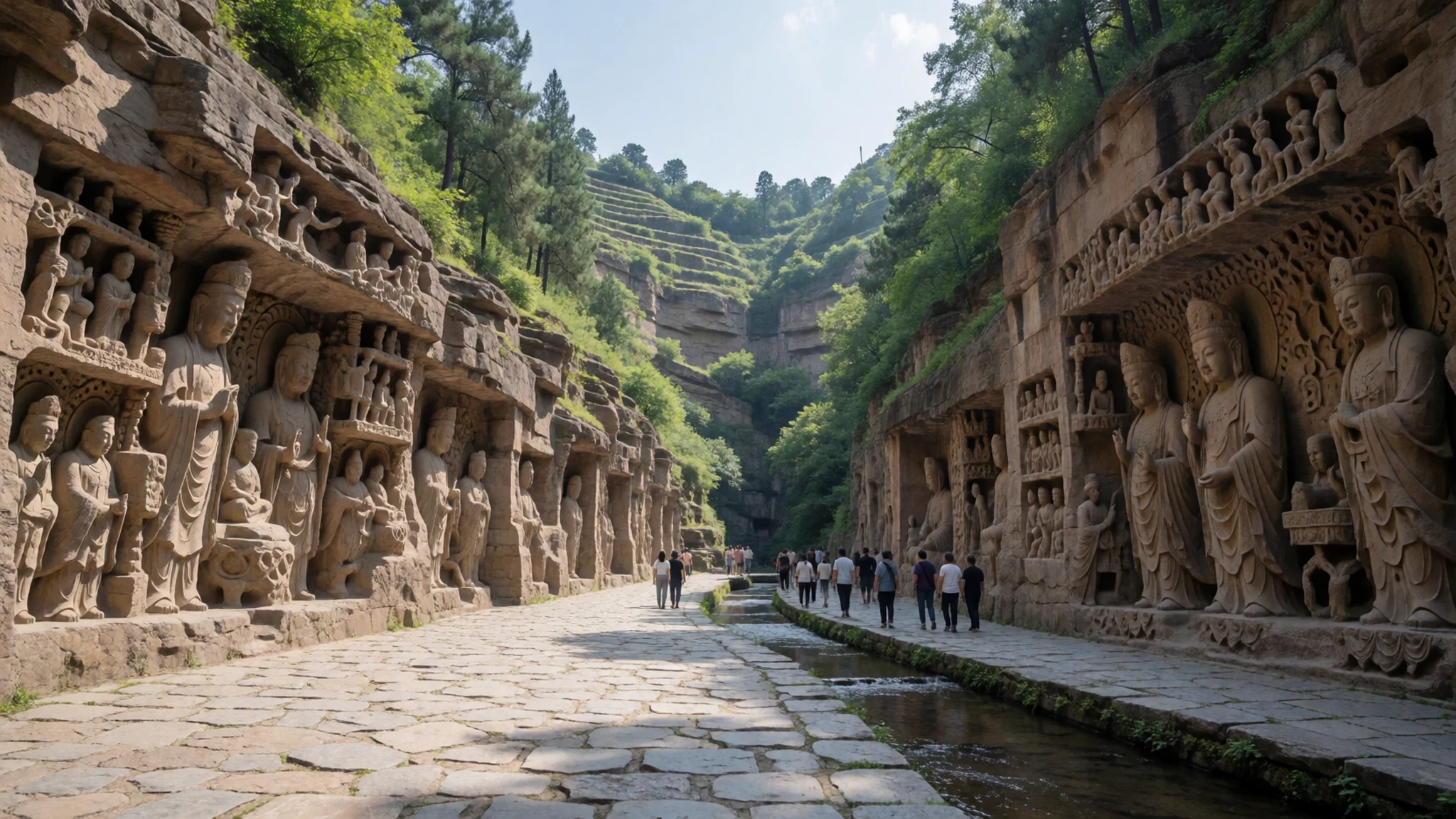
- Beishan Rock Carvings — Beishan
Stretching along a cliff face on North Mountain, this site displays refined sculptures crafted between the ninth and twelfth centuries. The panels highlight Tantric Buddhist iconography and Taoist deities, showcasing delicate hand gestures, ornate crowns, and flowing robes carved into the grey sandstone by generations of devout artisans.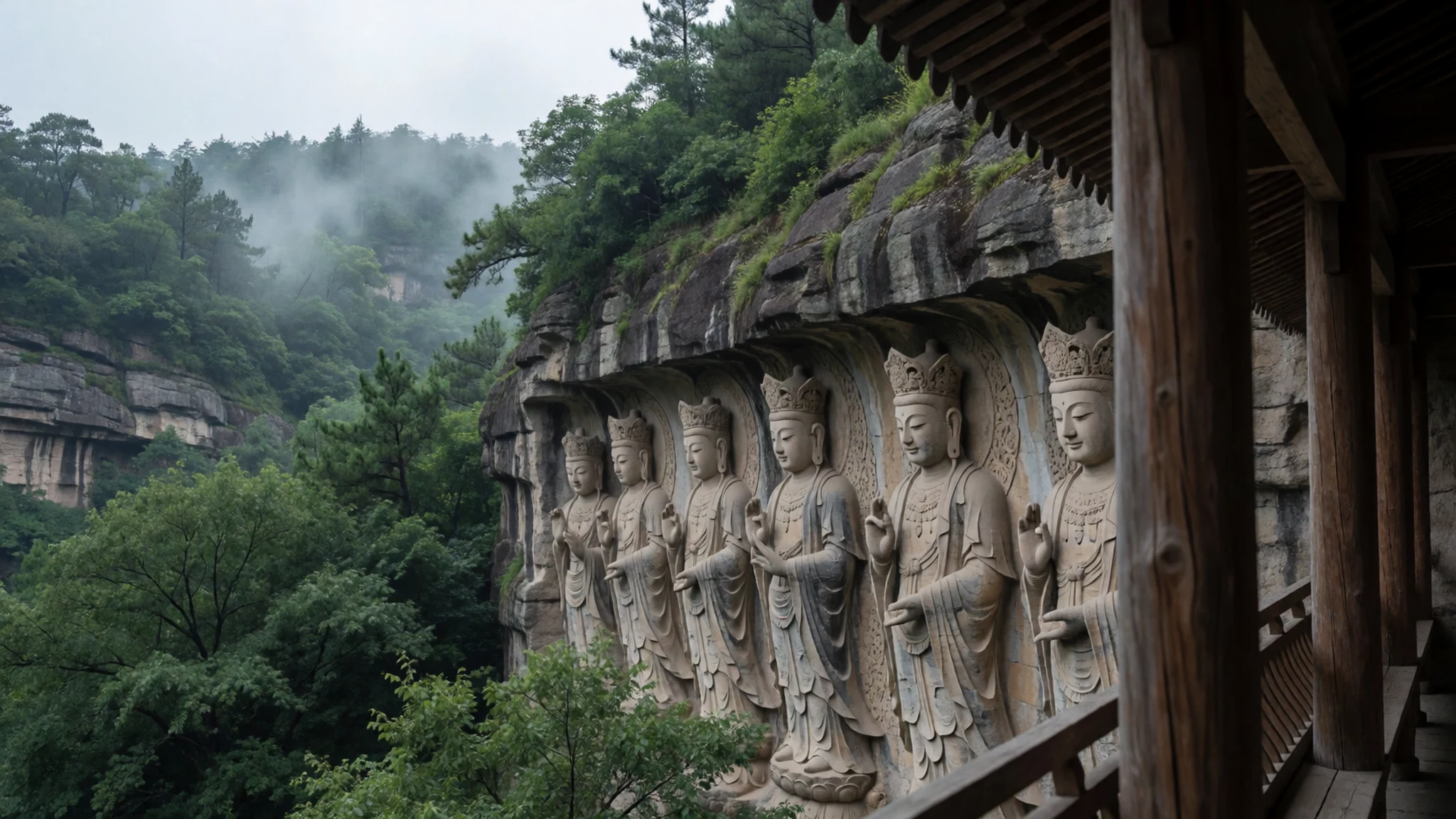
- Dazu Rock Carvings Visitor Centre — Dazu District
Serving as the mandatory arrival point for travellers heading towards the Baodingshan sector, this modern facility handles ticketing formalities and organizes passenger transfers. Visitors process their entry passes here before boarding the shuttle buses that connect the main arrival hub directly to the mountain scenic zones.
- Guangda Temple — Baoding Mountain
Originally established during the Song dynasty, this historic temple forms an integral part of the broader monastic landscape associated with the stone sculptures. The complex provides a quiet space to observe traditional architectural styles and architectural continuity maintained alongside the ancient cliff carvings over many centuries.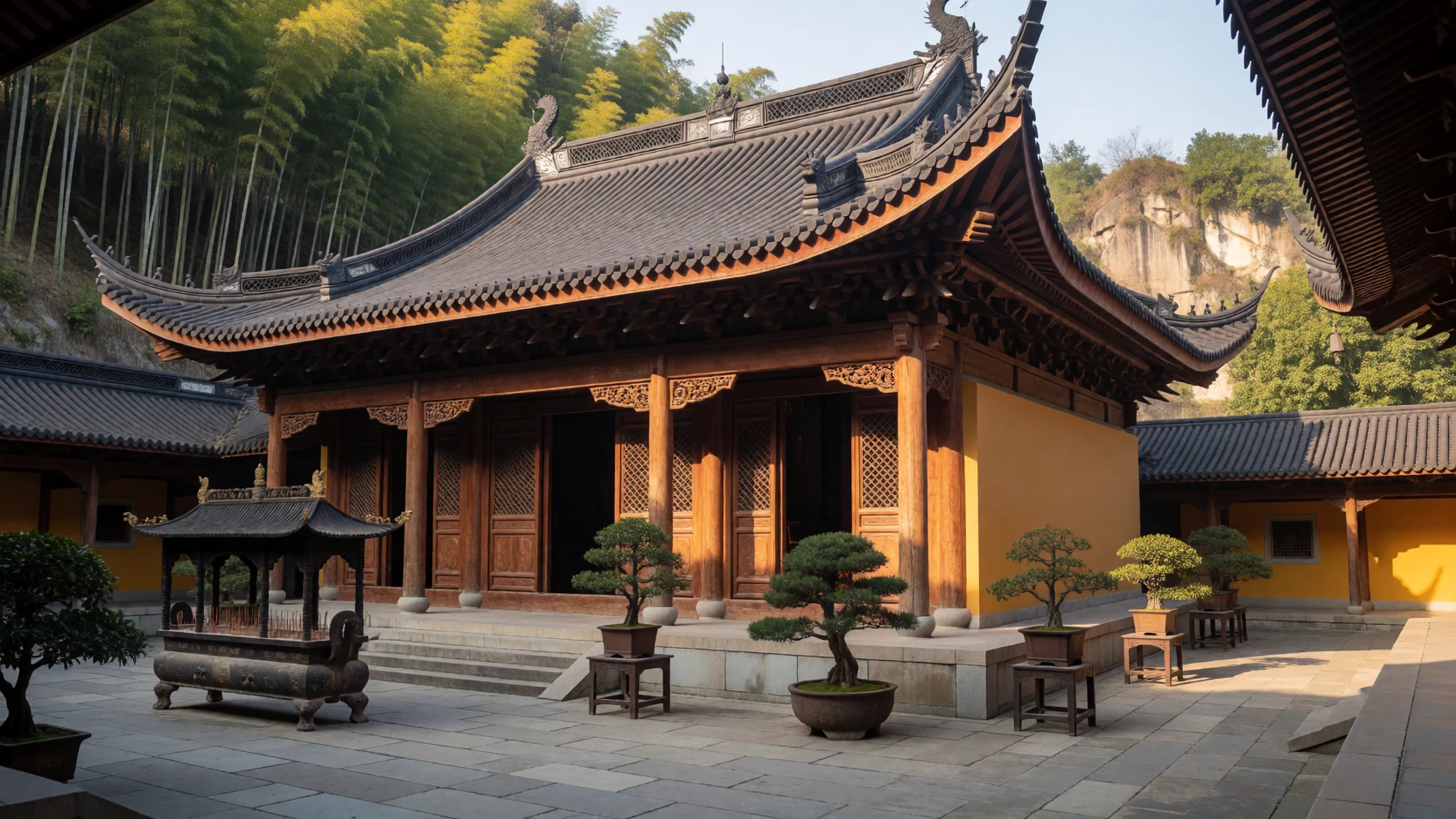
- Shengshou Temple — Baoding Mountain
Positioned near the upper reaches of the Baoding Mountain carvings, this temple dates back to the Southern Song dynasty and functions as a spiritual focal point for the complex. Its halls and courtyards offer travellers a place to pause and reflect before descending into the deep carved valley below.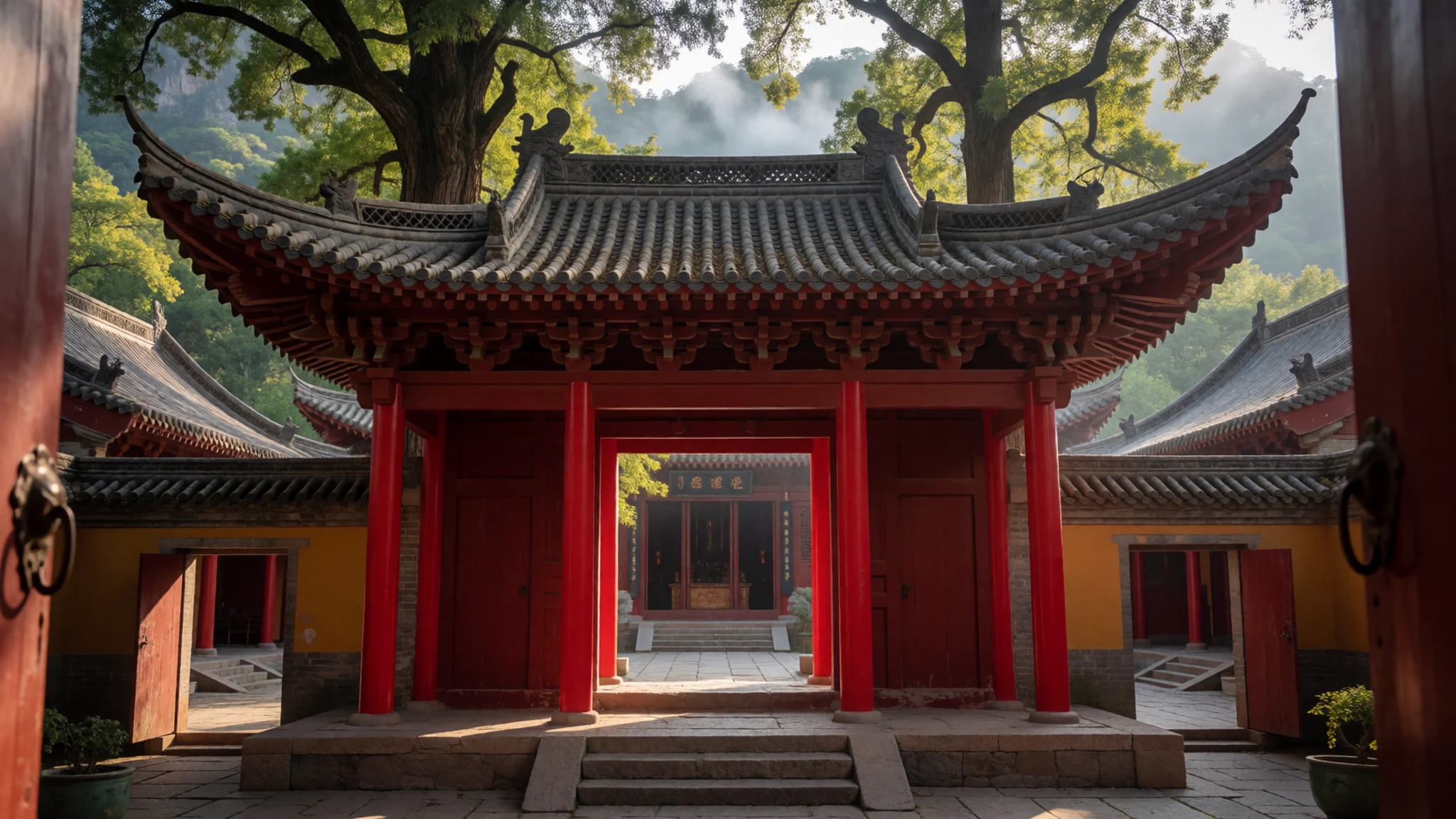
Culture
The cultural fabric of the Dazu District is deeply influenced by the convergence of three great philosophical traditions that shaped its historic cliff carvings: Buddhism, Taoism, and Confucianism. For centuries, local communities lived alongside these sacred hills, integrating moral teachings of filial piety, cosmic harmony, and spiritual mindfulness into daily rural life, traditional festivals, and community gatherings. Visitors exploring the area today will encounter a warm regional hospitality typical of Chongqing Municipality, where lively street markets, tea houses, and family-run eateries form the backbone of daily social interaction. While the region has embraced modern transport and tourism infrastructure, traditional customs regarding respect for sacred spaces remain strong, particularly around ancient temple grounds and protected stone reliefs. When visiting the carved grottoes and temple halls at Dazu, always refrain from touching the ancient sandstone sculptures or climbing on restricted architectural barriers.
What to wear
Traditional dress in the Dazu region historically reflected practical rural Sichuan attire, featuring loose-fitting cotton tunics and trousers designed for comfort during agricultural labour in a warm, humid climate, often complemented by woven bamboo hats for sun protection. Today, locals in Dazu District dress in contemporary casual clothing, mirroring urban trends across China with jeans, comfortable sneakers, and modern jackets dominating the streets and markets. Travellers visiting the Dazu Rock Carvings should prioritize practicality and weather suitability, choosing breathable fabrics for the humid summer months and warm layers for chilly winter days. Because many of the main sights involve extensive outdoor walking on uneven stone pathways, stairs, and hill tracks, sturdy and comfortable walking shoes are essential footwear. Modest dress covering shoulders and knees is recommended when entering active monastic buildings like Guangda Temple and Shengshou Temple out of respect for local religious practices.
What to eat
- You Ting Crucian Carp — Dazu District eateries
A celebrated local delicacy across the Dazu District, this savoury fish dish is prepared with rich regional seasonings and aromatic herbs, offering a tender texture that makes it a must-try culinary experience found in traditional local restaurants.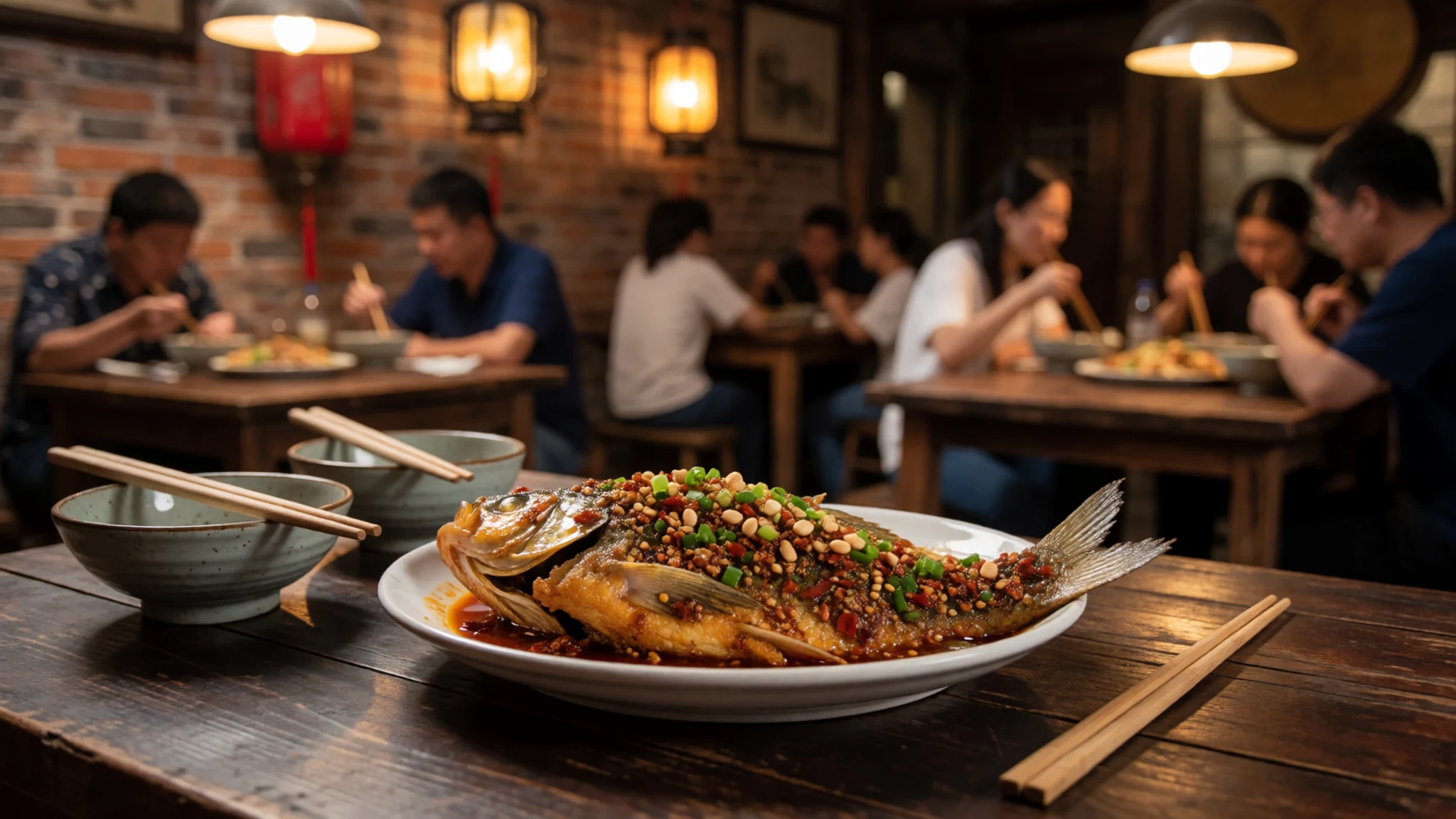
- Jiawei Rabbit Hotpot — Local hotpot restaurants
Rabbit hotpot is a renowned specialty in the region, featuring lean rabbit meat simmered in a bubbling, spice-infused broth loaded with Sichuan peppers and chilli oils that deliver a distinctive numbing warmth.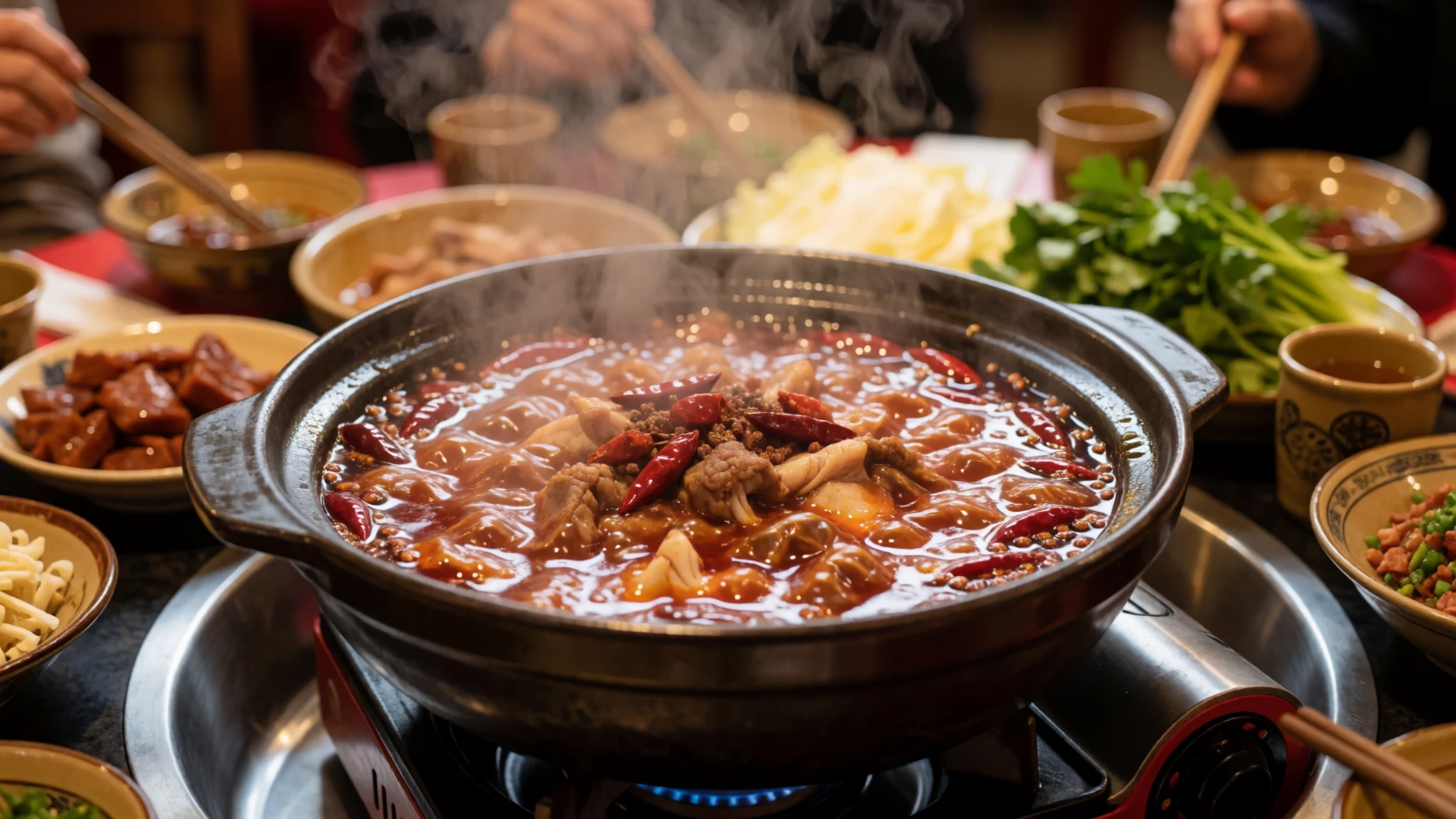
- Wang Shuhua Potatoes — Dazu street food stalls
A popular local comfort food featuring soft, flavourful potato portions tossed with regional spices and herbs, creating a balanced combination of tender textures and savoury seasoning popular at street stalls. - Rong Mama Charcoal BBQ — Evening food stalls and night markets
Traditional charcoal-grilled skewers prepared with various meats and vegetables, cooked over open flames to impart a distinct smoky flavour that sets them apart from standard pan-fried dishes. - Lotus Villa Fresh Lotus Dishes — Lotus Villa restaurant by the water
Situated near scenic water gardens where lotus plants bloom vibrantly in midsummer, this eatery serves seasonal dishes incorporating fresh lotus root, seeds, and petals harvested directly from the surrounding lakes.
Plan it
Best time. March to April and October to November offer the most pleasant weather for exploring the outdoor cliff carvings, while June brings heavy summer rains and August can be intensely hot and humid.
How long. 2
Getting there. Fly into Chongqing Jiangbei International Airport, then connect via metro to Chongqing North Station to take a high-speed train towards the district, or take a direct taxi from the airport.
Budget. mid
Tips
- Arrive at the visitor centre early in the morning to beat the peak tour group crowds from Chongqing.
- Wear comfortable footwear with good grip for walking up and down steep cliffside stairways.
- Carry bottled water and sun protection, as the open-air grotto sites offer limited shade during sunny days.
- Keep some local currency or mobile payment apps ready for purchasing snacks and souvenirs near the scenic areas.
Etiquette
- Never touch the ancient sandstone carvings, as natural skin oils cause permanent damage to the stone.
- Obey all photography regulations posted inside sensitive grotto viewing zones and active temple halls.
Nearby
Sources
- Wikidata Q651278 (CC0)
- Wikipedia (rev 1365860000) (CC-BY-SA 4.0)
- Wikivoyage (rev 5400902) (CC-BY-SA 4.0)