Cumae
Cumae, Italy
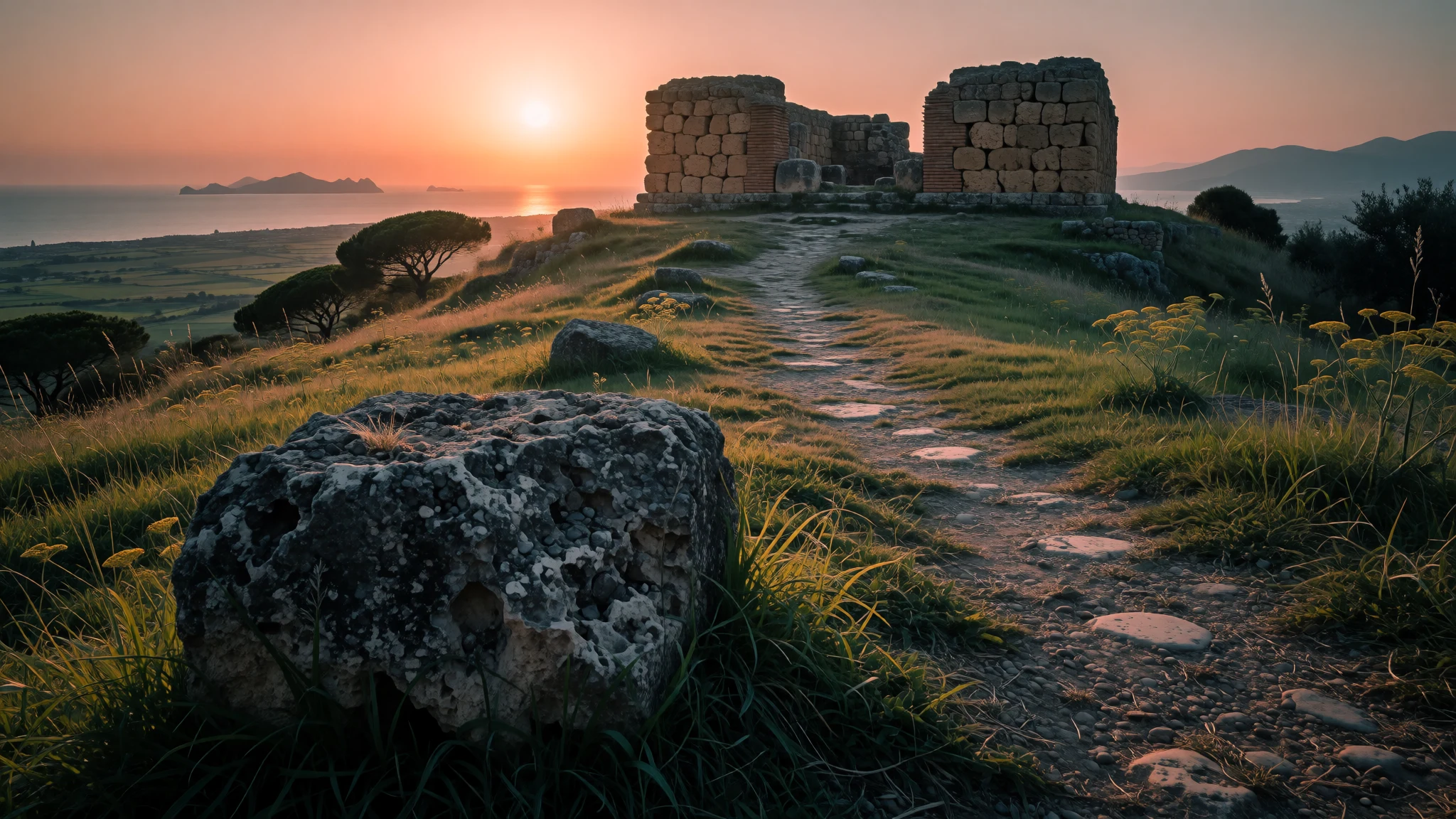
Cumae is the mainland Italian foothold of the early Greeks, where a hilltop acropolis, a legendary prophetess's cave and Roman ruins share one headland.
The place
Cumae sits on the coast of Campania, west of Naples, in the volcanic landscape of the Phlegraean Fields. The ruins spread over a low hill and the flatter ground beneath it, and they are split between the municipalities of Pozzuoli and Bacoli, which is why signs and maps sometimes disagree about where the site begins. The settlement was the first Greek colony on the Italian mainland, founded by settlers from the island of Euboea in the 8th century BCE, and it later grew into a prosperous Roman town. What remains is a loose scatter rather than a tidy ruin: an acropolis on the summit with temple foundations and sea views, a lower city of streets and public buildings among pines and scrub, and a set of tunnels and galleries cut into the rock. The setting is part of the appeal. Water lies on one side, the farmland of the Campanian plain on the other, and the cones and lakes of the old volcanic district all around. It is a place for slow walking rather than quick ticking-off, and it draws far fewer people than Pompeii or Herculaneum, though school groups and tour coaches can fill the main paths on spring mornings. Summer heat on the exposed hilltop is real, and shade is thin. Many of the statues, vases and inscriptions once found here now sit in the archaeological museum of the Phlegraean Fields, housed in the Aragonese Castle nearby. Pairing the two gives the site a context that bare foundations cannot.
Its story
Cumae's story begins before the Greeks. Excavations have turned up traces of a Bronze Age community that lived in pits, and later houses of Iron Age peoples whom the Greeks called Ausones and Opici. Their territory was known as Opicia. Into this landscape came settlers from the Euboean cities of Eretria and Chalcis in the 8th century BCE, having already established themselves on nearby Ischia, then called Pithecusae. Two leaders are named as joint founders, Megasthenes of Chalcis and Hippocles of Cyme. They chose a hill that the sea guarded on one side while the rich soil of the Campanian plain lay on the other, a position that suited both trade by ship and farming. The colony prospered quickly. Within the same century it was strong enough to send out settlers of its own, one group to found Zancle in Sicily and another to found Tritaea in Achaea, according to what the traveller Pausanias was told. Later Cumae fell under Roman control and became a wealthy town, and the Romans kept its prophetic legend alive. The Sibyl of Cumae, a priestess said to speak for Apollo, appears in Roman literature, including Virgil's Aeneid, where the hero Aeneas consults her before descending to the underworld. The volcanic lake of Avernus nearby was thought to be an entrance to that underworld, which gave the whole district a faintly sinister reputation. Cumae declined over the centuries that followed, and archaeologists have been uncovering it in stages since the late nineteenth century.
What to see
- Acropolis and Temple of Jupiter — Acropolis, Cuma
The summit of Monte di Cuma holds the foundations of the Temple of Jupiter, reused in later centuries, plus remains of a second sanctuary traditionally linked with Apollo. The climb is gentle, shade is scarce, and the view across the sea and the plain explains why Greek settlers chose this hill as their stronghold.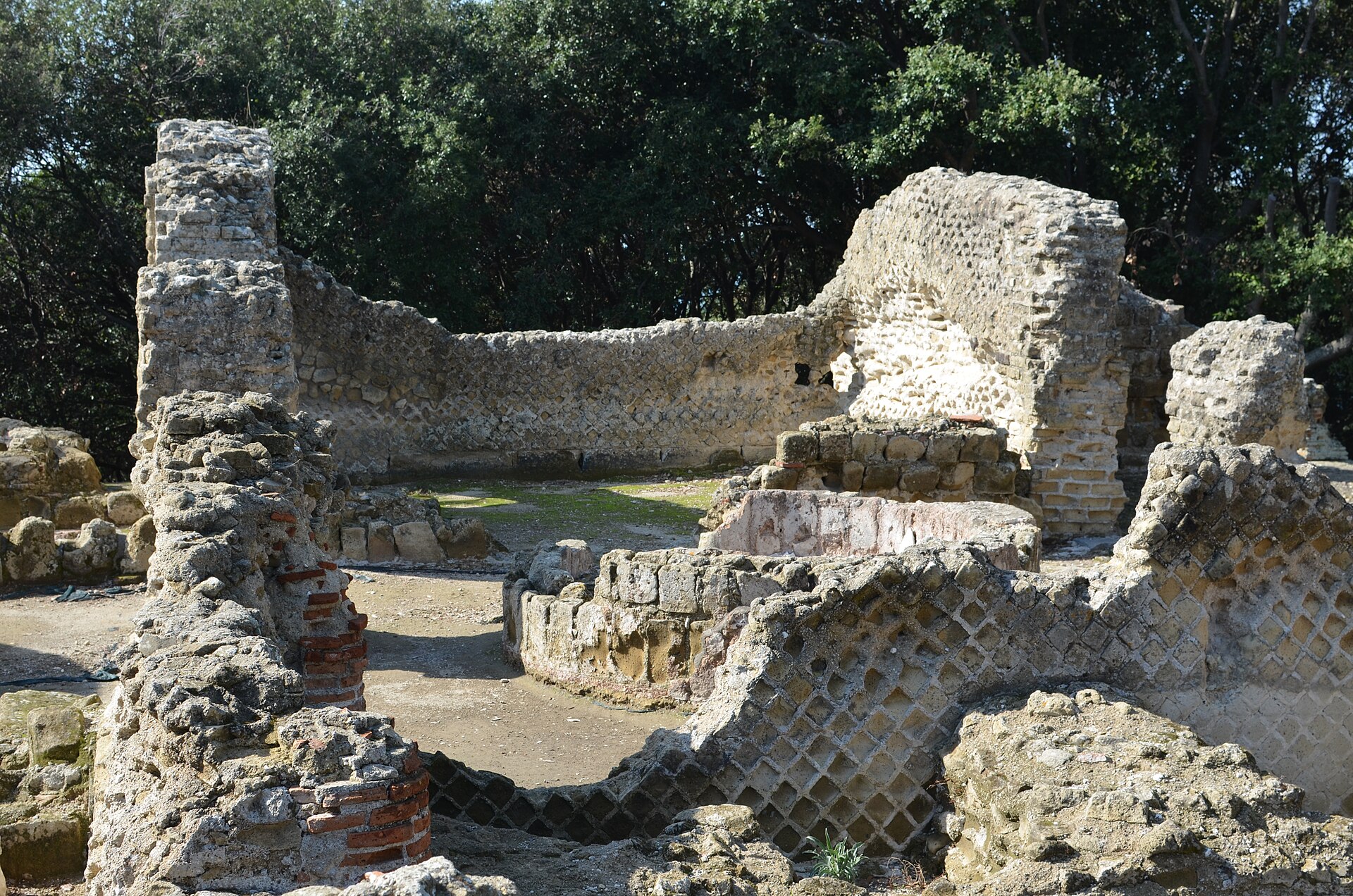
- Cave of the Sibyl — Below the acropolis, Cuma
Cut into the rock below the acropolis, a long gallery with a trapezoidal profile and side openings that let in slanting light is thought to have been the seat of the Cumaean Sibyl. Scholars debate that label, but the corridor is atmospheric, cool in summer, and a fitting place to recall Virgil's account.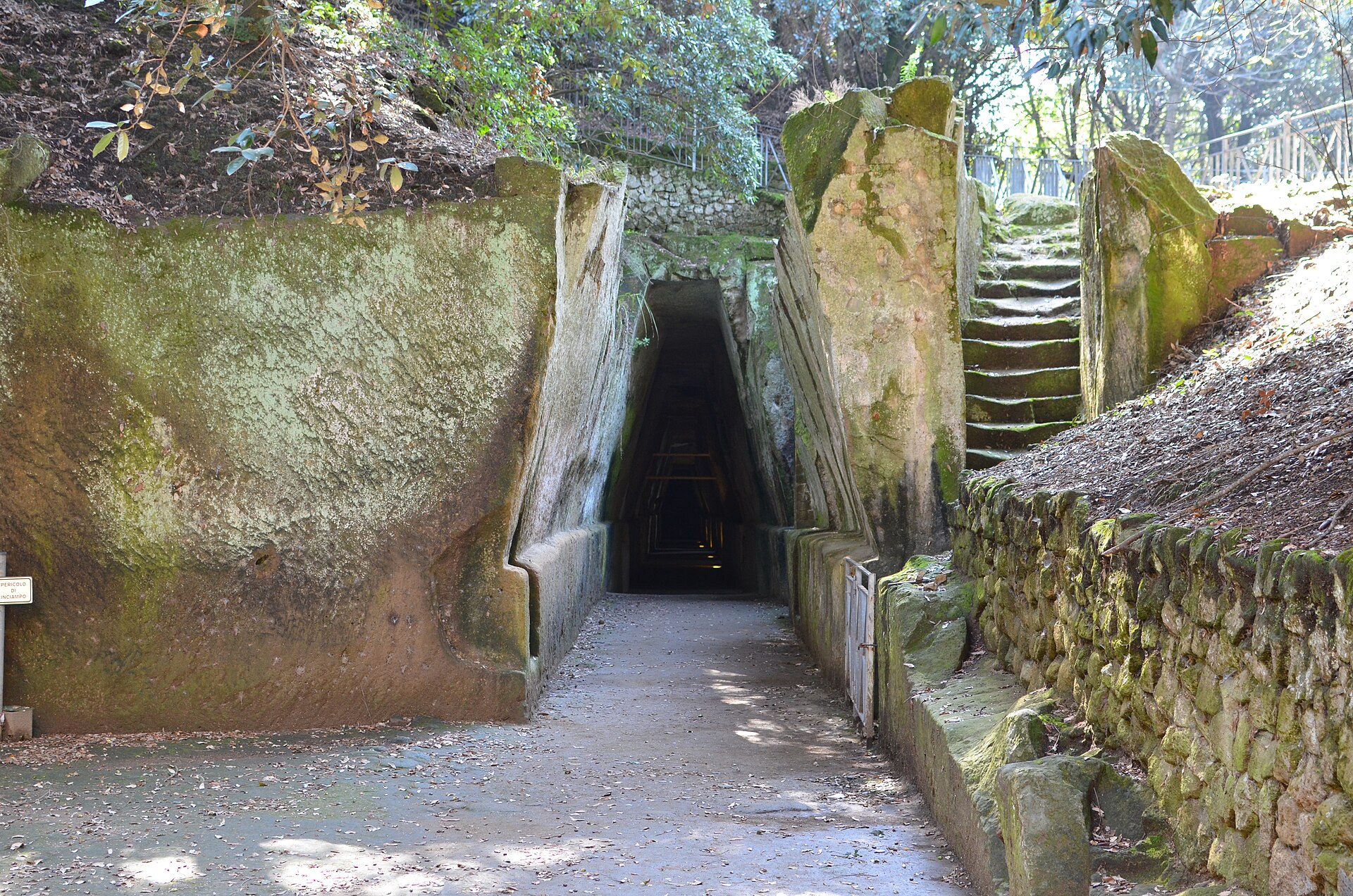
- The lower city — Lower city, Cuma
Below the acropolis, the lower city spreads across flatter ground, with paved streets, a forum area and the bases of public buildings among pines and wild grass. It is quieter than the hilltop, and from the acropolis edge the street layout and the coastline can be read together, which makes the plan of the town easy to grasp.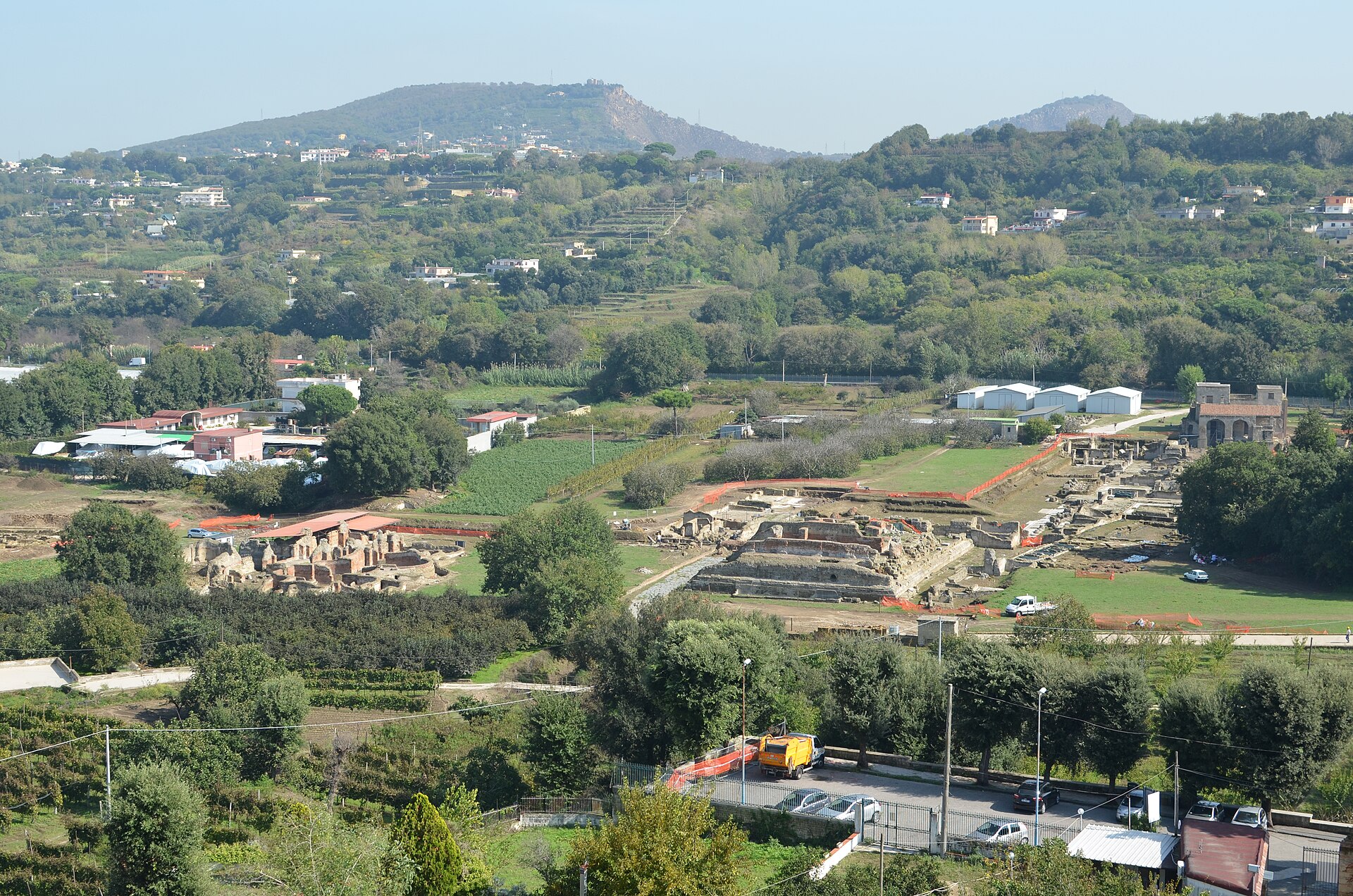
- Crypta Romana — Beneath the acropolis, Cuma
A Roman-era underground passage cuts through the hill beneath the acropolis, a reminder of the engineering effort that went into taming the rock. Floors can be damp and uneven. Access arrangements change from season to season, so check the official site before planning a visit around it.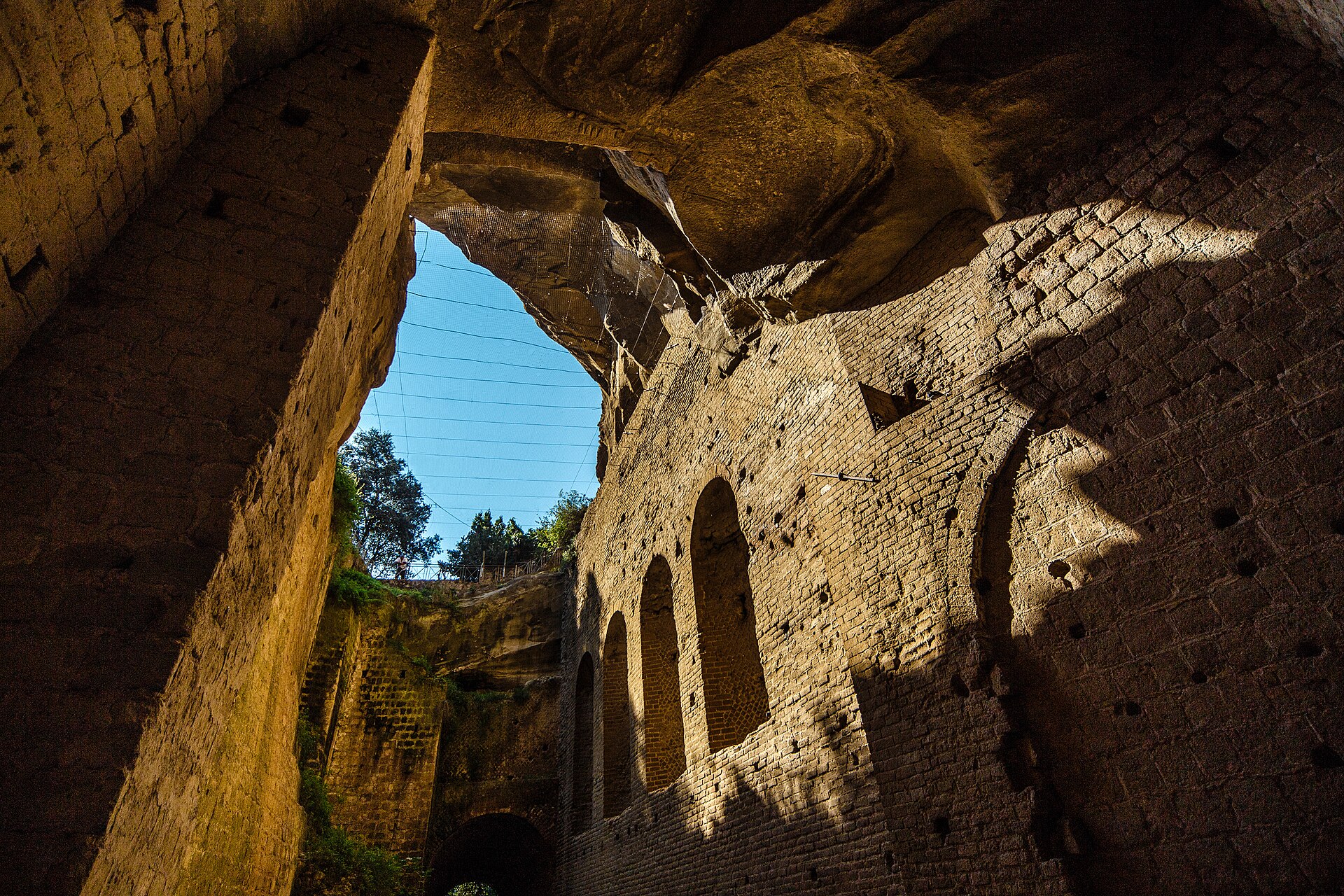
- Grotta di Cocceio and Arco Felice — Near Lake Avernus and Arco Felice
A long Roman tunnel runs through the hills towards Lake Avernus, linking the Cumae area with the lake district, and its mouth near Arco Felice is a striking sight for anyone who enjoys ancient engineering. Opening is irregular, so check the official site or local notices before making a special trip.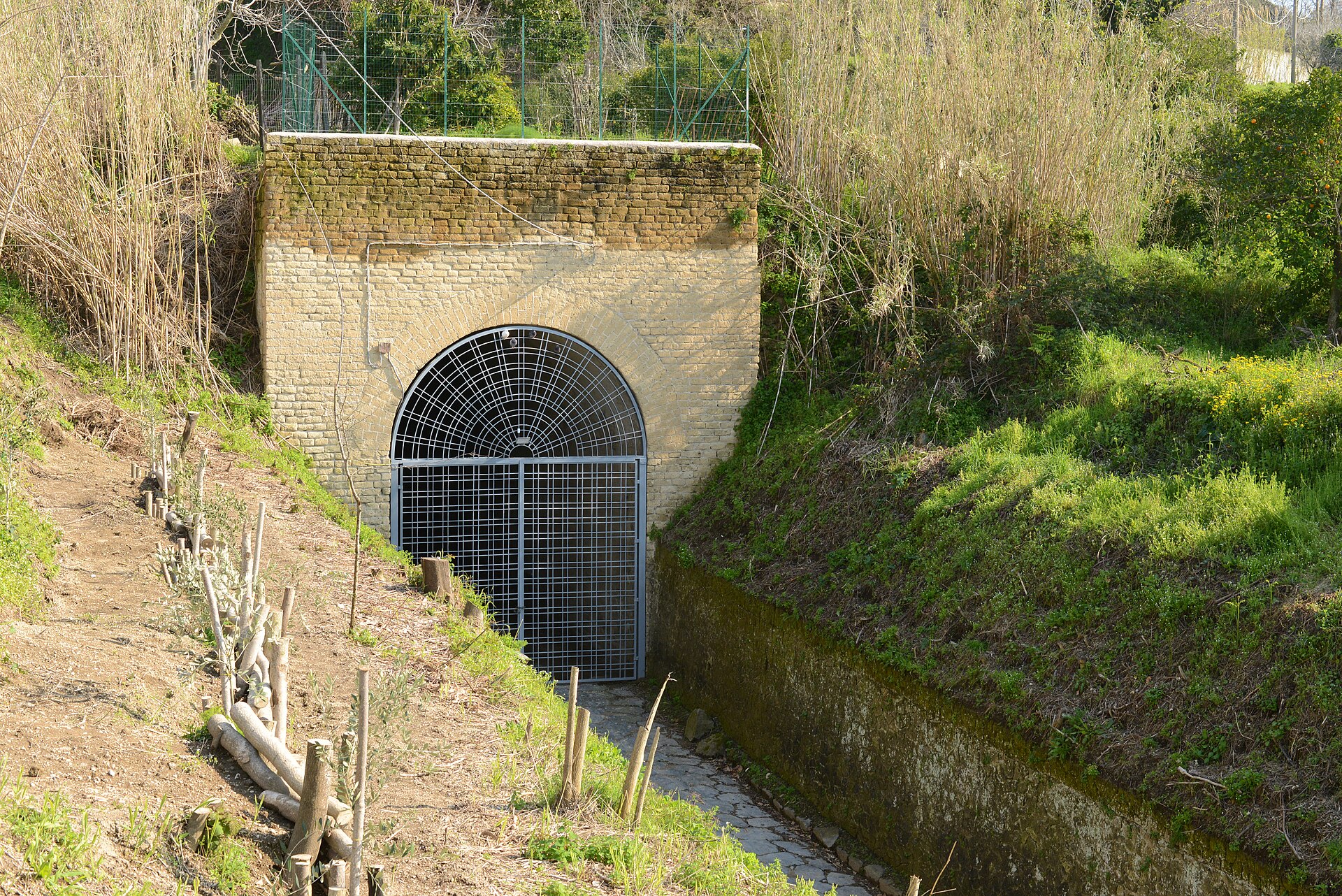
- Archaeological Museum of the Phlegraean Fields — Aragonese Castle, Baia (Bacoli)
The museum inside the Aragonese Castle holds many finds from Cumae, including sculpture such as the Athena shown in the museum photographs. A visit before or after the site turns bare foundations into people, offerings and everyday objects. Check the official site for opening arrangements.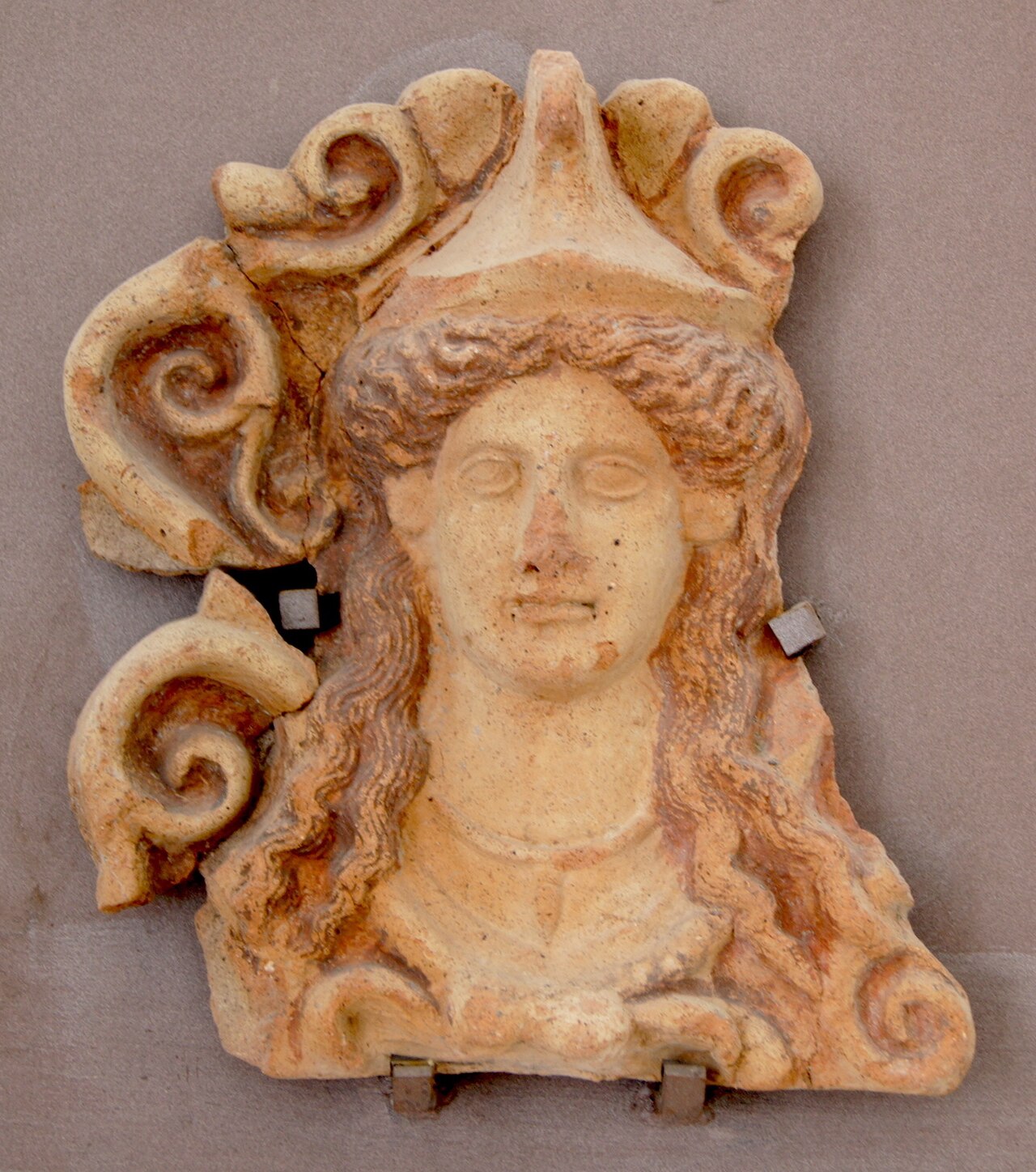
Culture
Culture at Cumae is mostly a matter of stories carried across layers of time. The Greek founders brought their gods, with Apollo central to the traditions of the acropolis, and the Sibyl became the site's lasting figure: a priestess who delivered prophecies, remembered by the Romans as the guide who helped Aeneas reach the underworld. Writers from antiquity onward kept returning to her, and her image travelled into medieval and Renaissance European art. Around the site, modern life belongs to Campania, where Neapolitan speech, family-run farms and a strong feeling for local food shape the daily rhythm. The neighbouring towns of Pozzuoli and Bacoli have their own fishing and shellfish habits, and the Phlegraean district has long mixed myth with geology, since steaming ground and crater lakes made the underworld feel close. Visitors who enjoy classical literature find the place rewarding, because the sixth book of the Aeneid reads differently once the cave and the lake of Avernus are in view. Those who do not know the poem still pick up the atmosphere from the quiet, the pines and the sea. Local guides are usually keen to explain which walls are Greek, which Roman and which later repair, and a short guided walk is often worth taking. In the cave and tunnels, keep voices low and stay on the marked routes, and never climb on the ancient walls or pocket stones and pottery fragments as souvenirs.
What to wear
Fashion around Cumae has no single regional costume to point to, so the story runs through the wider Greek, Roman and Campanian past. Greek settlers wore the chiton and himation, draped garments of wool and linen, and Roman citizens later added the tunic and the wool toga. Campanian folk dress, seen mostly at festivals and in dance groups, uses embroidered bodices, full skirts, lace and bright cotton and wool, often shown at tarantella performances. Day to day, people in Naples and the coastal towns dress in a smart-casual way: ironed shirts, linen in warm months, good leather shoes and a taste for tailoring that the Neapolitan tradition is known for. Beach clothes belong on the beach, and locals rarely wear them in town. A visitor to the ruins should plan for sun and uneven ground. Wear a hat, sunglasses and light, breathable layers, and carry a thin jacket or scarf because the tunnels and the cave stay cool. Shoes matter most: trainers or walking sandals with a firm sole cope with worn stone, steps and loose gravel, while flip-flops and smooth soles do not. Shoulders and knees need covering only if the day also includes a church in Pozzuoli, Bacoli or Naples.
What to eat
- Mozzarella di bufala — Dairy shops and market stalls across the Campanian plain
Fresh buffalo-milk cheese from Campania, soft and slightly elastic, with a milky liquid that seeps out when it is cut. Look for the consortium mark on the wrapper to avoid imitations, and eat it soon after buying, ideally within a day or two. - Pizza napoletana — Pizzerias in Pozzuoli, Bacoli and Naples
The local pizza has a soft, blistered edge and a thin, wet centre, topped simply with tomato, mozzarella and basil. It is eaten fresh from a wood-fired oven and often folded by hand at lunch, and it is the everyday meal of the region. - Spaghetti alle vongole — Fish restaurants and seafront eateries in Bacoli and Pozzuoli
Spaghetti with small clams, olive oil, garlic and parsley, sometimes with a few cherry tomatoes. The sea nearby makes it a natural order after a morning among the ruins, and the sauce should be loose and salty rather than heavy. - Frittura di paranza — Harbour-side friggitorie and fish restaurants
A mixed fry of small fish, squid and shrimp, lightly floured and served hot in a paper cone or on a plate with lemon. It suits a walk along the harbour and is best eaten straight away while crisp. - Sfogliatella — Pasticcerie and cafés in Pozzuoli, Bacoli and Naples
A shell-shaped pastry with many crisp layers, filled with sweetened ricotta and semolina, sometimes flavoured with citrus peel. The riccia version is crunchy, while the frolla version has a smoother shortcrust casing. It makes a good mid-morning snack with coffee.
Plan it
Best time. April–May and September–October bring mild days that suit walking on an exposed hilltop. July and August are hot with little shade, and winter can be wet and windy, though the site is then at its quietest.
How long. 1
Getting there. Fly to Naples international airport, or to Rome Fiumicino and take a fast train to Naples. From Naples, local trains on the Cumana line run towards Torregaveta, then a short bus or taxi ride reaches the site; check current services before travelling.
Budget. low
Tips
- Check the official site, cir.campania.beniculturali.it/archeocuma, for opening arrangements, ticket details and which tunnels are open
- Start early in warm months, since the acropolis has little shade
- Carry water and wear shoes with grip for worn stone and steps
- Combine Cumae with the museum at Baia or Lake Avernus for a fuller day
- Take a little cash for cafés and small shops, though larger places accept cards
Etiquette
- Stay on marked paths and off the ancient walls
- Keep voices low in the cave and tunnels
- Do not remove stones or pottery fragments from the site
Nearby
Sources
- Wikidata Q243456 (CC0)
- Wikipedia: Cumae (rev 1371788246) (CC BY-SA 4.0)
- Wikivoyage: Campania (rev 5220549) (CC BY-SA 4.0)
- Photo: Cumae acropolis seen from lower city (AlexanderVanLoon) (CC BY 3.0)
- Photo: Scavi archeologici di Cuma (Saverio.G) (CC BY-SA 4.0)
- Photo: Cumae lower city seen from acropolis (AlexanderVanLoon) (CC BY 3.0)
- Photo: Cumae Cave of the Sibyl (AlexanderVanLoon) (CC BY 3.0)
- Photo: Cumae Temple of Jupiter back (AlexanderVanLoon) (CC BY 3.0)
- Photo: Grotta di Cocceio, exit via Arco Felice Vecchio (Ruthven) (CC0 1.0)
- Photo: Galleria Crypta Romana, Cuma (Cimmino G) (CC BY-SA 4.0)
- Photo: Athena from Cumae (Rjdeadly) (CC BY-SA 4.0)


