Crespi d'Adda
Crespi d'Adda, Italy
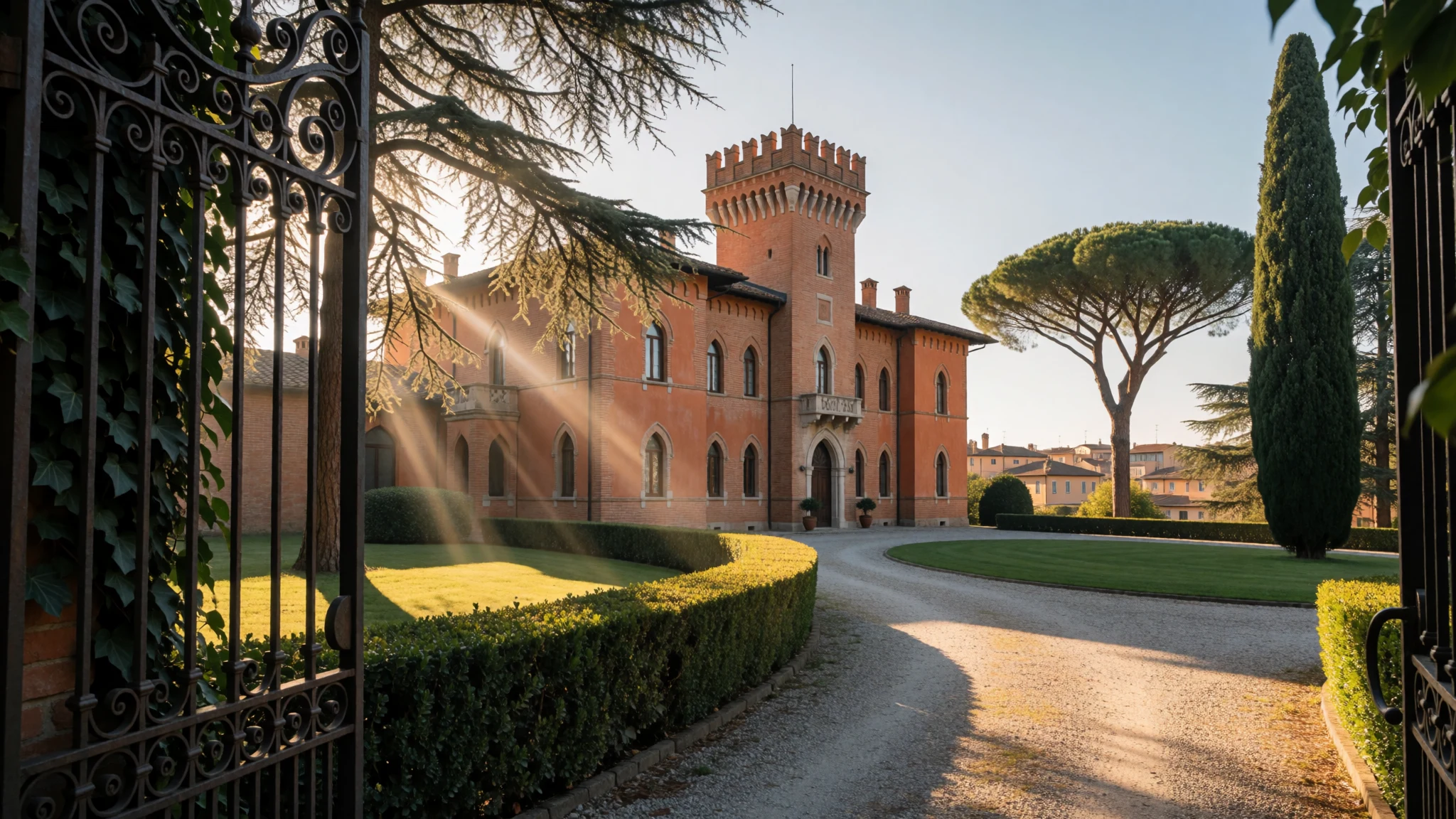
Crespi d'Adda is a rare, still-intact company town where industry, housing and daily life were designed together.
The place
Crespi d'Adda is a historic village (a frazione of Capriate San Gervasio) in northern Italy, in the province of Bergamo, Lombardy. It sits on the eastern shore of the river Adda, not far from the regional border with Milan—an easy rhythm to read in the landscape: water, factories, then long straight lines of workers’ homes.
What makes the place unusual is that the settlement was planned as a whole. The industrial side and the residential side were built with the idea that workers needed more than jobs; there were community services and carefully laid-out roads, with a tree-lined avenue separating production from housing. Even today, much of the site remains intact, and parts of it still function for industrial uses.
Because it’s on UNESCO’s World Heritage list since 1995, the village gets visitors, but it does not feel like a theme park. The biggest crowds tend to be day-trippers arriving in good weather, while quieter hours are usually tied to early mornings and weekdays. The ground is walkable, but the area can feel spread out—so comfortable shoes help, particularly near the river where you get wind off the water.
For planning, it helps to think like this: Crespi d'Adda is best approached as a neighbourhood you wander slowly, stopping to look at how the buildings face one another, how the streets line up, and how the “company town” concept shows up in bricks, gates and street corners.
Its story
Crespi d'Adda began with cotton manufacturing. In 1869, Cristoforo Benigno Crespi, a textile manufacturer, bought the valley between the rivers Brembo and Adda south of Capriate with the intention of building a cotton mill on the Adda’s banks. The settlement that grew beside it was founded in 1877, and from the start the idea was to pair work with a full daily environment.
The mill was associated with modern spinning, weaving and finishing processes, and power for production came via a hydroelectric plant on the Adda river at Trezzo, built around 1906. This mattered for the lived feel of the village: electric light was used, shaping both factory operations and the broader settlement.
The village itself took form as a planned workers’ community. Along parallel roads east of the factory, houses were laid out in ordered rows inspired by English models. A chequer-board plan is part of the street pattern, and a tree-lined avenue runs between the industrial zone and the homes, creating a clear visual separation between “production” and “residence”. Architects and engineers contributed to the design and construction over about fifty years.
What survives today is the physical logic of that period: factory-side buildings, offices and the residences facing one another, plus key community institutions such as a church and a cemetery. The story doesn’t end as a perfect victory, though. Changing economic and social conditions have threatened the village’s long-term survival, even as parts of the site remain used for industrial purposes and the UNESCO status keeps attention on its upkeep.
What to see
- Factory-and-residence layout (workers’ town grid) — Between the industrial buildings and the workers’ housing streets
Crespi d'Adda is best understood by walking the straight lines. Factory-side structures sit beside the orderly streets of workers’ homes, with the separation between work and living made visible through the street plan and setbacks. Look for how the housing lines face the industrial zone.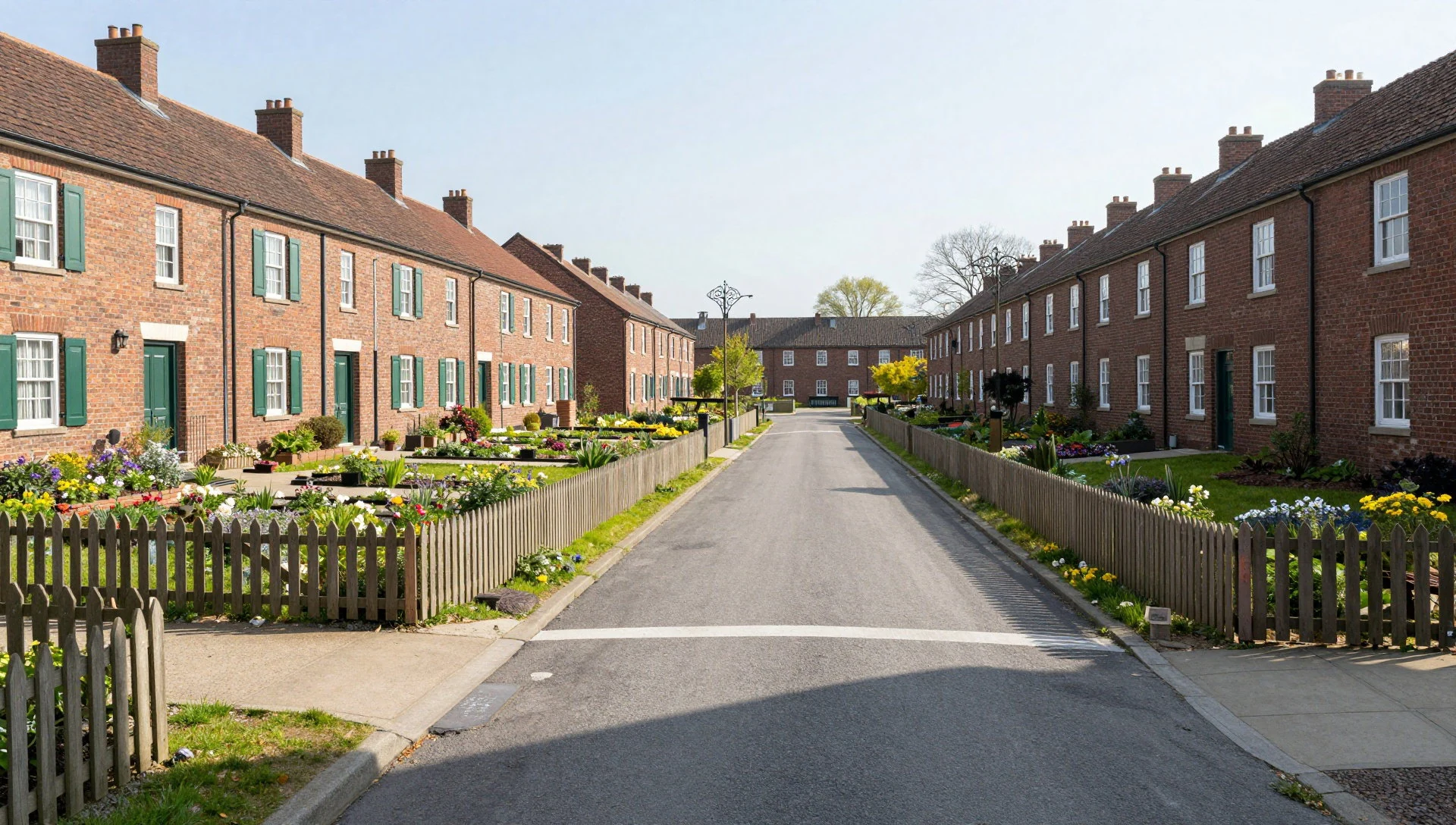
- The Crespi residence (“castle”) — Near the centre of the planned settlement, by the residential side
Crespi d'Adda’s residence is often described as a “castle”, and it reads that way in the village context: solid, formal and clearly placed within the industrial model-town world. It’s a strong contrast to the workers’ housing rows, and an easy checkpoint for orientation while wandering.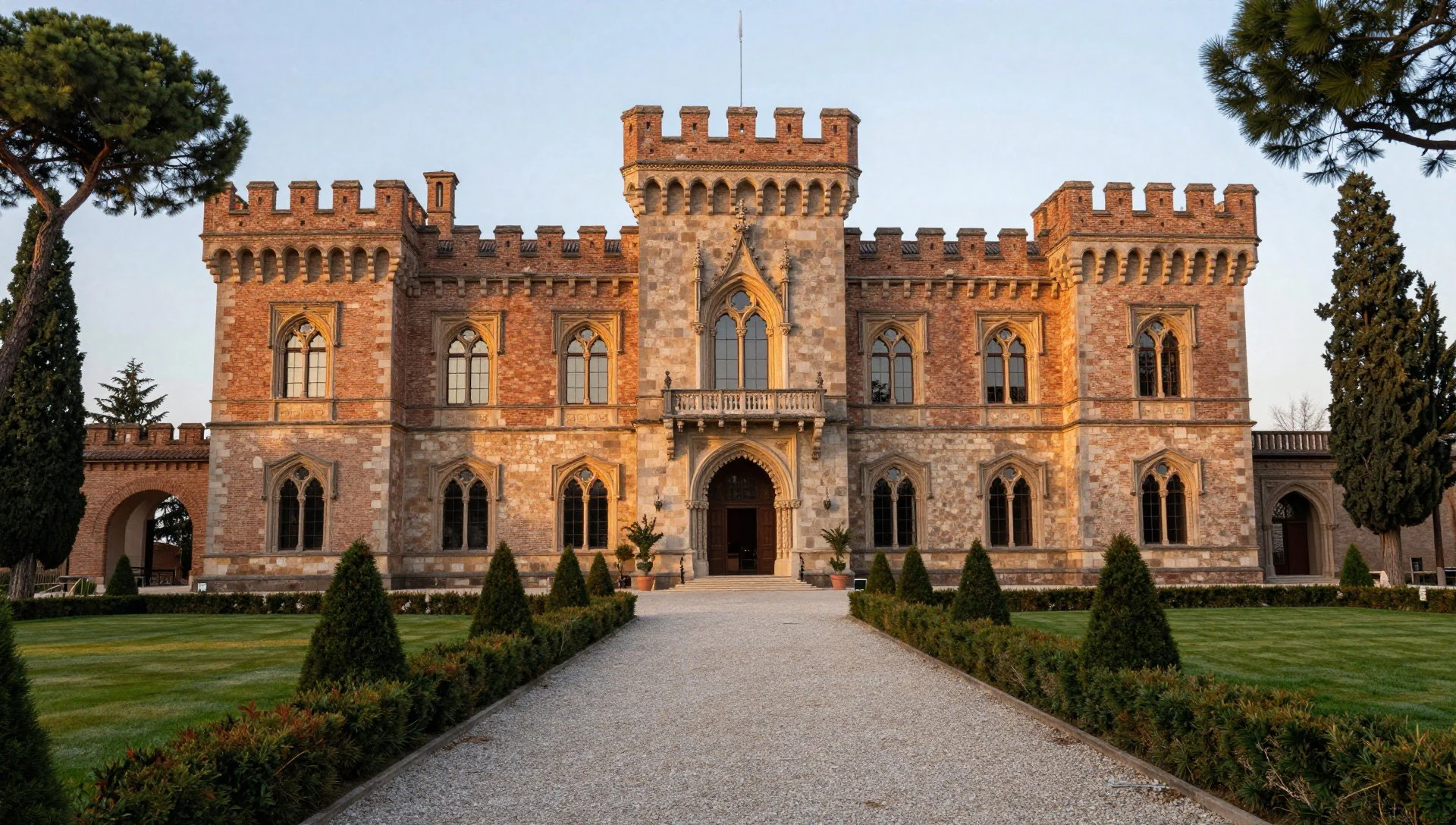
- Church in the village — Within the workers’ residential area of the village
The church at Crespi d'Adda is part of the original idea that the settlement would cover more than work. Its presence anchors the community feel, and when the light is good the simple exterior shapes stand out clearly against the ordered streets. It’s a calm pause in the walk.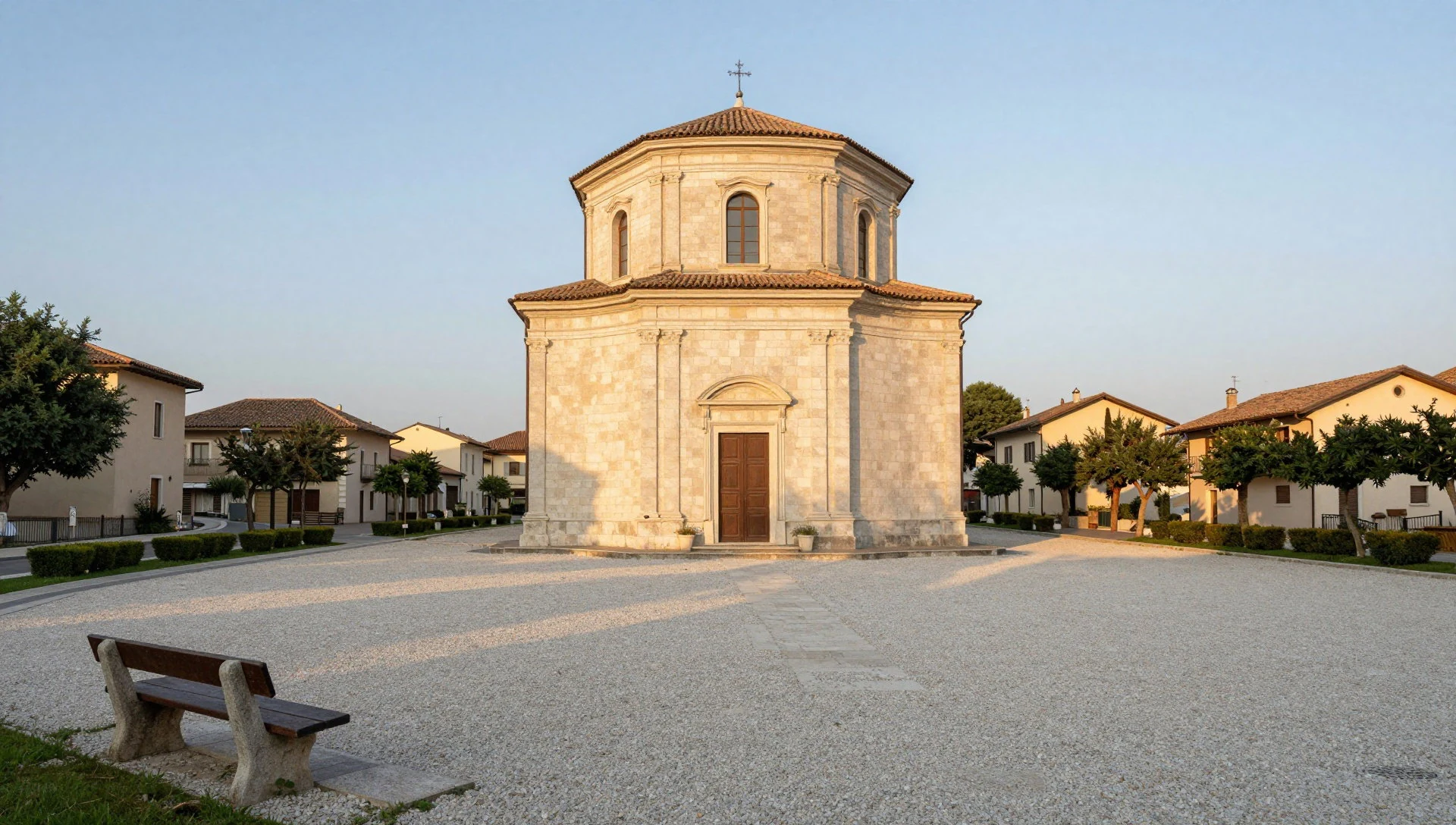
- Factory-side offices and hall entrance — Factory/administrative side of the settlement
Crespi d'Adda has office buildings and an entrance area that underline the village’s industrial purpose. The façades and openings communicate administration and access, and they’re useful for seeing how “company town” planning bundled work, management and movement in one compact space.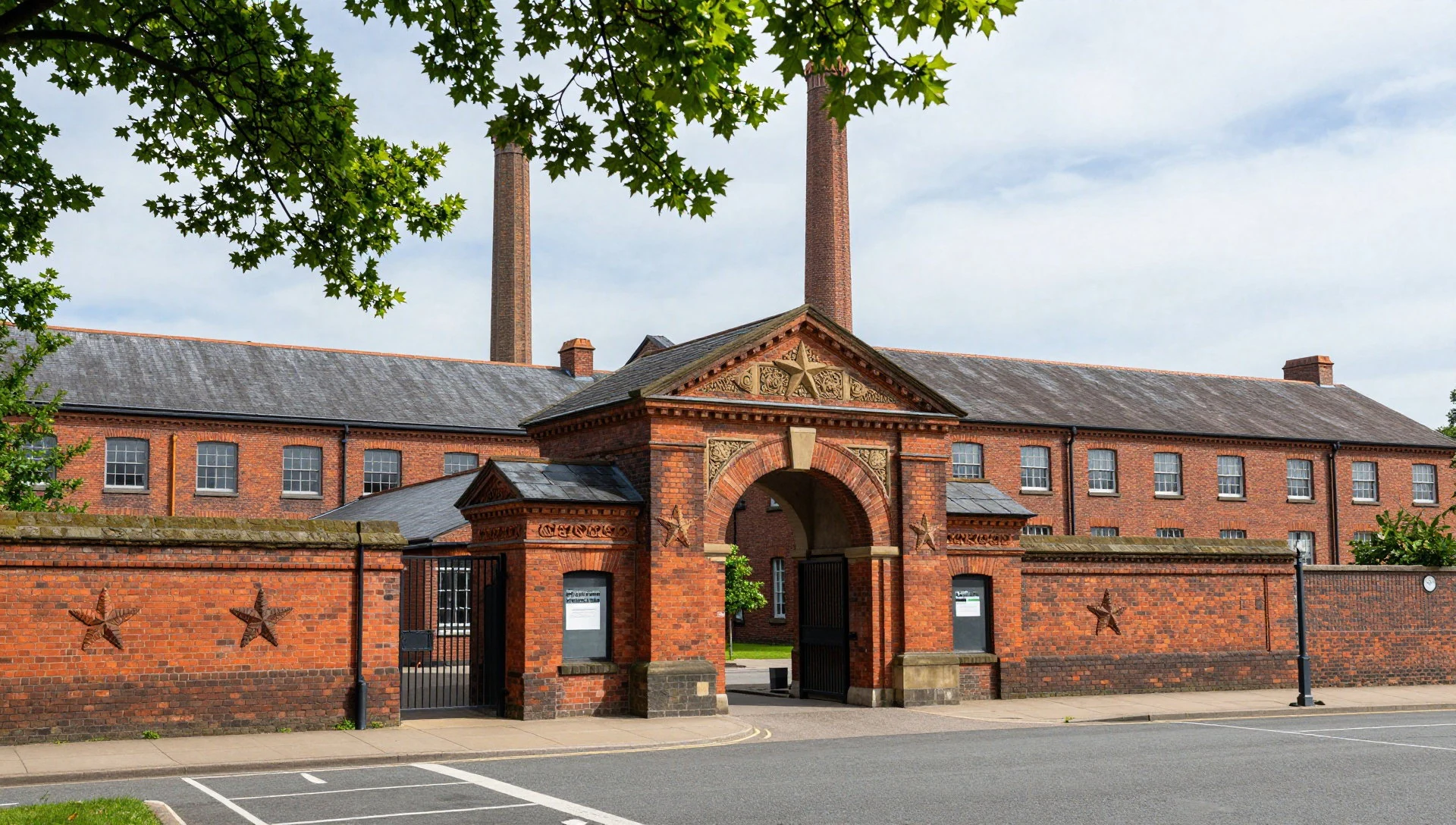
- Workers’ homes (English-inspired rows) — Along the parallel streets east of the factory area
Crespi d'Adda’s workers’ houses are set up in repeatable patterns along parallel roads. Walking past them is like reading a plan in real life: building after building shows how uniformity supported community routines and gave the village its tidy, almost rhythmic street feel.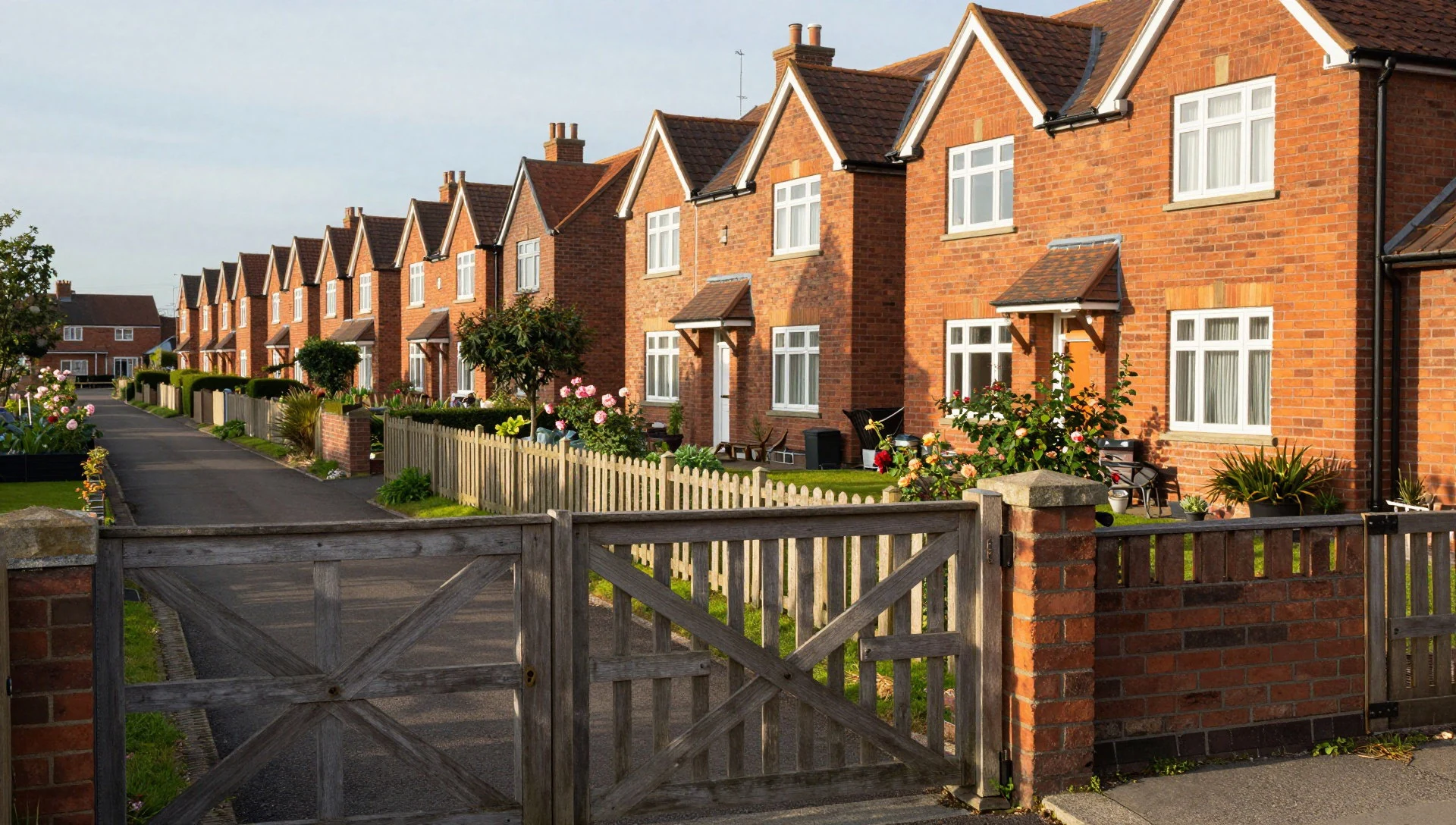
Culture
Crespi d'Adda is cultural heritage that still sits in a working landscape. Because parts of the site remain tied to industrial activity and the residential streets feel like a real neighbourhood, the experience is different from purely museum villages. Visitors often come for the planning story—how the town was designed around labour, community services and the rhythms of a factory day—but the best moments are simply noticing details: how buildings line up, how the “work vs home” boundary is drawn, and how everyday architecture preserves a past system.
Crowds are generally manageable, but day-trips increase in fair weather. Midweek is usually calmer, and mornings tend to feel more relaxed for photos and slow walking. Heat can build quickly in Lombardy’s warmer months, so plan short stops and longer pauses near shaded streets rather than rushing from one viewpoint to the next.
Photography is common, yet it helps to stay respectful around entrances and people’s homes—especially where industrial buildings or residential courtyards blur the line between “site” and “place people live/work”.
What to wear
At Crespi d'Adda the “style” is mostly practical. The village streets are designed for walking between industrial and residential zones, and Lombardy can swing from cool to warm depending on the season. Visitors commonly wear layers: a light jacket in the shoulder months and breathable fabric in warmer periods, plus a cap or sunglasses when the sun’s bright off the river.
There isn’t a single daily traditional outfit performed for visitors, but the architecture reflects an era of planned community life. Modern residents mostly dress like people in the wider Italian north: casual everyday wear, with practical footwear for streets that can be uneven near older building edges.
For a visitor’s wardrobe, sturdy trainers are the best choice—especially if the path near the river is damp. If visiting church areas, it’s sensible to choose clothing that covers shoulders and keeps hemlines reasonably modest. Also bring a small bag for water and any essentials; the village is compact enough for day walking, but it’s not the kind of place where you want to stop searching for facilities mid-route.
What to eat
- Minestrone soup — Trattorias around Bergamo and local eatery counters
In Lombardy, minestrone is a comforting starter that suits cooler days. Look for it at local trattoria-style eateries and neighbourhood dining spots around Bergamo, where seasonal vegetables drive the flavour.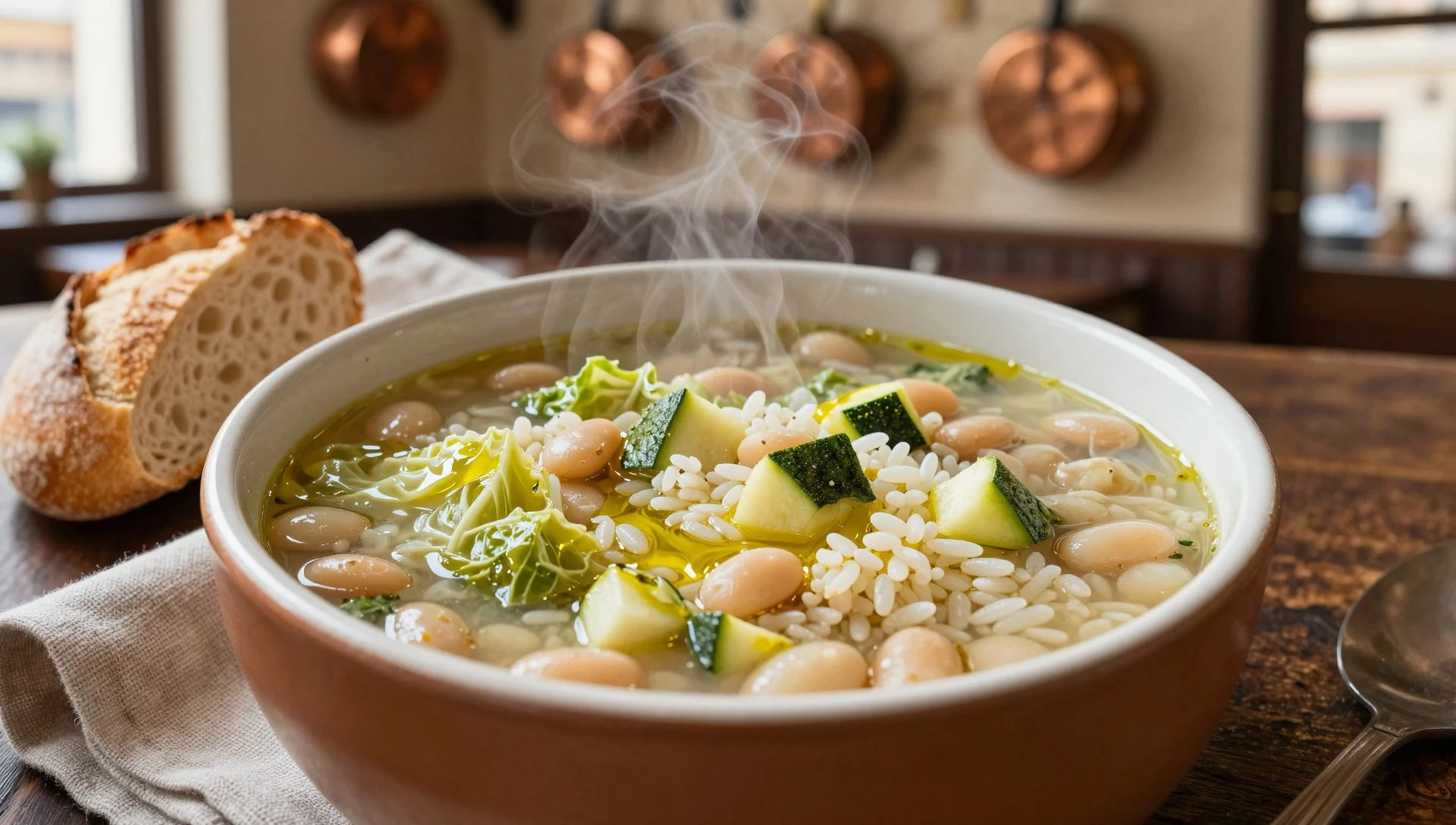
- Osso buco — Restaurant mains in the Bergamo and Milan area
Osso buco is the classic Milan-area dish: slow-cooked meat in a rich sauce that’s ideal when the weather turns. It’s widely available on set menus and main dishes at restaurants across the Bergamo–Milan belt.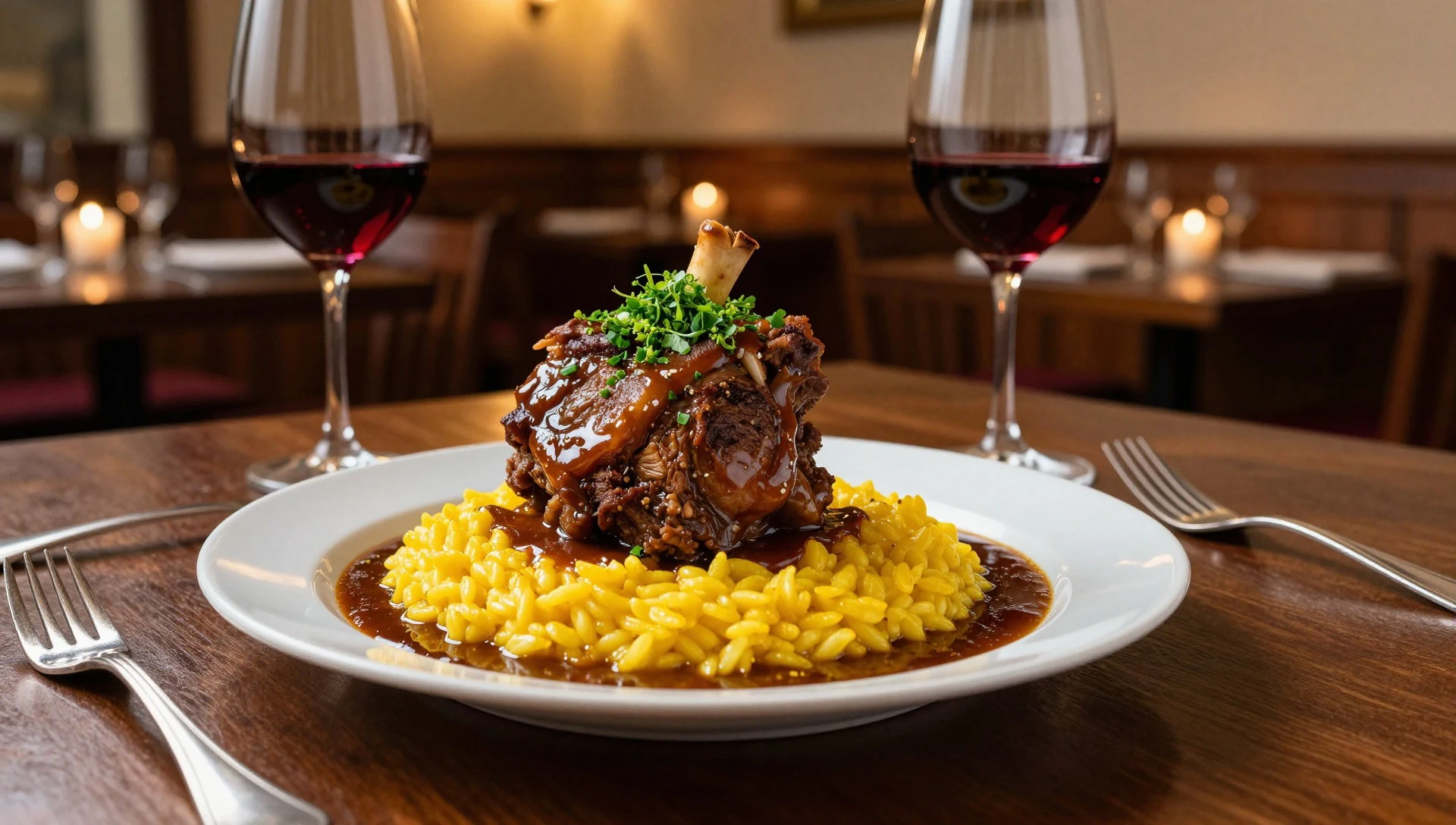
- Risotto alla milanese — First-course risotto on menus around Milan and Bergamo
Risotto alla milanese is a rice-based speciality associated with the wider region. In and around Lombardy cities, it’s typically served as a first course, often tied to saffron, and you’ll find it in many regional menus. - Salumi — Markets and deli-style counters in nearby towns
Salumi—cold cuts—show up often in northern Italian snacking. For a simple meal, look for cheese-and-cold-cuts-style plates in local markets and casual counters, especially in bigger towns near the river routes. - Aperitivo — Wine bars and aperitivo spots in nearby towns
Aperitivo is common in northern Italy: a pre-meal drink paired with small bites. Even when the plan is light after sightseeing, a slow aperitivo tends to fit the evening pace, particularly in towns with evening footfall.
Plan it
Best time. March–April and October–November for comfortable temperatures and calmer walking; summer can be hot near the river, and the broader region can feel lively with weekend day-trippers.
How long. 2–3
Getting there. Fly into Milano Malpensa, Milano Linate or Bergamo Orio al Serio, then take local rail or bus connections towards Capriate San Gervasio; Crespi d'Adda is reached from the Capriate side and is best covered by the last road leg and on-foot exploring.
Budget. mid
Tips
- Plan a slow morning walk to catch the village’s layout before the daytime rush
- Wear shoes with grip for older pavements and possible damp patches near the river edge
- Build a route that starts with the industrial side and then moves through the residential streets, so the town-plan “reads” clearly
- Keep an eye on your connections if travelling during busy periods around major cities in Lombardy
Etiquette
- Stay on public walkways and avoid stepping into areas marked for industrial operations
- Keep voices low around residential streets and be mindful of where people live
- If photographing, do it without blocking doorways or courtyards
Nearby
Sources
- Wikidata Q726842 (CC0)
- Wikipedia (Crespi d'Adda) (CC BY-SA 4.0)
- Wikivoyage (Lombardy) (CC BY-SA 4.0)
- Photo: Vista di Crespi d'Adda (CC BY 3.0)
- Photo: Crespi d’Adda, Castello (Ian Spackman 2007-007-30) (CC BY-SA 2.0 uk)
- Photo: Crespi d'Adda church (CC BY 3.0)
- Photo: offices and hall door (Ian Spackman 2007-007-32) (CC BY-SA 2.0 uk)
- Photo: worker’s house (Ian Spackman 2007-007-37) (CC BY-SA 2.0 uk)


