Conwy Castle
Conwy Castle, United Kingdom
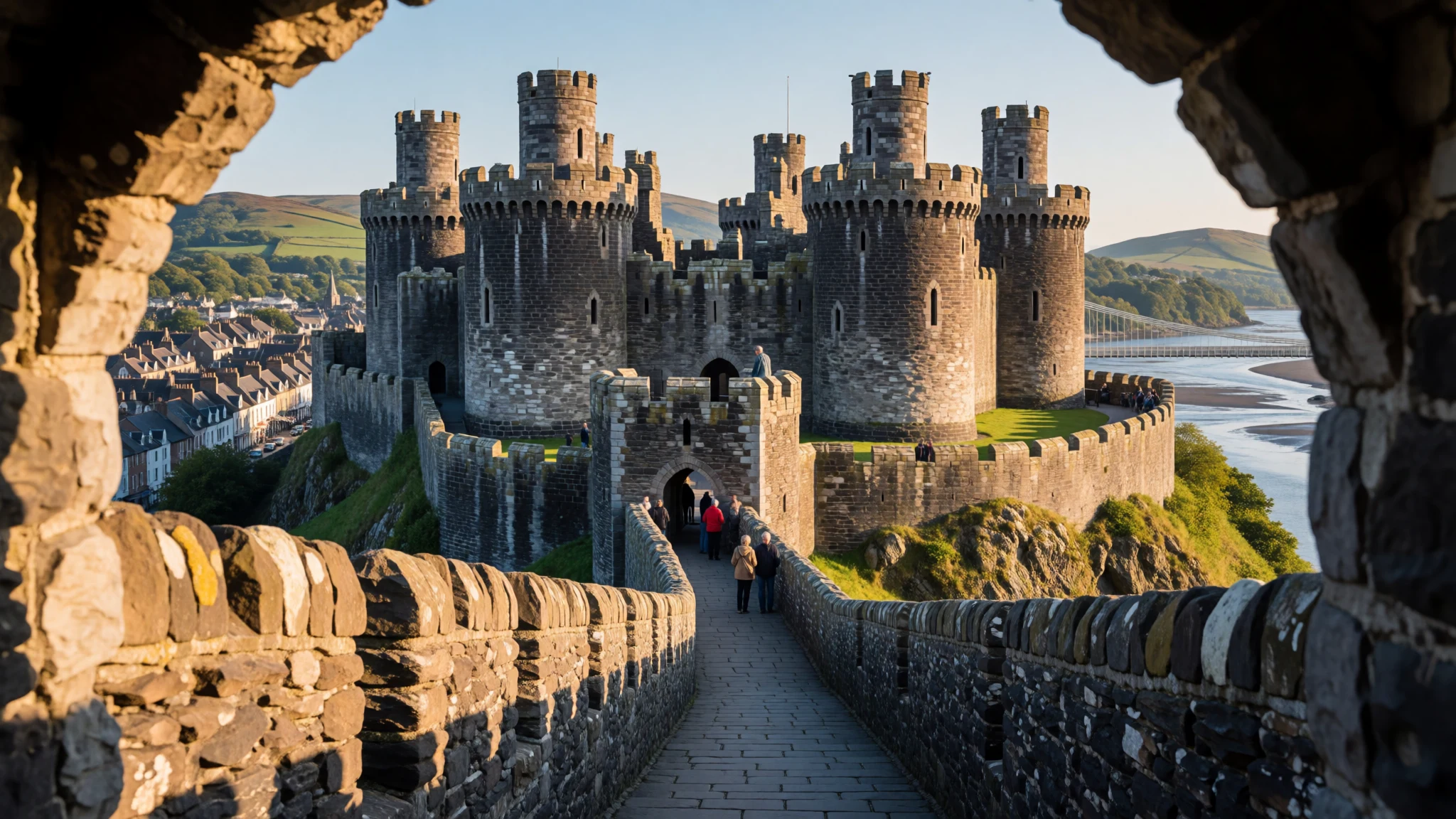
Conwy Castle is a roofless medieval fortress above a tidal estuary, wrapped by town walls and an easy train ride from the North Wales coast.
The place
Conwy Castle stands on a rocky ridge beside the River Conwy estuary in North Wales, about 22 m above sea level, and it makes more sense once its purpose is clear. Edward I began it in 1283 as half of a single project: a royal castle and a walled English town, raised together on the site of a Cistercian abbey to control the river crossing between the coast and the inland valleys. The castle is a long rectangle of dark stone, studded with round towers and divided into inner and outer wards. It is a ruin now. Roofs and floors are gone, but the towers and curtain walls are largely complete, and visitors can climb spiral stairs and walk the wall-heads. From the top the view takes in the estuary, the harbour, the suspension bridge and hills rising towards Snowdonia. Below, the town is small and tightly packed, with narrow lanes, a working quay and the old walls looping around it all. The castle is looked after by Cadw, the Welsh government's historic environment service, and since 2024 it has been presented under its Welsh name alone, Castell Conwy. It is also part of a UNESCO World Heritage Site. Summer weekends and school holidays bring crowds to the stairs and towers, while the shoulder seasons are calmer, though the estuary wind can be sharp. A visit fits comfortably into half a day, with the town and walls adding a few more hours.
Its story
Conwy Castle was built on ground that already mattered to the Welsh. Before the English arrived, the site held Aberconwy Abbey, a Cistercian house favoured by the princes of Gwynedd, and one of their court residences stood close by. The river crossing was valuable too, and the older fortress of Deganwy had guarded it for years. When Edward I pushed into North Wales during his second campaign there, he took Aberconwy and decided to remake the place entirely. The monks were moved up the valley to Maenan, Deganwy was left to decay, and a new castle and walled borough rose on the old abbey's land, intended for English settlers. The scheme cost a fortune, and it was soon tested. The castle held out during the uprising led by Madog ap Llywelyn, sheltered Richard II at a desperate moment, and was seized for a time by supporters of Owain Glyndŵr. In the English Civil War it was a royalist stronghold until it surrendered to Parliament. Parliament then partly slighted it, and later its remaining lead and iron were stripped and sold, which finished it as a building. Painters discovered the picturesque ruin in the Georgian period, visitors followed, and the Victorians began repairs. Today the castle is read as both a masterpiece of medieval engineering and a reminder of conquest, and many Welsh visitors hold both views at once.
What to see
- Conwy Castle — Conwy, on the ridge above the estuary
The castle rewards a slow circuit. Climb the towers for wall-walk views over the estuary, the slate roofs of the town and the hills beyond, and look for the doorways and fireplaces that hint at how the royal rooms were arranged. Floors and roofs are long gone, so imagination does some work. Allow a couple of hours.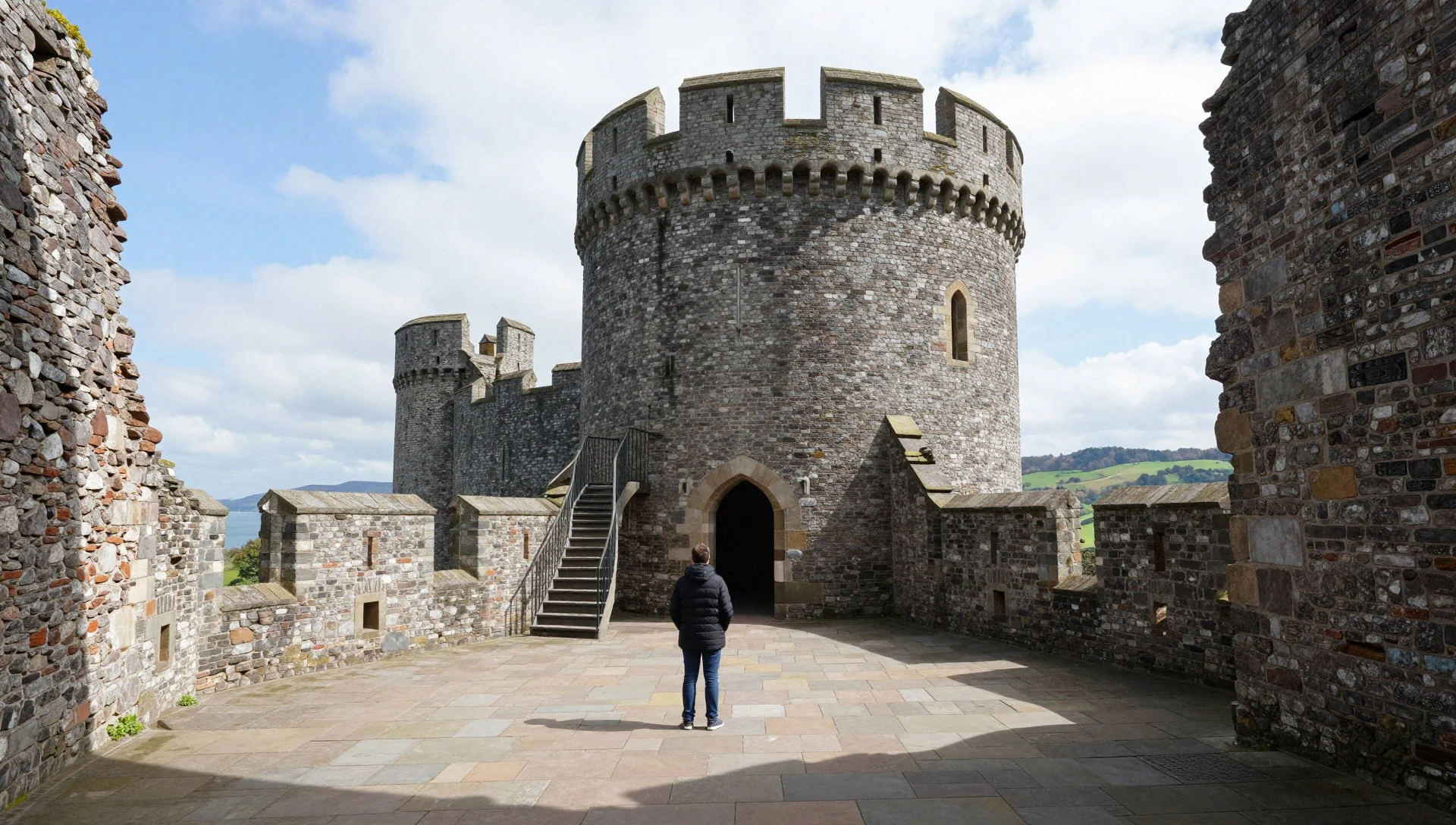
- Town walls — Around the old town of Conwy
The medieval walls still stand around the old town, and parts can be walked, which gives a different angle on both the castle and the rooftops. Towers punctuate the route. Some steps are steep and uneven, so take care, especially after rain, and expect gusts where the wall meets the water.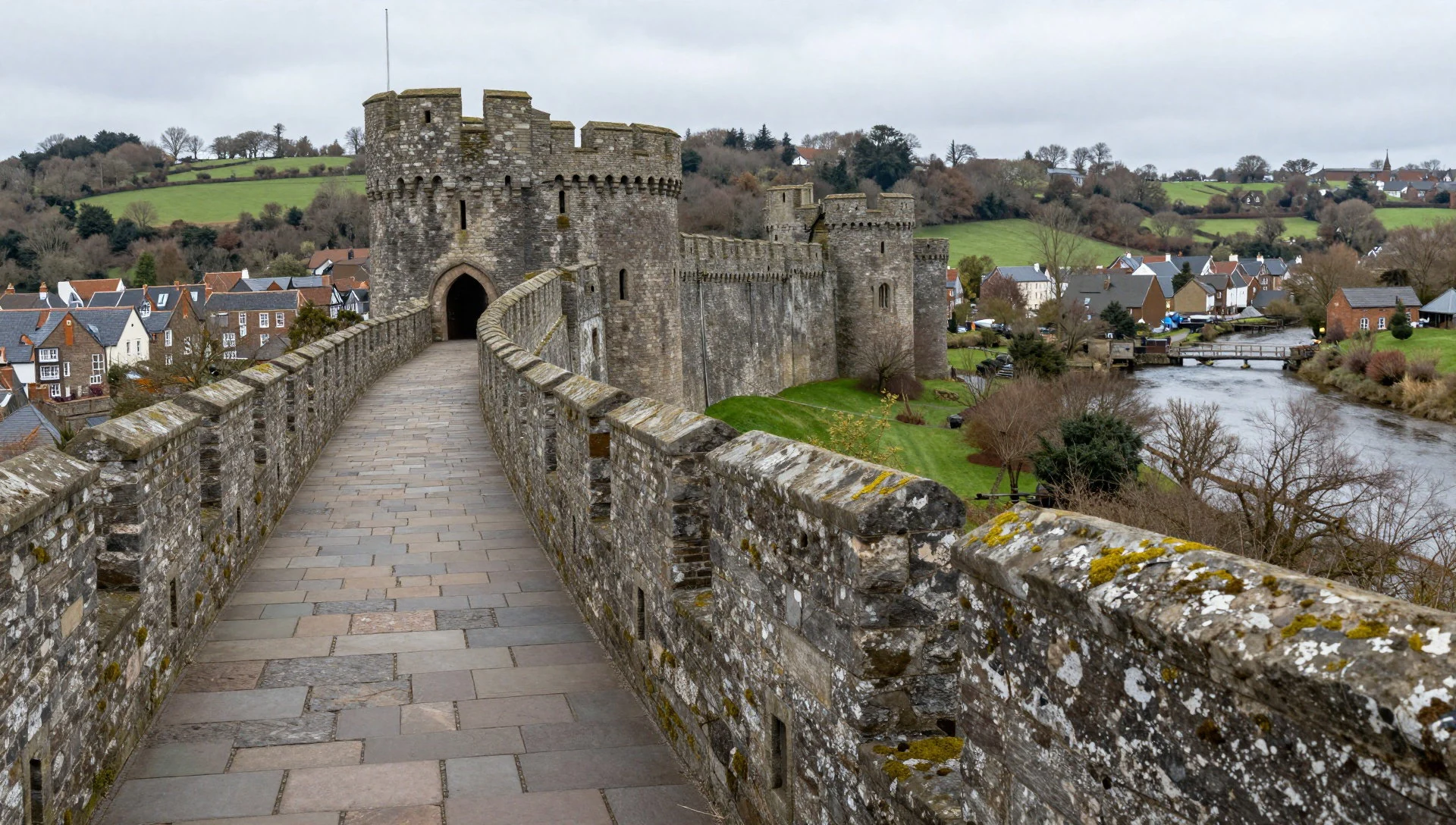
- Plas Mawr — High Street area, Conwy
Plas Mawr is an Elizabethan town house on the lanes of Conwy, partly restored and otherwise kept close to its original condition. It shows how a prosperous merchant family lived long after the castle's fighting days, with decorated plaster and period rooms. Check the official site for opening times and ticketing before planning around it.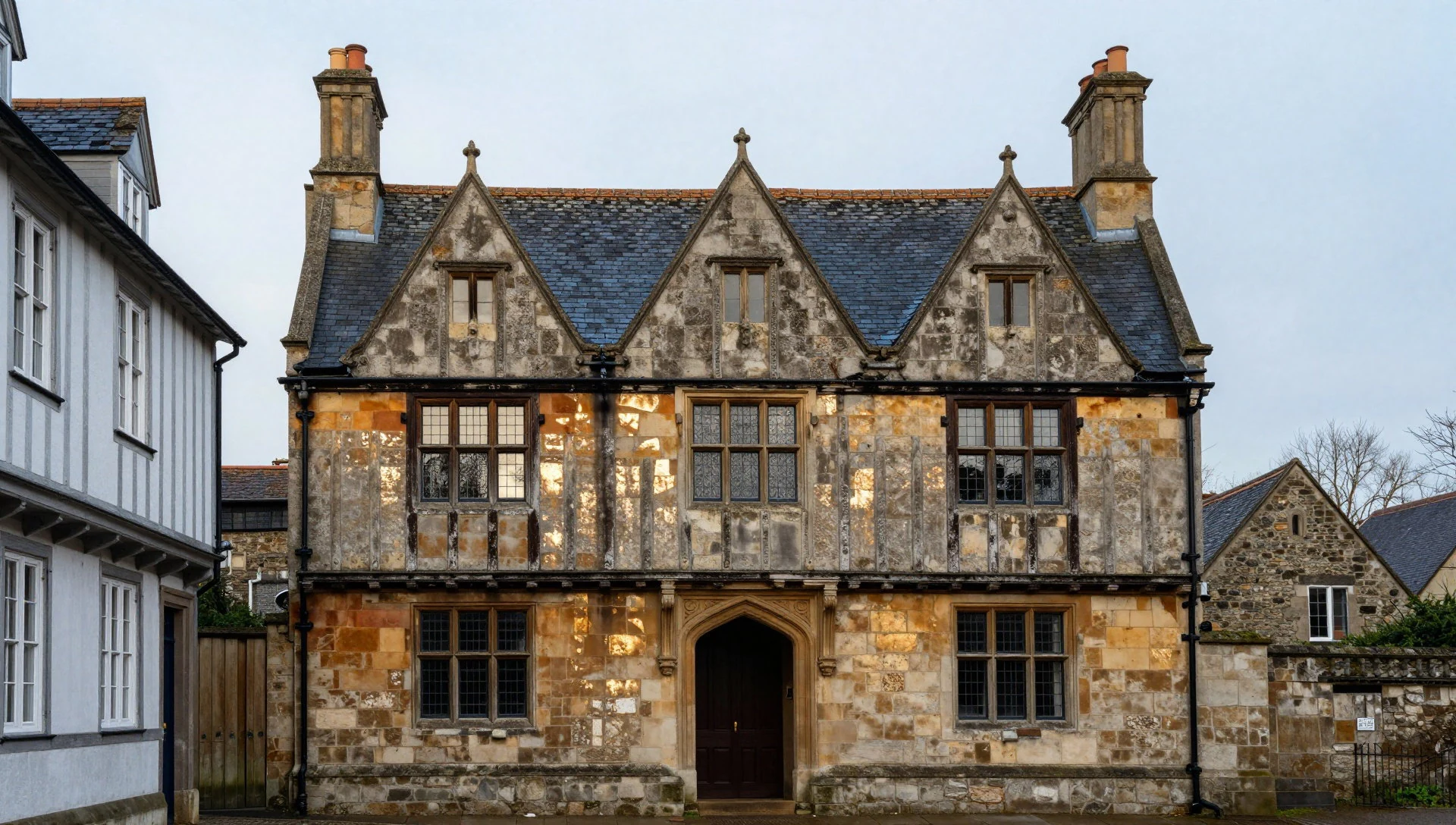
- Aberconwy House — Near the quay, Conwy
Aberconwy House is a medieval merchant's house near the quay, furnished to suggest daily life across several centuries. It is small, so the visit is short and pairs well with a walk to the water. It is run by the National Trust, which has offered a joint ticket with the suspension bridge; check current options.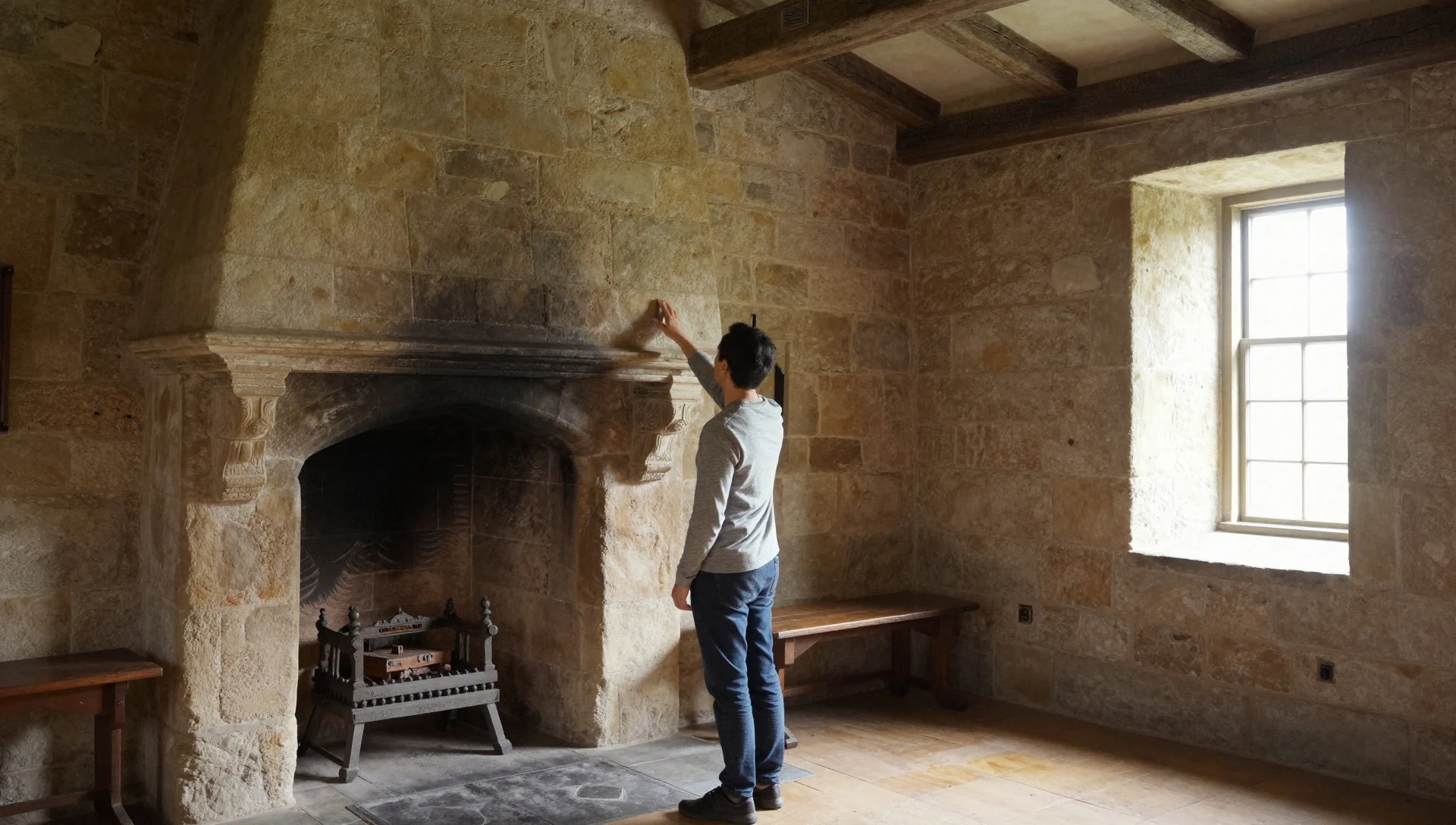
- The quay and the Smallest House — Conwy Quay
Conwy's working quay is where boats bring in mussels and where the Smallest House, a very narrow cottage recognised by Guinness, stands at the end of the row. It is a quick stop, and a better excuse for a bench by the water, a bag of chips and a view back up at the castle.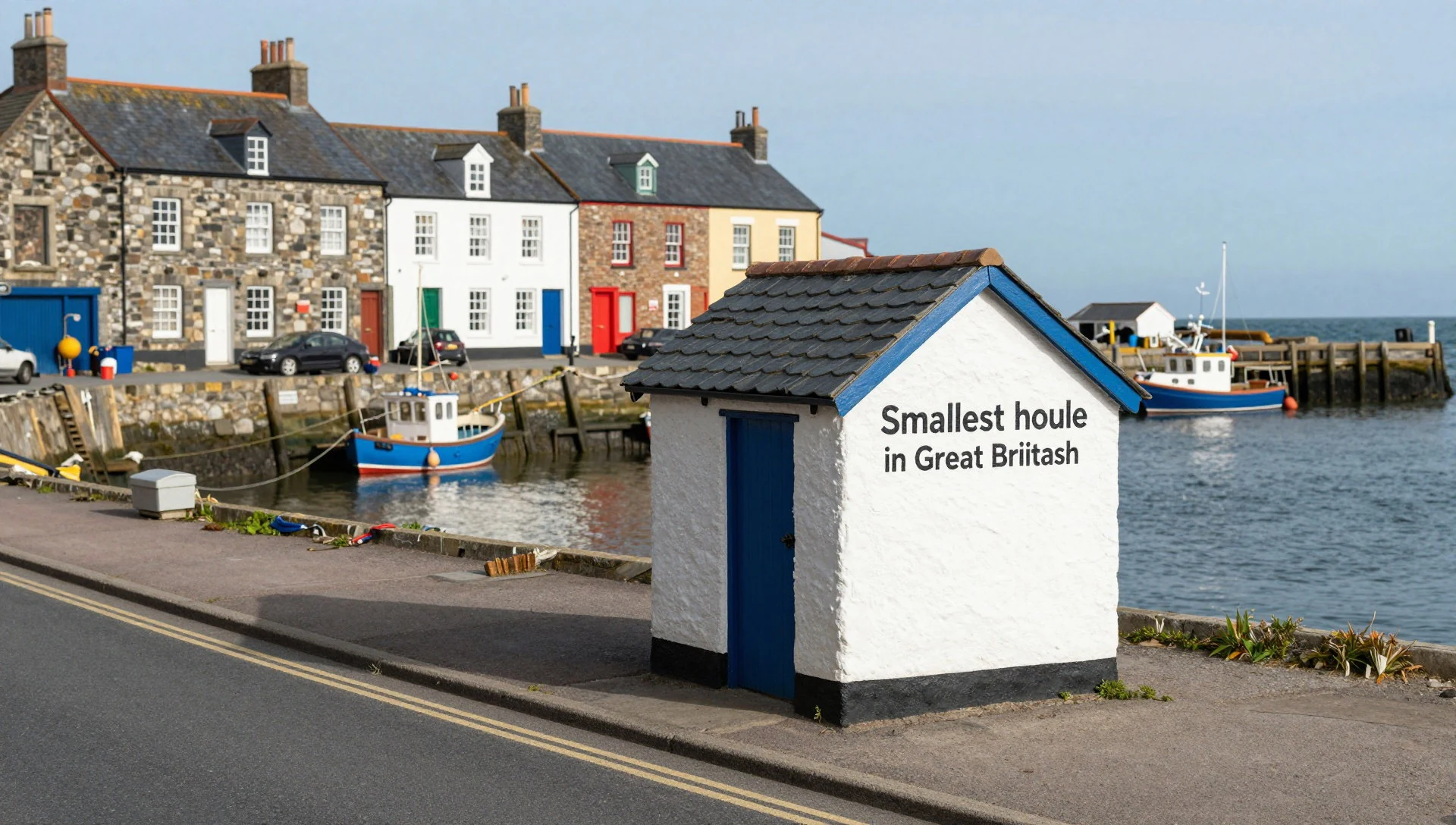
- Bodnant Garden — Conwy valley, south of town
Bodnant Garden lies a short drive south of town in the Conwy valley. It is known for the Laburnum Arch, a tunnel of golden blooms that flowers in late May, and for the Pin Mill beside the water. Check the official site for opening arrangements, and allow a few hours for the slopes and terraces.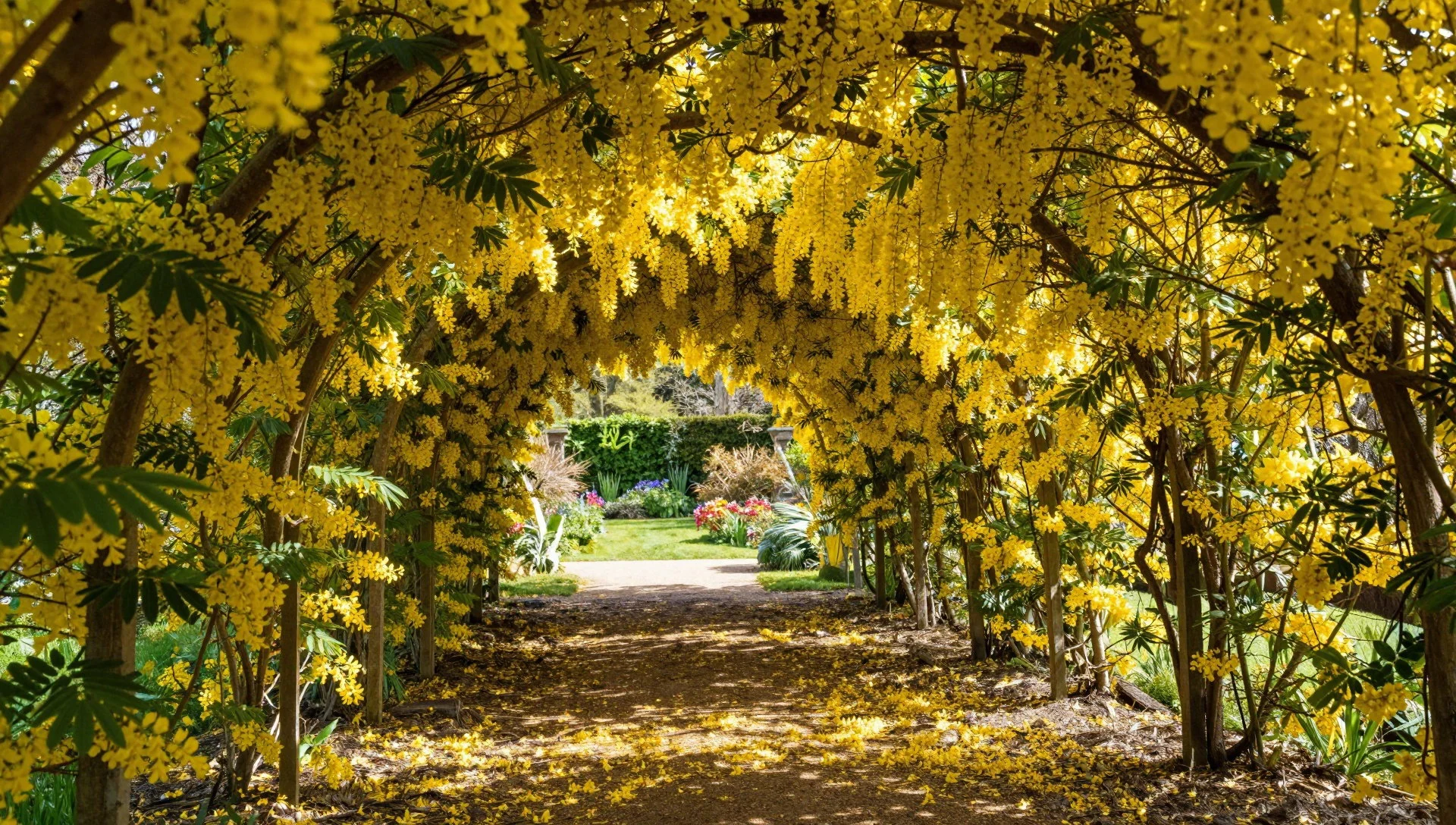
Culture
Conwy Castle sits in a town where Welsh and English histories rub against each other, and visitors will notice it quickly. The fortress was built to hold down a conquered land, yet it now carries a Welsh name on its official signs, and Welsh is still heard in the shops, chapels and school playgrounds of the surrounding valley. Many locals see the castle as a landmark they grew up under rather than as a symbol, and opinions about what it represents vary. Beyond the walls, the town's own traditions are quieter. Mussel fishing has long shaped the quay, chapels and choirs are part of the wider North Wales picture, and the annual eisteddfod season, with its competitions in poetry, music and recitation, shows how living the language remains. Pubs are friendly, small and often busy on match days, when rugby and football talk fills the rooms. Conwy also sits on the edge of Snowdonia, so walkers, climbers and day-trippers share the lanes and the train platforms. Welsh is a working language here rather than a heritage display, and a few words are appreciated: bore da for good morning, diolch for thanks. Please stay on the marked routes and away from unfenced wall edges inside the castle, and greet staff and shopkeepers with a friendly bore da or a plain hello before asking a question.
What to wear
Around Conwy Castle, the traditional Welsh dress most people picture is a nineteenth-century country costume: a long skirt and bedgown in woollen flannel, often striped or in red, with an apron, a shawl or cloak, and a tall black hat. Wool from Welsh mills was the staple material. Today that outfit mostly appears on St David's Day, when schoolchildren dress up, and at eisteddfod events and folk performances. Everyday clothing in Conwy is practical and weather-led: fleeces, waterproof jackets, walking boots, jeans, and rugby or football shirts on match days. Smart dress appears for chapel, weddings and concerts, but there is no formal dress code for tourists. A visitor should dress for wind, rain and stone. Bring a waterproof layer even in summer, plus a warm top, because the estuary wind can be cold on the towers. Wear shoes with a good grip, since the spiral stairs are worn and uneven, and wall-walks can be slippery when wet. Sandals and smooth soles are a poor choice. A sun hat and sunscreen help in clear summer weather, when the stone reflects heat. There are no modesty rules for entering the castle, but shoulders and knees covered are sensible in a cool, breezy climate.
What to eat
- Fish and chips — Chip shops near the quay and the main street
The classic harbour-town meal, and Conwy has several shops serving it. Take it to the quay and eat it facing the boats and the castle, though gulls will be watching. Queues are longest at lunchtime on sunny weekends.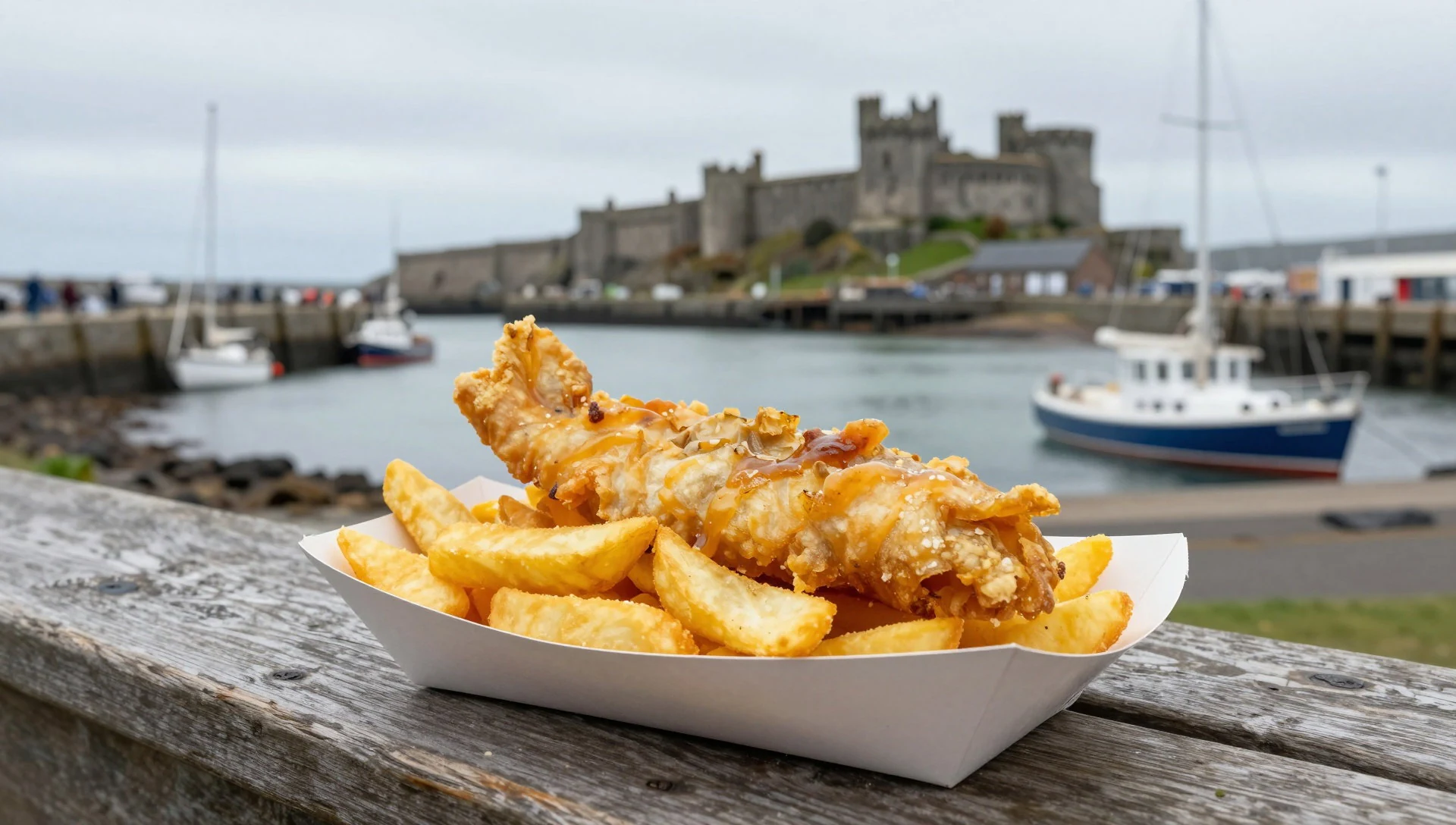
- Conwy mussels — The working riverfront and local restaurants
Mussels have long been brought in by the town's fishermen. They are usually served steamed in a simple broth with bread, or in a creamy sauce. Ask when they were landed, as quality depends on freshness and season.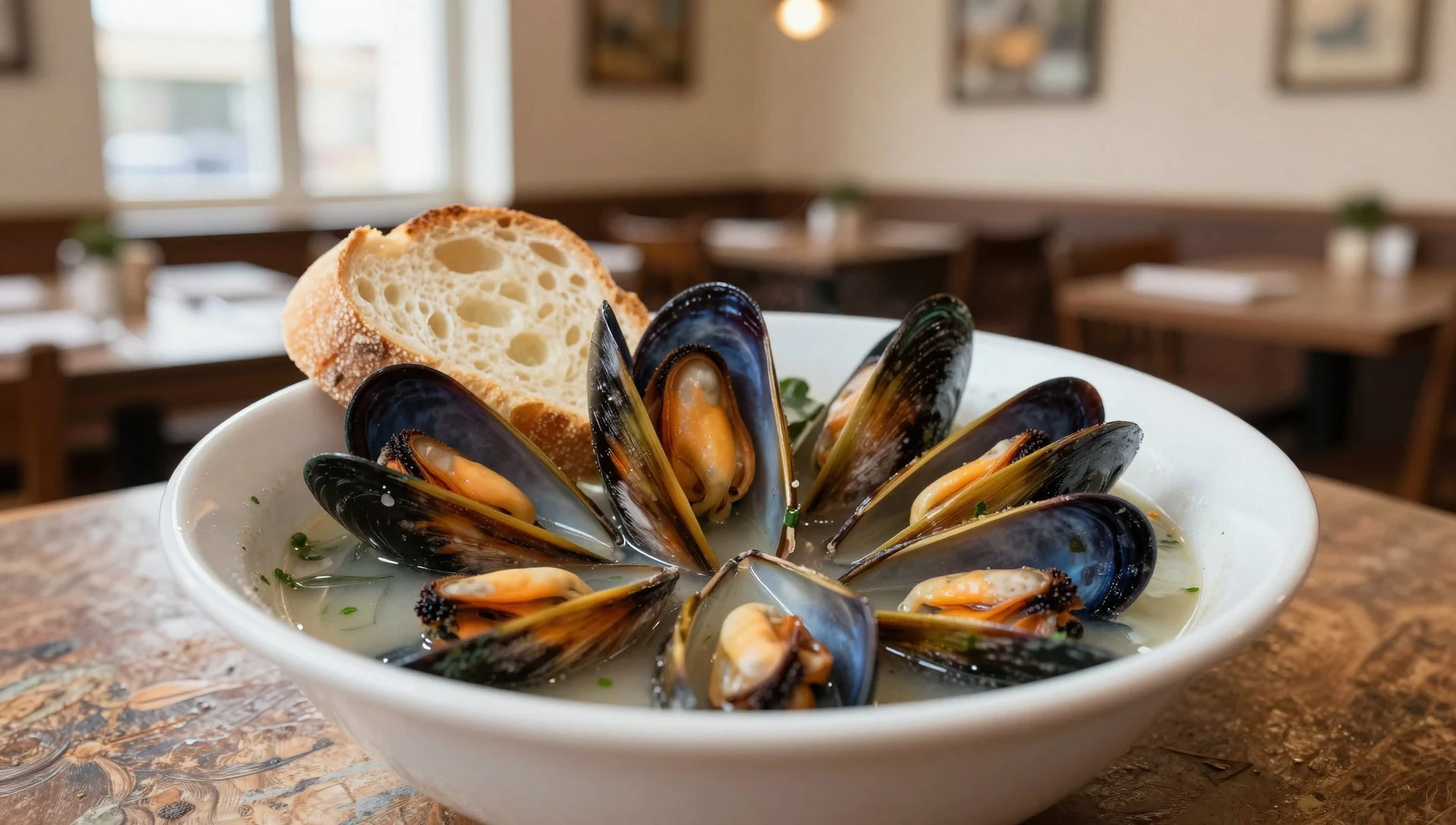
- Welsh cawl — Bistros and pubs serving Welsh dishes in the old town
A slow-cooked broth of lamb or beef with leeks, potato and swede, eaten with bread and sometimes cheese. It suits a damp, windy day on the estuary. Menus vary, so ask whether it is on that day. - Bakery scones and cream cakes — The bakery on the main street
The town bakery is praised for morning scones and large cream cakes. Go early for the scones, which tend to sell out, and pair one with tea before climbing the castle stairs. - Pub lunch — Small pubs and cafes close to the castle walls
Simple hearty pub food, such as pies, sausages and chips, is easy to find beside the castle. Some pubs have outdoor tables in dry weather. It is a reliable choice when the weather turns and the queues elsewhere grow.
Plan it
Best time. May–June and September for the best mix of drier days and longer light, with gardens at their best in late May. July and August bring the biggest crowds. Winter is quiet but wet, windy and short on daylight, and some attractions run limited hours.
How long. 1–2
Getting there. Conwy is on the A55 coast road, with parking south of the castle. By train, services run to Llandudno Junction from across the UK, including London Euston in about 3 hours, then a 5-minute taxi into Conwy. A smaller station is in the town centre on the Holyhead line. Arriva buses link Conwy with Bangor, Llandudno and Betws-y-Coed.
Budget. mid
Tips
- Check the Cadw website (https://cadw.gov.wales/visit/places-to-visit/conwy-castle) for opening times, tickets and any closures before you go
- Arrive at opening or late afternoon to avoid the busiest stairs and wall-walks
- Bring a waterproof and shoes with grip; the estuary wind is strong and the stone is slippery when wet
- Book accommodation ahead in summer and on bank holiday weekends, as the town has mainly small B&Bs and guesthouses
- Carry some cash and a card; small shops and cafes may prefer one or the other
Etiquette
- Stay off unfenced edges and keep to marked routes on the towers and wall-walks
- Say bore da or hello to shopkeepers and staff, and try a diolch when thanked
- Give way on narrow stairs and wall-walks, and keep voices down in the quiet church and house museums
Nearby
Sources
- Wikidata Q756830 (CC0)
- Wikipedia: Conwy Castle (rev 1366004452) (CC BY-SA 4.0)
- Wikivoyage: Conwy (rev 5400467) (CC BY-SA 4.0)
- Photo: Conwy Castle, Wales, UK (Llywelyn2000, derivative MathKnight) (CC BY-SA 4.0)
- Photo: Conwy Castle, from the water (Andrew Woodvine) (CC BY-SA 2.0)
- Photo: Recreation of Conwy Castle, early 1300s (Hchc2009) (CC BY 3.0)
- Photo: Conwy Castle, Conwy (P L Chadwick) (CC BY-SA 2.0)
- Photo: Conwy Castle (Albertran) (CC BY 3.0)
- Photo: Conwy merlons compared with San Giorio di Susa (AJ Marshall) (CC BY-SA 4.0)
- Photo: Conwy Castle 9 (Mike Peel) (CC BY-SA 4.0)
- Photo: Conwy Castle, Conwy (Ian S) (CC BY-SA 2.0)


