Château de Montsoreau
Château de Montsoreau, France
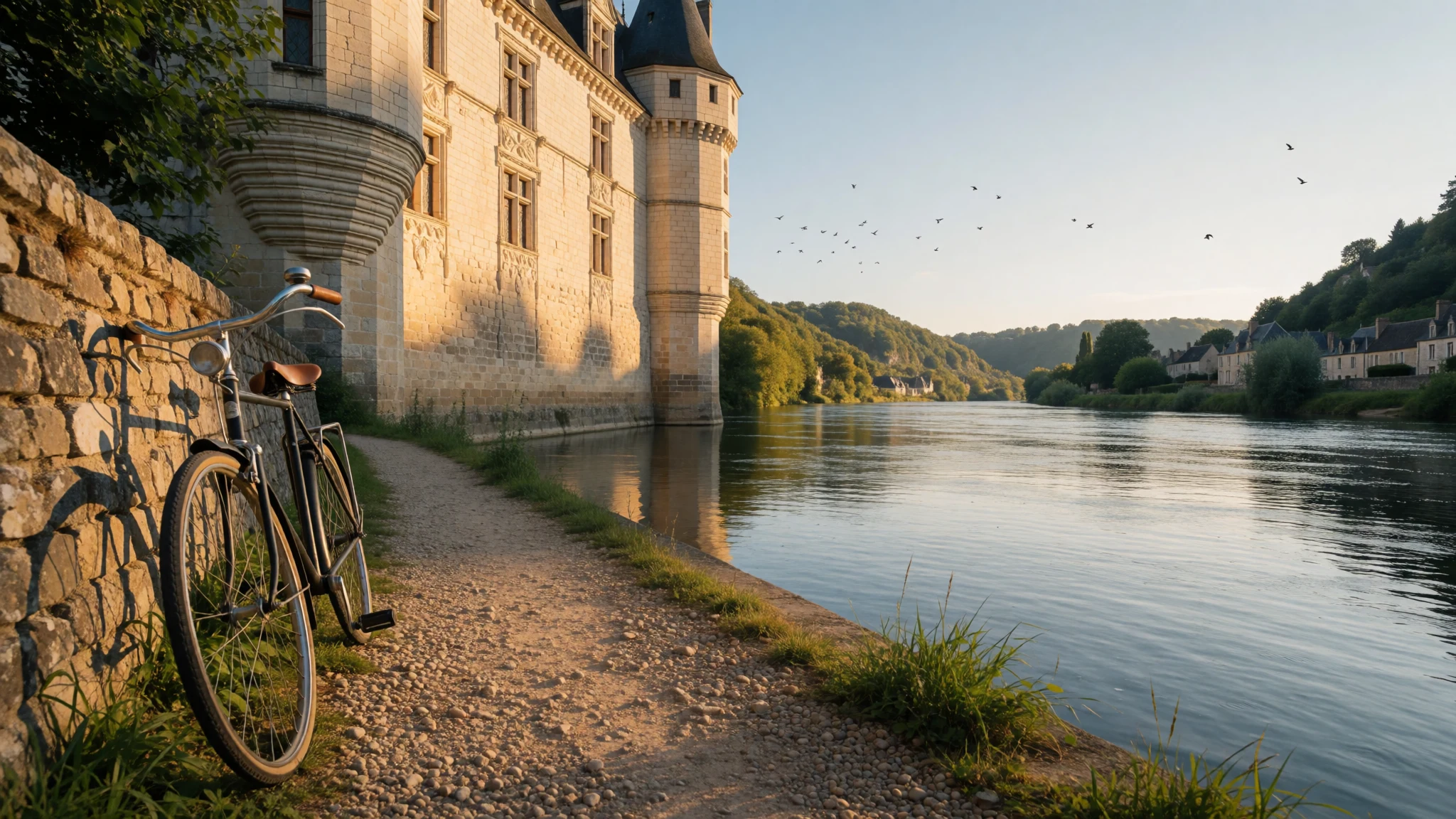
A Flamboyant Gothic castle built into the Loire's riverbed, where two rivers meet, and now home to a contemporary art museum.
The place
Château de Montsoreau stands on the south bank of the Loire in the Maine-et-Loire département, at the point where the Vienne runs into the larger river. The castle was built directly into the riverbed, so its pale walls rise almost from the water, with the village of Montsoreau pressed against the slope behind. Three historical regions meet here: Anjou, Poitou and Touraine. That meeting of landscapes gives the area a mixed character of river, vineyard and hillside. Saumur, Chinon, Fontevraud-l'Abbaye and Candes-Saint-Martin are all close, which makes Montsoreau a natural base for a slow few days in the valley. The building today is both a castle and a museum of contemporary art, and the two sit together more easily than might be expected: thick medieval masonry outside, calm galleries within. The village itself is small. It is a market town with a riverside walk, a handful of crêperies and bars, a church, a beach on the river and a cycling route, the Loire à Vélo, passing through. Settlement here is old, and a fortress was first raised on the site around 990. Different parts of the present monument were given heritage-listed status by the French Ministry of Culture over the nineteenth and twentieth centuries. Most visitors give the castle and waterfront a half day, then spend the rest of their time on the abbey at Fontevraud, the cellars and the cycle paths nearby.
Its story
Château de Montsoreau sits on ground that has been contested for a thousand years. The place appears in written records as Restis in the sixth century. A Gallo-Roman origin is established for the settlement but not for the castle, although a carved stone column found in the moat during late twentieth-century restoration hints at older buildings. The first true fortress was raised around 990 by Eudes, count of Blois. A few years later Anjou took it, and Foulques Nerra gave it to Gautier I, founder of a line that counted among Anjou's leading families. The town beside the castle grew prosperous, and by the twelfth century the lords were collecting taxes there. Gautier de Montsoreau oversaw Fontevraud Abbey when its order was established in 1101. In 1152 Henry Plantagenet, later Henry II of England, besieged and captured the castle in a family quarrel with his brother Geoffrey. Guillaume IV, the lord, had sided with Geoffrey, and he was taken prisoner, though he was later restored to his home. The building seen today dates from a rebuilding between 1450 and 1460 for Jean de Chambes, a wealthy councillor and chamberlain to Charles VII and Louis XI. Archaeologists uncovered remains of the earlier fortress during restoration. In 1845–46 Alexandre Dumas gave the castle a second life as the setting of his novel La Dame de Monsoreau.
What to see
- Château de Montsoreau and its museum — Montsoreau waterfront
The castle itself is the main sight. Its Flamboyant Gothic walls stand in the riverbed, and inside, a museum of contemporary art shows a substantial collection of Art & Language works, gathered by the collector Philippe Méaille. Allow a few hours, and check the official site for opening days and ticket arrangements before travelling.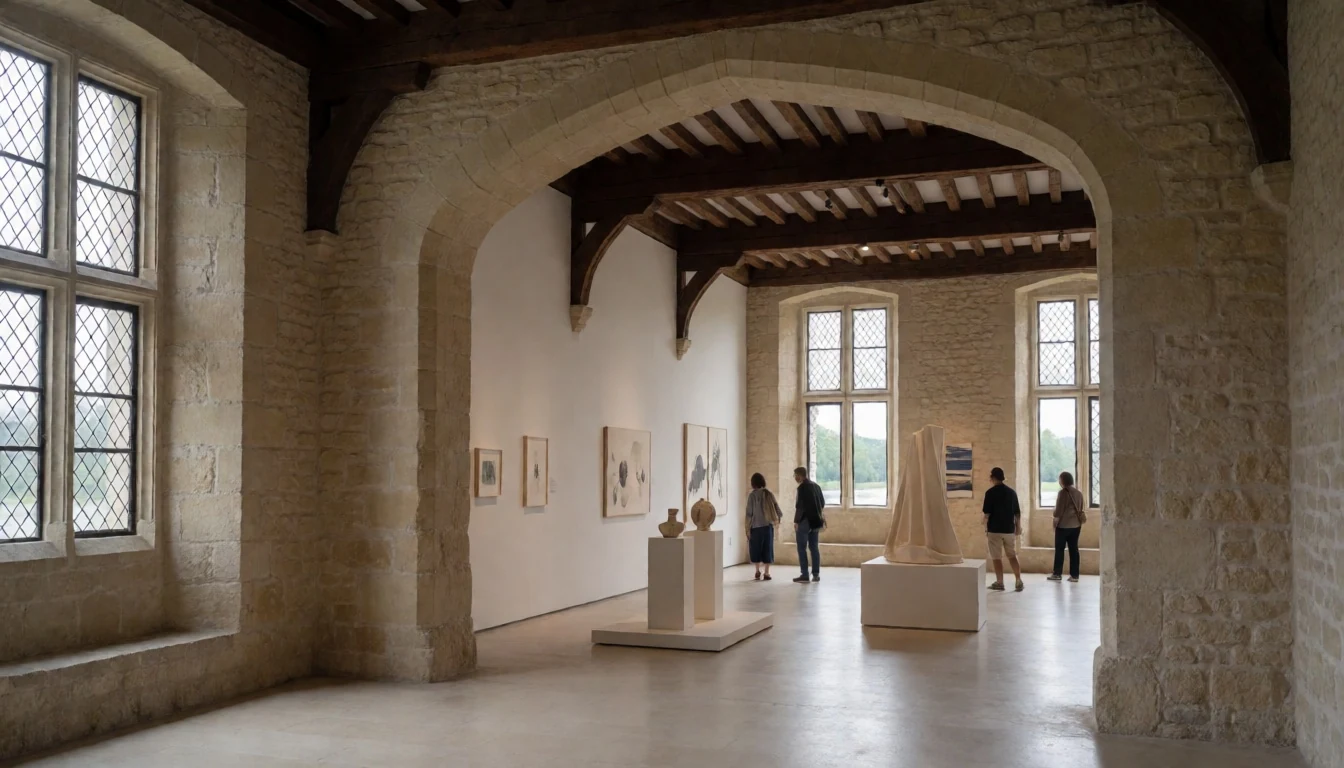
- Église Saint-Pierre — Village centre
The church of Saint-Pierre is listed as a historic monument and sits a short walk west of the castle along the main street. It is a quiet counterweight to the museum, a village church where the pace slows. Look at the stonework outside, and step in briefly if it is open.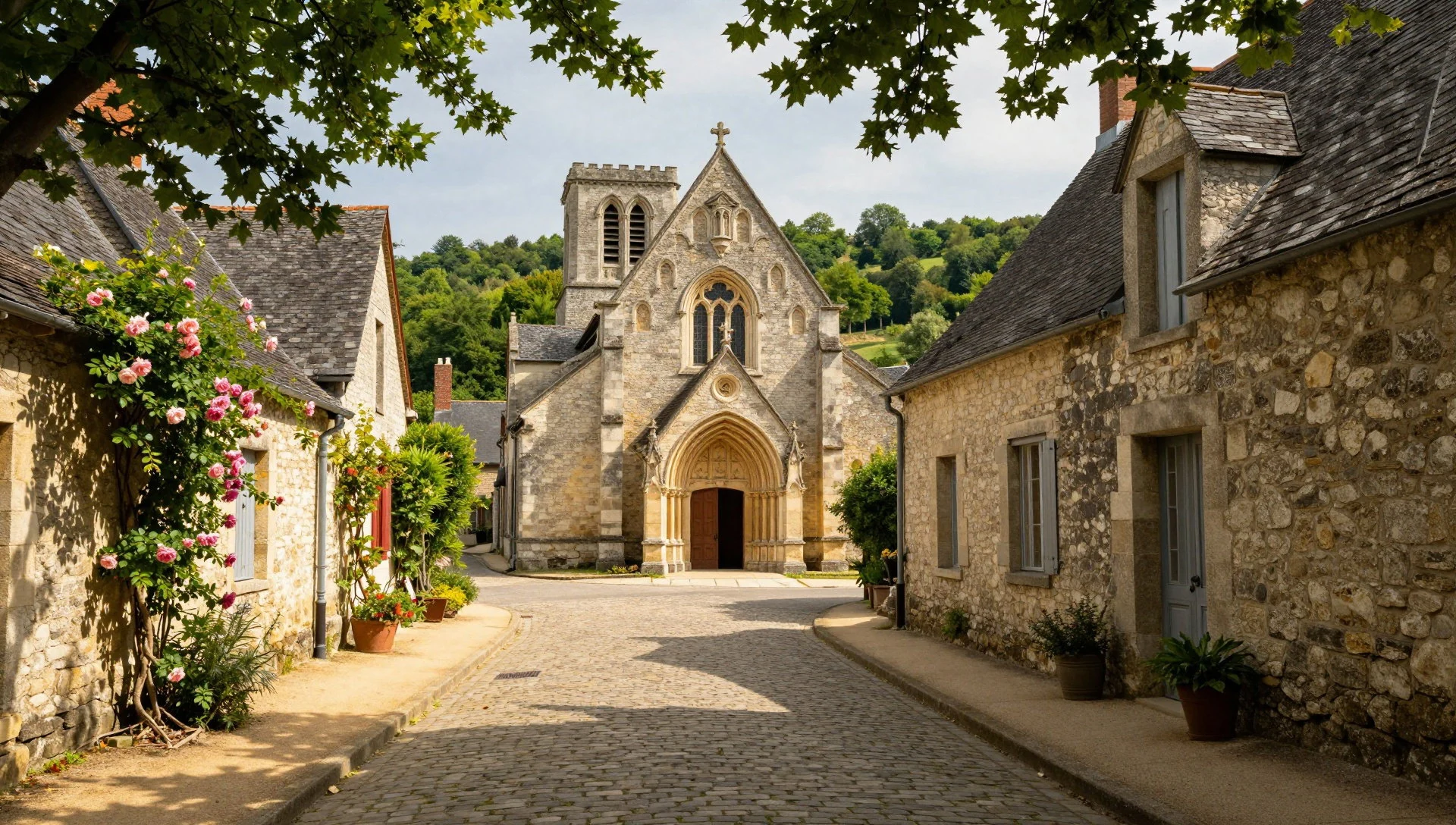
- Confluence Beach — Riverbank east of the castle
Confluence Beach lies where the Vienne meets the Loire, a little east of the castle. Swimming is permitted, but the spot fills up in summer, so arrive early. Currents in big rivers can be strong, so check posted signs and local advice before going in.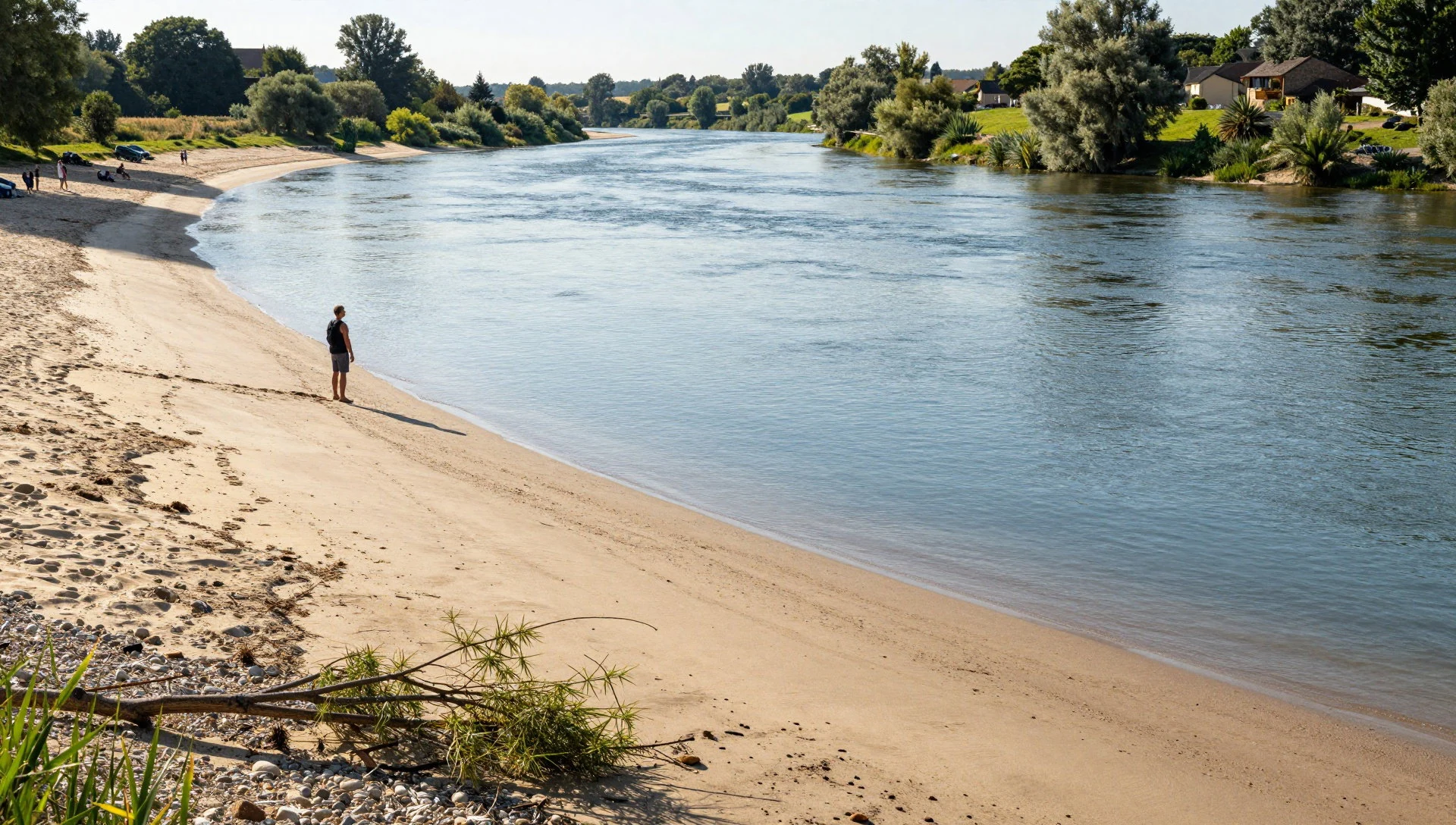
- Moulin de la Tranchée — Hillside south of the village
Moulin de la Tranchée is a historic mill, protected as a monument, on the slope above Montsoreau. It can be reached on foot or by bike from the village. The climb is short, the height gives a wider view over the river valley, and it makes a sensible break on a ride along the Loire à Vélo.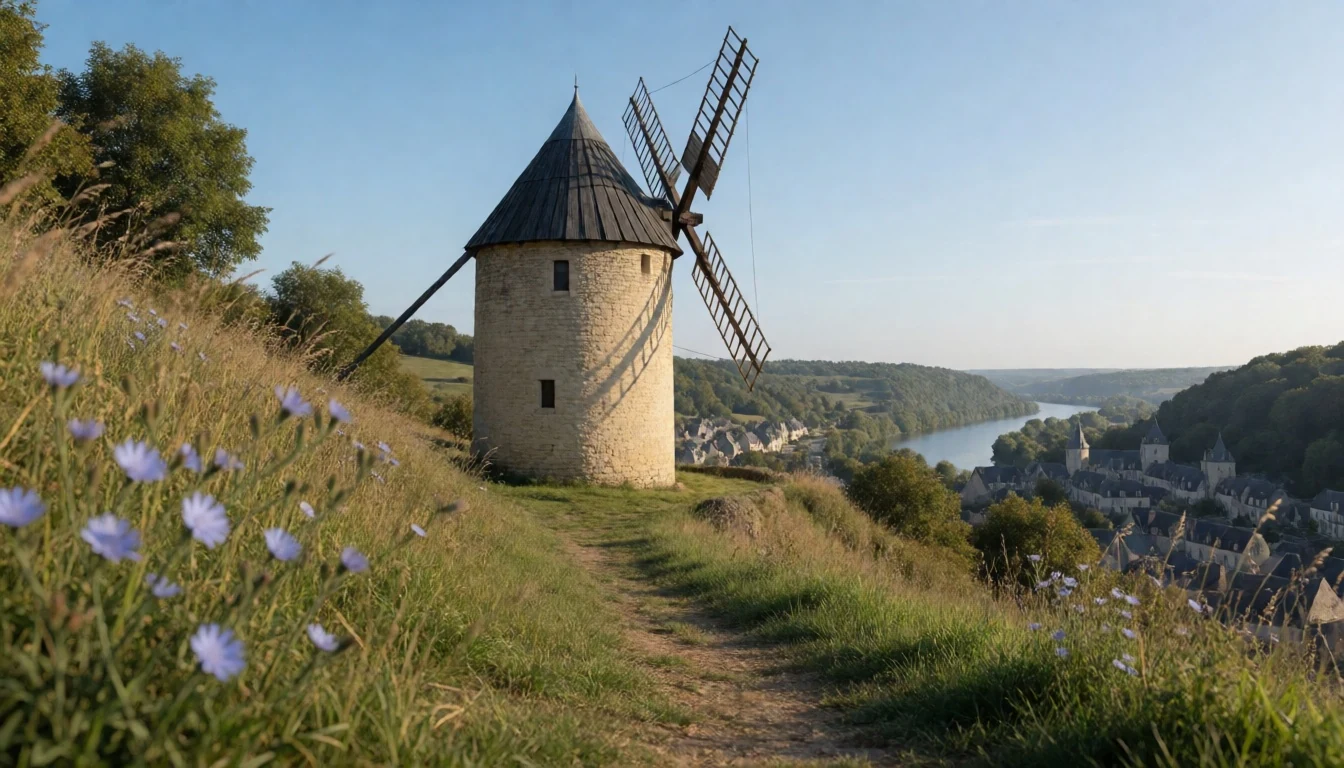
- Dolmen de la Pierrelée — Countryside south-west of Montsoreau
Dolmen de la Pierrelée is a prehistoric stone monument in the countryside south-west of Montsoreau, protected as a historic monument. It shows that people used this landscape long before any castle. Go by bike or car, wear shoes for rough ground, and treat it as a short stop rather than a destination.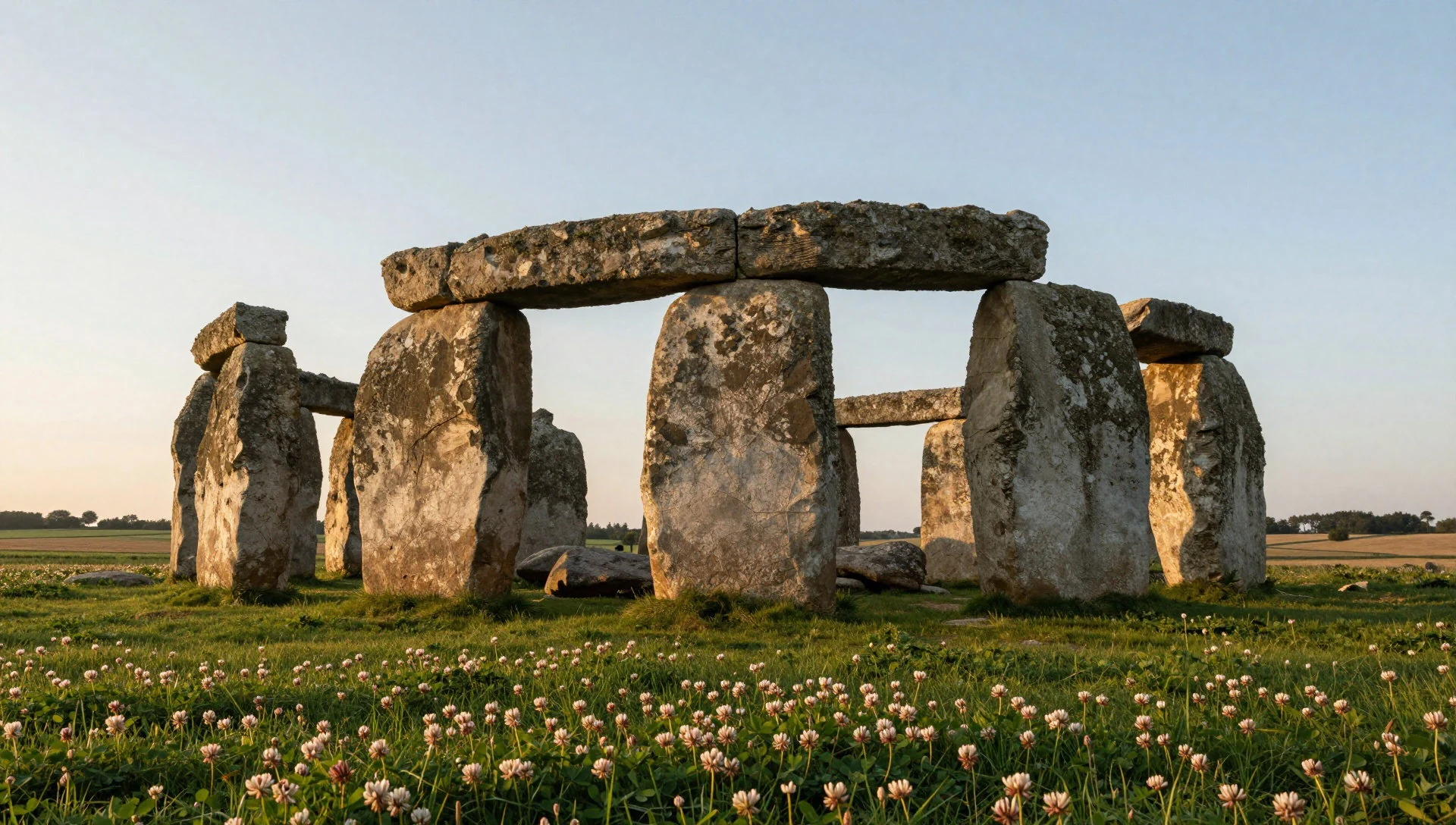
- Canoeing on the Loire — Riverbank beside the castle
Canoe trips on the Loire start from Montsoreau, and the river gives a view of the castle that the road cannot. Water skiing is also permitted on this stretch. Ask at the riverside about operators and conditions, since water levels vary with the season, and wear a buoyancy aid.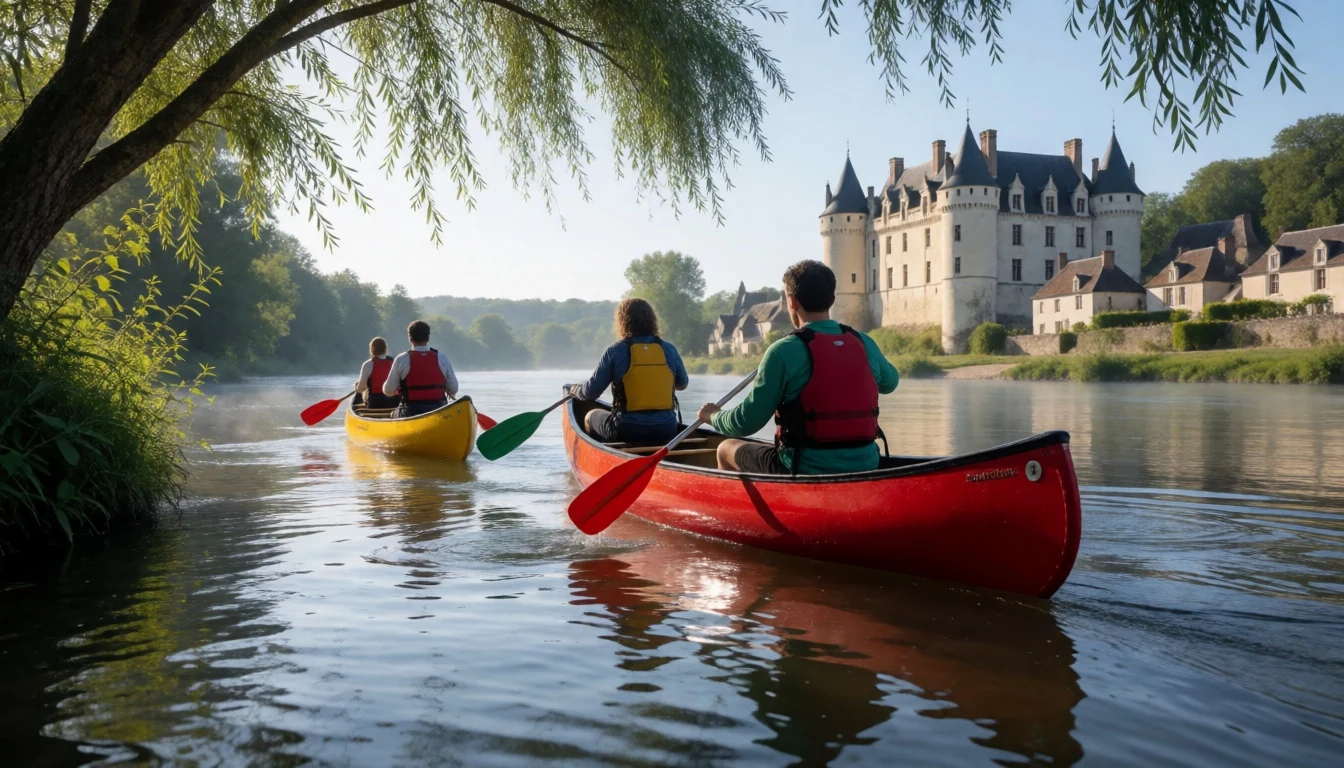
Culture
Château de Montsoreau is a place of layers: a medieval fortress, a fifteenth-century lord's residence, a literary setting and now a gallery. Alexandre Dumas borrowed the castle's name for La Dame de Monsoreau, the middle book of a trilogy set in the French Renaissance, and the novel still draws readers to the village. The contemporary art museum gives the castle a second identity, with conceptual art hung inside walls that once guarded a river crossing. Whether that pairing delights or puzzles depends on the visitor, but it is part of why the castle is talked about. The valley around adds its own rhythm: cyclists on the Loire à Vélo, wine bars pouring natural wines, small crêperies, and a summer crowd at the river beach. Monastic history is close by as well, since Fontevraud Abbey was established in 1101 under the supervision of Gautier de Montsoreau. The village is relaxed and used to visitors, but it is a living community rather than a stage set, and the quiet of its evenings is part of its charm. In the museum galleries, follow the staff's guidance on photography and keep a clear distance from the works, and in the village greet people with a polite 'bonjour' before asking for anything.
What to wear
Château de Montsoreau has no everyday regional costume today, so the clothing story here is mostly historical. In the castle's rebuilding years of the fifteenth century, nobles around Jean de Chambes would have worn wool, velvet and silk in rich colours, with fur in winter, and that kind of dress now appears mainly at heritage events and in paintings. Ordinary rural dress in the valley followed the usual French pattern of linen, wool and simple caps, and it faded long ago. These days people wear what suits a quiet riverside town: jeans or linen trousers, shirts, light jackets, cycling kit along the Loire à Vélo and swimwear at the beach. The style is casual and neat rather than showy, and diners tend to dress a little smarter in the evening. For a visit, the climate swings from hot summers to cold winters, so bring layers, a light waterproof and a sun hat for summer. Comfortable shoes matter more than anything else, because the village has uneven paving, and the riverside paths and nearby tracks are gravel or earth. There is no dress code at the museum, but covered shoulders and knees are respectful if stepping into the village church. Sandals or swim shoes help at the river beach. In cooler months the riverbank can be damp and breezy, so a warm coat is worth packing.
What to eat
- Crêpes and galettes — Crêperies along the main street and riverside
Sweet crêpes and buckwheat galettes with savoury fillings are the easy, affordable meal in the village. They are served at the small crêperies near the waterfront, often with a glass of cider, and suit a lunch before or after the castle.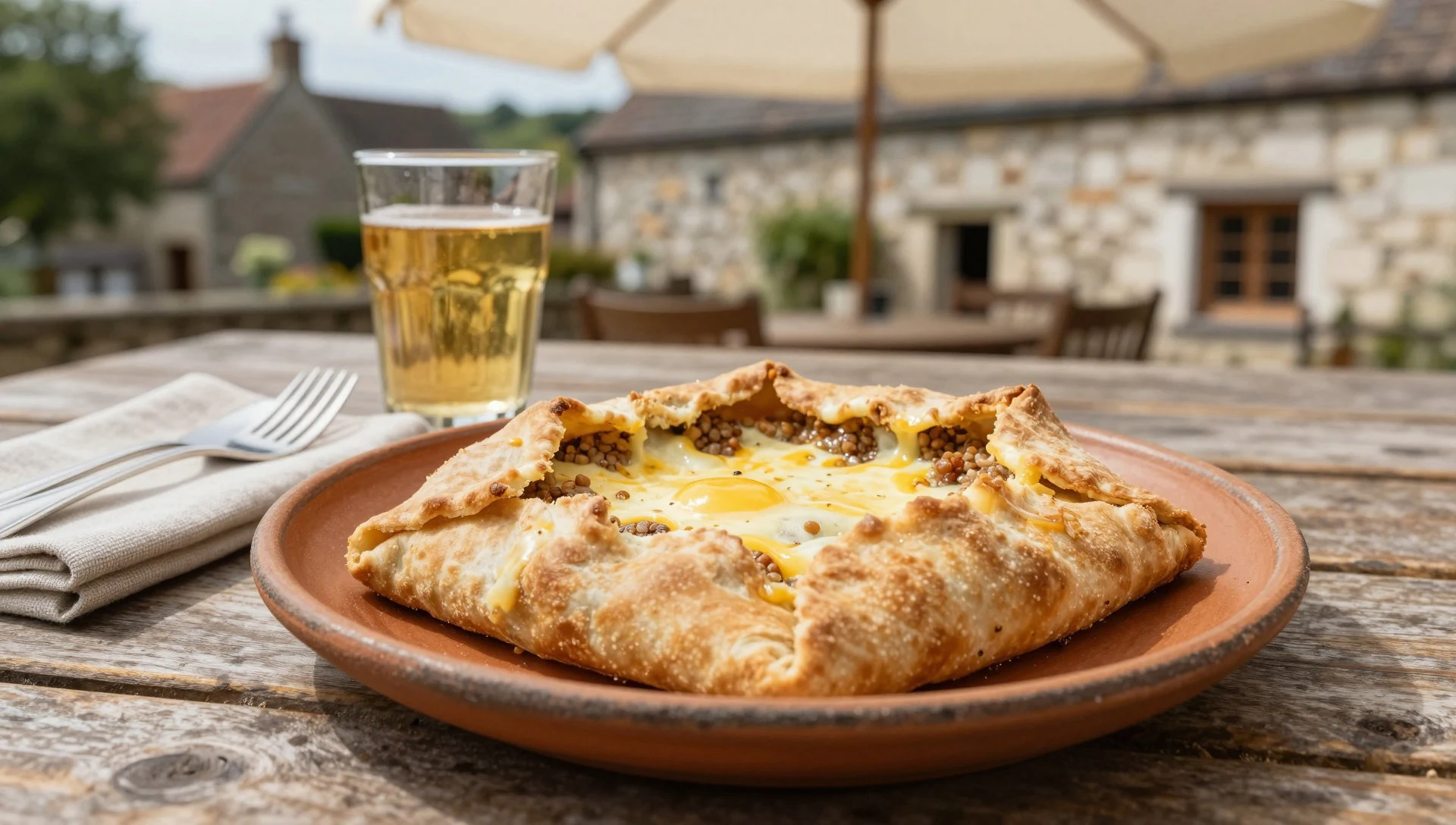
- Local cheese and charcuterie platter — Wine bars and cafés in the village centre
A slate of regional cheeses and cured meats is a typical light meal here, built around whatever the producers of the valley supply. Wine bars and cafés in the village serve them, and a platter works well for sharing in the evening.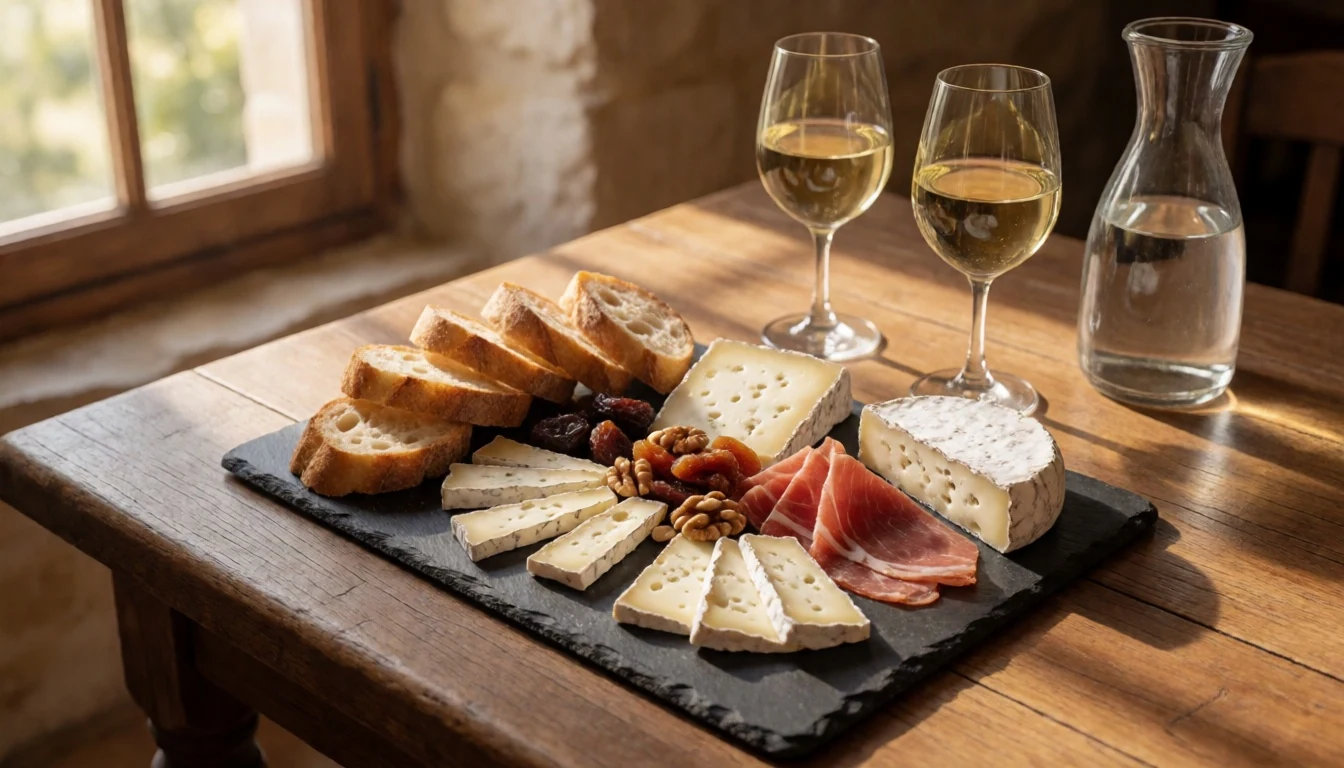
- Fouées — Traditional restaurants in the valley, some set in cave dwellings
Fouées are small round breads baked hot and split open, then filled with rillettes, beans or cheese. They belong to Anjou and Touraine cooking and are a good way to taste the local table without a formal meal. - Loire river fish with beurre blanc — Riverside restaurants in Montsoreau and Saumur
Freshwater fish from the Loire, such as pike-perch, are classically served with beurre blanc, a light butter and shallot sauce. It is a valley dish more than a village one, so look for it on set menus at riverside restaurants nearby. - Saumur-Champigny and natural wines — Wine bars and terraces by the Loire
The red wines of the Saumur area are a pleasure with local cheese, and several village bars specialise in natural wines. Ask for a recommendation by the glass, and take time over it; the terrace by the river is the best seat.
Plan it
Best time. May–June and September–October. Days are hot, with highs of about 31 to 38 C, yet the river path is pleasant for cycling and the vines are green or turning. July and August are warmer and busier, especially at the river beach, while winter is quiet and damp with some seasonal closures.
How long. 1–2
Getting there. Tours-Val de Loire Airport (about 70 km) is the closest international airport, Angers-Loire (about 59 km) is the nearest national one, and Paris Charles de Gaulle is under two hours away. By train go to Saumur, then use the local bus network or a shuttle for the last leg to Montsoreau. By road take the D952 along the Loire, or ride the Loire à Vélo.
Budget. mid
Tips
- Check the official site, https://www.chateau-montsoreau.com/, for opening days, ticket arrangements and any booking advice before travelling
- Arrive at Confluence Beach early in summer, as it gets very busy
- Pair the castle with Fontevraud-l'Abbaye and Saumur, and use the bus or a bike between them
- Carry a card and a little cash for small crêperies and bars, and bring water for cycling
- Visit on weekdays outside school holidays if you want the village at its quietest
Etiquette
- Greet people with a polite 'bonjour' on entering a shop, café or restaurant
- Follow the museum's rules on photography and keep a distance from the works
- Take care in the river: check signs and local advice before swimming or paddling
Nearby
Sources
- Wikidata Q1143049 (CC0)
- Wikipedia: Château de Montsoreau (rev 1377842039) (CC BY-SA 4.0)
- Wikivoyage: Montsoreau (rev 5411448) (CC BY-SA 4.0)
- Photo: Château de Montsoreau Museum of contemporary art Loire Valley, Suavemarimagno (CC BY-SA 4.0)
- Photo: Château of Montsoreau, the only Loire castle built in the riverbed, Suavemarimagno (CC BY-SA 4.0)
- Photo: Château de Montsoreau Museum of Contemporary Art, Mariekro (CC BY-SA 4.0)
- Photo: Chateau de Montsoreau Museum of contemporary art, Suavemarimagno (CC BY-SA 4.0)
- Photo: Self-portrait, J. M. W. Turner (Public domain)
- Photo: Auguste Rodin 1893 Nadar (Public domain)
- Photo: Les châteaux de la Loire (1), xorge (CC BY-SA 2.0)
- Photo: Les châteaux de la Loire (2), xorge (CC BY-SA 2.0)


