Château de Chambord
Château de Chambord, France
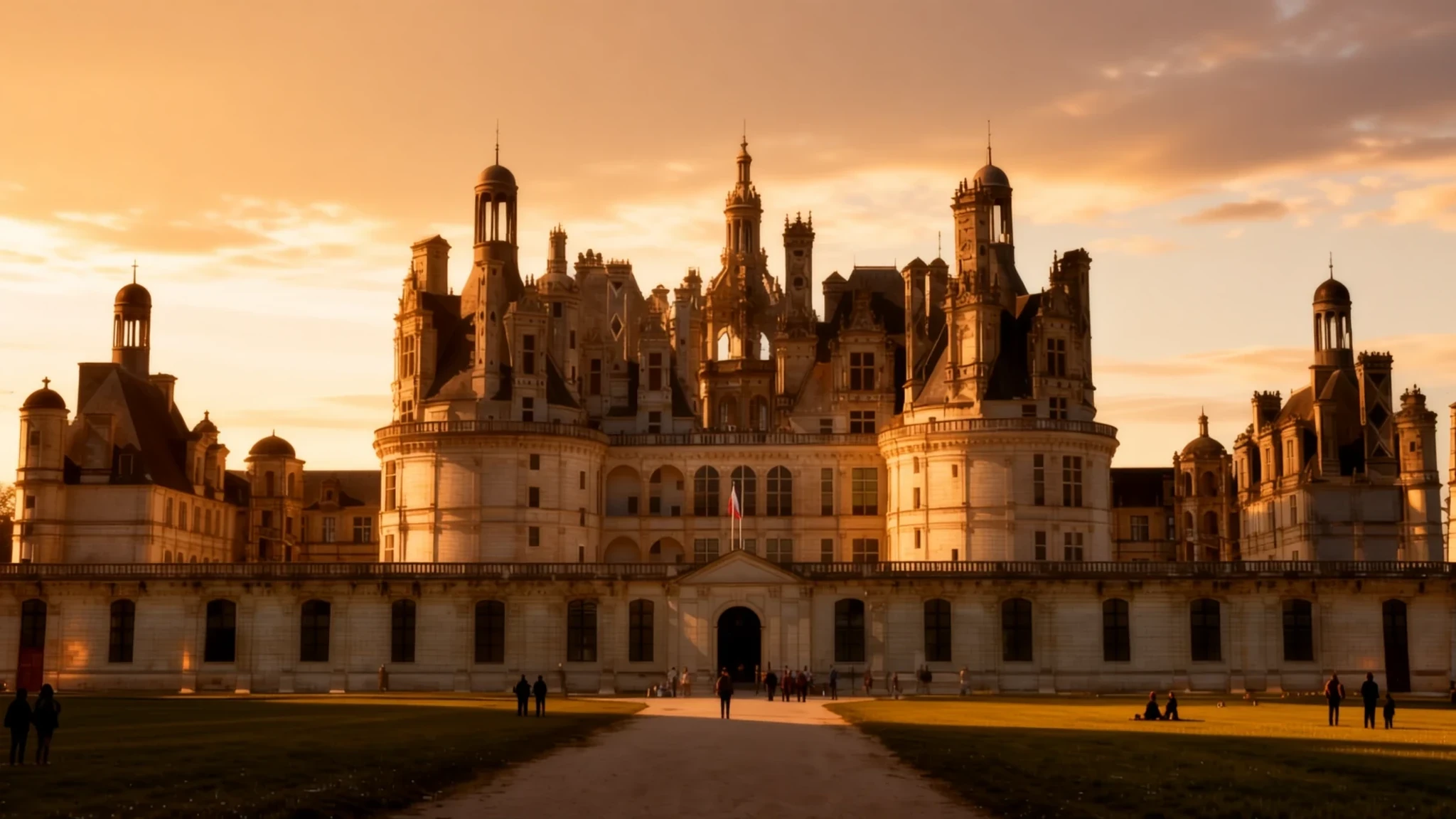
Château de Chambord is the Loire's largest château and a rare chance to see French Renaissance architecture at its most theatrical.
The place
Château de Chambord stands in the village of Chambord, in the Centre-Val de Loire region of France, and it is one of the most easily recognised châteaux anywhere. Its design blends the towers and steep roofs of French medieval building with the symmetry and central planning of the Italian Renaissance, which is why it looks both familiar and unlike anything else in the valley. Francis I commissioned it, and it was built between 1519 and 1547. It is generally counted the largest château in the Loire Valley, though its real size is hard to read from the front, because the building is more a display of ambition than a place for daily living. The walls are pale limestone, and the roofline bristles with chimneys, lanterns and dormers that give it the look of a small town lifted into the air. The château sits inside a walled estate of about 1,000 hectares, mostly woodland and marsh, with a long straight canal running out from the front. The building is UNESCO listed. Most people spend at least an hour inside, and the terraces on the roof are the best reason to linger. The ground floor and grounds are largely flat, so the surrounding park suits a bicycle or a slow walk.
Its story
Nobody is entirely sure who drew the château. The first design is credited to Domenico da Cortona, an Italian architect, though historians have doubts about how much of the finished building is his. A wooden model of his scheme survived long enough for André Félibien to make drawings of it in the 17th century. Those drawings show a keep with two straight staircases running side by side, a plan that was later swapped for a single central double helix. That change suited the French taste for dramatic staircases, yet it also gave the building a centralised layout that owes a debt to Italy. Since 1913, some writers have argued that Leonardo da Vinci, who lived at Clos Lucé near Amboise in his last years, shaped the scheme. His interest in central planning and double spirals fits the result, and many scholars now accept that he at least influenced the staircase. The building changed many times during the 28 years of construction, overseen on site by Pierre Neveu. Once the château was nearly finished, Francis I entertained his old rival Charles V there, using the house to show off his wealth. Its royal life was short. In 1792, after the Revolution, furnishings were sold and timber was stripped out, and the building was left empty for a long stretch. Nineteenth-century restorers made some efforts to repair it. During the Second World War, paintings and works from the Louvre and the Château de Compiègne were sheltered here. Today it is open to visitors, who come to see a royal hunting lodge that was never quite finished as a home.
What to see
- The central double helix staircase — Keep, inside the château
The staircase rising through the middle of the keep is the château's most famous feature. Two spirals wind around one another, so people going up and coming down never meet on the same flight. Go up slowly, because the view through the open centre is the point. It is one of the clearest links to the Leonardo debate, and it is worth pausing on the way up to look at how the turns are cut.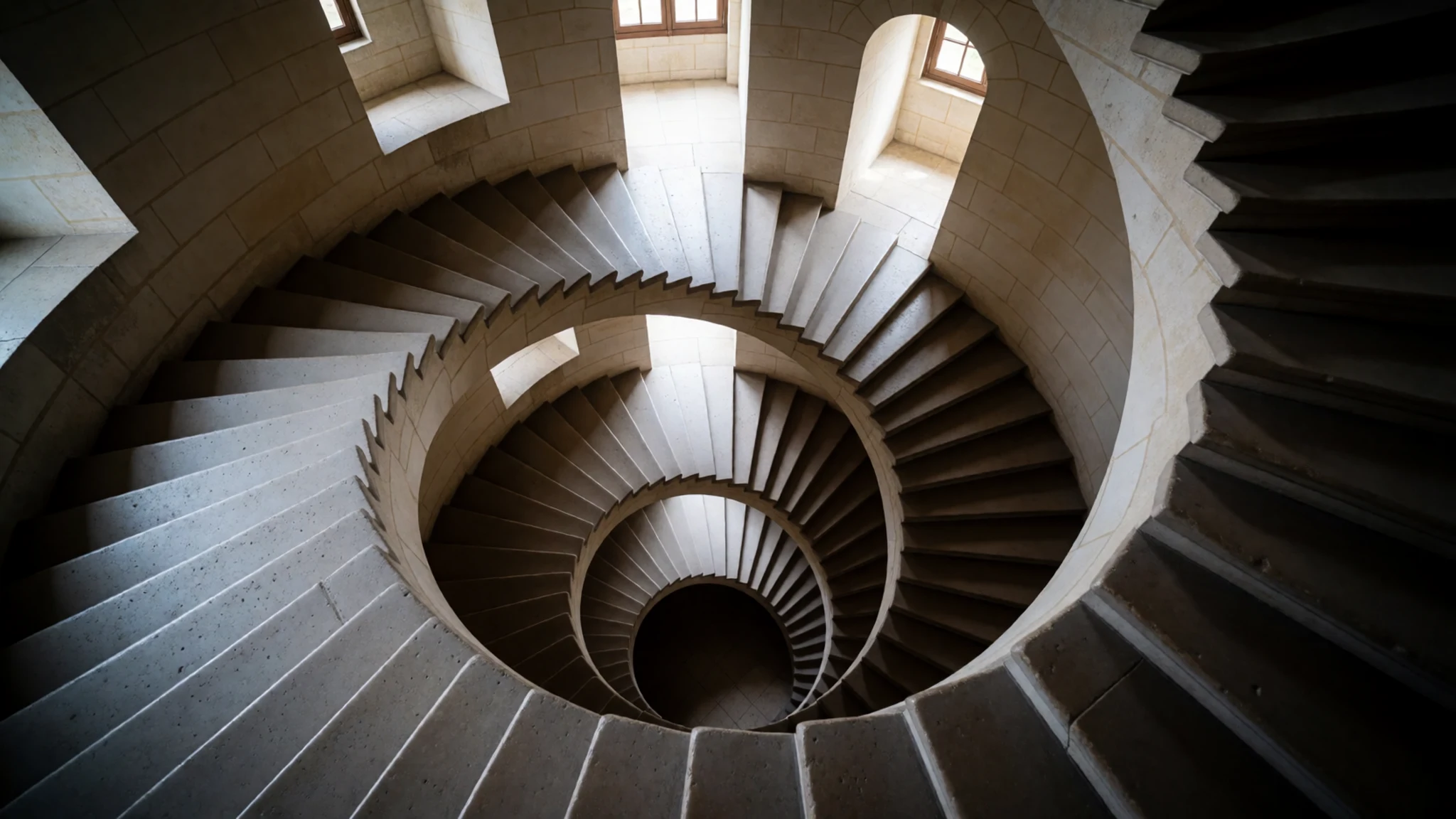
- The roof terraces — Roof level, inside the château
The terraces above the top floor are where the château becomes a skyline. Chimneys, lanterns and dormer windows crowd together, and from up here the building looks like a village. The climb is steep in places, so allow time for it. On a clear day you can look out over the canal, the surrounding woods and the grounds in a single view.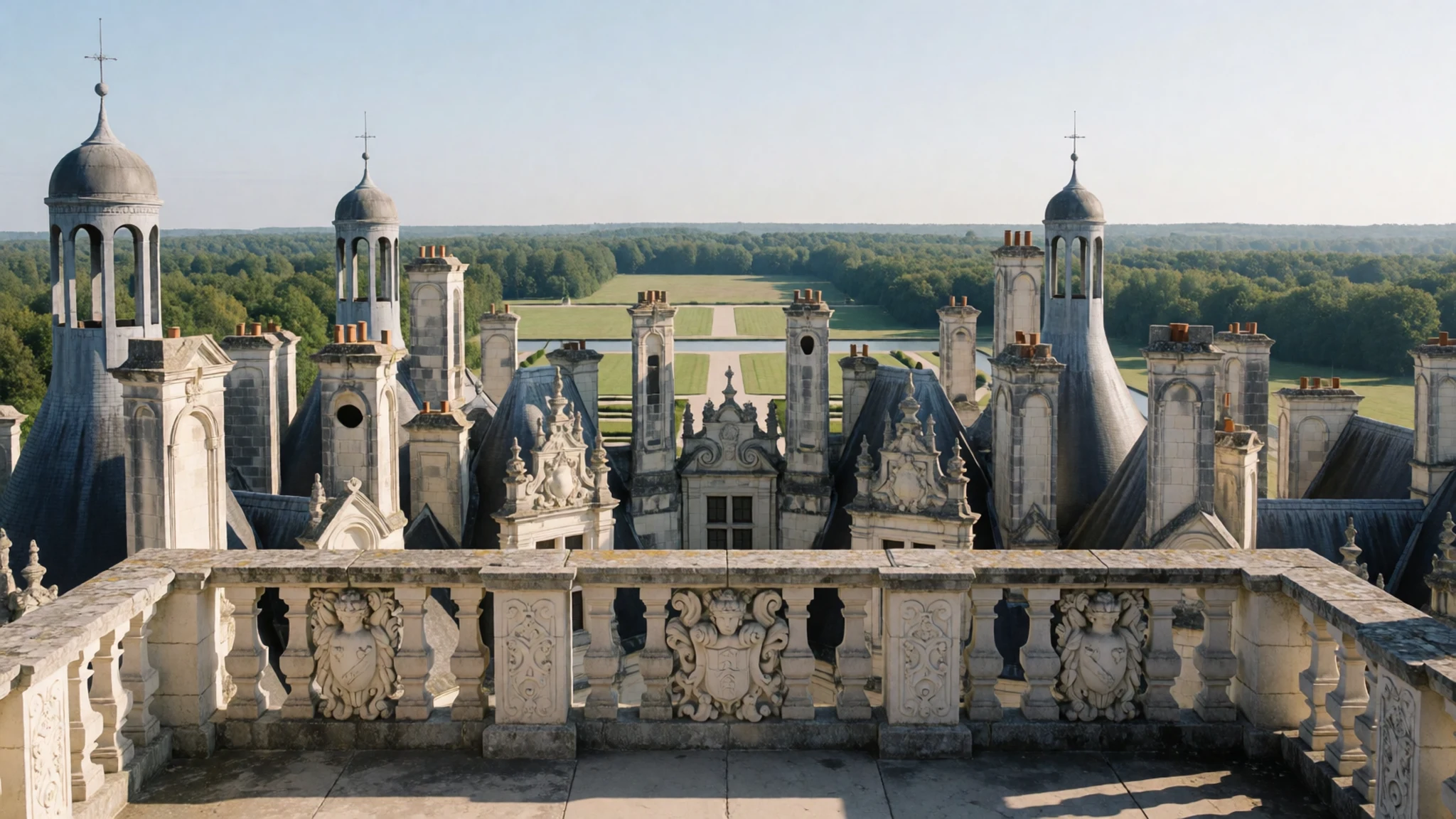
- The northwest façade — Front approach and gardens
The northwest façade is the view most photographs use. Its long pale wall, the rounded towers and the rhythm of windows show the mix of medieval and classical features clearly. Stand back on the lawn to take it in, because the building is too wide to see from close up. Early or late in the day the stone takes on a warmer colour.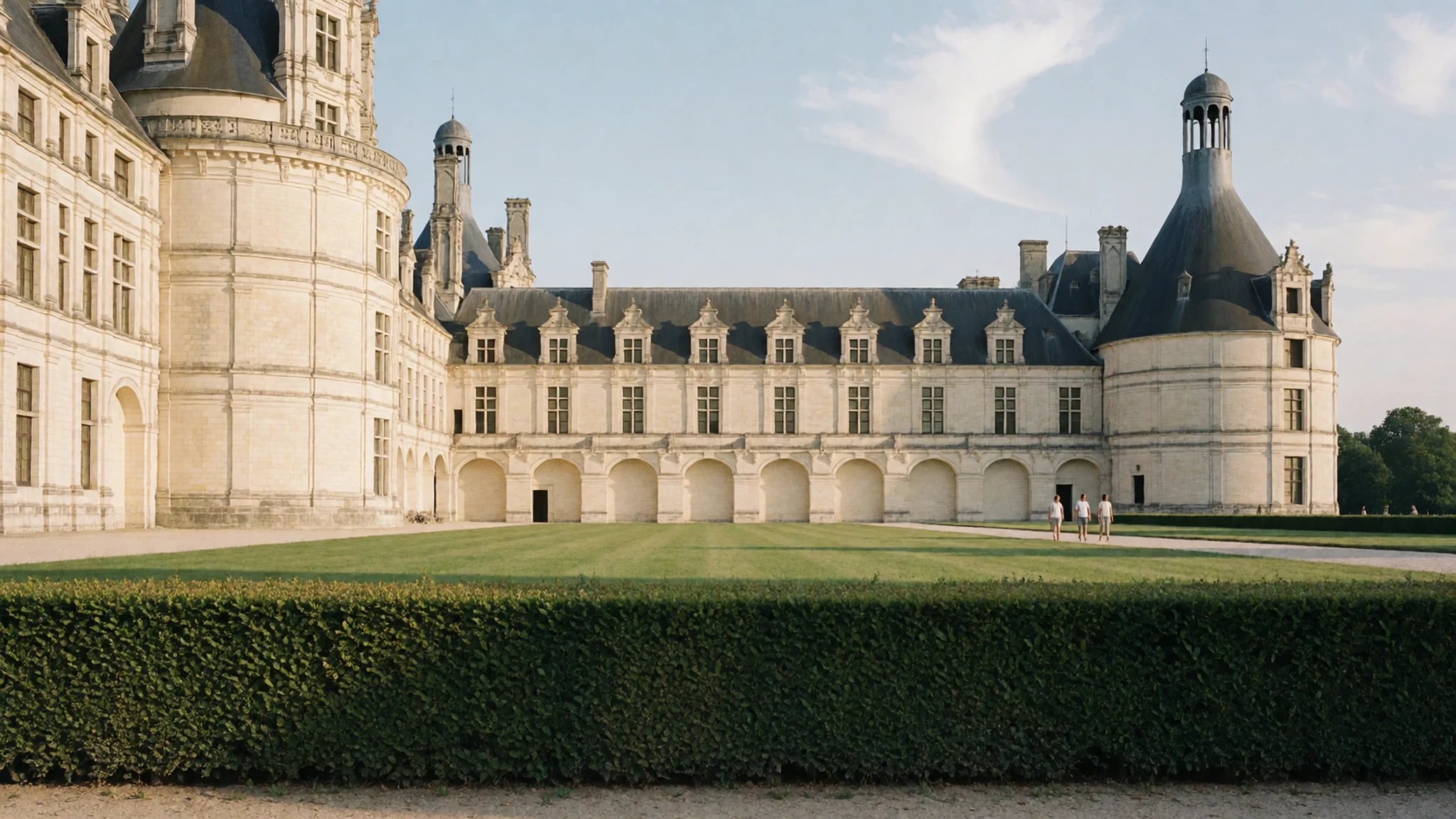
- The estate and wildlife park — Estate, around the château
The walled estate covers about 1,000 hectares of woodland, marsh and open ground. You can picnic, cycle or walk through it, and there are free observatories where you can watch deer and other animals. Bicycles can be hired from the château during the warmer months. Pick up a map at the reception before you set off, because the paths are long and the signs are not always clear.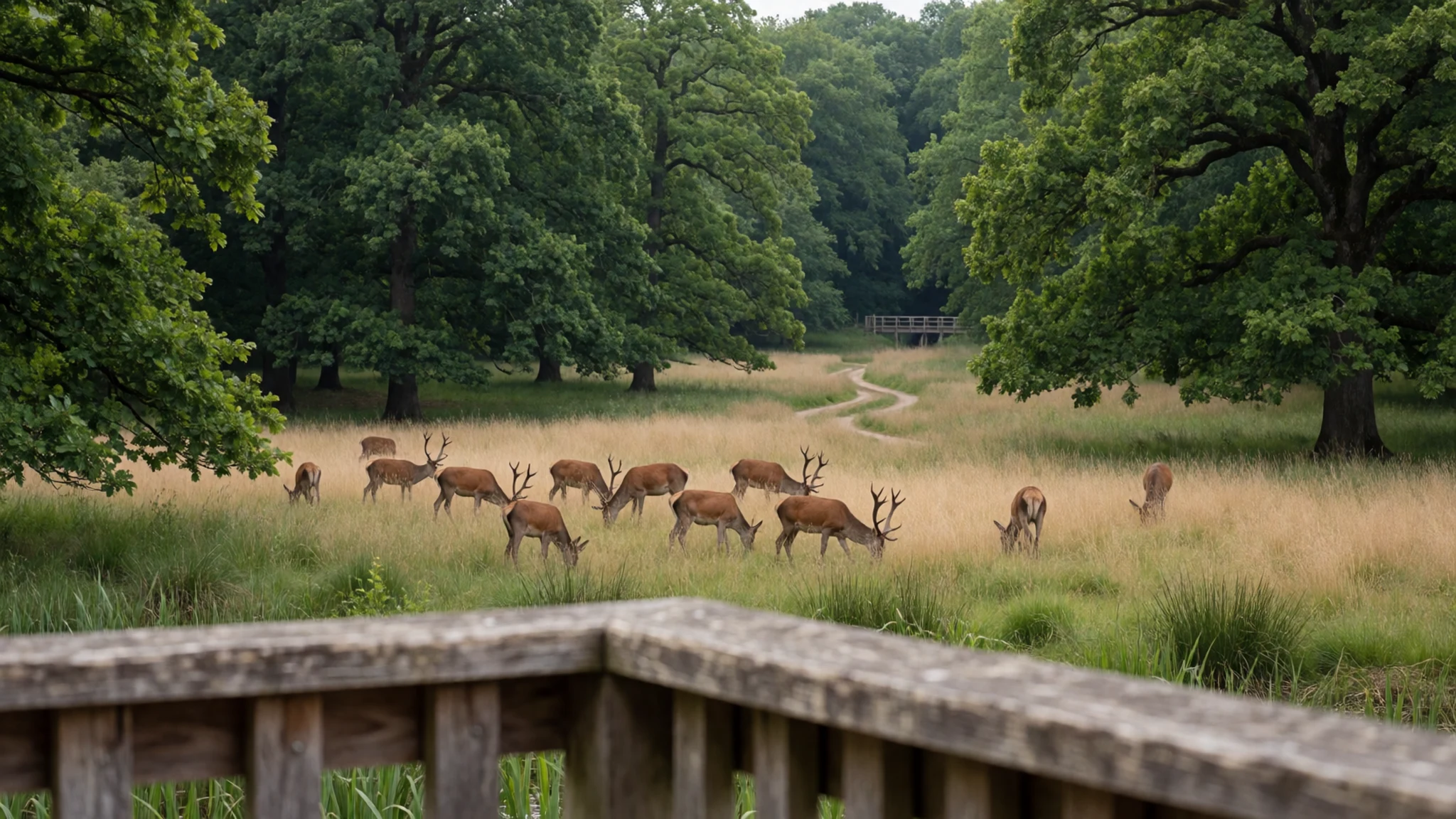
- The horse show in the stables — Stables near the château
A horse show takes place twice a day in the stables near the château during the summer season, which makes a good break from the stonework. The stable area is also where you will find a bar. Check the château's official site for the current days and times, as they change from year to year. It works well as a half-hour stop between tours of the interior and the grounds.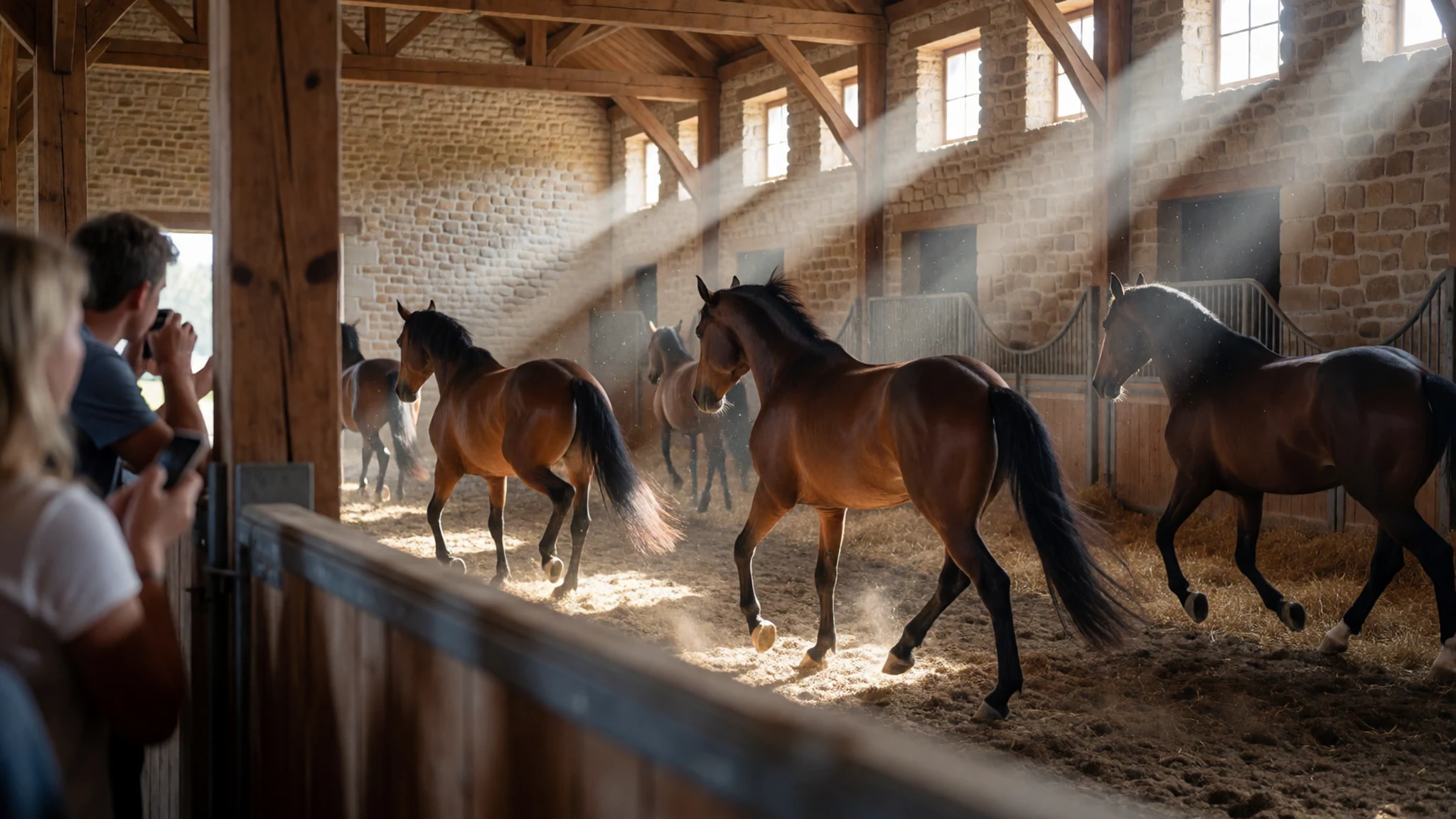
Culture
Château de Chambord is a royal building that is now a public monument, so visitors are expected to treat its rooms and staircases with care. Keep to the marked routes, and do not touch carved stone or old fittings, which are fragile after centuries of wear. The château is also a working tourist site with a busy schedule of shows, films and guided visits, so it helps to arrive with a rough idea of what you want to see. Many visitors also come to the grounds for a walk or a picnic, which is a relaxed part of the day that suits families and cyclists alike. The local town of Blois, a short way off, has its own traditions, including a horse-drawn carriage ride from the château square that many people enjoy. Photography is generally fine in the public areas, and the terraces are a favourite spot for it, but be considerate of other visitors queuing for the stairs. Please keep your voice low and let people pass on the narrow staircases, since the stone carries sound. Wait your turn on the staircase and step aside for anyone coming down.
What to wear
The château's own dress is a matter of building and setting rather than costume. Its Renaissance court would have been dressed in layered silks, velvets and brocades, with fur and fine linen worn for display and warmth. Those fabrics were the marks of rank, and the building's decoration was designed to match them. Local people today dress for the outdoors and for the season, not for the building, so you will see jeans, walking trousers and light jackets across the grounds. Lightweight layers work better than heavy coats, since the interior is cool and the terraces can be windy. Wear closed flat shoes. The stone stairs are steep, the terraces have worn surfaces, and the grounds are gravel and grass, so heels and sandals are a poor choice. Pack a light waterproof and a hat for the summer, when the sun can be strong on the open lawns. No particular dress code applies inside the château, but tidy casual clothes feel right in a building of this status.
What to eat
- Rillettes de Tours — A bistro or café in Blois, or a delicatessen in Tours
Rillettes are slow-cooked pork shredded and set in its own fat, spread on bread as a starter or a picnic snack. The Touraine version is a regional favourite. Look for it on a plate at a cafe or bistro, served with cornichons and a glass of local wine.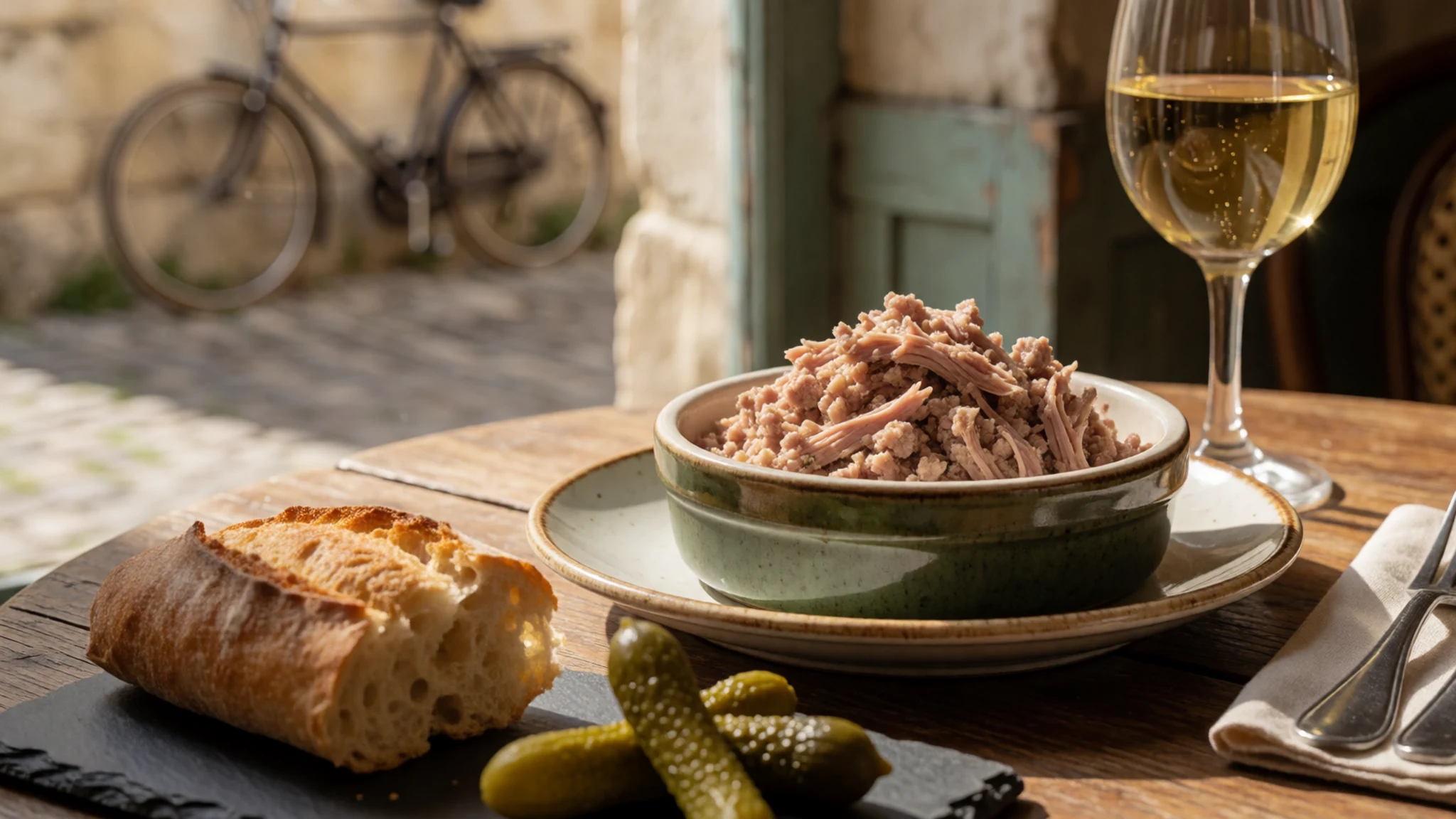
- Tarte Tatin — Any café or pâtisserie in Blois
This caramelised upside-down apple tart is widely linked to the Loire and makes a satisfying end to a day of walking. It is usually served warm, often with cream. Order it in the cafés of the town, where it is made fresh, and ask for a single slice if you are sharing.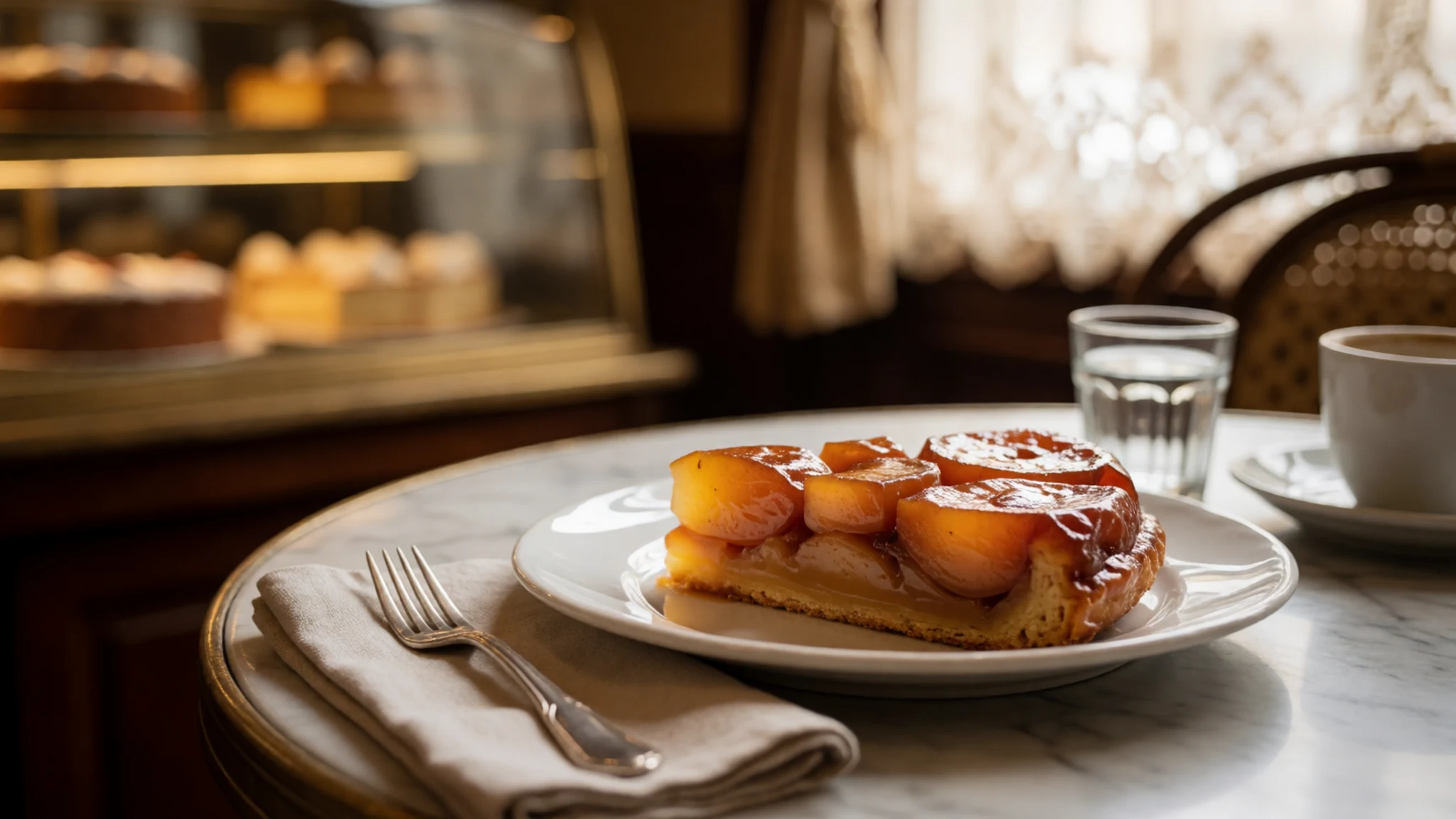
- Crottin de Chavignol — The morning market in Blois or a cheese shop in Tours
A small, dry goat's cheese from the central Loire, it is good on a picnic in the estate. Buy it from a market cheese stall and ask for it young, when it is creamy, or older, when it is firm and sharp. It pairs well with bread and fruit.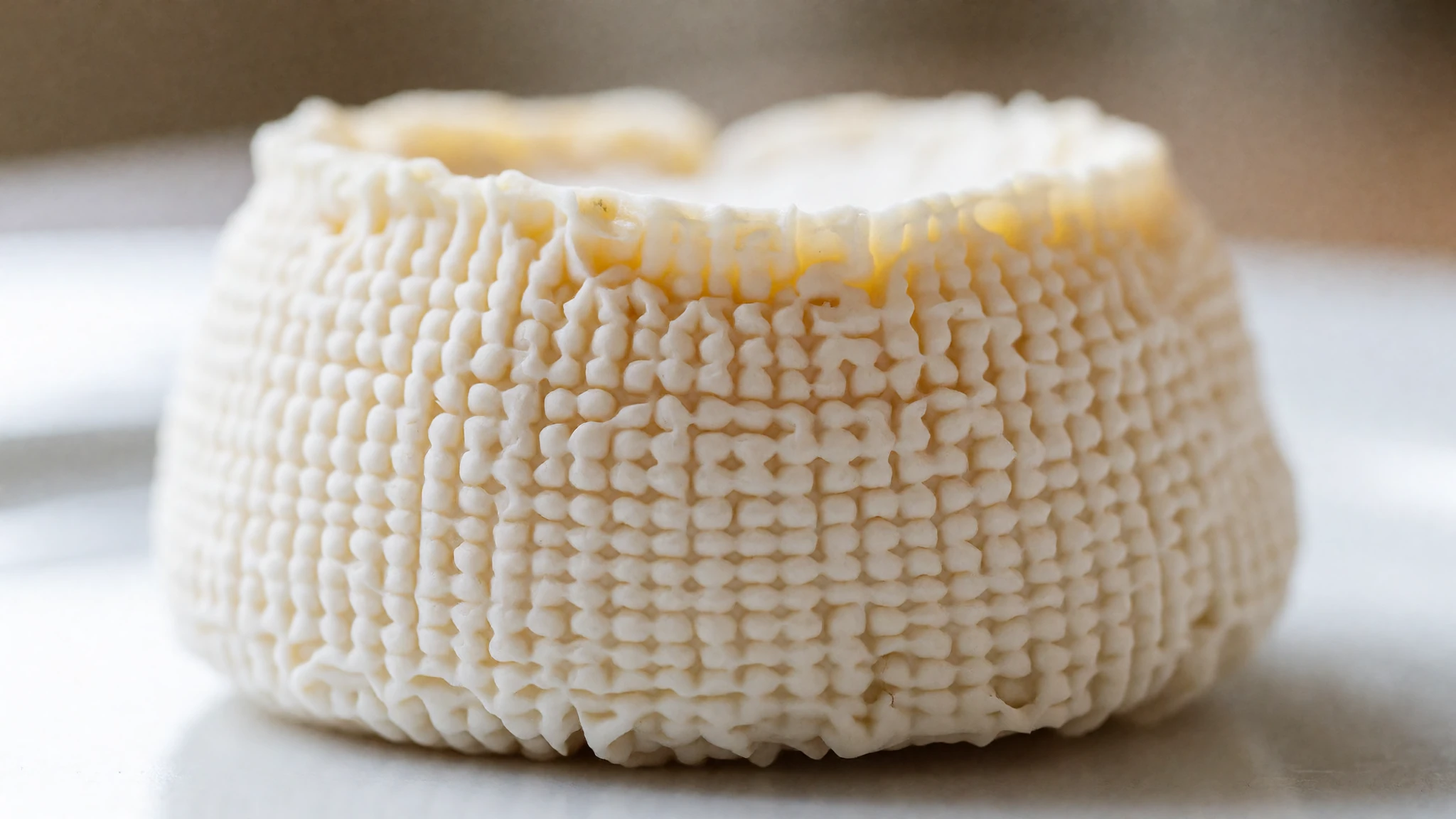
- Game stew from the Sologne — A traditional restaurant in Blois, especially in cooler months
The forests south of the château provide wild boar, venison and rabbit, often braised in red wine. Dishes like this show up on winter menus in the region. The Sologne is the local hunting country, so the dishes reflect what the land gives. - Loire white wine — The bar in the stable area, or a wine shop in Blois
The Touraine and Vouvray areas produce dry and sweet white wines that go well with local cheese and pork. A cold glass after a long walk through the estate is a simple pleasure. The château's bar serves drinks, and the wines of the valley are easy to find in any shop.
Plan it
Best time. April to June and September to October suit a visit best. Spring and early summer bring green grounds and the horse shows, while autumn is calmer and cooler. July and August are busiest, and the grounds can be hot and crowded. Winter is quiet and the terraces are cold, but the château is open and the light is clear.
How long. 1–2
Getting there. Fly into Paris or Tours, then reach Chambord by car from Tours or Blois. A shuttle bus runs from Blois in season, which is simpler than driving on a busy day. Check the official timetable before you travel, as services change.
Budget. mid
Tips
- Arrive early in the day to beat the midday crowds, especially in summer
- Book your visit slot in advance if the official site offers timed entry
- The car park is large and cheap, but it is a walk to the château, so allow time
- Carry cash for the car park, as well as cards, and check payment options on arrival
- Bring water and a hat for the open grounds, since shade is limited on the lawns
Etiquette
- Keep to the marked routes inside and do not touch carved stone or fittings
- Let people pass on the narrow staircases and do not block the flow
- Ask before photographing people in the stable area or at the horse show
Nearby
Sources
- Wikidata Q205367 (CC0)
- Wikipedia: Château de Chambord (rev 1364378402) (CC BY-SA 4.0)
- Wikivoyage: Chambord (rev 5310481) (CC BY-SA 4.0)
- France Loir-et-Cher Château de Chambord, photo by GIRAUD Patrick (CC BY-SA 2.0)
- Aerial image of Château de Chambord, Carsten Steger (CC BY-SA 4.0)
- Floor plan of the Château de Chambord, Jacques I Androuet du Cerceau (Public domain)
- Château de Chambord, Arnaud Scherer (CC BY-SA 4.0)
- Roof of the Château de Chambord, Manfred Heyde (CC BY-SA 1.0)
- Central double helix staircase, Hélène Rival (CC BY-SA 1.0)
- Northwest façade of Chambord castle, Benh LIEU SONG (CC BY 3.0)
- Facade of the keep after Félibien, André Félibien / after Domenico da Cortona (Public domain)


