Central Balkan National Park
Central Balkan National Park, Bulgaria
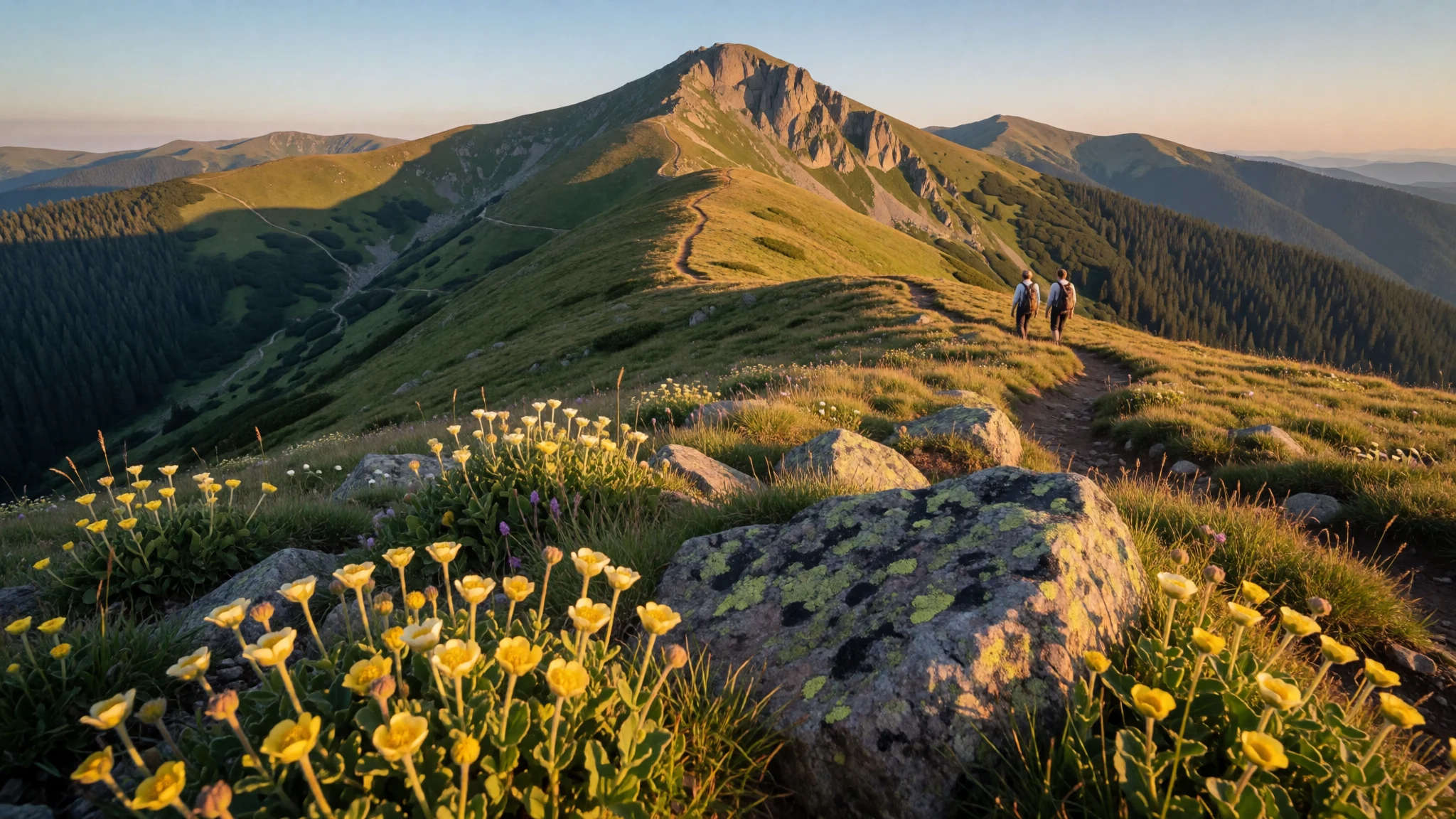
Central Balkan National Park is Bulgaria’s mountainous playground—forests, waterfalls and ridgeline hikes with plenty of quiet stretches.
The place
Central Balkan National Park sits in the central, higher parts of Bulgaria’s Balkan Mountains, inside the broader Stara Planina (“Old Mountain”) range. The setting feels classic Balkan: wooded slopes, rocky angles where trails carve through the landscape, and long views that change by the hour as clouds move across the ridges.
Altitude is a big part of the experience. Near Karlovo the ground starts much lower, then climbs steadily into the high country, reaching Botev Peak, the range’s top summit. That vertical shift matters for weather, too: a morning walk that feels mild in the foothills can turn into colder air and a brighter, harsher wind higher up. The park was established in 1991, and it’s managed as a protected area with nine nature reserves tucked within it.
In the field, the park is all about variety. Forest covers a little over half of the territory, with treeless zones and meadows filling in the rest. There are also plenty of places where water announces itself—small streams, basins and waterfalls reached by mountain tracks. Some routes are straightforward point-to-point day hikes; others are longer, best handled with the expectation that conditions can shift and that the best time for photos often means starting early.
Plan around the seasons rather than a single itinerary: spring and autumn tend to feel the most comfortable, while summer can be hot in the lower valleys and winter brings a proper mountain atmosphere. If Central Balkan National Park sounds like “just hiking”, it’s that—but it’s also a living landscape, with local culture and land-use stitched into how trails, viewpoints and resting spots have developed over time.
Its story
Central Balkan National Park was established in 1991 with a clear purpose: protect the natural scenery and safeguard the cultural heritage and everyday livelihoods of people who live in and around the area. In practice, that means conservation isn’t separate from local life here—it’s managed through an official park directorate that works with regional structures and mountain enthusiasts.
The park’s story is also written into the geography. Stara Planina is the name you’ll hear for the “Old Mountain”, and Central Balkan takes up the central, more mountainous portions of that range. Because the terrain rises from relatively low areas near Karlovo up to high peaks like Botev Peak, the park becomes a patchwork of habitats rather than one single look. Forested slopes gradually shift into open places, and waterways collect into basins, streams and waterfalls. Even a short hike can feel like changing neighbourhoods: shade and undergrowth early on, then stronger light as the trail climbs.
The park structure adds another layer. It covers a large protected area and stretches across multiple provinces—so you’re never far from the idea that this is a lived landscape, not an isolated wilderness. Within the broader park boundary sit nine nature reserves, each with its own character.
For visitors, the best way to understand the park’s “why” is to spend time moving slowly: watch how vegetation changes with altitude, notice where paths follow ridgelines versus where they track valleys, and take breaks where water and views naturally gather. Conservation here is about keeping that whole system working—ecosystems, species, and the cultural threads connected to how people have travelled through these mountains for generations.
What to see
- Raysko Praskalo waterfall viewpoints (Ray Resthouse area) — central Stara Planina (Ray area near the park interior)
From the Ray Resthouse area, the landscape opens towards central Stara Planina, with water and rock features pulling your eye through the forested slopes. It’s a good stop when conditions are clear, because the valley views make the hike feel longer than it is.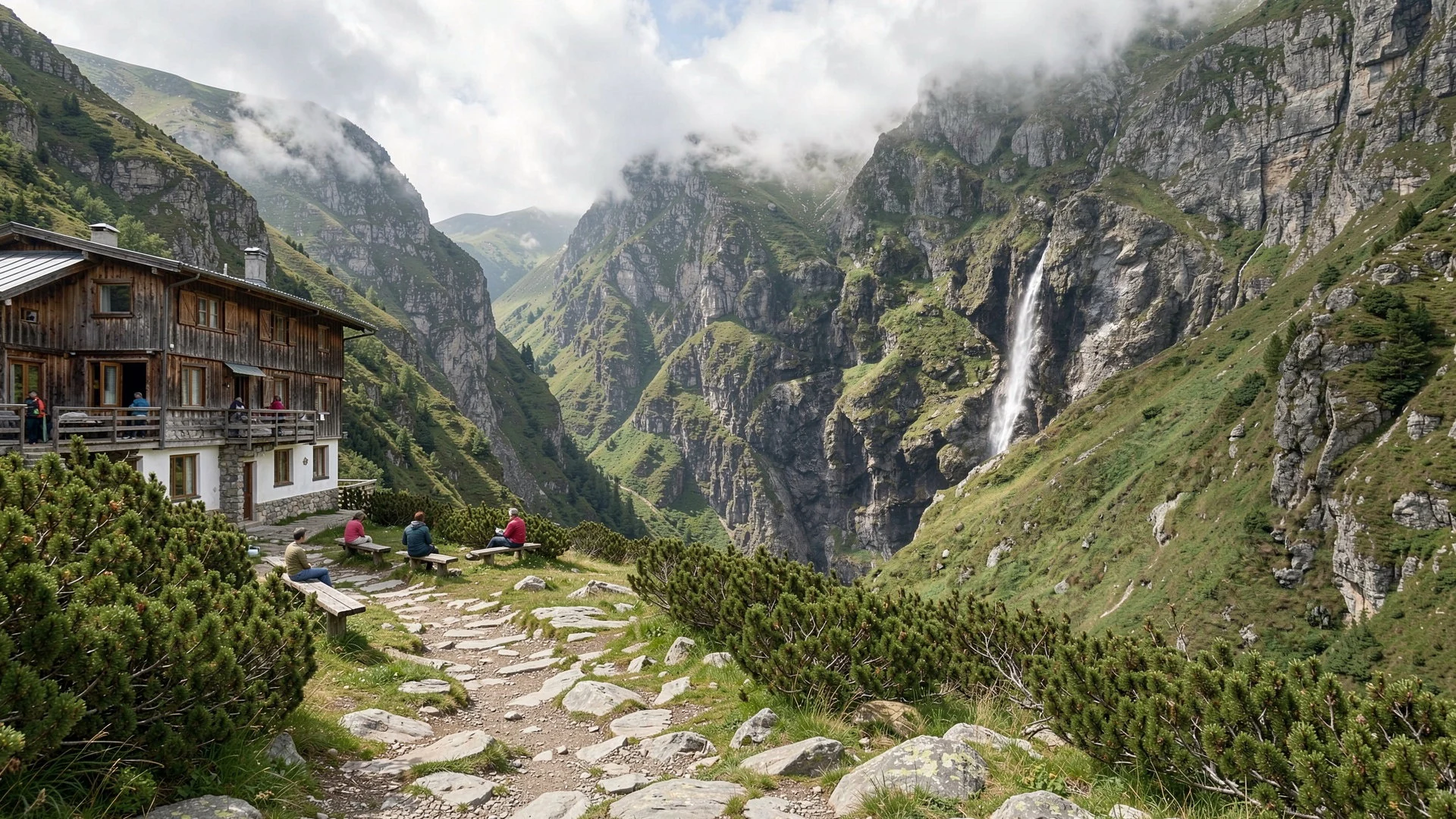
- Ray Hut & Botev Peak panorama — Botev Peak vicinity (Stara Planina high country)
A classic “ridge-meets-sky” feeling: you get the sense of standing inside the mountain’s scale, with Ray Hut as a landmark and Botev Peak looming above. Even when you don’t reach the highest point, the approach gives big-altitude atmosphere and long horizon lines.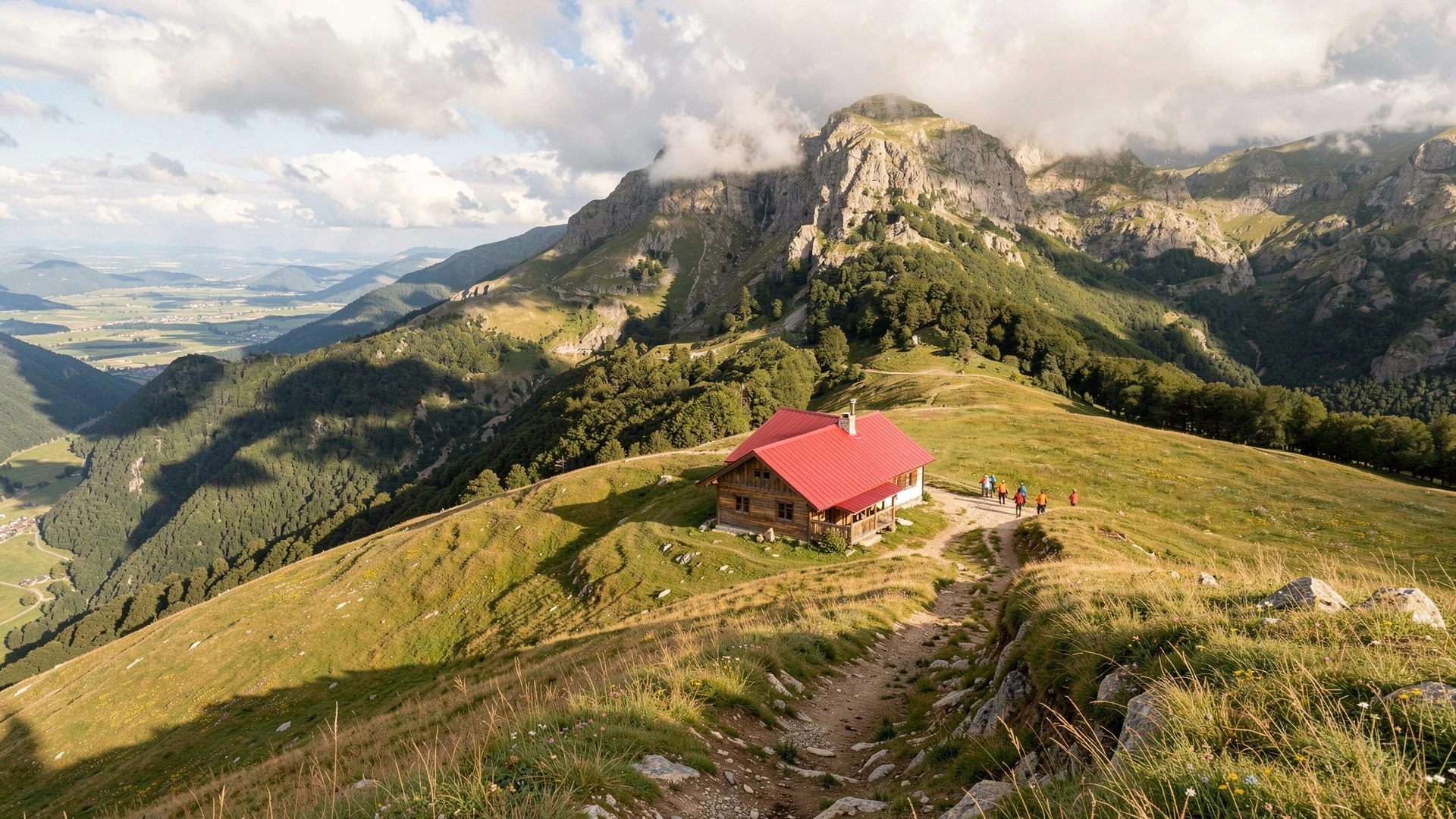
- Shipka Pass in winter — Shipka Pass (Balkan Mountains)
Winter scenes around Shipka Pass are all about stillness: snow softens the terrain and the slopes look cleaner, almost architectural. If you’re visiting in the colder months, expect harsher conditions—this is when the park’s mountain character is most dramatic.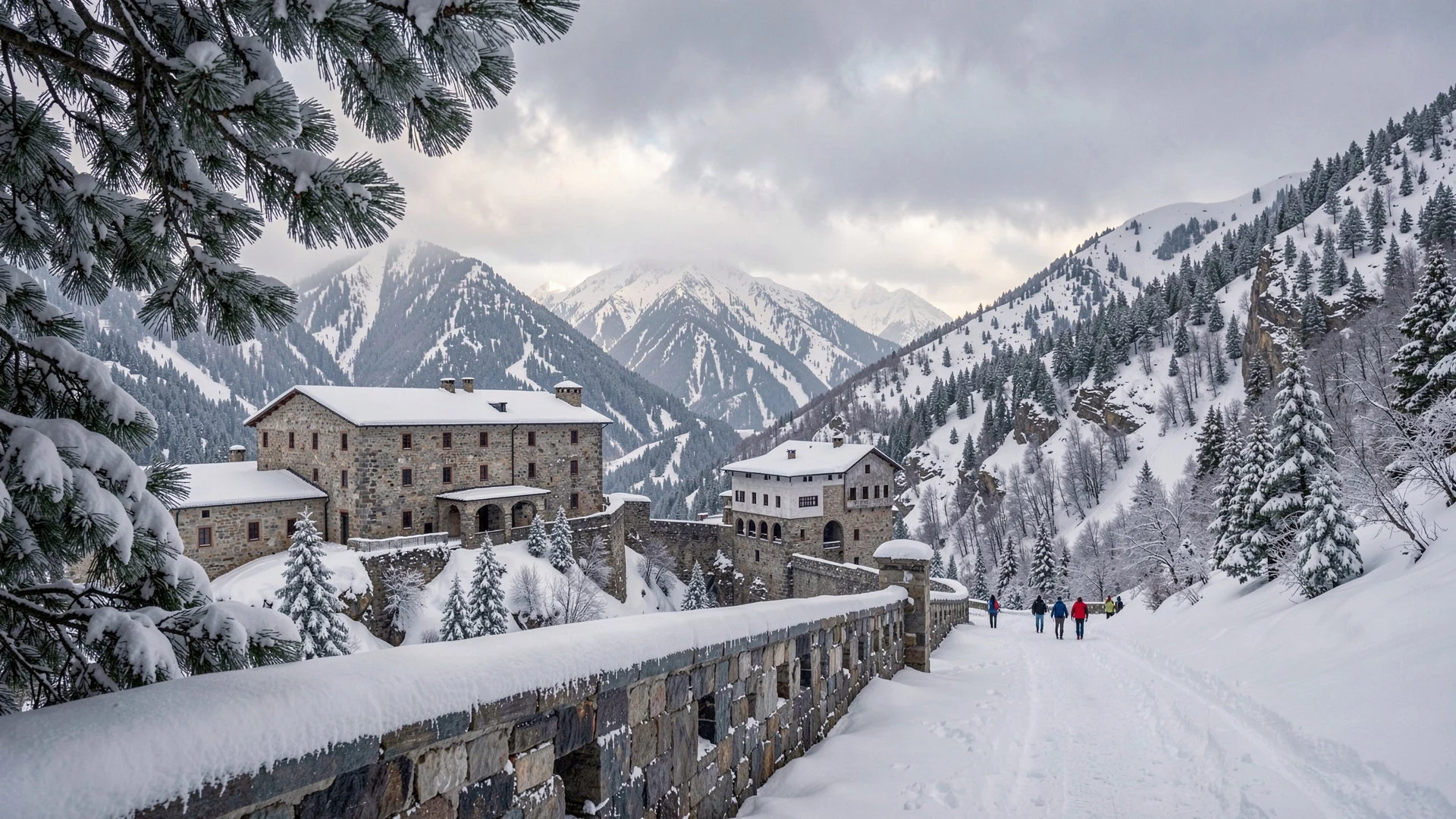
- High-mountain feel in the Triglav massif zone (Stara Planina) — Stara Planina high country (Triglav massif area)
If you like your mountain scenery steep and textured, the Triglav massif area delivers that “highlands” punch. Think of dark rock lines, cold-looking skies and the kind of terrain that makes you slow down and watch your footing before you look around.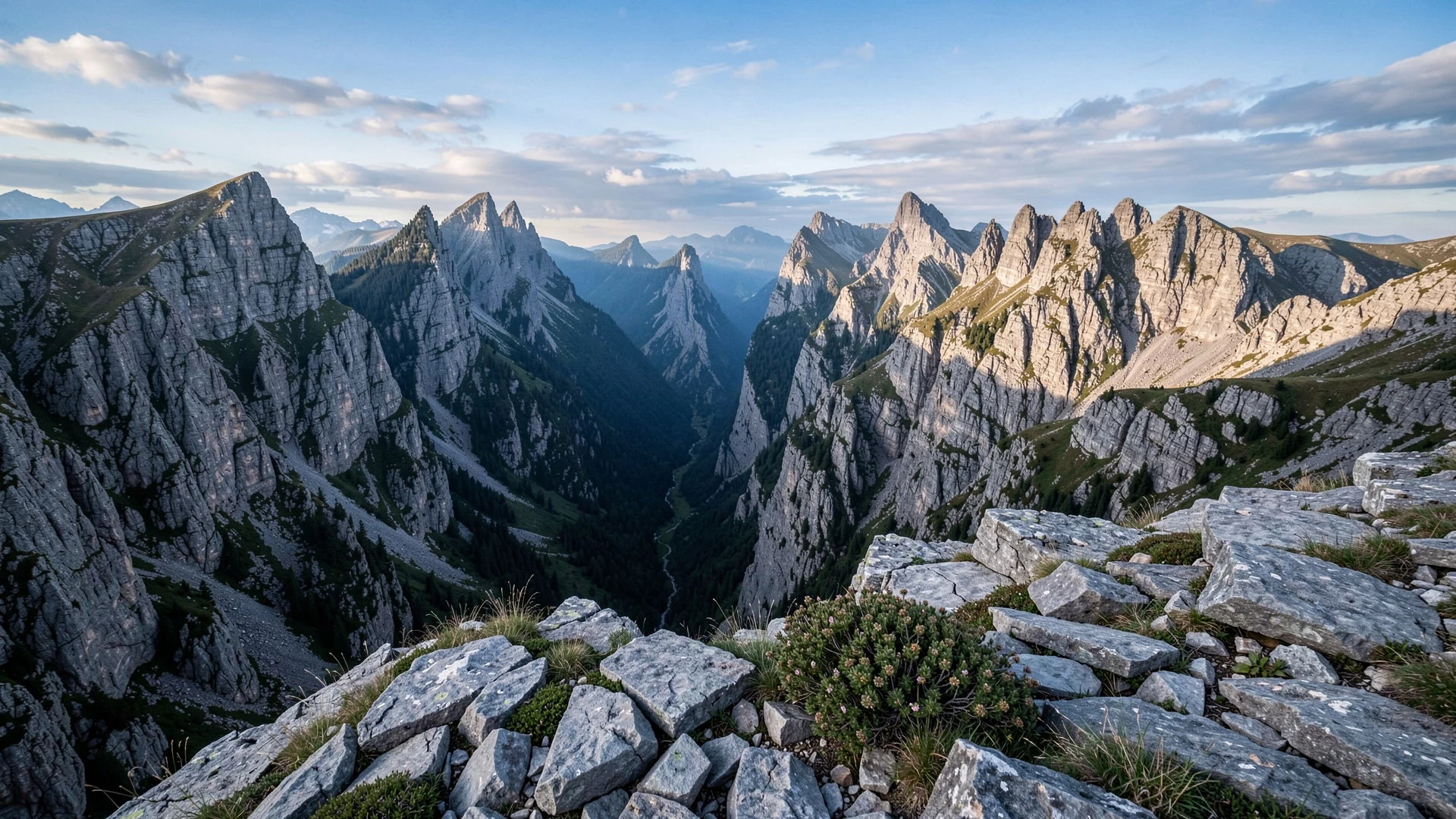
- Djavolsko praskalo waterfall (waterfall walk) — Djavolsko praskalo area within the park
Djavolsko praskalo is one of those spots where the path feels like it’s leading you to a single reveal. You’ll usually hear water before you see it clearly, then the surrounding rock and forest frame the drop—great for short, energetic walks.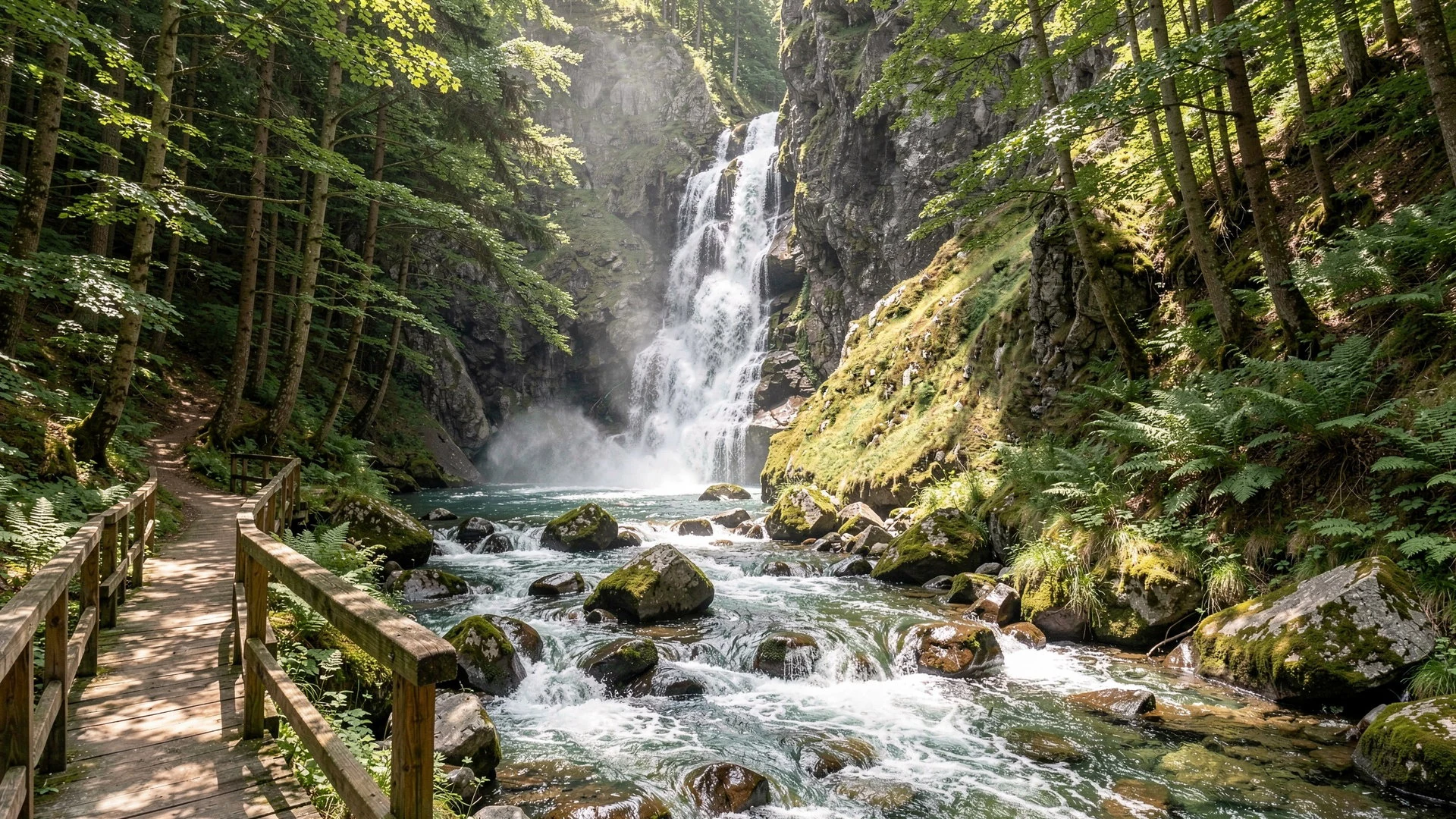
- Djavolsko praskalo (different angles, same roar) — Djavolsko praskalo area within the park
Returning for another viewpoint is worth it here: Djavolsko praskalo looks different depending on where you stand, and the surrounding slopes change the way the waterfall’s mist drifts. It’s the kind of stop that rewards patience rather than speed.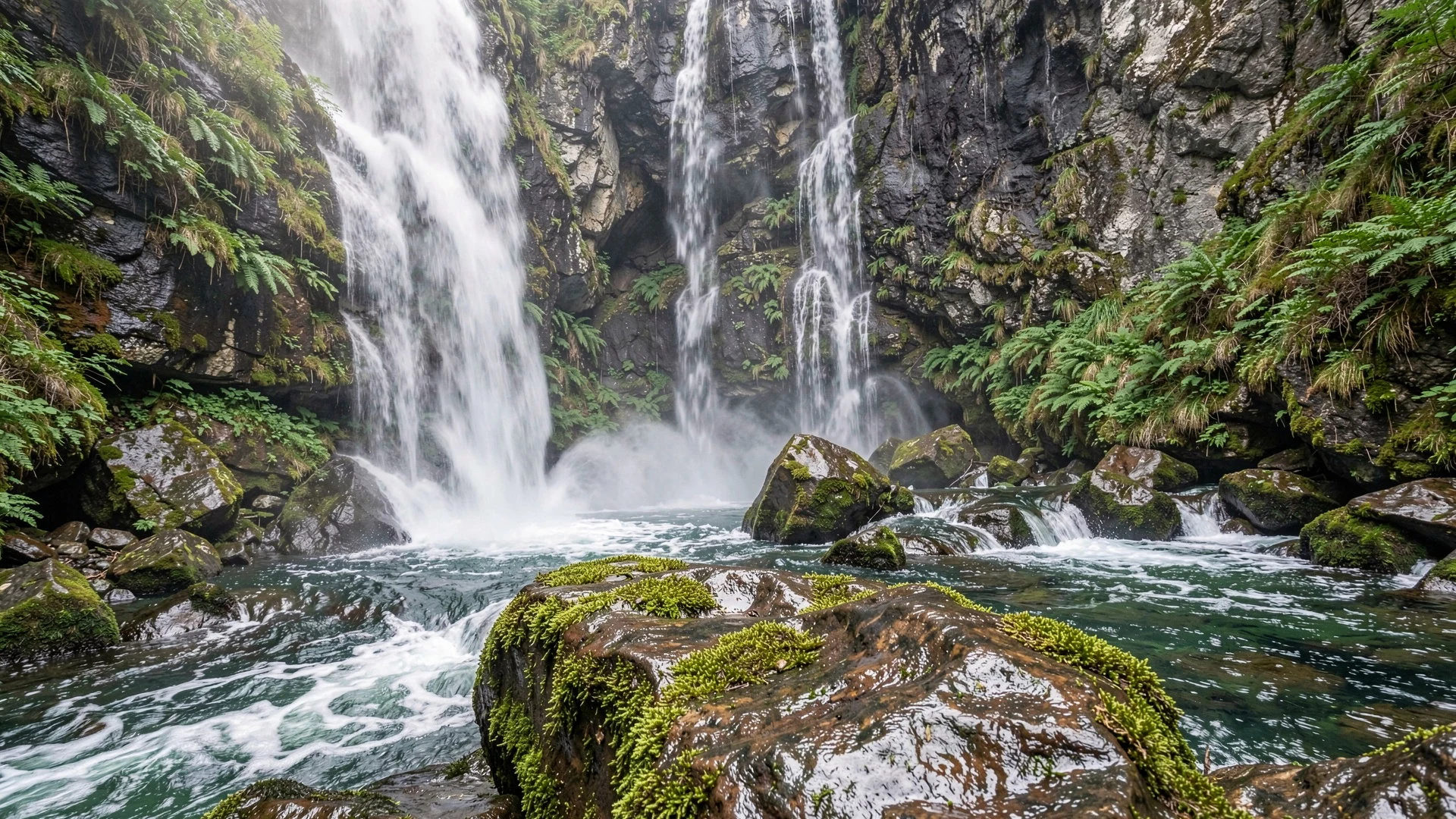
Culture
Central Balkan National Park is managed with attention to both nature and the communities around the mountains. A park directorate oversees protection work, and local organisations and volunteers are involved in carrying out the goals of conserving scenery while supporting ways of life connected to these hills.
In day-to-day terms, this shows up in how mountain tracks are used. Trails exist because people have moved through the area for work, seasonal access and recreation, and many routes link viewpoints, picnic-ready places near water, and monastery-like calm in small valley settings. Even where the landscape looks “wild”, it’s part of a long cultural relationship with the Stara Planina range.
Wildlife and habitats are a serious part of the story. The park contains forested ecosystems as well as open, treeless zones, and nature reserves sit inside the wider park system. That diversity is one reason you’ll see different kinds of vegetation along the same route as you gain and lose height.
For visitors, the practical rule is simple: treat the park like a working landscape, not a theme park—stay on marked paths, keep noise down in quiet valleys, and avoid trampling vegetation near viewpoints so the route remains intact for the next hiker and for the animals using the same ground.
Be quiet near wildlife and stay on marked trails to protect habitat and keep local areas peaceful.
What to wear
Central Balkan National Park sits in the Balkan Mountains, where weather can swing with altitude and season. Traditional dress in this part of Bulgaria is commonly associated with folk styling—embroidered fabrics, patterned aprons and woven elements that reflect local textile traditions. Visitors often see regional variations, with wool and other heavier materials used for warmth in colder months, and lighter layers when the mountains are milder.
What people actually wear now is mostly practical: hiking boots, trekking trousers, waterproof jackets and mid-layers for wind on ridges. In towns near the park, you’ll spot everyday clothing and casual wear, but outdoorsy locals and visitors shift quickly into function-first gear when the terrain turns uneven.
For a visitor, the key is layers and traction. Choose breathable base layers plus a warm insulation layer, and bring a waterproof shell even outside the rainiest stretches because mountain showers can appear suddenly. Closed-toe hiking shoes are the safe bet: the ground can be rocky, wet near watercourses, and sometimes icy in winter. If there’s a chance of visiting a monastery or a small religious site nearby, dress modestly—cover shoulders and keep clothing from being overly revealing. A hat and gloves are especially useful in colder months, while a sun layer helps on exposed ridgelines in clear weather.
What to eat
- Mountain-style grilled meats (soups and roasts in local eateries) — restaurants in nearby towns and villages at the park edges
Look for hearty, meat-based meals in village restaurants near the park approach roads. Expect comfort food that fits cooler mountain evenings, often served with simple sides rather than elaborate presentation.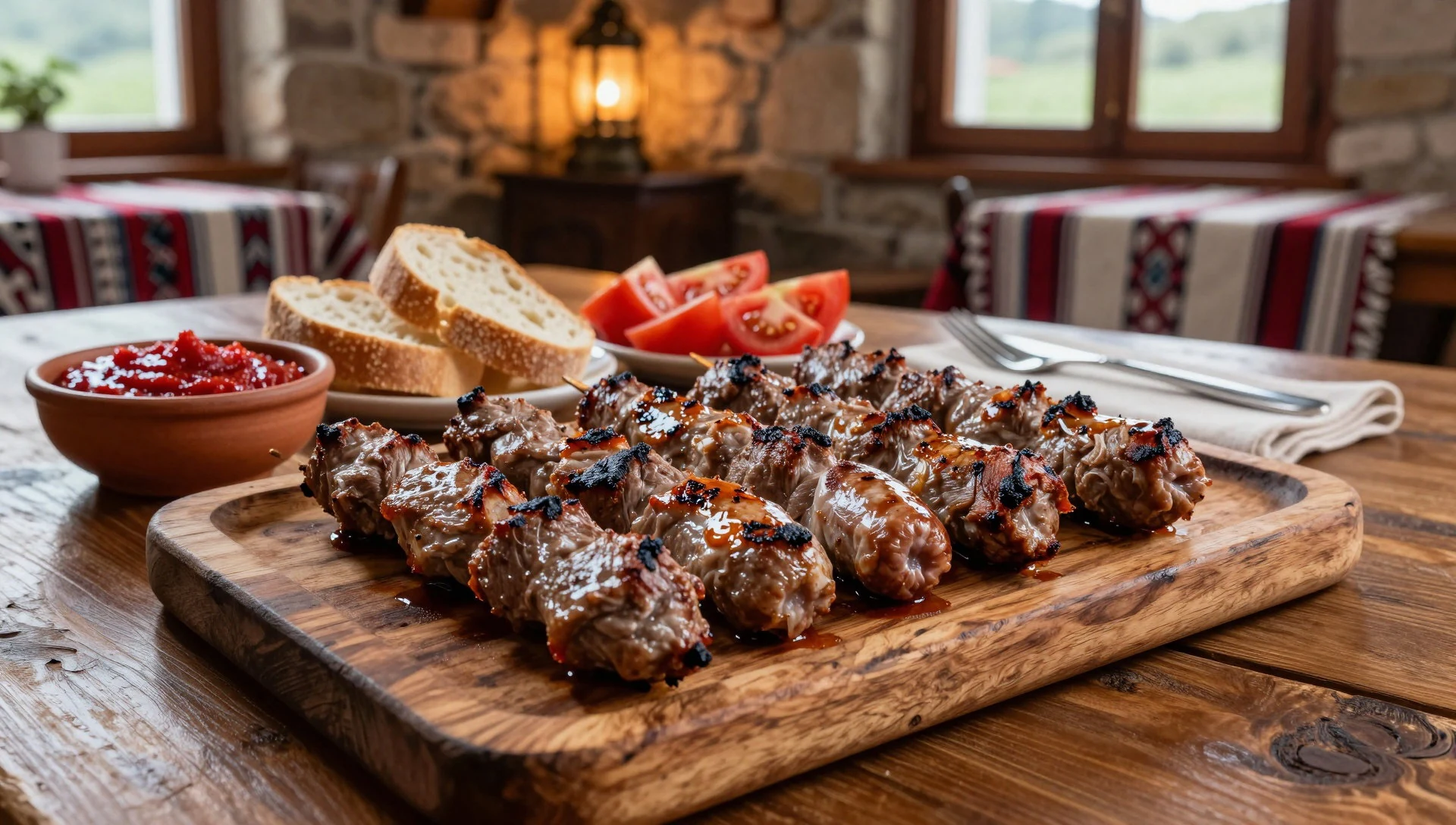
- Bean and vegetable stews — typical Bulgarian eatery menus in towns around the park
Warm bowls of stewed beans and mixed vegetables are a common mountain-cold-weather choice. They’re easy to eat after a hike, and you’ll usually find them on seasonal menus in local eateries.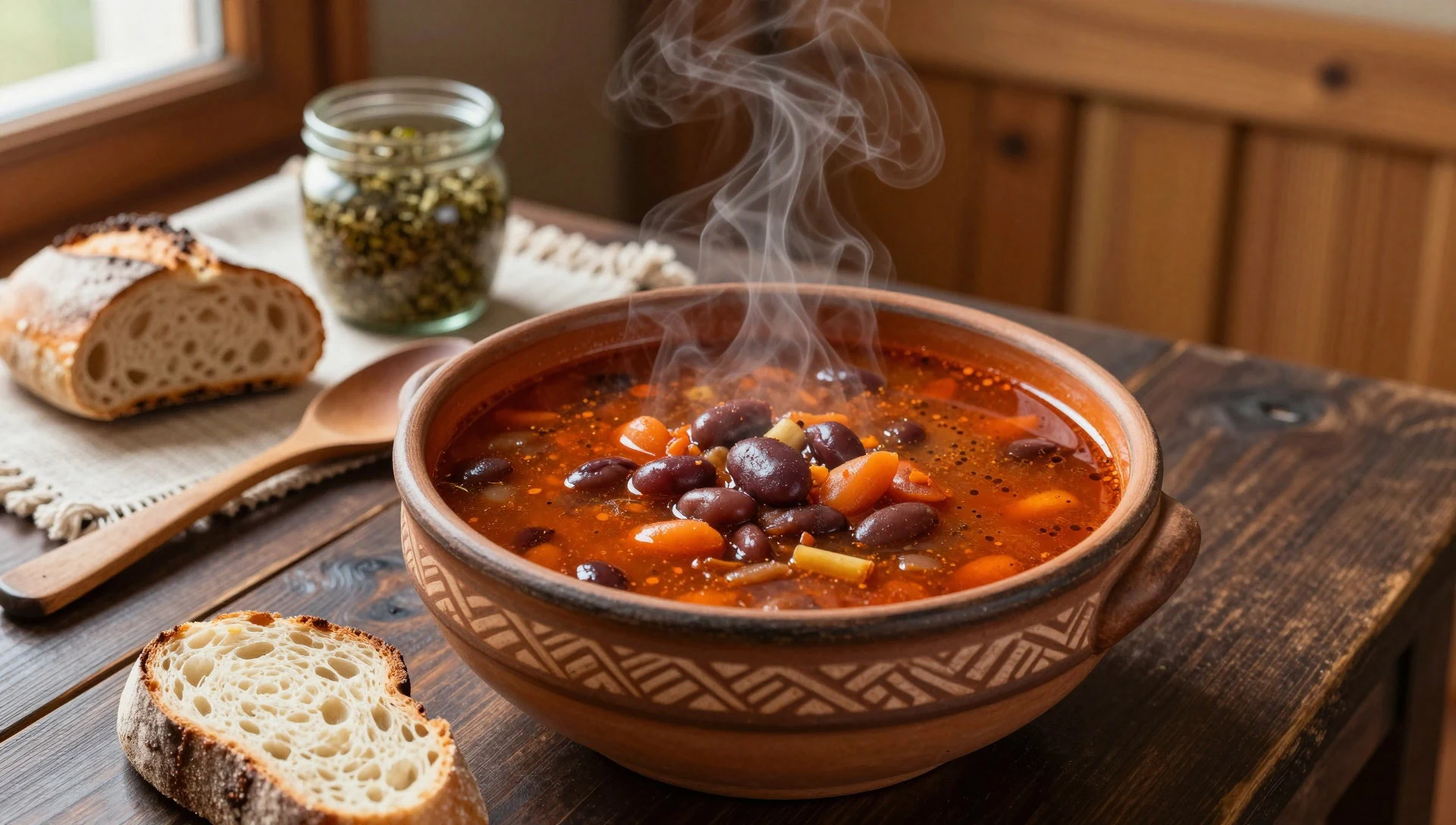
- Fresh dairy and cheeses — cafés and small food stops around the park routes
Bulgaria’s mountain regions are big on dairy, and you’ll often see regional cheeses and yoghurt-style options for breakfast or a light lunch. It’s a reliable way to refuel without needing a full sit-down meal. - Pickled vegetables and seasonal salads — markets and small grocery shops in nearby towns
Pickles and simple salads show up often, especially when the season is warmer. They balance the heavier mountain dishes and work well as part of a picnic-style meal plan. - Mineral-water style breaks (where available near tracks) — designated mineral water fountain stops along certain routes
Some areas around the park are known for natural water sources, making quick stops part of the hike routine. Even if you’re just refilling bottles, these water points turn an ordinary break into a proper mountain moment.
Plan it
Best time. March–April for comfortable spring hiking and autumn crispness in October–November; the park’s higher terrain shifts temperature quickly, and June is a rainy season while August can be hot and humid.
How long. 3–4
Getting there. Fly to Sofia and drive or take regional transport toward the park entrance areas; then use local buses or hire a car for the last legs to trailheads.
Budget. mid
Tips
- Start early for clear visibility over the ridges, especially around viewpoint areas
- Use the cooler parts of the day for higher sections and save longer descents for late morning
- Check trail and weather conditions before setting off—mountain conditions can change quickly
- Carry water and snacks; shop options may be limited away from towns
- Bring cash for smaller roadside eateries and market-style stops
Etiquette
- Stay on marked paths, especially near sensitive vegetation and water edges
- Keep voices low in quiet valleys to avoid disturbing wildlife
- Pack out litter, including tissues and snack wrappers
Nearby
Sources
- Wikidata Q1887045 (CC0)
- Wikipedia (Central Balkan National Park, rev 1362710119) (CC BY-SA 4.0)
- Wikivoyage (Balkan Mountains, rev 5265424) (CC BY-SA 4.0)
- Photo photos/01-staraplanina-krassiu.jpg (CC BY 2.5)
- Photo photos/02-panorama-ray-hut-botev-peak.jpg (Public domain)
- Photo photos/03-snow-scene-at-shipka-pass-1.jpg (CC BY 3.0)
- Photo photos/04-triglav-massif-bulgaria.jpg (CC BY 3.0)
- Photo photos/05-central-balkan-national-park-panoramio.jpg (CC BY 3.0)
- Photo photos/06-djavolsko-praskalo-waterfall-panoramio-1.jpg (CC BY 3.0)
- Photo photos/07-djavolsko-praskalo-waterfall-panoramio-2.jpg (CC BY 3.0)
- Photo photos/08-djavolsko-praskalo-waterfall-panoramio.jpg (CC BY 3.0)


