Cahokia Mounds
Cahokia Mounds, United States
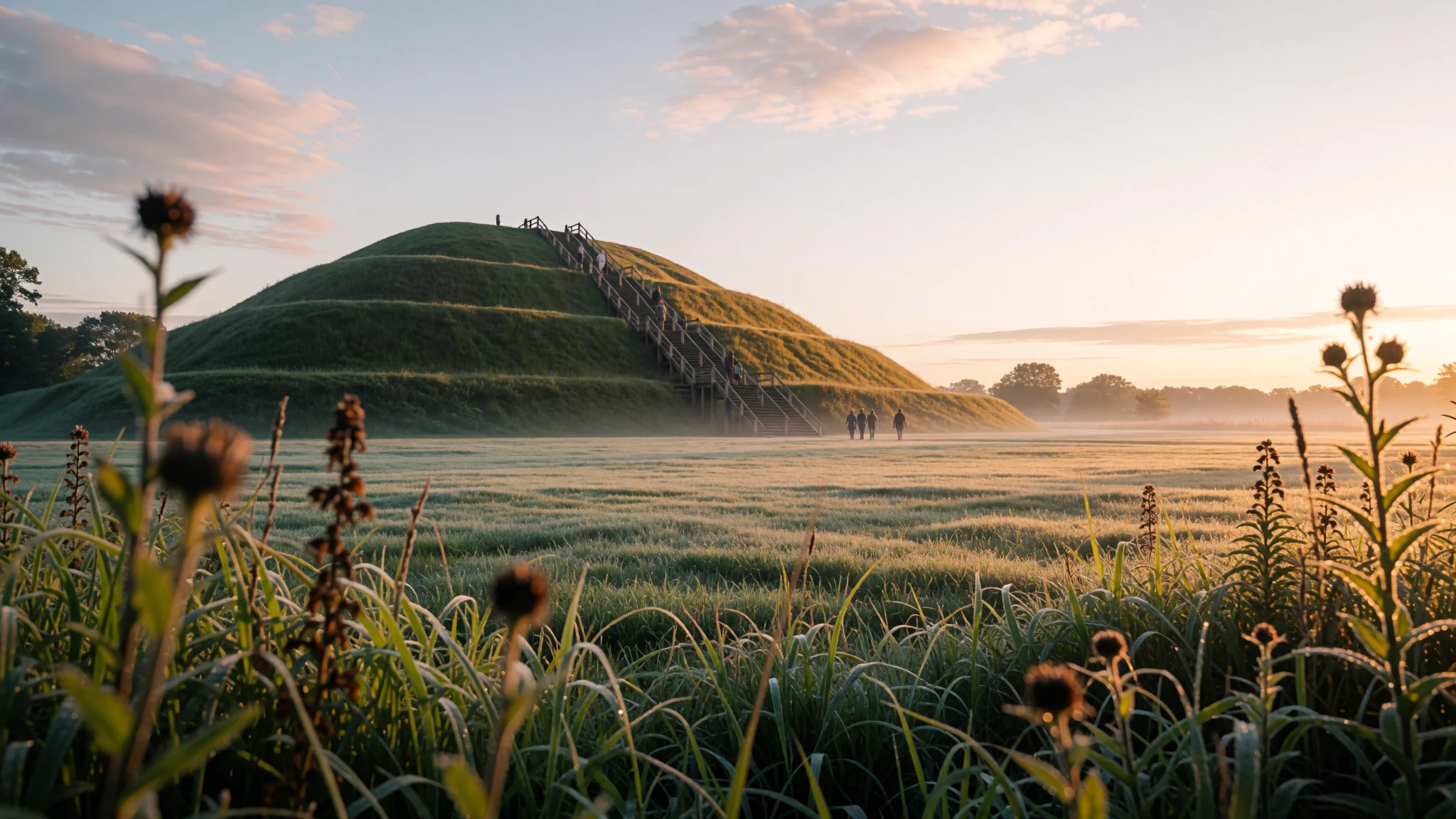
Cahokia Mounds: earthen platforms and a long-lost city rise from the floodplain across the Mississippi from St. Louis, best explored at an easy pace.
The place
Cahokia Mounds is an archaeological site in south-western Illinois, just across the Mississippi River from St. Louis, Missouri. The state historic site lies between East St. Louis and Collinsville, and the surviving earthworks are only part of the ancient settlement that once stood here. At its height the town is thought to have held roughly 20,000 people, which places it among the major pre-Columbian urban sites in North America. Its earthen platforms rise above the floodplain and are arranged around open plazas, with a wider scatter of smaller mounds that once marked homes, ceremonies and burials. Many were built up in stages over generations, so the landscape records decades of labour rather than a single building campaign. The site is a National Historic Landmark and a UNESCO World Heritage Site, and the Interpretive Centre serves as the usual starting point before walkers head out to the earthworks. The park feels open and quiet compared with major city attractions, although summer brings heat and insects. Trails vary from smooth paved paths to dirt, gravel and grass, and a half day covers the main features at a relaxed pace. Much of the archaeology remains under study, and the ground is protected for that reason.
Its story
The story of Cahokia begins well before the city itself. Traces of people using the site go back to the Late Archaic period, around 1200 BCE, but the settlement as archaeologists now define it took shape around 600 CE, during the Late Woodland period. Mound building began with the Mississippian culture, from about the 9th century. The people who lived here left no written records, only symbols on objects, the layout of their community and the burials they made. Cahokia grew into the principal centre of the Mississippian world, whose settlements ran along major rivers across much of the Midwest and the Southeast. Its place near the meeting of the Mississippi, Missouri and Illinois rivers linked it to exchange networks reaching the Great Lakes to the north and the Gulf coast to the south. Goods moving along those routes included copper, chert from distant quarries, and shark teeth and whelk shells from the sea. Earlier, from around the 10th century, the surrounding floodplain held small villages that were occupied for only a few years before people moved on. The rise of one large central town marked a sharp break from that pattern. The city reached its height around 1100 CE, but by about 1350 CE it had been largely abandoned, and why that happened is still debated. The name Cahokia came later, taken from an Illiniwek people living in the area when French explorers arrived in the 17th century. They were not necessarily descended from the builders.
What to see
- Interpretive Centre
The Interpretive Centre is the natural first stop at Cahokia Mounds. Its introductory video does a good job of explaining the site, the city's scale and the way archaeologists have pieced its story together, which makes the walk outside far easier to follow. Audio tours are available for hire from the museum shop, which suits self-guided walking.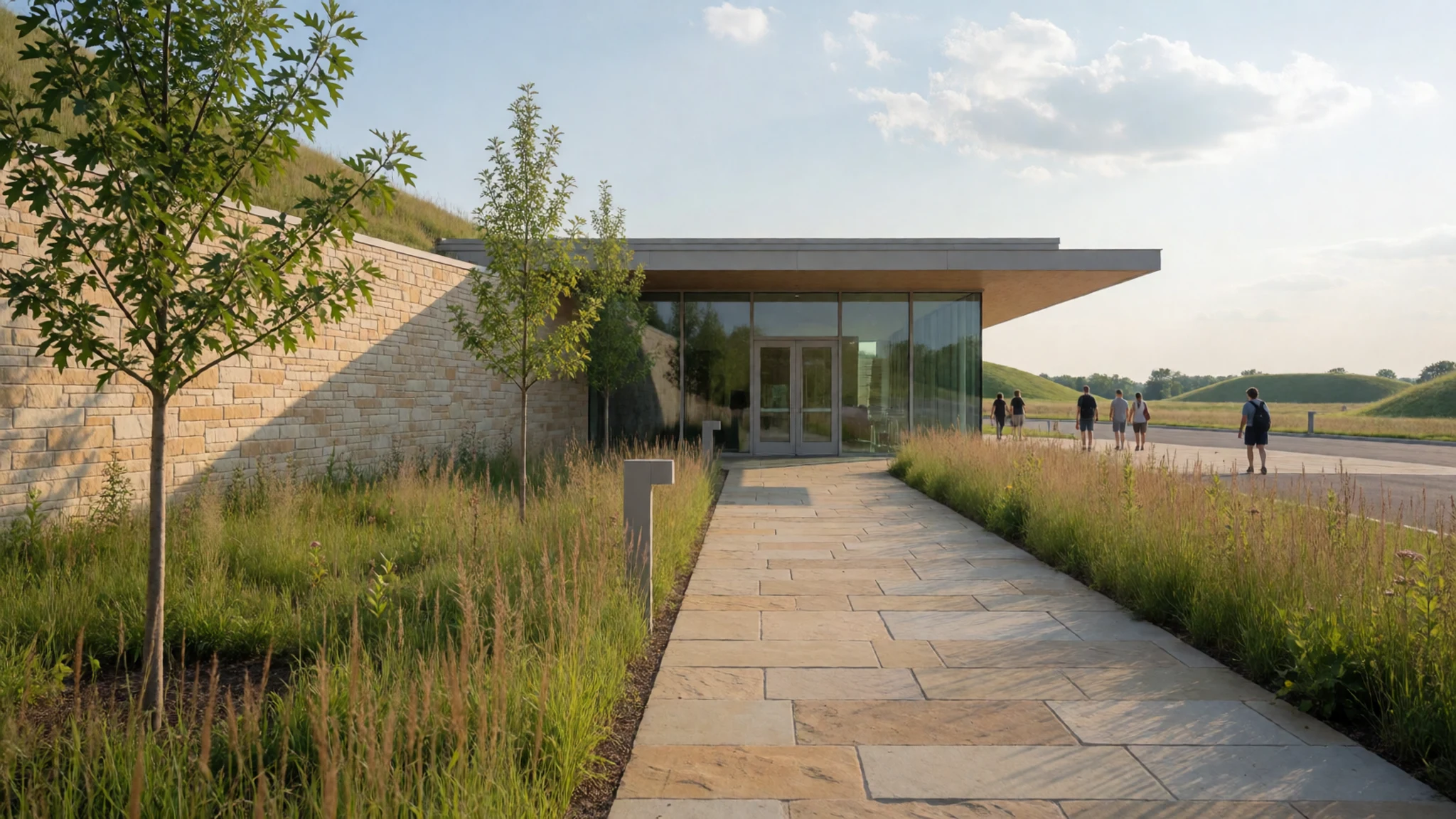
- Monks Mound
Monks Mound is the great flat-topped platform that dominates the site. A long staircase leads to the summit, and from the top the views take in much of the historic park and, on a clear day, the skyline of central St. Louis. It was built in stages over a long period, and it is the feature most visitors head for first after the Interpretive Centre.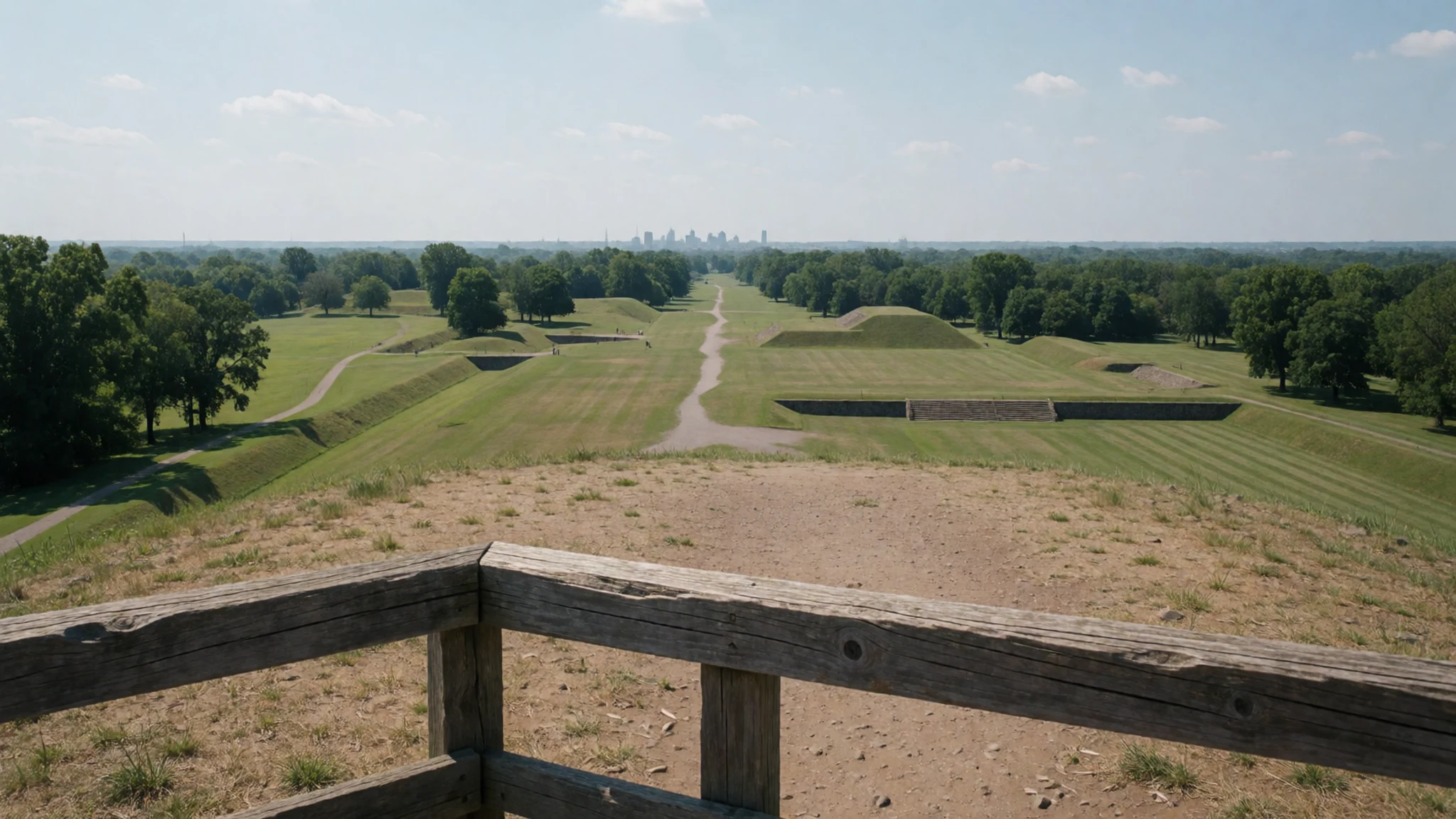
- Woodhenge
Woodhenge lies a short walk west of Monks Mound. The circle of wooden posts, set out over a wide area, is laid so that its central column lines up as it would at the equinoxes, which shows how carefully the builders watched the sky. Walking the ring gives a good sense of the scale of the ceremonial layout.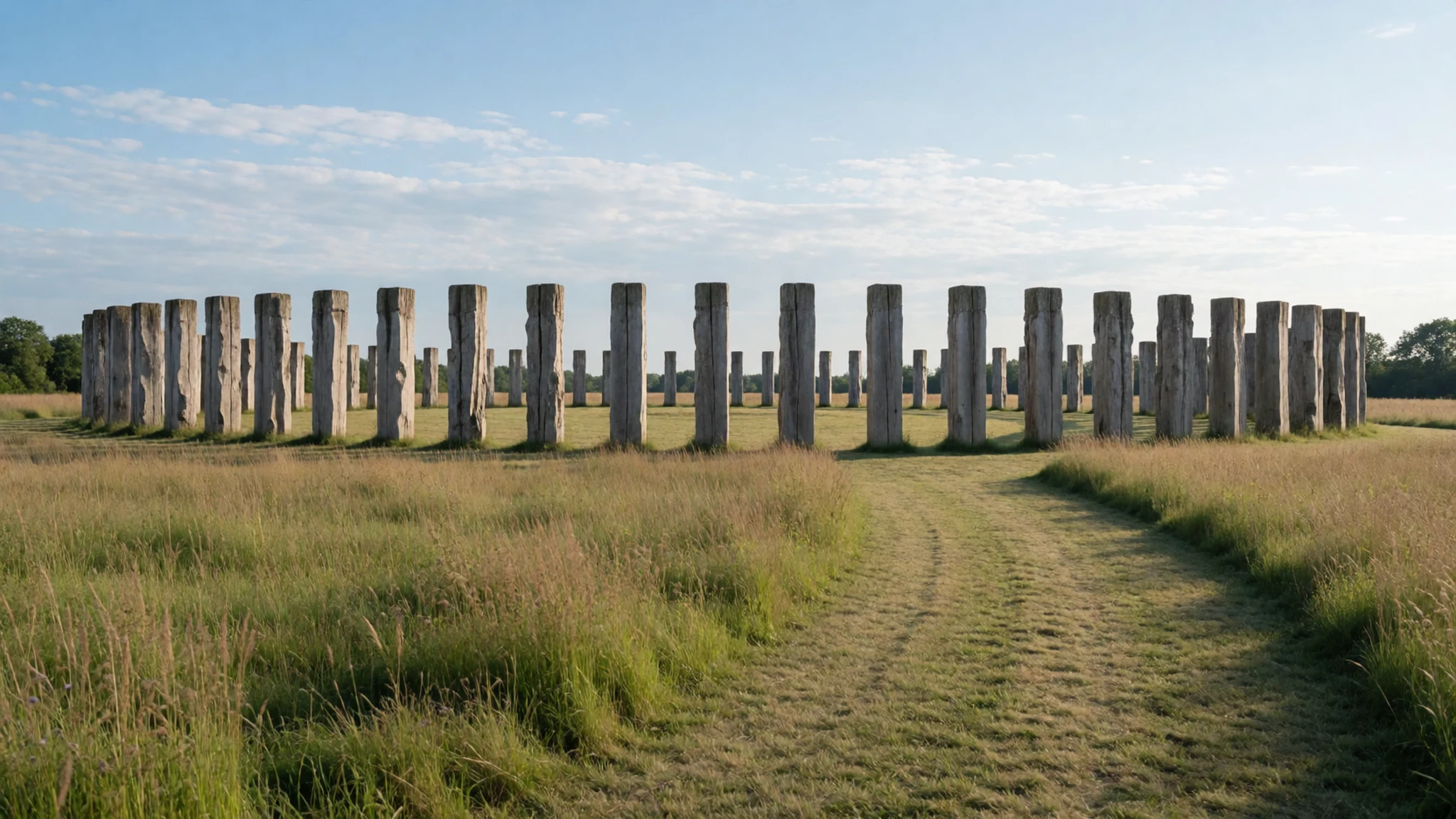
- Ridge-top burial mound
This ridge-top burial mound stands south of Monks Mound, and it is where archaeologists found the remains of people interred there. The mound is a reminder that the site was a place for the dead as well as the living. It is best seen as part of the wider layout rather than alone, because the mounds were built to be read together across the open ground.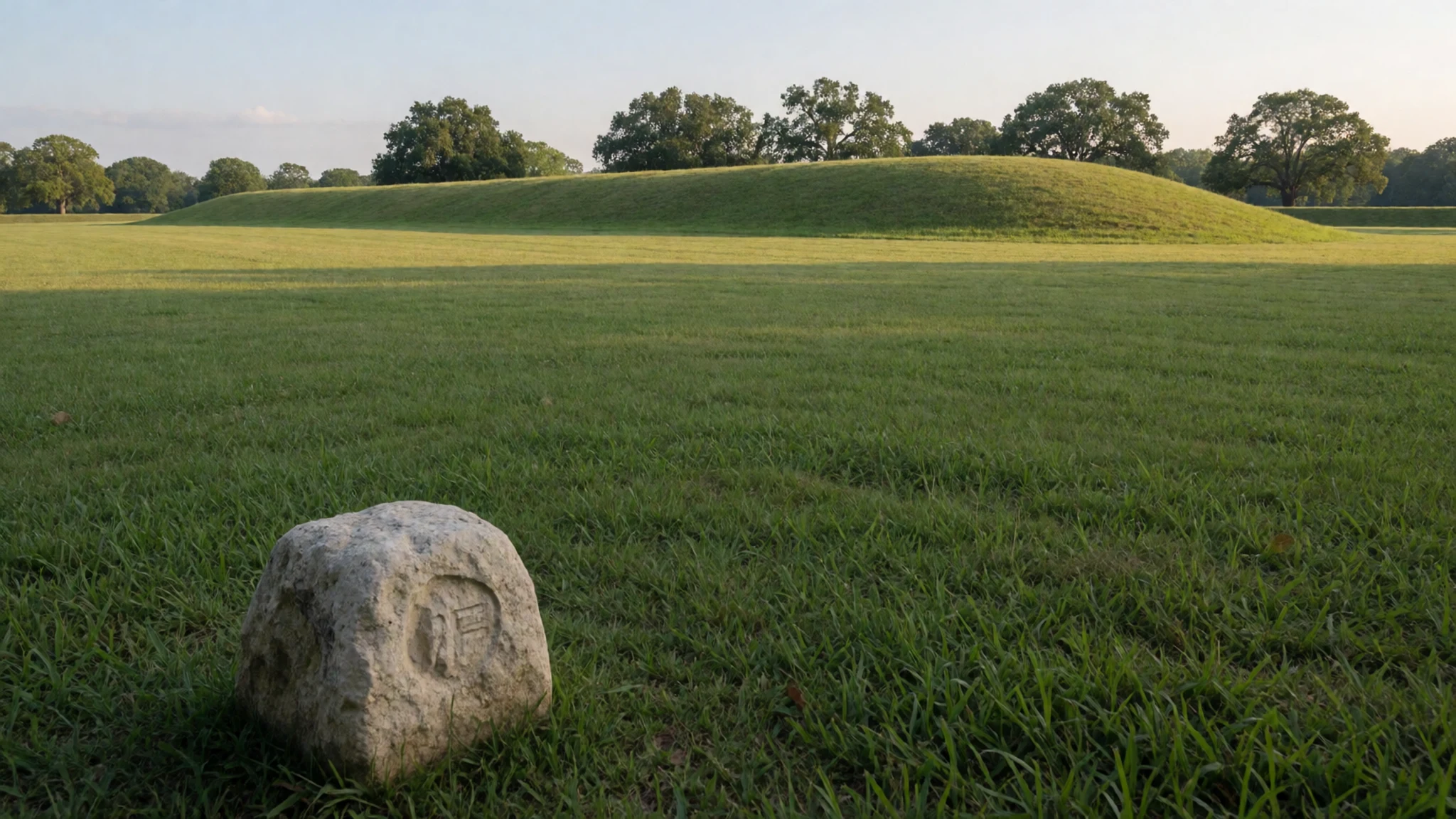
- Market Days
Market Days are held on the second weekend of July, when several dozen Native American artists gather at the site to show and sell work in sculpture, pottery, jewellery and painting. Many talk about what they make, so the weekend offers a chance to meet makers. Check the official site for the current programme, as dates and details can change from year to year.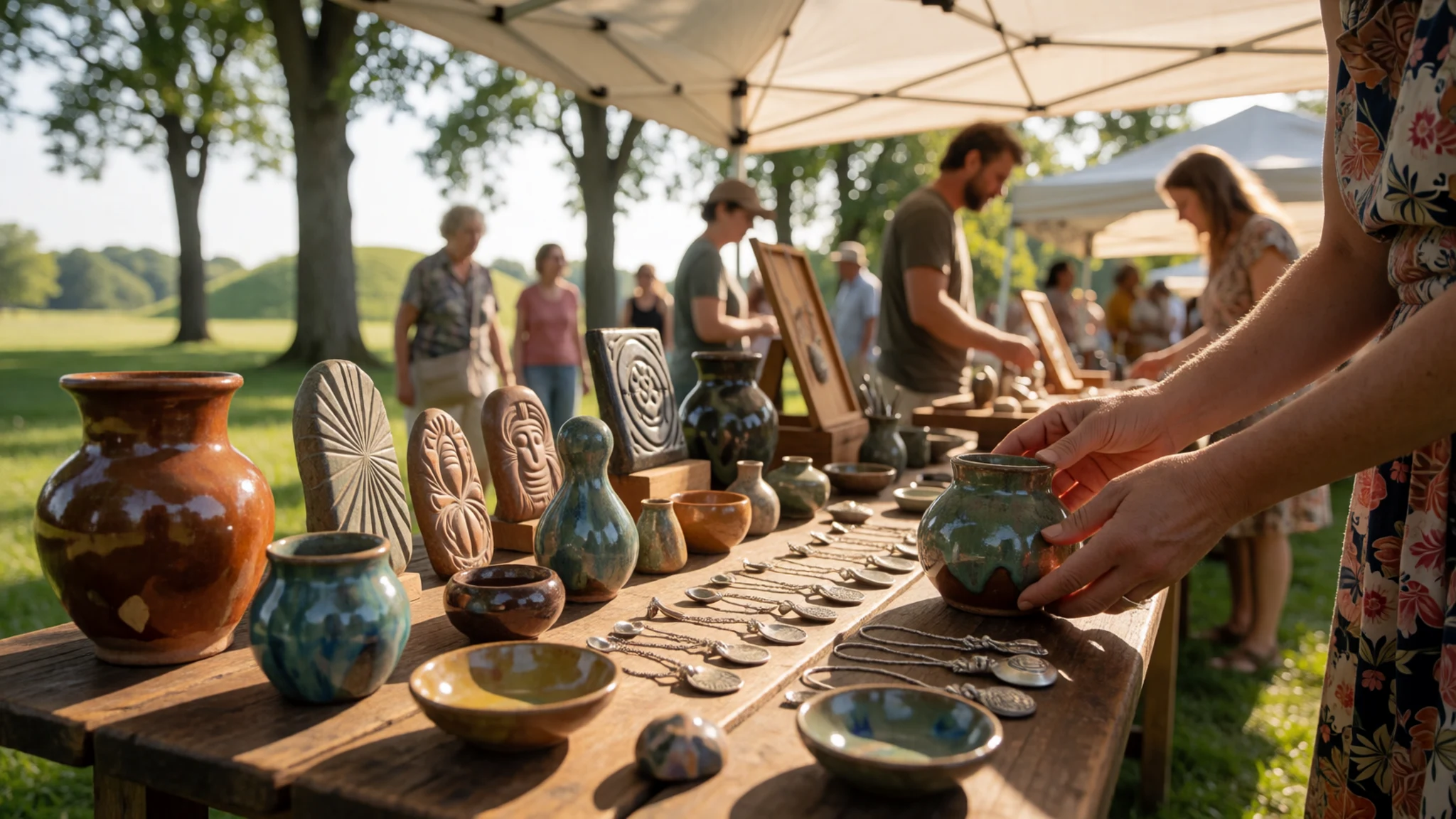
Culture
Cahokia Mounds is an archaeological site and also a place of deep cultural weight for many Native American communities, so it deserves the care due to a burial ground even though it is an open park. The earthworks are fragile, and they still hold evidence that archaeologists are working to understand. Unauthorised digging is strictly illegal in every part of the site, even where the ground looks disturbed. Public talks, winter lectures and artist markets show a wider interest in the living cultures connected to the mounds, and visitors are welcome to take part. Most people walk the paths quietly with family or friends, and speaking softly near the interpretive panels and at the market stalls is part of the everyday courtesy here. Photographing the landscape and the earthworks is normal, but ask artists before photographing them or their work, and buy or admire rather than copy. Ticks and poison ivy are a practical concern on the longer trails. Stay on marked paths and leave every object where you find it.
What to wear
Cahokia Mounds has no single traditional dress to show visitors, because Mississippian-era clothing is known mainly from archaeological finds and from later accounts. The finds suggest woven plant fibres, animal hides and shell or copper ornaments, though the detail of how these were worn is uncertain. Native American communities in the wider region have their own dress traditions, including beadwork, quillwork and regalia worn at powwows and ceremonies, and some of the artists who take part in the market weekends work in these traditions. Today people at the site dress much as they would on any outdoor day out: jeans, t-shirts, sun hats and sensible trainers. Visitors should dress for summer heat and humidity, choosing light, breathable layers and a hat, and should bring long trousers for the longer trails, where ticks and poison ivy are a risk. Shoes with good grip suit the mix of paved paths, dirt, gravel and grass, and the climb up Monks Mound is easier in footwear that holds on steep steps. There is no religious dress code for the mounds, but modest, respectful clothing suits a place of deep cultural meaning, especially at the market stalls.
What to eat
- Packed picnic — the picnic area near the Interpretive Centre
Bringing your own food is the simplest option at Cahokia Mounds. The picnic area sits a short walk from the Interpretive Centre and has tables available on a first-come basis, with parking nearby. It suits a lunch between walks, especially in summer.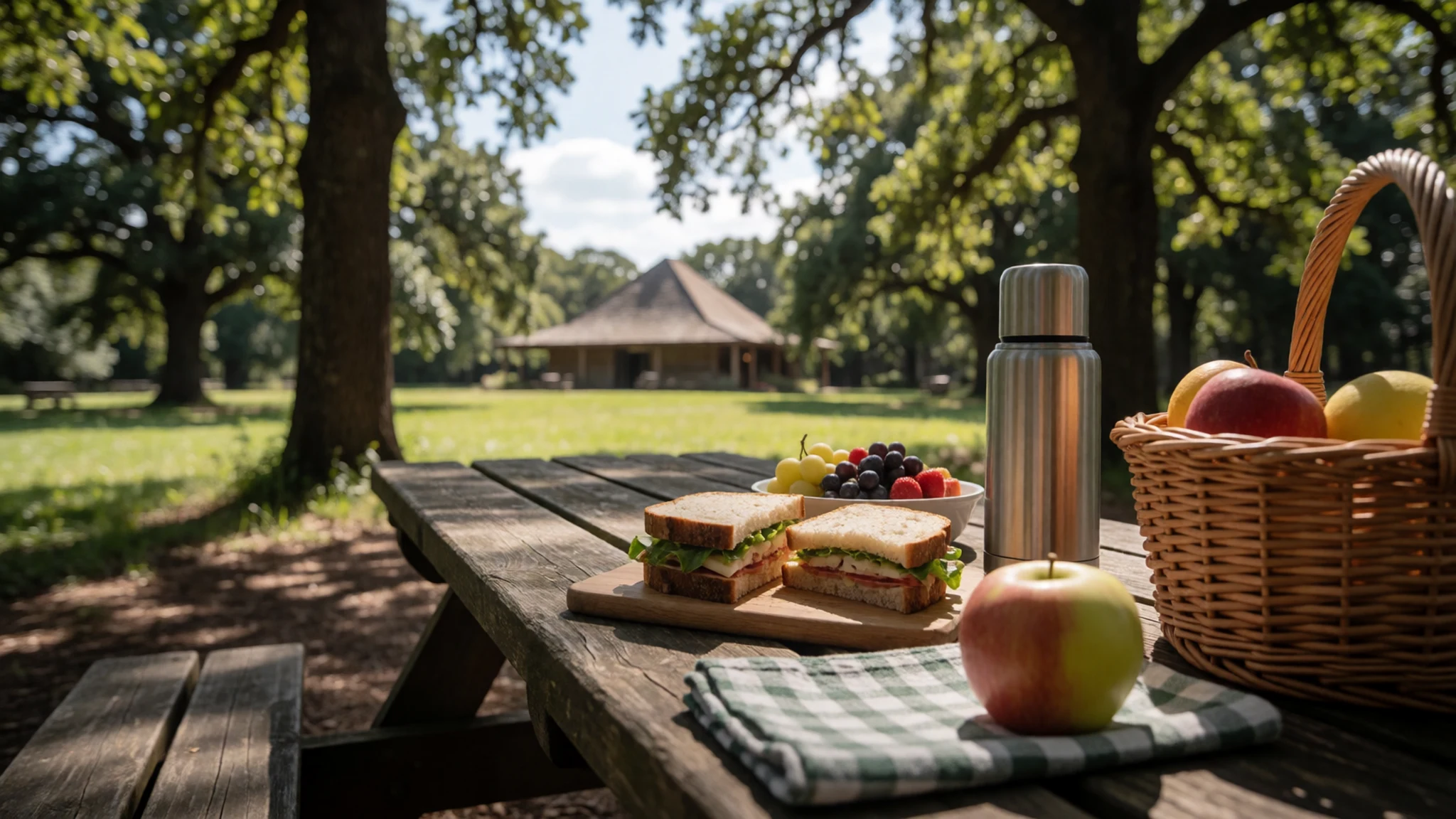
- Vending machine snacks — the Café Cahokia area of the Interpretive Centre
Drinks and snacks are sold from vending machines in the Café Cahokia area of the Interpretive Centre. They are handy for a quick top-up of water between tours, though the choice is limited. Bring a refillable bottle for the trails, as the walking can be warm.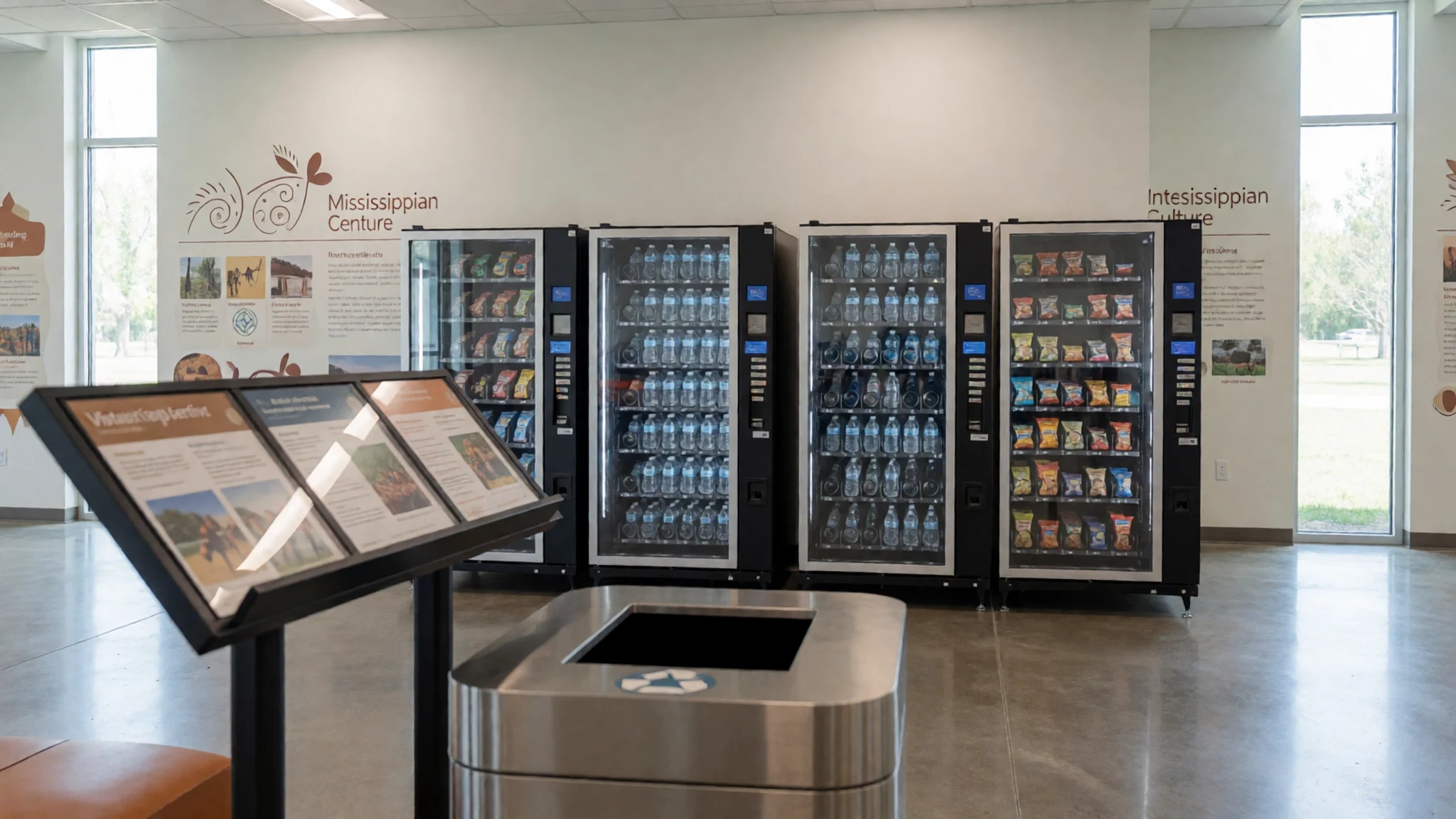
- Bar and grill meals — bar and grill establishments in Collinsville
Bar-and-grill style food is the usual choice for a hot meal after a morning on the earthworks. The menus are generally hearty and aimed at a sit-down lunch or an early dinner. Eating out here means leaving the park, so plan it into the day rather than trying to fit it between tours. - Restaurant lunch in Collinsville — restaurants in Collinsville, a short drive from the park
For a sit-down meal, the restaurants in Collinsville are the practical choice, as they lie within a short drive of the park. Going out for lunch after the morning walk works well, and it saves carrying food around the site. It is also a relaxed way to finish a visit before driving back toward St. Louis.
Plan it
Best time. Spring and autumn suit walking the open ground best. Summer is hot and humid with insects along the trails, but public tours run most often from June to August and the July market takes place, so those months are busier.
How long. a half day to a full day
Getting there. Fly into St. Louis and drive across the river into Illinois, then take the interstate to the Collinsville Road exit; the Interpretive Centre is on Collinsville Road. Check the official site for current transport options, as this is primarily a car journey.
Budget. low
Tips
- Check the official site before you travel for current opening days and tour times.
- Start at the Interpretive Centre to get oriented before walking the earthworks.
- Wear long trousers and insect repellent on the longer trails, because ticks and poison ivy are present.
- Carry water, as summer heat builds on open ground.
- Plan around the July market weekend if you want talks and artist stalls.
- Hire an audio tour from the museum shop for self-guided walking.
Etiquette
- Keep to marked paths and leave all objects in the ground.
- Ask before photographing artists or their stalls.
- Keep voices low near the interpretive panels and at talks.
Nearby
Sources
- Wikidata Q333661 (CC0)
- Wikipedia: Cahokia (CC BY-SA 4.0)
- Wikivoyage: Cahokia Mounds State Historic Site (CC BY-SA 4.0)
- Monks Mound in July (Skubasteve834) (CC BY 3.0)
- Monks Mound Summer 2024 (Skubasteve834) (CC BY 4.0)
- Mississippian culture mound components (Herb Roe) (CC BY 3.0)
- Cahokia Mounds UNESCO reconstruction (CC BY 2.5)
- Cahokia 1 (Carptrash) (CC BY 3.0)
- Monks Mound, 1882 illustration (W. R. Brink & Co.) (Public domain)
- Cahokia Mound 72 (Carptrash) (CC BY 3.0)
- Woodhenge Cahokia 3998 (QuartierLatin1968) (CC BY 3.0)


