Blarney Castle
Blarney Castle, Ireland
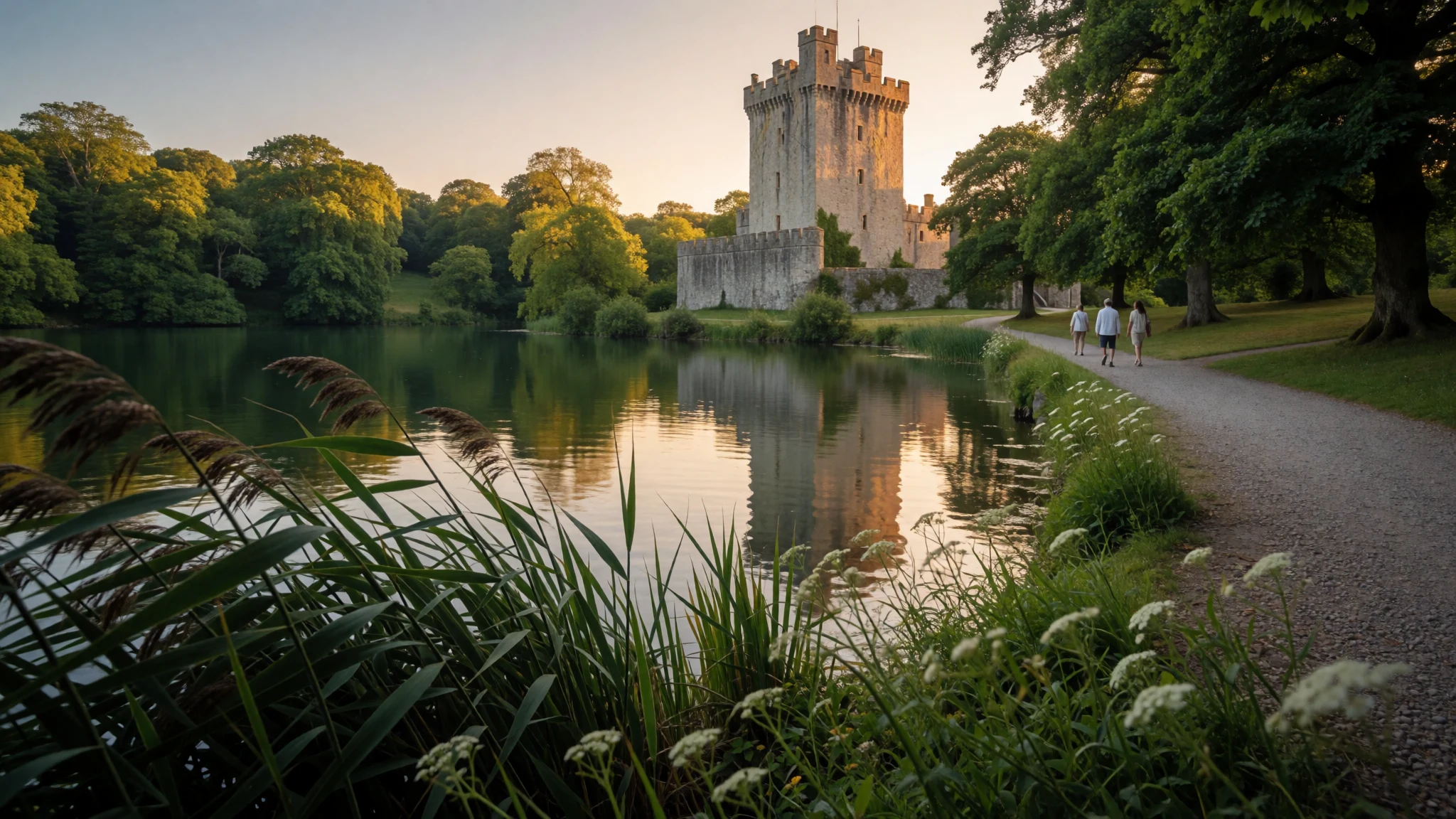
Blarney Castle pairs a ruined fifteenth-century tower, a famously awkward kiss on a limestone block and a large estate of gardens near Cork.
The place
Blarney Castle stands on the edge of Blarney, a village a short way northwest of Cork city in the south of Ireland. What remains is a tower house, the tall fortified home of a Gaelic lord, and the present keep is dated to 1446. It is now a partial ruin: a narrow stone stair climbs past a few accessible rooms to the battlements, and the rest is open to the sky. Around it lies a wide estate of lawns, woodland, a lake and themed gardens, and many visitors end up spending as long outside the tower as in it. The reason for the crowds is the Blarney Stone, a block of limestone set into the parapet near the top. Tradition promises eloquence to anyone who kisses it, which means lying on one's back and leaning out over a drop while an attendant holds on. The stone is ordinary local rock, whatever the grander legends say. The Irish name is Caisleán na Blarnan, and the English word 'blarney', for smooth, flattering talk, comes from this spot. A Victorian mansion, Blarney House, sits near the lake. Summer is busy, the queue for the stone can be slow, and Cork weather changes quickly in any season. A visit is best planned as a half-day outing rather than a quick photo stop, with the climb, the wait and the gardens all taking time. Tickets are sold by the estate; check the official site, http://www.blarneycastle.ie/, before travelling.
Its story
Blarney Castle has had several lives, and the present keep is only the latest. A timber house is thought to have stood here first, followed by a stone fortress that was destroyed. The MacCarthys of Muskerry, a branch of the old Desmond kings, rebuilt it in 1446 under Cormac Láidir MacCarthy, who also raised castles at Kilcrea and Carrignamuck. In the seventeenth century it changed hands with the politics of the day. Parliamentarian forces took it during the Irish Confederate Wars, and the family regained it at the Restoration, when Donough MacCarty became Earl of Clancarty. A later earl backed the losing side in the Williamite war of the 1690s, and the estate was confiscated. After several sales it passed in the early eighteenth century to Sir James Jeffreys, governor of Cork. His successors built a large house that burned down, and in 1874 the architect John Lanyon designed Blarney House in a Scottish baronial style. By marriage, the Jefferyes line merged with the Colthursts, and the Colthurst family still lives on the estate. The stone's reputation is younger than the walls. It appears in print in Francis Grose's slang dictionary of 1785, where the 'blarney' was a tall tale about the kiss rather than the kiss itself. Tourism, music-hall caricature and the Irish abroad then made it famous. During the First World War, sailors on leave at Cobh were reportedly taken to a different tower, Belvelly, and shown a fake stone.
What to see
- The keep and battlements — Castle grounds, Blarney
The tower is the heart of the visit, a plain, heavy block of grey stone that looks smaller from the lawn than it feels on the stairs. The climb is narrow and spiral, with rooms off the route, and ends on a high walkway with views over the estate and surrounding farmland. Expect a slow shuffle at busy times.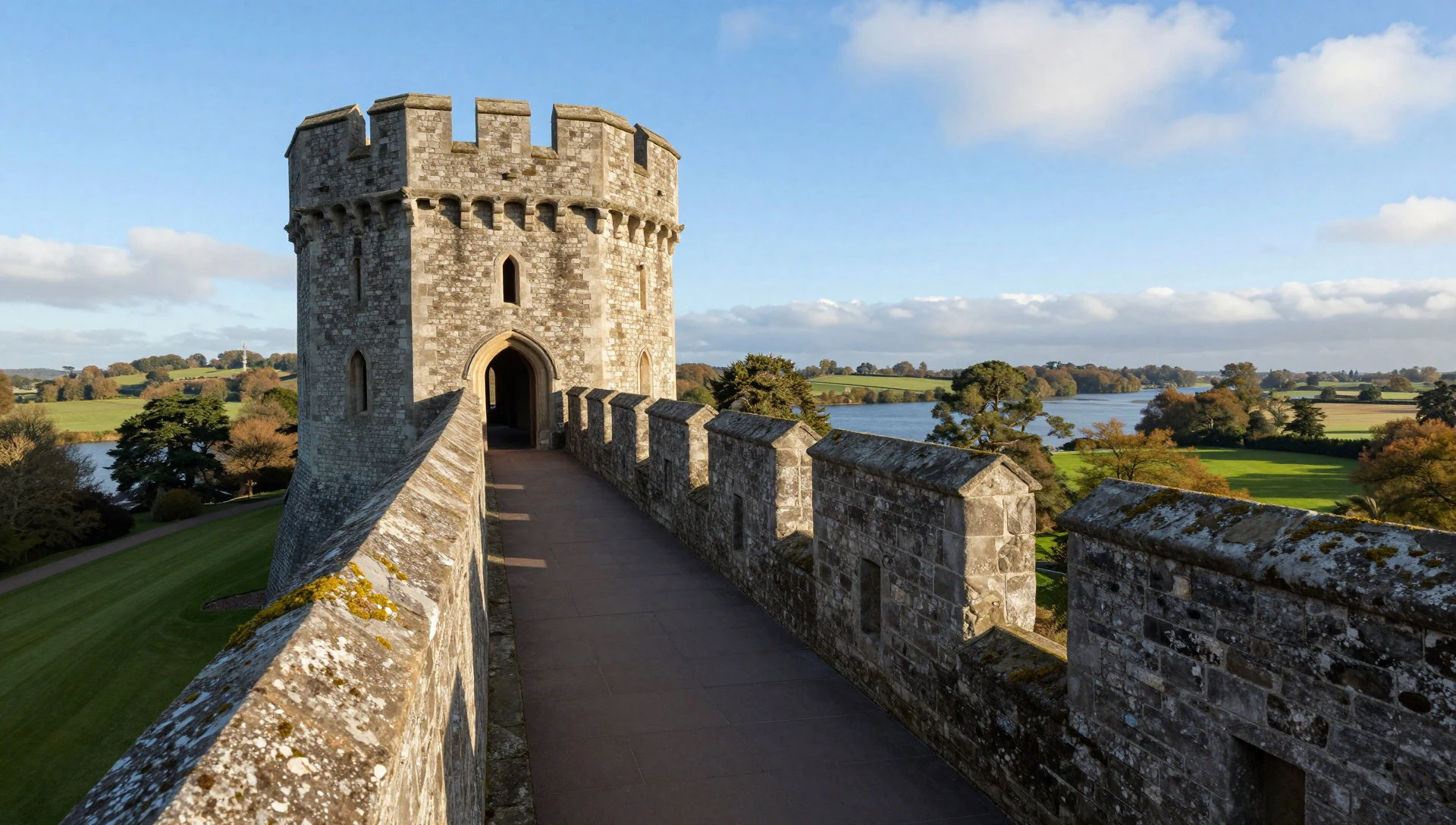
- The Blarney Stone — Top of the keep
Set into the parapet beneath the walkway, the stone is reached by lying down, gripping iron rails and lowering the head backwards through a gap. Staff steady each person, and the whole thing takes seconds. Photographs are usually taken by an attendant. The wait to reach it is the real test of patience.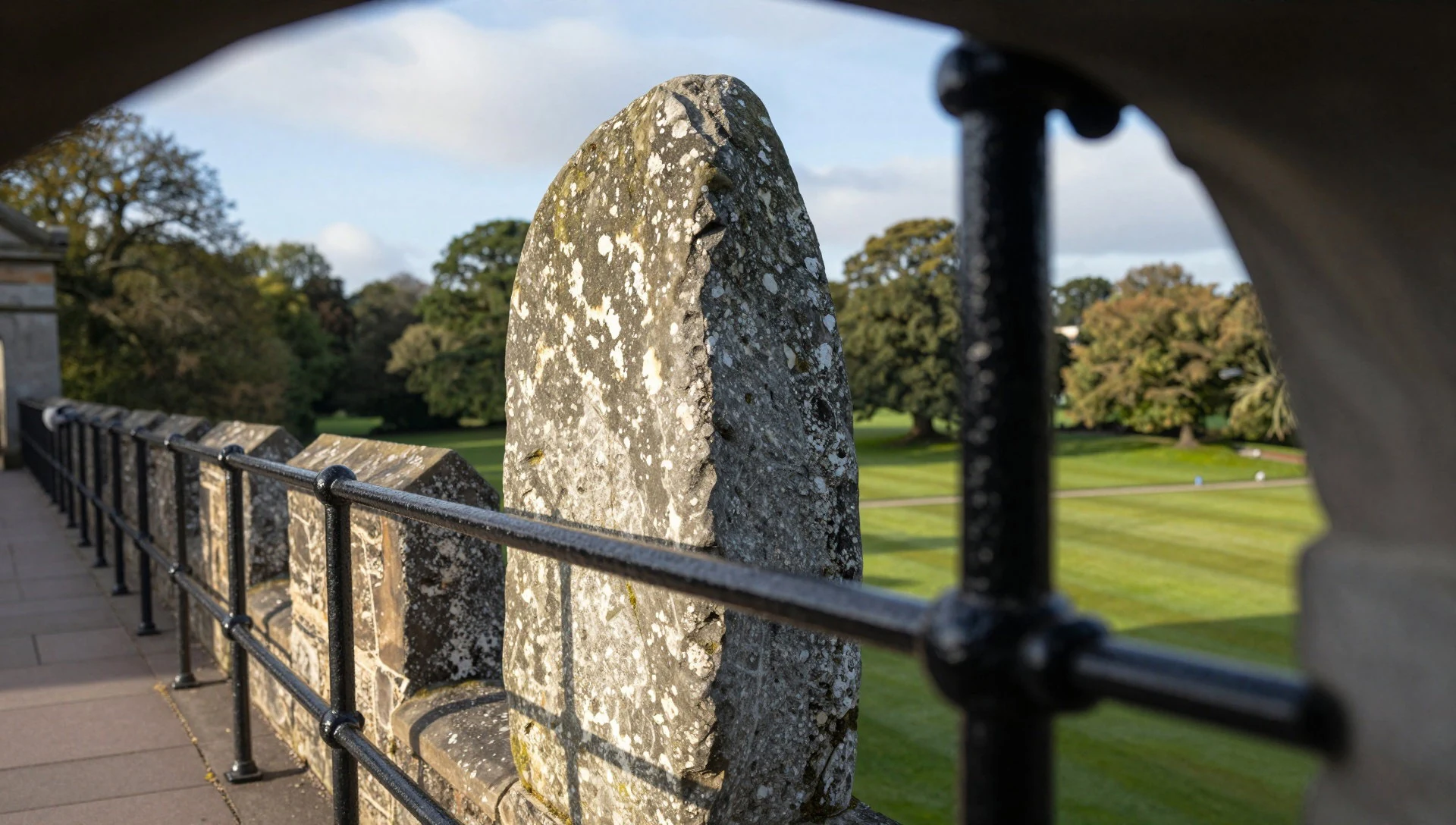
- The Poison Garden — Estate gardens
A walled collection of dangerous plants, labelled and signed, with some kept behind bars. Wolfsbane is among them, and guides like to explain what each species does to the body and how it was used in medicine or murder. It is a short, memorable stop and a change from the usual pretty borders.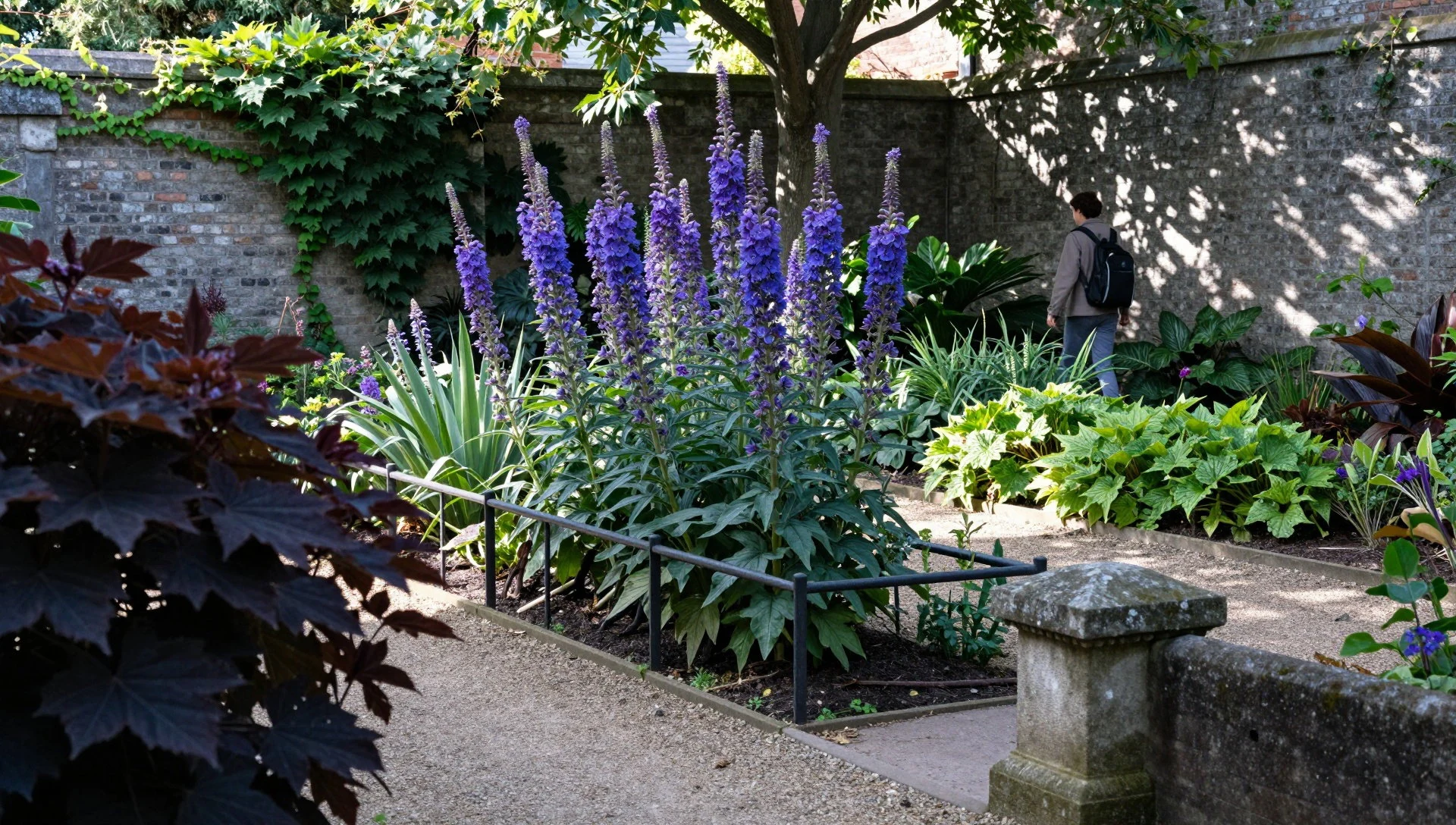
- Rock Close — Estate woodland
A shaded woodland corner of mossy outcrops and old yews, where paths pass formations with fanciful names such as the Druid's Circle, the Witch's Cave and the Wishing Steps. Legend says that climbing the steps with eyes shut brings a wish true. The ground is uneven and often damp, so it suits slow walking.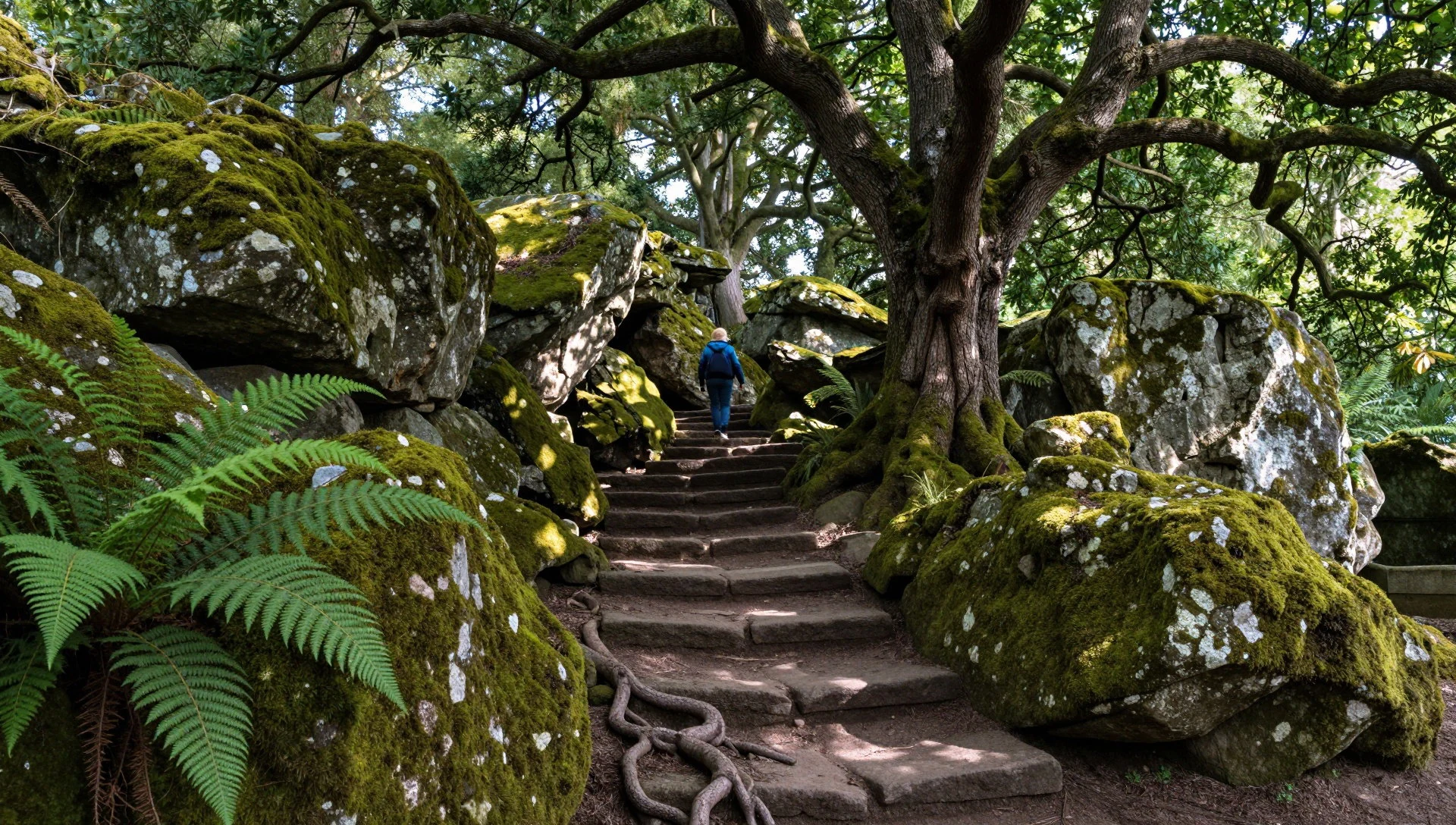
- Blarney House — South of the castle, by the lake
This Scottish baronial mansion stands a short walk south of the keep, overlooking the lake. It was built after fire destroyed an earlier house, and the family still has links with the estate. Check the official site for current access to the interior, since arrangements have changed over time. The gardens and lakeside paths are the easier reason to come.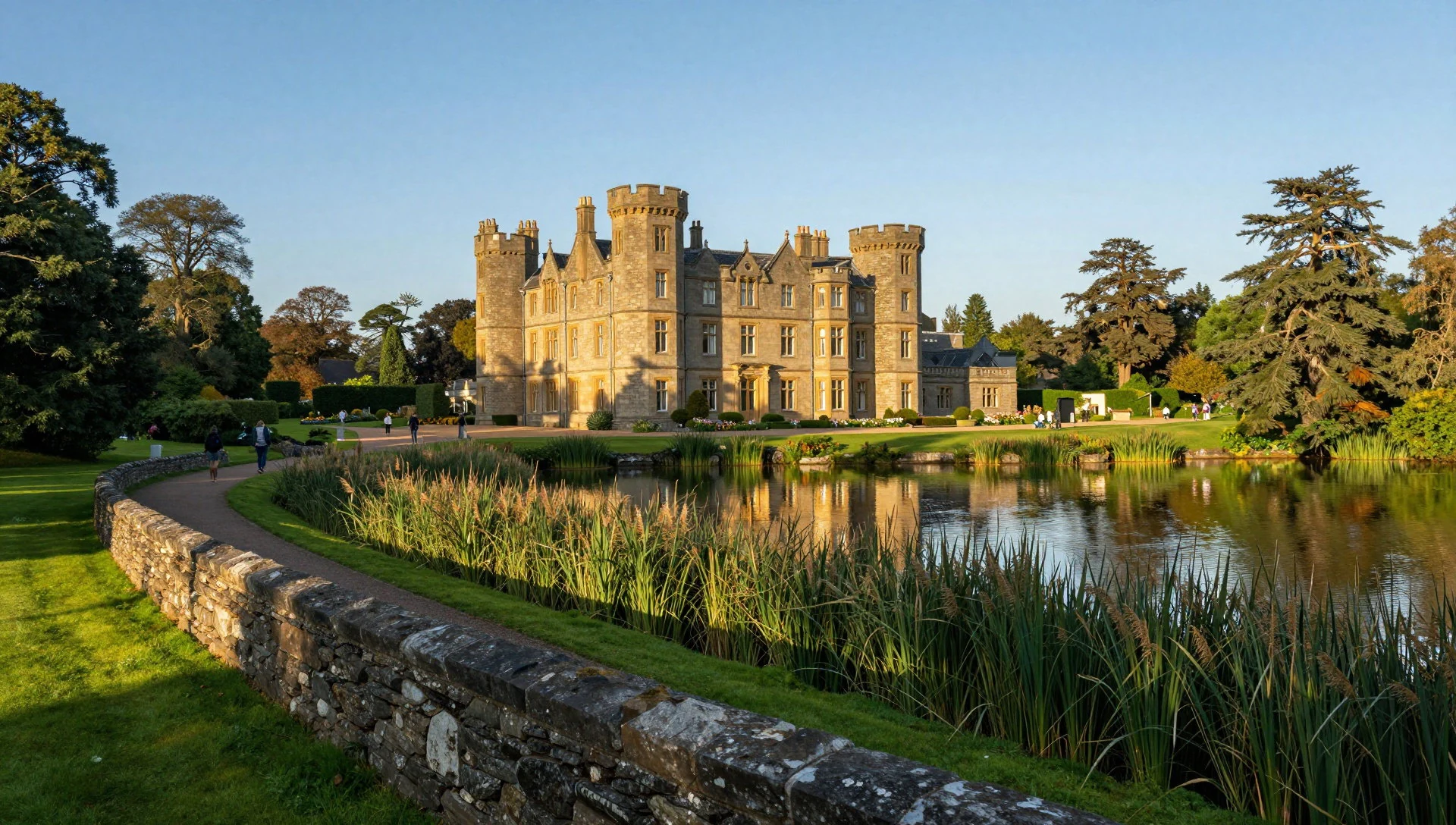
Culture
Blarney Castle sits at the centre of one of Ireland's best-known jokes about itself. The idea that kissing a stone confers a silver tongue grew from an eighteenth-century turn of phrase into a worldwide tourist ritual, helped along by Victorian visitors, music-hall stage Irishmen and descendants of emigrants who returned to find the place their grandparents described. Locals tend to be wry about it. Conversation is a valued skill in Ireland, from pub storytelling to the long, looping answer to a simple question, and the castle's legend suits that habit well. The estate's Irish name, Caisleán na Blarnan, and the stone's Irish name, Cloch na Blarnan, are a reminder that the story is older than the souvenirs. The castle's Gaelic builders, the MacCarthys, were a ruling family in Munster for centuries, and Cork's wider story of rebellion, trade and emigration shows up in its museums and streets. Blarney village itself is small and centred on a green square, a woollen mill and a handful of pubs, so the sense of place is quieter than the stone's fame suggests. The Poison Garden adds a darker, curious strand, drawing on folklore, herbal medicine and old fears. Visitors who accept the legend lightly, as a bit of fun, get the most from the day. At the stone, follow the attendant's instructions, keep phones, glasses and loose items secured, and be patient with those ahead of you in the queue.
What to wear
Blarney Castle sits in a country whose traditional clothing is built around wool, tweed and linen. The Aran jumper, knitted in thick cream wool with textured cable patterns, is the best-known piece and is still worn by fishermen and walkers. Tweed, woven in earthy colours, is used for flat caps, jackets and waistcoats. Linen has a long history in Irish dress, and shawls and cloaks were once everyday outerwear for women. Dancers at Irish dance competitions wear embroidered costumes inspired by Celtic designs, but these are for performance and festivals rather than ordinary days. Today, people in Cork dress practically: jeans, waterproof jackets, trainers or boots, and a jumper in cool months. Smart-casual is normal in restaurants and pubs. Woollen mills in and around Blarney sell scarves, caps and knitwear, which is the easiest way to see the textiles up close. Visitors should dress for changeable weather rather than a formal occasion. Bring layers and a waterproof jacket, even in summer, since rain can arrive in minutes. Wear shoes with grip, because the castle stair is worn stone and the grounds can be wet and muddy. Avoid sandals and heels. For the stone, trousers or a longer skirt are more comfortable, as the position involves leaning back. A hat, scarf or loose jewellery should be zipped away before the climb, since the top of the tower can be windy. No religious dress code applies, though a modest top is sensible at a nearby church.
What to eat
- Irish stew — Village pubs in Blarney and around Cork
A slow-cooked pot of lamb or mutton with potato, onion and carrot, seasoned simply and served thick. It is comfort food for cold, wet afternoons and a standard pub lunch, best tried after a damp morning in the castle gardens.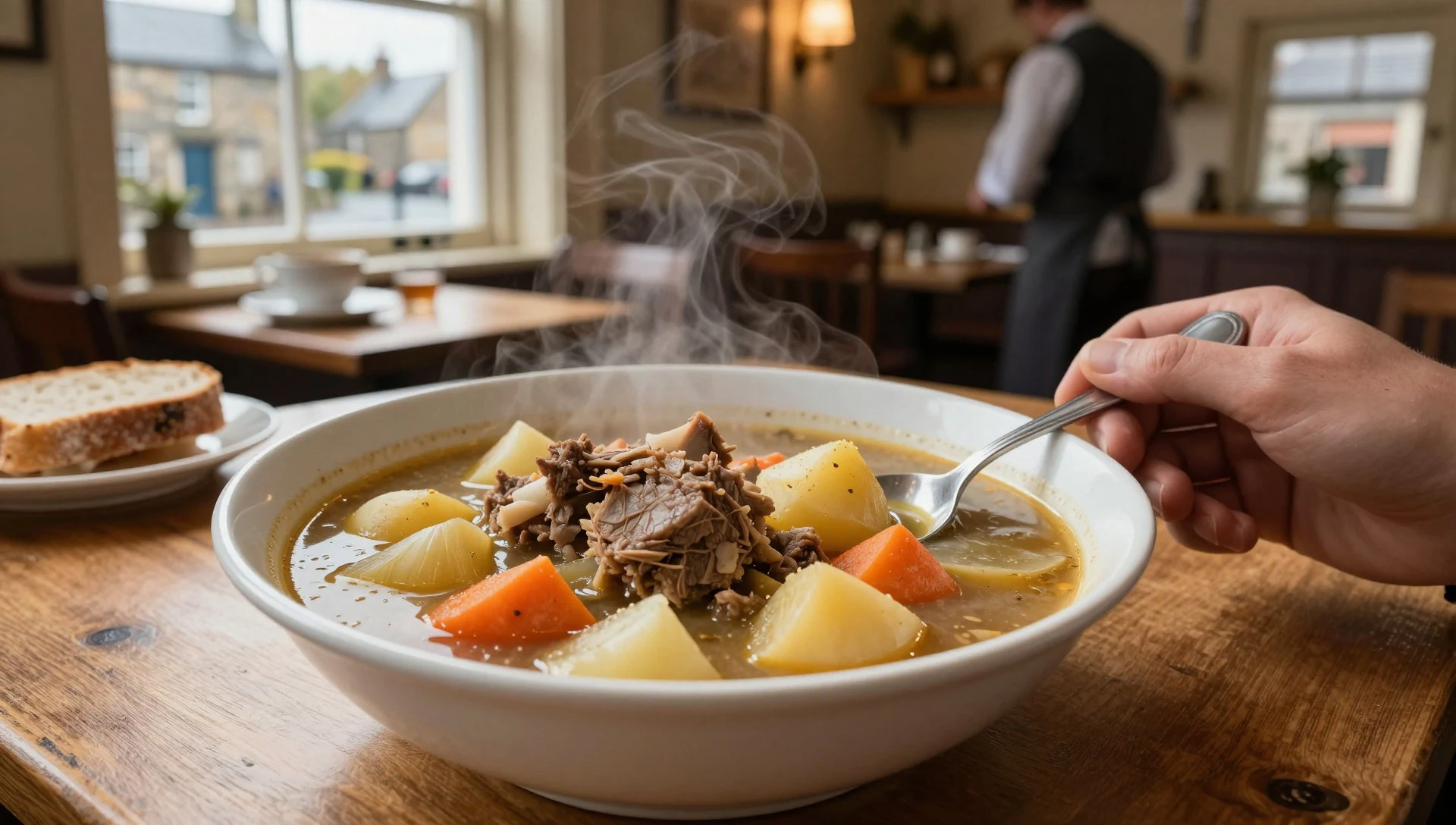
- Brown soda bread — Bakeries and cafés in Blarney village and Cork city
A dense, slightly sweet loaf raised with bicarbonate of soda and buttermilk rather than yeast. It is served in thick slices with butter, alongside soup or smoked salmon, and sold fresh at bakeries and in many cafés.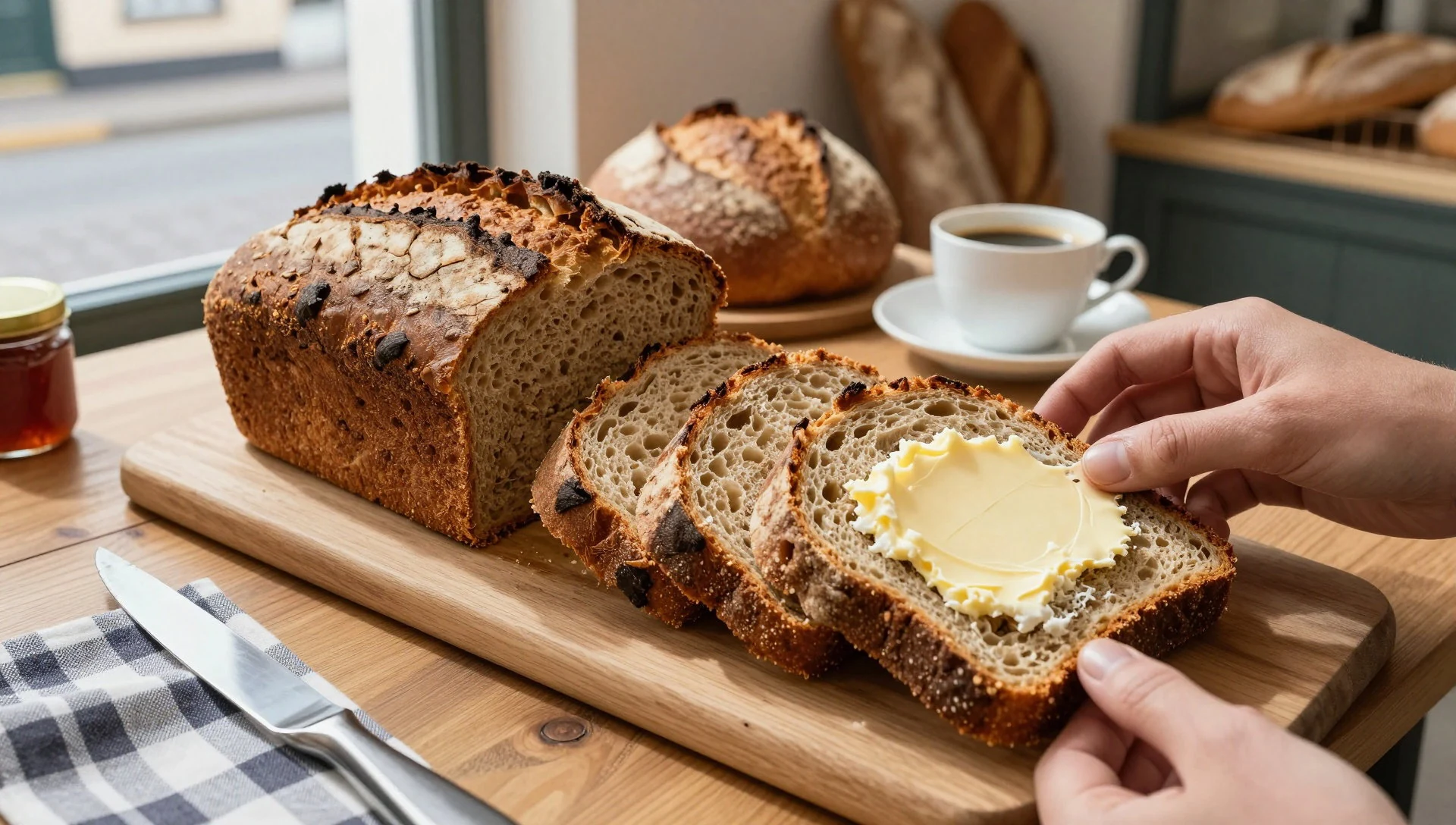
- Seafood chowder — Pubs and cafés in Cork city and the harbour towns
A creamy soup of white fish, salmon and shellfish, usually served with brown bread. Cork sits near a long, fishing-rich coast, so this is often a good-value choice and a filling lunch before or after the castle. - Full Irish breakfast — Guesthouses, B&Bs and cafés in and around Blarney
A plate of fried egg, bacon, sausages, grilled tomato, mushrooms and toast, often with black and white pudding. In Cork, expect the pudding to be a local pride. It sets visitors up for a day of walking. - Scones with jam and cream — Tea rooms and café counters near the castle and in Cork
Light, crumbly baked scones, split and served with fruit jam and whipped cream beside a pot of tea. They suit a break between the tower and the gardens, and are a staple of tea rooms across Ireland.
Plan it
Best time. May to September brings the longest days and the gardens at their fullest, though July and August are the busiest. Late spring and early September are calmer. Rain is possible all year, and winter days are short, cool and often wet, so the stone queue is shorter but the grounds are muddier.
How long. 1
Getting there. Fly to Cork Airport, then go by bus or taxi into Cork city. Local buses run from the city centre to Blarney village in under half an hour, and the castle is a short walk from the village square. Driving from Cork takes a similar time. Trains from Dublin end in Cork city, as Blarney has no station.
Budget. mid
Tips
- Arrive early in the day to reach the stone before the queue builds
- Book tickets through the official site, http://www.blarneycastle.ie/, and check current opening times
- Wear shoes with grip, since the stair and woodland paths are often wet
- Bring a waterproof layer whatever the forecast
- Allow time for the gardens as well as the tower
Etiquette
- Follow staff instructions at the stone and do not push ahead in the queue
- Keep to marked paths in the Poison Garden and never touch the plants
- Secure phones, glasses and hats before leaning out at the parapet
Nearby
Sources
- Wikidata Q881739 (CC0)
- Wikipedia: Blarney Castle (rev 1373219855) (CC BY-SA 4.0)
- Wikivoyage: Blarney (rev 5348952) (CC BY-SA 4.0)
- Blarney Castle, Gerd Eichmann (CC BY-SA 4.0)
- Blarney Castle in Ireland, Ryanhuntmuzik (CC BY-SA 4.0)
- Blarney House at Blarney Castle, The mobot (CC BY 3.0)
- Kissing the blarney stone (CC BY 3.0)
- Blarney Castle, Summer 1954, Joan Cassidy (CC BY 3.0)
- Blarney Castle Poison Garden sign, JHawk88 (CC BY-SA 4.0)
- The Irish Question, Charles H. Owens (1919) (Public domain)
- Blarney Castle, Newenham (1830) (Public domain)


