Będzin Castle
Będzin Castle, Poland
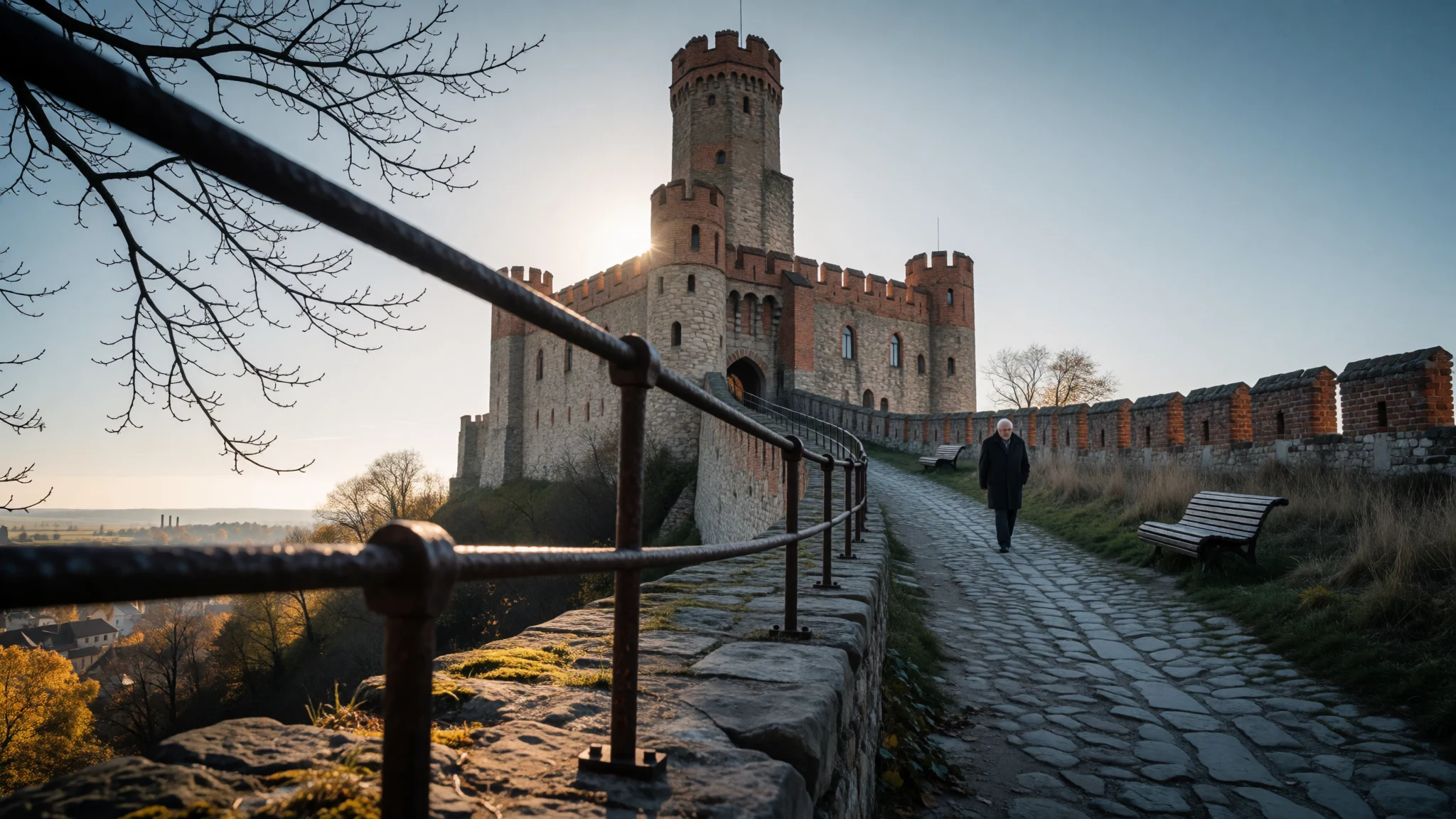
Będzin Castle is a Gothic border fortress on a hill in southern Poland, with a guided underground route and Jewish heritage below.
The place
Będzin Castle stands on a hill above the small Czarna Przemsza river in southern Poland, on the edge of the Zagłębie industrial region near Katowice. The setting makes sense once the old map is in mind: Będzin sat on the borderland between Lesser Poland and Silesia, and the castle was the kingdom's western lookout. Today the town is an ordinary working one, with traffic, tenement blocks and a thin café scene, and the castle is its anchor.
The historic core is compact. Castle Hill carries the fortress, a cemetery church, fragments of the medieval walls and some parkland with viewpoints. Below it, the old town holds Holy Trinity Church and the oldest street pattern. A guided tunnel route, the Będzin Underground, runs beneath the hill.
Other districts add to the picture. The Jewish heritage trail links two preserved prayer houses, a cemetery and several memorials in the streets of the former Jewish neighbourhood. Gzichów has Mieroszewski Palace in its park. Grodziec, further out, has a church on St Dorothy's Hill and the leftovers of cement-making and workers' housing. Syberka is the modern side of town, with a park and an events arena.
Half a day covers the castle, the hill, the Underground and a couple of heritage stops. A full day lets Grodziec in. Crowds are rarely a problem here; the main limits are weather on the hill and the need to book the Underground ahead.
Its story
Będzin Castle began as timber. A wooden stronghold is on record on the hill by the 11th century, and the Mongol raids of 1241 destroyed it, after which it was rebuilt. Stone arrived under Casimir III the Great, and by 1348 the new castle was in service. Its purpose was geographical: as the kingdom's westernmost fortress, it was placed to slow any army heading into Lesser Poland from Bohemian or Silesian territory.
People of rank did pass through. Charles IV, Holy Roman Emperor, visited in 1364, and in 1588 Archduke Maximilian III was held here as a prisoner after losing the contest for the Polish throne.
Decline came slowly. The castle was neglected from the late 16th century, then damaged by fire in 1616 and again during the Deluge, the mid-century invasions, in 1657. Repairs were made from time to time, but as frontiers shifted and neighbours' relations changed, the fortress lost its reason to exist. After the partitions the town came under Prussian rule and the castle passed to the Hohenzollern family. The surrounding lands moved to the Duchy of Warsaw in 1807 and to Congress Poland in 1815.
By 1825 the ruin was so unsafe that falling stone killed a passer-by, and demolition was ordered. Before work started, the castle was declared a monument instead, which is the only reason anything survived. The building seen today is largely a rebuilding carried out after the Second World War.
What to see
- Będzin Castle — Castle Hill, old town
Będzin Castle is the town's main landmark, a Gothic royal fortress rebuilt after the Second World War. Inside, part of the Museum of Zagłębie occupies the halls with historical displays, and a viewing tower gives a wide look over the rooftops and the industrial plain beyond. Check the museum's current opening details before going.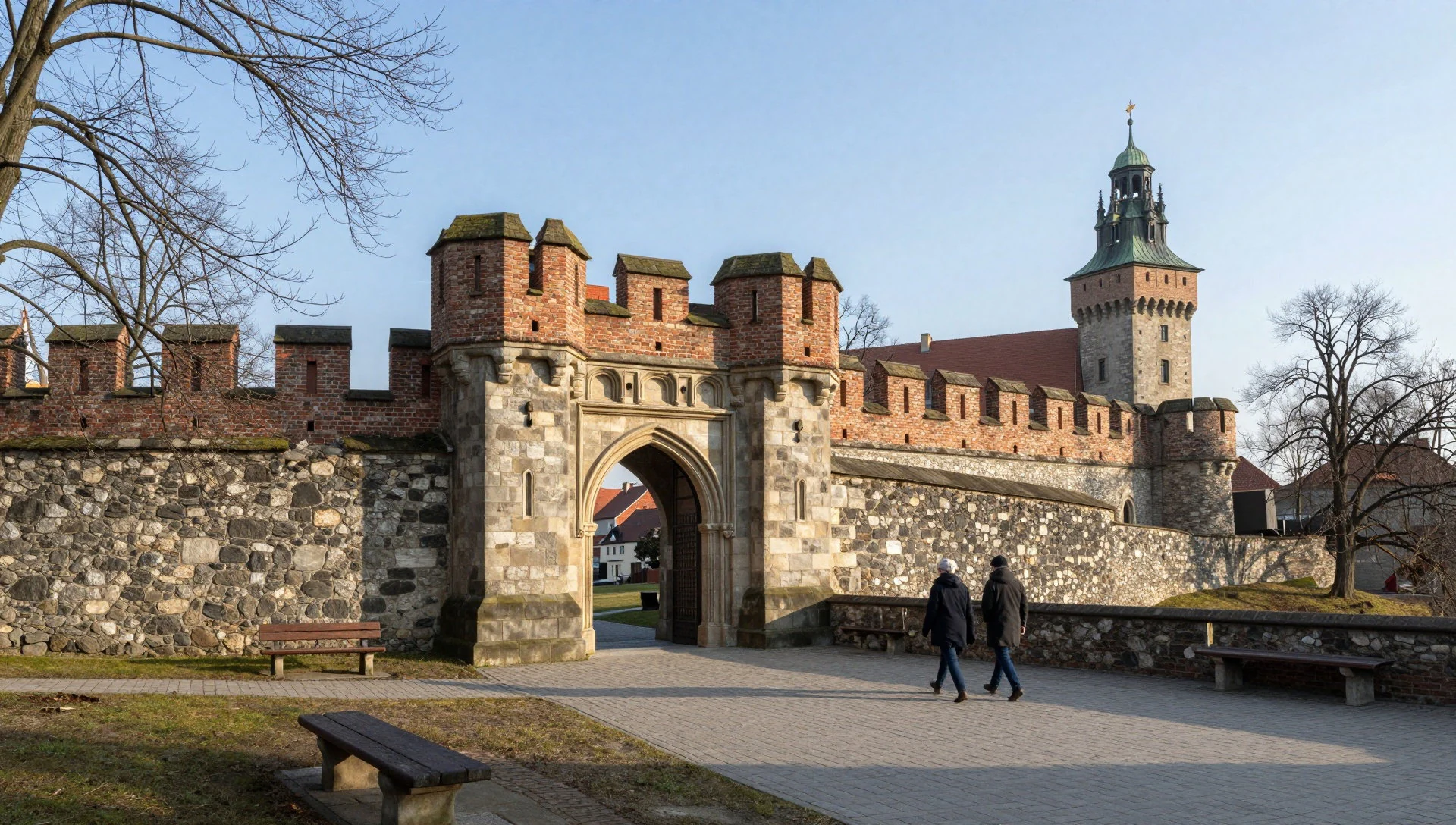
- Castle Hill and the town walls — Castle Hill
Castle Hill is best enjoyed on foot. A loop around it passes parkland, a few viewpoints and surviving stretches of the medieval town wall, which show how the old town once fitted under the fortress. The paths are uneven in places, so sturdy shoes help, especially after rain.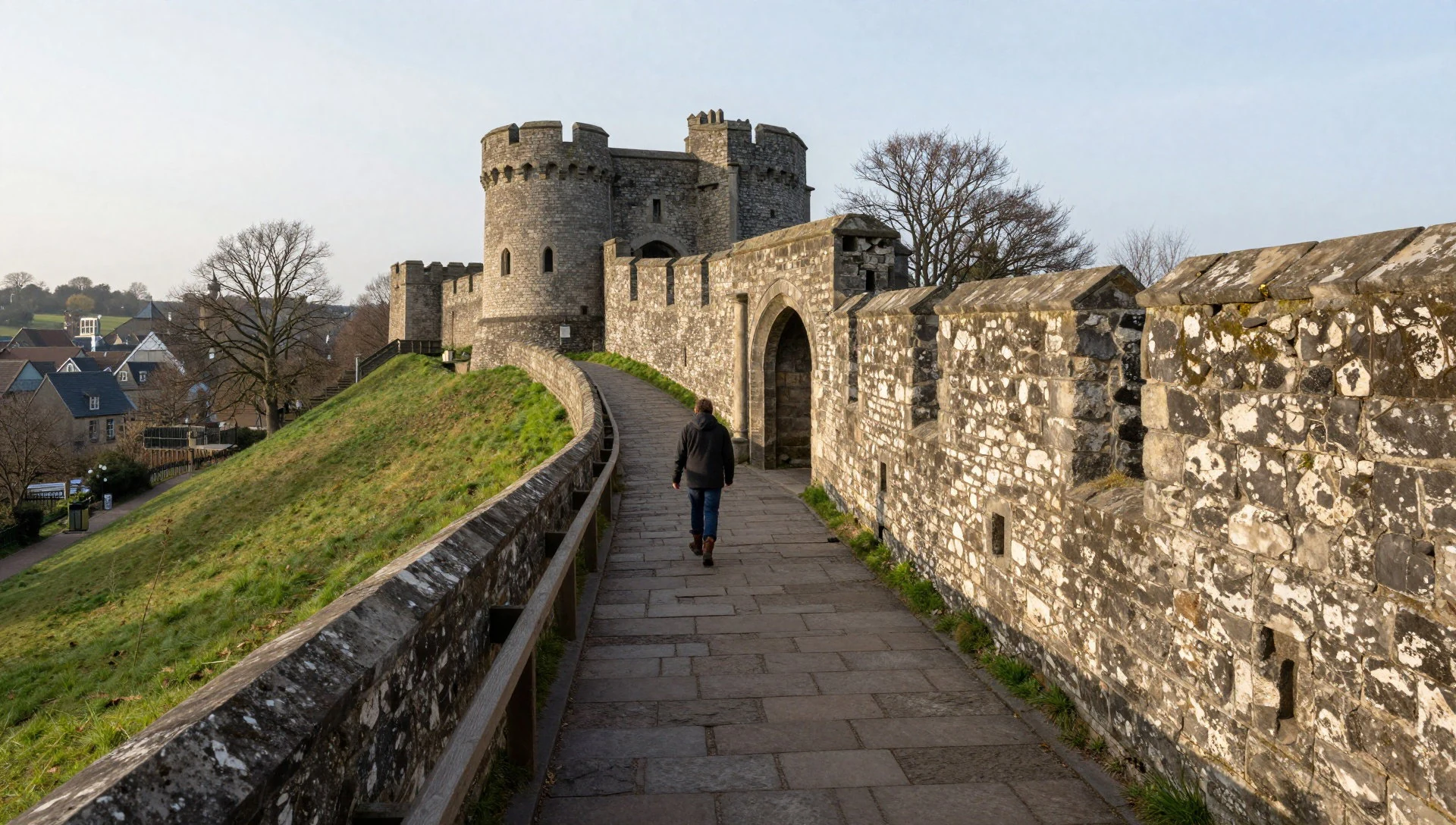
- Będzin Underground — Beneath Castle Hill
The Będzin Underground is a tourist route through tunnels under Castle Hill. It runs as a guided visit, so arrange it in advance rather than turning up on the day. The air below is cool whatever the season, and a warm layer is wise even in midsummer.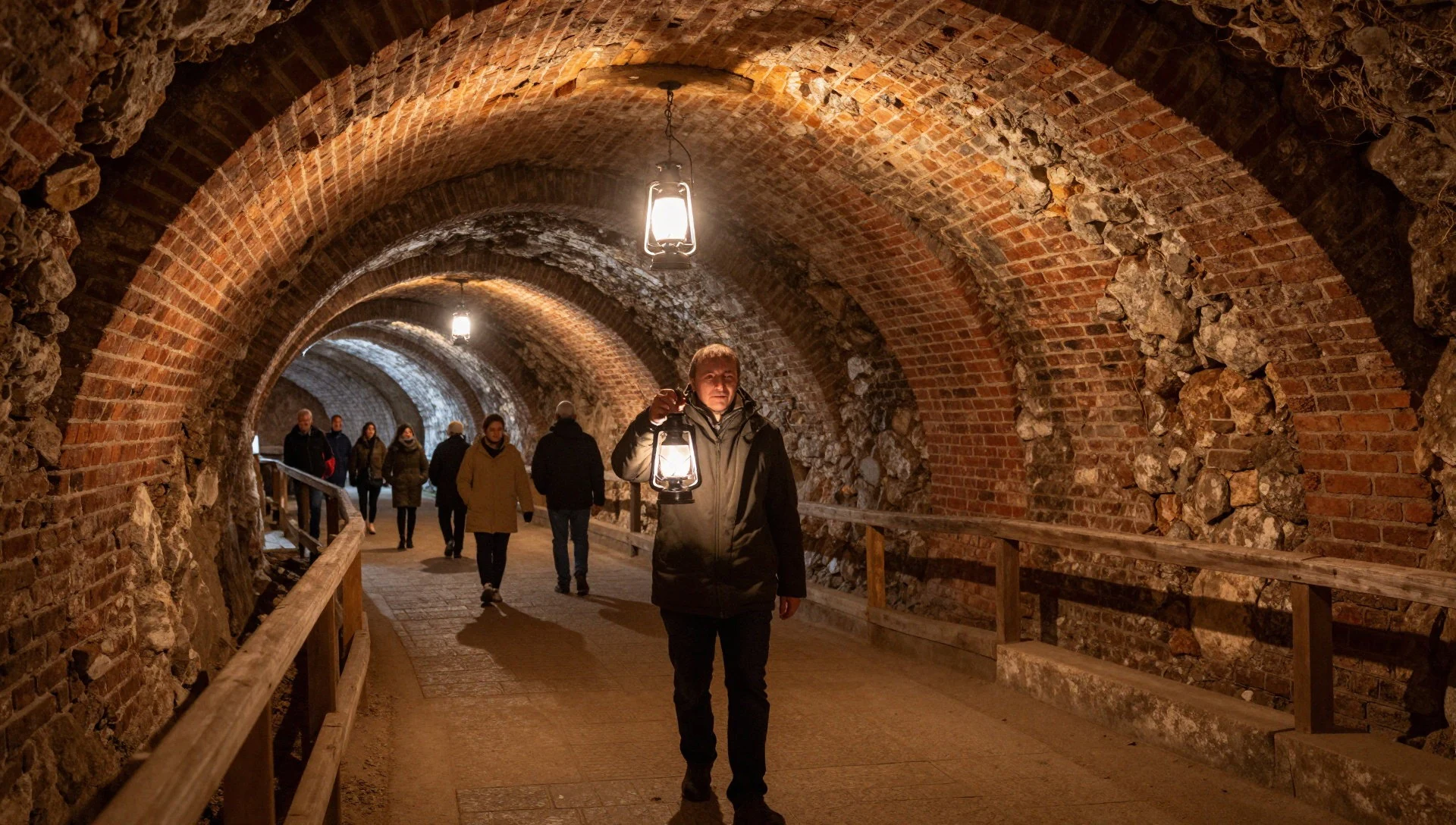
- Cukerman Prayer House — Jewish quarter, town centre
The Cukerman Prayer House is a preserved Jewish place of prayer with painted walls, and one of the most significant Jewish heritage sites in Będzin. It makes a quiet counterpoint to the castle, showing the town's life below the hill. Pair it with the Mizrachi Prayer House nearby.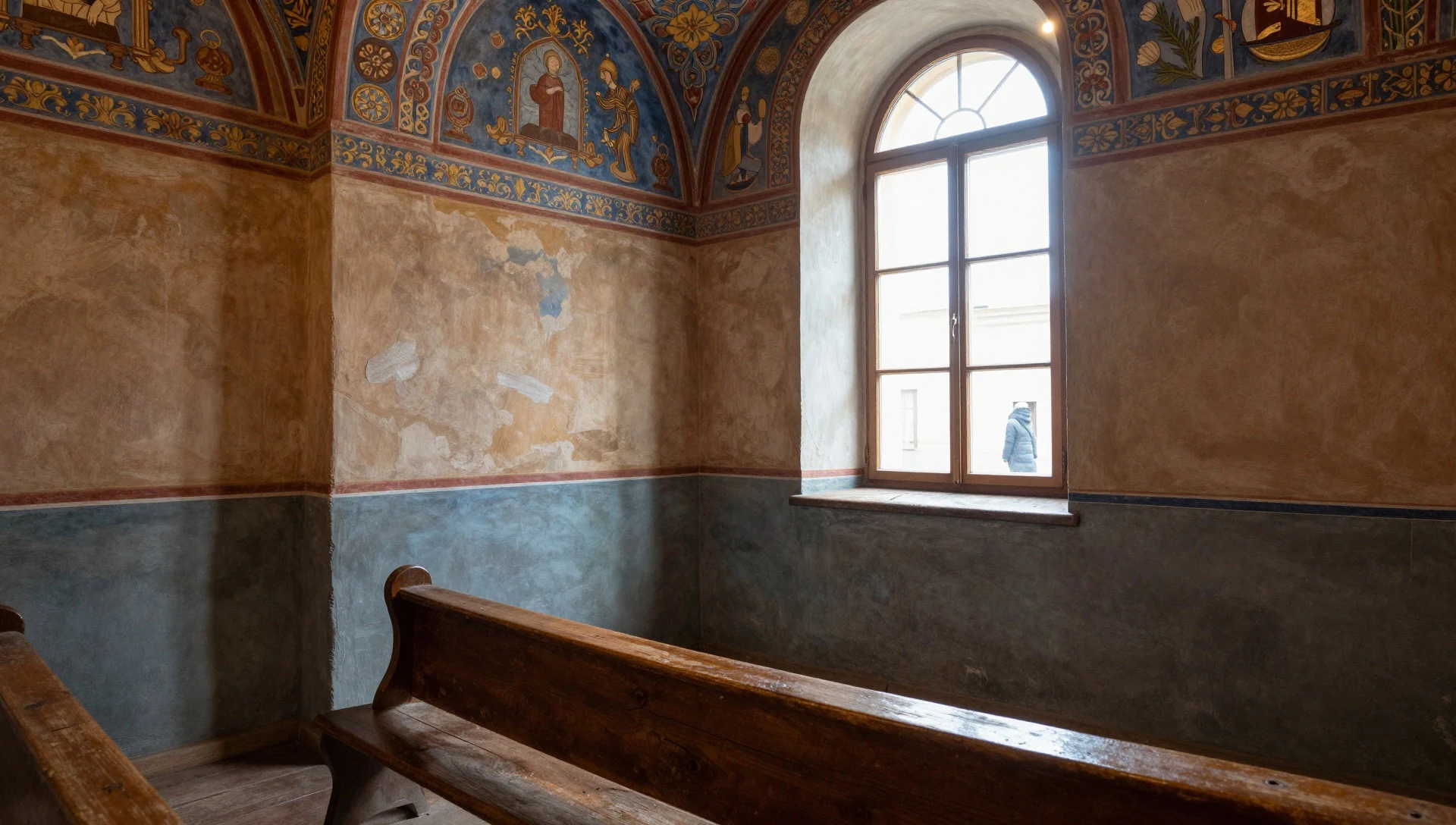
- Holy Trinity Church and St Thomas Becket Church — Old town and Castle Hill
Holy Trinity Church is the historic parish church of the old town and tied to its earliest street layout. Higher up, St Thomas Becket Church stands in a cemetery full of old graves and weathered tombstones. Together they give the hill a human scale that the castle alone does not.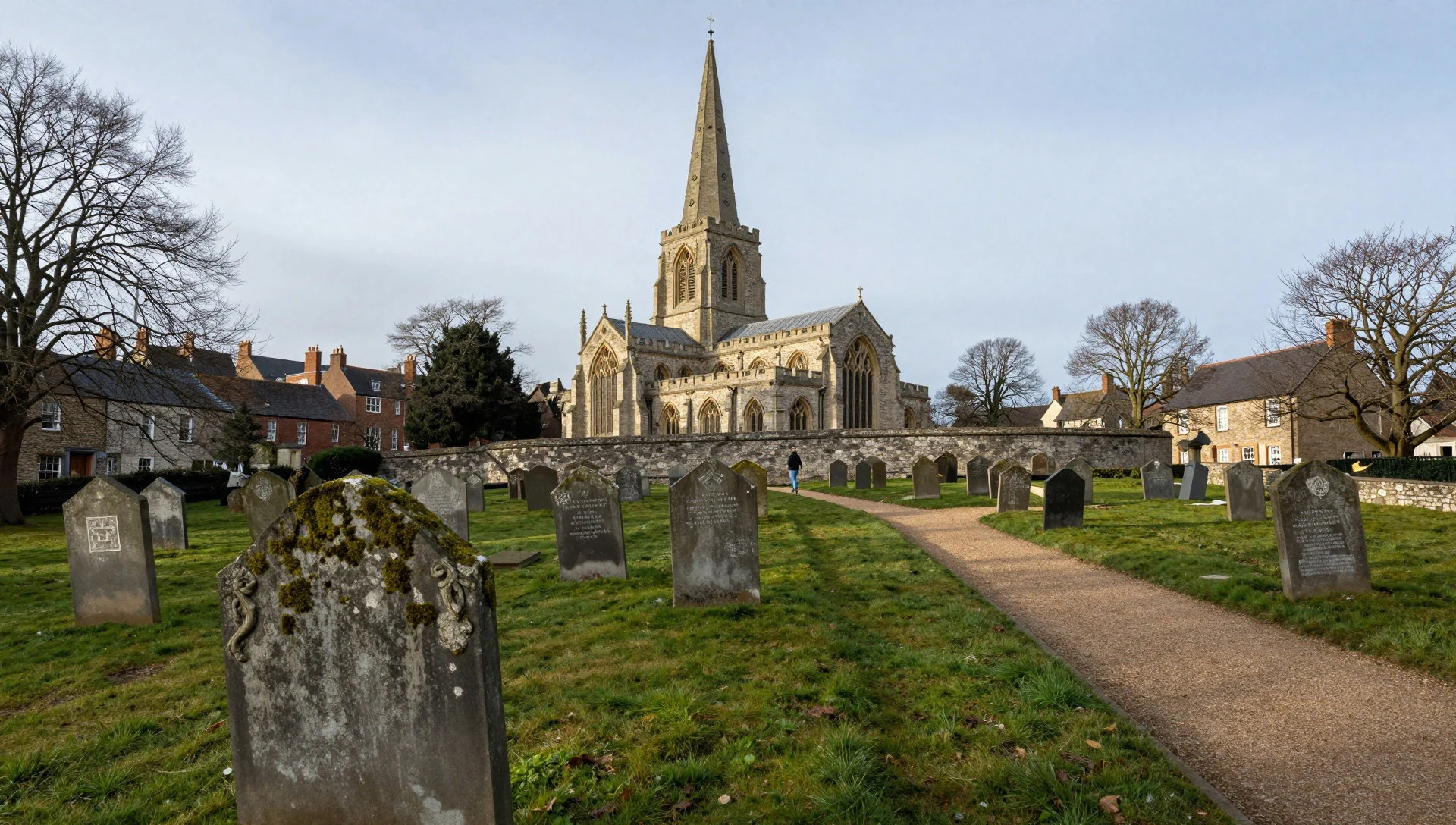
Culture
Będzin Castle sits in a part of Poland with a layered identity. The town lay on a frontier between Lesser Poland and Silesia, and later in the Zagłębie coal and industry belt, so local pride is tied to work, borders and survival more than to courtly glamour. The museum in the castle is called the Museum of Zagłębie for that reason: it tells the story of the region, not only of one building.
The Jewish heritage of Będzin is a large part of its story. The preserved prayer houses, the cemetery near Castle Hill and the memorials in the former Jewish neighbourhood are places of remembrance, not attractions, and locals visit them for that purpose. Reading the signs and taking time with them is the respectful way to see them.
The castle itself was rebuilt after the Second World War, so it carries two histories at once: a medieval one and the effort of a community to put a landmark back on its hill. Events, school trips and weekend walkers all share the grounds, and the atmosphere is local rather than touristy.
At the prayer houses, the Jewish cemetery and the church graveyards, dress modestly, keep your voice low, ask before photographing anyone or anything inside, and follow any posted rules about covering the head.
What to wear
Będzin Castle's region has no single famous costume, so Zagłębie's traditional dress is best understood through its neighbours. Lesser Poland folk dress, associated with the Kraków side, features wool skirts in bold stripes, embroidered bodices, flower-trimmed hats and coral-style beads, worn today mainly at festivals, church feasts and dance groups. The region's mining past also left ceremonial uniforms, seen at commemorations and on local holidays.
Day to day, people in Będzin dress as in any Central European town: jeans, jackets and trainers, with smarter clothes for church and family occasions. Winters are properly cold and coats, hats and boots are normal. Summers are warm, and light cottons and sandals appear, though nothing flashy.
Visitors should plan around the hill and the weather. Wear shoes with grip for the cobbled, uneven slopes of Castle Hill, and keep a waterproof layer handy, since rain can arrive quickly in any season. Bring a warm jumper for the Underground, which stays cool all year. For churches and Jewish heritage sites, cover shoulders and knees, and avoid sleeveless tops or short shorts. In winter, add gloves and a hat; the viewing tower is exposed, and the wind on the top can be sharp.
What to eat
- Żurek — Traditional Polish restaurants and café-eateries in the town centre
Żurek is a sour rye soup, usually served with sausage, potato and half an egg, and sometimes in a bread bowl. It is warming, tangy and a good test of any local kitchen. It suits cold days on the hill particularly well.
- Pierogi — Small family eateries and milk-bar-style canteens
Pierogi are filled dumplings, boiled and often fried afterwards. Common fillings are potato and cheese, cabbage and mushroom, meat, or seasonal fruit. They are cheap, filling and found almost everywhere, making them the safest lunch choice for vegetarians.
- Kotlet schabowy — Restaurants near the castle and the centre
Kotlet schabowy is a breaded pork cutlet, pounded thin and fried, served with potatoes and a cabbage or beetroot side. It is the standard Polish Sunday dish and appears on nearly every menu of local cooking in town. - Rolada with kluski śląskie — Restaurants serving Silesian-style cooking
Beef roulade with Silesian dumplings and red cabbage is the regional comfort plate. The dumplings are soft, with a dent in the middle to hold the gravy. Look for it in restaurants that advertise Silesian or regional dishes. - Cakes and coffee — Cafés and bakeries in the centre
Poland's cafés rely on baked cakes: apple cake (szarlotka), cheesecake (sernik) and poppy-seed rolls are typical. They are a sensible reward after climbing Castle Hill. The selection changes seasonally, so ask what was baked that day.
Plan it
Best time. April and October are the most comfortable months for the hill and the viewing tower, while July and August are the hottest and May to July the wettest. Summer can be warm and winter is cold, with icy paths on Castle Hill; the Underground stays cool all year.
How long. 1–2
Getting there. Fly to Katowice Airport at Pyrzowice, then take a Transport GZM bus with an interchange in Będzin, Sosnowiec or Katowice, or drive via the S1 and DK86. By train, Będzin sits on the main Warsaw–Katowice line; Będzin Miasto is the useful station, close to the centre, castle and Underground.
Budget. low
Tips
- Book the Będzin Underground ahead; it runs only as a guided visit
- Check the Museum of Zagłębie's current opening details before travelling
- Wear sturdy shoes for the slopes and bring a warm layer for the tunnels
- Eating places are scattered, so check current hours before planning a meal around one
- Allow half a day for the old town, or a full day if adding Grodziec
Etiquette
- Treat the Jewish prayer houses and cemeteries as places of remembrance: dress modestly and ask before taking photographs
- Keep out of fenced-off ruins and abandoned industrial ground, Grodziec above all
- Take normal city precautions near railway stations and in quiet parks after dark
Nearby
Sources
- Wikidata Q2193788 (CC0)
- Wikipedia: Będzin Castle (rev 1380021072) (CC BY-SA 4.0)
- Wikivoyage: Będzin (rev 5427509) (CC BY-SA 4.0)
- Geociekawostki, Będzin, zamek, XIV w. (CC BY-SA 3.0 pl)
- Luizmilani, Castelo de Będzin (CC BY-SA 4.0)
- Napoleon Orda, Zamek w Będzinie (1881) (Public domain)
- Będzin na starej pocztówce (early 20th century) (Public domain)
- Jerzy Szota, Będzin, ul. Zamkowa 1 (CC BY-SA 3.0 pl)
- Andrzej Otrębski, Będzin - Royal Castle (CC BY-SA 4.0)
- Sylvia224, Będzin, zamek (CC BY-SA 3.0 pl)
- Andrzej Hajdas, Królewski Zamek Będziński (CC BY-SA 4.0)


