Bachkovo Monastery
Bachkovo Monastery, Bulgaria
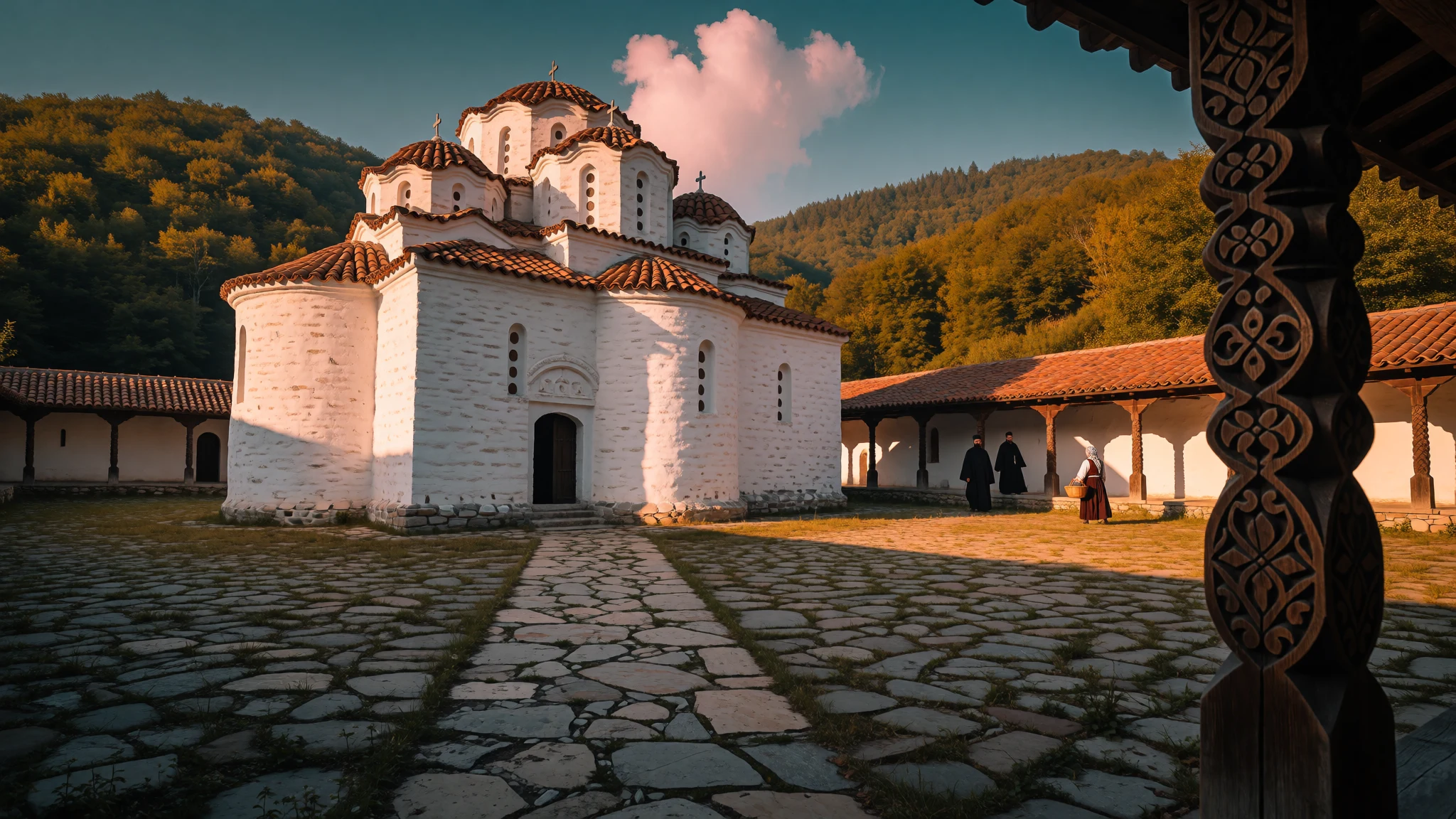
A working Orthodox monastery in a Rhodope river valley, founded by Georgians and now thoroughly Bulgarian, with painted walls, quiet courtyards and good pilgrim-town food.
The place
Bachkovo Monastery sits on the right bank of the Chepelare River in the Rhodope foothills of southern Bulgaria, about 10 km south of the town of Asenovgrad and 189 km from Sofia. Its full name is the Monastery of the Dormition of the Theotokos. It is stauropegic, which in practice means no local bishop stands between it and the Holy Synod of the Bulgarian Orthodox Church. The setting is a narrow wooded valley, and the buildings crowd along the river behind thick stone walls, with timber balconies, arcaded courtyards and a cluster of church domes. It still works as a monastery rather than a museum, so services, bells and black-robed monks share the grounds with day visitors, pilgrims and school parties. The place began as a Georgian Orthodox foundation, and that origin gives it an unusual blend of Georgian, Byzantine and Bulgarian threads, held together by shared faith rather than shared language. Inside the complex, the main Church of the Holy Mother of God, a separate ossuary, a refectory with a painted outer wall and the smaller Church of the Holy Archangels each repay a slow walk. Bulgaria sits close to the Turkish Straits, and the land routes between Europe and Asia run through it, so armies, traders and pilgrims have crossed this region for centuries. Most visitors come as a half-day trip from Plovdiv or Asenovgrad. Weekends and feast days are busier, and weekday mornings are the quietest.
Its story
Bachkovo Monastery was founded in 1083 by Gregory Pakourianos, a Georgian nobleman who rose to high military rank serving the Byzantine Empire. In that same year he wrote the monastery's founding charter, a typikon, which sets out how the community should live and remains the best window onto his intentions. One rule is telling: the monks had to know Georgian, so the house would stay Georgian in character even though it stood deep inside Byzantine territory. The charter is also openly distrustful of Greeks, whom its author saw as a threat to Georgian foundations, and Greeks were largely kept out of the brotherhood. Behind this lay a rivalry between Byzantium and the rising Kingdom of Georgia. Bachkovo belonged to a small circle of Georgian monastic centres abroad, with Iviron on Mount Athos the usual companion name. Monks in these houses wrote original theology, translated religious texts from other languages and sent the results back to Georgia. The best-known scholar linked to Bachkovo is Ioane Petritsi, whose philosophical work became an important thread in Georgian thought. Later centuries changed the make-up of the community, and the buildings were repaired, enlarged and repainted more than once, so what stands in the valley today is a layered site rather than a single medieval snapshot.
What to see
- Church of the Holy Mother of God — Central courtyard
The main church of Bachkovo Monastery anchors the central courtyard and is the spiritual heart of the place. Pilgrims come to venerate the icon of the Virgin and to look at the layered wall paintings. The interior is dim, so give the eyes a minute to adjust, and look for signs about photography.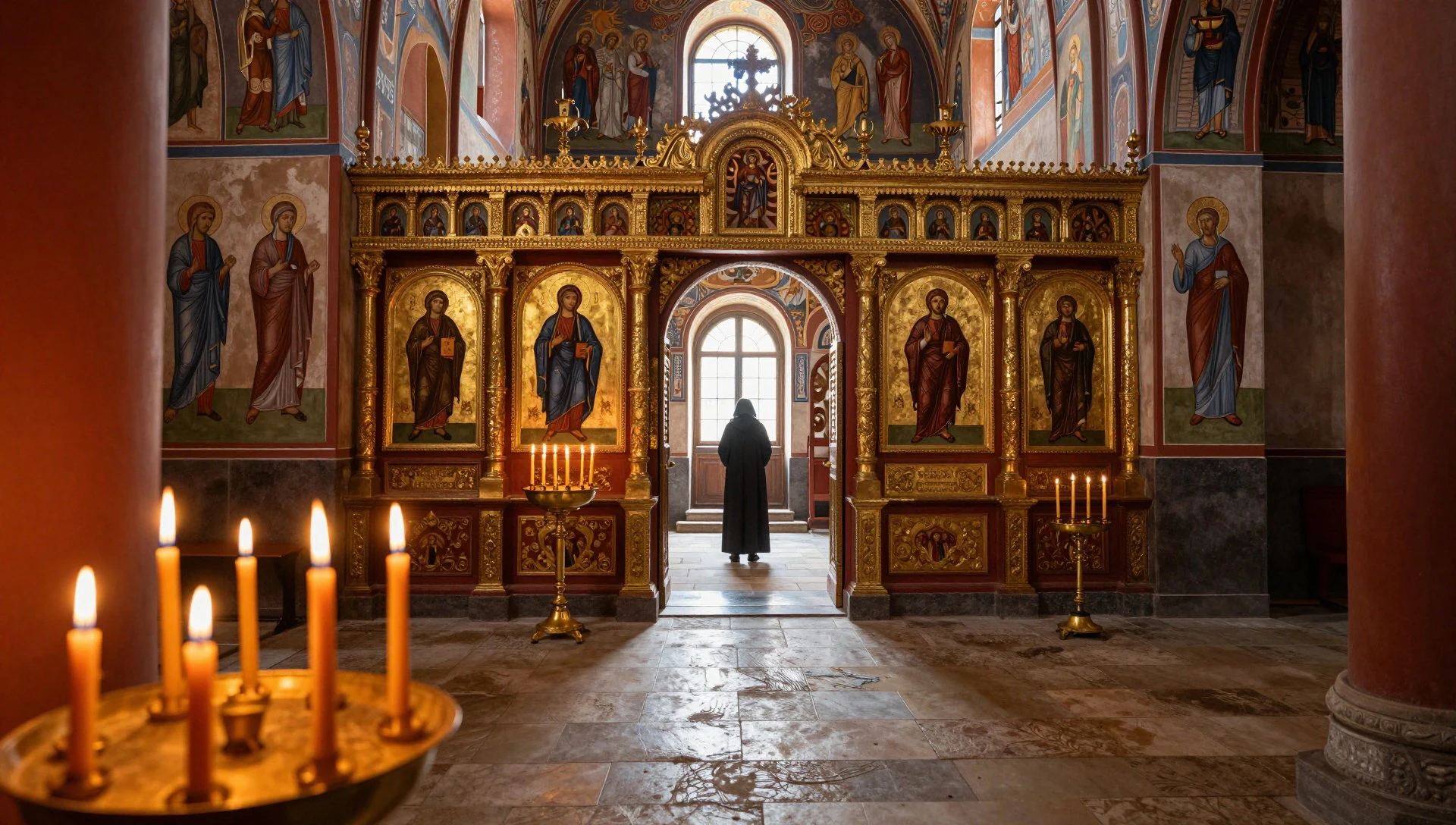
- The ossuary — Just outside the main courtyard
The ossuary of Bachkovo Monastery stands a short walk from the main courtyard, set apart in its own grounds. Painted scenes cover its walls, and the detail rewards close looking. It is smaller and quieter than the main church, which makes it a good pause when the courtyard fills with tour groups.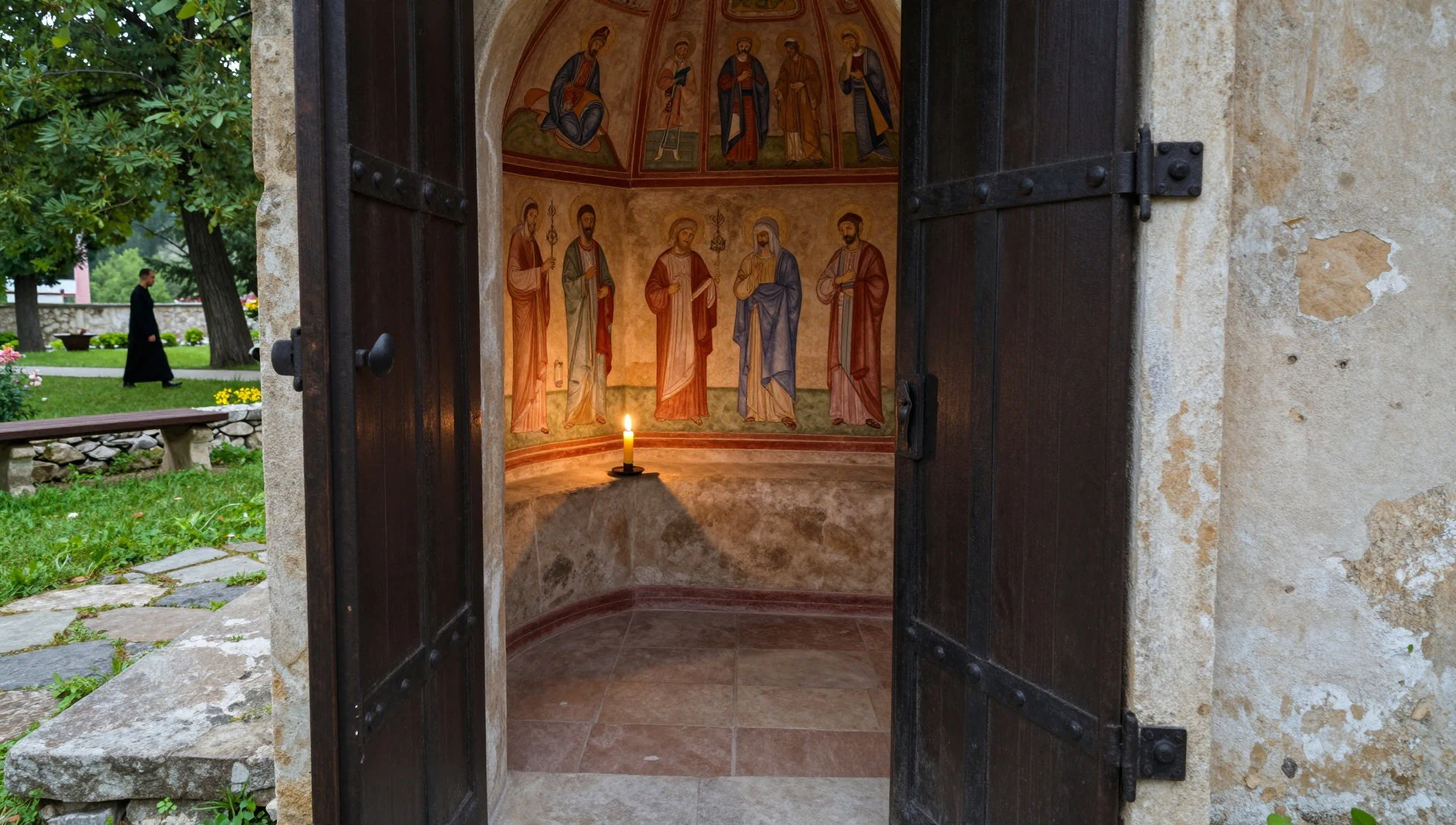
- Refectory and its outer mural — Monastery courtyard
The refectory at Bachkovo Monastery is worth a look from outside as much as in. A long mural by Alexei Atanasov covers its exterior wall and shows a procession carrying an icon, a reminder that the monastery's holiest image is meant to move through the community, not just hang on a wall.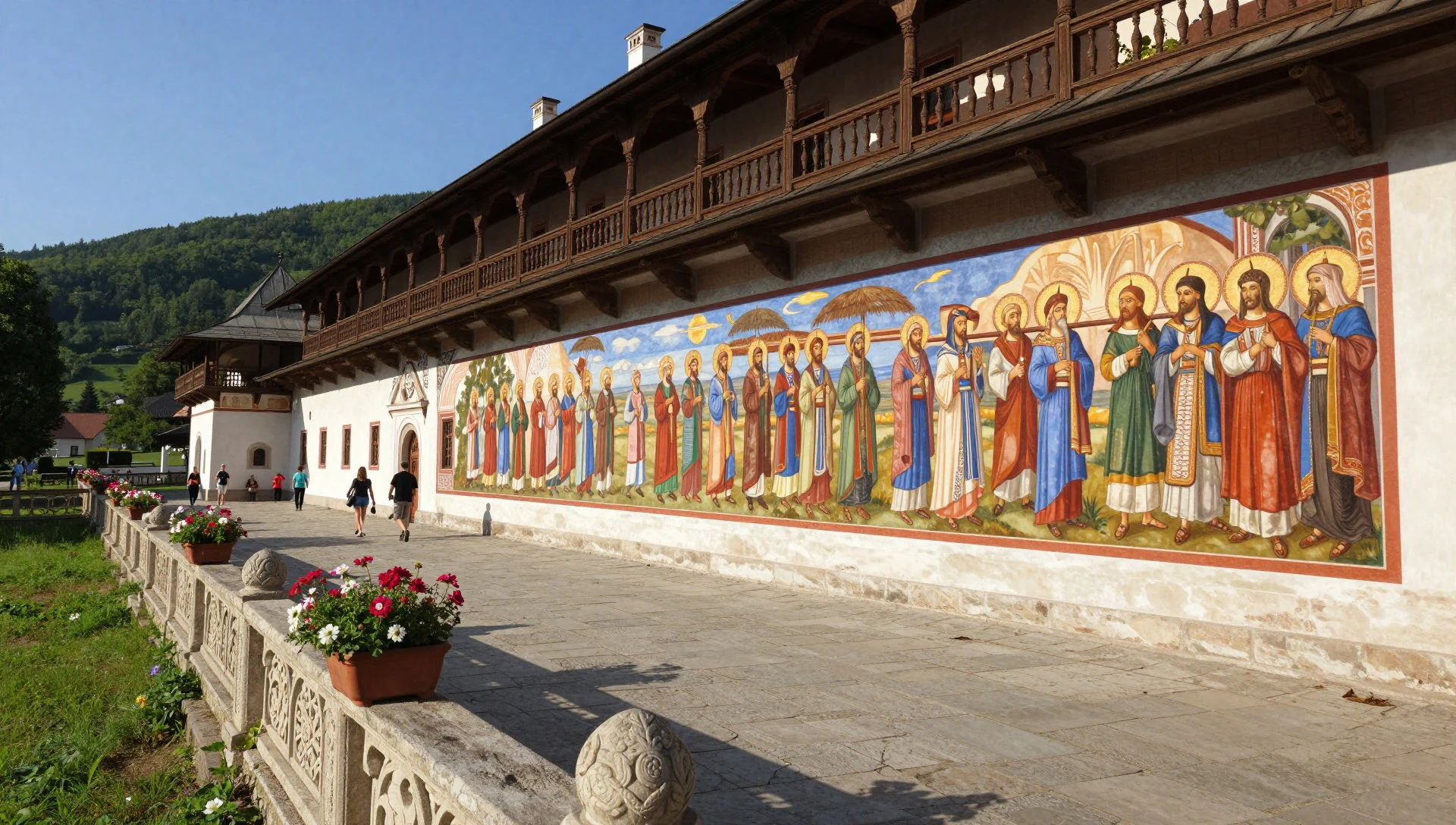
- Church of the Holy Archangels Michael and Gabriel — Monastery grounds
This smaller church within Bachkovo Monastery is dedicated to the Archangels Michael and Gabriel. It is easy to walk past on the way to the larger buildings, yet its more intimate scale suits a longer, quieter visit. Pair it with the ossuary for a calmer half hour away from the crowds.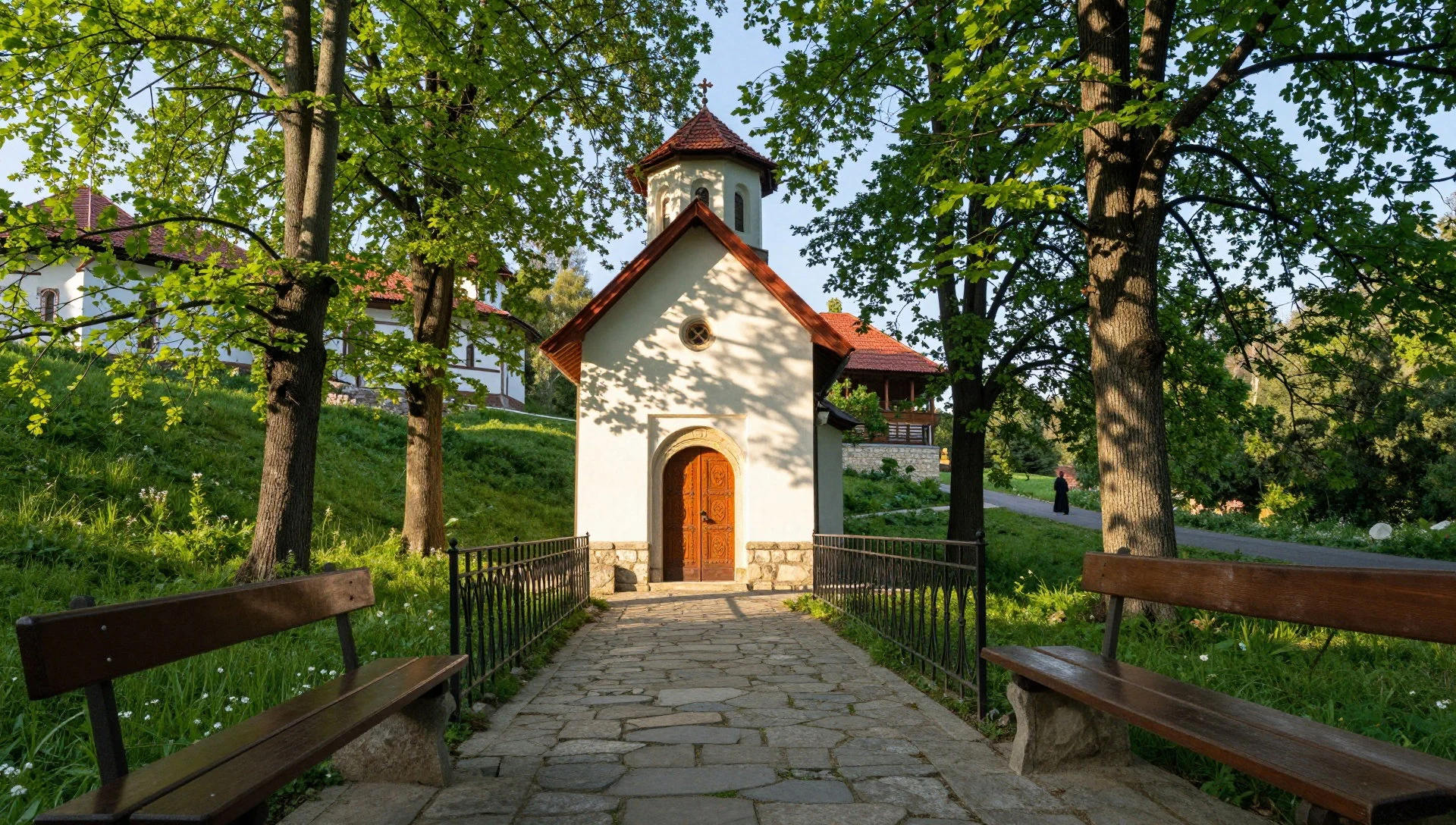
- Courtyards, galleries and the river — Whole complex and riverbank
Beyond the individual buildings, Bachkovo Monastery is best taken as a whole: arcades, wooden galleries and stone paving stepping down towards the Chepelare River. The view of the complex against the wooded slopes is clearest from the approach road, and a short riverside stroll after the visit lets the place settle.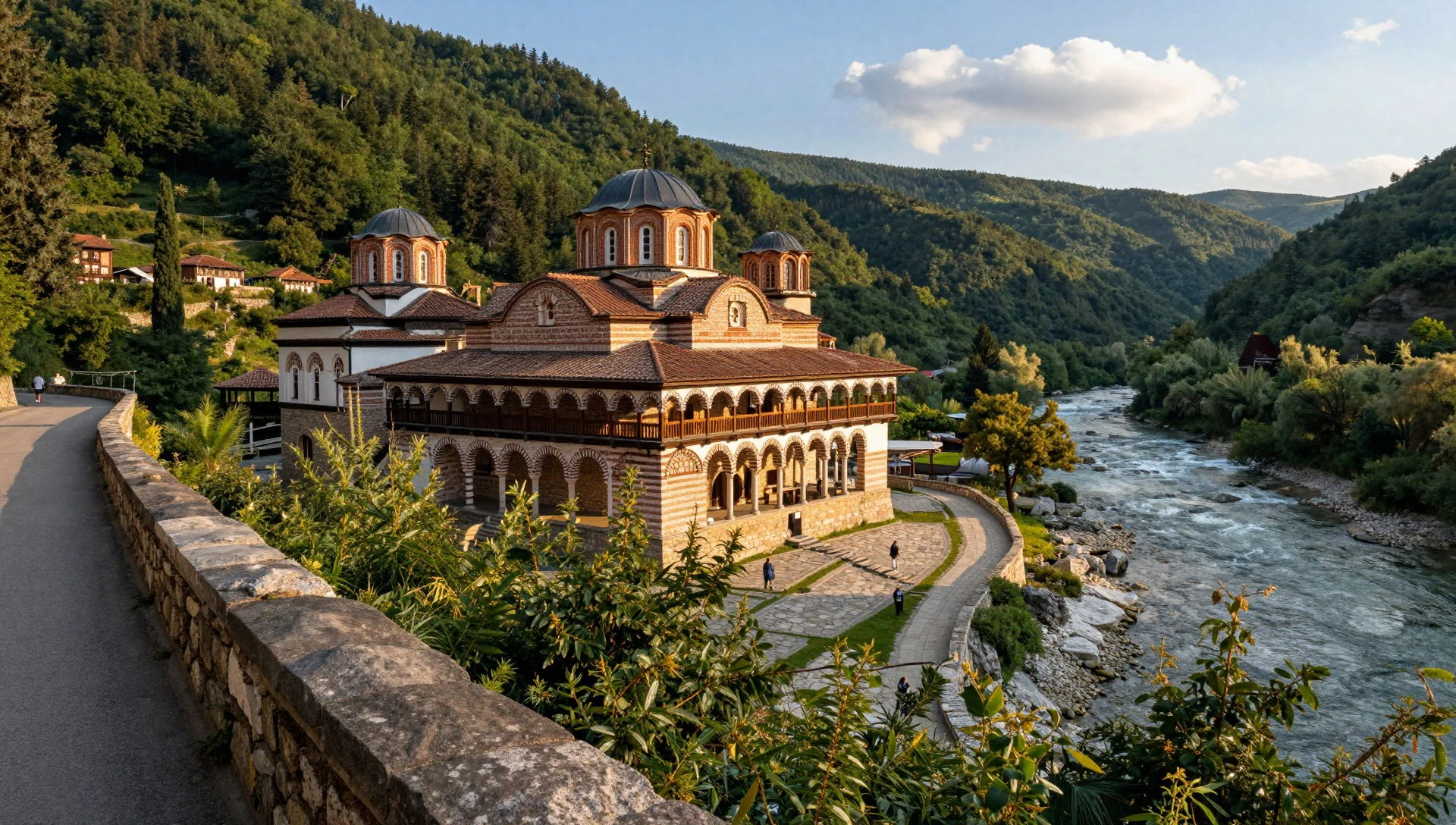
Culture
Bachkovo Monastery is a living Orthodox community, and the customs around it are Bulgarian even though its founders were Georgian. Pilgrims arrive to light candles, kiss icons and pray before the venerated image of the Virgin, and the monks' daily round of services continues whether or not visitors are watching. In the Rhodope villages nearby, hospitality is a point of pride, and a stranger may well be invited to share a meal. A simple 'dobar den' (good day) to someone passing, or at a quiet stall, goes down well. Bulgarians are generally friendly and curious about foreigners, but they rarely make small talk with shop staff, so a blank look at the till is not rudeness. One point of national pride: the script used for Bulgarian is the Cyrillic alphabet, and calling it the Russian alphabet is a mistake that lands badly. Weekends and feast days bring families, queues for candles and the smell of incense and beeswax. Lunch afterwards in a village tavern is part of the day for many Bulgarian visitors. Speak softly in the courtyards and churches, cover shoulders and knees, take off hats indoors, and ask before photographing monks or anyone at prayer.
What to wear
Traditional dress in the Rhodope region at Bachkovo is built on wool, linen and hemp, woven and embroidered at home. Women's costume centres on the sukman, a sleeveless dress worn over a linen chemise, with woven aprons, sashes and headscarves, and embroidery in dark reds and blacks. Men wore wool trousers, waistcoats and belts. Today these outfits appear mainly at folk festivals, weddings, school performances and national holidays. Everyday dress in Asenovgrad and Plovdiv is plain and European: jeans, shirts, trainers, with smarter clothes for church feasts. Monks wear black robes and a tall cylindrical hat, and older women in nearby villages often favour dark skirts and headscarves. For a visit, dress for a working church. Cover shoulders and knees, and carry a light scarf or shawl for entering the churches. Shoes matter: the courtyards are stone, worn smooth and slippery in rain, and there are steps and slopes, so wear flat, grippy soles. The valley is cooler than the plains, so bring a layer even in summer, a hat and sun cream for July and August, and a waterproof jacket in autumn and spring. Winter can be cold and damp, so warm layers and boots are sensible.
What to eat
- Shopska salad — Any traditional mehana (tavern) in Asenovgrad or the villages near the monastery
A salad of chopped tomato, cucumber and peppers under a snowdrift of grated white brine cheese. Bulgarian meals traditionally open with a salad, and this is the one most tables start with, often alongside a small glass of rakia.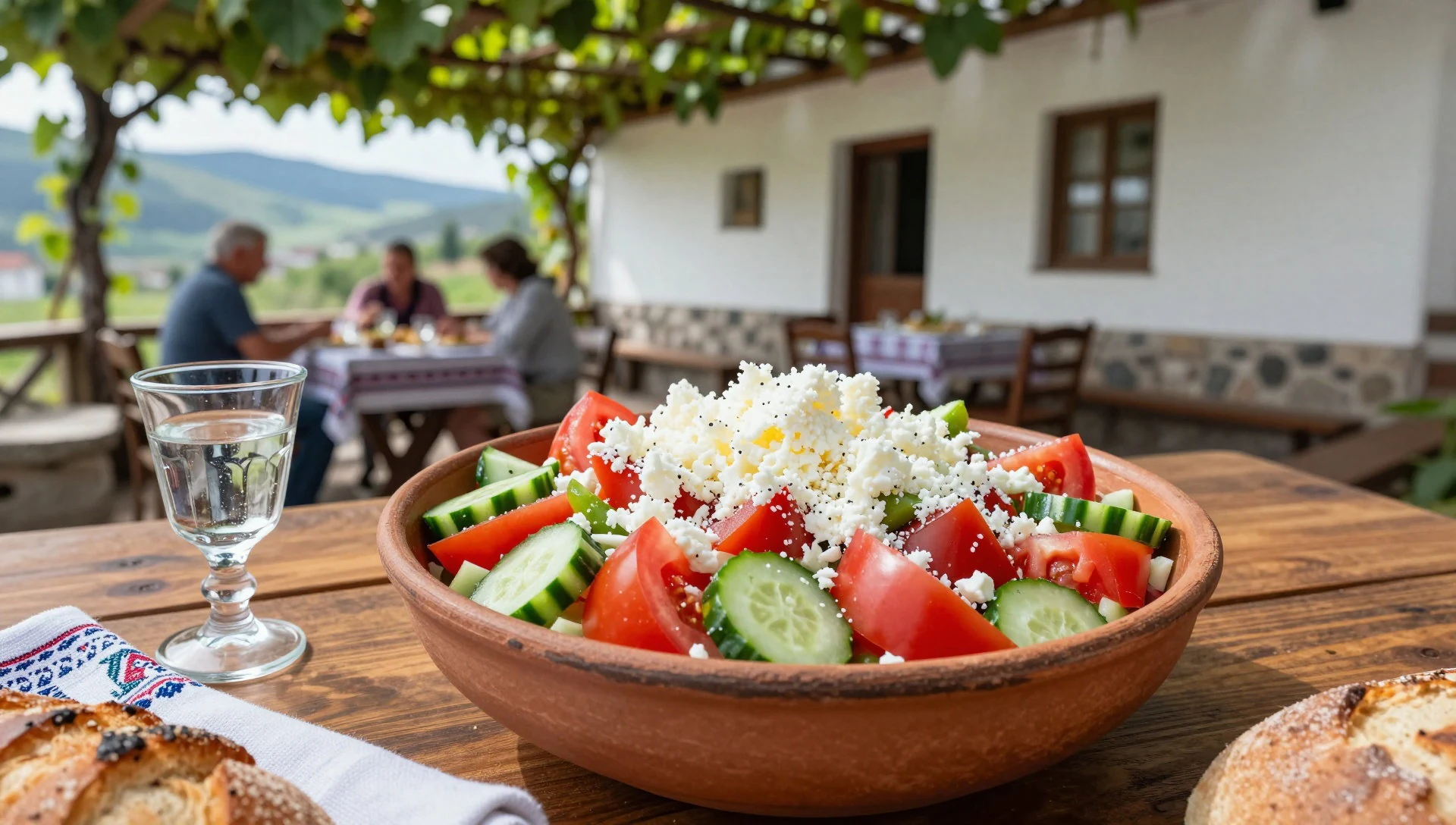
- Banitsa — Any bakery in Asenovgrad or Plovdiv, best in the morning
Layers of thin pastry brushed with fat and folded around beaten egg and crumbled white cheese, baked until crisp on top and soft inside. It is a breakfast staple, usually eaten warm with plain yoghurt or ayran, and travels well for a day out.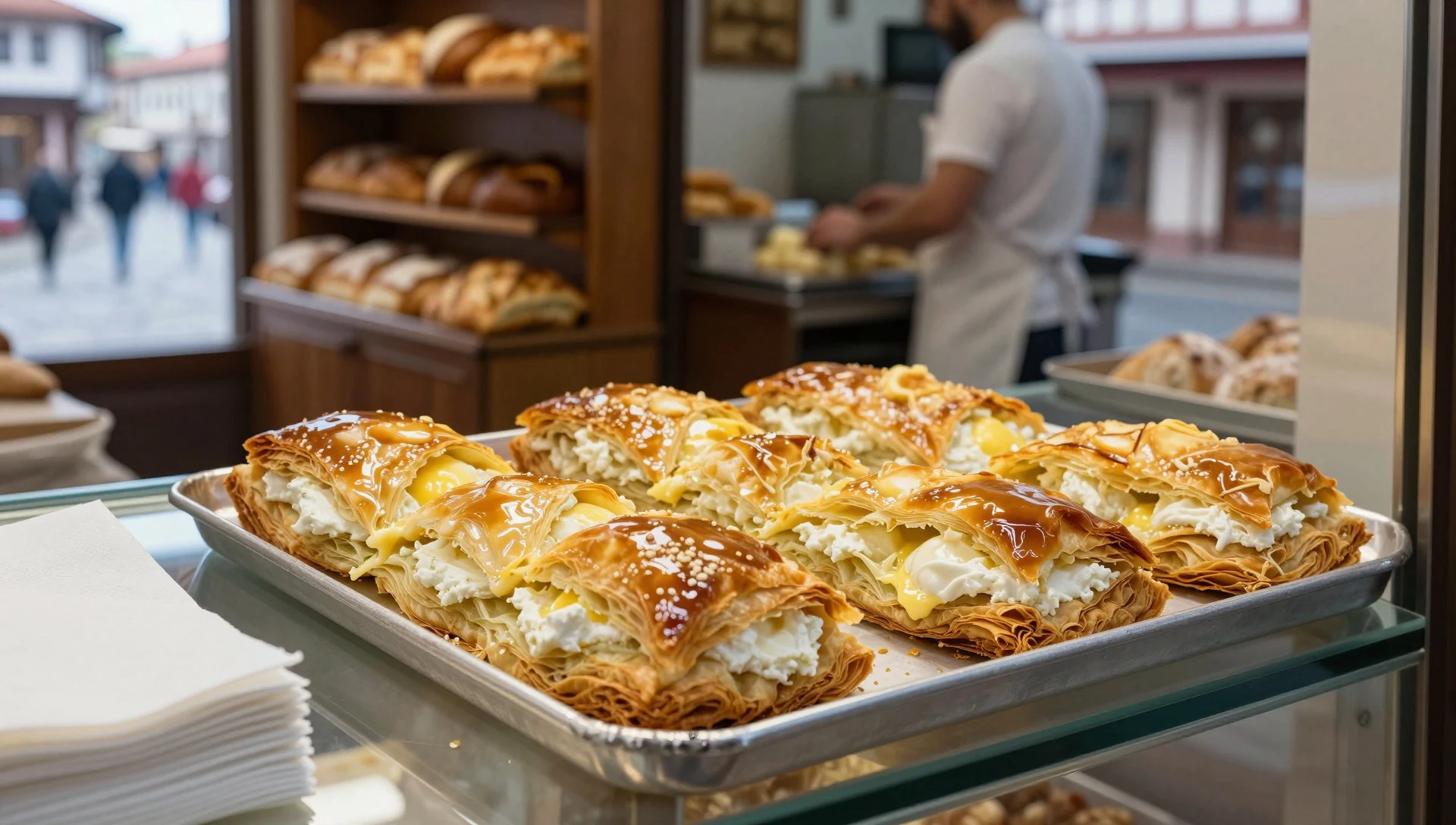
- Kebapche — Grill-house or tavern in Asenovgrad
Spiced minced meat, often pork, shaped into a short roll and grilled over charcoal. It arrives with chips, bread and a side salad, and is a straightforward lunch after a morning of walking around the monastery. - Rhodope patatnik — Village taverns and family-run eateries in the Rhodope hills
A Rhodope speciality of grated potato mixed with onion and savoury herbs, baked into a dense, golden pie. Plain, filling and good for vegetarians, it suits the cooler hill climate. Ask whether a given kitchen makes it, as it is not on every menu. - Tarator — Most taverns and restaurants in the valley and in Asenovgrad
A cold soup of yoghurt thinned with water, diced cucumber, garlic, dill and often crushed walnuts. It is refreshing after a hot walk in summer and sits well alongside grilled meat. Vegetarian, and found on most Bulgarian menus from late spring.
Plan it
Best time. May and September–October, when the valley is green or golden and walking is comfortable. July and August are hot and busier with day-trippers; winters are cold and damp in the hills, so check conditions before travelling.
How long. 1
Getting there. Fly to Sofia (189 km away) or to Plovdiv, the nearest large city with rail and bus links. Take a bus or train to Asenovgrad, about 10 km south of the monastery, then a local bus or taxi for the last leg up the Chepelare valley. Driving from Plovdiv is straightforward.
Budget. low
Tips
- Check the official site, https://www.bachkovskimanastir.com/, for opening times and any entry or parking charges before you set out
- Go on a weekday morning to avoid the weekend and feast-day crowds
- Carry some cash for candles, souvenirs and small purchases at the monastery
- Wear flat, grippy shoes for stone courtyards that turn slippery in rain
- Combine the visit with Plovdiv or Asenovgrad so the day has a lunch stop
Etiquette
- Cover shoulders and knees, and take hats off inside the churches
- Ask before photographing monks, worshippers or church interiors
- Keep your voice low in the courtyards and during services
Nearby
Sources
- Wikidata Q47020 (CC0)
- Wikipedia: Bachkovo Monastery (rev 1362322592) (CC BY-SA 4.0)
- Wikivoyage: Bulgaria (rev 5424560) (CC BY-SA 4.0)
- Photo: Bachkovo Monastery — Reneman (CC BY 3.0)
- Photo: Church of the Dormition, Bachkovo Monastery — Kritzolina (CC BY-SA 4.0)
- Photo: Ossuary of the Bachkovo Monastery — Todor Bozhinov (CC BY 3.0)
- Photo: Church of the Holy Mother of God — Todor Bozhinov (CC BY 3.0)
- Photo: Bachkovo Monastery plan — Kandi (CC BY-SA 4.0)
- Photo: Church of the Holy Archangels Michael & Gabriel — Todor Bozhinov (CC BY 3.0)
- Photo: Panorama mural on the refectory wall — Jerrye and Roy Klotz MD (CC BY 3.0)
- Photo: 4251 Bachkovski manastir — sMboro (CC BY 3.0)


