Axum
Axum, Ethiopia
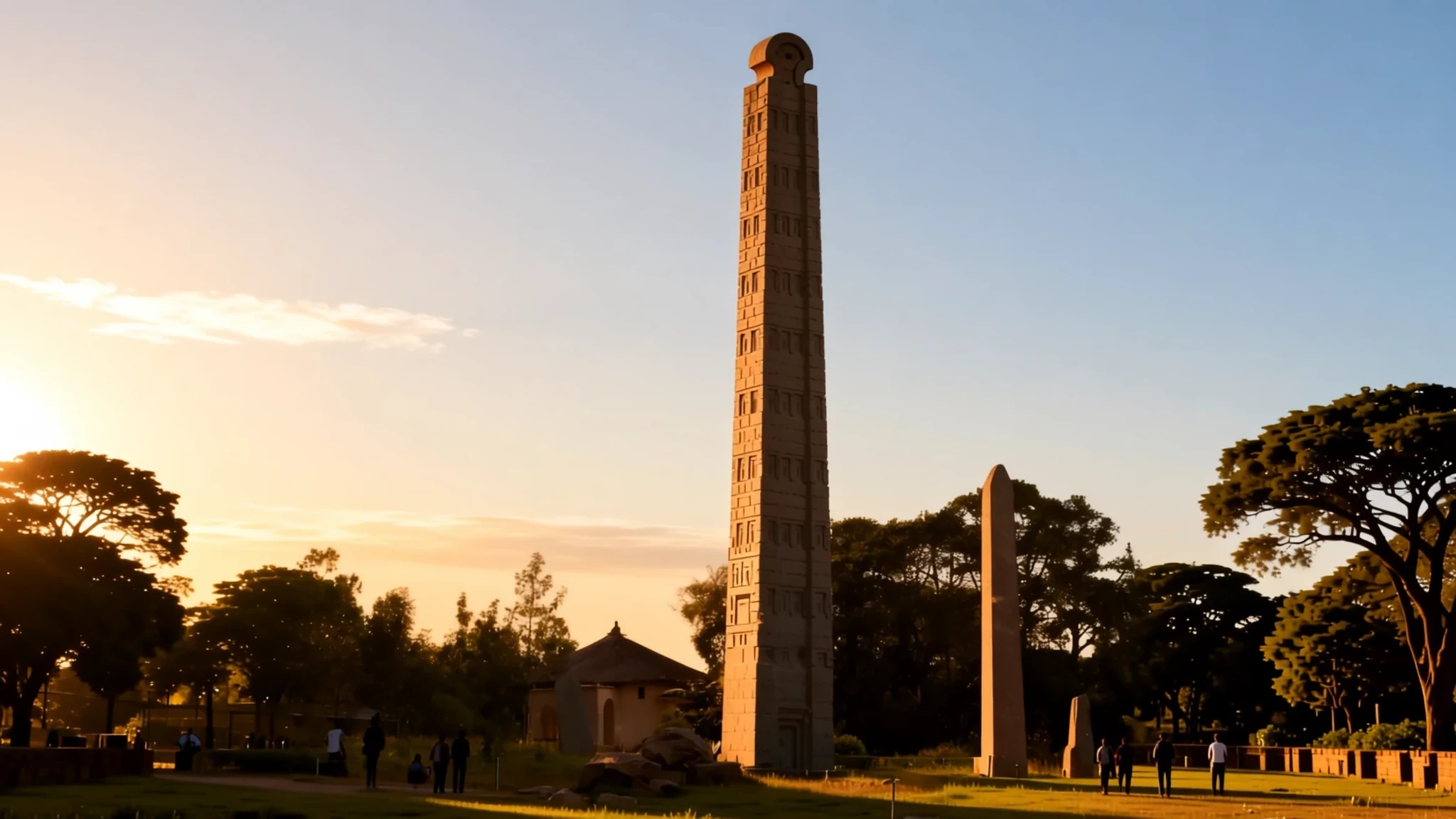
Axum is the ancient capital of the Aksumite Empire, where carved granite stelae and royal tombs still stand in open ground.
The place
Axum sits in the Tigray Region of northern Ethiopia, on a highland plateau at about 2,131 metres above sea level, close to the Adwa mountains. Its population is around 95,000, so it feels like a market town with a major archaeological inheritance rather than a large city. The Aksumite Empire made this its capital, and the stone monuments it left still shape the town's outskirts, its routes and its reputation.
Most of the historic sites are spread across open ground rather than enclosed behind a single gate. Visitors tend to walk between the Northern Stelae Field, the museum and the royal tombs, with the Judith stelae field and the Dungur palace a short distance away. Walking is easiest in the cooler morning hours, and the ground is uneven in places, so flat shoes with good grip matter more than a heavy camera bag.
The town itself is practical and low-rise, with a few guesthouses, cafés and small shops clustered around the central streets. Churches are active, and the Ethiopian Orthodox calendar shapes the rhythm of many days. Tourism was once strong, but the conflict that began in 2020 disrupted travel for a long time, so check current conditions before planning. Treat any itinerary as provisional until it has been confirmed locally, and expect limited nightlife, with meals planned around opening hours.
Its story
Axum's story begins long before its stone monuments. Excavations on the hills above the present town and in the Stele Park suggest settlement stretching back well before the common era. By the first centuries of the common era, a Greek trading guide already described the town as a major centre. Its rise into a dominant regional power came over several centuries, driven by trade routes that linked inland farmland with the Red Sea coast.
The monuments began as grave markers. Royal and elite burials were marked with granite stelae, which started as plain, rough shafts and became carefully dressed slabs. Later examples were carved to resemble multi-storey towers, with recessed panels and a design that echoed timber frames. Builders combined huge dressed granite blocks with rubble walls, mud mortar and brick vaults. Walls leaned inwards as they rose, a technique that gave strength without great weight.
Water and farming supported all of this. A large reservoir below the hill called May Oho may date to Aksumite times, and Aksumite coins show wheat, a sign of the fertile land around the town. Metalworking, glassmaking and pottery were practised as crafts. Trade later shifted and the empire's influence faded, but the town kept its ancient identity, and its stones remain the clearest record of that power.
What to see
- Northern Stelae Field — Stele Park, central Axum
The main stelae field holds the standing Ezana Stele and the Obelisk of Axum, alongside the fallen Giant Stele, which lies broken on the ground. The tall granite shafts show how the monuments were shaped, with fine dressing on some and rougher, unfinished surfaces on others. Allow at least an hour here, and arrive early, when the low light brings out the texture of the granite and the field is quieter.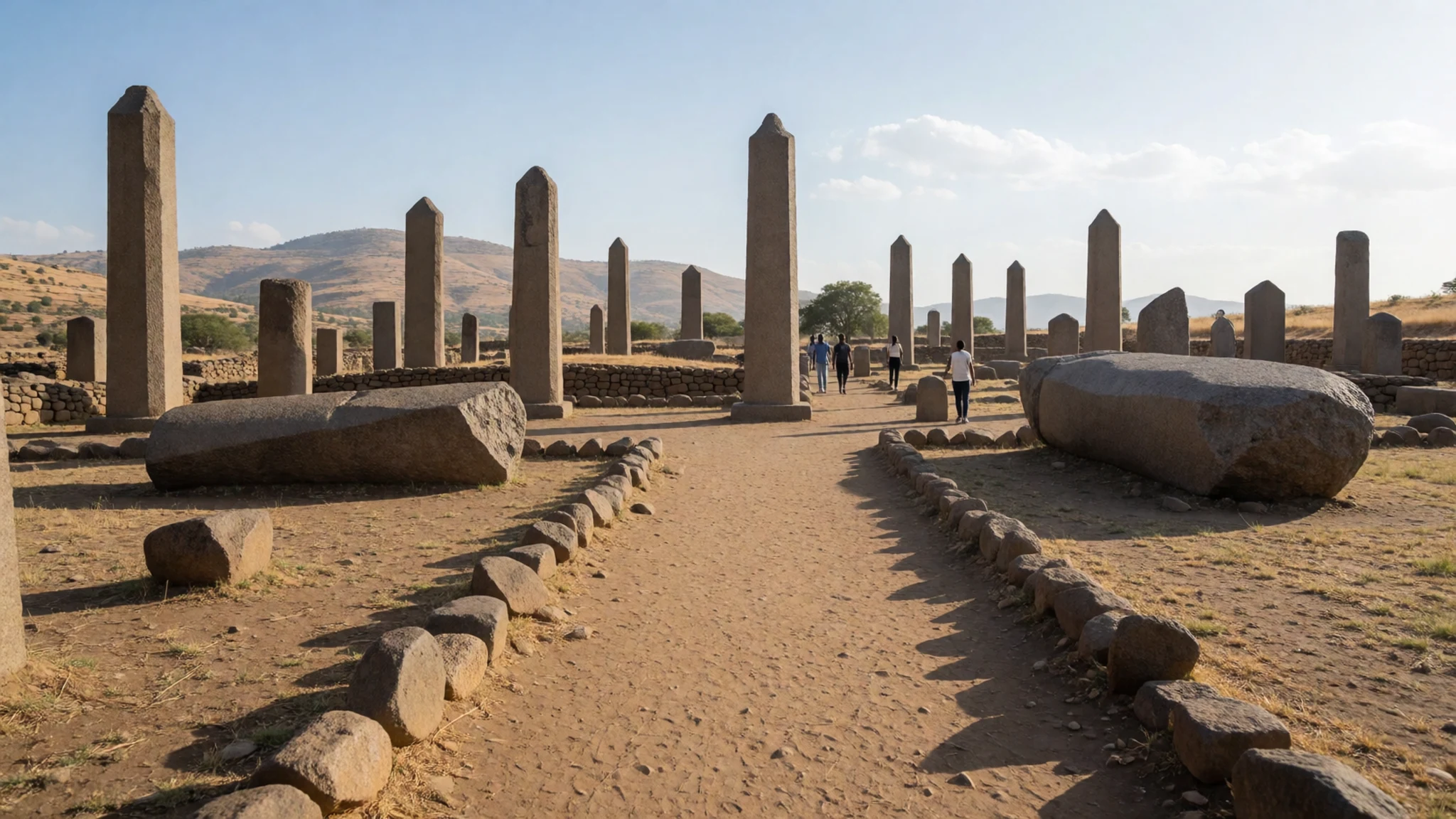
- Archaeological Museum of Axum — central Axum, near the stelae field
A short walk from the stelae, the museum gathers finds from the excavations, including pottery, metalwork and inscribed material that explain the Aksumite world beyond the monuments. Displays give useful context for the field, so it is sensible to visit before walking out to the outlying sites. Plan a relaxed hour, and check current opening arrangements locally, as they change.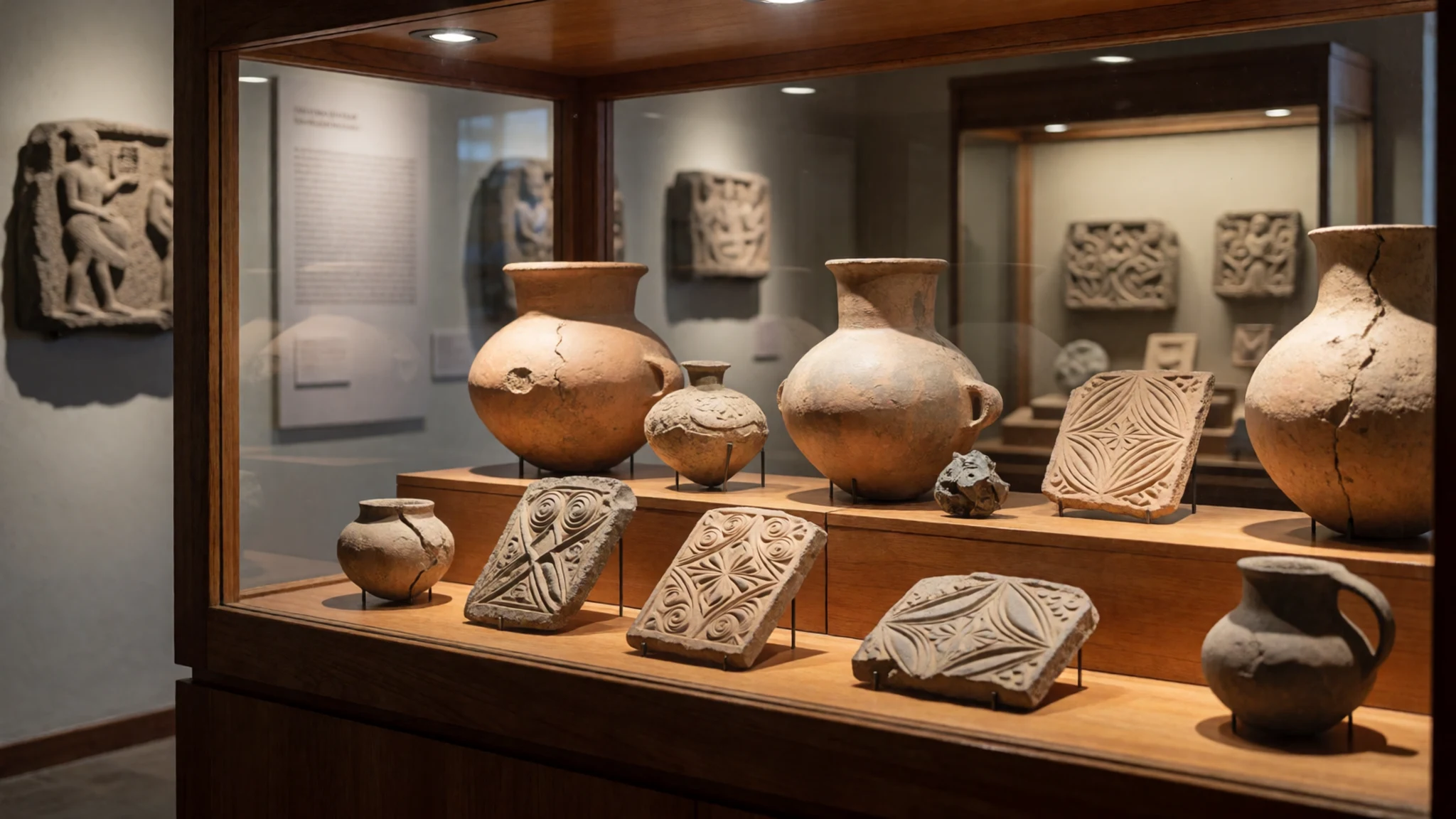
- Ezana's tri-lingual tablet — near Ezana Park, central Axum
A well-preserved tablet, about two metres tall, is carved in Greek, Sabaean and Ge'ez. It praises God for help in a military campaign in what is now Yemen. A farmer discovered it in the 1980s, and it is a rare surviving text from the period. Look closely at the three scripts, and ask a guide to point out the sections that name the rulers.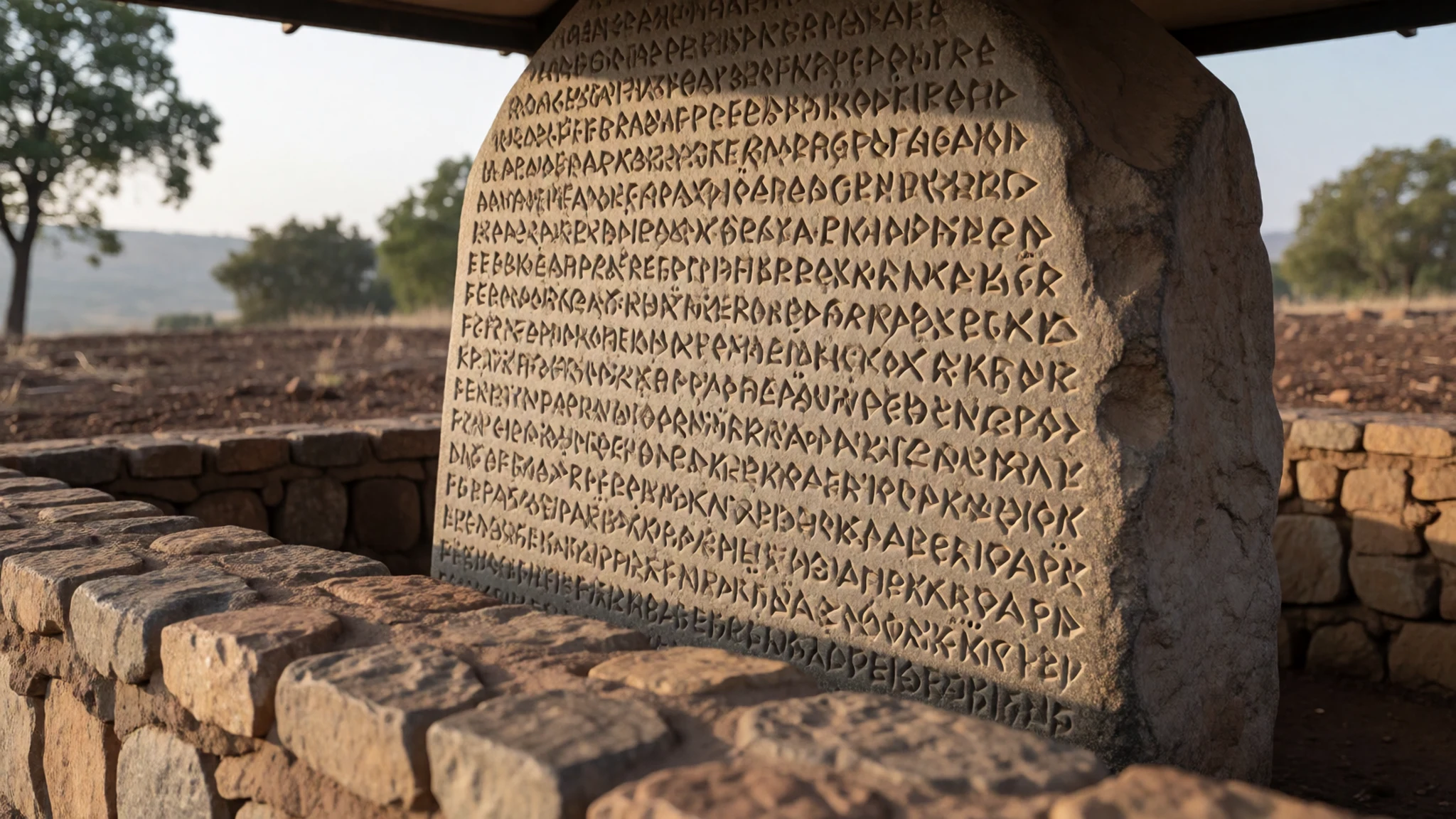
- Tombs of Kings Kaleb and Gebre Mes'kel — northeast of the northern stelae field
About a 20-minute walk northeast of the northern stelae field, along a rough road, these tomb foundations and surrounding structures reward the effort. The site is quieter than the main field, and the views across the plain are open. Wear closed shoes, carry water, and go with a guide who knows the route, because the path is uneven and can be dusty.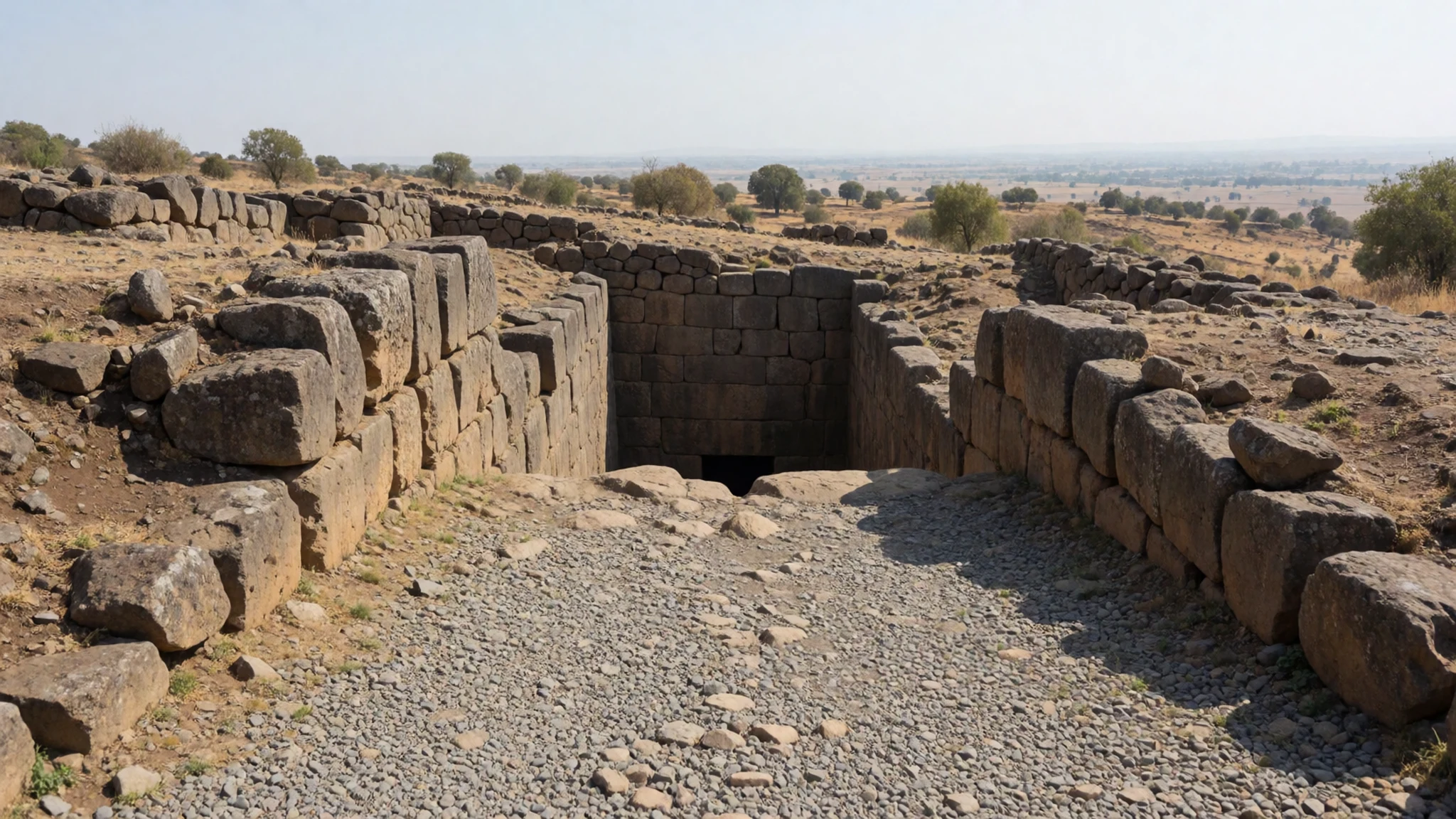
- Dungur Palace — beside the Judith stelae field
The grand entrance steps and foundations of this palace stand near the Judith stelae field, with ruined walls rising up to about 3 metres in places. Its scale marks it as a major building in the town, and the layout shows the same inward-leaning walls and dressed granite seen elsewhere in Axum. Climb the steps slowly and keep to marked paths, because the foundations are fragile.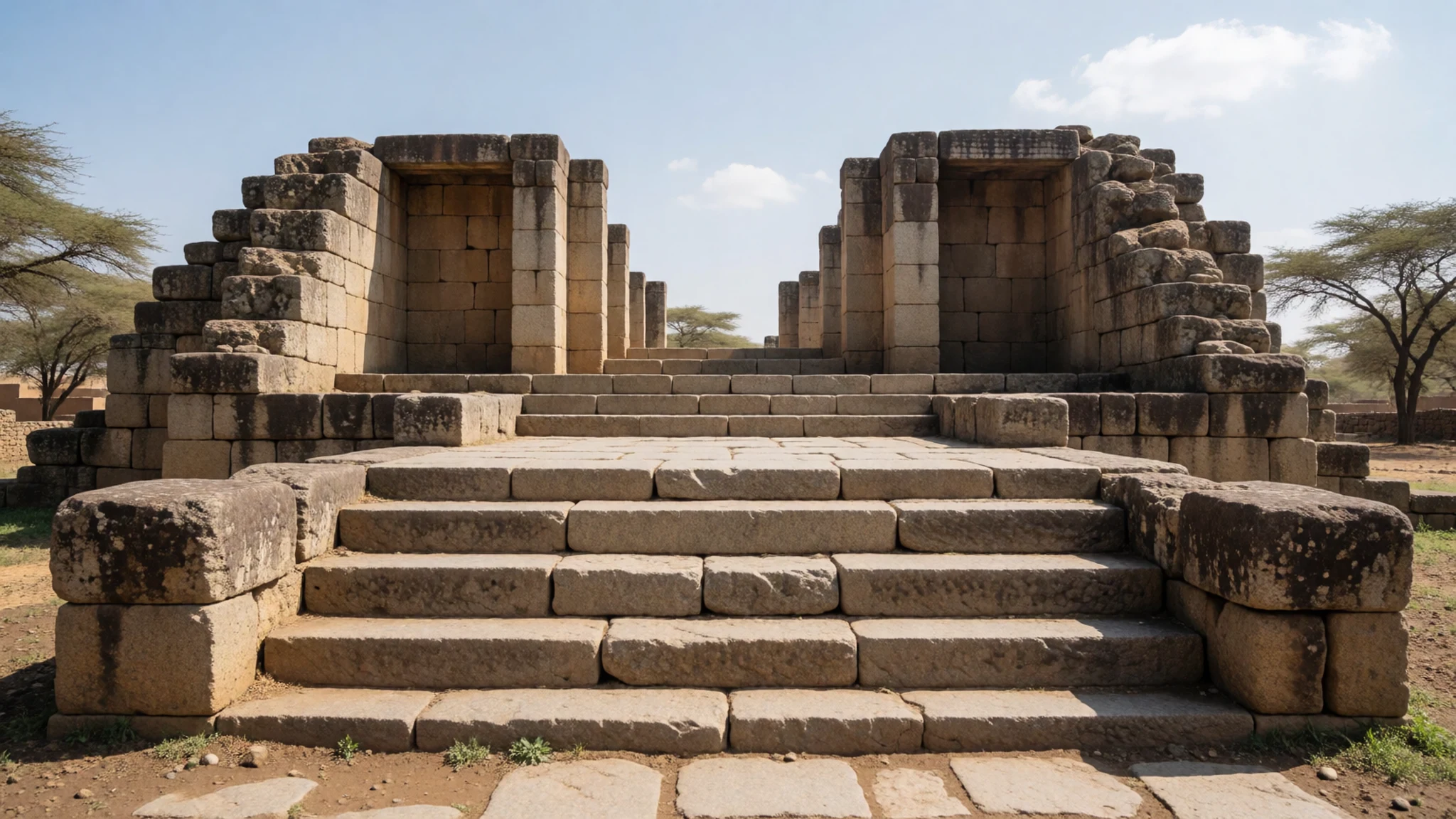
- Judith (Gudit) Stelae Field — opposite Dungur Palace
Across the road from Dungur Palace, this field holds stelae that are generally less refined than those in the northern field. That makes it useful for seeing how the monuments changed in quality over time. It is a quick stop and is usually quieter than the main field. Compare the rough and dressed shafts, and notice the variety in their shapes and sizes.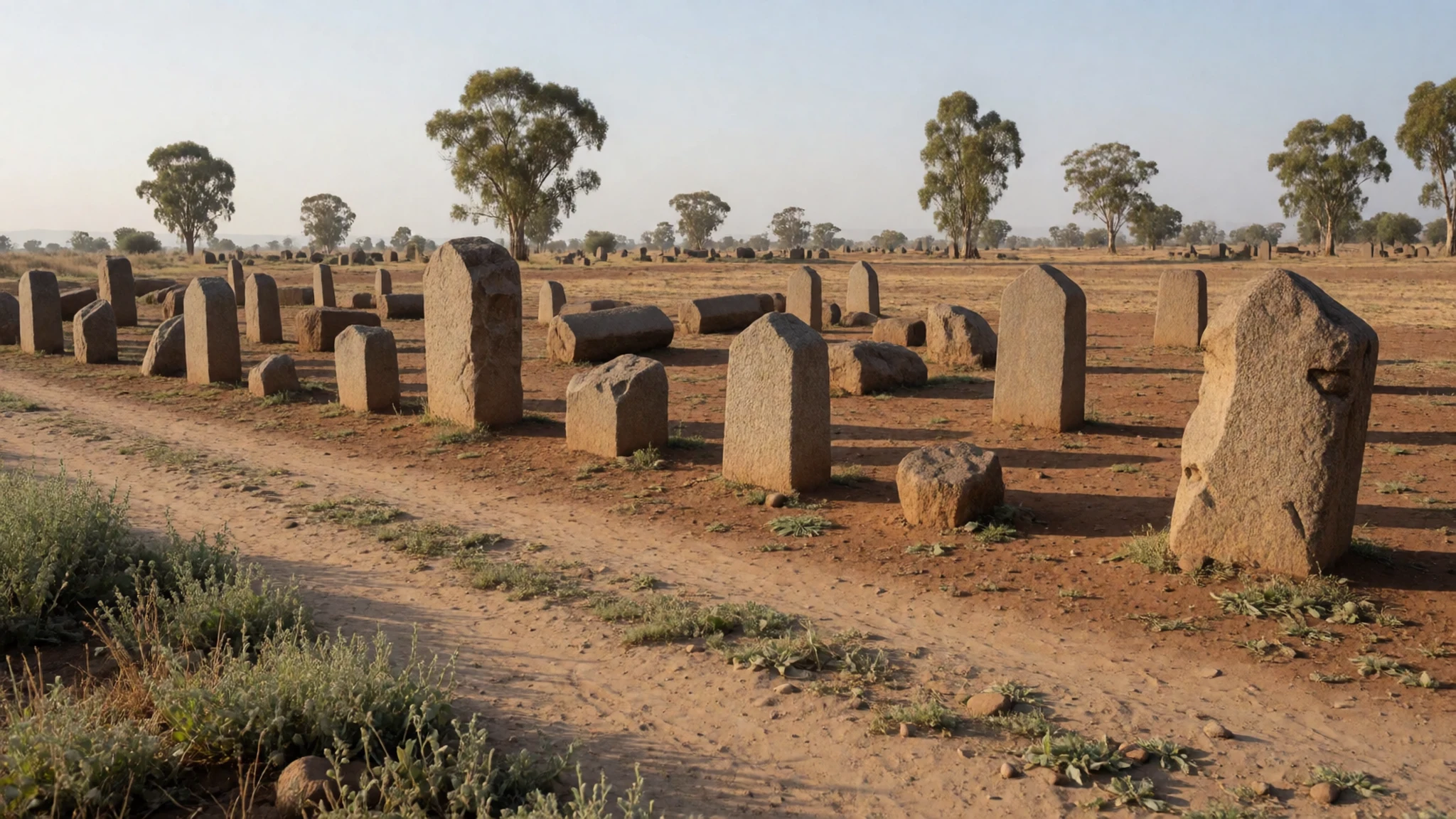
Culture
Axum is a religious town as well as an archaeological one. Its churches are working places of worship for the Ethiopian Orthodox community, and feast days and fasts shape local life. Greetings matter: a slow, warm exchange is expected before any question or request. Coffee is a social ritual, and accepting a cup in a home or small café is a courtesy. Photographing people is a sensitive matter in many parts of Ethiopia, and worshippers and children often expect to be asked first. Begging is common near the main sites, so decide in advance how you will respond to requests for money. Because the town has a strong religious identity, dress and noise matter. Remove shoes at church thresholds, cover shoulders and head, and ask before photographing anyone at prayer.
What to wear
Traditional dress in Axum follows the wider Ethiopian habesha style: a long white cotton dress, the kemis, often finished with woven coloured bands at the hem and shoulders, worn with a shawl called a netela over the shoulders. Weaving is a skilled craft, and cotton is the usual material, with the finest cloth kept for church occasions and holidays. Women often wear the full outfit at religious festivals, while men may wear a white shirt and trousers with a wrap for ceremonies. In everyday life across Axum, people mostly wear Western-style clothes such as jeans, shirts, skirts and jumpers, with traditional dress kept for church days, weddings and holidays. Visitors should dress modestly, which here means covering shoulders and knees, and bringing a light scarf that can cover the hair when entering a church. For the terrain, pack sturdy closed shoes with good grip, because the stelae fields and tomb paths are uneven and dusty. Lightweight layers help too, since the highland air can be cool in the morning and evening even when the middays are warm.
What to eat
- Injera with wat — family-run eateries on the central streets
Injera, a spongy sourdough flatbread, is the base of most Ethiopian meals in Axum. It comes with wat, a slow-cooked stew of spiced lentils or meat. Diners tear off pieces of bread and use them to scoop up the stew. It is everyday food, and the simplest way to try it is at a family-run eatery where the menu follows what has been cooked that day.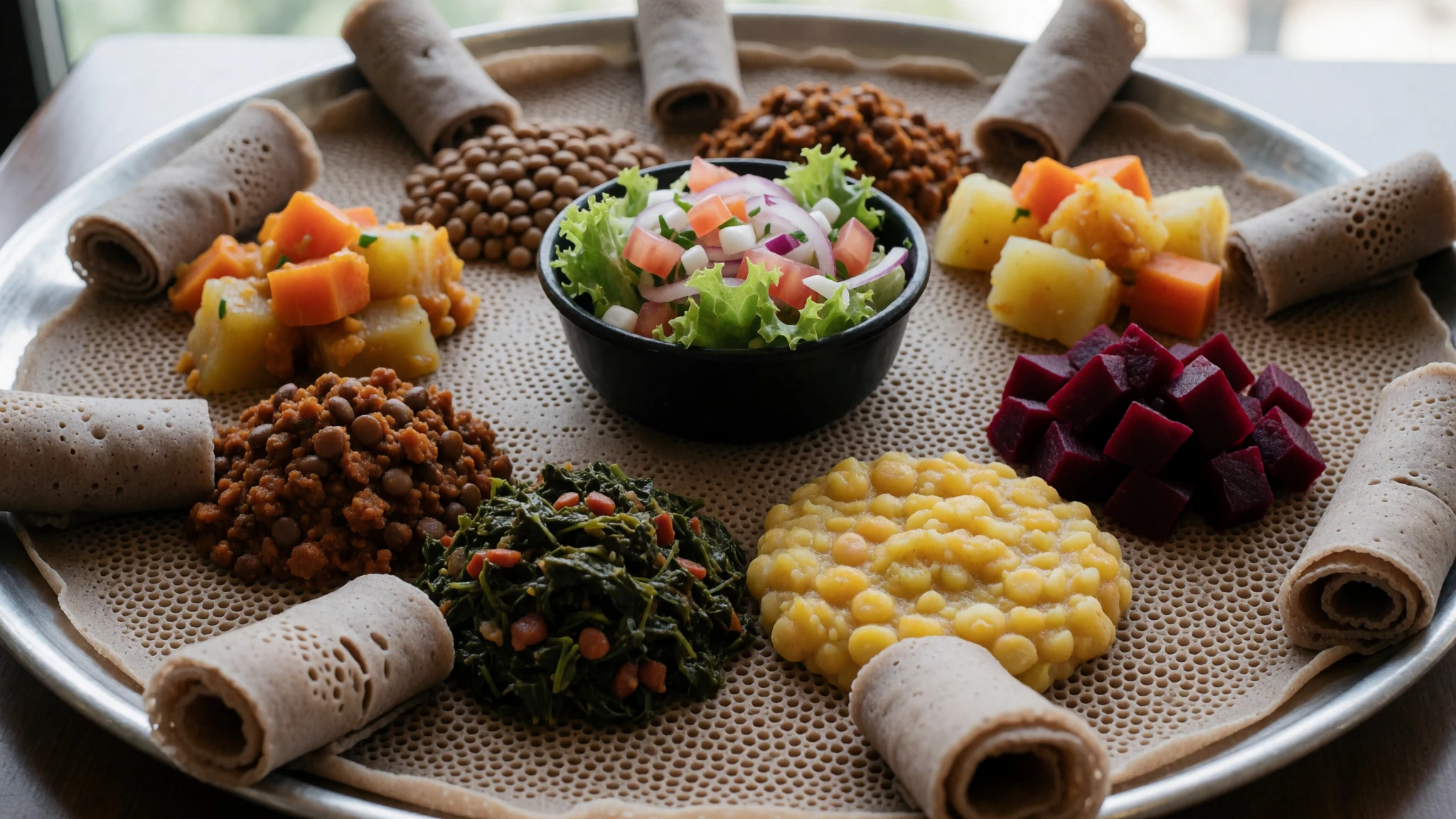
- Tibs — the restaurant of the central hotel, or any eatery serving meat
Tibs are small pieces of beef or lamb, fried quickly with onion, chilli and butter, sometimes with garlic and rosemary. They arrive sizzling and are eaten with injera. Tibs make a filling lunch and are widely available. Ask for mild or hot, because spice levels vary from kitchen to kitchen.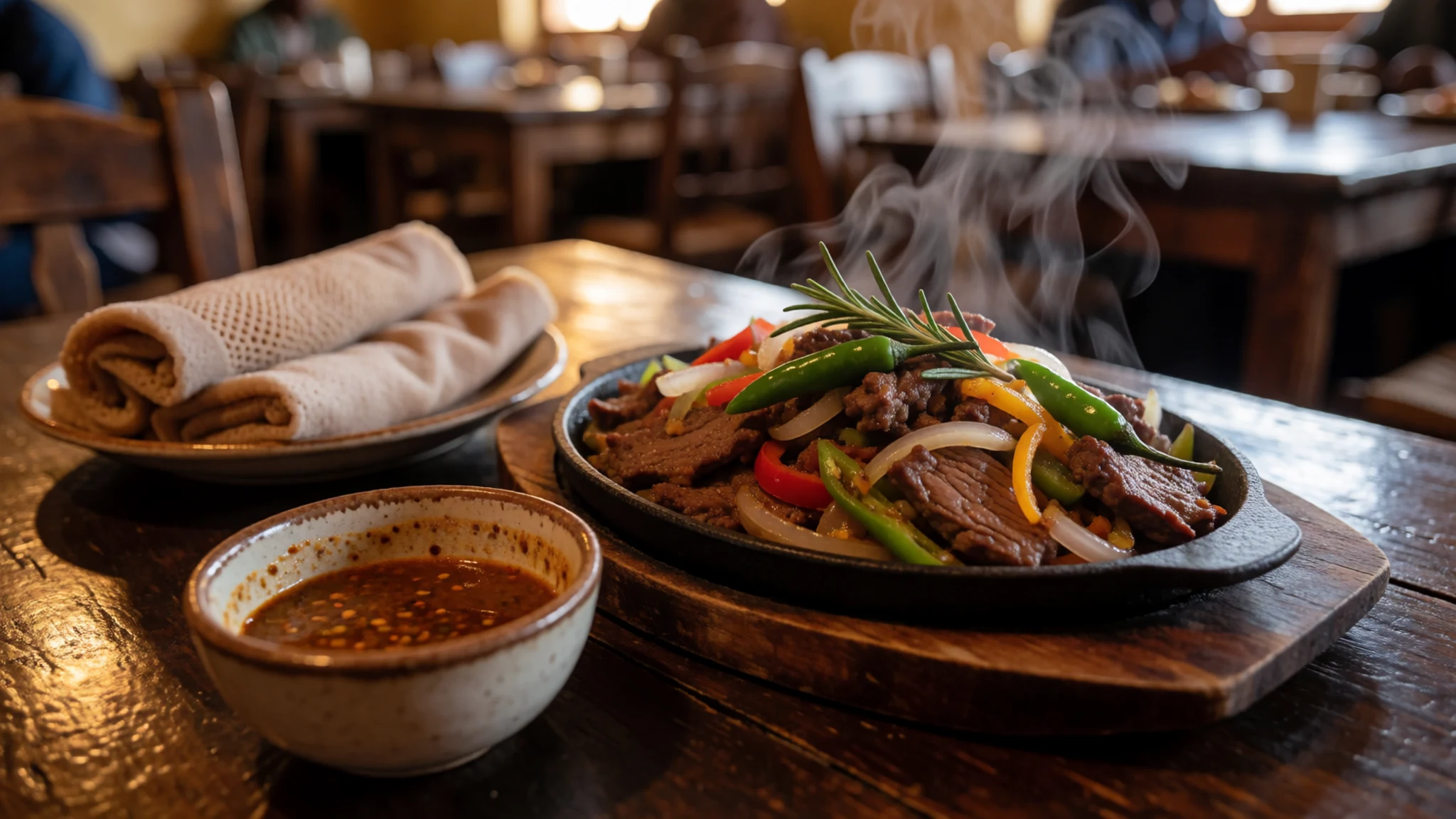
- Coffee ceremony — cafés in the centre, including Ezana Cafe by Ezana Park
A coffee ceremony is a slow ritual of roasting green beans over charcoal, grinding them and brewing in a clay pot called a jebena. The coffee is poured into small cups and often served with popcorn or sugar. It is an important social moment, and joining one in a home or small café is a warm way to spend an afternoon.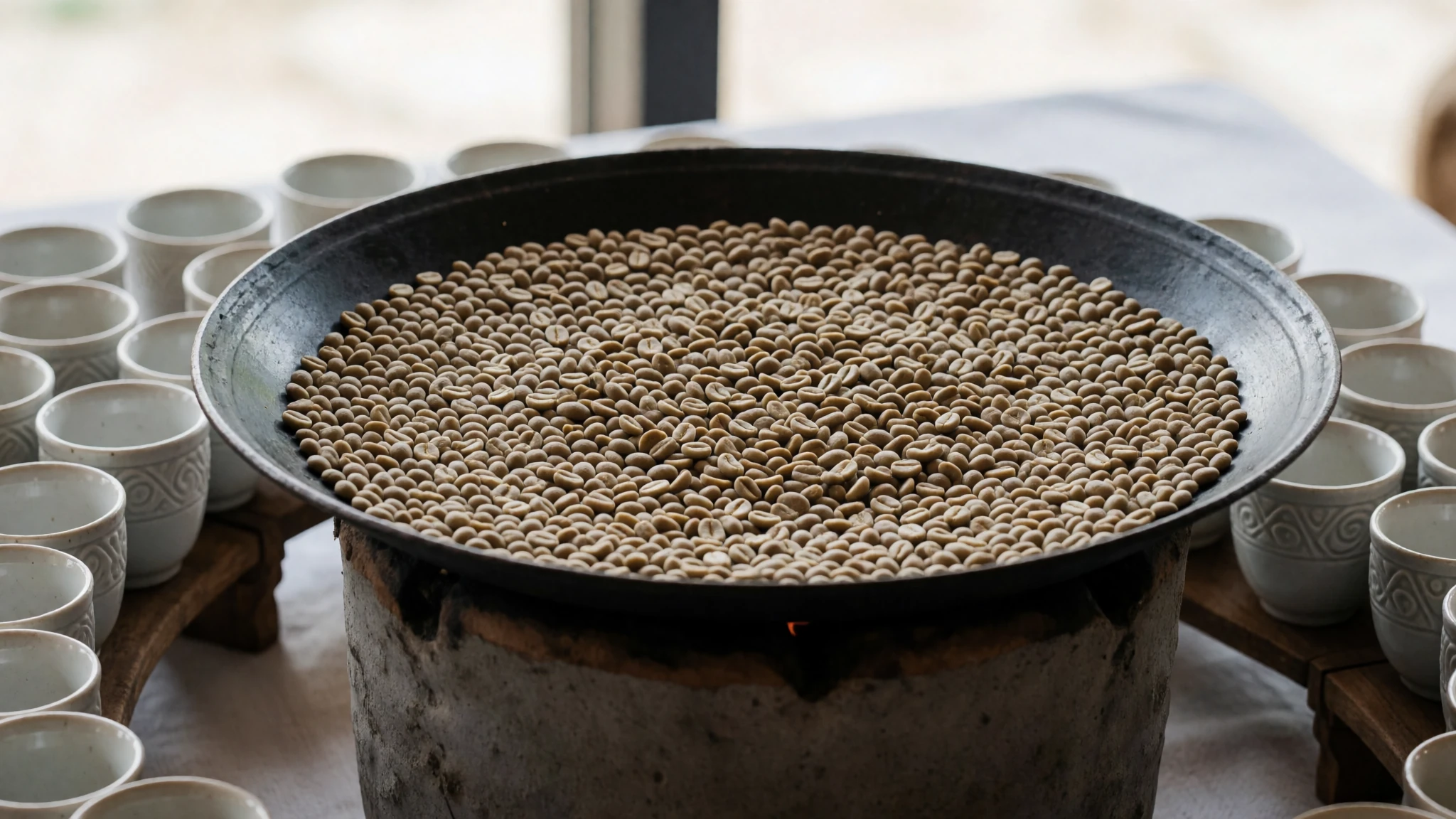
- Breakfast at a local café — Ezana Cafe, close to Ezana Park
Breakfast often means fresh bread, eggs or a spiced scramble, with tea or coffee and sometimes a plate of fruit. Local cafés open early, and the morning is the best time for a quiet meal before the sites fill up. Ezana Cafe is a favourite with local customers and serves good coffee.
Plan it
Best time. October to May is the dry window, but November to January are the most comfortable, with highs near 30 °C and cooler mornings that suit walking the stelae fields. The main rains fall in July and August, while February to May are the hottest months, with highs around 33 to 35 °C, so check local forecasts before travelling.
How long. 2–3
Getting there. Fly into Yohannes IV Airport, close to town, or into Shire Airport (about a 1 hour drive) or Mekele Airport (about a 4 hour drive). Buses from Gondar run via Shire, but the road is long and rough, so flying is the more reasonable choice.
Budget. mid
Tips
- Book internal flights early and confirm onward transport before arriving
- Plan stelae visits for early morning, when the light is good and the heat is lower
- Carry cash in small notes, because card payment is not reliable in town
- Drink plenty of water and take the first day gently at 2,131 m
- Expect security checks on the road to the airport, at the terminal and after check-in, usually three in total
Etiquette
- Remove shoes at church thresholds and cover your shoulders and head
- Ask before photographing people, especially at prayer or in homes
- Stay on marked paths and keep off the stelae and tomb structures
Nearby
Sources
- Wikidata Q5832 (CC0)
- Wikipedia: Axum (rev 1382692797) (CC BY-SA 4.0)
- Wikivoyage: Axum (rev 5274837) (CC BY-SA 4.0)
- Aksum (Ethiopia), Jim Williams (CC BY-SA 3.0 igo)
- Stelae in Main Stelae Field, Adam Jones (CC BY-SA 2.0)
- Maryam Sion in Axum, JensiS65 (CC BY 3.0)
- Camels and Landscape, Axum, A.Davey (CC BY 2.5)
- Palazzo di Dungur, Sailko (CC BY 3.0)
- Salt and Havell (1809), The Obelisk at Axum (Public domain)
- Littmann Gruppenfoto, FU-Berlin (Public domain)
- Ezana Stone, Sailko (CC BY 3.0)


