Augustów Canal
Augustów Canal, Poland
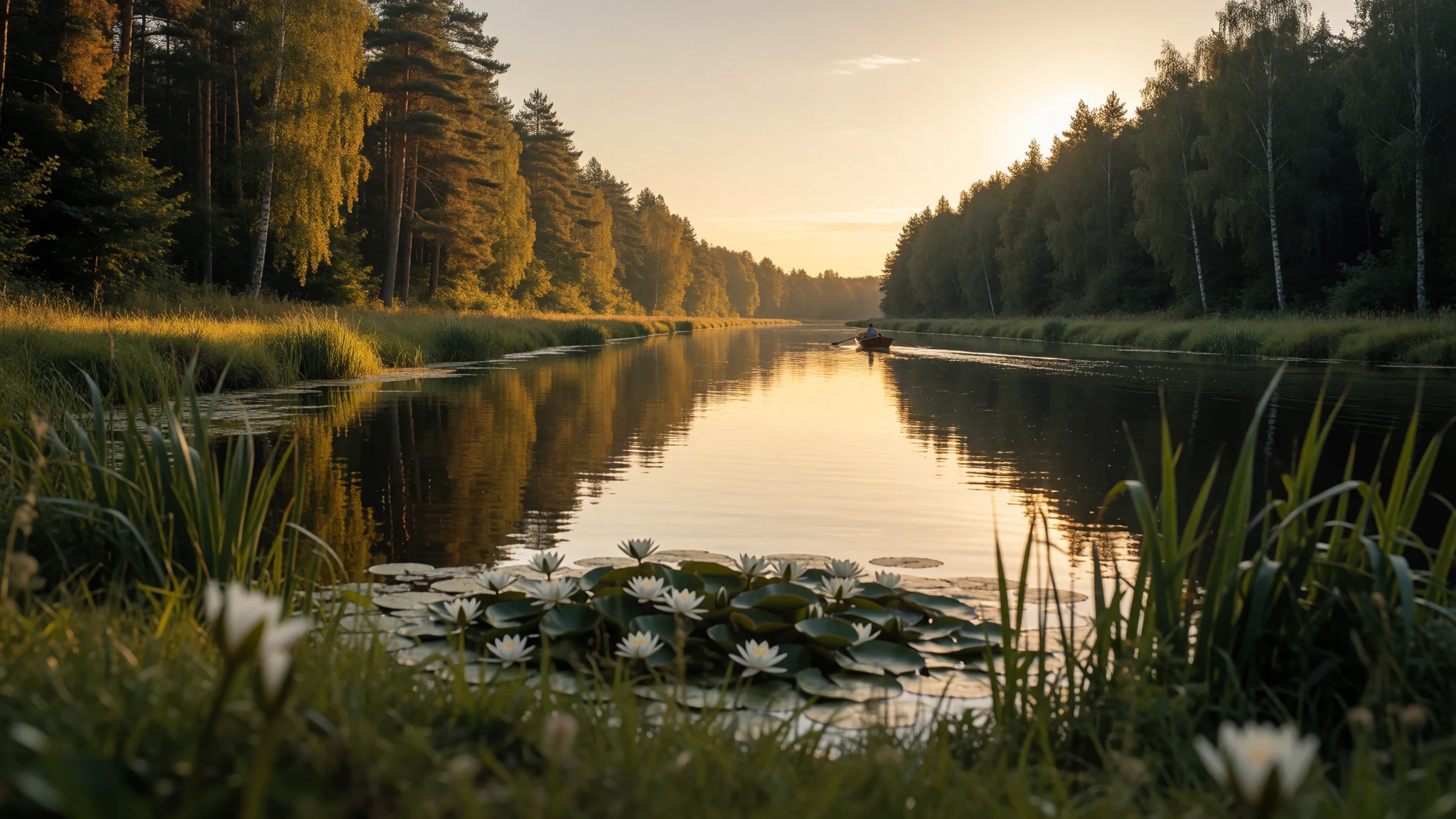
Augustów Canal is a rare mix of engineered waterways and wild lakes, best enjoyed on foot between sluices and quiet shorelines.
The place
Augustów Canal (Kanał Augustowski) runs through Poland’s northeastern Podlaskie region and into parts of western Belarus, threading together lake stretches and engineered waterworks in a landscape shaped by post-glacial channels. On a calm day, the canal feels less like a rigid trench and more like an organised route through water: broad, reflective lakeside sections alternate with tighter channel stretches, and the surrounding woods soften everything into a natural corridor.
The “wow” moments are practical rather than theatrical. Sluices and level changes are built into the journey, so the route has a rhythm—gliding in, then pausing at a working structure, watching water shift as the system adjusts. That mix of motion and pause is what makes the canal feel unusual: it’s not just scenery, it’s how the water connects the country’s river basins.
In summer, the region can be hot and humid, and July–August attracts more walkers and day-trippers around the town of Augustów and the most accessible viewpoints. August is workable, but it rewards early starts and shade breaks. In cooler months, the same lakes and canal lines turn quieter and more atmospheric; crisp air and lower light make the canal feel especially cinematic, even when the water is still.
Getting around is easiest from towns that sit close to the water, then switching to short walks, bike routes, and calm detours to shoreline viewpoints. Expect a slower pace than a city trip: the canal is meant to be read with time, not rushed.
Its story
Augustów Canal was built for reasons that were partly economic and partly political—basically, moving goods and improving routes without relying on Prussian territory. In the early 19th century, very high customs duties were introduced for transit of goods tied to the Russian Empire, and that pushed traders toward alternate pathways. Congress Poland was granted greater commercial autonomy from the Russian customs area, which helped make a new trade idea more feasible.
The project’s logic was engineering in service of geography. Plans were drawn up to connect river basins—linking the Vistula system through the Biebrza and the Narew network to the Neman system via the Czarna Hańcza. The canal uses a natural depression carved after the last glacial retreat, which allows the route to “chain” through a sequence of lakes and river valleys rather than fighting the land at every turn.
Surveys and works began with field parties from Russian and Polish engineering groups, and the plan developed into a waterway with hydraulic structures designed to bypass the Prussian route while still creating a workable connection toward the Baltic. Over decades, construction and later operation shaped what visitors see today: a route where canals, lakes, and sluice mechanisms are integrated into the surrounding wetlands and woodland.
For modern travellers, the canal’s story matters because it explains the character of the landscape. It wasn’t only built to look impressive—it was built to make water transport dependable across a challenging, basin-to-basin terrain.
What to see
- Gorczycie–Orle Lake canal stretch — Gorczycie–Orle area
This lakeside section shows why the canal feels natural: wide, calm water sits between wooded banks, with the canal line clearly readable from shore paths. It’s a good starting point for a slow loop walk, especially when the light is low and reflections hold steady.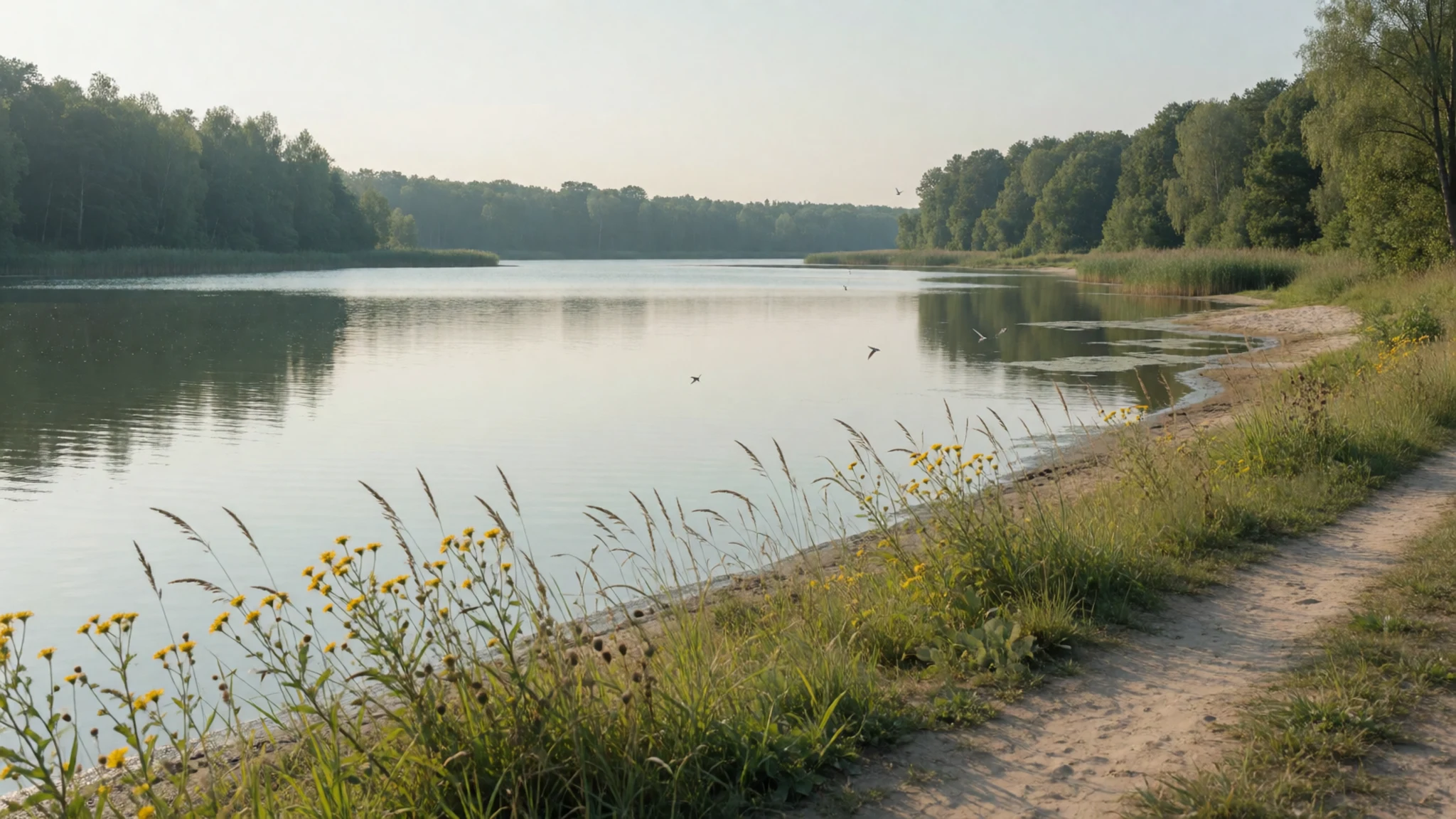
- Augustów lakeside promenade (Bulwar w Augustowie) — Augustów town waterfront
In Augustów, the canal’s water-energy turns into a town-facing waterfront. The promenade is where the route becomes human-scale—good for an evening stroll, quick photos, and a feel for how the canal fits daily life in the lakes district. Expect more people here than on rural stretches.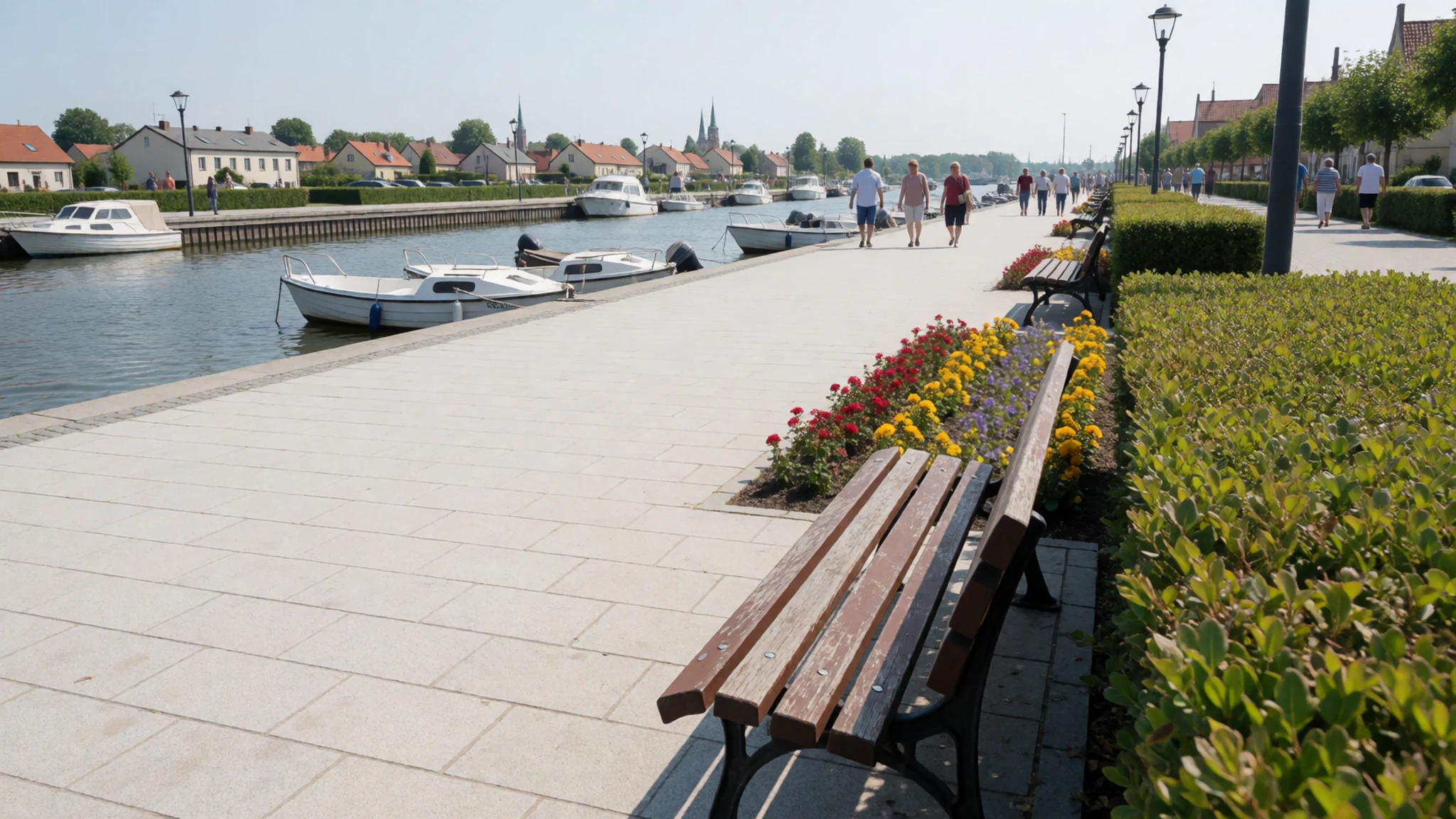
- Suwalszczyzna countryside viewpoints — Suwalszczyzna region
Heading away from the densest town areas, the corridor opens into countryside where the canal line is easier to “read” across land. Viewpoints work well for understanding the bigger picture: water connections, forest edges, and the gentle terrain that supports the canal’s layout.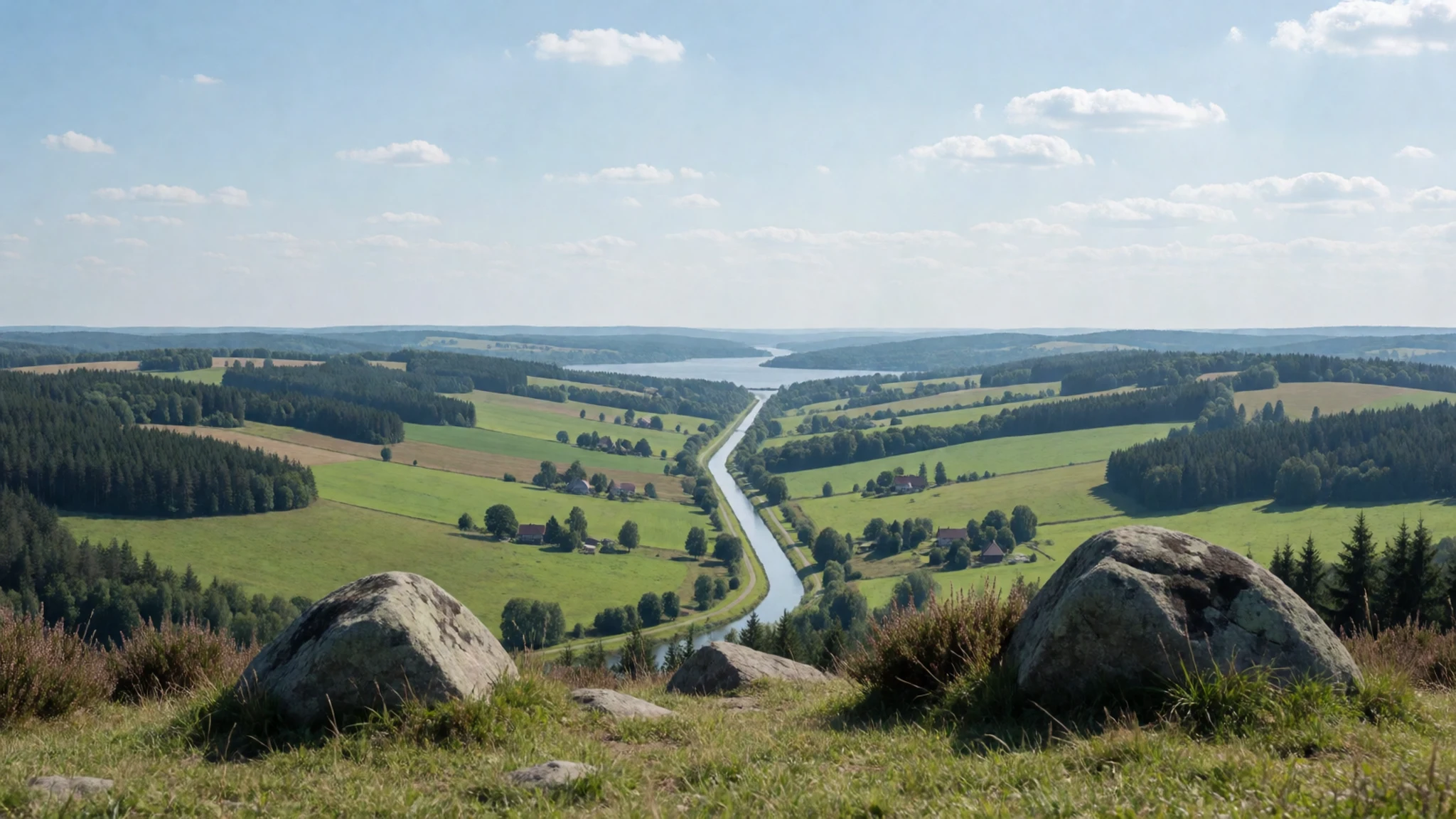
- Sluice-and-level-change moments — Along the canal between lake stretches
At sluices, the canal stops being just a waterway and becomes a system. Watch how boats (or even just the water movement) interact with the level changes: gates, steps, and engineered channels all explain why the canal can link separate river basins.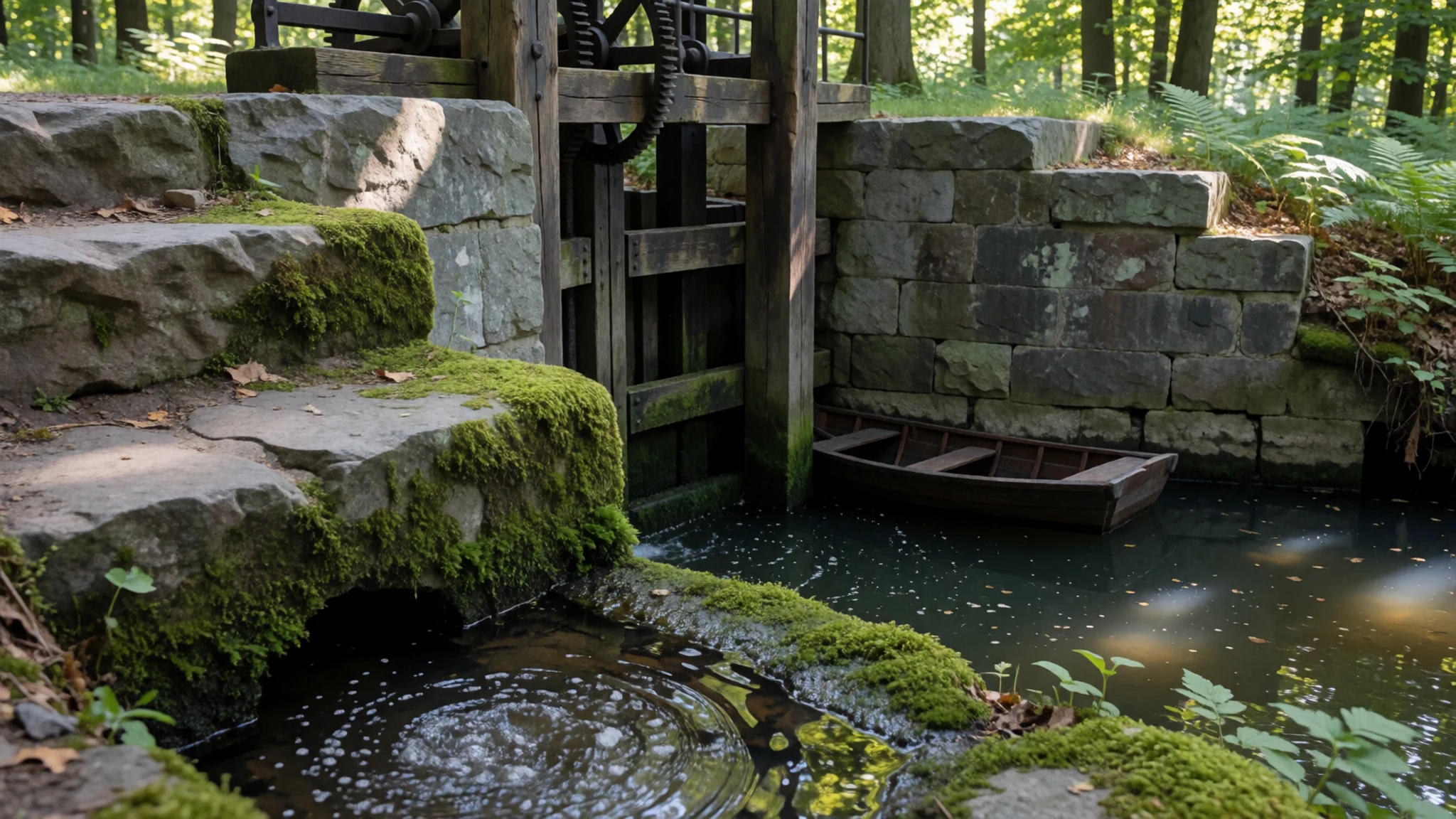
- Navigation corridors through settlements — Canal edges near towns
Where the canal passes closer to settlements, the waterway looks more like a corridor—straightened sections, bridges, and accessible edges make it easy to hop between viewpoints. These stretches help you plan short walks without losing the canal’s continuous thread.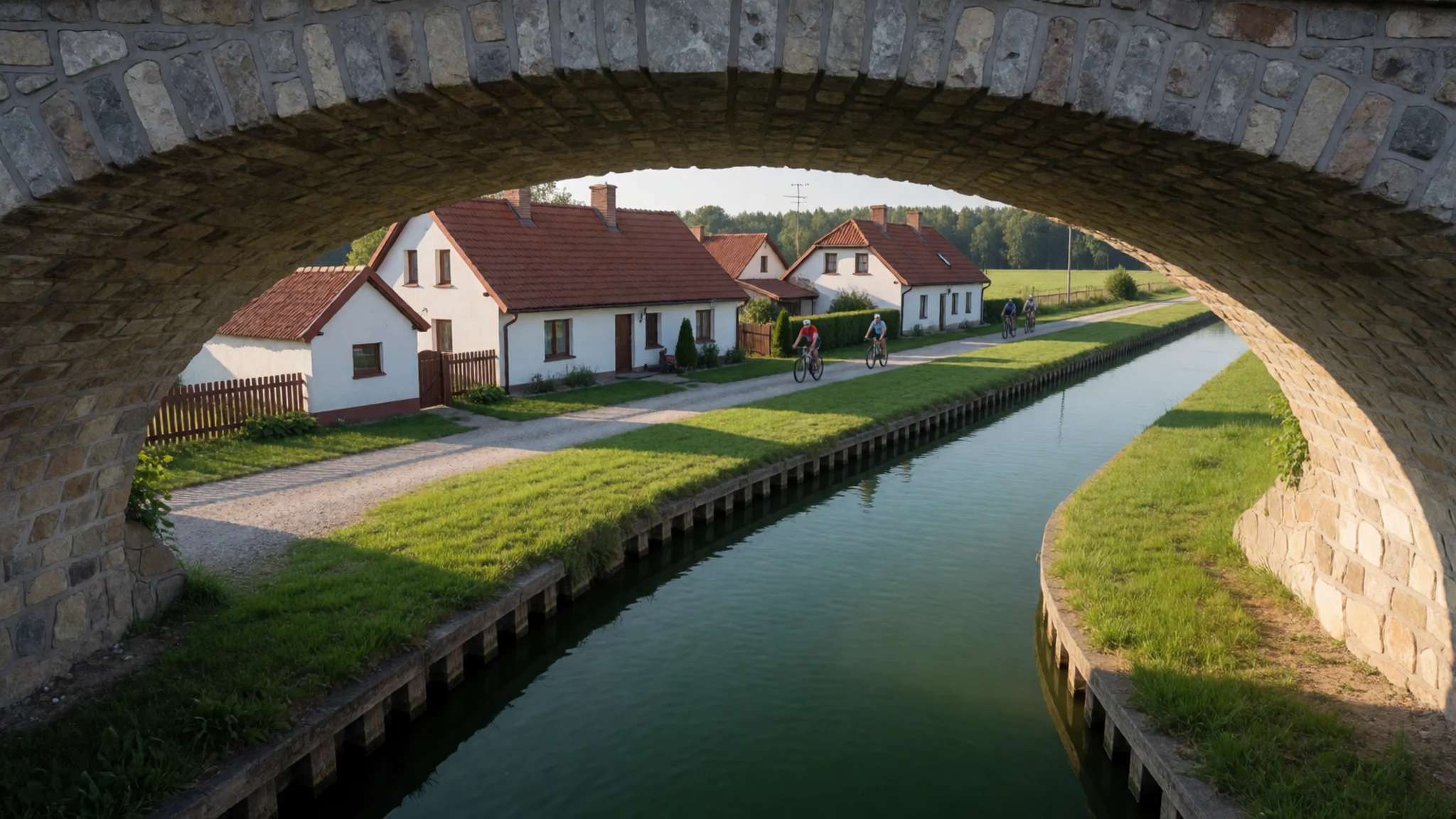
- Winter-friendly contrast walks — Every accessible canal segment
Even in colder months, the canal remains walkable as a landscape route. Short, well-chosen segments let visitors compare how the same engineered line sits inside different light, wind, and water behaviour—quietly showing the canal’s structure when summer crowds thin out.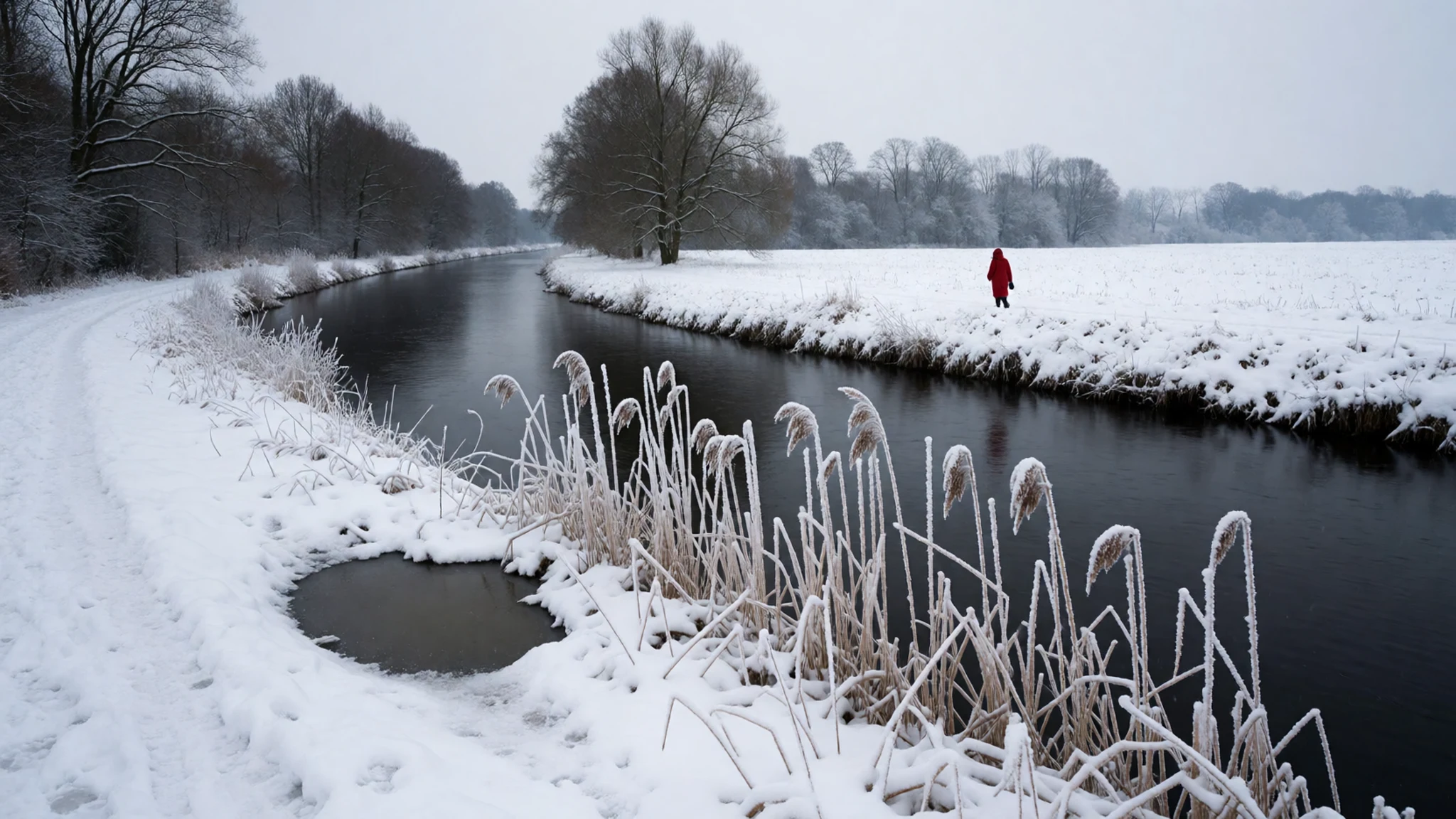
Culture
Augustów Canal is a working water landscape, so visitor behaviour tends to be about respecting both nature and the infrastructure. The shores often feel open, but the edges are part of the system—stay on marked paths where they exist, and avoid scrambling over fragile banks or vegetation to get a “better” angle. Many visitors come for photos, and that’s fine, but it helps to keep groups compact and avoid blocking narrow viewpoints.
Boat travel and canal-side watching are common, especially around easy-access stretches. If a sluice is operating, there’s usually a little bustle—people gather, phones come out, and the water draws attention. Moving with patience makes a difference because the real “show” is the process, not the crowd.
In warmer months, heat changes everything: plan shade stops, bring water, and don’t assume cloud cover means it’s cool. In colder months, conditions can turn slippery around wet ground and metal infrastructure, so slower walking is the sensible choice.
Visitor etiquette: keep to paths near sluices and lake edges, and don’t block access while water-control operations are happening.
What to wear
For Augustów Canal, clothing is mostly about weather and footing rather than any local dress code. Traditional textiles and patterns are part of the wider Podlaskie and Suwałki-region cultures, but day-to-day life around the canal is practical: people wear casual layers, comfortable shoes, and rain-ready outerwear.
In summer (including August), expect warmth and humidity. Lightweight breathable tops, shorts or light trousers, and a hat make the day easier, while a thin waterproof layer is still useful for quick showers. Footwear matters: choose trainers or walking shoes with grip, because canal edges and shoreline paths can be uneven and wet.
In shoulder seasons, temperature swings can be sharp, especially near water, so add a mid-layer—fleece or a light jumper—and a windproof jacket. In colder months, thicker socks and warmer gloves help for the walk-and-stop rhythm, when the water and forest air feel colder than expected.
Modesty isn’t a strict issue here, but the sensible rule is to wear clothing appropriate for walking outdoors and for getting close to water-control structures without exposing skin that invites sunburn or cold bites.
What to eat
- Pierogi (dumplings) — Augustów town centre markets and eateries
Pierogi are widely available in the Augustów area, with different fillings depending on the season. Look for them at local eateries and market stalls around the town centre.
- Żurek or soup of the day — Town restaurants and lunch spots in Augustów
Warm soups are a handy canal-side meal when the weather shifts. Find them in small restaurants, especially as a daily special, alongside hearty bread.
- Kielbasa-style grilled sausages — Waterfront-adjacent casual eateries
Grilled sausages are common on Polish menus and work well after a longer walk. Choose a sausage plate or sandwich-style option at casual eateries near the waterfront. - Fresh bread and local cheeses — Local shops and markets near the canal
The region’s small food shops and markets often stock simple, filling snacks—bread, mild cheeses, and seasonal additions. It’s an easy way to build a picnic for lake and canal walks. - Seasonal berries and desserts — Bakeries and cafés in Augustów
Late-summer fruit can show up as toppings, compotes, or dessert-style portions. Grab something sweet from bakeries or café menus after a lakeside stroll.
Plan it
Best time. March–April for blossom, late October–November for colour; August is hot and humid, so start early and build in shade and rest breaks.
How long. 3–4
Getting there. There’s no international airport in Podlaskie Voivodeship; fly via Warsaw’s Frederic Chopin Airport or Modlin Airport, then travel onward by train or bus to towns such as Augustów or Suwałki, and finish with short local connections to canal access points. By rail, Polish State Railways connect Warsaw (and Zelionka in Lithuania) to Białystok and onwards to Augustów and Suwałki.
Budget. mid
Tips
- Use the earliest daylight for the first canal segment—heat and crowds rise later in August.
- Plan walks in short chunks from towns, then connect between lake stretches instead of chasing one long loop.
- Keep water and a light rain layer handy; weather changes near lakes quickly.
- If travelling by train or bus, build buffer time for local onward transfers to quieter trailheads.
Etiquette
- Stay on marked paths around lake edges and sluices, especially on wet ground.
- When people gather at sluices, move calmly and don’t block the canal-side access points.
- Be considerate with photo stops so others can pass along narrow waterfront paths.
Nearby
Sources
- Wikidata Q770907 (CC0)
- Wikipedia (Augustów Canal, rev 1321907892) (CC BY-SA 4.0)
- Wikivoyage (Podlaskie, rev 5251499) (CC BY-SA 4.0)
- Photo photos/01-gorczyca-sluzowanie-2.jpg (CC BY-SA 1.0)
- Photo photos/02-bulwar-w-augustowie.jpg (CC BY 3.0)
- Photo photos/03-suwalszczyzna.png (CC BY-SA 2.0)
- Photo photos/04-057-336-12-2005.jpg (CC BY 4.0)
- Photo photos/05-057-337-12-2005.jpg (CC BY 4.0)
- Photo photos/06-057-338-12-2005.jpg (CC BY 4.0)
- Photo photos/07-057-423-12-2005.jpg (CC BY 4.0)
- Photo photos/08-057-424-12-2005.jpg (CC BY 4.0)


