Ashkelon
Ashkelon, Israel
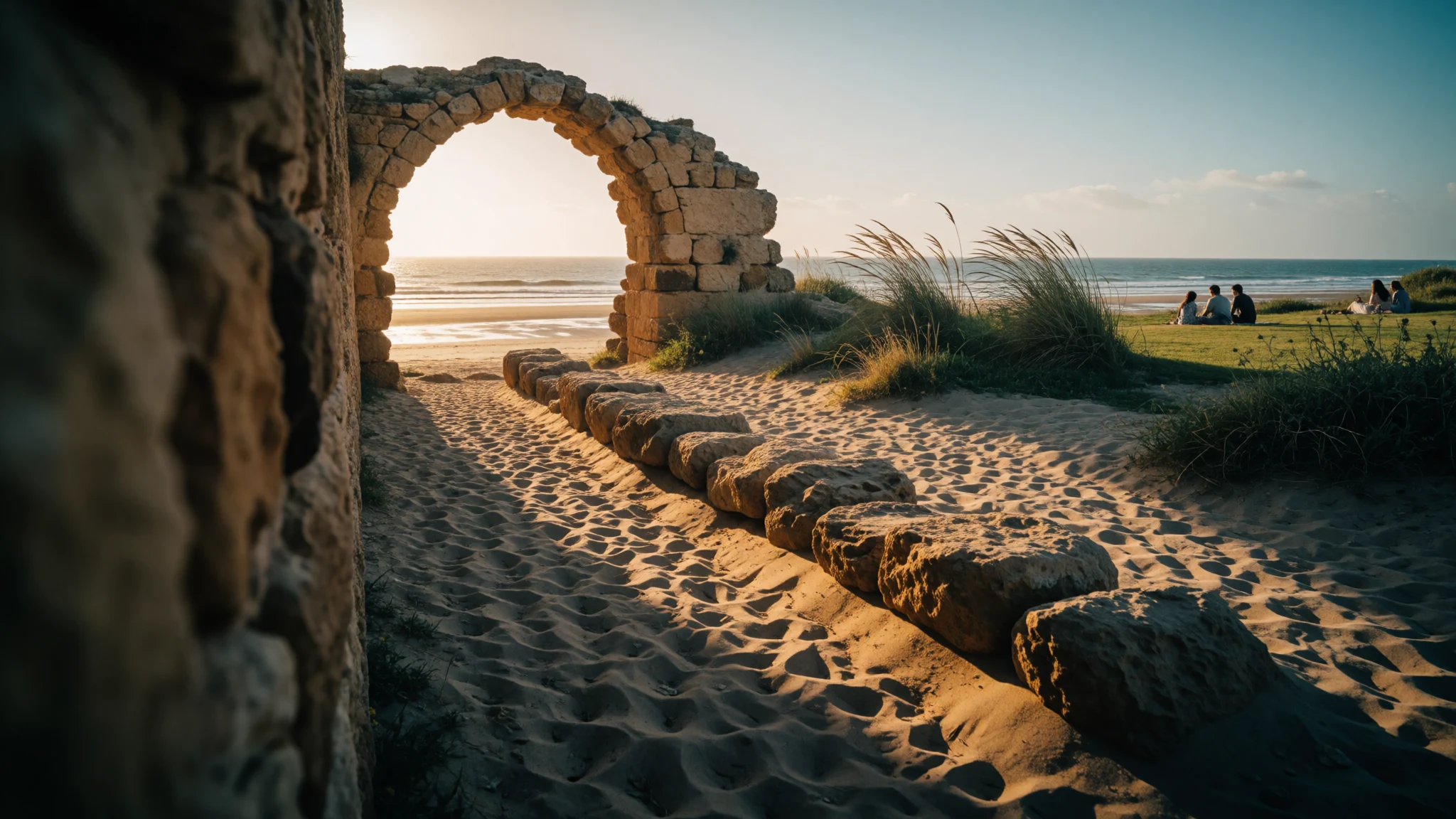
Ashkelon pairs a Mediterranean beach city with the buried remains of an ancient port, so sand, sea and archaeology share one day.
The place
Ashkelon (Hebrew: אשקלון) is a coastal city in Israel's Southern District, about 50 km south of Tel Aviv and 13 km north of the border with the Gaza Strip. It has about 141,000 residents and sits only about 10 m above sea level, so the Mediterranean is rarely out of sight. The modern city is a patchwork of districts with distinct characters. Migdal, inland, is the old market quarter, with a walking street, cafés and the surviving buildings of an earlier Arab town. Afridar is a planned residential district with a seaside centre and a bar scene. Barnea, to the north, has newer housing and a Byzantine church. The marina and beaches run along the western edge, and at the south-western corner the ruins of the ancient seaport lie inside a national park where families picnic between the stones and the water. Day to day, Ashkelon feels like a working Israeli coastal city rather than a resort: there are schools, a college, shopping streets and a promenade where locals walk in the evening. Visitors mostly come for the beach and the archaeology, and many treat it as a day trip from Tel Aviv. Its closeness to the Gaza border means events can change travel conditions quickly, so it is sensible to check current official advice before setting out. The municipality's website is https://ashkelon.muni.gov.il/he, in Hebrew.
Its story
Ashkelon's story is really two stories on one stretch of coast. The first belongs to ancient Ascalon, a seaport that was part of Philistia, a group of five Philistine cities, and whose founding our records place at 950 BCE. It remained a significant harbour under Roman, Byzantine and early Muslim rule. Its position between the Crusader states and Egypt made it a prize during the Kingdom of Jerusalem, and the Battle of Ascalon closed the First Crusade. In 1270 the Mamluk sultan Baybars ordered the harbour and fortifications torn down, and the town never recovered. Its people moved a short way inland to Majdal 'Asqalan, a replacement founded by Baybars with a grand congregational mosque, a market and shrines. By 1596 Ottoman records show it as a large village, and it appears in travellers' accounts from the end of the fifteenth century. The second story begins in 1948. Majdal had been an entirely Muslim and Christian town, and in the war that year it filled with refugees from surrounding villages. Israeli forces took it in November, and most of the Arab population fled or was deported over the following two years. The Israeli town of Migdal was founded in 1949, settled by Jewish immigrants and demobilised soldiers, and the modern city takes its name from the ancient port. Ruins, shrines and street names carry both histories, which are remembered very differently depending on who is asked.
What to see
- Ashkelon National Park — South-western Ashkelon, on the sea
Ashkelon National Park occupies the site of the ancient port at the south-western edge of the city. Most local visitors come for the beach and picnic lawns, but the grounds also hold excavated walls, an ancient arch and other finds from the Canaanite and later periods. Go in the morning, before the heat and the weekend crowds.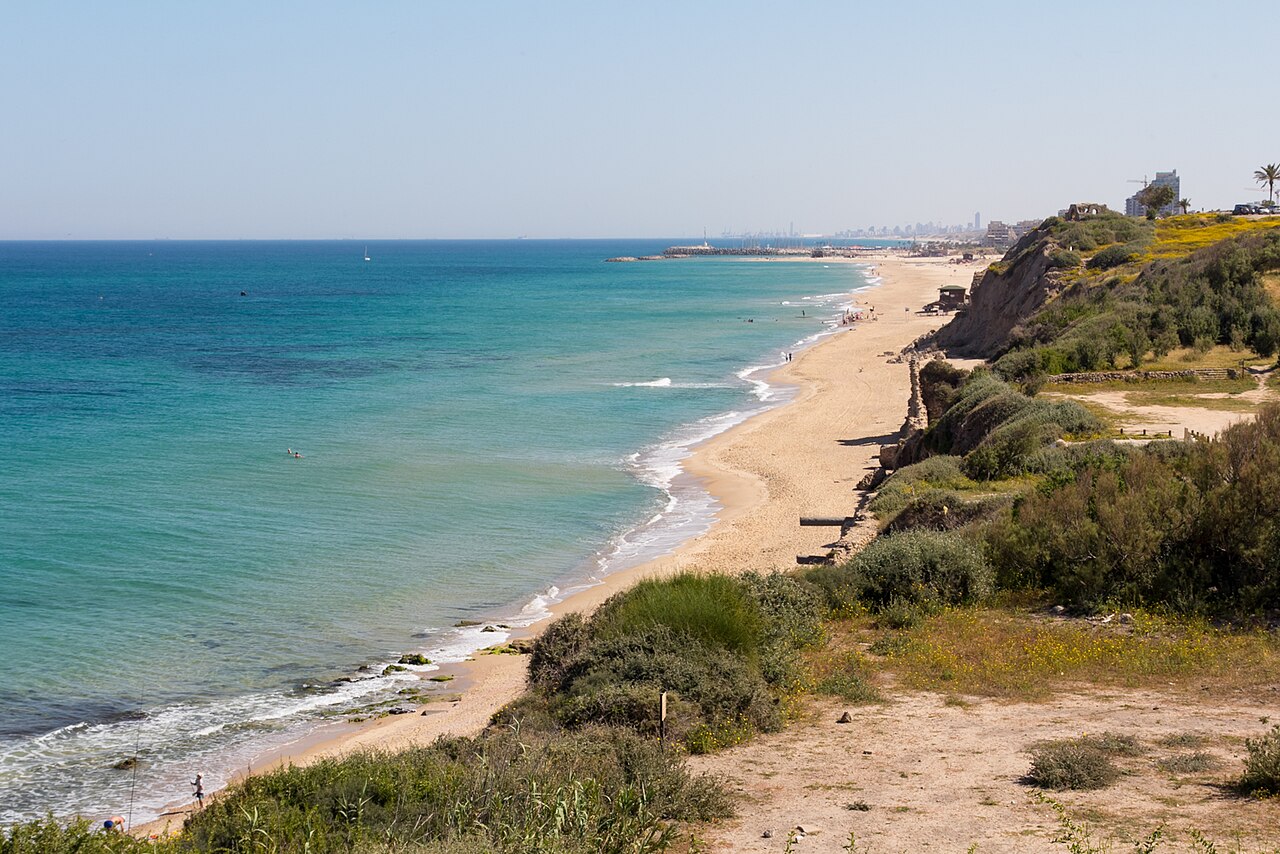
- Tomb of Sheikh Awad — Northern beaches
This medieval domed tomb stands on a hill above the northern beaches, beside the seafront promenade. It is small and quiet, valued more for the view along the coast than for anything inside. It is still a Muslim holy place, so approach it respectfully, and the walk there suits late afternoon light.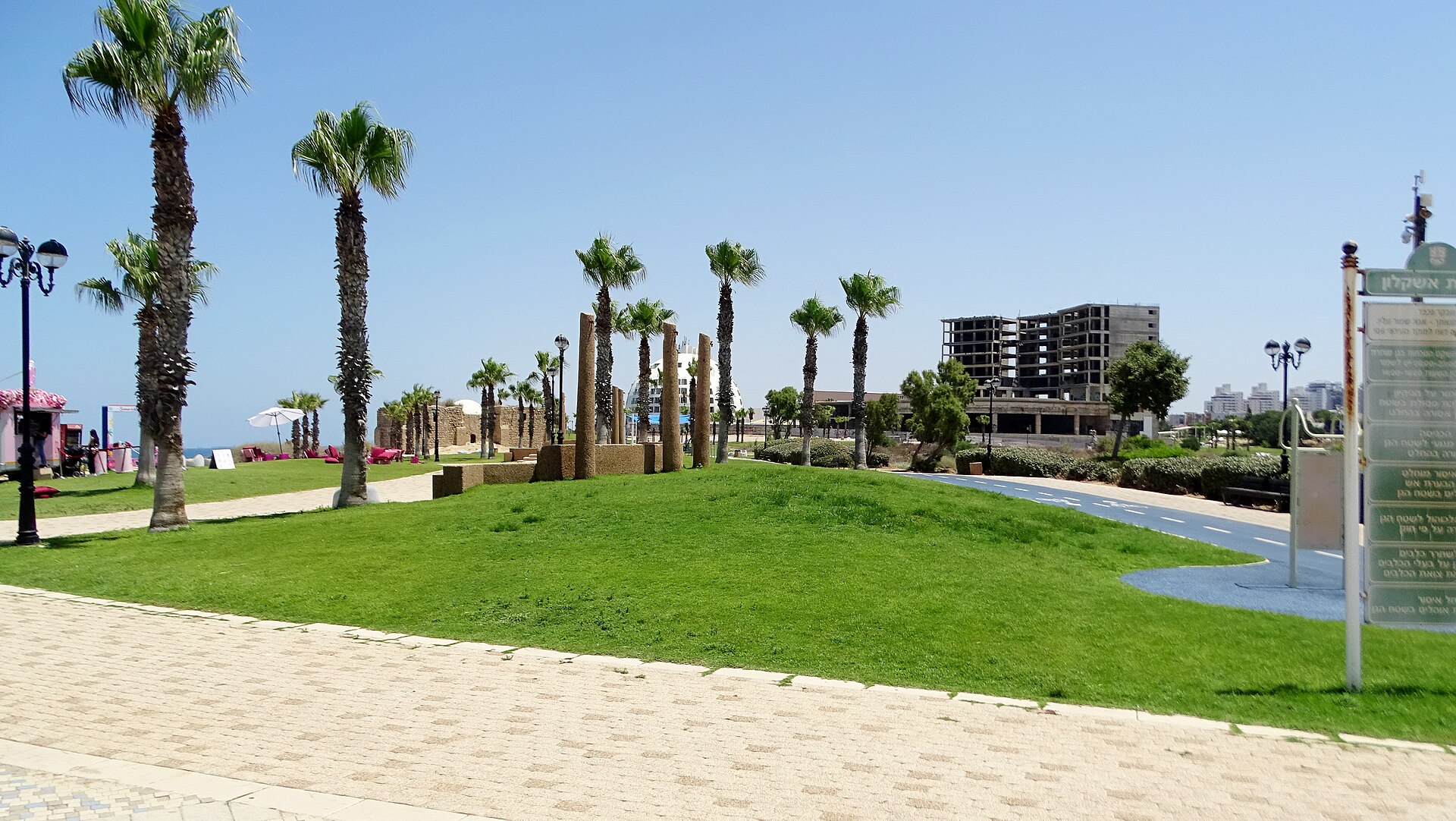
- Byzantine church, Barnea — Barnea quarter
In the residential Barnea quarter lie the remains of a Byzantine-era church, with a marble slab floor and traces of glass mosaic on the walls. It is a short stop among apartment blocks rather than a full outing, and it rewards anyone curious about the Christian history of the coast. - Migdal and the Khan — Migdal, inland
Migdal is the old Majdal district, now a shopping area with a walking street, cafés and bars that stay lively at night. Several buildings from the Arab town survive, notably the Khan, an old mosque courtyard. The Ashkelon Khan and Museum nearby displays local finds, including a replica of the Canaanite silver calf. - Apridar archaeological garden — Afridar district
This small garden in Afridar shows off Roman marble sarcophagi carved with battle, hunting and mythological scenes. Entry is easy to combine with a seafront walk, since the district sits close to the beach. It suits half an hour, and makes a good contrast with the larger national park.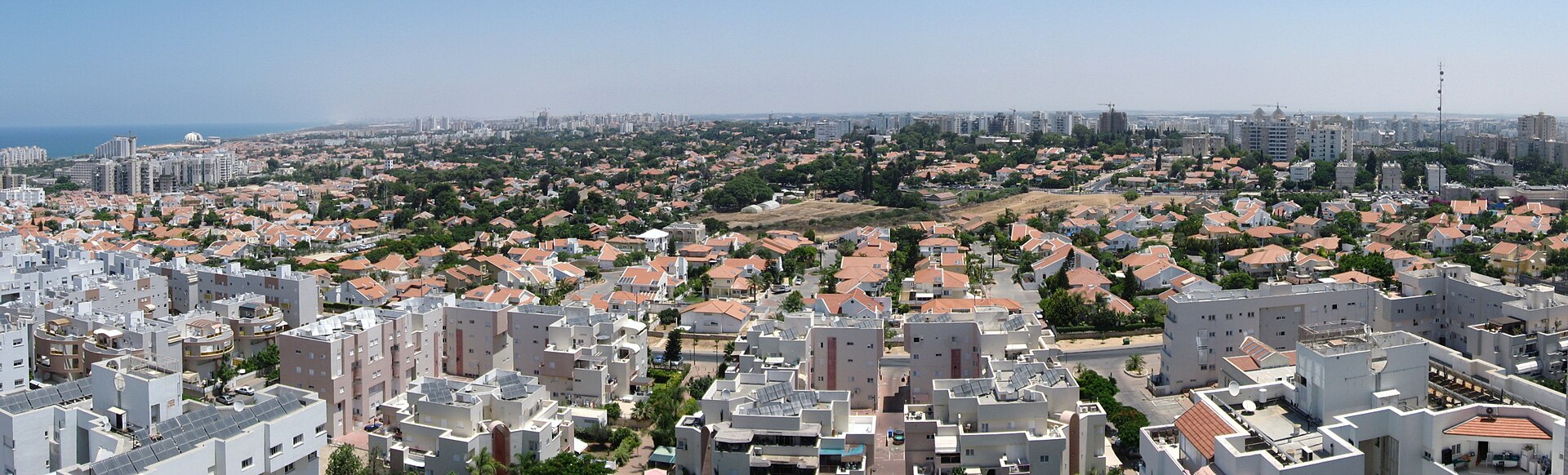
- Ashkelon Marina — Western waterfront
The marina is the city's leisure waterfront, with boats, restaurants and bars, and places to rent a water scooter, kayak or similar craft. It is quiet by day and gets crowded at weekends, when bars fill from Thursday to Saturday. A good place for sunset, less so for peace.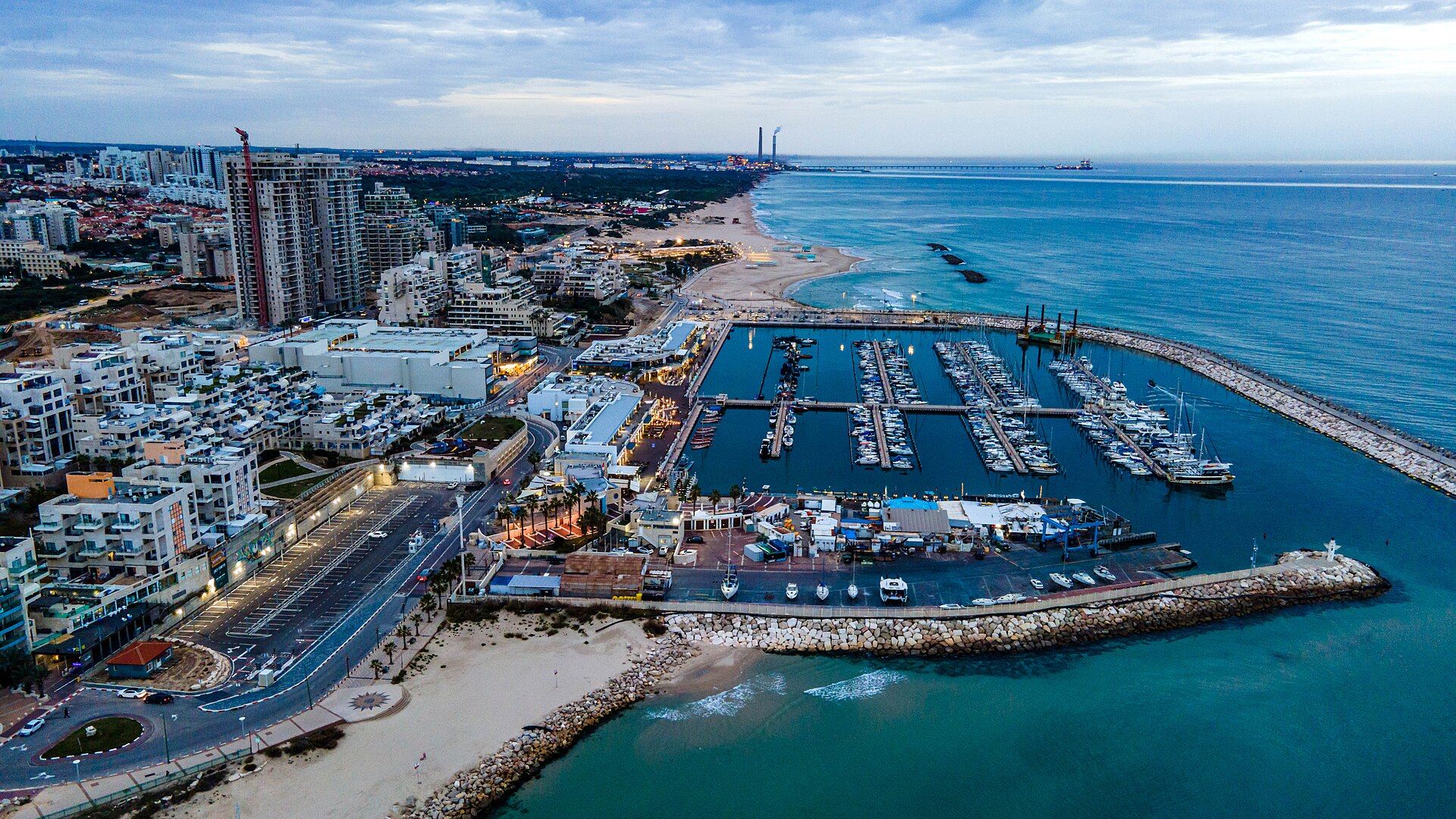
Culture
Ashkelon's culture is layered, and the layers do not always sit comfortably together. Most residents today are Israeli Jews, many from families that arrived as immigrants from different countries, so everyday life mixes Hebrew, Russian and other languages with a mostly secular coastal habit of beach, football and café. The rhythm of the week is set by Shabbat, from Friday afternoon to Saturday evening, when public transport thins and many shops and restaurants close, though beaches and some cafés stay busy. Beneath the modern city lies an older Arab town, Majdal, whose mosque courtyard, the Khan, and the shrines of Sheikh Awad and Nabi Hussein survive as reminders of the families who lived here before 1948. How that history is told depends on who is telling it, and visitors will hear more than one version. Museums and the national park present the far older Canaanite, Philistine, Roman and Crusader past, which most locals treat as shared heritage and a good place for a weekend picnic. Evenings are social: the Migdal walking street and the marina fill with young people, and bars cluster near the sea from Thursday to Saturday. Conversation is direct and friendly, and politics comes up quickly. At Muslim shrines such as the tomb of Sheikh Awad, dress modestly, keep your voice low and ask before photographing anyone who is praying.
What to wear
Ashkelon's traditional dress depends on the community. Palestinian women of the region historically wore the thobe, a long dress of cotton or linen with cross-stitch embroidery whose motifs marked a woman's home town, and it now appears mainly at weddings and family celebrations. Among observant Jewish residents, men wear a kippah, often with a dark hat on Shabbat, and women favour long skirts and covered shoulders. Everyday dress in the city is far simpler. People wear T-shirts, shorts, light dresses and sandals, with swimwear on the beaches and tailored clothes only for work or evenings out. Younger crowds at the marina dress up a little at weekends, but nothing is formal. Visitors should pack for sun first: light cotton or linen, a brimmed hat, sunglasses and high-factor sunscreen, since summers are hot and humid and shade is scarce on the beach and at the ruins. Winters are mild but can be wet, so a light waterproof helps. For shrines and religious neighbourhoods, carry a scarf or shawl and wear trousers or a skirt below the knee and sleeves covering the shoulders. Closed, grippy shoes suit the uneven ground in the national park better than flip-flops, and a spare pair of sandals handles the sand.
What to eat
- Falafel in pita — Falafel stalls in Migdal and around the central bus station
Deep-fried chickpea balls tucked into pita with salad, pickles and tahini. Falafel stalls are everywhere in Ashkelon, and locals favour the ones around Migdal's walking street. It is cheap, filling and best eaten standing up, fresh from the fryer. - Shawarma — Street vendors in Migdal and the town centre
Spiced meat shaved from a spit and served in pita or a larger flatbread, with salads, pickles and sauces. Street vendors across the city sell it, much as elsewhere in Israel. Go at lunchtime, when the meat is freshest and the queue shows which stall locals trust. - Hummus with warm pita — Small hummus eateries around Migdal and Afridar
Smooth chickpea paste topped with olive oil, whole chickpeas or spiced beans, scooped up with warm pita. A simple hummus eatery makes a good breakfast or midday meal, usually with pickles and raw onion on the side. Ask for it fresh and still warm. - Grilled fish and seafood — Restaurants around the marina and the seafront
The coast supplies fish that is grilled whole or served in small plates with salads and bread. Restaurants near the marina lean on the sea view, and quality varies, so choose a place busy with local diners. Order the day's catch rather than anything frozen. - Shakshuka — Cafés on Migdal's walking street and in Afridar
Eggs poached in a spiced tomato and pepper sauce, served in the pan with bread for dipping. It is a standard café breakfast across Israel and an easy vegetarian choice. Mop up the sauce and pair it with strong coffee on a terrace.
Plan it
Best time. March–April and October–November, when days are warm rather than hot and the sea is still pleasant. Summer is hot and humid, which suits beach days but is hard going at the ruins at midday, and winter is mild but can be wet.
How long. 1–2
Getting there. Fly into Ben Gurion Airport near Tel Aviv, then take a train or bus south to Ashkelon; check the national rail and bus operators for current timetables. Buses also run from Haifa, Jerusalem and Beer Sheva to the central bus station in the middle of town, and a short taxi or local bus reaches Migdal, the marina or the national park.
Budget. mid
Tips
- Check your government's current travel advice before going, since Ashkelon is close to the Gaza border and conditions can change quickly
- Visit the national park in the morning, before the heat and the weekend picnic crowds
- Remember that Shabbat, from Friday afternoon to Saturday evening, shuts many shops and thins public transport, so plan food and travel around it
- Expect the marina and beach bars to be packed from Thursday to Saturday evenings
- Carry water, sun protection and a card plus a little cash for stalls and small cafés
Etiquette
- Dress modestly and keep quiet at Muslim shrines such as the tomb of Sheikh Awad
- Ask before photographing people, especially anyone praying
- Keep swimwear to the beach and cover up when walking into town or religious neighbourhoods
Nearby
Sources
- Wikidata Q60956 (CC0)
- Wikipedia: Ashkelon (rev 1381329661) (CC BY-SA 4.0)
- Wikivoyage: Ashkelon (rev 5393897) (CC BY-SA 4.0)
- Photo: Ashkelon skyline (Wikipod) (Public domain)
- Photo: Ashkelon panorama (Wikipod) (Public domain)
- Photo: Marina Ashkelon (דוידי ורדי) (CC BY 2.5)
- Photo: Tomb of Sheikh Awad (israel zeller ישראל זלר) (CC BY 2.5)
- Photo: Ashkelon National Park (Oren Rozen) (CC BY 3.0)
- Photo: Ashkelon Academic College (שלמהמ21) (CC BY-SA 4.0)
- Photo: Church of St Stephen mosaic of Askalon (Carole Raddato) (CC BY-SA 2.0)
- Photo: Ashkelon 1870s map (Walter Besant) (Public domain)


