Arequipa
Arequipa, Peru
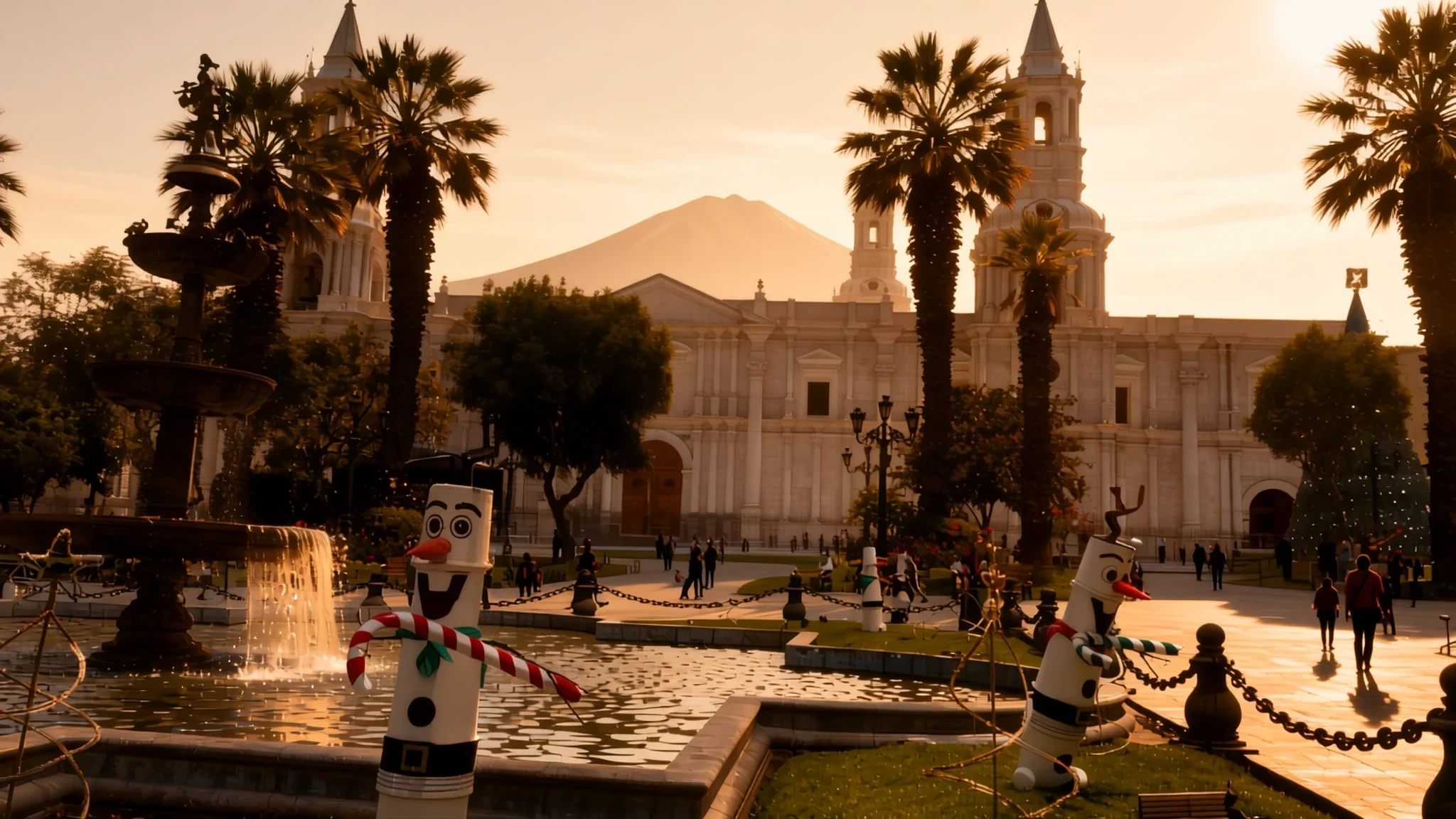
Arequipa is a volcano-framed city of white sillar stone, with a colonial centre, a famous cloistered convent and a food scene built around the picantería.
The place
Arequipa sits in a broad valley on both banks of the Chili River, with the Andes rising to the north and east and low coastal hills to the south and west. The volcano Misti is the landmark most people remember, its cone visible from many streets above the roofs. At about 2,335 metres the air is noticeably thinner than on the coast, so days can feel bright and warm in the sun while evenings turn cool quickly.
The city has about one million people, which makes it Peru's second most populous city after Lima. It is also the seat of the Constitutional Court, which is why it carries the nickname the Legal Capital of Peru. Most of the historic centre is built from sillar, a pale volcanic stone that gives the buildings their white glow and the city its nickname, the White City.
The Plaza de Armas is the natural starting point, a square lined with arcaded buildings and close to the cathedral. From there the old streets run out to the riverside bridges, the markets and the walled convents that give the city much of its character. Walking covers most of the centre, though the slopes can be steep and the midday sun strong, so a morning start makes sense. Traffic can be heavy, and taxis are the simplest way to reach the outer districts.
Its story
Long before the Inca, the valley where Arequipa now stands held nomadic groups who hunted, fished and gathered food. Over time they domesticated camelids, took up farming and built settlements, many of them linked to the coast by trade routes. Irrigation canals carried river water onto the plains and up the terraces along the valley slopes, making farming possible in what was otherwise desert. The Yarabaya and Chimba peoples settled where the city stands today, and together with the Collagua and Cabana communities they built an agrarian economy in dry land.
The Inca reached the valley later, and their approach was administrative rather than urban. The ruler Mayta Cápac, according to later sources, did not found a town here. Instead the state placed mitma households, families moved from elsewhere, to guard and run a frontier zone. The chronicler Pedro Cieza de León argued that Mayta Cápac never extended Inca rule into the valley himself, since he died before the conquest of Kuntisuyu. His successor pressed on, but a Chanca threat that besieged Viracocha in his capital interrupted the campaign.
Spanish rule arrived in 1540, when the settlement was named Villa Hermosa de Nuestra Señora de la Asunta de Arequipa. A royal decree of 1541 made it a city, and during the colonial era it grew in importance through its economic role and its steady loyalty to the Spanish crown. That mix of trade and allegiance shaped its churches and convents, and the blend of Spanish and Andean ideas that filled them. Today the city is Peru's second most industrialised, with an economy built on industry and services.
What to see
- Plaza de Armas — Centre
The main square in Arequipa is the heart of the old town and the place most visitors start. Its buildings are faced in sillar, the pale volcanic stone that gives the city its White City nickname. Benches and shaded trees make it a good spot to sit with a coffee and watch the city move, and it is a handy landmark for working out where everything else sits.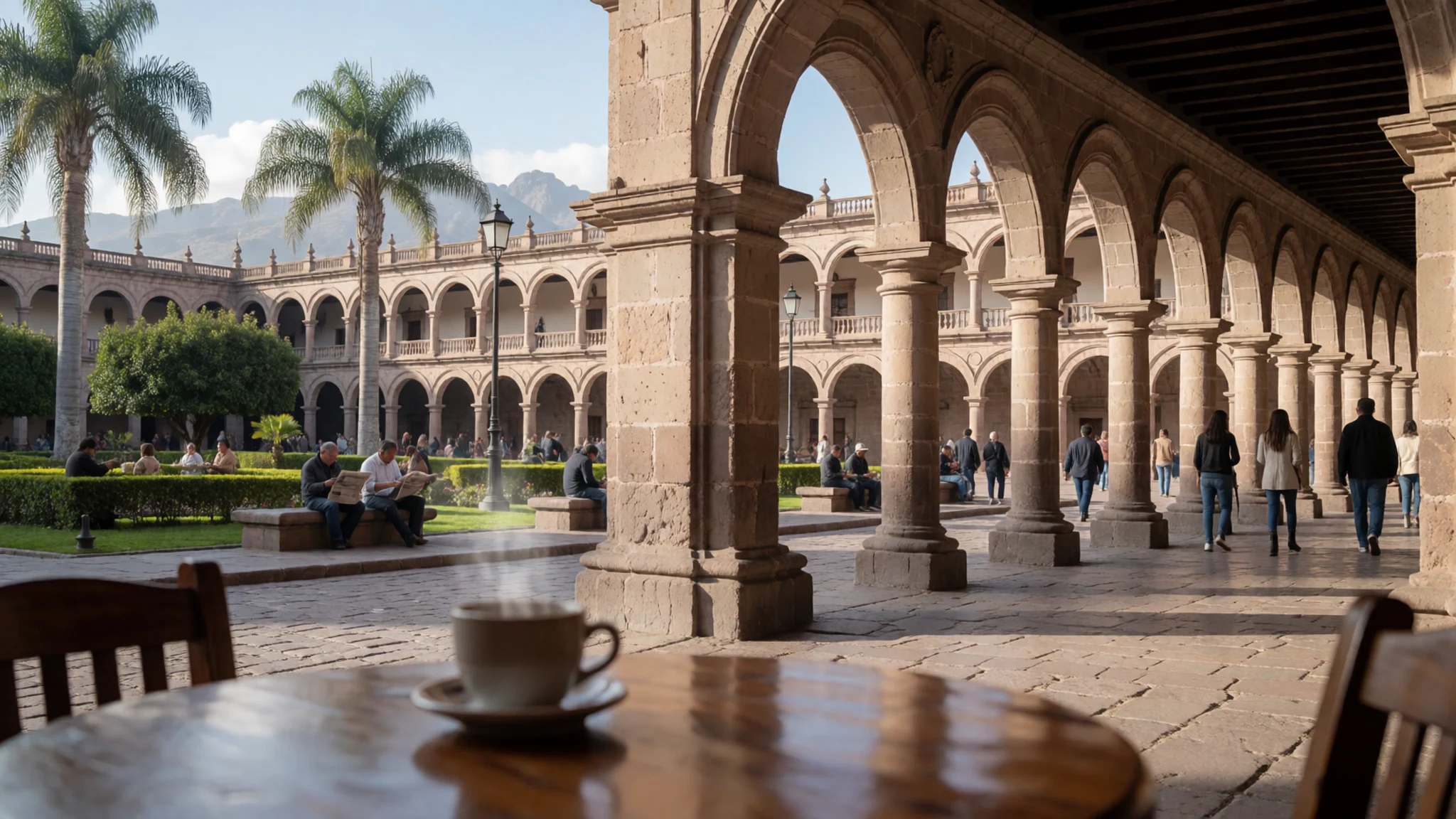
- Cathedral Basilica of Arequipa — Centre, on the Plaza de Armas
Arequipa's cathedral stands on the main square. The first church on the site went up in 1544, but the building you see now is a reconstruction dating from 1848. A 2001 earthquake caused the towers to collapse through the roof, and substantial repairs followed. Check the official site for current opening arrangements before you go.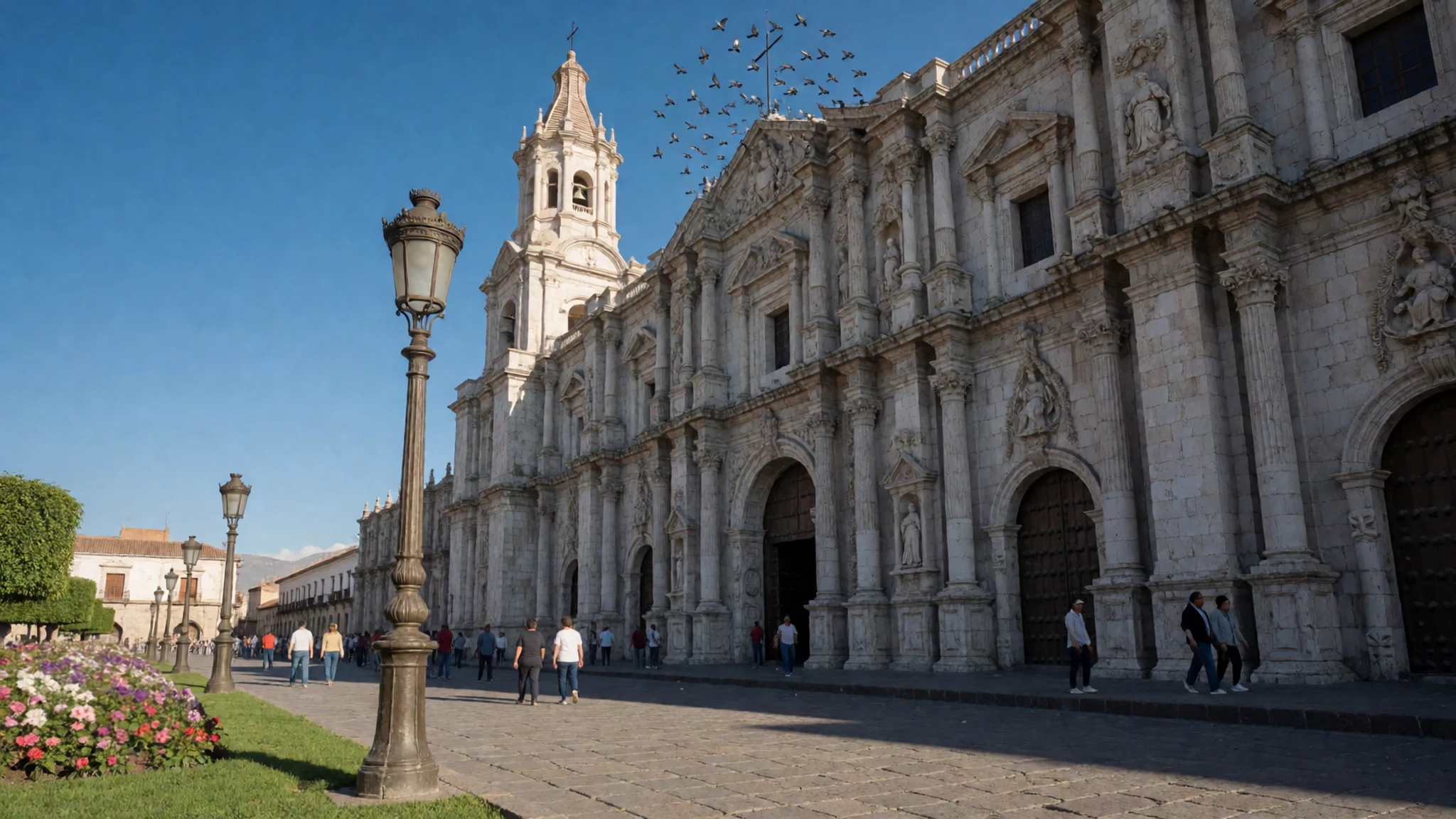
- Monasterio de Santa Catalina — Centre, a few minutes' walk from the square
In Arequipa, this walled convent is the most visited building from the Spanish era. Often described as a city within a city, it has narrow lanes, painted walls and flowering courtyards that reward slow walking. The cloisters can feel like stepping back a few centuries. Allow a generous couple of hours, and check the official site for current hours and ticket arrangements.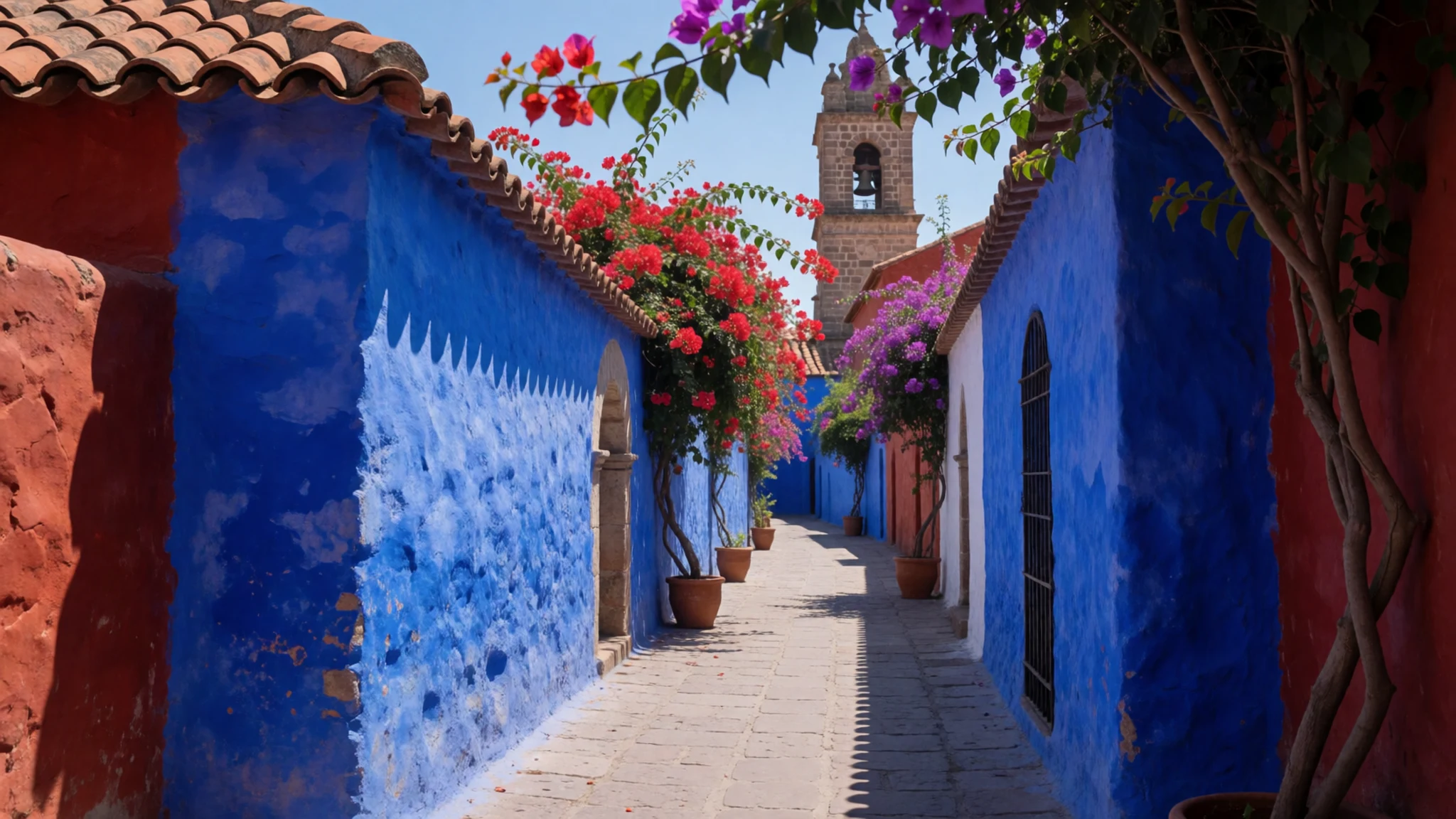
- San Camilo Market — Centre, three blocks from the Plaza de Armas
In Arequipa, the San Camilo market is described as the oldest market in the centre, about three blocks from the main square. Stalls pile up with fruit, vegetables, grains, dried chilli and cheese, and the lanes are busiest in the morning. It is a good place to see daily life and to eat simply at a counter. Ask before photographing stall-holders.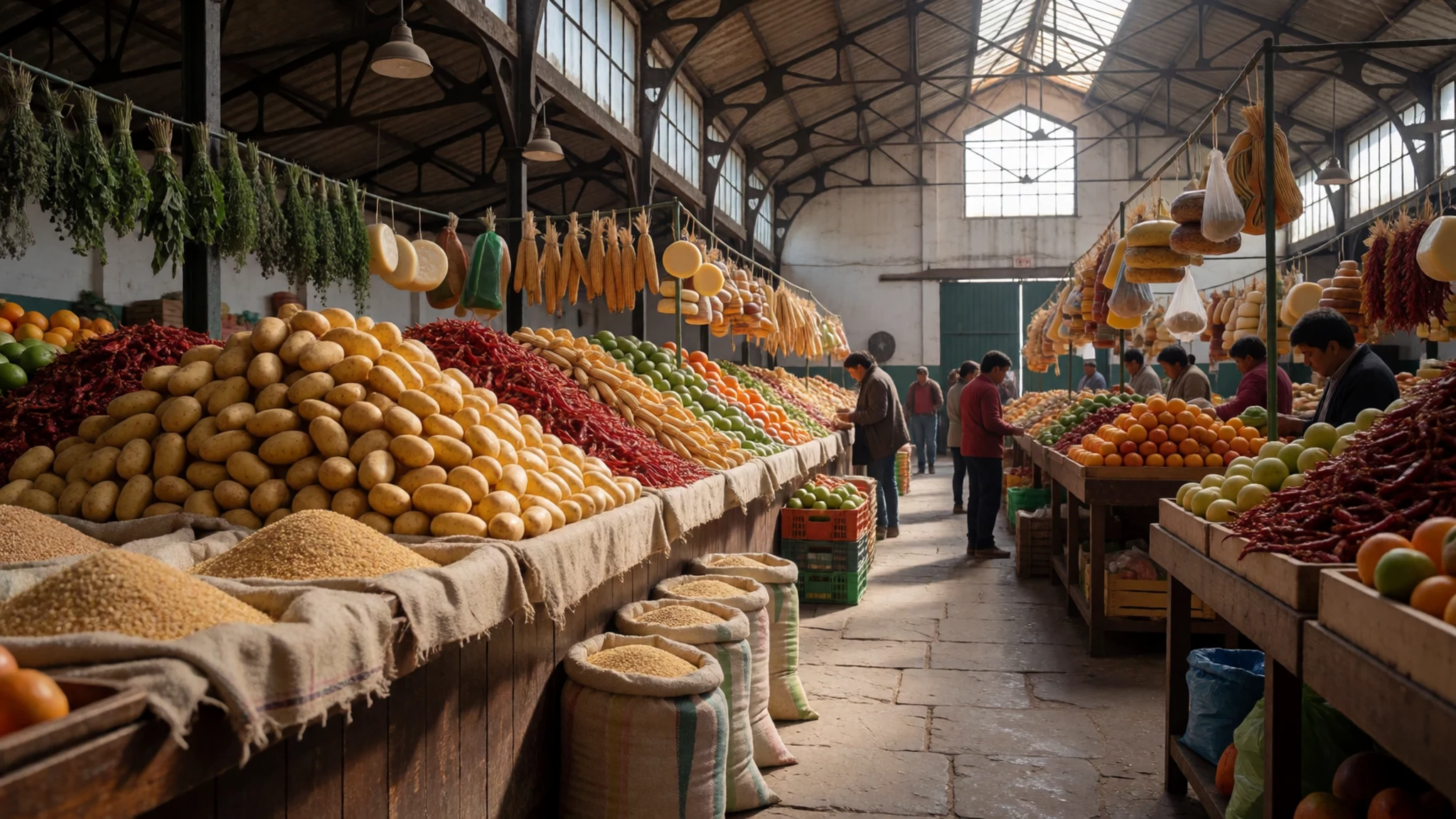
- Museo Santuarios Andinos — Centre, close to the Plaza de Armas
This Arequipa museum sits close to the main square and is home to Juanita, a frozen Inca-era girl found high on the Ampato volcano and known as the Dama de Ampato. Juanita is on show year-round, so the museum is worth a visit whenever you are in the city. Check the official site for current opening times and entry details before you go.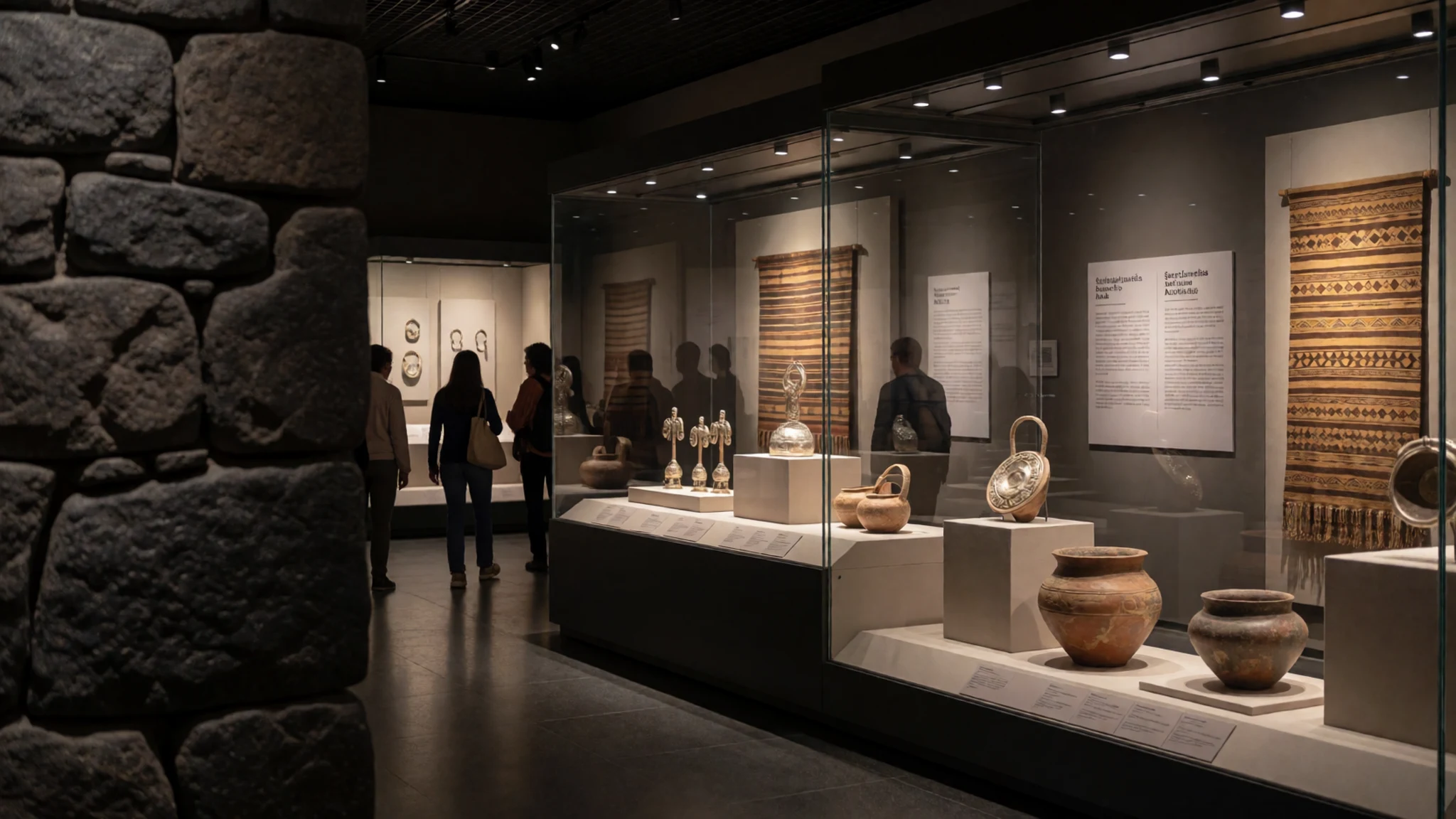
Culture
Arequipa's arts carry two strands at once. Long before the Spanish arrived, people in the valley made petroglyphs and ceramics, and Toro Muerto is a key site, with its rock carvings still studied by archaeologists. After the Spanish came, church architecture, carved walls and altars blended European and Indigenous ideas, and a local painting style called mestizo painting emerged. It kept its distance from the European Renaissance, yet currents from France, England and Spain still reached the city and reshaped its art.
Academic and Romantic painting later flourished, led by artists such as Carlos Baca-Flor, Enrique Masías and Jorge Vinatea Reynoso, whose work helped open the way to contemporary art. The city's identity is strongly regional, and the colonial churches and convents are working places of prayer as well as museums. Religious life still shapes the calendar for many families.
Dress modestly with shoulders and knees covered when entering churches and the convent, and ask before photographing people, especially market vendors.
What to wear
Arequipa's traditional dress grows out of Andean weaving. Wool from alpaca and llama, spun and woven by hand, forms the basis of the shawls, skirts and ponchos worn in the highlands around the city, and bright embroidery on blouses and hats signals community identity. The woven shawl, often called a manta or lliclla, was used to carry bundles on the back and is still worn at festivals, on dance days and at processions.
In daily life most people in Arequipa wear modern clothing: jeans, jackets, trainers and office wear. Traditional dress appears mainly at celebrations, in dance groups and in more rural communities. A warm jacket is a common sight in the evening, because the temperature at this altitude drops quickly after sunset.
For a visitor, layers work best: a light base, a warm jacket for evenings, and a hat and sunglasses for the strong midday sun. Comfortable closed shoes matter on the steep, uneven streets of the centre. For churches, the Santa Catalina convent and religious processions, cover shoulders and knees.
What to eat
- Rocoto relleno — Picanterías in the old centre, the traditional lunchtime eateries
Arequipa's signature stuffed pepper uses the rocoto, a hot red chilli, filled with minced beef, onion, raisins and cheese, then baked. The dish is one of the defining flavours of the city. The classic version is found at the traditional eateries.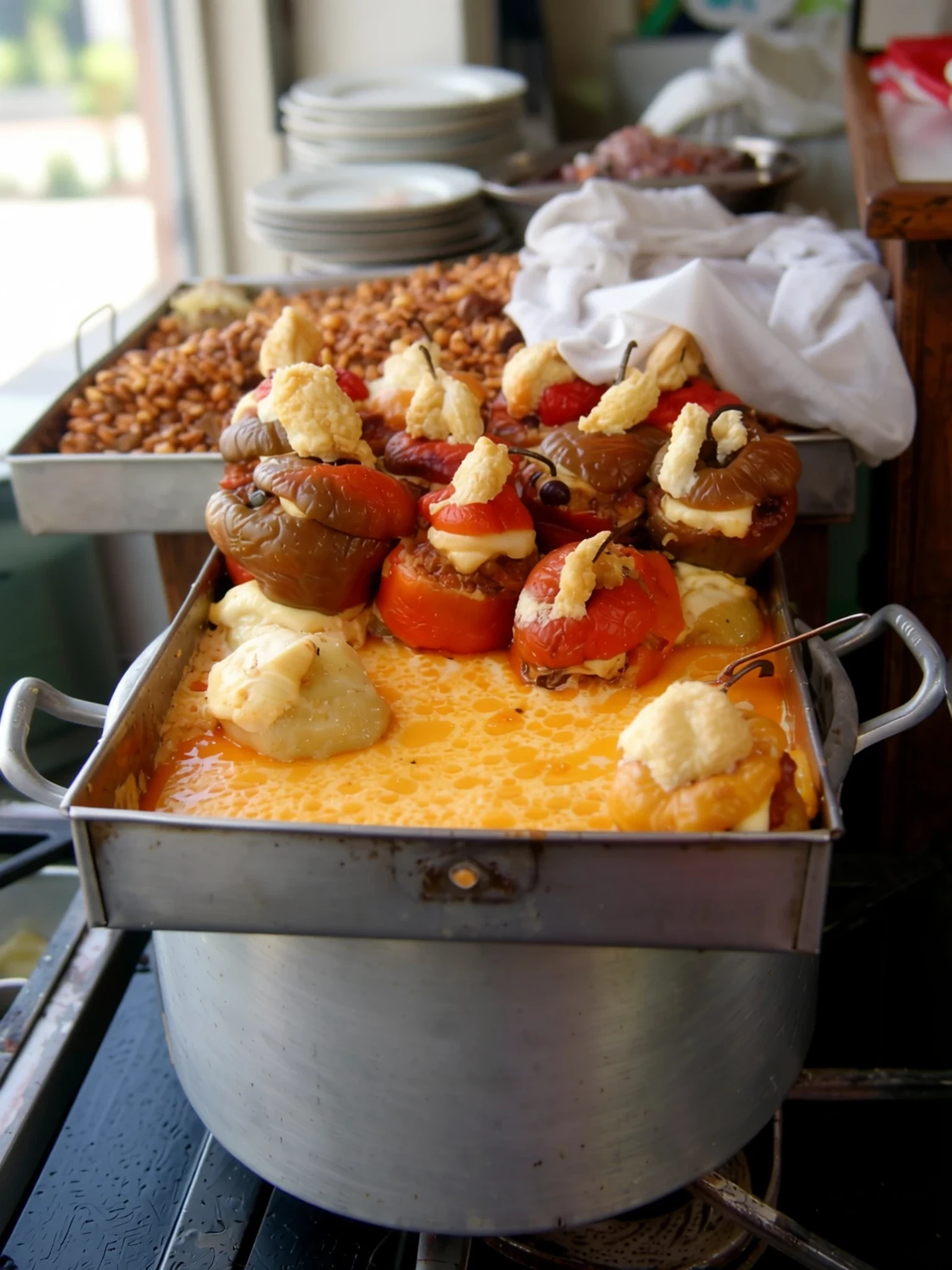
- Chupe de camarones — Picanterías around the centre and lunchtime restaurants offering a set menu
In Arequipa, this shrimp chowder is thickened with milk, cheese and egg and flavoured with chilli and potato. It is a rich, warming bowl that suits the cool evenings at altitude. It is usually served at lunch and is a good introduction to local cooking.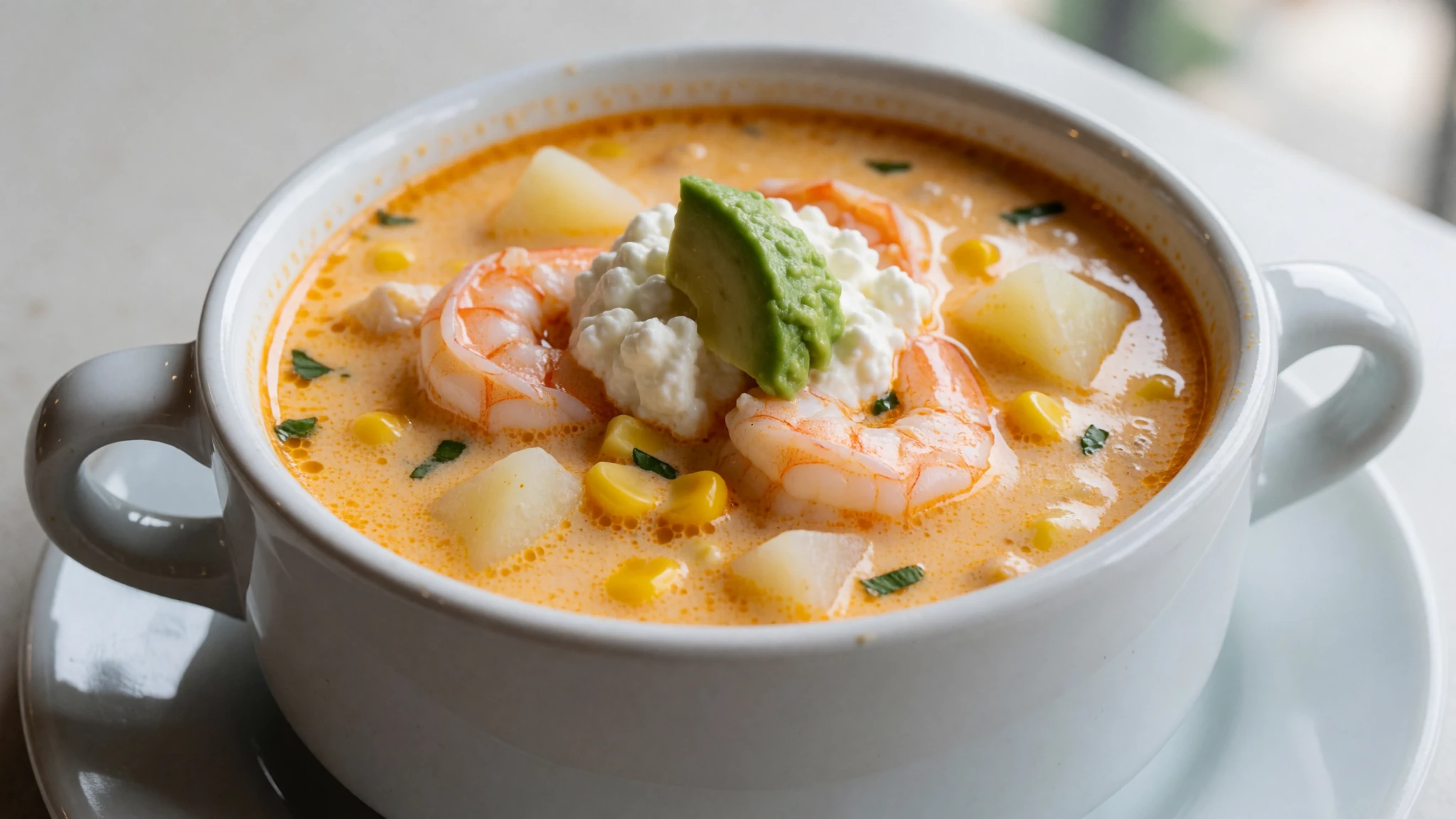
- Adobo arequipeño — Morning stalls and early picanterías near the centre
This Arequipa pork stew is cooked in a dark chilli sauce and is traditionally eaten early in the day, often with rice. Because locals eat it at breakfast or first thing, timing matters, and stalls often run out by midday. - Solterito — Market lunch counters near San Camilo, and cafés across the centre
A cold salad of broad beans, corn, cheese, onion and tomato dressed with lime and chilli. It is light, fresh and a useful counterpoint to the heavier stews. Arequipa cooks often add a slice of boiled potato. - Menú del día — Lunchtime eateries in the centre, including vegetarian restaurants
The set lunch, usually a soup, a main and a soft drink, is the most practical way to eat well in Arequipa. Vegetarian eateries near the centre offer a version with a small salad and dessert, which suits meat-free eaters.
Plan it
Best time. Expect mild, sunny days all year, with most of the rain falling from January to March. Days are often sunny at about 2,335 metres and nights are cool all year, so the drier, clearer months are the most comfortable for walking. Check current forecasts before you travel.
How long. 2–3
Getting there. Flights from Lima and Cusco land at the city's airport, from which a marked taxi with a posted flat rate runs to the centre. Long-distance buses arrive at one of two terminals about 3 km from the centre, a short taxi ride away.
Budget. low
Tips
- Book flights and longer bus journeys early for holiday weeks, when seats on popular routes can sell out
- Start a visit to Santa Catalina early, before the lanes fill up
- Check the official site for convent and museum opening times and ticket options before you go
- Carry small change for markets and small shrines, since cards are less widely accepted there
- Give yourself a day to adjust to the altitude, as breathlessness and tiredness are common on arrival
- If you take a night bus, choose a reputable company with an air-conditioned service
Etiquette
- Dress modestly, with shoulders and knees covered, for churches and convent cloisters
- Ask before photographing people, especially stall-holders and women in traditional dress
- Keep your voice low inside the convent, where the courtyards are quiet
Nearby
Sources
- Wikidata Q159273 (CC0)
- Wikipedia: Arequipa (CC BY-SA 4.0)
- Wikivoyage: Arequipa (CC BY-SA 4.0)
- Plaza de Armas, Arequipa (Draceane) (CC BY-SA 4.0)
- View of the Plaza de Armas, Arequipa (Hans Brian Brandsberg Berg) (CC BY 2.5)
- El volcán Misti sobre Arequipa (Los viajes del Cangrejo) (CC BY 2.5)
- Iglesia de la Compañía de Jesús en Arequipa (Arteyvista) (CC BY-SA 4.0)
- Monastery of St. Catharine, Arequipa (Draceane) (CC BY-SA 4.0)
- Street scene in Arequipa, Peru (Havardtl) (CC BY 4.0)
- Puente Arequipa (John Seb Barber) (CC BY 2.5)
- Pintura de la Toma Final de Arequipa, 1858 (anonymous) (Public domain)


