Alytus
Alytus, Lithuania
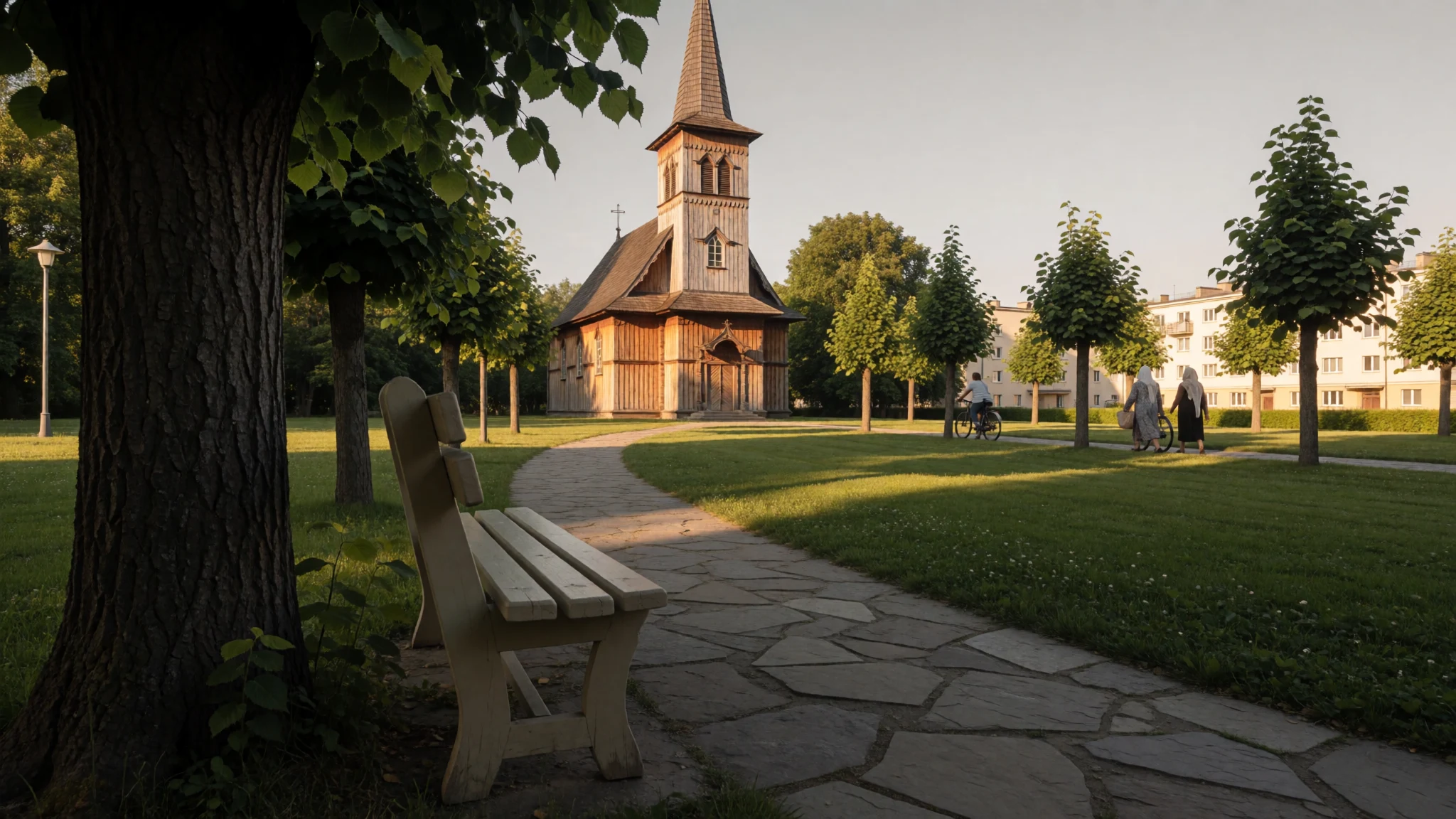
Alytus is a quiet Nemunas river town in southern Lithuania, with a castle mound, wooden and neoclassical churches, and a base for Dzūkija's countryside.
The place
Alytus sits on the banks of the Nemunas river in southern Lithuania, about 93 metres above sea level, and is home to roughly 52,000 people. It is the historical centre of the Dzūkija region and the capital of its own county. Roads fan out from it to Vilnius, Kaunas, the Polish border at Lazdijai and Grodno across the Belarusian frontier, so the town has long been a place people pass through as well as live in. The city is really two halves, still called Alytus I and Alytus II. The eastern half, across the river, is the older and smaller one and grew around a castle mound. The western half developed from the fifteenth century around what is now the Church of the Guardian Angels, and it holds today's centre: parks, apartment districts and some industry. For centuries the river was a political border, with the two banks answering to different empires, and they only merged into one town in 1915. Most twentieth-century growth went west, so the centre feels practical and lived-in rather than medieval. Visitors should not expect a postcard old town. What Alytus offers is a modest, walkable river city with a few good churches, a grassy hillfort, a local museum and an unhurried pace. It works well as a base for Dzūkija's forests and lakes, or as a stop between Vilnius and the Polish border. The climate is humid continental, with big swings between seasons: cold winters and warm summers. There is no passenger rail service, so buses and cars shape every trip.
Its story
Alytus enters the written record in 1377, when the German chronicler Wigand of Marburg noted a small wooden fortress called Aliten on the frontier between Lithuania and the Teutonic Order. It was a watchtower more than a town, and both sides raided it repeatedly. A peace settlement after those wars briefly left it on the Order's side of the line, but Lithuanian forces recovered it soon after. The castle hill on the east bank, probably in use from the eleventh century, was damaged in the Teutonic wars and left to grass, which is how it looks today. In 1581 King Stephen Báthory granted the settlement town rights under Magdeburg law, and Alytus still marks the date as its city day. Its position on the Nemunas made it a trading point, with export goods from Lithuania moving through it and a royal economic office based in the town. Then came the partitions. In 1795 the Polish–Lithuanian Commonwealth was carved up and Alytus was split, the east bank going to the Russian Empire and the west to Prussia. After the Napoleonic wars and the treaty at Tilsit, the western part passed to the Duchy of Warsaw. The two banks were reunited only in 1915. Photographs from 1920 show Prime Minister Kazys Grinius visiting and Lithuanian cavalry parading down Vilnius Street, which gives a sense of a young state's garrison town. Pictures from 1941 show the same street with damaged buildings, a reminder of the war years. History here is read from the hill, the churches and the museum rather than from grand monuments.
What to see
- Church of the Guardian Angels — Town centre, west bank
A wooden Roman Catholic church dating from 1830, standing in the west-bank centre where Alytus II began to grow. Its neo-baroque altars are the draw inside. It also works as a reference point: the theatre, cinema and several cafés are within a short walk to the south. - Church of St Louis — Old town
Alytus's Church of St Louis was rebuilt in neoclassical stone in 1818 after a wooden predecessor, dedicated to St John the Baptist in 1524, burned down. It is a Roman Catholic church, so visits are best timed outside Mass. Its restrained style contrasts nicely with the wooden Guardian Angels church across town.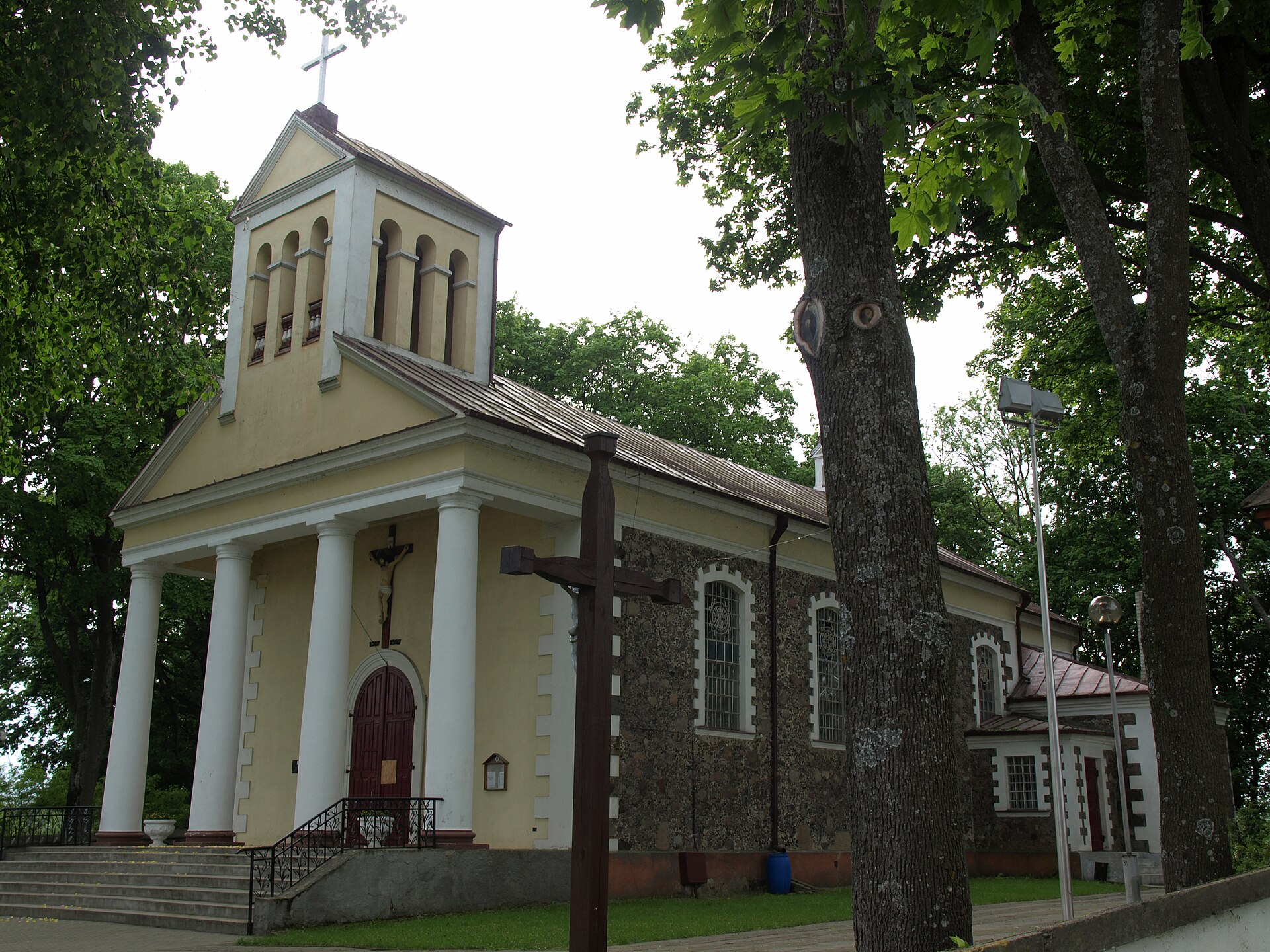
- Alytus hillfort — East bank of the Nemunas
The old castle site on the east bank is now only a grassy knoll, reached along Piliakalnio gatvė. A wooden fortress was documented here in 1377 and may be older, but after damage in the Teutonic wars it was never restored. Come for the setting beside the river and the sense of the frontier past.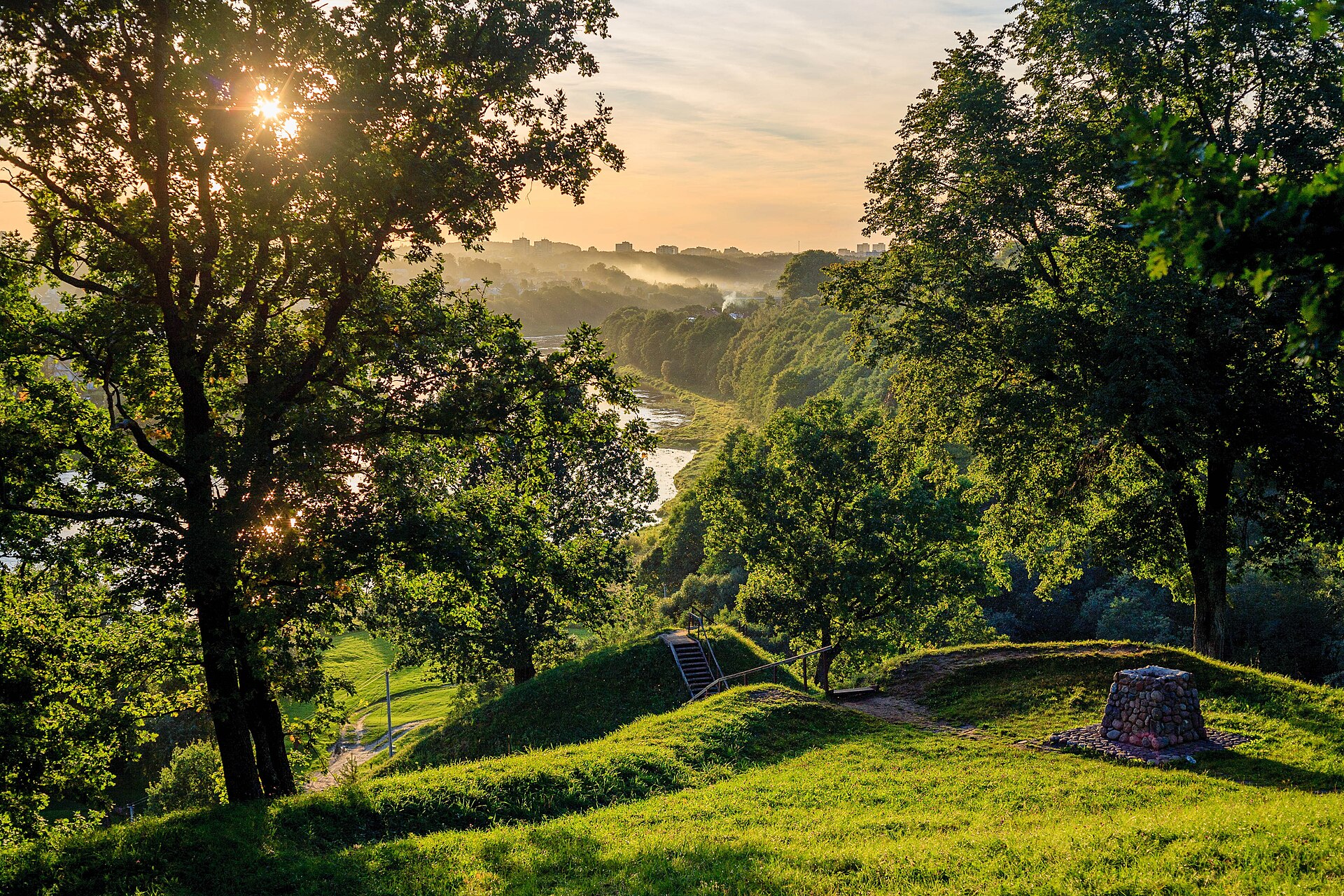
- Ethnography Museum — Town centre
The local history museum is a sensible first stop for making sense of the two banks, the border history and the Dzūkija region. It is described as child-friendly, which helps on a rainy day. Its collections are credited for the 1920 photograph of Prime Minister Grinius's visit. Check opening times on the official site, alytus.lt.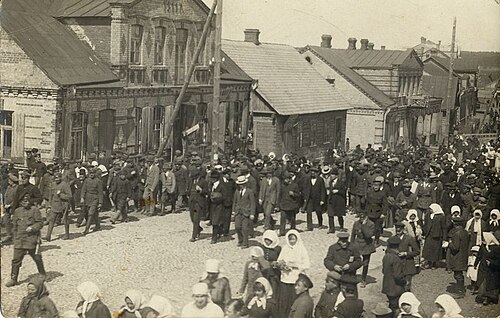
- Dainava Cinema — South of the centre
Founded in 1960 and reopened in 2025 after a thorough modernisation, Kinas Dainava is a popular local gathering spot. It stands on Sporto gatvė, south of the Guardian Angels Church. It is worth a look for a film on a wet evening, or simply for a glimpse of everyday Alytus life.
Culture
Alytus has a culture that mixes the offbeat with the sporty. In 2009 it hosted an Art Strike Biennial, staged as a cheeky answer to Vilnius being European Capital of Culture that year; it included a demonstration and a football match played between three teams. Basketball matters here too: the Alytus Arena hosted group games of Eurobasket in 2011. The local football club, DFK Dainava, now plays in the second tier, with matches from spring to late autumn. The town holds bonsai exhibitions that have drawn entrants from several countries, and for some years it ran an annual tomato tasting where growers compared varieties and discussed how to get a good crop. Local industry is part of the identity as well, since Snaigė, a maker of refrigerators, is based in the city. A museum for veterans of the Afghan wars reflects the recent military past, while a historical reconstruction festival called Jotvos Vartai brings in costumed performers. In 2010 the city received a European honour plate for its work. Everyday life is unshowy: people meet at cafés around the town hall square, at the cinema and at sports halls. When visiting a church such as Guardian Angels or St Louis, dress modestly, keep your voice low and do not photograph worshippers during Mass.
What to wear
Fashion in Alytus follows the practical habits of a small Lithuanian city with cold winters. Traditional dress in the Dzūkija region, now seen mainly at festivals, folk ensembles and school celebrations, is built on home-grown textiles: linen blouses and shirts, woollen skirts in stripes or checks, waistcoats, and woven sashes in patterned bands. Women's outfits are often finished with headscarves or wreaths, and amber beads are a common accessory across Lithuania. Everyday clothes today are casual European: jeans, trainers and layered knitwear, with smarter outfits for church, the theatre and weekends in the centre. In winter locals wear long coats, hats, gloves and insulated boots; in summer, light cotton and linen. Visitors should dress for the season. From November to March, bring thermal layers, a warm hat and waterproof boots with good grip for snow and ice. Summers are warm and can turn showery, so pack light layers and a rain jacket. Comfortable walking shoes are enough for pavements and parks, though the paths up the grassy hillfort turn muddy after rain. For churches, cover shoulders and avoid very short shorts; no head covering is needed. Folk performances and re-enactment events are a good chance to see traditional costume up close, though dates change, so check the town website.
What to eat
- Cepelinai — Traditional restaurants around the town hall square
Large potato dumplings, shaped like airships, usually stuffed with minced meat or curd cheese and served with sour cream and bacon bits. Heavy and filling, they suit cold days. Look for them at traditional Lithuanian restaurants around the town hall square. - Šaltibarščiai — Local restaurants and cafés in the centre
A cold pink soup of beetroot and kefir with cucumber, dill and egg, often served with hot boiled potatoes on the side. It is the classic summer lunch, and most eateries with a Lithuanian menu offer it from late spring. - Kugelis — Everyday eateries serving traditional food
A baked potato pudding made from grated potato, with bacon or onion, cut into slabs and served with sour cream. It appears as a side or a main in everyday Lithuanian eateries, and it is especially welcome in the cooler months. - Forest mushroom dishes — Traditional restaurants, late summer to autumn
Dzūkija is a forest region, and in season mushrooms turn up fried with onion and cream, in soups or pickled. Supply is seasonal, so it is worth asking what is on that day at a traditional eatery. - Kepta duona — Pubs and beer restaurants in the centre
Strips of dark rye bread fried in oil, rubbed with garlic and often served with a cheese dip. They are the standard companion to a glass of local draught beer, which most pubs and beer restaurants in town pour. - Čeburekai — Takeaway counters on Vilniaus gatvė
A large fried turnover filled with minced meat, a fast-food staple across the region. It makes a quick snack on the move. Look for small takeaway counters along the main street, Vilniaus gatvė.
Plan it
Best time. May to September for the warmest weather and long days, with late spring and early September calmer. Alytus has a humid continental climate with large seasonal differences, so winters are properly cold and snowy.
How long. 1–2
Getting there. Fly into Vilnius Airport, then take a bus: Kautra coaches run hourly from Vilnius and from Kaunas, and Alytus lies about 105 km west of Vilnius by road. There is no railway service, so skip the old station outside town. The bus station is on Naujoji gatvė, northwest of the centre, and some buses also stop in the centre.
Budget. low
Tips
- Plan on bus or car travel, since there is no passenger rail; check timetables on Autobusubilieta.
- Bicycles are carried free on Kautra buses, which suits day trips into the Dzūkija countryside.
- The bus station has little in it and its toilets are often locked, so use a café in the centre.
- Carry a card and a little cash for small eateries and kiosks.
- Check museum and church opening times on the official site, alytus.lt, before you set out.
Etiquette
- Dress modestly and keep your voice low inside churches, and avoid photographing worshippers during Mass.
- Ask before photographing people at festivals or in their daily setting.
- Greet staff with a polite hello in cafés and shops before ordering.
Nearby
Sources
- Wikidata Q450625 (CC0)
- Wikipedia: Alytus (rev 1382775210) (CC BY-SA 4.0)
- Wikivoyage: Alytus (rev 5423996) (CC BY-SA 4.0)
- Photo: Alytus Sanct Louis church (Juste) (CC BY 3.0)
- Photo: Alytaus piliakalnis rudenį (Juliux) (CC BY 3.0)
- Photo: Prime Minister Kazys Grinius visiting Alytus in 1920 (Alytus Ethnographic Museum) (CC0 1.0)
- Photo: 2nd Uhlan Regiment of the Lithuanian Army parading in Alytus (Kaplanas) (CC0 1.0)
- Photo: Damaged buildings of the Alytus Old Town during World War II in 1941 (Public domain)
- Photo: Alytus žiemą (Qwarc) (CC BY 3.0)
- Photo: Jotvos Vartai festival (Ristynes) (CC BY-SA 4.0)
- Photo: Alytus Saint Casimir church (Juste) (CC BY 3.0)


