Viñales
Viñales, Cuba

Viñales offers a tranquil escape into dramatic limestone valleys, fertile red earth, and traditional rural Cuban life.
The place
Viñales rests in a lush northern valley within Pinar del Río Province, framed by low mountain ranges of the Cordillera de Guaniguanico and the dramatic Sierra de los Órganos. The landscape is defined by steep-sided limestone outcrops known as mogotes, which rise like green haystacks from the red farmland below. Much of the surrounding terrain is shaped by subterranean networks of caves carved into the ancient stone. The settlement itself is characterised by modest, one-story wooden houses featuring wide front porches that look out towards the valley. Rural life moves at a slower pace here than in the capital, shaped by the rhythms of farming and traditional craftsmanship. The valley holds international renown for producing exceptional tobacco within its unique microclimate. Beyond agriculture, the area gained global recognition when the valley was inscribed as a UNESCO World Heritage Site in November 1999, celebrated for its karst scenery, vernacular architecture, and enduring musical traditions. Travellers arriving in the municipality find a community deeply connected to its natural environment, where ox-drawn ploughs still till the soil and horse-riding remains a primary way to navigate the winding tracks between the fields and hills.
Its story
Viñales carries a history shaped by indigenous displacement, runaway communities, and waves of agricultural settlement. Before European colonisation, the territory served as a refuge for a remnant Taíno population joined by escaped slaves who sought safety among the dense vegetation and hidden caves of the limestone hills. Colonial colonisation began in earnest at the dawn of the 1800s, driven by tobacco growers arriving from the Canary Islands who settled across the wider Vuelta Abajo zone. The earliest documented colonial footprint in Viñales appeared as a remote ranch established by Andrés Hernández Ramos. Official foundation followed as a typical rural community complete with a central church, school, healthcare building, and a public recreation square designed for local gatherings. Over subsequent decades, the town expanded gradually around its central plaza while maintaining its distinct agricultural identity. The resilience of its farming families and the preservation of traditional curing methods for tobacco transformed the valley into a living museum of rural heritage. Today, the layered history of indigenous survival, Canary migration, and agricultural mastery remains visible across the landscape, from cave hideouts once used by runaways to heritage drying barns handed down through generations of local cultivators.
What to see
- Calle Salvador Cisneros — Central Viñales
Named in honour of a key independence leader and former Cuban president, this primary thoroughfare serves as the bustling spine of the settlement. It features numerous eateries and local spots catering to visitors eager to experience daily town life.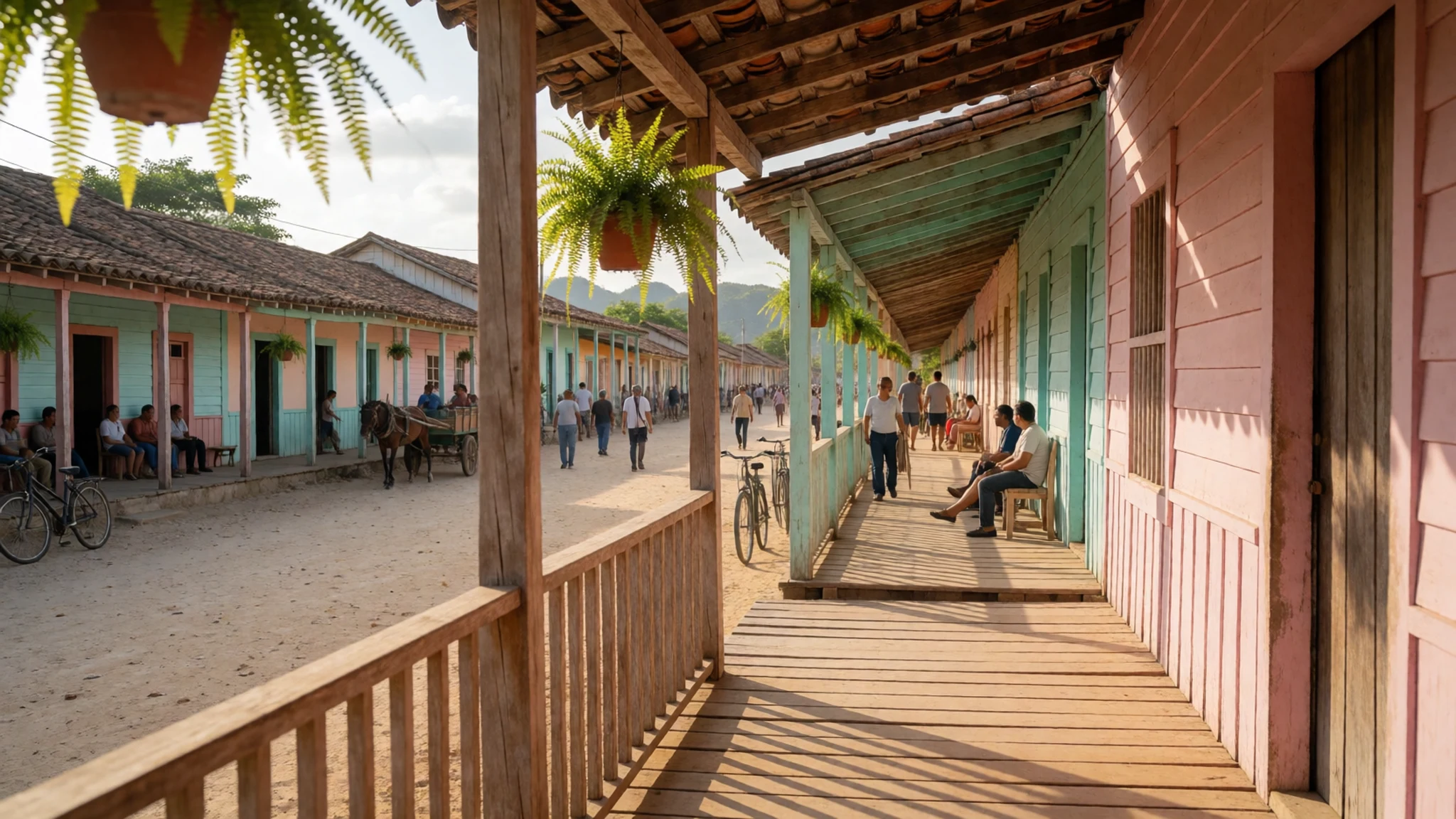
- Casa de la Cultura — Central Plaza
Positioned directly on the central plaza, this cultural hub hosts daily community gatherings, musical performances, fashion events, and children's programmes. It is an ideal venue to observe local artistic expression and connect with residents involved in the cultural life of the municipality.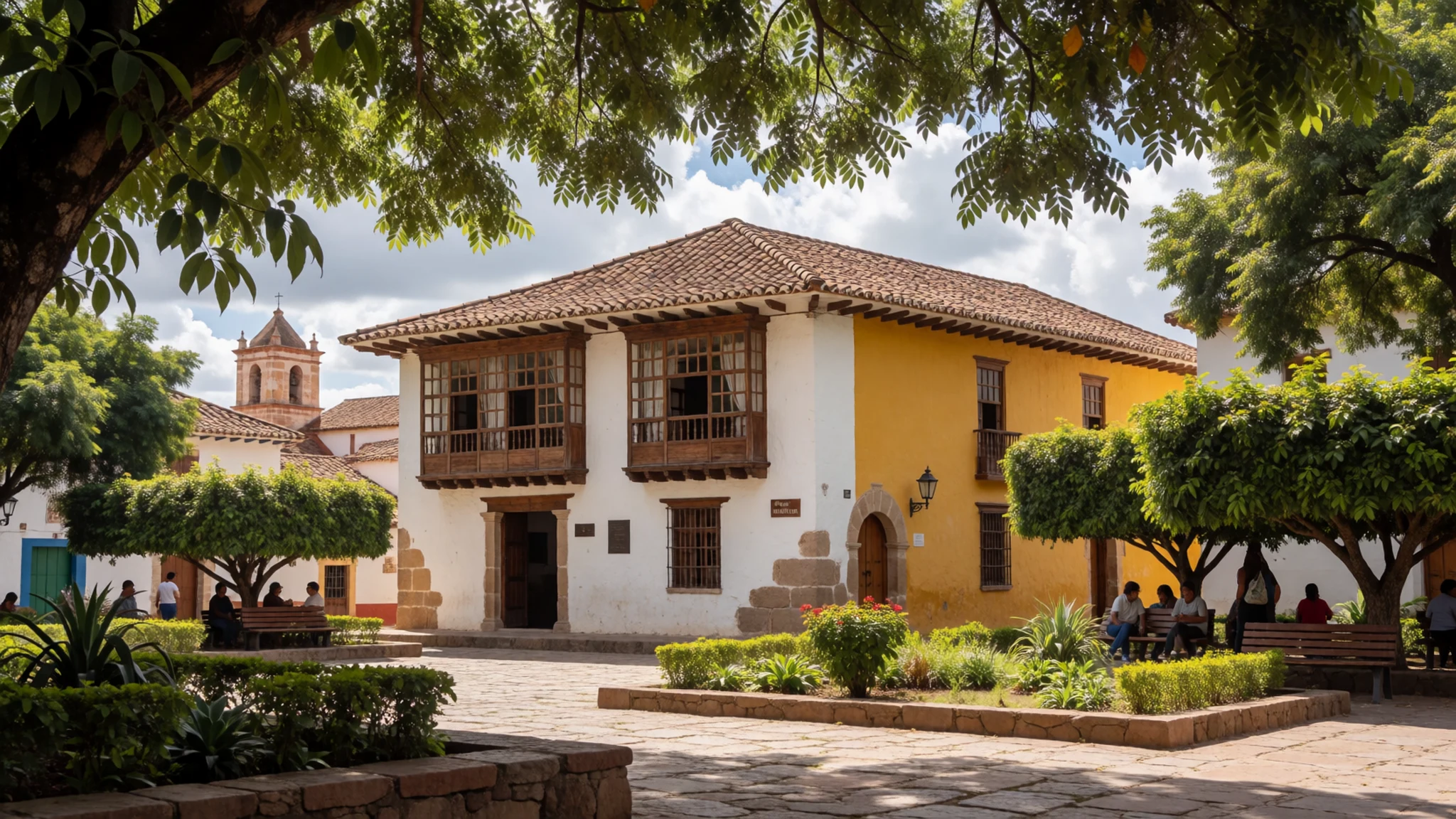
- Tobacco Farm Casa del Veguero — Viñales Valley
This agricultural homestead provides an educational window into traditional leaf cultivation and curing practices. Visitors can walk through the drying sheds to observe how local farmers process the harvest that contributes to the region's renowned reputation for quality.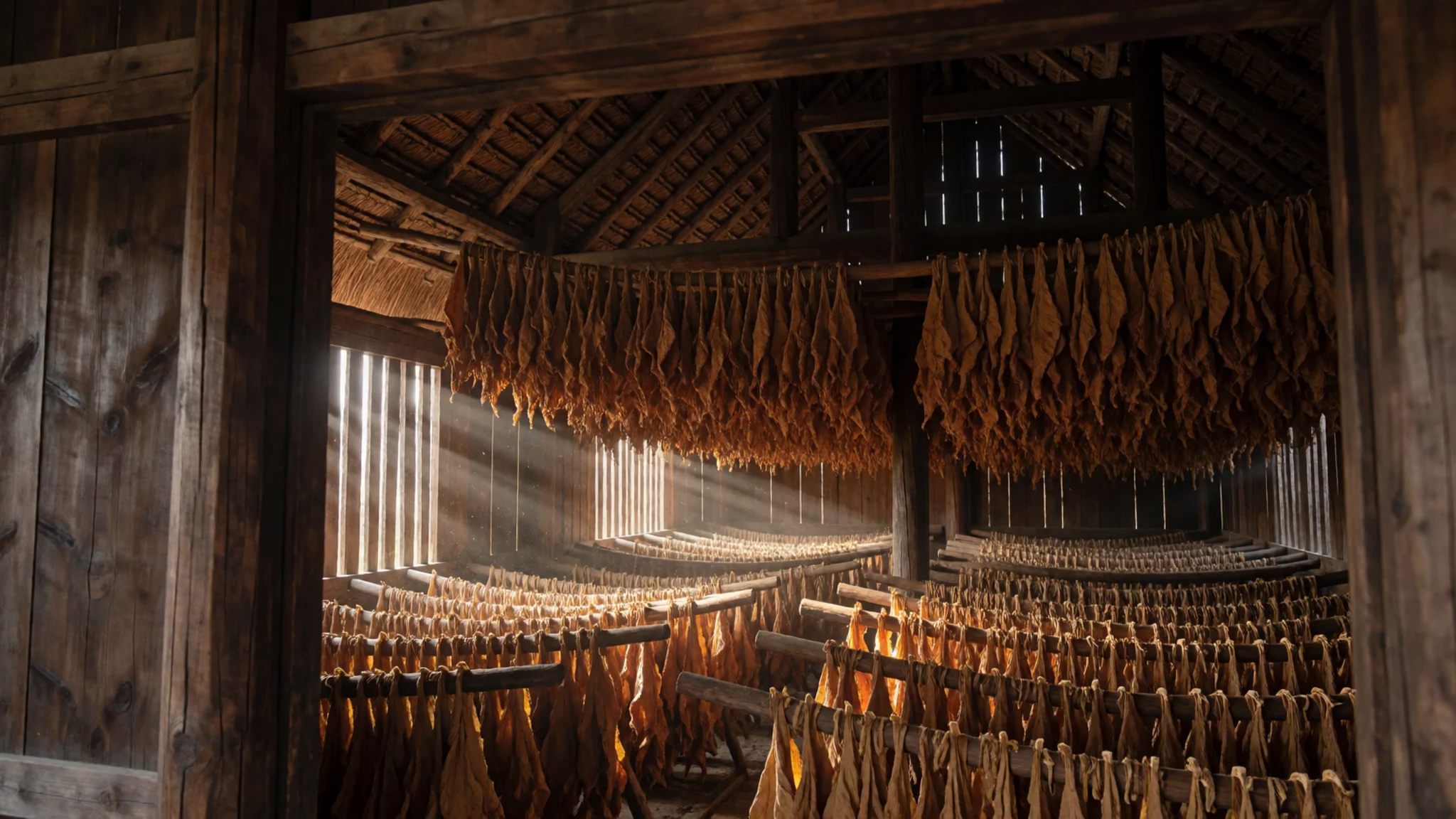
- El Palenque de los Cimarrones — Northern valley outskirts
Set within a smaller cave passage known as Cueva de San Miguel, this site functions as an interpretive space dedicated to the history of escaped slaves who once hid in the hills. A rustic restaurant operates near the rear exit for visitors exploring the cavern.
- The Central Plaza — Town Centre
Serving as the civic heart of the town, this square brings together the local church, an art gallery, and lively weekend farmers' markets. It is a natural meeting point where residents gather in the shade of surrounding trees to converse and socialise throughout the day.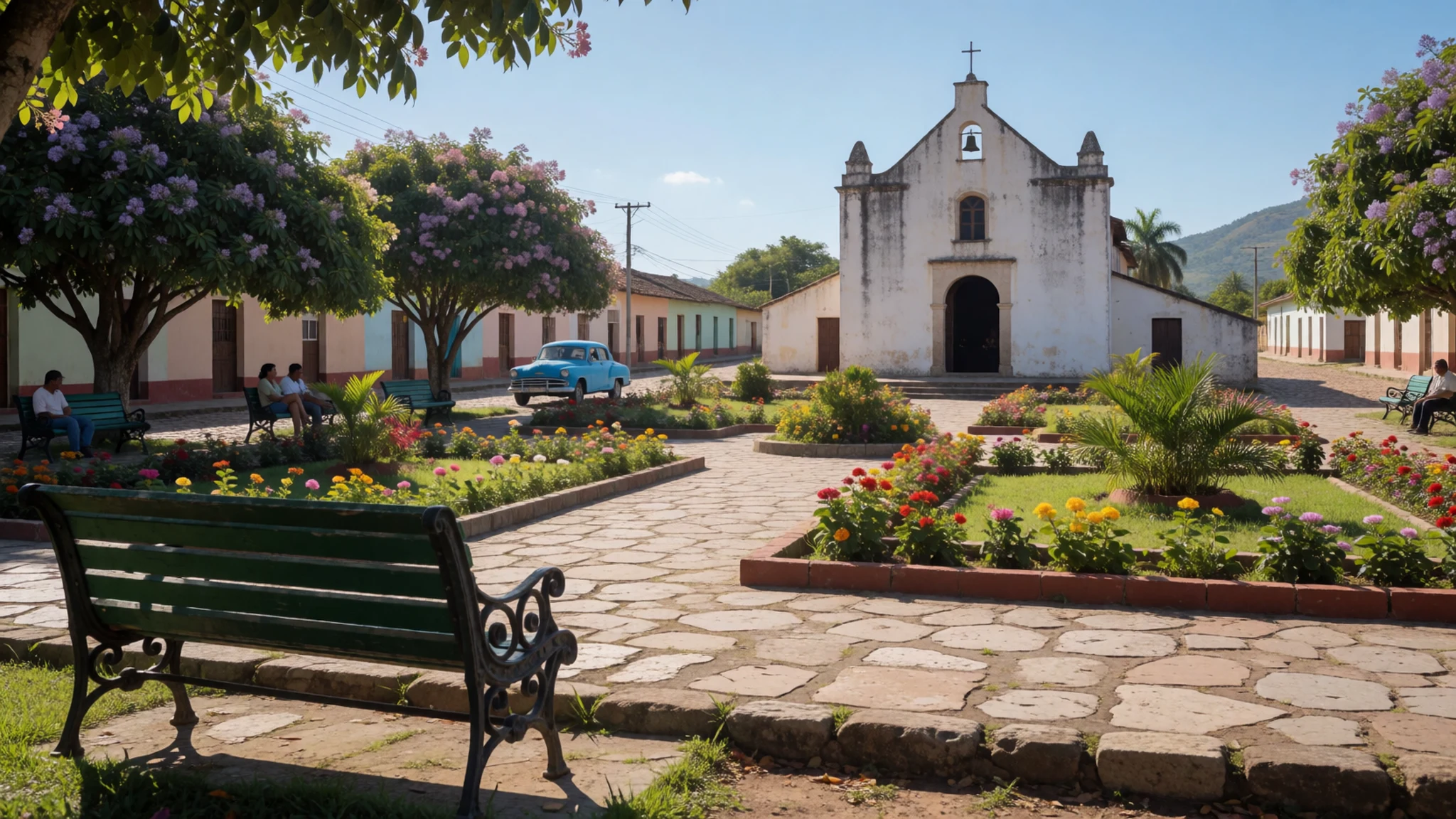
Culture
The cultural fabric of Viñales is rooted in agrarian traditions, communal music, and strong family networks. Social life often revolves around the front porches of wooden houses, where neighbours converse and share news in the cool evening air. Music permeates the town, from impromptu guitar sessions in local courtyards to evening performances at historical venues near the plaza. Hospitality is deeply valued among residents, many of whom welcome visitors into private homestays known as casas particulares. Agriculture remains a central pillar of community identity, with farming techniques passed down through families who work the red earth using traditional methods. Visitors are encouraged to engage respectfully with local guides, farmers, and hosts, as genuine personal connections often lead to a deeper understanding of rural Cuban customs. When photographing residents or private farmsteads, always ask for permission first before taking pictures.
What to wear
Traditional dress in Viñales reflects practical rural attire suited for outdoor agricultural labour under a warm tropical sun. Historically, farmers and field workers relied on durable cotton shirts, sturdy trousers, and wide-brimmed straw hats to protect against the heat while tending crops. Today, local residents generally wear comfortable, casual contemporary clothing, including lightweight t-shirts, denim, and sensible footwear suitable for dusty tracks or unpaved paths. Travellers visiting the valley should prioritise lightweight, breathable fabrics such as cotton or linen to cope with humid daytime temperatures. Sturdy walking shoes or trainers are essential for exploring uneven valley trails, cave systems, and horseback riding routes. A light waterproof jacket or poncho is also recommended for sudden showers during the wetter months, while modest attire such as covered shoulders is appreciated when visiting churches or rural communities.
What to eat
- Organic Farm Set Menus — Finca Agroecológica El Paraiso
Served at hillside agricultural projects overlooking the valley, these multi-course meals feature fresh organic produce harvested directly from surrounding gardens, prepared simultaneously for all seated diners in a communal rural setting.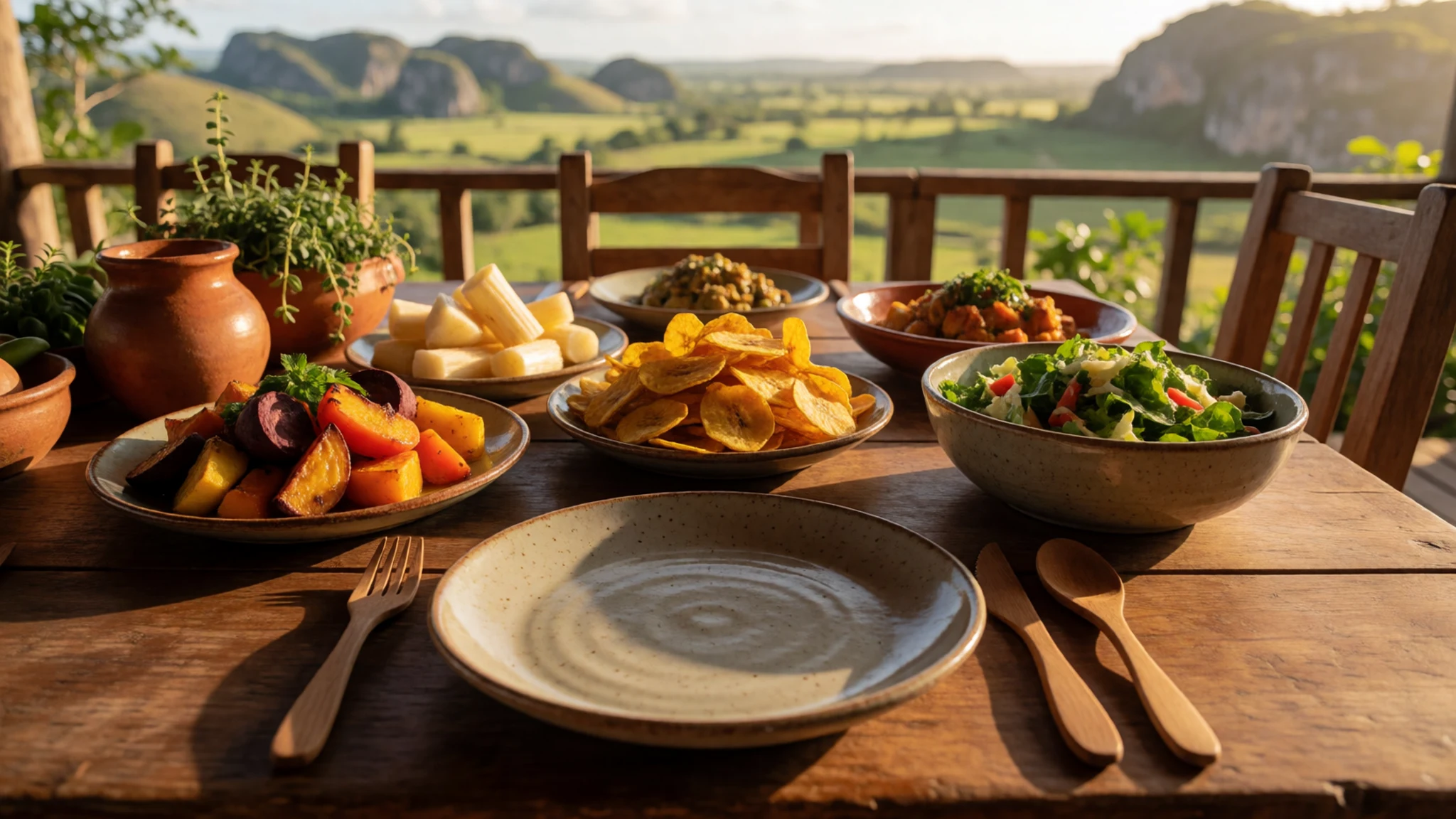
- Fresh Tropical Fruit Juices — Mirador lookout points
Refreshing beverages pressed from seasonal fruits grown locally across the fertile valley floor, offering a cooling respite from the afternoon heat at scenic viewpoints along the western ridges.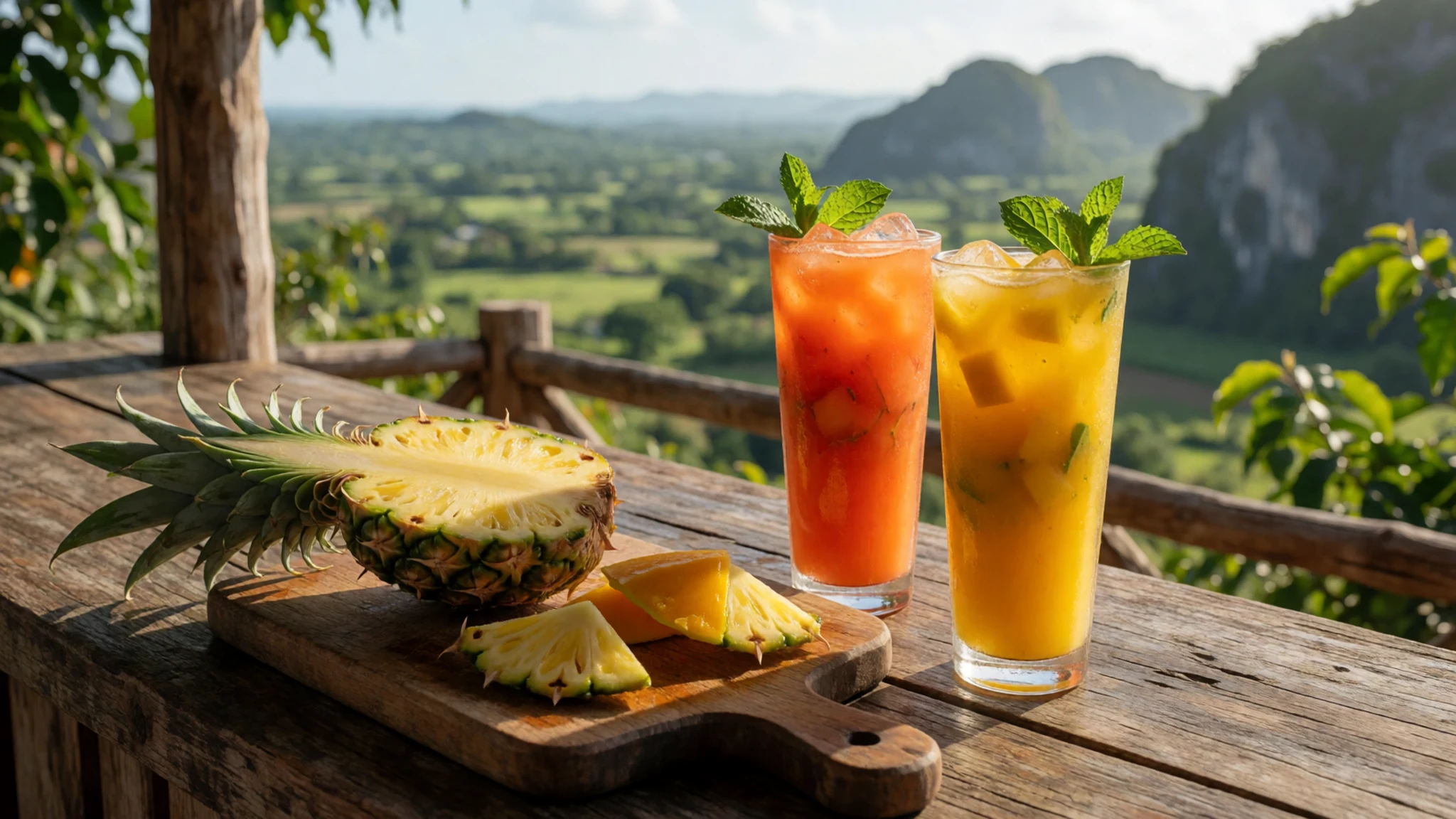
- Small Plates and Tapas — El Olivo restaurant
Delicious contemporary and traditional dishes served in intimate portions at popular eateries located along the main thoroughfare, ideal for sharing while sampling local culinary creativity. - Classic Cuban Fare — Casa de Don Tomás and Don Carmelo
Simple, comforting plates featuring rice, beans, roasted pork, and root vegetables prepared in historic town buildings or neighbourhood eateries at accessible prices.
Plan it
Best time. December to March marks the dry season with pleasant temperatures, whereas June is the rainiest month and July through August brings high heat and humidity.
How long. 2–3
Getting there. Arrive by Viazul bus or shared colectivo taxi from Havana, which typically takes about three hours along connecting highways.
Budget. mid
Tips
- Arrange transport and excursions at least a day in advance through your casa particular
- Carry sufficient cash, as card payment acceptance is extremely limited
- Start valley walks or horseback rides early in the morning to avoid afternoon heat
- Drink bottled or filtered water rather than tap water
- Confirm bus schedules in person, as departure times can change unexpectedly
Etiquette
- Always ask permission before photographing local farmers or their families
- Support licensed taxi drivers rather than unofficial street transport operators
- Greet hosts and shopkeepers politely upon entering homes or establishments
Nearby
Sources
- Wikidata Q1180693 (CC0)
- Wikipedia (rev 1376976928) (CC BY-SA 4.0)
- Wikivoyage (rev 5340213) (CC BY-SA 4.0)
- Photo 01 (CC BY-SA 4.0)
