Sian Ka'an
Sian Ka'an, Mexico
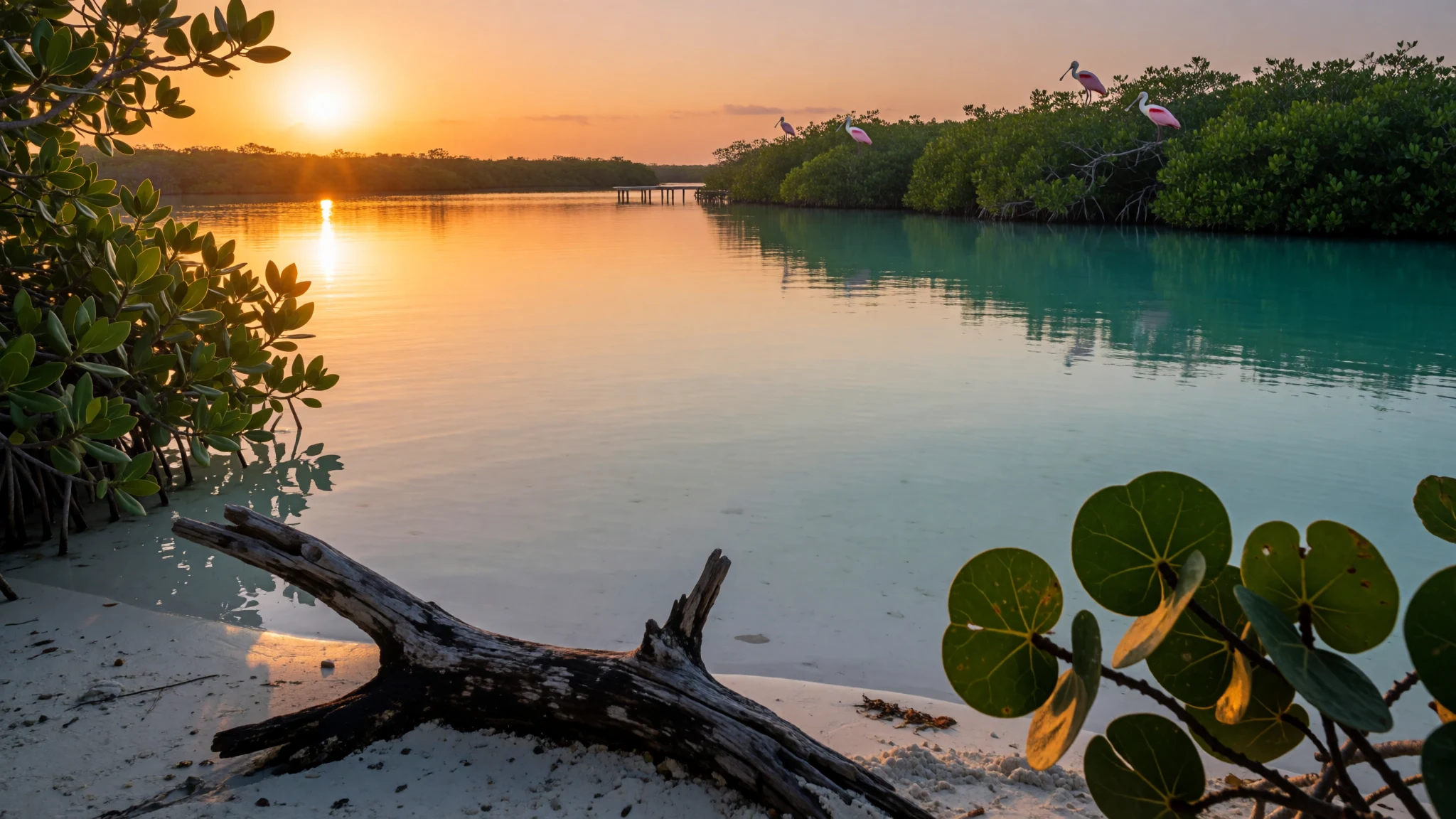
Sian Ka’an is a water-and-wildlife biosphere where boat routes, reefs and birdlife feel more like discovery than sightseeing.
The place
Sian Ka’an Biosphere Reserve (Reserva de la Biósfera de Sian Ka’an) sits around Tulum Municipality in Quintana Roo, Mexico, with both land and sea inside the protected area. It’s also listed as a UNESCO site, which helps explain the focus on conservation rather than resort-style development.
The reserve’s character comes from water. There are stretches of Caribbean coastline, lagoons and channels where boats are the natural way to move between habitats. Reef areas extend offshore, so the scenery can flip from mangrove edges and calm inlets to open blue water and living coral environments. On a good day, the reserve doesn’t feel like a single attraction; it feels like a network of places—some reachable only via guided routes—where you time swims, snorkelling and wildlife spotting to tides and conditions.
Sian Ka’an also has a Maya side. Within the reserve are archaeological sites, including Muyil, which gives the landscape a second layer beyond nature trails. It’s a place where the “what” changes depending on how you enter: a common approach is via points such as Chunyaxché or Punta Allen, each leading to different kinds of routes.
Crowds are generally lighter than the big day-trip loops from Tulum and Cancún, but demand exists for boat tours and wildlife watching. Heat and sun are major factors year-round, so what matters most is timing, water access planning, and bringing the right protection for a reef-focused reserve.
Its story
Sian Ka’an is one of those rare conservation places where your schedule starts to feel physical: you wake with the light, you wait for calm water or clear skies, and you build the day around what the reserve allows—boat routes, snorkelling windows and the pace of animals rather than opening hours. The result is that even a simple ride along channels can feel like it has chapters.
Many visitors base themselves around Tulum and then choose between entering by Chunyaxché or going farther on the Punta Allen side. Chunyaxché tends to be the easier gateway because it sits on the main road corridor, and from there tours often combine a lagoon-and-canal passage with chances to float and snorkel. Punta Allen is the more remote-feeling option: it’s far from services, so the day can be quieter and more “off-grid”. That remoteness also changes how the experience feels at night, with less bustle and fewer options for last-minute detours.
A big part of the story here is what you learn to ignore. The beaches are natural, and litter or seaweed can change your view in ways no marketing photo can promise to prevent. Sargassum can arrive in patches, so the “best photo” might be about timing rather than perfection. That’s also why guides matter: they can read the water and habitats better than a general travel map.
And then there’s the human thread inside the reserve. Maya archaeological sites like Muyil sit alongside wetlands and reef zones, reminding you that the landscape has been used and understood for a long time. Sian Ka’an becomes less about checking a list and more about moving carefully through a living system.
What to see
- Boat routes through the canals — Main reserve waterways
Boat trips in Sian Ka’an link lagoons, mangroves and wider marine areas. The views tend to alternate between quiet, enclosed water and sudden open Caribbean colour, with plenty of chances to spot wildlife from the edge as the boat slows down. - Reef and snorkelling zones — Coastal reef areas
Snorkelling in Sian Ka’an is about conditions and access—clear water, the right entry points and a guide who knows where to stop. Expect reef life off the coast, with snorkel time often built into canal-to-caribbean style tours. - Birdwatching towers and river edges — Birding viewpoints around the reserve
Sian Ka’an is good for birdwatching, especially from purpose-built viewing spots and quiet shoreline edges where species feed and move through the day. Early and late light can make colours pop, and patient watching often beats quick scanning. - Muyil archaeological zone — Muyil area
Muyil sits inside the reserve and gives a Mayan historical layer to a nature-heavy day. The layout is easier to understand when it’s paced slowly, with the surrounding wetlands and canal landscape making the setting feel part of the story. - Boca Paila sea bird areas — Boca Paila
Boca Paila is known as a spot where seabirds are active around the water. If conditions are calm, it’s the kind of place where you can watch movement over the surface—birds passing overhead, landing, and then vanishing back into the reserve’s wider routes.
Culture
Sian Ka’an is a biosphere reserve in Mexico where conservation is part of everyday operations, not a separate “education programme”. The area brings together scientists, technicians, students and local groups such as fishermen and farmers, which influences how tours are run and how visitors are expected to behave around sensitive habitats.
Because the reserve includes marine and coastal zones, cultural respect here isn’t just about monuments—it’s also about what you bring into the water. Sun protection is one of the clearest examples: commercial lotions can be harmful to coral, so reef-safe options (when allowed by guides) are important. The practical culture of the place also shows up in the way some entry points feel more basic and remote, where cash is common and mobile connectivity may be unreliable.
The Maya presence adds another layer. Archaeological sites like Muyil are not theme-park attractions; they’re part of a landscape that people continue to live alongside. Visiting with that mindset helps keep the experience grounded—quiet observation, sticking to designated areas, and recognising that the reserve’s value is ecological and historical.
Visitor etiquette: keep noise low and follow your guide’s instructions on water access and reef-safe products, especially around snorkelling spots.
What to wear
Traditional dress in this region is often connected to Yucatecan and Mayan-inspired textiles, with woven fabrics and colourful patterns used for everyday clothing and special occasions. In and around tour areas, you’ll mainly see modern casual wear, but you can still spot the cultural importance of textiles in markets and community crafts.
What people actually wear now is practical for tropical sun: breathable T-shirts, lightweight shorts or long skirts, and sandals or trainers that can handle wet ground. For days involving canals, boats and possible snorkelling, people usually pack a quick-dry top and something to protect from strong sunlight, because the heat builds fast.
For visitors, dress for a mix of sun, humidity and occasional walking on uneven surfaces. Choose light layers, long sleeves or a hat for the brightest hours, and reef-friendly sun protection if your plan includes snorkelling. Bring footwear with grip for boardwalks and sandy edges; flip-flops can be convenient on calm beach stretches, but closed-toe sandals or trainers are more comfortable for mixed terrain. If visiting archaeological areas such as Muyil, keep clothing modest and avoid anything too revealing around site entrances.
What to eat
- Seafood plates by the water (fish, shrimp, octopus) — Coastal access areas near the reserve
In Sian Ka’an’s nearby coastal dining, menus often centre on fish and shellfish, including shrimp and octopus, alongside simple sides. Look for seafood-focused eateries around the access towns and waterfront stops. - Beachfront seafood with cold drinks — Restaurants near the waterfront
Expect seafood with an ocean-view setting, usually served with fresh flavours and a straightforward, tropical vibe. These are the meals that make sense after a tour, when you want something filling without fuss. - Yucatan home-style cooking (tortillas included) — Muyil and nearby regional eateries
Regional Yucatan-style food tends to feature homemade tortillas and dishes that feel rooted in local ingredients rather than resort menus. A good bet is to look for places serving regional cuisine in the Tulum–Muyil area. - Roadstop Mexican seafood and drinks — Along the main highways near tour access points
On the route between Cancún and Chetumal, roadstop-style stops can deliver typical Mexican dishes with local seafood options and cold drinks. It’s the kind of meal for refuelling between longer legs. - Cash-and-carry style meals near remote junctions — Remote entry points and nearby stops
Some of the most convenient meals for travellers are the ones that sit at informal transport nodes rather than in big city centres. Plan for simple setups where payment can be cash-focused and the food is basic but filling.
Plan it
Best time. March–April for calmer conditions and comfortable warmth, and late October–November for a break from the most intense summer heat; June is the rainy season and August is hot and humid.
How long. 3–4
Getting there. Fly into Tulum International Airport (TQO), Cancún International Airport (CUN) or Chetumal International Airport (CTM), then reach Tulum and connect to tours. From the coast, take an ADO bus to Tulum; it’s common to book a Sian Ka’an trip there, and the final leg depends on whether you enter via Chunyaxché or Punta Allen.
Budget. mid
Tips
- Start boat and wildlife plans early in the day to beat the strongest sun and improve viewing conditions.
- If entering via Chunyaxché, look for the combi route that indicates Felipe Carrillo Puerto on the windshield.
- Bring a plan for sun protection that’s reef-conscious; ask guides what’s allowed before packing sunscreen.
- Keep cash accessible for smaller stops and remote areas, especially on the Punta Allen side.
- For snorkelling, go when your tour schedule matches water conditions rather than aiming for the longest session.
Etiquette
- Ask your guide before entering the water and keep to marked areas for reefs and wildlife.
- Follow footwear guidance around boats and wet ground for safety and to avoid slipping.
- In archaeological areas such as Muyil, respect boundaries and move quietly.
Nearby
Sources
- Wikidata Q559789 (CC0)
- Wikipedia (Sian Kaʼan Biosphere Reserve) (CC BY-SA 4.0)
- Wikivoyage (Sian Kaʼan Biosphere Reserve) (CC BY-SA 4.0)
- Photos (Wikimedia Commons/Wikimedia) (CC BY-SA 3.0 / CC BY-SA 4.0 / CC BY 3.0 / CC BY-SA 2.0)
