Omkareshwar Temple
Omkareshwar Temple, India
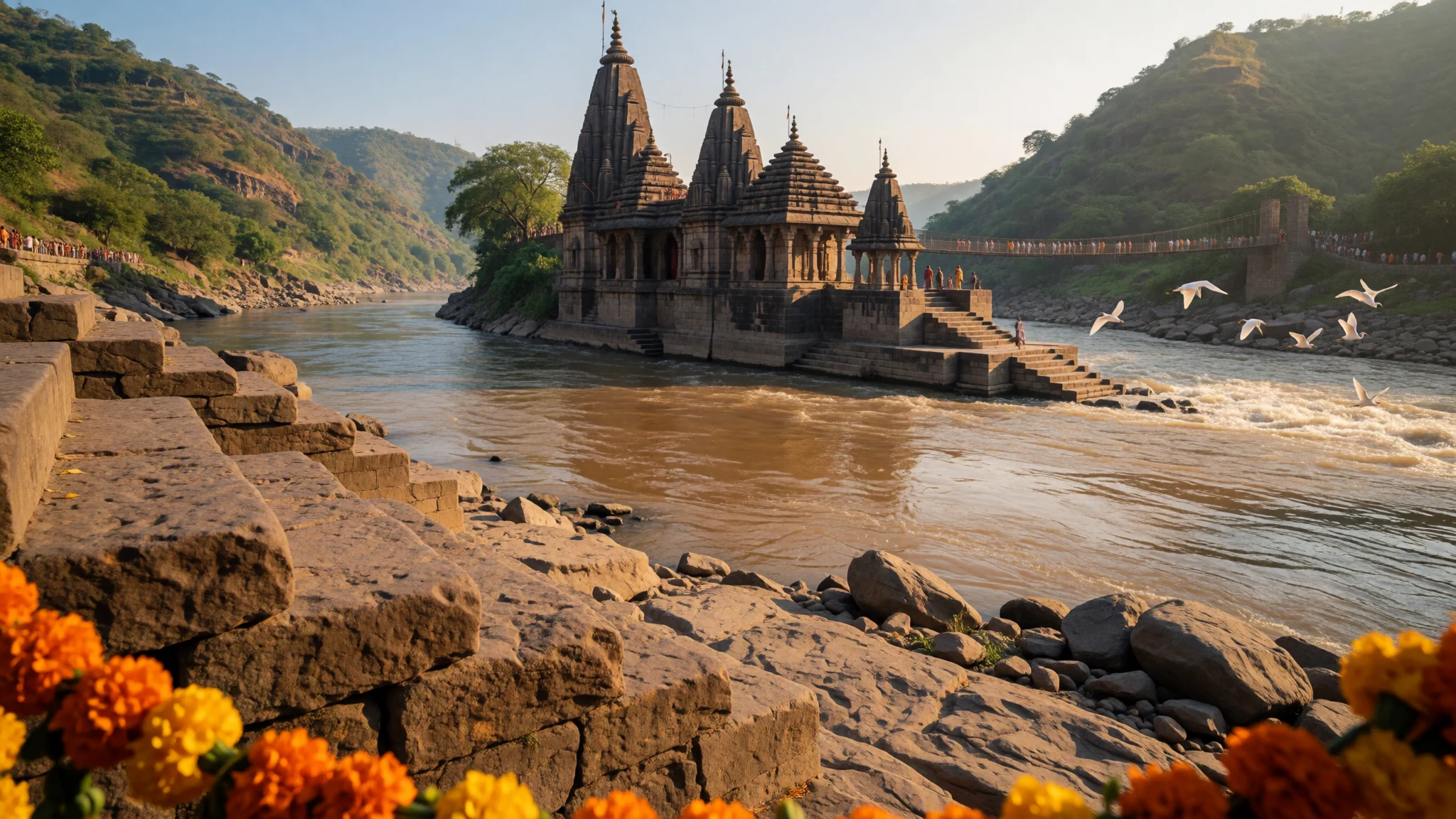
Visit Omkareshwar Temple to experience one of India's most revered island shrines to Shiva, shaped naturally like the sacred Om symbol.
The place
Omkareshwar Temple stands upon an island shaped remarkably like the sacred Devanagari Om symbol, formed by the winding paths of two rivers in Madhya Pradesh. This island, known as Mandhata or Shivpuri, sits in the waters of the Narmada River alongside its tributary, the Kaveri. Pilgrims approach the island by boat or across bridges, arriving in a landscape where temple bells chime continuously over the rushing current and stone steps descend to the water's edge. The complex holds two main shrines dedicated to Shiva. One sanctuary, Omkareshwar, sits on the island itself, while its counterpart, Mamleshwar, stands directly across the southern bank on the mainland. Together, they form a dual pilgrimage site that draws devotees seeking spiritual connection. The surrounding region features rocky riverbanks, dense vegetation, and a climate that ranges from warm dry periods to heavy monsoon rains. Visitors walk along stone ghats where morning rituals take place under the open sky. The atmosphere carries the scent of burning camphor, marigold garlands, and woodsmoke from small roadside stalls. Away from the main shrines, the island trails lead past smaller abandoned ruins, ancient carvings, and quiet viewpoints overlooking the wide river valley. The scale is intimate enough to explore on foot, though the summer months bring intense heat that demands slow movement and plenty of rest in the shade of temple colonnades.
Its story
Omkareshwar Temple carries a long narrative shaped by regional dynasties, conflicts, and dedicated restoration efforts across many centuries. Historical records point to construction originating under the Paramara kings of Malwa during the medieval era. Following their rule, administrative control passed to the Chauhan rulers who maintained the site through changing political landscapes. During the medieval period, the sanctuary suffered attacks and looting by external forces entering the region, yet the core shrines managed to survive total ruin. Throughout the era of Mughal administration, the sanctuary remained under local Chauhan oversight without major modern additions. A significant turning point arrived in the eighteenth century when the Holkar rulers initiated a comprehensive reconstruction project. The rebuilding efforts began under the direction of the first Holkar queen, Gautama Bai Holkar, and reached completion through the leadership of her daughter-in-law, Devi Ahilyabai Holkar, whose patronage revived many central Indian pilgrimage sites. Following the transfer of authority during the British colonial period, responsibility for the architectural heritage shifted after independence. Today, the Archaeological Survey of India oversees preservation work in cooperation with local district administration from Khandwa, ensuring that the ancient stone structures endure for future generations of travellers and devotees.
What to see
- Omkareshwar Shiva Temple — Mandhata Island
Omkareshwar Shiva Temple serves as the primary spiritual focus of the island and stands as one of the twelve revered Jyotirlinga shrines dedicated to Lord Shiva. Pilgrims queue patiently through carved stone corridors to catch a glimpse of the sacred symbol inside the inner sanctum while priests chant ancient prayers. - Mamleshwar Shiva Temple — Southern River Bank
Mamleshwar Shiva Temple occupies the southern mainland bank directly across the river from the island sanctuary, offering an equally ancient space for quiet worship. This complementary shrine features intricate stone carvings on its exterior walls and provides a calmer atmosphere away from the dense crowds of the main island complex. - Pataleshwar Shiva Temple — Mandhata Island
Pataleshwar Shiva Temple sits quietly right beside the main sanctuary on the island, remaining relatively untrammeled by heavy tourist groups. Visitors can inspect weathered stone sculptures and examine detailed architectural motifs carved directly into the ancient masonry without the rush of long pilgrimage lines. - Siddhanath Mandir — Mandhata Island
Siddhanath Mandir showcases exceptional medieval architecture with elaborate friezes depicting dancing figures, elephants, and mythical beasts around its elevated stone platform. Walking up to this lesser-visited vantage point rewards travellers with sweeping views across the surrounding river loops and the rugged hills of the district. - Narmada River Ghats — River Bank
Narmada River Ghats line the water's edge where pilgrims gather daily to perform ritual ablutions and launch floating oil lamps into the current at dusk. Sitting on these stone steps offers an unfiltered look at local life as boatmen call out for passengers and families offer morning prayers.
Culture
Omkareshwar Temple operates as a deeply traditional Hindu pilgrimage centre where daily life revolves around temple rituals, seasonal festivals, and ritual bathing in the Narmada River. Music from conch shells and bells echoes across the water from dawn until late evening, marking the rhythms of worship. Because of its sacred status throughout the region, the entire town observes a strictly vegetarian diet, and alcohol is entirely absent from local markets. Travellers interact with local shopkeepers, temple priests, and wandering ascetics who wear traditional saffron robes. While older generations maintain strict orthodox customs, younger residents balance traditional religious duties with modern life, commuting to nearby towns or managing small guesthouses and shops that cater to visitors. Traditional attire remains common, with men wearing dhotis or trousers paired with simple shirts, and women draped in colourful cotton or silk sarees. Visitors should dress modestly by covering shoulders and legs completely, and remove footwear before stepping onto temple premises or river ghats.
What to wear
Omkareshwar Temple reflects regional Madhya Pradesh dress traditions, where practical climate considerations meet religious modesty. Traditional attire for local women typically features cotton or lightweight silk sarees and salwar kameez in bright shades of red, yellow, and blue, often accented with simple silver jewellery. Men traditionally wear a white cotton dhoti or pyjama paired with a loose kurta, wrapping a cotton gamchha cloth around their shoulders to ward off the sun or dust. What people wear now has shifted toward casual everyday styles, with younger locals and urban travellers opting for trousers, jeans, and casual shirts, though traditional garments remain the default choice for entering the temple sanctums. Visitors should choose loose, breathable clothing made from natural fibres like cotton or linen to handle the regional heat. Both men and women must wear clothes that cover their shoulders and knees, avoiding shorts or tank tops entirely. Comfortable slip-on footwear is essential because you will need to remove your shoes frequently at temple entrances and carry them or leave them with designated attendants along the stone paths.
What to eat
- Omkar Prasad — Mandir Trust Canteen
Omkar Prasad is prepared fresh daily by the temple trust kitchens, offering simple sanctified vegetarian food served on large platters to pilgrims and visitors after morning prayers. - Sattvic Thali — Town Eating Houses
Sattvic Thali consists of lentils, seasonal vegetable curries, plain rice, and freshly baked flatbreads prepared without onion or garlic in accordance with local temple traditions. - Poha Jalebi — Central Market Stalls
Poha Jalebi pairs flattened rice seasoned with mustard seeds, turmeric, and green chillies with piping hot, syrup-soaked pretzel-shaped sweets for a classic regional breakfast combination. - Masala Chai — Riverbank Tea Stalls
Masala Chai is brewed slowly in large iron pots with fresh ginger, cardamom, and milk, offering a hot and revitalising drink served in small clay cups near the ghats.
Plan it
Best time. October through March offers pleasant weather with cooler days ideal for walking the island paths; summer months from April onward bring intense heat, while the monsoon brings heavy rain.
How long. 2
Getting there. Fly into Rani Ahilyabai Airport at Indore, then take a bus or hired taxi for the journey south to the town centre.
Budget. low
Tips
- Arrive at the main temple early in the morning before the daytime tour groups and long queues build up.
- Carry cash for small donations, boat fares, and simple eateries where card payments are not accepted.
- Drink bottled water and stay hydrated, especially when walking the stone ghats under the afternoon sun.
- Book clean guesthouse accommodation in advance if travelling during major Hindu festival periods.
Etiquette
- Remove shoes and leather items before entering any temple courtyard or approaching the inner shrines.
- Dress modestly with shoulders and legs covered at all times within the town and sanctuary grounds.
- Ask permission before photographing local residents or priests engaged in prayer.
Nearby
Sources
- Wikidata Q1093334 (CC0)
- Wikipedia (rev 1378686413) (CC BY-SA 4.0)
- Wikivoyage (rev 5306311) (CC BY-SA 4.0)