Nemea
Nemea, Greece
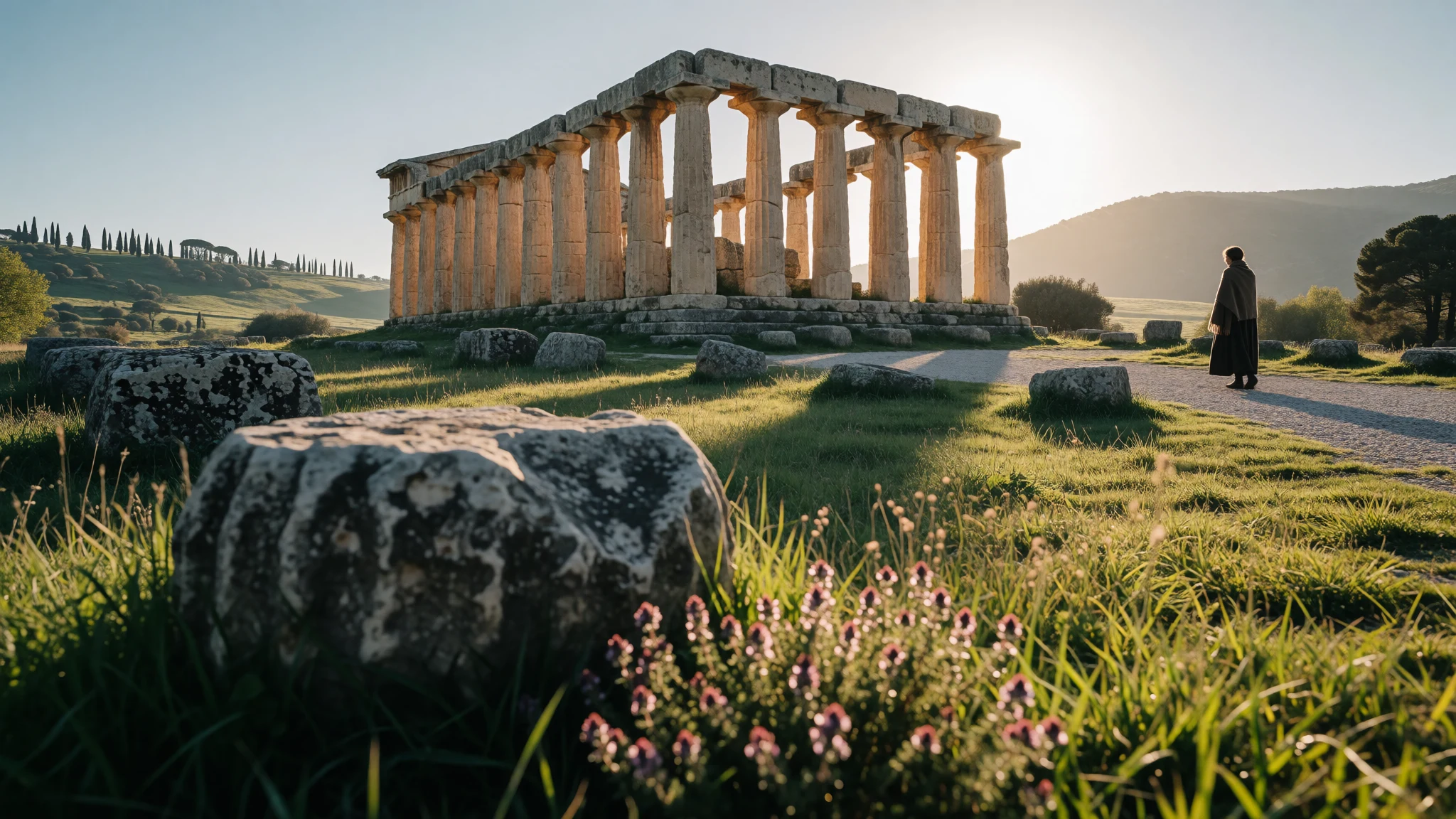
Nemea is a quiet Peloponnesian valley where athletes once raced for Zeus, and where a stone stadium and a ruined temple still stand among vineyards.
The place
Nemea lies in the northeastern Peloponnese, in the regional unit of Corinthia, on a valley floor about 286 m above sea level. The ancient sanctuary of Zeus occupies a patch of open ground between low hills, and today vineyards press close to its edges. Nothing about the setting is dramatic in the way of a cliff-top citadel. The appeal is the quiet: birdsong, cicadas in summer, wind in the grass between fallen stones.
Two settlements sit beside the site. The small village of Archaia Nemea, once known as Iraklion, lies immediately to the southwest. The newer town of Nemea spreads out to the west and holds the shops, bakeries, cafés and wine producers that serve the area. Most visitors base themselves in one of these two places, or visit as a day trip from Corinth or the Argolid.
The location was chosen for a reason. This ground sat on the borders of ancient Achaea, Arcadia, Argolis and Corinth, which made it neutral territory, a place where rival cities could meet without any one of them playing host. That is why a religious centre and an athletics ground grew here, recognised across the Greek world.
The site is compact and easy to walk. A modest museum, the temple of Zeus, the bathing and changing buildings, the old guest quarters and the stadium all lie within a short stroll of each other. Expect a visit of a couple of hours rather than a full day, with little shade and a lot of sky. Crowds are thin compared with Athens, Delphi or Olympia, and on a weekday outside summer the site can feel almost private.
Its story
Nemea was one of four Panhellenic sanctuaries whose games drew competitors and spectators from across the Greek-speaking world. The others were Delphi, Isthmia and Olympia. Together they formed a circuit, and winning at all of them carried enormous prestige. At Nemea the honour belonged to Zeus, and the sanctuary around his temple was the stage for the festival.
Local myth tied the place to Herakles, who was said to have fought and killed a monstrous lion in the district as one of his labours. The story gave the valley its identity long before the stadium was built, and it shows how religion, legend and sport were woven together here.
The poet Pindar left the best record of the festival's spirit. Eleven of his victory songs, collected in the fourth book of his Epinikia and dating from 476 BC, celebrate Nemean champions. They praise the winners, their families and their home cities, and they give a sense of how much a victory at this remote valley meant to a community far away.
The games brought rivals to neutral ground, and the sanctuary needed practical buildings for the crowds: a bathing complex, guest quarters, a changing room for athletes, and a stadium with a vaulted passage for entering the track. Over time the festival lost its place in the ancient calendar, the buildings fell into ruin, and the valley returned to farming. Modern excavation has since recovered the stadium and parts of the sanctuary, and the site has become a place to understand how ancient athletics worked on the ground, away from the grander monuments.
What to see
- The ancient stadium — East side of the sanctuary
Nemea's stadium is the main reason to come. The stone starting line is still in place, the running track is clearly visible, and low grassy banks stand where spectators gathered. Walking the track gives a feel for how simple an ancient race course could be. A vaulted entrance tunnel still carries old scratched marks.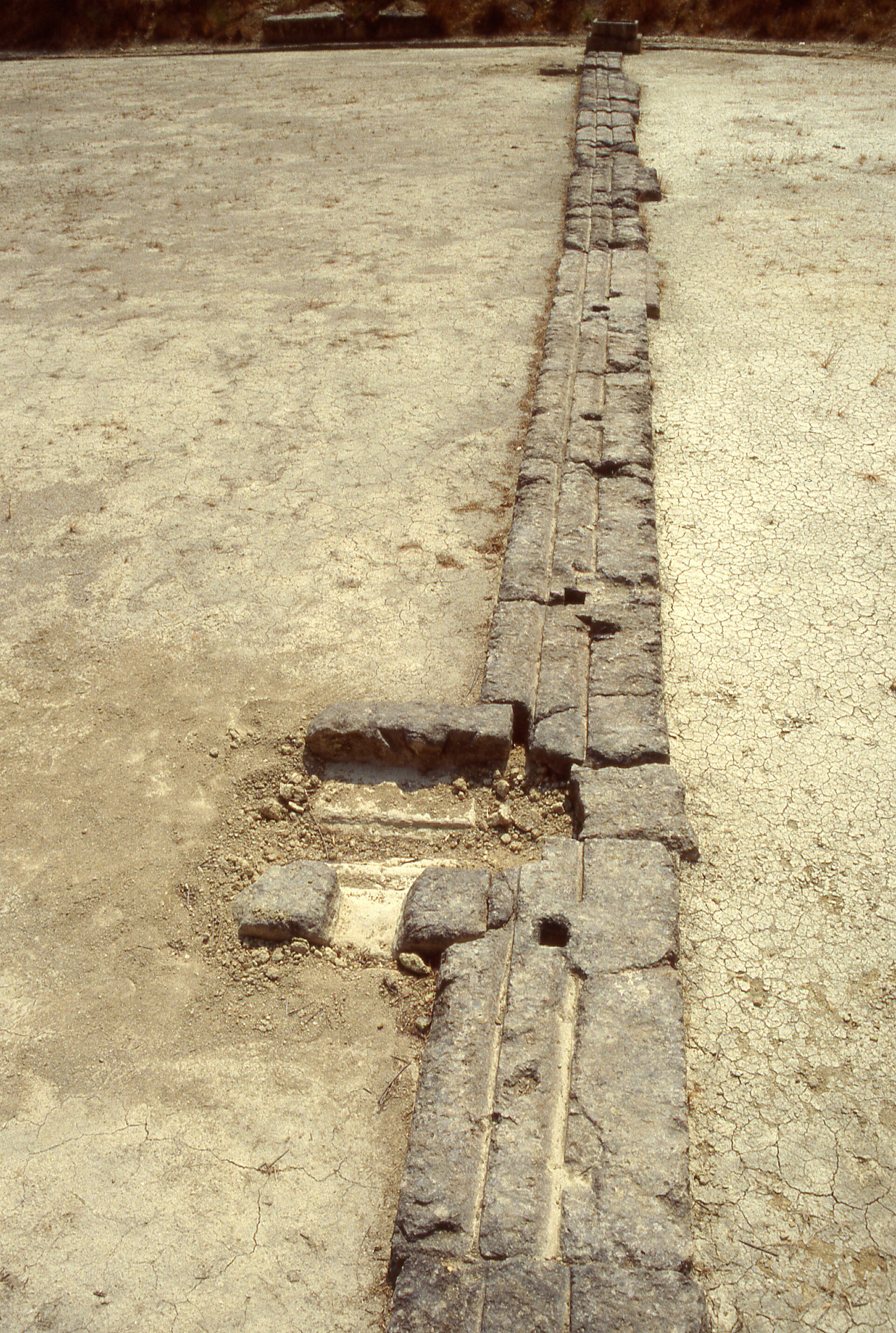
- Temple of Zeus — Centre of the sanctuary
The temple of Zeus at Nemea is a ruin, yet a handful of Doric columns rise above the grass and give the sanctuary a vertical anchor. The foundations show the plan clearly. It is best seen in low morning or late afternoon light, when the stone turns golden against the hills.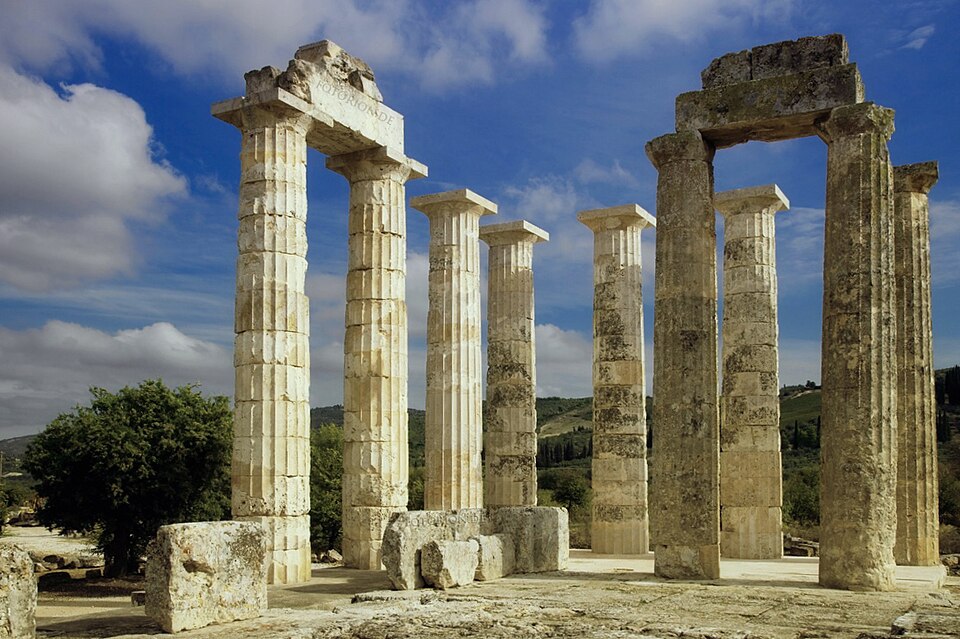
- The apodyteria (changing room) — Near the stadium approach
Nemea's apodyteria was the changing room where athletes undressed before competing. Its low stone walls, close to the stadium approach, are modest but evocative. They make the point that ancient sport was physical and practical, and that athletes prepared here much as sportspeople still do, only with oil and no kit.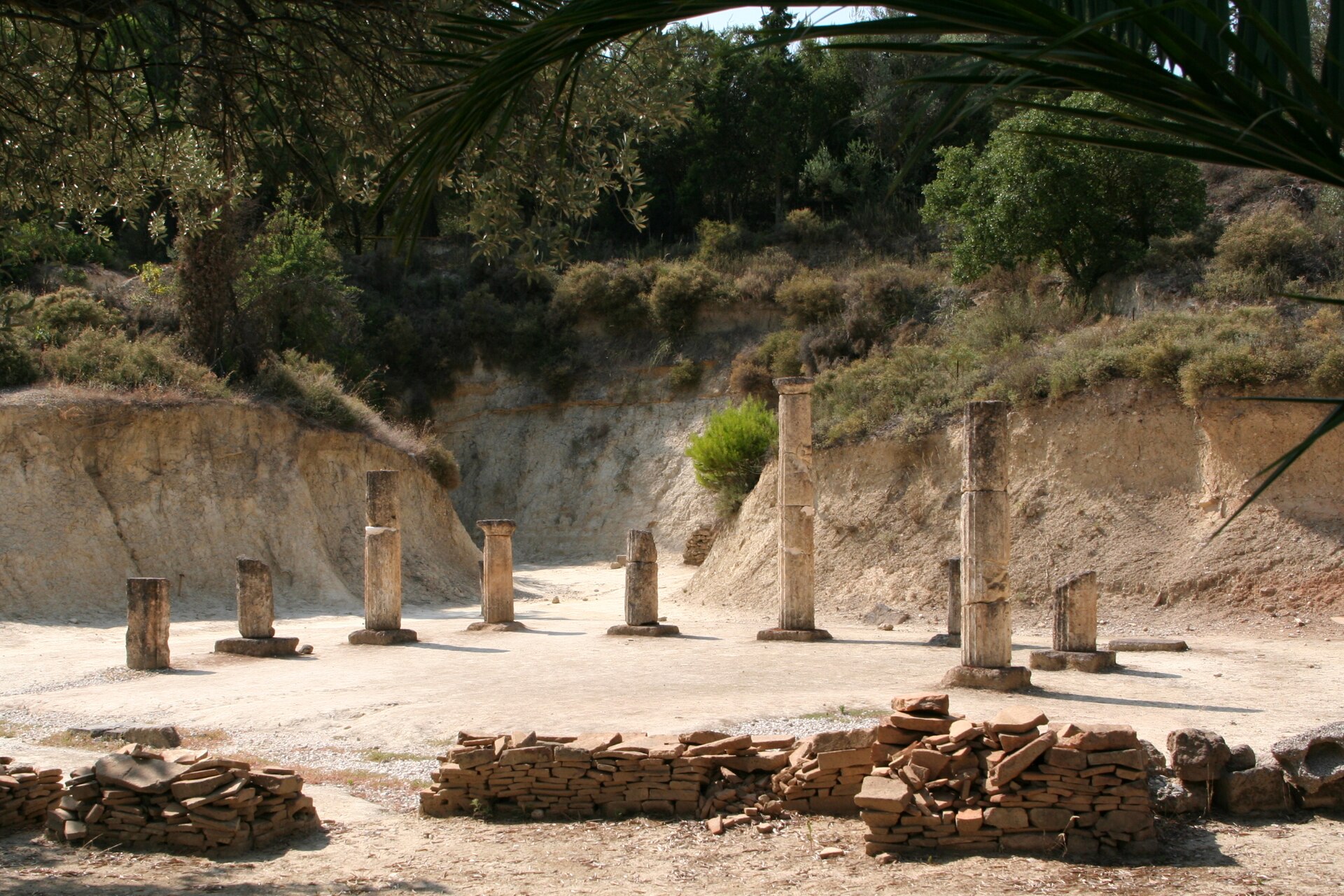
- The oikoi and sanctuary ruins — Eastern part of the sanctuary
East of the temple at Nemea lie the foundations of the oikoi, the buildings used for dining and hospitality during the festival. The stone is crumbly and easy to overlook, but it hints at the scale of the gathering. The surrounding bathhouse and guest quarters are worth a slow walk.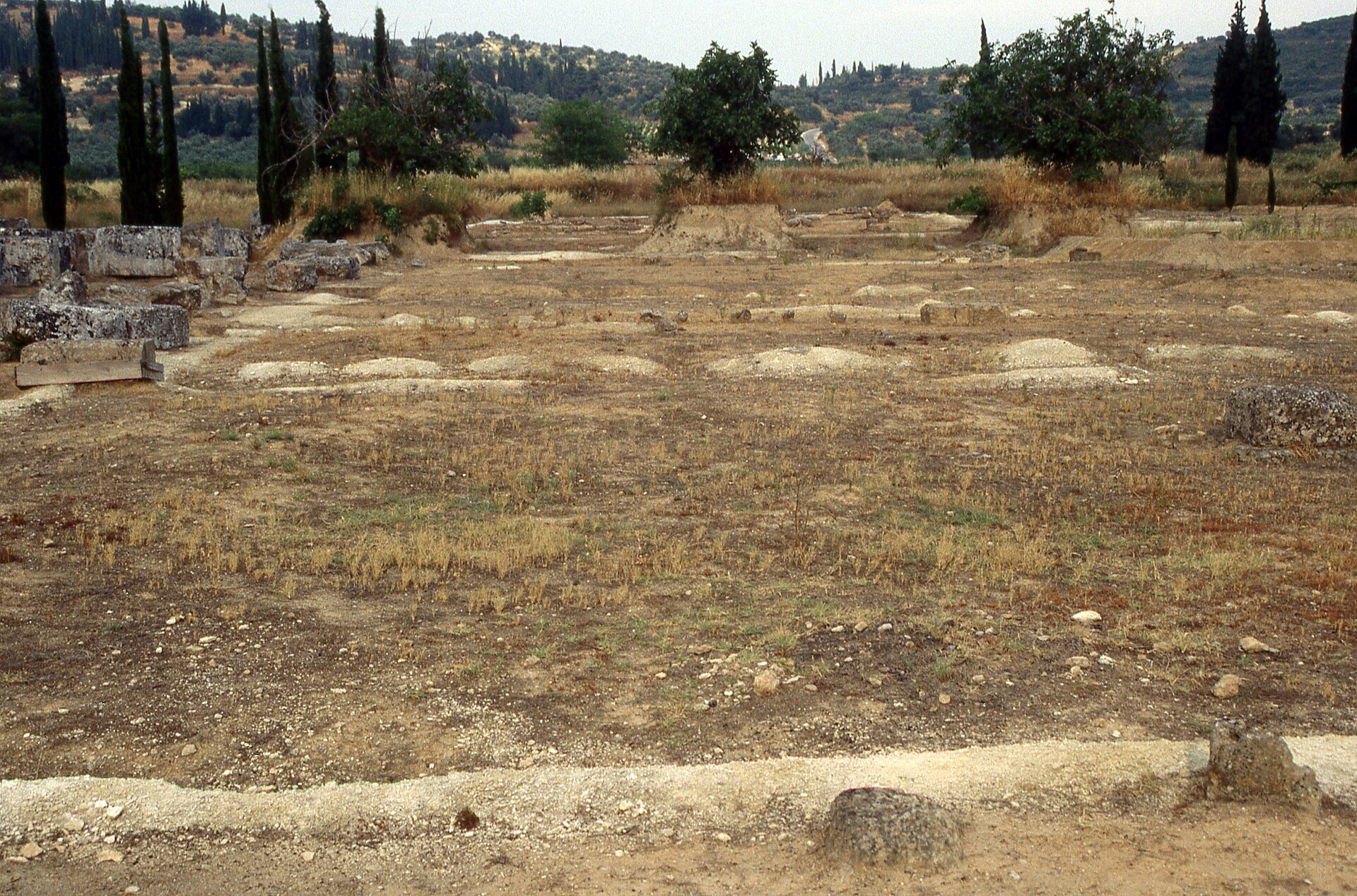
- The site museum — Beside the archaeological site
The small museum at Nemea sets finds from the sanctuary and stadium in context. It is worth visiting before walking the site, since the displays explain how the games were run and how the buildings fitted together. Opening times change, so check the official Greek ministry of culture listings before travelling.
Culture
Nemea carries its religious past lightly. There is no active shrine today, but the sanctuary was devoted to Zeus, and the site still reads as a place of ceremony as much as athletics. Greek visitors tend to treat ancient places with quiet respect and a certain pride, and the village life around the site is ordinary, agricultural and unhurried.
Wine matters here more than monuments to many locals. The Nemea area is known across Greece for red wine made from the Agiorgitiko grape, and many families have vines, cellars or relatives in the trade. Harvest time in early autumn shapes the rhythm of the town: tractors on the roads, grapes drying in yards, cellar doors open.
The Orthodox calendar also matters. Saints' days and Easter are celebrated with processions, long lunches and church bells, and small village chapels dot the valley. Hospitality is generous, and a polite greeting in Greek goes a long way. Kalimera in the morning and efharisto for thanks are enough.
The ancient games are remembered through occasional revival events, in which people run the old track in a spirit of homage. Whether or not one is taking part, the site rewards curiosity about how sport, religion and politics mixed in the ancient world.
When walking the stadium and temple, stay on the marked paths and do not climb on the ancient stones, columns or banks, since the site is fragile and staff will ask you to step down.
What to wear
Nemea has no single dress of its own, so traditional clothing here follows wider Peloponnesian and Greek patterns. For men, the best-known garment is the foustanella, a pleated kilt-like skirt of white cotton or linen, worn with embroidered waistcoats and tasselled shoes. It survives today in ceremonial uniform and at folk festivals. Women's regional costumes used wool, cotton and silk, often with embroidered aprons, long dresses and decorative headscarves, and are brought out for national days and village celebrations.
Day to day, people in Nemea dress as in most Greek towns. Jeans, cotton shirts, light dresses and sturdy shoes are normal, with practical work clothes for those in the vineyards or fields. Smart casual is the norm for church services, restaurants and evenings out. Locals do not dress up for visitors, and nobody will look twice at ordinary travel clothes.
For a visit, think about the sun first. The archaeological site is open and exposed, with little shade, so a wide-brimmed hat, sunglasses and sunscreen matter from late spring through early autumn. Wear light, breathable fabrics such as cotton or linen. The ground is uneven, with loose stones and long grass, so closed, grippy shoes or walking sandals are better than flip-flops. In spring and autumn bring a thin layer for cooler mornings and breezy afternoons.
If the plan includes a village church or monastery, cover shoulders and knees. A light scarf or sarong in a day bag makes this easy. For winery visits, comfortable casual clothes are fine.
What to eat
- Agiorgitiko red wine — Wineries and wine bars around the new town of Nemea
Nemea is the heartland of Agiorgitiko, a soft, fruity red grape grown in the surrounding valley. Wine producers in the new town and nearby villages offer tastings and cellar visits. Ask for it with grilled meat. Booking ahead is wise for smaller family cellars. - Grilled lamb or pork souvlaki — Souvlaki counters on the main streets of Nemea town
Skewers of charred meat in pita with onion, tomato and yoghurt sauce are the simplest meal after a morning on the site. Quality varies, so follow the smell of charcoal and the queue of locals to a busy grill. - Spanakopita and other bakery pies — Morning bakeries in Nemea and Archaia Nemea
Flaky pastry filled with spinach and cheese is the classic local snack, alongside cheese pies and herb pies. Bakeries sell it warm in the morning and it travels well in a bag for a picnic by the ruins. - Horta with olive oil and lemon — Family tavernas in the villages around the sanctuary
Boiled wild or farmed greens, dressed with olive oil and lemon, make a plain but satisfying side dish. In spring they are especially good. Pair them with bread, a slice of local cheese and a glass of the local red. - Spoon sweets and local fruit — Cafés and delicatessens in Nemea town
Preserved fruit, such as orange peel, cherries or figs in syrup, is served on a small spoon with a glass of water and often with coffee. It is a traditional welcome in Greek homes, and some cafés and shops offer it too.
Plan it
Best time. April–May for green hills, wildflowers and mild days, and October for warm light and the end of the grape harvest. July and August are hot and exposed on the open site, and midday heat can be fierce. Winter is quiet and cooler, with some rain, and a few smaller venues may be closed.
How long. 1–2
Getting there. Fly to Athens, then drive west and south via Corinth to Nemea, which is the easiest way to reach the site. Without a car, take a train or bus to Corinth and then a regional bus or taxi for the last leg. Check current timetables with the operators, because services change.
Budget. low
Tips
- Visit early in the morning or late in the afternoon in summer to avoid the heat on the open ground
- Carry water, a hat and sunscreen, since shade is limited
- Check the official Greek ministry of culture site for opening hours and ticket details before travelling
- Pair Nemea with Corinth or the Argolid to make the journey worthwhile, since the site itself needs only a couple of hours
- Carry some cash for small cafés and bakeries, as card acceptance can be patchy in villages
Etiquette
- Stay on marked paths and do not climb on ancient stones or columns
- Cover shoulders and knees if you visit a village church
- Greet shopkeepers and café staff with a simple kalimera or kalispera
Nearby
Sources
- Wikidata Q748108 (CC0)
- Wikipedia — Nemea (rev 1371456720) (CC BY-SA 4.0)
- Wikivoyage — Corinthia (rev 3707835) (CC BY-SA 4.0)
- Photo: The ancient stadion of Nemea — Michael F. Mehnert (CC BY-SA 2.0)
- Photo: The temple of Zeus — Wlodek Kaluza (CC BY 3.0)
- Photo: Starting line of stadium, from west — Mark Landon (CC BY 4.0)
- Photo: Stadium, west side of track — Mark Landon (CC BY 4.0)
- Photo: Apodyteria (Changing Room) — Ophelia2 (CC BY-SA 2.0)
- Photo: Oikoi in 1991, from the west — Mark Landon (CC BY 4.0)
- Photo: View from inside the Stadium of Nemea — George E. Koronaios (CC0 1.0)


