Munnar
Munnar, India
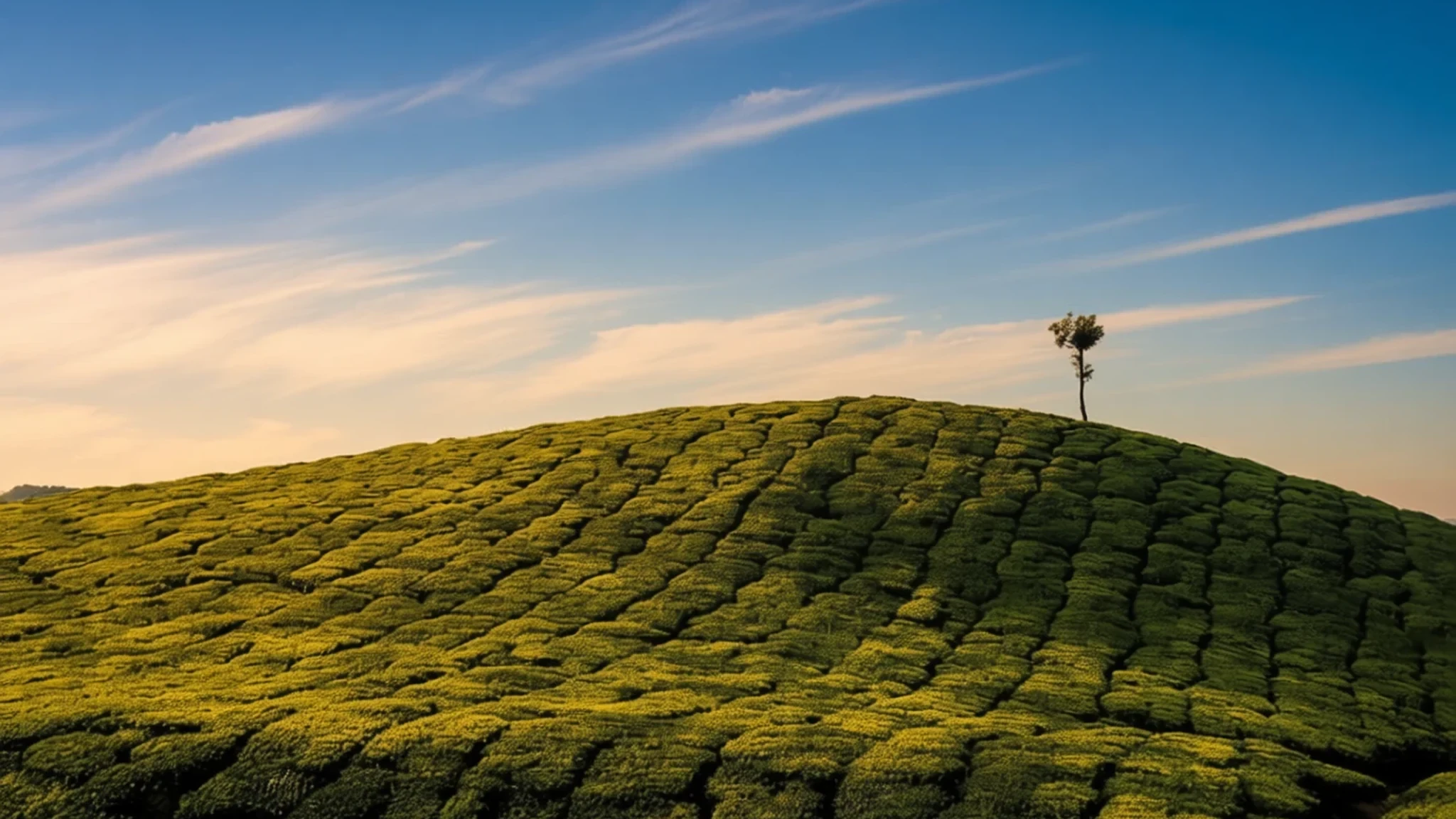
Munnar offers mist-cooled mountain air, sweeping carpets of green tea estates, and dramatic valley views across the Western Ghats.
The place
Munnar sits high within the Western Ghats mountain range in the southwestern Indian state of Kerala, set entirely within the Idukki district. This historic plantation settlement functions as a hill station defined by its steep terrain and rolling agricultural green slopes. The geography of the surrounding area features significant vertical relief, climbing from lower valley floors up to much loftier peaks. Three distinct waterways—the Madupetti, Nallathanni, and Periavaru rivers—flow through this high-altitude settlement before joining further downstream. Its local name is derived from this river convergence, reflecting the three streams that shape the valley floor.
The municipal layout divides broadly into two distinct zones. The core area commonly referred to as Munnar contains the primary transport links, including the bus station, alongside the majority of local guesthouses and places to stay. A short distance away lies Old Munnar, which houses the official visitor information office and quieter administrative quarters. Across the broader mountainous terrain, expansive estates blanket the hillsides with manicured rows of green leaves, producing notable regional brands such as Kannan Devan tea. The climate remains cool year-round due to the altitude, attracting travellers seeking relief from the heavy warmth of the coastal plains below. Patches of native montane forest and grassland persist alongside the cultivated estates, providing isolated pockets of habitat for endemic wildlife species unique to these southern heights.
Its story
For thousands of years, the high-altitude forests and grasslands of the Munnar region sustained indigenous hunter-gatherer communities, notably the Malayarayan and Muthuvan peoples. Centuries later, workers of Tamil and Malayali heritage settled the valleys to labour on the expanding agricultural estates. Early European exploration of these high ranges remains tied to military and administrative surveys. Benjamin Swayne Ward conducted the initial topographic survey of the terrain during the early nineteenth century, establishing a camp at the meeting point of the local rivers. Decades later, senior colonial officials explored the hill country to evaluate its potential for health sanatoria and revenue-generating agriculture without repeating the severe environmental degradation seen in other colonies where coffee had cleared entire native rainforests.
Agricultural viability changed dramatically when a British planter identified the region's suitability for cash crops. Munro and his associates secured rights to the Cardamom Hills from the local ruler, beginning widespread forest clearance around Devikulam. Throughout the 1880s, numerous European planters arrived to establish the vast tea estates that define the landscape today. Forests were systematically cleared to plant tea bushes, transforming the ecology of the upper hills. Labourers recruited from neighbouring lowland districts built the roads, factories, and township infrastructure that turned a remote mountain wilderness into an organised industrial plantation hub.
What to see
- Mattupetty Dam — Mattupetty area
Mattupetty Dam creates a wide reservoir tucked between tree-lined hills, serving as a popular recreational spot in Munnar. Visitors can rent speedboats to cross the water, watch for passing wildlife along the forested banks, or enjoy a relaxed afternoon surrounded by cool mountain air.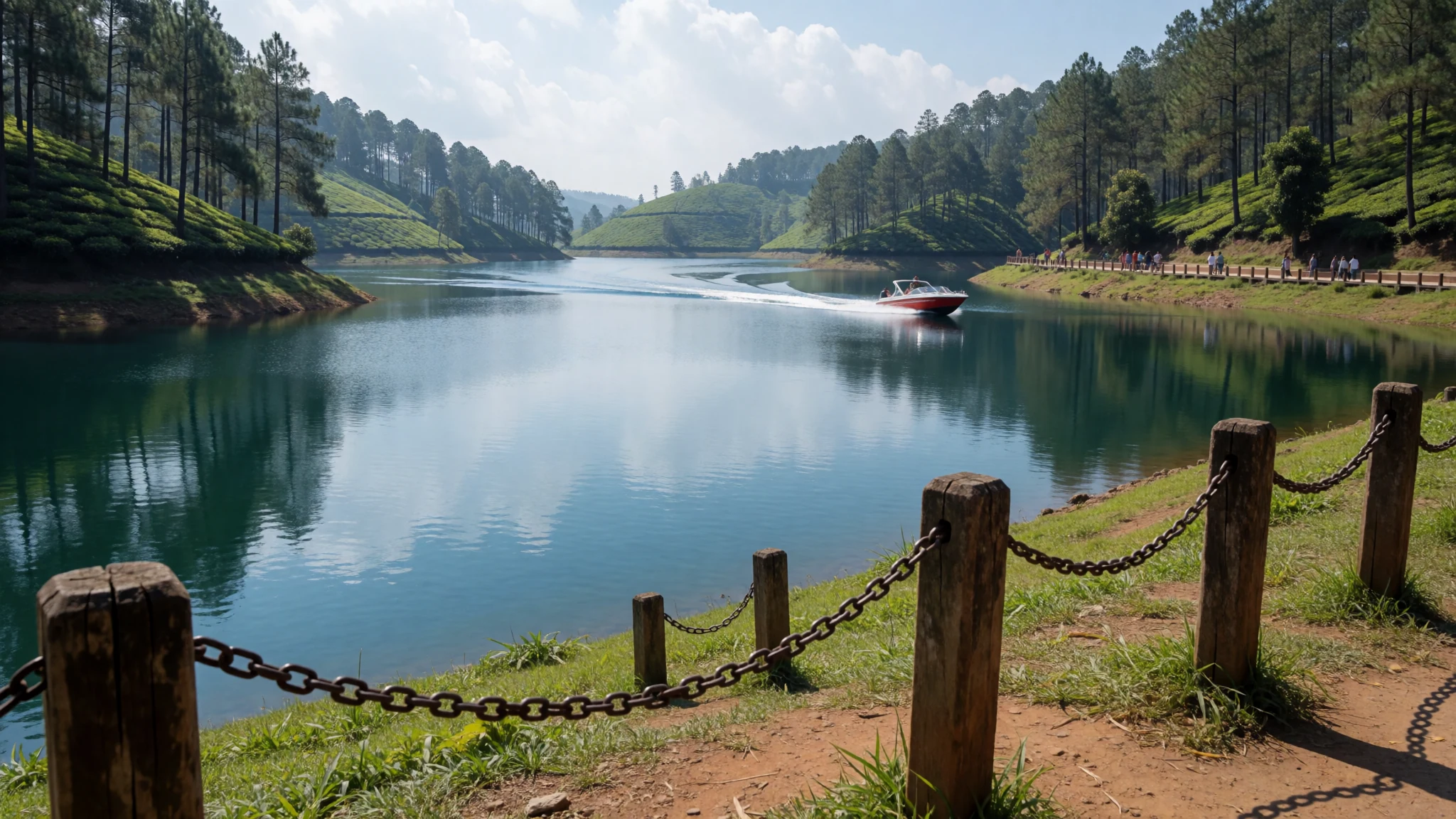
- Kundala Lake — Kundala valley
Kundala Lake occupies a picturesque hollow surrounded by dense jungles and rolling slopes in the upper hills of Munnar. Travellers frequently rent pedal boats here to explore the quiet shoreline, while the surrounding valley occasionally features blooms of rare regional flora during their specific seasonal cycles.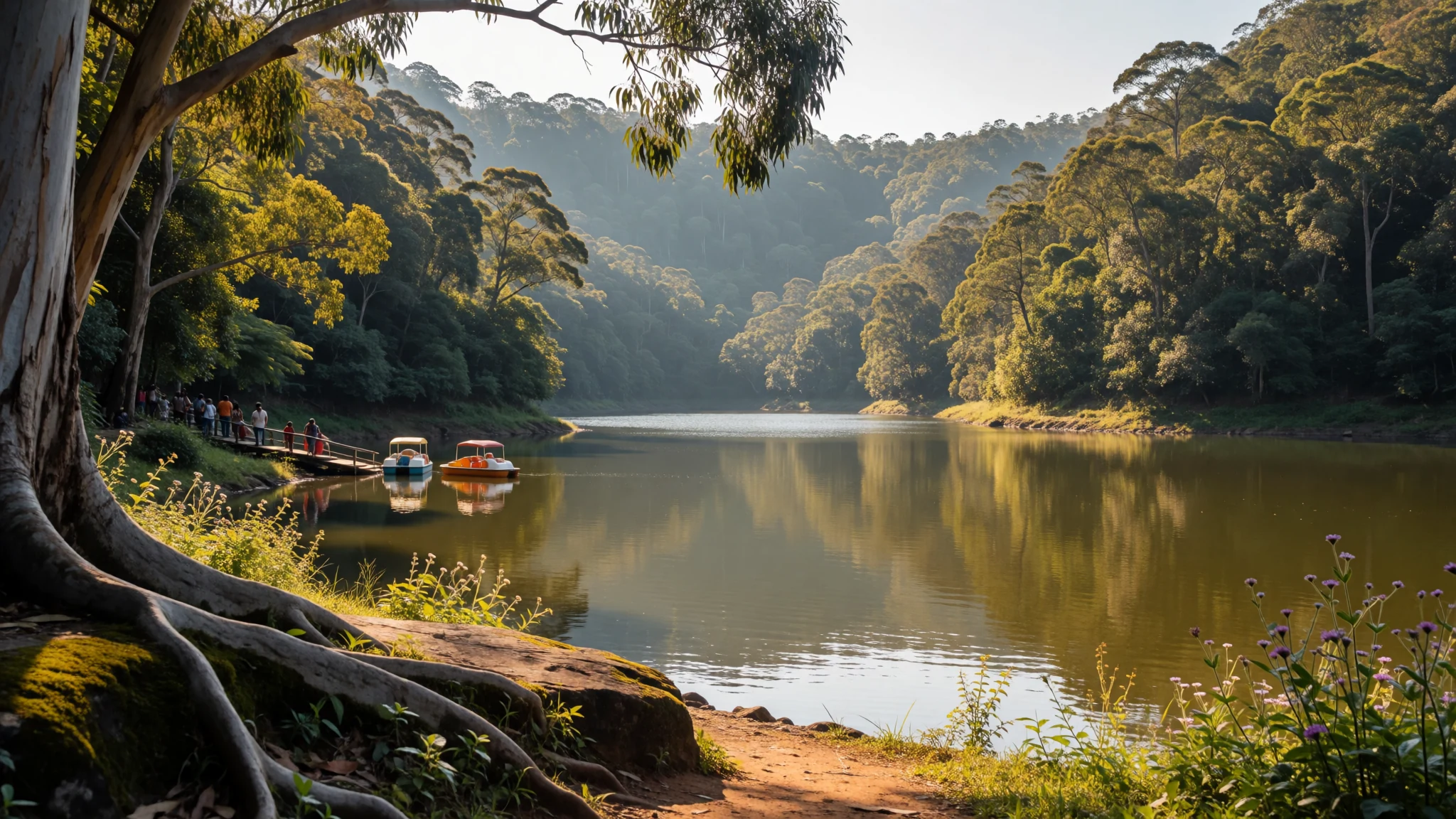
- Pothamedu View Point — Pothamedu village
Pothamedu View Point sits on a prominent ridge overlooking sweeping valleys, deep gorges, and terraced plantations near Munnar. On clear days, the vantage point reveals wide vistas of neighbouring hills covered in dense green tea bushes, coffee shrubs, and cardamom plants stretching toward the horizon.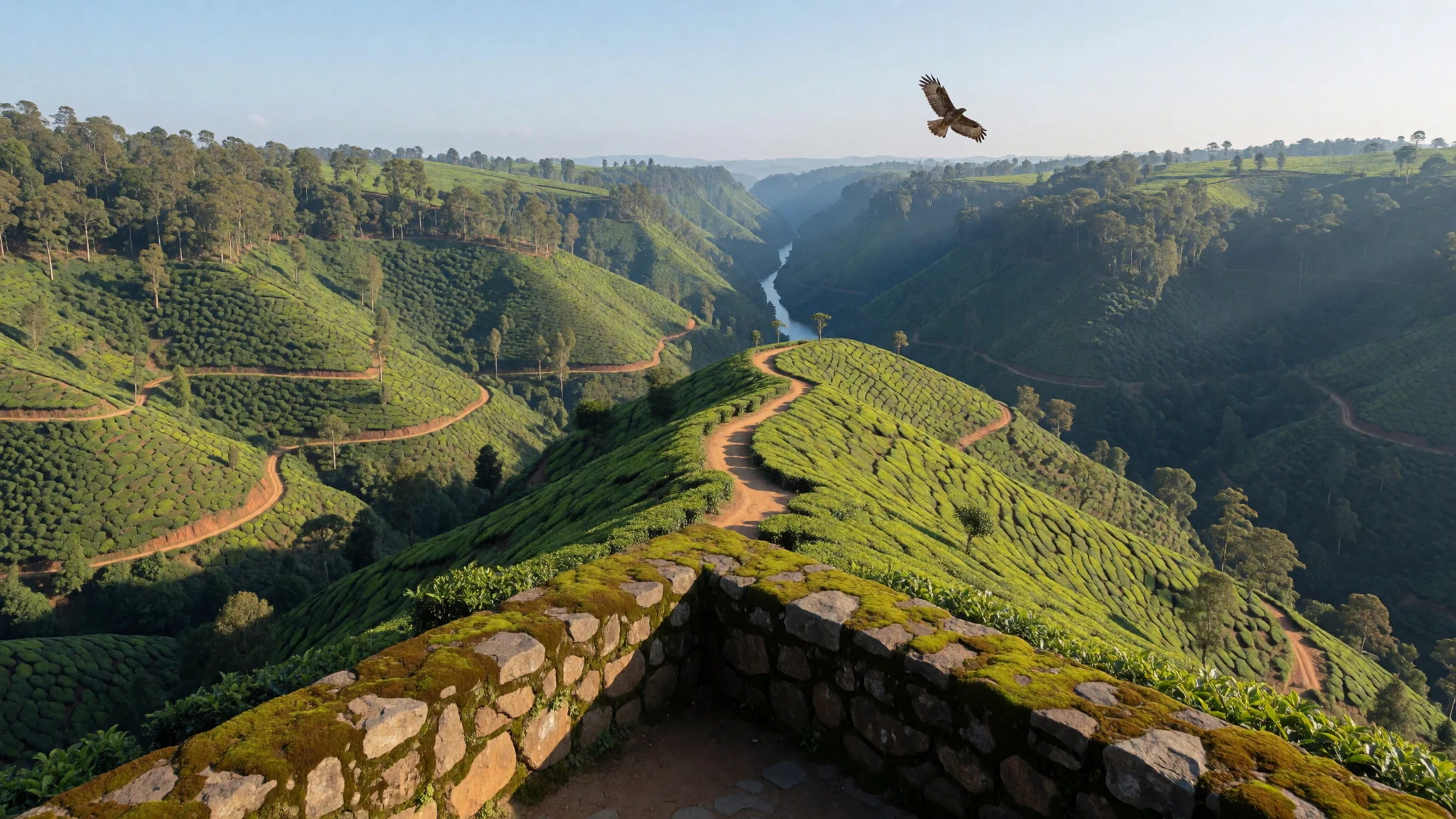
- Atukkad Waterfalls — Atukkad valley
Atukkad Waterfalls cascades down steep rock faces amidst dense jungle foliage and rugged hills just outside central Munnar. The rushing water creates a dramatic natural feature between narrow valley walls, offering a scenic spot to observe the untamed side of the Western Ghats mountain range.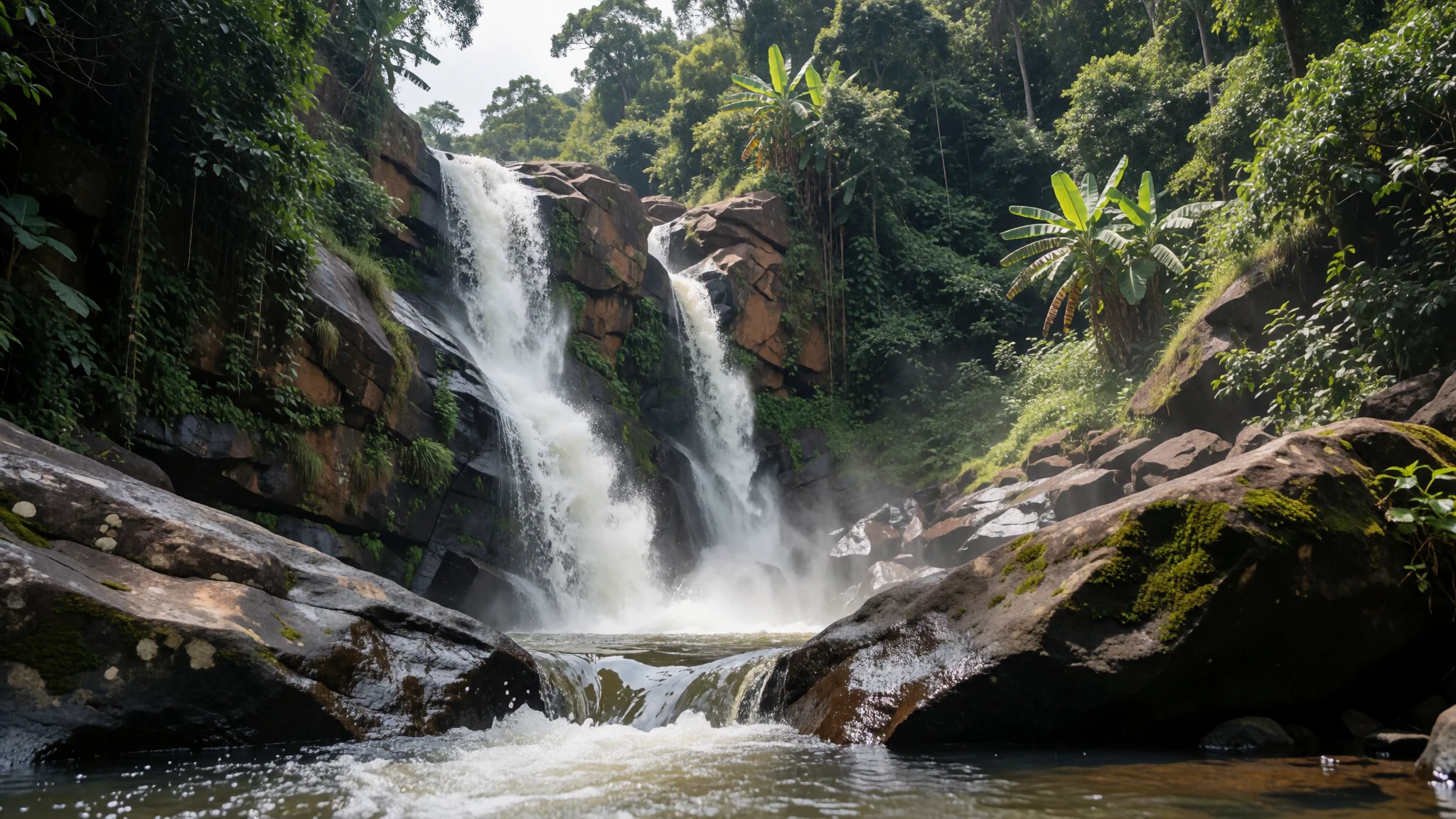
- Floriculture Centre — Mattupetty road
The Floriculture Centre in Munnar is managed by the state forestry corporation and maintains carefully tended gardens filled with colourful blossoms. Visitors wander through terraces showcasing a diverse collection of flowering plants, ornamental shrubs, and aromatic herbs set against a backdrop of distant tea estates.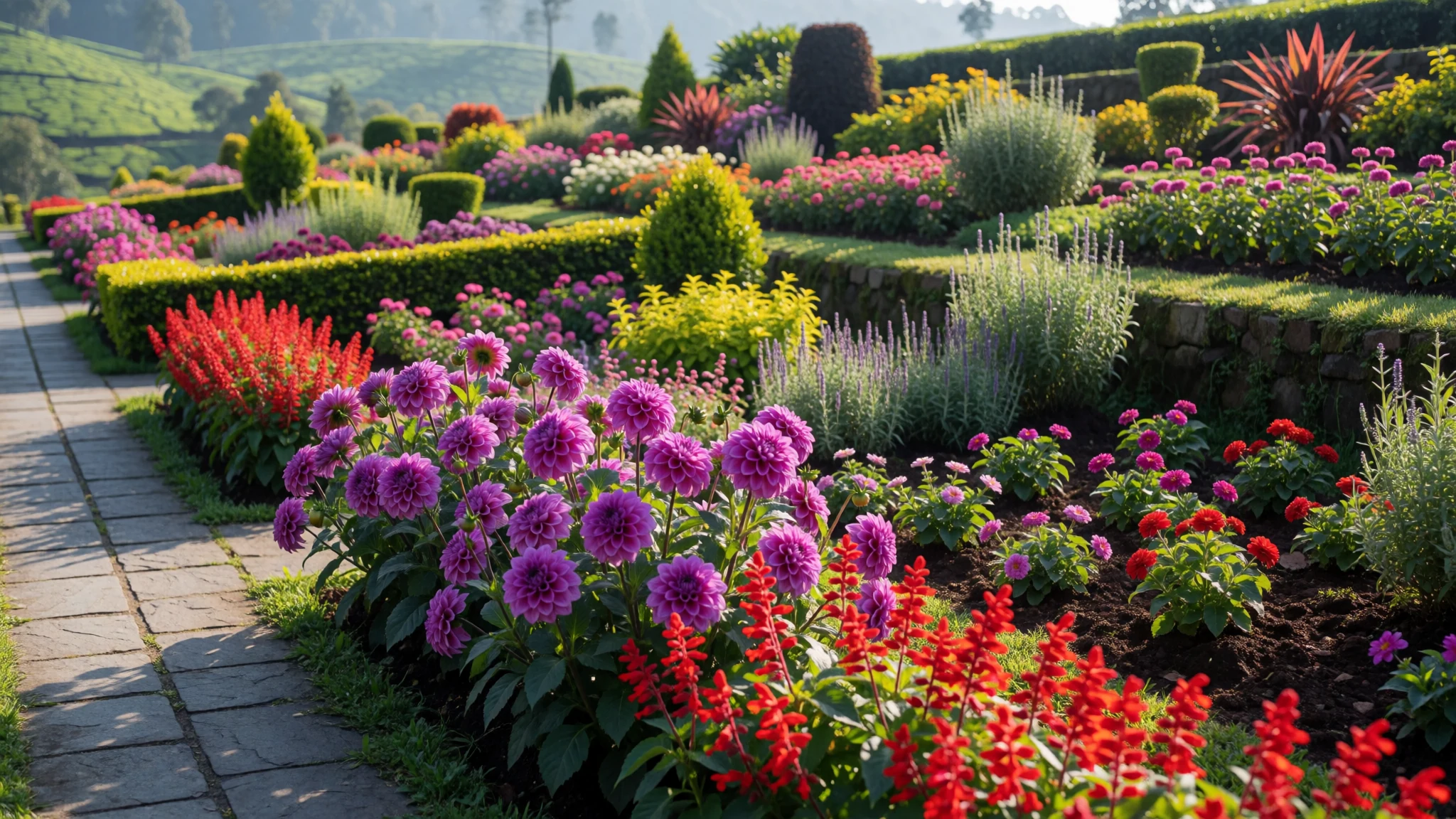
- Chithirapuram — Chithirapuram village
Chithirapuram preserves a distinct old-world character in Munnar with its collection of historic colonial-era bungalows, quiet cottages, and old sports courts. Surrounded by sprawling green tea plantations, this peaceful settlement offers a glimpse into the architectural legacy left behind by early British planters.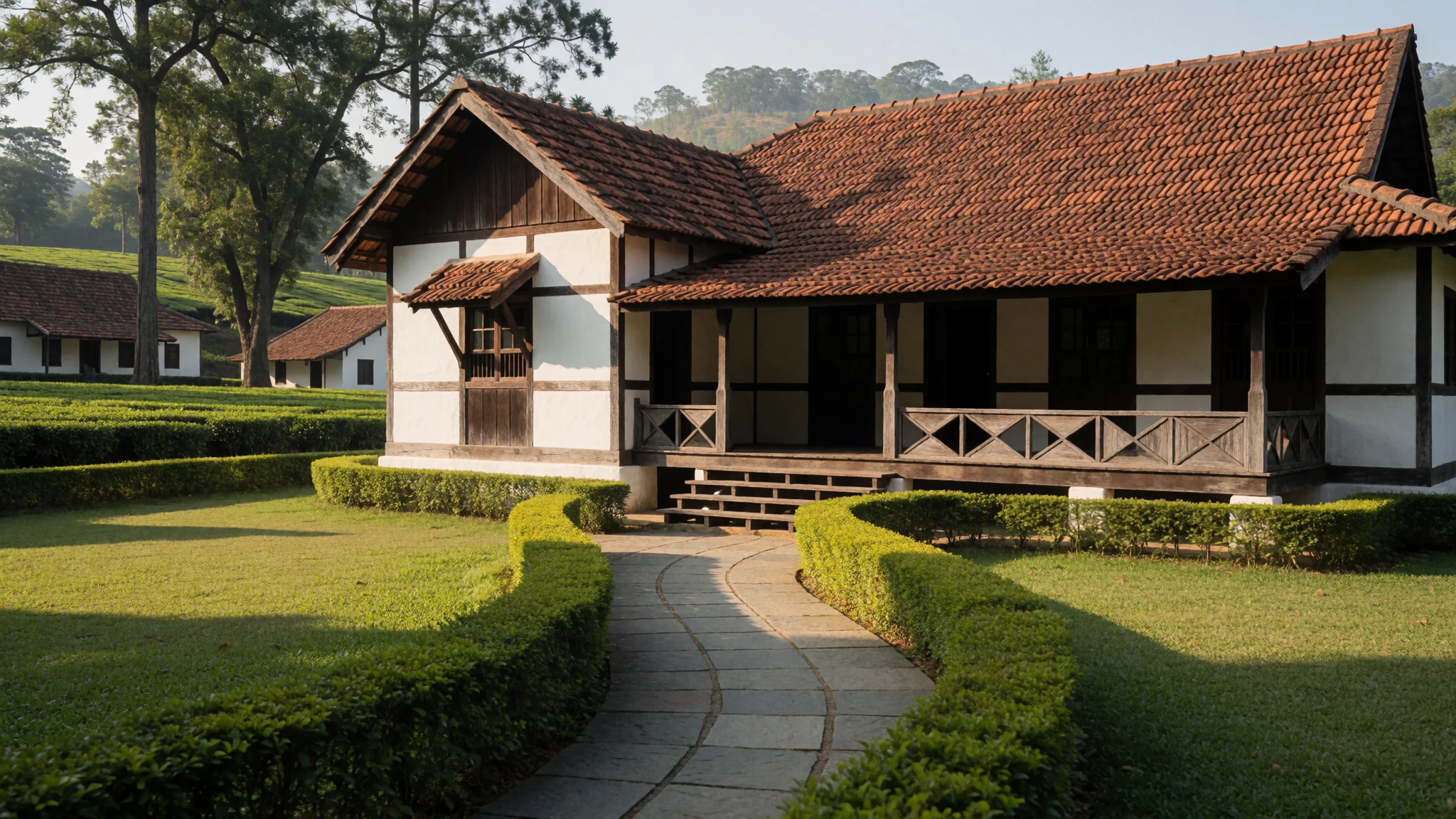
Culture
Munnar reflects a distinct blend of Kerala highland traditions, plantation heritage, and multi-ethnic community influences. The local population includes descendants of plantation workers from Tamil Nadu alongside native Malayali residents, creating a bilingual culture where both Malayalam and Tamil are widely spoken. Traditional performing arts remain an integral part of the regional identity, particularly classical dance-drama featuring elaborate facial makeup and expressive gestures, alongside ancient martial arts demonstrations hosted in cultural venues across the town. Traditional festivals such as Onam are celebrated with community feasts and floral decorations across the estates. Visitors exploring Munnar should remove footwear before entering any local temple or sacred shrine out of respect for local customs.
What to wear
Munnar reflects the practical dress norms of the Indian hill country, shaped by both traditional South Indian attire and cooler mountain temperatures. For traditional events and daily wear among older generations, women in Munnar commonly wear handloom cotton or silk sarees, while younger residents often choose comfortable salwar kameez sets. Men typically wear shirts and trousers or traditional dhotis for ceremonial occasions. In daily contemporary life, modern casual clothing such as jeans, shirts, and lightweight jackets is worn widely across the town.
Because Munnar experiences cool mountain temperatures due to its high altitude, visitors need a different wardrobe than the warm coastal plains of Kerala. Travellers should pack warm layers, including woolen sweaters, fleeces, and a windproof jacket for chilly mornings, evenings, and overcast days. Comfortable walking shoes or sturdy trainers are essential for exploring the uneven terrain of the tea estates and viewing points. When visiting religious sites or rural villages around Munnar, travellers should dress modestly by keeping shoulders and knees covered.
What to eat
- Kerala Fish Curry — Local specialty restaurants throughout Munnar
Kerala Fish Curry features fresh river or coastal fish simmered in a sharp, aromatic gravy flavoured with kudampuli (malabar tamarind), coconut milk, and spices. It is a regional staple served throughout Munnar alongside steamed rice or tapioca.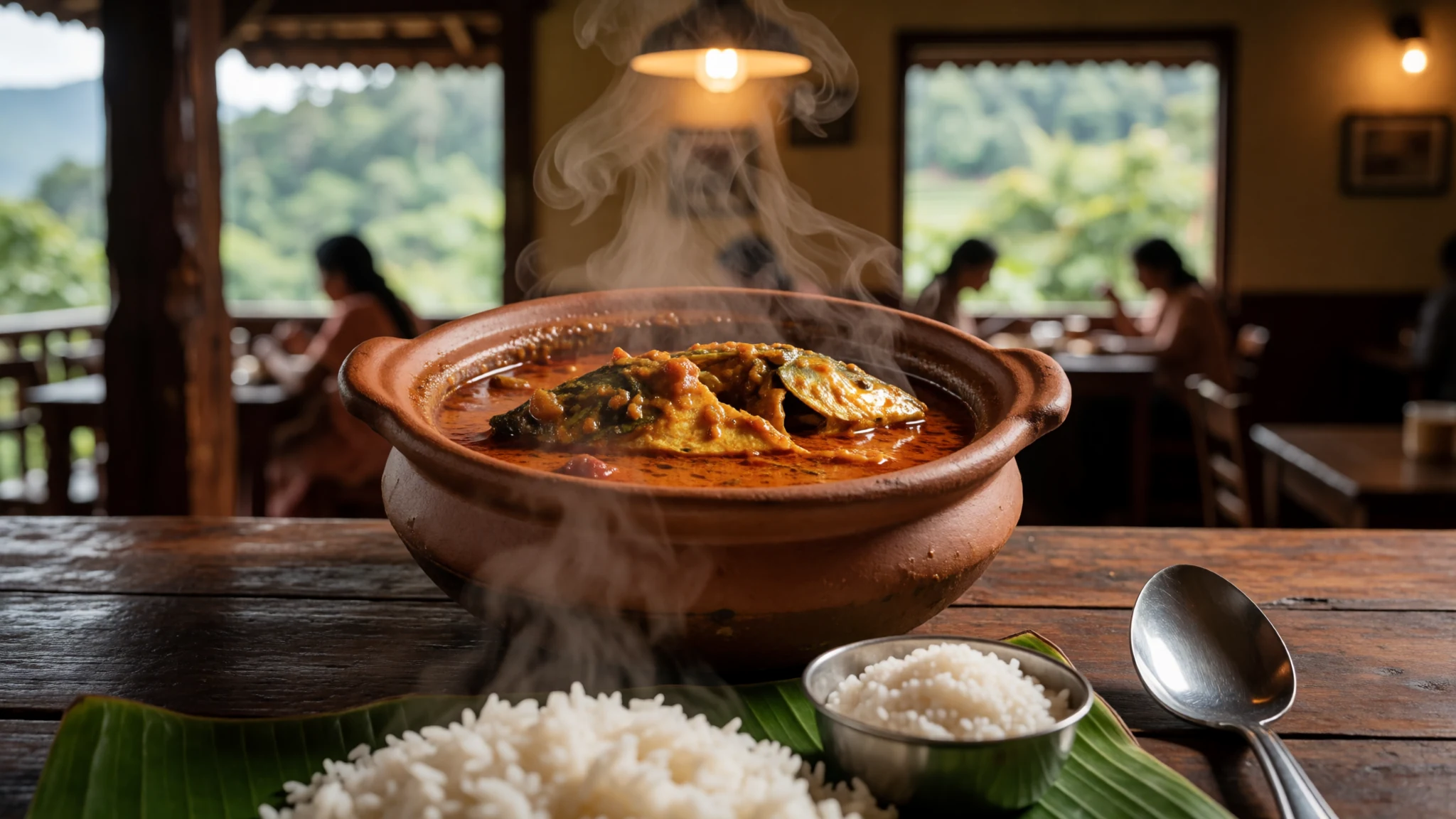
- Gujarati Thali — Gujarati and Marwari eateries in central Munnar
Gujarati Thali offers a balanced vegetarian meal consisting of assorted lentil dal, vegetable preparations, rotis, rice, and sweets served on a large metal platter. Several long-standing eateries in Munnar serve unlimited portions at modest prices.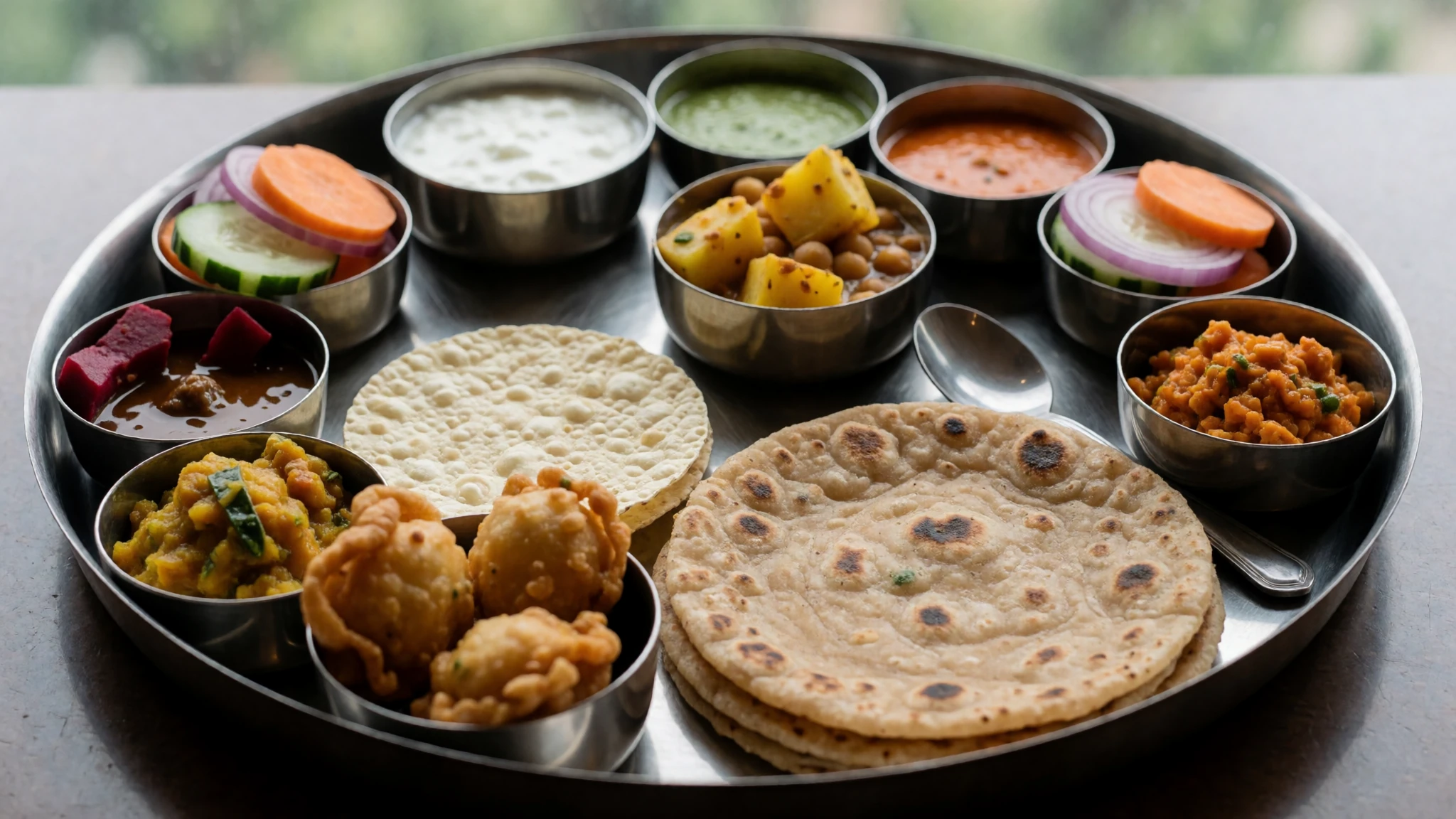
- Chilly Bhaji with Hot Tea — Tea stalls and roadside canteens across Munnar
Chilly Bhaji consists of green chillies dipped in spiced gram flour batter and deep-fried until crisp, making it a popular street snack. Paired with hot, strong tea brewed from local estates, it provides ideal comfort food during cold mountain weather in Munnar. - North Indian Vegetarian Meals — Specialist vegetarian restaurants in the town centre
North Indian Vegetarian Meals provide hearty, meat-free dishes ranging from Punjabi paneer curries to fresh tandoori rotis and dal preparations. Multiple dedicated vegetarian restaurants in Munnar serve these wholesome dishes to travellers seeking familiar flavours. - Organic Yogic Cuisine — Dedicated wellness retreats and eco-resorts in Munnar
Organic Yogic Cuisine focuses on healthy, 100% pure vegetarian dishes prepared with locally grown vegetables, whole grains, and traditional Ayurvedic herbs. This light, wholesome food is served in retreat dining rooms designed for wellness-focused travellers visiting Munnar.
Plan it
Best time. December to February offers the most pleasant weather for exploring Munnar, with the driest skies and mild daytime temperatures; March and April turn hot before the rains arrive, and the monsoon from May to October brings heavy seasonal rainfall.
How long. 2–3
Getting there. Cochin International Airport is approximately 125 km away, or Aluva railway station is 110 km away; continue the journey to Munnar by hiring a private taxi or boarding a local KSRTC bus for the four-hour uphill mountain drive.
Budget. mid
Tips
- Carry a torch or flashlight since hill stations get dark quickly after sunset
- Book estate tours and wildlife park permits well in advance during peak holiday seasons
- Keep cash handy as smaller shops and tea stalls in Munnar may not accept cards
- Pack warm clothing layers as temperatures drop significantly after sunset in the high ranges
Etiquette
- Remove your shoes before entering temples, shrines, or private homes
- Ask permission before photographing local plantation workers or indigenous residents
Nearby
Sources
- Wikidata Q1025124 (CC0)
- Wikipedia (CC-BY-SA 4.0)
- Wikivoyage (CC-BY-SA 4.0)
- Photo 01-munnar-overview.jpg (CC BY-SA 4.0)
- Photo 02-munnar-tea-plantations-img-20250321-093255.jpg (CC BY-SA 4.0)
- Photo 03-munnar.jpg (CC BY 3.0)
- Photo 04-varayadu.jpg (Public domain)


