Kerala backwaters
Kerala backwaters, India
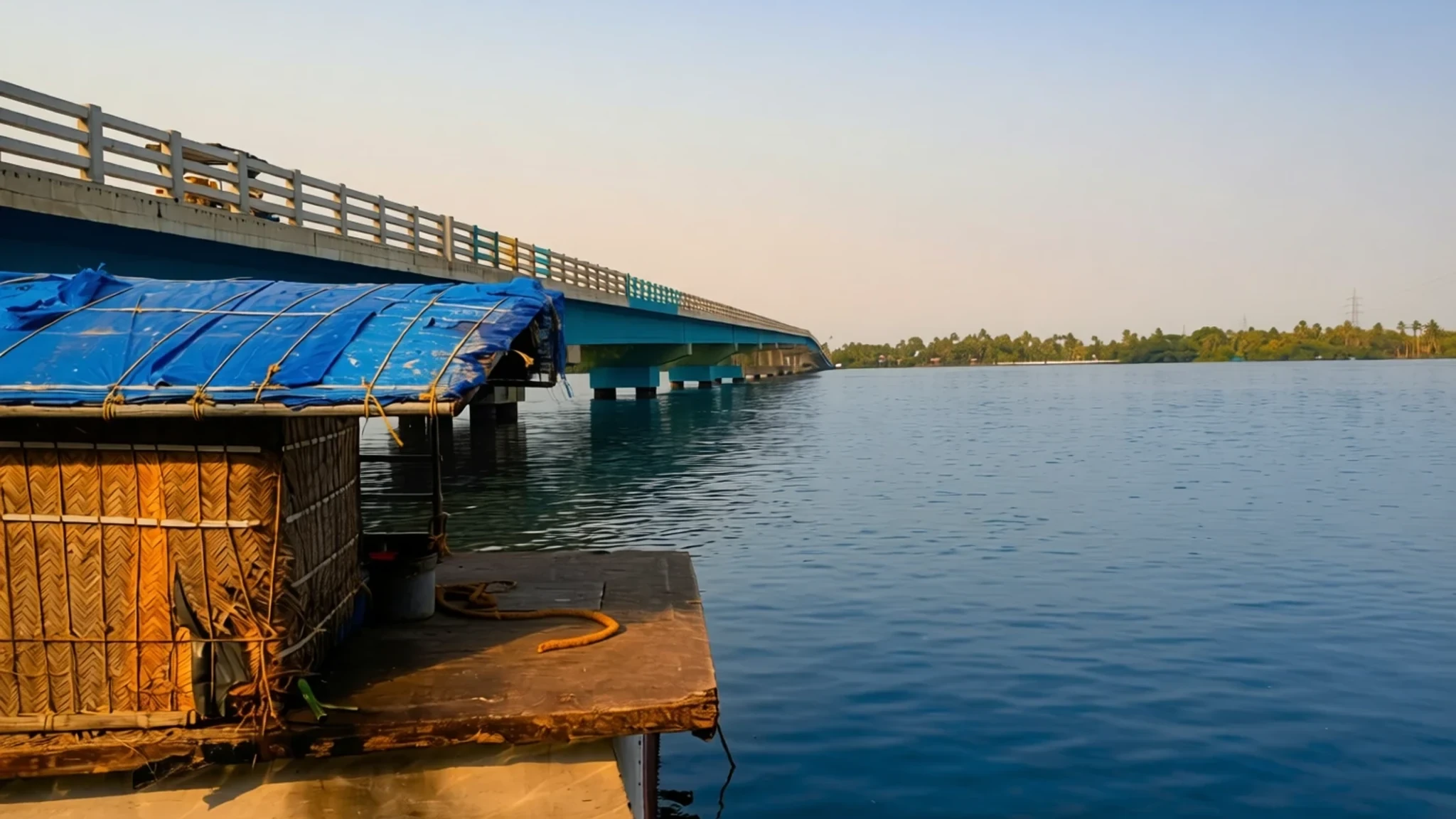
Glide through a labyrinth of palm-fringed lagoons and canals aboard a converted wooden cargo vessel where daily life unfolds entirely upon the water.
The place
The Kerala backwaters form an intricate, brackish web of lagoons, canals, and lakes running parallel to India's Malabar Coast. Fed by numerous rivers descending from the Western Ghats range, this aquatic network spans hundreds of kilometres across the coastal terrain. Low barrier islands separate the inland channels from the open Arabian Sea, creating a unique coastal ecosystem where freshwater mixes with tidal marine currents. A barrage built near Thanneermukkom regulates salinity, preserving freshwater supplies for widespread irrigation across the region.
The scenery is defined by dense groves of palm trees, pandanus shrubs, and emerald bushes bordering the glassy waterways. Beneath the surface and along the reedy banks, the ecosystem sustains diverse aquatic life, including crabs, mudskippers, otters, and turtles, alongside water birds such as kingfishers, darters, and cormorants. Towns and small settlements anchor the edges of these waterways, serving as departure points for travellers exploring the aquatic interior. While hills and sandy shores draw visitors elsewhere in the country, this watery expanse offers an entirely distinct geography shaped by silt, tides, and tropical monsoons.
Its story
For generations, the backwaters served as the primary highway system for the region's commerce and daily travel. Before modern roads and trucks transformed local transport, heavy goods, spices, rice, and coir were moved almost exclusively by water. The workhorses of this aquatic economy were traditional wooden vessels known as kettuvalloms, or roofed boats. Carpenters built these long craft using seasoned wooden planks lashed tightly together with sturdy coconut fibre ropes, sealing the hulls from the outside with protective coats of cashew nut oil.
Over time, as road networks expanded and cargo haulage shifted inland, these utilitarian carriers faced obsolescence. Enterprising boat owners reimagined the traditional hulls, converting the old cargo carriers into floating accommodation for travellers. Today's houseboats retain the classic silhouette and natural building materials—utilising bamboo, coir, palm leaves, and timber—while incorporating living quarters, kitchens, and observation decks. Despite this modern tourism transition, the essential rhythm of the backwaters remains unchanged. School children commute by public ferry, fishermen pole their small skiffs through water hyacinth, and village life continues right at the water's edge, anchored to the ebb and flow of the tropical tides.
What to see
- Kettuvallom Houseboats — Alappuzha and Vembanad Lake
Step aboard a traditional wooden cargo boat converted into an eco-friendly floating home. Built from bamboo, coir, and timber lashed with coconut rope, these vessels feature furnished bedrooms, open-air decks, and onboard kitchens where local meals are prepared as you cruise the calm inland lagoons.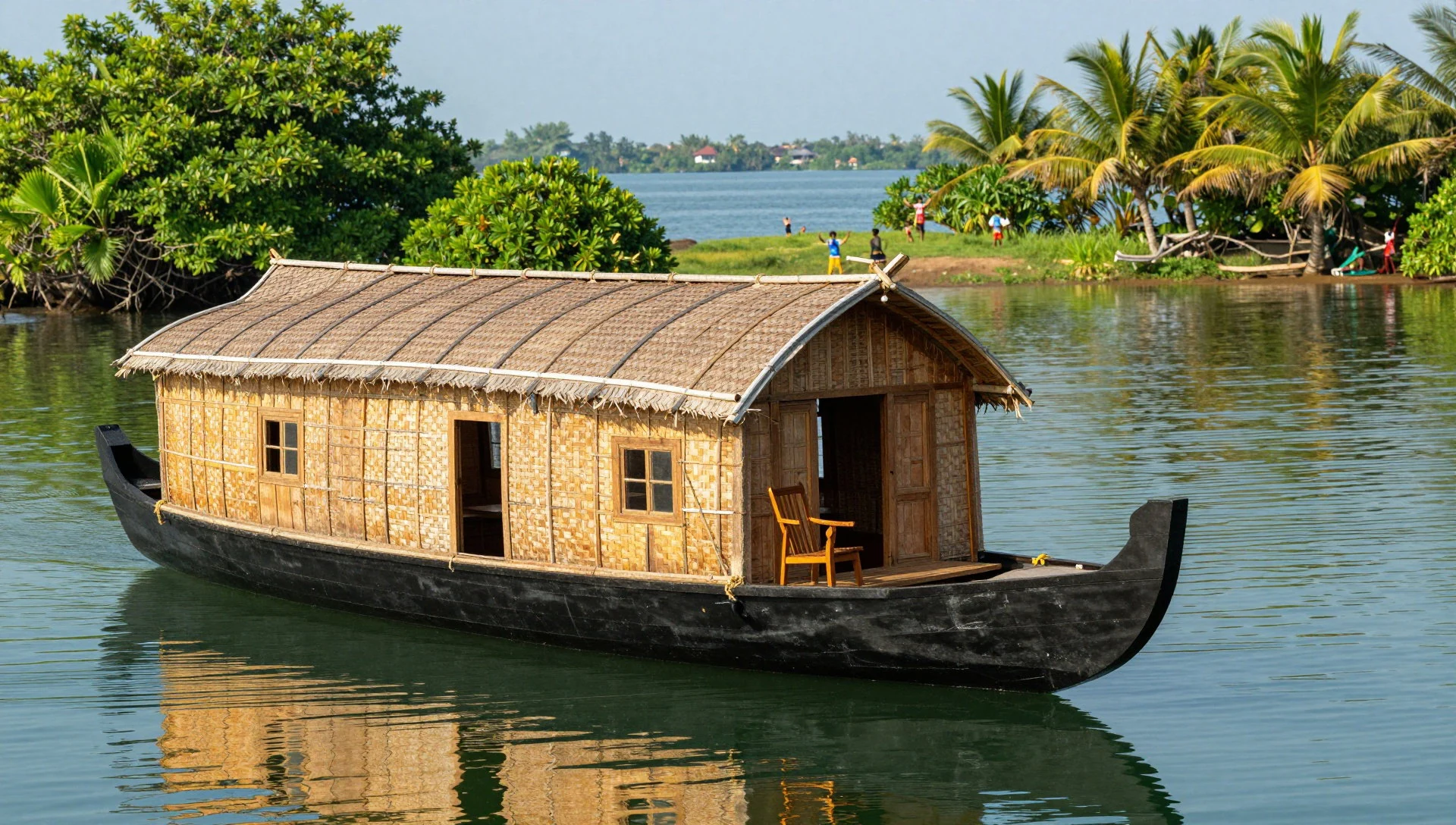
- Vembanad Lake — Kumarakom and Kottayam
Explore the largest water body in the region, a vast expanse linking multiple rivers and canals. Dotted with small islands, resort patches, and busy ferry routes, it is the central hub for overnight cruises and birdwatching excursions across the southern wetlands.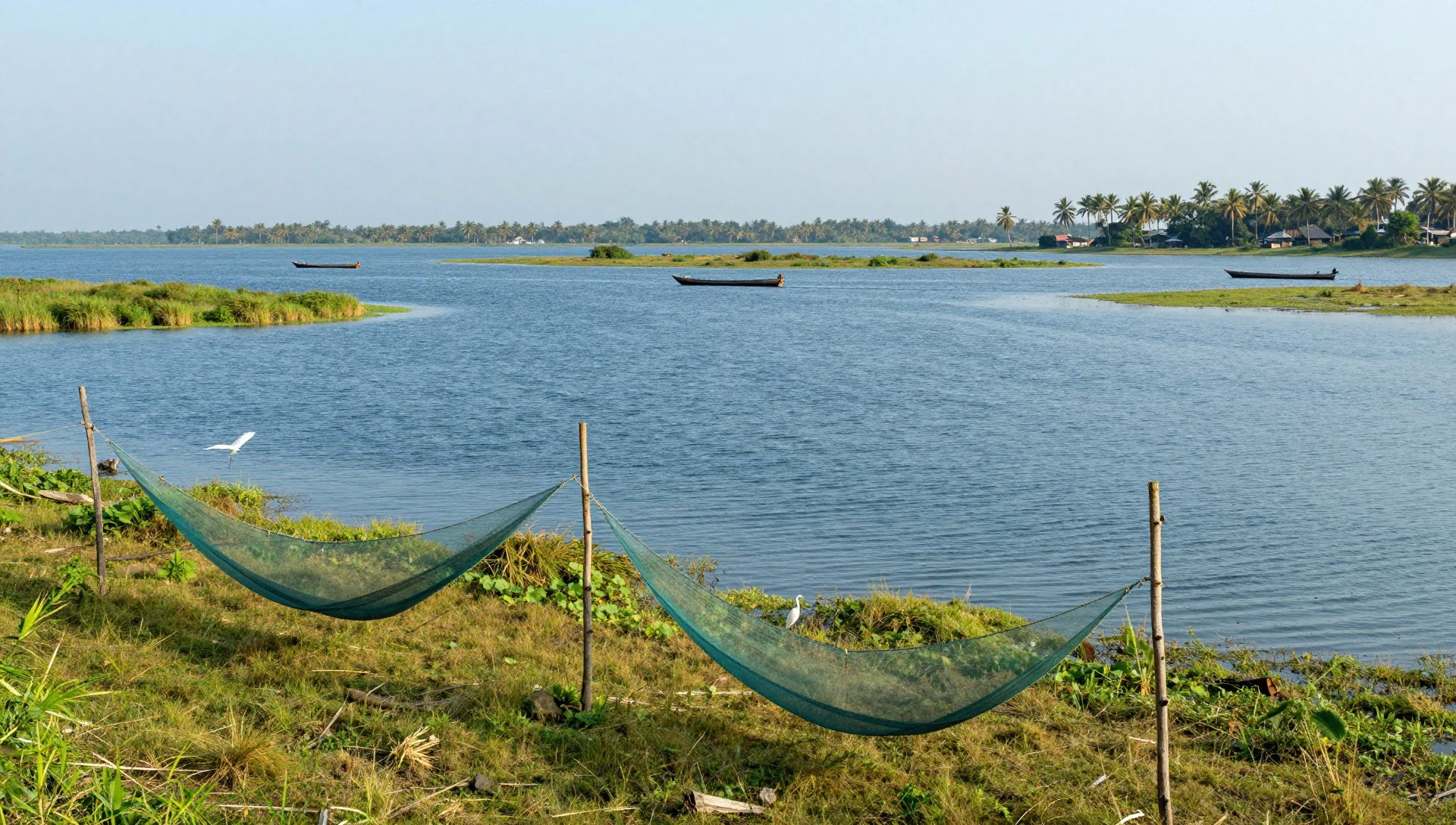
- Alappuzha Canals — Alappuzha town
Wander or cruise through the narrow urban canals often called the Venice of the East. Public ferries and small wooden skiffs push past water hyacinth and residential doorsteps, offering an intimate look at daily neighbourhood life right on the water.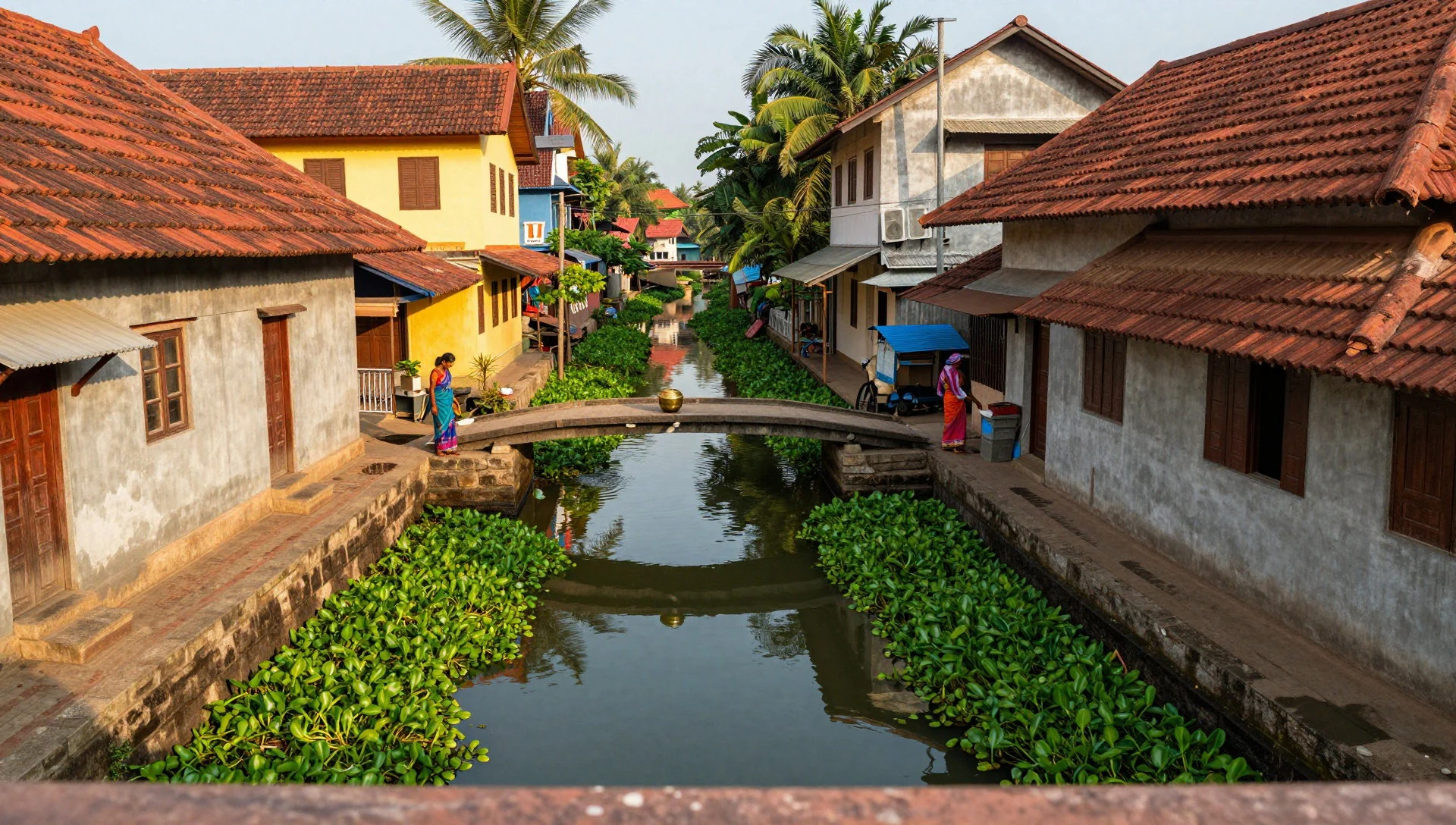
- Kumbalangi Village — Ernakulam district
Visit this model tourism island where local families host visitors in traditional homestays. Experience grassroots village life, watch traditional Chinese fishing nets being operated along the shore, and learn about local crab farming and coir spinning crafts.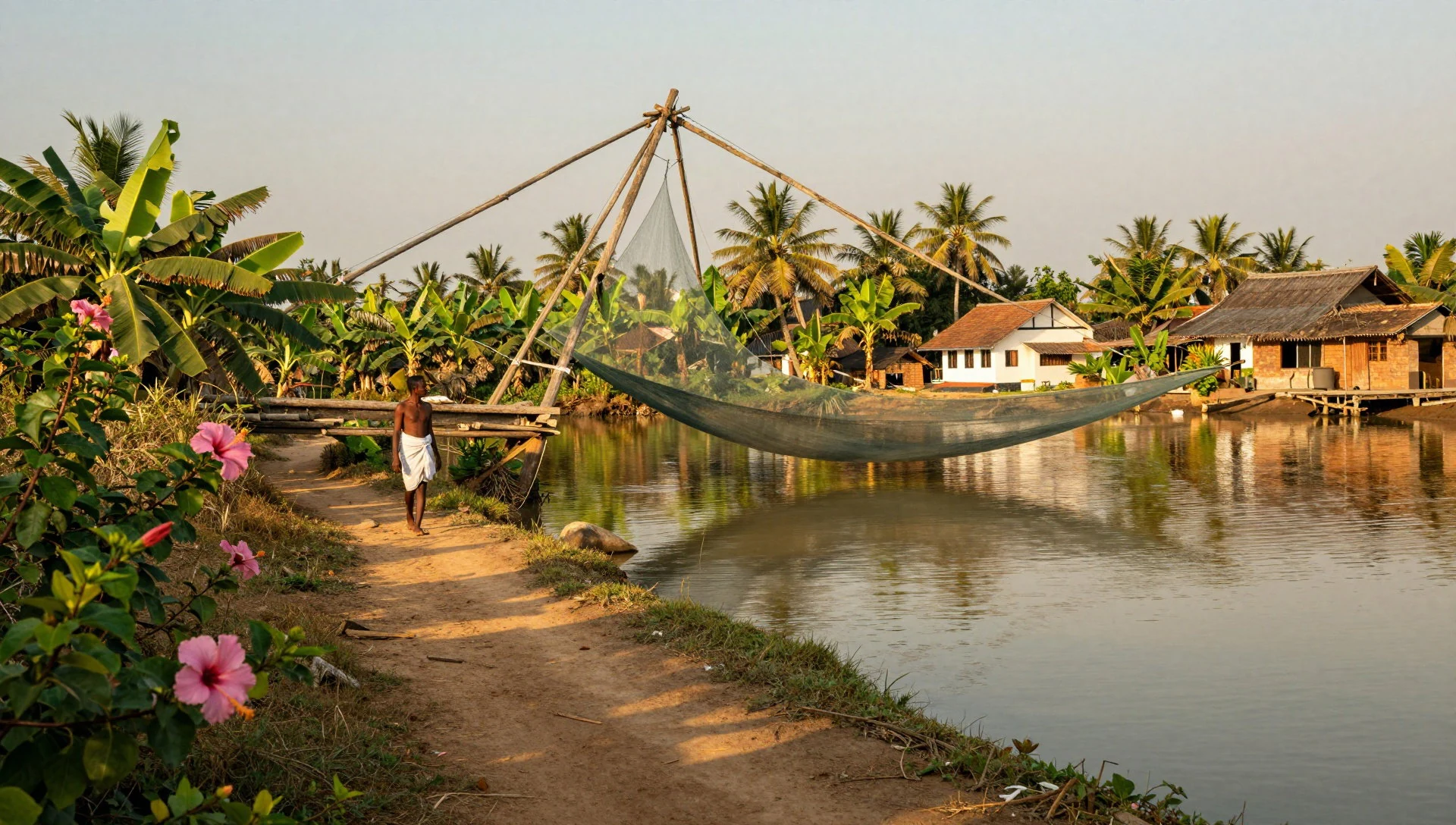
Culture
Life along the backwaters is deeply rooted in communal harmony, maritime traditions, and a distinct regional identity that separates Kerala from northern and eastern parts of the country. Traditional arts such as Kathakali dance-drama and Kalaripayattu martial arts reflect centuries of rigorous physical discipline, while the annual snake boat races demonstrate fierce village solidarity and synchronised rowing prowess. Hospitality is considered a sacred duty, and visitors are welcomed into local homes and family-run guesthouses with warm generosity. Traditional social structures blend ancestral customs with high literacy rates and progressive community initiatives. When entering a local home or place of worship in the backwater villages, always remove your footwear at the doorway.
What to wear
Traditional attire across the backwaters reflects the tropical climate and coastal lifestyle. For women, the classic dress is the kasavu saree—a crisp, unstitched cream-coloured cotton garment bordered with distinctive gold or zari threads, historically worn during festivals and family ceremonies. Men traditionally wear the mundu, a white cotton wrap tied around the waist, often paired with a simple cotton shirt. Today, younger generations and urban residents lean towards casual Western wear, including shirts, trousers, and lightweight dresses for daily activities, though traditional garments remain standard for weddings, religious festivals, and formal occasions. Visitors should dress modestly, opting for lightweight, breathable cotton clothing that covers shoulders and knees out of respect for local sensibilities. Sun hats, sunglasses, and comfortable slip-on footwear that is easy to remove before entering homes or sacred spaces are essential for navigating the humid, sunlit waterways.
What to eat
- Karimeen Fry — Houseboat kitchens and local eateries
Pearlspot fish harvested straight from the local backwaters, marinated in spices and shallow fried in fragrant coconut oil until crisp on the outside and tender within. - Kappa and Fish Curry — Toddy shops and traditional restaurants
Mashed tapioca flavoured with turmeric and mild spices, served alongside a fiery, tangy red fish curry prepared with tamarind and fresh coconut milk. - Chemmeen Thoran — Backwater dining halls and homestays
Fresh tiger prawn pieces cooked with finely chopped vegetables, shallots, green chillies, and an abundant dusting of grated coconut powder. - Varal Roast — Riverside restaurants and village stalls
Firm fish meat grilled inside a fragrant banana leaf wrap, coated in a thick, semi-dry tomato and spice masala gravy. - Tharavu Roast — Local kallu shops and family eateries
Tender duck meat slow-cooked in a rich, dark roasted coconut and spice semi-dry gravy, traditionally enjoyed with appam or rice.
Plan it
Best time. December through February is the driest stretch, with little rain, but daytime highs of 34 to 37°C make the heat the main challenge.
How long. 2–3
Getting there. Fly into Cochin International Airport (COK) for Vembanad Lake or Thiruvananthapuram International Airport (TRV) for Ashtamudi Lake, then continue by taxi, bus, or train to Alappuzha or Kottayam railway stations.
Budget. mid
Tips
- Book overnight houseboats well in advance during the peak winter holiday season
- Pack effective mosquito repellents for evening deck stays
- Bring cash for small village purchases and tips, as card readers are uncommon in rural stalls
- Confirm whether your houseboat package includes all meals and AC operating hours
Etiquette
- Remove your shoes before entering any local home or sacred shrine
- Only swim in designated, crew-approved areas due to strong currents and deep waters
- Ask permission before photographing local residents and fishermen at close range
Nearby
Sources
- Wikidata Q666519 (CC0)
- Wikipedia (CC BY-SA 4.0)
- Wikivoyage (CC BY-SA 4.0)